
Imagine hitting the open road with the wind in your hair, embarking on an adventure where the horizon is your playground and comfort is just a few steps away. Recreational vehicles (RVs) offer a unique way to explore the great outdoors, combining the thrill of travel with the comforts of home. One RV owner expressed it beautifully, saying,
“Waking up to a new backyard every morning”
encapsulates the freedom they experience on the road.
However, with great freedom comes great responsibility. As another passionate RVer noted,
“The freedom of the open road is incredible, but it comes with responsibility. Knowing your policy inside out isn’t just paperwork; it’s what lets you truly relax and enjoy the journey.”
Before you set off on your own journey, it is essential to understand the licensing and insurance requirements that apply to RVs.
Navigating the complexities of commercial driver’s license (CDL) regulations, especially for larger RVs, can seem daunting. Many RV owners may not know that in some states, specific CDL for RVs is required based on weight, length, and purpose of use. Moreover, RV travel insurance is crucial to safeguard your investment and ensure a smooth journey.
Arming yourself with knowledge about RV licensing requirements and insurance options is crucial for your safety and compliance. So, let’s dive into the world of RV adventures and explore why knowing about CDL requirements and RV travel insurance is key to enjoying your travels safely and confidently.
CDL Requirements for Driving an RV
When you want to drive a recreational vehicle (RV), you need to consider your driver’s license type based on the vehicle’s weight and size. In the U.S., you generally do not need a commercial driver’s license (CDL) if your RV weighs less than 26,000 pounds. However, many RVs, especially Class A motor homes, weigh more than this limit and may need special licensing due to local laws.
Class A and Class C Licenses
- Class A License: If you drive a vehicle that weighs more than 26,000 pounds, you need a Class A license. Many Class A motor homes are heavy and usually exceed 45 feet in length. You must have this license to legally drive such an RV according to state laws.
- Class C License: A Class C license is usually enough for lighter RVs, which weigh between 6,000 and 26,000 pounds. This license allows you to drive vehicles that transport 16 or more passengers or those that carry hazardous materials. It is a suitable option for many RV drivers.
Always check with your local Department of Motor Vehicles (DMV) for the exact weight and length rules that apply to your RV. Understanding these details helps ensure compliance and safety, giving you peace of mind as you enjoy your RV adventures!
An adventurous RV traveling on a beautiful scenic road, surrounded by stunning landscapes.
RV Insurance Basics
Recreational vehicle (RV) insurance is crucial for protecting your investment and ensuring safety during your trips. There are several types of RV insurance, each offering different levels of coverage to meet varying needs. The primary coverage options include:
- Liability Coverage: This is essential for all drivers and protects you if you’re at fault in an accident that causes injury to others or damage to their property. It usually comprises bodily injury and property damage liability.
- Collision Coverage: This covers damages to your RV resulting from a collision, regardless of who is at fault. It ensures that you can get your vehicle repaired after an accident.
- Comprehensive Coverage: Unlike collision coverage, comprehensive insurance addresses damages not resulting from a collision, such as theft, vandalism, fire, or natural disasters. This type of coverage is incredibly valuable as it protects you from unpredictable events.
- Specialized RV Insurance: Tailored for unique situations like full-timers or rental RVs, this insurance can include various features based on how you use your RV. It may provide better protections suited to the lifestyle of RV enthusiasts.
Having adequate insurance is vital for covering risks such as accidents, theft, or damage to personal belongings. Not only does proper RV insurance provide peace of mind, but it also ensures compliance with state laws, enhancing your overall RV travel experience.
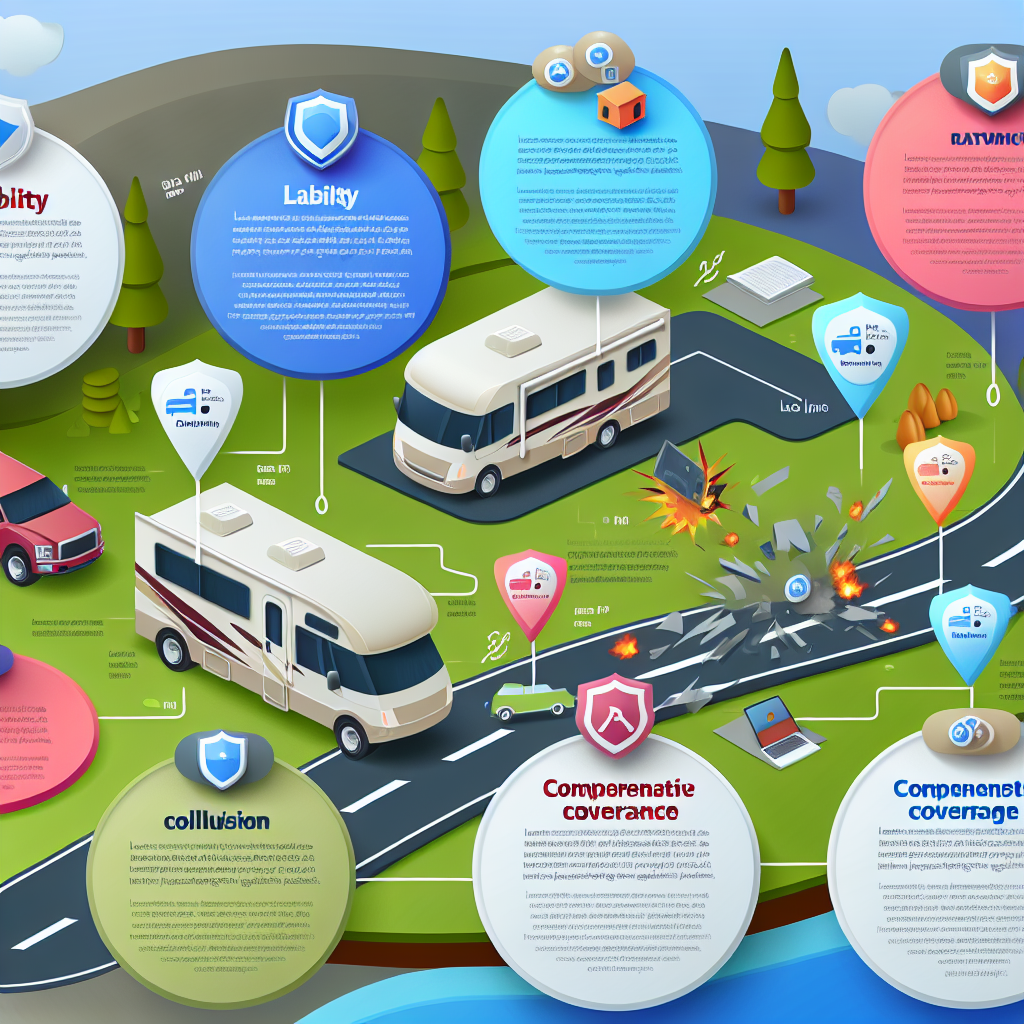
An illustration demonstrating various types of RV insurance coverage, including liability, collision, and comprehensive, to emphasize their importance for RV owners.
| Insurance Provider | Coverage Options | Average Annual Price | Customer Ratings |
|---|---|---|---|
| Progressive | Liability, collision, comprehensive, specialized for full-timers | $1,500 – $3,000+ | High (based on claims satisfaction) source |
| Geico | Liability, collision, bundling discounts | $500 – $4,000+ | Above Average (affordability praised) source |
| National General | Liability, collision, specialized replacement cost | $800 – $2,500 | High (specialized coverages rated well) source |
| Good Sam Insurance | Emergency assistance, specialized for full-timers | $800 – $2,000 | Good (customer service ratings) source |
Note: Prices are averages based on the type of RV and coverage selected, and customer ratings may vary by individual experience.
State-Specific Regulations
When it comes to recreational vehicles (RVs), state-specific regulations on licensing and insurance can vary significantly, making awareness vital for RV owners. Each state sets its own rules based on factors like vehicle weight and length. For instance, while some states like Arizona and Tennessee have minimal requirements, others impose stringent measures. In Wisconsin, a commercial driver’s license (CDL) is necessary for RVs over 45 feet long, while California demands a non-commercial Class B license for vehicles exceeding 26,000 pounds or 40 feet in length.
This variance makes it imperative for RV owners to check with their local Department of Motor Vehicles (DMV) for detailed licensing requirements. Additionally, insurance minimums and registration processes may differ substantially. Understanding the specific laws in your home state is essential not only for compliance but also to avoid potential legal issues. When traveling across state lines, it’s essential to adhere to your resident state’s regulations to ensure a smooth and lawful RV experience.
For more information, you can reference resources from RV Lifestyle Magazine and Travel and Wheels.
Map highlighting different states in the United States and their variability in RV regulations.
Conclusion
In conclusion, understanding the licensing and insurance requirements for recreational vehicles is crucial for RV enthusiasts. It is essential to know the specific weight and length limitations that determine whether a commercial driver’s license (CDL) is necessary for operating your vehicle. Equipping yourself with knowledge about the Class A and Class C licenses ensures compliance with local regulations while enhancing safety on the road.
Additionally, investing in suitable RV insurance protects your investment and provides peace of mind during your travels. By staying informed and adhering to state-specific regulations, you can embark on your RV adventures with confidence and security, ready to create unforgettable memories on the open road.
Best Practices for RV Owners
Successfully navigating the world of RV ownership requires awareness and preparation, especially concerning licensing and insurance. Here are key best practices to consider:
- Research Licensing Requirements: Familiarize yourself with your state’s specific licensing requirements for your RV. If it exceeds certain weight or length limits, a commercial driver’s license (CDL) might be necessary. Always consult your local DMV for compliance.
- Understand Insurance Needs: Review insurance options like liability, collision, and comprehensive coverage. Customize your policy based on usage, whether full-timer or occasional user. Specialized RV insurance can provide better protection.
- Keep Documentation Handy: Organize a folder with your license, registration, insurance policy, and maintenance records. This organization will save time and stress during your travels.
- Plan Your Routes Wisely: When planning your trip, consider road types and RV height restrictions. Familiarize yourself with potential hazards and suitable accommodations, especially for larger RVs.
- Conduct Regular Maintenance: Regularly check your RV for repairs. Proper maintenance not only enhances safety but could also positively influence your insurance rates.
By following these best practices, RV owners can prepare for their adventures with confidence, avoiding potential pitfalls along the way.
DMV Resources for RV Licensing and Insurance Requirements
Navigating the licensing and insurance requirements for your recreational vehicle (RV) can be complicated. Here are some key official resources and summaries to help guide you:
-
Recreational Vehicle (RV) Licensing and Insurance Requirements
Source: Official DMV Resources
Summary: RV licensing varies based on the vehicle’s size and type. For instance, self-propelled RVs under 6 meters in length with up to 9 seats require a blue license plate and a C1 driver’s license. Those exceeding these specifications require a yellow plate and either an A1 or B1 license. Trailer RVs are generally required to use a yellow plate and often need an A2 license, adhering to certain size limits (e.g., length ≤8m, weight ≤2.5t). Insurance must include compulsory traffic insurance, and the registration process encompasses vehicle inspection, tax payment, and the submission of necessary documents, including the purchase invoice and certificate of conformity. -
RV Registration and Insurance Guidelines
Source: National Transportation Authority
Summary: This resource reiterates that self-propelled RVs under 6m and with 9 seats use blue plates with a C1 license, while larger vehicles require yellow plates and an A1 license. Trailer RVs consistently need yellow plates and an A2 license, alongside not exceeding specified dimensions. Mandatory insurance includes a basic insurance requirement called 交强险. Registration involves purchasing insurance, paying the vehicle tax, and completing office procedures with required documentation. -
Comprehensive RV Licensing and Insurance Overview
Source: Vehicle Administration Bureau
Summary: This comprehensive overview supports the previous statements regarding RV licensing categorization by type and size, emphasizing that self-propelled RVs under 6m and ≤9 seats need blue plates and a C1 license. Larger self-propelled RVs require yellow plates with an A1 or B1 license. Trailer RVs mandate yellow plates and an A2 license, with insurance requirements establishing mandatory traffic insurance. The registration process varies regionally and typically entails vehicle inspection and tax payment.
Understanding and using these resources can ensure compliance with local and national regulations, aiding smooth RV travels.