
Registering a vehicle typically involves certain prerequisites, including legal documentation, proof of identity, and confirmation of vehicle ownership. However, many individuals find themselves facing a suspended or revoked driver’s license, leading to questions about their ability to register a vehicle. This article delves into the intricacies of vehicle registration when one’s license is not valid, shedding light on the legal implications, state-specific regulations, and practical tips that guide this multifaceted process. Each subsequent chapter builds a comprehensive understanding, from the fundamental aspects of registration to the nuances of state laws and actionable advice for those in this challenging situation.
Ownership Without Driving: Navigating Vehicle Registration When a Driver’s License Is Suspended
When a driver’s license is suspended, many people assume the car they own becomes unusable or unregistrable. In truth, registration and licensing are two separate systems that intersect in complex ways, but one does not automatically depend on the other. Registration is a record of ownership and a gatekeeper for insurance, taxes, and safety compliance. Licensing, on the other hand, is the privilege to operate a vehicle on public roads. Understanding how these two structures interact is essential for anyone facing a license suspension who still needs to maintain a vehicle, whether for work, family obligations, or personal necessity.
In most places, you can legally own and register a vehicle even if your driver’s license is suspended or revoked. The process of registering the car—obtaining the title, securing license plates, and paying the required fees—rests on proof of ownership, identity, and insurance rather than on an active driving privilege. This separation is deliberate. It reflects a broader separation of concerns: the state wants to know who owns the vehicle, that the vehicle meets basic safety standards, and that insurance coverage exists, regardless of whether the current driver is allowed to operate it on public roads. The same principle underpins the standard title and registration system that many states maintain across the country. If you can show you own the car, have insurance, and can pay the relevant registration costs, you can proceed with registration even if your driving privileges are paused.
To register a vehicle while your license is suspended, you will typically need several core components. First is a government issued photo ID. This could be a state or national identity card, a passport, or another accepted form of identification. The second is proof of ownership. That means either the title in your name or a bill of sale from the previous owner, which demonstrates that you are the legitimate purchaser or current owner of the vehicle. Third is proof of liability insurance. The vehicle must meet basic insurance requirements before it can circulate, and the documentation must be current and valid. Finally, you must pay the registration fees and any applicable taxes. In many jurisdictions you can complete this process online, by mail, or in person at a DMV office. The exact steps may vary, but the essential ingredients—proof of ownership, proof of identity, proof of insurance, and payment—tend to hold true across states.
Beyond these practical requirements, one crucial legal caveat remains constant: suspending your license does not grant you a license to drive the car. You can own and register a vehicle without a valid driver’s license, but you cannot legally operate it on public roadways until the suspension is lifted or reinstated. Driving with a suspended license is a separate offense and can lead to fines, additional penalties, or even jail time, depending on the jurisdiction and the circumstances. This separation is not merely theoretical. Law enforcement, court systems, and DMV records all treat driving privileges and vehicle ownership as distinct domains. The car may exist in your name, with plates and registration valid, but the act of driving is a different matter altogether during the period of suspension.
State by state, the rules can differ in meaningful ways. Some states have a straightforward posture: you may register a vehicle if you can prove ownership and insurance, even if your license is suspended. Others adopt more restrictive positions and require the registrant to hold a valid license as a condition of registration. While nationwide practice skews toward permissiveness in ownership and registration, it is not universal. The safest approach is to verify the specific requirements with your local DMV or equivalent agency before attempting to register. The rules can hinge on nuanced details of your suspension, such as whether it is administrative, related to nonpayment, or tied to a more serious offense such as driving under the influence. In practical terms, this means that a family member or a trusted associate might hold the title or operate the vehicle during the suspension period if that arrangement complies with local law, but any such arrangement should be examined in light of the exact jurisdictional rules to avoid missteps that could complicate reinstatement or lead to penalties.
The implications for the registration process itself are straightforward but worth outlining clearly. You will need to establish who will be listed as the registered owner. If you are the sole owner but your license is suspended, you can still file the registration in your name so long as you meet the ownership and insurance requirements. If you anticipate needing someone else to register the vehicle on your behalf, you should check whether your jurisdiction allows a third party to appear for the registration process or to title the vehicle in their name while you remain the owner in the sense of beneficial ownership. Some states may have restrictions on who can be the registered owner of a vehicle when the registered driver’s license is suspended, especially if the registry is linked to the ability to operate the vehicle domestically. The critical point is that the vehicle’s registration is about ownership and compliance, not about permission to drive at that moment.
Another important consideration is the relationship between insurance and registration. Insurance is a pillar of road safety and financial responsibility. Insurance documents are generally centralized around the vehicle rather than the driver alone, although many policies do require the vehicle to be driven by an insured party. Even with a suspended license, you must have an active liability insurance policy in effect for the vehicle you register. Some states require you to list the driver with the suspended license on the insurance policy, while others focus strictly on the vehicle’s status and the policy’s validity. In any case, you will need to present proof of insurance when you register, and you must keep coverage in force to maintain the registration. If your insurance lapses or is canceled during the suspension, the registration itself could be jeopardized, and you may face penalties for both registrational noncompliance and the underlying licensing issue.
The practical steps to register can be seen as a sequence of checks and confirmations. Start with gathering the essential documents: your government issued photo ID, the vehicle’s title or a bill of sale, and proof of insurance. Then verify the information about the vehicle, including its VIN, make, model, and year, to ensure the records match the title and insurance documents. Next, confirm your address and contact information on file with the DMV and update them if needed. Because fees and taxes vary, you should be prepared to calculate the expected cost and have payment ready, whether you are filing online or in person. If you are handling the transaction in person, bring copies of documents in case the clerk needs to verify or scan them. If you are applying online, make sure your scans or photos of documents are legible and that the digital versions meet the DMV’s file size and format requirements. In many states, the process yields a registration card and, crucially, license plates or a plate renewal notice if you already have a plate you are reusing. The title transfer, if applicable, is typically processed with the registration and may require additional steps if there is a lien on the vehicle or if ownership is being transferred from another person.
The interplay between suspension and registration also invites consideration of timing and consequences. If your license is suspended due to unpaid fines or unaddressed citations, registration may still proceed, but you should anticipate that the suspension could affect other related vehicle activities. For example, if you accumulate more unpaid penalties during the period of suspension, you could face additional sanctions that complicate reinstatement of your driving privileges. Alternatively, if the underlying cause of the suspension is unrelated to registration, such as a clerical error in the DMV system, you may find that registration and license issues can progress on somewhat different timelines. The key is to stay proactive, maintain records of all payments and communications, and seek clarification if any part of the process seems unclear or incompatible with the other pending actions.
An area that deserves special attention is the practical reality of moving a vehicle during a suspension. Even with a valid registration, the registered vehicle remains subject to the law that prohibits driving with a suspended license. If you must transport the vehicle, you should arrange for a licensed driver to operate it, use a tow service, or arrange for storage in a secure, legally compliant manner. Attempting to drive a vehicle with a suspended license not only risks fines and impoundment but can also impact your future ability to reinstate your license. Law enforcement agencies are increasingly vigilant about the interplay between ownership, registration, and operation, and penalties can escalate quickly when the driving privilege is in question. In some cases, individuals attempt to circumvent the issue by transferring the vehicle to another person who can drive legally, but this strategy must be evaluated carefully for potential legal exposure, including questions about fraudulent transfer, insurance coverage continuity, and the true ownership status of the vehicle during the suspension period.
The broader message here is that registration is about accountability and stewardship. When you register a vehicle while your license is suspended, you are affirming ownership, financial responsibility through insurance, and compliance with vehicle standards. You are not, in that moment, granted permission to operate on public roads. This distinction is essential for staying on the right side of the law and for ensuring that you can ultimately reestablish your driving privileges without entangling yourself in preventable penalties. The reality is that every jurisdiction sets its own boundaries, and while many will allow registration during a suspension, the clerks and DMV staff are trained to emphasize the risk of misinterpretation. If you have questions, the clearest path is to contact your local DMV directly and to document every step of the registration process so you can demonstrate due diligence should any question about your status arise later.
As you navigate this issue, you may encounter subtle guidance that helps illuminate the best path forward. The general principle is straightforward: you can register a vehicle if you can prove ownership, identity, and insurance, and you can afford the fees. But the precise rules about who can be the registered owner, whether a license must be valid for the registration to be processed, and how to handle vehicles when the license is suspended vary. For those seeking location specific advice, consulting the state rules that govern driver licensing can provide a clearer framework. See more on how state rules shape driver licensing here: state rules impacting driver licensing. This link points toward a nuanced discussion of jurisdictional differences and helps readers avoid assuming a one size fits all approach. If you want a broader macro view of vehicle registration safety and requirements, you can consult the official California DMV information on vehicle registration for a reference point about how the system handles suspensions and licenses in practice. While the CA example is not universal, it highlights the balance between ownership documentation and the ongoing requirement for insurance and compliance that applies across many states. For general, nationwide information, the official state resources are the most reliable, and the guidance can always be tailored to your locale.
In the end, the bottom line remains consistent with the overarching theme of this article: yes, you can register a vehicle with a suspended license, but you cannot legally drive it until your license is restored. The separation is intentional and helps keep the system functional while you address the underlying cause of the suspension. The key is informed preparation and careful adherence to the rules of your jurisdiction. Do not assume that what applies in one state will automatically apply in another. Make the call to your local DMV to confirm the exact requirements, gather the necessary documentation, and proceed with registration in a way that protects both your rights and your responsibilities as a vehicle owner.
For readers who want to explore this topic further, a practical, location-specific resource offered by the DMV ecosystem can help illuminate how registration interacts with suspensions in your area. The process can be smoother when you understand how the registry treats ownership and driving privileges simultaneously, and the right information can prevent mistakes that might complicate both evaluation and reinstatement. This chapter has aimed to present a cohesive view of this nuanced issue, tying together the core idea that ownership and operation are distinct realms within vehicle law, and that registration remains a viable pathway even when a license is temporarily unavailable.
External reference: https://www.dmv.org/us-ca/vehicle-registration.php
Between Paperwork and the Road: Navigating the Legal Terrain of Vehicle Registration with a Suspended License
Registration is a civil, administrative function that sits separately from the authority to drive. This separation lies at the heart of the question many people face when their driver’s license is suspended: can a vehicle still be registered in their name? The short answer, depending on where you live, is often yes. The longer, more nuanced answer is that registration and driving privileges operate under distinct legal frameworks. One governs ownership and liability, the other governs the right to operate a vehicle on public roads. This distinction matters deeply because it shapes the decisions you make, the risks you take, and the penalties you may face should you cross the line between possessing a vehicle and being authorized to use it on public streets. In many jurisdictions, the registry office treats your vehicle as an asset that can be owned, titled, insured, and registered regardless of your current ability to drive. The mechanics are straightforward enough: you prove who you are, prove who owns the vehicle, prove you have liability insurance, and pay the appropriate fees. Importantly, a valid driver’s license is not a prerequisite for the registration itself. The vehicle can be tagged with a title and license plates, and the ownership can be assigned to you or someone else, as long as the required documents are in order. This distinction is not a loophole or a loophole-in-waiting; it is a recognition that owning a vehicle and driving a vehicle are regulated through two different channels, each with its own set of rules, requirements, and enforcement mechanisms. The practical upshot is clear: you can, in many places, register the vehicle even if your license is suspended, but you cannot legally operate that vehicle on public roads until the suspension is lifted. The registry does not confer driving privileges, and it certainly does not sanitize the fact that driving with a suspended license remains a criminal offense in nearly every state. If you are pondering the implications of this separation, you should approach the matter with both prudence and concrete knowledge of your local rules. A careful, rules-based approach reduces the risk of penalties and keeps you from inadvertently stepping into a legal trap that could compound your suspension or create new liabilities for you and for any co-owners or co-signers involved in the registration.
The process of registration hinges on proof of ownership and proof of financial responsibility rather than proof of driving privilege. When you go to the DMV or its equivalent in your state, you will typically be asked to present several key items: government-issued photo identification, proof that you actually own the vehicle (such as a title or a bill of sale), proof of liability insurance, and a method to pay the registration fees and any applicable taxes. Some jurisdictions may also require proof of residency or a current address. Importantly, while a license is not required to complete the registration, the absence of a valid license can complicate other parts of the transaction. For example, if your license is suspended due to nonpayment of tickets or lack of insurance, you may face additional compliance steps before the vehicle can be properly registered in a way that satisfies the state’s risk-management framework. In other words, the state’s interest in registration is about accountability for ownership and financial responsibility, not about your ability to operate the vehicle on the road.
This distinction becomes especially important when you consider the practical consequences of having a suspended license. Even if you manage to register the vehicle, the act of driving remains a separate legal act. Driving with a suspended license is treated as a separate offense in nearly all jurisdictions, and the penalties are severe enough to remind the public that the license and the vehicle’s registration, while connected in everyday use, belong to two different legal ecosystems. The legal risk is not purely theoretical. Law enforcement can verify license status during a traffic stop, and if a suspension is detected, the driver can face immediate arrest, towing, and impoundment of the vehicle. The penalties for driving with a suspended license commonly include fines, potential jail time, extended suspensions, and even vehicle impoundment. In California, for instance, driving with a suspended license is a misdemeanor punishable by up to six months in county jail and fines that can reach $1,000. Repeat offenses or driving during an active suspension due to DUI can escalate to felony charges. While these figures are state-specific, the underlying principle holds across the United States: the registry can be in your name, but your capacity to operate a motor vehicle hinges on your license status. These penalties are not merely punitive; they reflect the public safety imperative to ensure that drivers on the road have demonstrated competence and accountability through the appropriate licensing process.
The broader legal framework often presents a more complex picture than the simple “yes, you can register” conclusion might imply. While most states allow the registration of a vehicle regardless of the registrant’s driving privileges, there are exceptions. Some states impose strict rules that require the vehicle’s registered owner to hold a valid driver’s license. In those places, registration might be conditional on resolving the license suspension before the vehicle can be properly registered in a way that fulfills all administrative requirements. Other states may enforce tighter documentation standards or impose tracking mechanisms that flag license status during registration and titling processes. The bottom line in this landscape is that you must verify the precise rules in your jurisdiction. Relying on generalizations about “most states” can lead to missteps, especially in a system where local variations can have meaningful consequences for liability, insurance, and the right to operate.
For anyone navigating this terrain, it is essential to anchor decisions in reliable sources and official guidance. Your first stop should be your state’s DMV or its equivalent. These agencies publish current rules, typical documentation requirements, and any nuances that could affect your situation. If you seek a broad reference point, national resources that collate state-by-state information can be helpful, but they should not replace the official state portal when you are preparing to register a vehicle. A practical approach is to prepare as if you will be dealing with a standard registration process—gather a government-issued photo ID, the vehicle’s title or bill of sale, proof of liability insurance, and funds to cover fees—and then anticipate that your suspended-license status could influence any ancillary steps, such as proof of insurance history or additional forms that demonstrate your identity and ownership beyond the basic documents. In several cases, people who register vehicles while their licenses are suspended do so to maintain the vehicle as an asset that can be sold, stored, or transferred, or to keep a car in ready-to-operate condition once the license issue is resolved. The key, again, is to separate the administrative act of registration from the legal act of operation.
One practical and often overlooked dimension concerns third-party registration. The results of many state practices indicate that registration can be completed through a trusted intermediary or a licensed dealer, a practice that can be convenient for individuals who cannot directly complete the process due to the suspension. However, even if a third party registers the vehicle, the responsibility to operate the vehicle rests squarely on the driver who possesses a valid license. If that driver attempts to operate the car, the legal consequences can be severe for the driver, the vehicle owner, and potentially for the intermediary if they knowingly facilitated the act in ways that contravene the law. This reality underscores the necessity of clear communication, documented consent, and strict adherence to the rules governing both ownership transfer and driving privileges. It also invites careful consideration of risk management: if you cannot legally drive, you must avoid any scenario in which you might be perceived as or accused of driving a registered vehicle.
In considering why a vehicle might be registered despite a suspended license, it is helpful to understand the roots of suspension itself. A license can be suspended for a wide range of reasons—unpaid tickets or fines, outstanding insurance requirements, or more serious public-safety concerns such as DUI or driving while impaired. A suspension does not necessarily negate the right to own or transfer property; it is a built-in mechanism to curb driving privileges while ensuring that the underlying legal and financial obligations are addressed. Suspension can be temporary, with reinstatement contingent on the completion of conditions such as payments, court-ordered programs, or proof of insurance. The risk calculus for registration hinges on recognizing that even if your license status is in flux, you still may have a path to ownership stability in the form of registration. This stability matters for a host of reasons: you may need to sell the vehicle, you may require the vehicle for transportation once reinstatement occurs, or you may be attempting to safeguard against a title dispute if the vehicle’s ownership is called into question during the suspension period.
To navigate successfully, you should engage with the process as a problem-solving exercise rather than a one-step form submission. Start by drafting a checklist that reflects the official documents you’ll need. Verify the current status of your license with the licensing authority, and do so with the precise intent to understand how it intersects with vehicle ownership. Some states offer targeted pathways for those with suspended licenses to complete certain steps while pursuing reinstatement, or they may require you to designate a co-owner or a legal representative who holds a valid license to be listed as the registered owner. These pathways, when they exist, are designed to preserve the integrity of the registration system while accommodating real-world situations. As you gather documents, consider the broader financial and legal implications: the registration is a liability shield, ensuring the vehicle’s legitimacy in ownership and in the event of an accident or a dispute—but it does not waive liability or alter the driver’s responsibility to drive only when legally permitted.
As this landscape evolves, the responsible course is to consult authoritative sources and to approach registration with disciplined clarity. The idea that “you can register a vehicle with a suspended license” is a technical possibility in many places, but it does not imply a license-free freedom to operate. The vehicle remains a controlled asset, and the act of driving is constrained by statutory licensing conditions. This framework is designed to protect not only the driver but also other road users, insurance providers, and the public purse from the consequences of unlicensed operation. If you want a succinct synthesis of these principles, you can think of registration as the administrative recognition of ownership and financial responsibility, while driving is a policy, not a mere administrative authorization. The two are related in everyday life—most people who register and own a car intend to drive it—but legally they inhabit different lanes, each with its own traffic rules and penalties.
For readers seeking further clarity, the state-by-state nuance is essential. The general pattern is that you can register a vehicle without a valid license in many jurisdictions, but you should not assume universal applicability. Check the specific rules in your state, and consider contacting your local DMV or its official online resources. The process can be straightforward in terms of required documentation, but it can become complicated if your suspension arises from issues that intersect with insurance, court orders, or other regulatory concerns. In short, you can register a vehicle with a suspended license under many circumstances, but you cannot legally drive it until your license is reinstated. This is not merely a technicality but a principle that governs everyday life on the road and the stability of vehicle ownership when legal privileges are in flux.
If you want to dig deeper into the policy landscape behind these rules, you can explore state-level discussions of how driver licensing interacts with vehicle ownership and registration. See the broader examination of state rules and their impact on driver licensing for context and nuance. This understanding helps you anticipate when the registration pathway might be open while the driving pathway remains closed. And while you navigate this terrain, keep in mind that the road to reinstatement is the path that truly matters for safe and lawful operation. A vehicle you cannot legally drive is still a valuable asset and a potential carrier of financial and legal risk if steered toward use in ways that contravene licensing restrictions. The careful reader will balance the practical need to secure and maintain a vehicle with the steady discipline required to avoid the legal hazards that accompany driving on a suspended license. For further reading on how state rules shape driver licensing, refer to the overview provided by state-specific resources mentioned in the preceding context.
For a quick, practical anchor, remember this: registration is about ownership, identification, and financial responsibility. Driving is about licensure and safety. When your license is suspended, you can still register a vehicle in many places, but you cannot legally operate that vehicle. Always confirm the precise requirements in your jurisdiction and proceed with documentation that reflects ownership and insurance rather than the privileges of driving. This distinction helps ensure you stay compliant across the board and reduces the risk that a suspension morphs into a cascade of penalties that affect your mobility, your wallet, and your freedom.
Internal link note: For more on how state rules may shape driver licensing in practice, see the discussion on state rules impacting driver licensing. This resource provides a broader lens on where registration rules align or diverge from licensing requirements, helping you map your path through the process with greater confidence. state rules affecting driver licensing.
External resource: For a clear legal framework on suspended licenses and related penalties, consult a comprehensive, official overview such as the California DMV’s suspended license FAQ. This external reference offers state-specific details and clarifications that complement the general discussion above. https://www.dmv.ca.gov/portal/dmv/detail/vr/faq/suspendedlicensefaq
Registering a Vehicle While Your License is Suspended: Understanding the Line Between Ownership and Driving
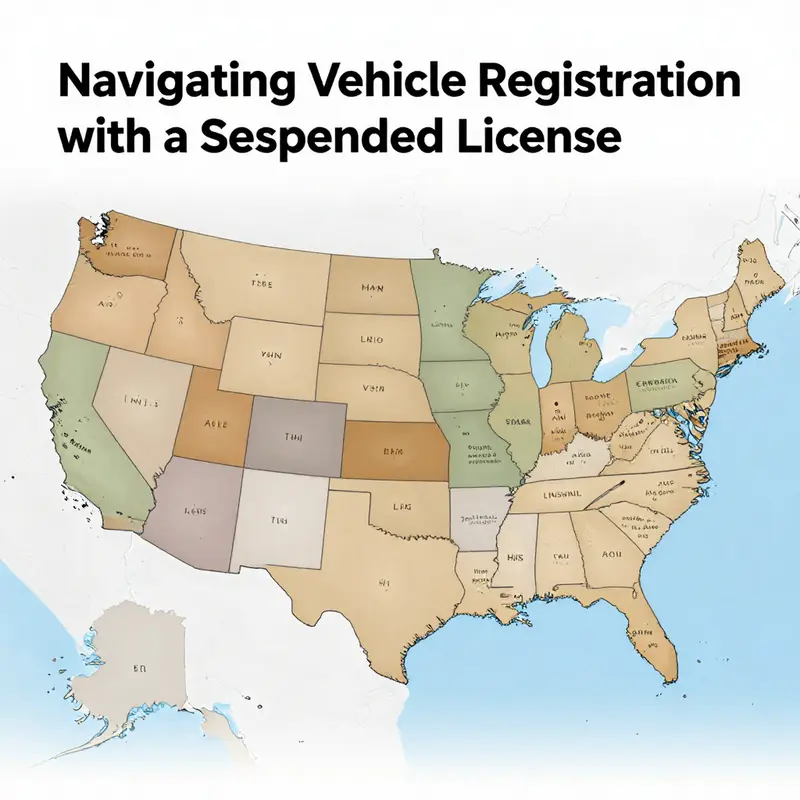
The moment you inquire about registering a vehicle while your license is suspended, you step into a space where ownership and operation travel on different rails. Registration is a civil, administrative act that records who owns a vehicle, that the vehicle exists legally, and that the owner pays the appropriate taxes and fees. Driving privileges, however, are a separate consent granted by the state based on meeting certain criteria of safety and responsibility. The practical upshot is simple in principle, but the details can be complex in practice: you can typically register a vehicle even if your license is suspended, but you cannot legally drive it until your driving privileges are restored. This separation—ownership versus operation—exists to prevent a suspension from automatically cancelling the vehicle’s legal status while still recognizing the realities of ownership and accountability for a vehicle on public roads.
To understand how this works in most places, imagine a car as a legal entity that sits at the intersection of several administrative systems. The DMV’s registration process is designed to track the vehicle itself: who owns it, that it is insured, that it meets applicable safety and, in some places, emissions standards, and that the correct fees have been paid. The process asks for concrete proof of ownership, such as a title or bill of sale, proof of identity, proof of insurance, and payment of registration fees. None of these items directly proves that the owner is currently allowed to drive. In many cases, you can present those documents, complete the registration, and issue plates in the name of the owner—even if the person listed on the registration has a suspended or revoked license. That separation is not a loophole but a deliberate design of the system, intended to address ownership, transferability, and financial accountability even when driving privileges are temporarily unavailable.
That said, the practical reality is delicate. You are not free to operate a vehicle just because you have updated plates or a current registration. The license status remains the gatekeeper for operating on public roadways. If you get behind the wheel with a suspended license, you risk criminal penalties for driving on a suspended license, which can include fines, additional suspension time, or even jail time in some cases. The system is built to discourage noncompliance with driving restrictions, while still allowing the vehicle itself to be held in a state of legal standing in the owner’s name. In this sense, the act of registering a vehicle is more about ownership and accountability than about the right to use the vehicle on the road at a given moment.
Across the United States, the specifics can vary. Registration procedures may require the same core components—identity, proof of ownership, proof of insurance, and payment—but some states impose extra conditions when a license is suspended. A few jurisdictions may maintain rules that effectively tie registration to driving privileges in certain circumstances, though this is less common in general practice. The point to emphasize is that you should not assume a blanket rule applies in every state. The safest approach is to consult the local DMV or its official online resources, recognizing that state law is the ultimate arbiter in these questions. A broad, reliable starting point for state-by-state guidance is the NASMVA directory of state DMV websites.
In the absence of a uniform nationwide rule, the practical steps for registering a vehicle when your license is suspended become a matter of collecting the right documents and understanding the limits of your legal status. You will typically need to present government-issued photo identification, such as a state ID or passport; proof of ownership, like a title or bill of sale; proof of liability insurance for the vehicle; and payment for the registration fees and any applicable taxes. In some states, you may also be asked to provide a VIN verification, a valid emissions test certificate, or proof of safety inspection. Some jurisdictions require additional documentation if the vehicle is being registered by a person who is not the primary driver or if the vehicle is leased rather than owned outright. In all cases, the purpose of the process remains the same: to establish a clear, traceable record of who owns the vehicle, that the vehicle is covered by insurance, and that the registrant is willing to comply with financial obligations owed to the state.
Beyond the mechanics of registration, a more nuanced issue arises when the candidate registrant is someone whose driving privileges are suspended for reasons ranging from nonpayment of fines to more serious offenses like DUIs. The suspension itself does not automatically strip the asset of its registration, but it does raise questions about who is legally permitted to operate the vehicle and under what arrangements. If the registered owner is not the person who will be driving, or if the vehicle will be kept in a household where another driver holds a valid license, many states allow registration to proceed under the responsible owner while ensuring that the vehicle is not operated by the suspended individual. In practice, this often means the vehicle is parked or used by another licensed driver, or that a specific plan is in place to prevent unauthorized operation. This approach upholds the principle of ownership and financial responsibility while recognizing the temporary restriction on driving privileges.
Still, a word of caution echoes through every jurisdiction: some states maintain stricter rules about who may appear on the registration, or who may be listed as the registered owner when the license is suspended. In those cases, the registered owner might be required to hold a valid driver’s license or to designate a co-owner who does meet the licensing requirements. The risk of misalignment here is not merely administrative; it can carry legal consequences if the state concludes that the registration was used to circumvent a driving suspension. That is why, even though the registration may proceed with the necessary documents, it remains imperative to understand and respect the prohibition on operating the vehicle until reinstatement is achieved. The separation of registration and driving privileges is not a workaround; it is a framework that helps maintain accountability in both ownership and use of motor vehicles.
For readers who want to place this topic in a broader context, state-specific nuances matter a great deal. Some states may articulate stricter ownership requirements tied to licensing, while others emphasize the imperative of proof of insurance and financial responsibility regardless of license status. California, for example, has rules that tie reinstatement to proof of financial responsibility in certain circumstances, such as non-payment of child support or lapses in insurance coverage. Reinstatement can require filing an SR-22 form, which acts as a higher level of liability coverage proof for a period determined by the state. Texas presents its own set of conditions, where a first-time DUI suspension can last through a specified period, after which alcohol education programs and sometimes an ignition interlock device are prerequisites to regaining driving privileges. These illustrations reveal how suspension terms and reinstatement steps are tailored to the nature of the offense and the severity of risk as seen by the state. They also underscore the importance of consulting official sources to determine what precisely is required in a given jurisdiction.
The practical advice that follows is straightforward, though it requires careful, state-by-state verification. Start by visiting your state’s official DMV website or contacting a local DMV office to confirm the exact documents needed for vehicle registration when a license is suspended. Since rules can diverge, it is essential to ask whether any additional proof is needed if you are not the anticipated driver or if the vehicle is intended to be kept in your name during the period of suspended driving privileges. While you gather documents, remember to keep an eye on insurance status, as insurers may request proof that the vehicle will not be operated by the suspended driver until reinstatement. The policy of many insurers is to require coverage in the name of the registered owner, and they may require the name on the policy to align with the owner who appears on the registration, particularly in cases where the vehicle is not being driven by the named operator. This is another reason to navigate the process with clarity and caution, ensuring that all elements—ownership, insurance, and anticipated use—cohere with state rules.
The broader framework that supports this inquiry is the recognition that vehicle registration and driving privileges are governed by different streams within the state system, a distinction that helps prevent abuse of the system while enabling individuals to maintain ownership and financial responsibility. It is entirely possible to own and register a vehicle while your license is suspended, provided you comply with the relevant documentation and payment obligations, and you refrain from operating the vehicle until the reinstatement is granted. This understanding helps balance the public interest in road safety with the personal realities of ownership and economic responsibility, particularly in households or communities where vehicle use is essential for work, family obligations, or daily life. It also underscores the pragmatic reality that the license suspension is a tool for behavior modification and accountability, not a blanket prohibition on every vehicle in a household.
For readers seeking a consolidated sense of how this landscape fits together, a useful step is to examine how state rules can influence driver licensing more broadly. This line of inquiry can illuminate why states set different requirements for registration when a license is suspended and how those requirements interact with other conditions of reinstatement, such as court orders, fines, or special programs. You can explore this broader context through resources that discuss state rules impact on driver licensing, which helps connect the dots between suspension, reinstatement, and how ownership ties into the administrative record of a vehicle. The linked discussion provides a helpful frame for understanding where your state sits on this spectrum and what it means for both your registration and your ability to operate a vehicle in the future.
Bottom line: yes, you can register a vehicle with a suspended license, but you cannot legally drive it until your license is restored. Always verify the specific rules in your state to ensure compliance. If you find yourself navigating a suspension, keep the lines of communication open with your local DMV and, when appropriate, with your insurer, lender, and, if needed, a legal advisor who understands traffic and licensing issues. The process may feel intricate, but it is designed to preserve accountability and safety while allowing you to maintain ownership responsibilities for your vehicle. In cases where the rules are unclear, reaching out to the DMV for definitive guidance is the prudent path. A reliable starting point for statewide information can be found through NASMVA, which provides links to state DMV sites and consolidates official resources in one place: https://www.nasmva.org/state-dmv-websites.
External resource: For authoritative, state-specific guidance, consult NASMVA’s directory of state DMV websites at https://www.nasmva.org/state-dmv-websites.
Internal link reference: For broader context on how state rules shape driver licensing across the country, you can read about state rules impact on driver licensing. state rules impact on driver licensing.
Registration Without the Right to Drive: Navigating Vehicle Ownership When Your License Is Suspended
When a driver’s license is suspended, the day-to-day reality can feel like a tug between ownership and access. You may still own a vehicle, you may even be able to register it, but you cannot legally operate it until the suspension is lifted. This distinction—ownership and registration on one hand, driving privileges on the other—shapes a practical path that some people overlook in the moment of crisis. Understanding how these processes interact is essential to staying within the law while you work to restore driving privileges. The separation between registration and driving privileges is not an illusion or a loophole; it is a reflection of how responsibilities and rights are distributed across different government authorities. Vehicle registration is typically an administrative matter managed by the state’s motor vehicle agency, focused on ownership, taxation, and the accountability of the vehicle itself. A valid license, by contrast, is a privilege tied to the person’s ability to operate that vehicle on public roads. Because these are distinct, it is possible to complete the paperwork and establish your ownership for a vehicle even if your license is suspended, provided you meet the institution’s requirements for identification, ownership, and insurance. Yet this separation also requires careful attention to detail, because the moment you attempt to drive without a valid license, you step into a different, more punitive legal territory. Most people discover this truth only after attempting to operate a vehicle in circumstances where their license status was unknown to those around them, or after receiving a citation that reveals the mismatch between ownership and driving privileges. The practical question, then, is not whether you can possess or register a car during suspension, but how to do so correctly and lawfully while your license remains suspended and while you work toward reinstatement. The answer is not a single prescription but a set of considerations that reflect the realities of state and local rules, the specifics of why the license was suspended, and the particulars of the vehicle in question. In the broad majority of jurisdictions, the act of registering a vehicle is not contingent on having a current, valid driver’s license. Instead, the registration process relies on proof of identity, proof of ownership, proof of insurance, and payment for fees and taxes. This means a person who cannot legally drive can still complete the formal steps required to title a vehicle, obtain license plates, and bring the vehicle into the state’s records. The crucial caveat is that this status does not authorize driving. If you are stopped by law enforcement or pulled over for a routine check, and you attempt to operate the vehicle with a suspended license, you risk substantial penalties, including fines, extended suspensions, or even criminal charges. The distinction between ownership and operation is therefore not merely theoretical; it has real consequences for how you plan, finance, and manage a vehicle while your license status remains in flux. As you consider the path forward, it helps to ground your understanding in the practical requirements. When you register a vehicle, the authorities typically require government-issued photo identification, proof of ownership such as a title or bill of sale, evidence of liability insurance, and payment of registration fees and any applicable taxes. These requirements transcend the license status because the state’s interest in vehicle registration centers on accountability for property and financial responsibility, not on whether the owner is currently allowed to drive. This means you can potentially complete the registration paperwork under your name, even if your license is suspended, as long as you can demonstrate who you are, prove you own the vehicle, show you have insurance, and pay the associated costs. Yet this is not a universal guarantee. Some states and localities impose more stringent rules that can complicate the process. In particular, there are jurisdictions that require the registered owner of a vehicle to hold a valid driver’s license. While this is not common nationwide, it is a possibility in certain regions or under specific circumstances. The practical implication is clear: before you begin the registration process, you should confirm the exact rules in your locale. A conversation with the local DMV or its equivalent can save you time and prevent unnecessary fees or delays. Even when registration is possible without a license, the operative limit remains: you cannot legally operate the vehicle until your driving privileges are reinstated. If you attempt to drive, you expose yourself to sanctions that can compound the original reason for the suspension. It is a straightforward, sometimes frustrating reality that ownership does not grant operation rights. Insurance also plays a pivotal role in this framework. While you may be able to secure insurance for the vehicle and use it for registration, many insurers require the driver to have a valid license to maintain coverage, or at least to align coverage with the policyholder’s status regarding driving privileges. If a suspension arises from nonpayment of fines or other administrative issues, addressing the underlying cause becomes a prerequisite for reinstatement. In many cases, resolving such issues—paying fines, providing proof of insurance, or satisfying court requirements—clears the path toward reinstatement. It is common for individuals to learn that you can initiate or continue certain registration-related tasks while the suspension is in effect, but you must address the core cause of the suspension before attempting to resume driving. The atmosphere around these decisions is further complicated by state-specific rules that can vary considerably. The law is not uniform across the country, and the path to reinstatement can depend on the reason for suspension, the jurisdiction’s preferred remedies, and the exact mechanics of the DMV’s procedures. To navigate this correctly, you should approach the process with a careful, information-rich mindset. Start by understanding the reason for the suspension. If the suspension stems from unpaid fines, a lack of insurance, or DMV administrative issues, there is often a concrete path to resolution. The first step is to contact your local DMV to obtain a detailed explanation of the suspension status and the specific steps required to address it. Some suspensions are resolvable quickly with payment of a fee or an insurance fix, while others may require more formal reinstatement processes, such as enrolling in a driver-improvement program, completing a course, or appearing before a hearing. In either case, the path toward getting back on the road begins with clearing the core issue and proving your compliance with legal requirements. As you walk through this process, you will encounter two connected but distinct tasks: the administrative task of registration and the legal task of reinstating driving privileges. The administrative task can be pursued in parallel with most underlying issues, provided you can meet the ID, ownership, and insurance requirements. However, the legal task—restoring your license—must eventually be completed if you intend to drive. There is also the element of representation. In rare cases, you may be able to have a designated representative register a vehicle on your behalf. This can involve a power of attorney or other formal authorization that allows someone else to handle the paperwork in your name. If this option is available in your jurisdiction, you would need to confirm the exact documentation required, as well as any constraints on who may act as a representative and for what purpose. The logic behind allowing a designated representative in some circumstances is to prevent undue hardship for someone who cannot attend to paperwork in person but still needs to establish ownership or comply with tax and insurance requirements. Nevertheless, this path requires careful alignment with local laws and a clear, documented trail that proves the representative’s authority to act. An overarching risk remains: even if you manage to register the vehicle, you must never operate it without a valid license. Driving during a suspension is a serious offense, and states frequently respond to violations with escalated sanctions. The penalties can include heavier fines, longer suspension periods, and even jail time in extreme circumstances. These consequences underscore the importance of separating the administrative act of registration from the legal privilege of driving. In practice, many people find themselves in a liminal space where they own and register a vehicle while their license is suspended, using the vehicle for storage, utility, or personal needs without risking the road. For the owners who rely on a vehicle for essential travel—commuting to work, transporting family, or fulfilling caregiving duties—the prompt reinstatement of driving privileges takes on heightened urgency. The difficulty lies in balancing the timeline. Reinstatement often hinges on meeting deadlines, paying fines, or fulfilling court-ordered requirements, while registration deadlines continue to tick. If you neglect registration, you may incur late fees or penalties that complicate your financial situation, adding another layer to the challenge of restoring your mobility. The best approach is to maintain clear, proactive communication with the DMV and to document every step you take. Keep records of payments, correspondence, and notices, and seek confirmation in writing when possible. If you encounter resistance or ambiguity about whether your specific circumstances permit registration without a license, ask for a supervisor or a specialist who can review the nuances of your case. Additionally, consider seeking guidance from a legal professional who specializes in traffic and licensing matters in your state. They can help interpret the suspension’s cause, explain the state’s procedures for reinstatement, and ensure that you are not inadvertently taking a path that could later complicate your ability to drive legally. It is worth noting that while the internal mechanics of registration can vary, the core principle remains consistent: you can establish ownership and meet the administrative requirements without a valid license, but you cannot drive until the suspension is lifted. This distinction is the anchor around which every decision revolves. In the end, the choice to register a vehicle while your license is suspended is a practical decision that requires careful planning and ongoing attention to the interplay between state rules, insurance requirements, and the timing of reinstatement. The plan should be anchored in legality, safety, and responsibility. If you decide to move forward with registration, approach the process as a strategic step toward regaining full mobility, not as a substitute for the reinstatement process. Use the registration to secure ownership, protect your investment, and maintain compliance with taxes and insurance, all while you navigate the steps necessary to restore driving privileges. For readers who want a concise map of how state rules can shape this scenario, the guidance you’ll find in state-level resources—often summarized as the rules that impact driver licensing—offers essential clarity. This is not a one-size-fits-all answer, but a framework you can apply with confidence as you engage with your local DMV. It bears repeating that the ability to register a vehicle without a license is contingent on meeting identification, ownership, and insurance requirements and on the absence of a rule that prohibits registration without a valid driver’s license in your jurisdiction. The ultimate message is simple: ownership and operation are distinct, and the best path through a suspended-license moment is to separate those responsibilities with careful attention to what each requires. As you work through your options, you may also rely on official guidance that consolidates state practices while offering general principles that apply across regions. For readers seeking broader context, the U.S. Department of Transportation provides general frameworks and links to state-specific resources that can help you navigate license reinstatement and registration procedures. The route you take will depend on the specifics of your suspension, your state’s rules, and your personal circumstances. But the throughline remains constant: you can handle the administrative task of registration while your license is suspended, so long as you do not drive and you address the underlying cause of the suspension so that you can eventually regain driving privileges. This balanced approach protects you from legal risk, preserves your investment in a vehicle, and keeps you aligned with the law as you work toward reinstatement. For deeper, locally tailored guidance on how state rules influence driver licensing, you can explore resources that distill the relationship between license status and vehicle ownership, like the compendium of state practices. State rules impact on driver licensing. State rules impact on driver licensing. To stay grounded in authoritative, up-to-date information, consult the official government resources and your state’s DMV. A reliable starting point for broad guidance is the U.S. Department of Transportation, which offers general guidance and links to state-specific resources. You can explore further at the national level by visiting https://www.transportation.gov/. This combination of state-specific detail and national coordination helps ensure you make decisions that protect your interests, your vehicle, and your legal standing while you work toward restoring full driving privileges. In summary, the practical stance is clear and actionable: you can register a vehicle with a suspended license in many jurisdictions, but you cannot drive it until your license is reinstated. The registration acts as a formal record of ownership and a means to meet insurance and taxation obligations, while the reinstatement process reopens your privilege to operate on public roads. By maintaining clear separation between these two domains, you navigate a challenging moment with prudence and foresight, minimizing risk while keeping options open for future mobility. The path is not automatic, and success depends on understanding the exact rules that apply where you live, addressing the underlying reasons for suspension, and staying compliant with both registration and licensing requirements. If you keep these principles in mind and approach the process with a disciplined plan, you will be better prepared to move forward when the license is back in good standing, and your vehicle remains properly registered and insured in the interim.
Final thoughts
In conclusion, while the challenges of registering a vehicle with a suspended license can be daunting, understanding the separate processes involved can empower prospective vehicle owners. By familiarizing oneself with legal implications, state-specific rules, and practical steps outlined in this article, individuals can navigate their registration journey with confidence. Always remember that even if you can register a vehicle without a valid driver’s license, adhering to the laws surrounding driving privileges is crucial to avoid further legal complications.