
Vehicle license numbers play a crucial role in identifying and regulating motor vehicles, forming the backbone of legal vehicle operation. Whether you are a new driver learning about vehicle registration, an existing driver needing to understand compliance, a vehicle owner looking to navigate administrative processes, or an auto dealership managing vehicle stocks, grasping the significance of license numbers is key. This article delves into the importance of these unique identifiers from legal operations to global variations, fostering a comprehensive understanding of how they impact every driver, vehicle owner, and dealership alike. Each chapter connects the dots, building a clearer picture of the significance of vehicle license numbers in today’s automotive landscape.
The Legal Ledger on Your Bumper: How Vehicle License Numbers Power Rights, Responsibilities, and Road Safety
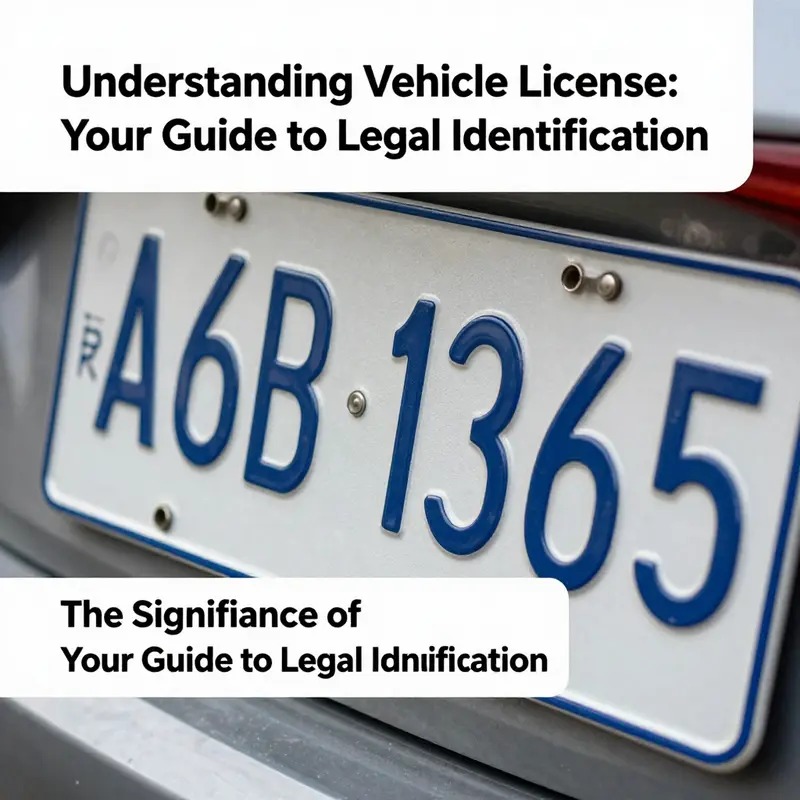
On every road, the license number stitched to a plate is more than a decorative label. It is the legal fingerprint of a vehicle, a compact code that ties a moving machine to a legal person, a record, and a set of obligations. In many jurisdictions it is the first reliable key in a vast registry that tracks ownership, status, and accountability. The license plate number, sometimes called the registration number, is issued by a government authority and appears on the front and rear of the vehicle. It is designed to be quickly recognizable by officers, dispatchers, and cameras, and to be robust against tampering, weather, and the wear of daily use. This chapter unpacks what that numeric and lettered tag represents, why it matters for lawfulness and safety, and how it functions within a broader system that keeps roads orderly.
Across borders, the core idea remains the same even as the formats diverge. In one country, a plate might begin with a regional character that signals the province or state, followed by a sequence that uniquely identifies the vehicle within that jurisdiction. In another country, a different arrangement of letters and numbers serves the same purpose, with security features woven in to deter counterfeiters. For instance, you may see a format such as ‘粤A·12345’ in China, where the first character marks the province and the second indicates the city, and the subsequent digits present a unique serial. In the United Kingdom, a plate like ‘AB12 CDE’ folds letters and digits into a two-part rhythm that is instantly legible to readers both human and machine. While these formats look like mere styling choices, they are, in fact, carefully structured components of a legal identity system. The plate numbers are printed, affixed, and maintained in ways that courts, police, and civil administrators depend on every day.
What makes a license number authoritative is not the beauty of its font or the color of the plate but the ecosystem that supports it. The number serves as the link between the vehicle and the registered owner, a connection backed by a formal registration process. In everyday terms, it is the doorway to confirming who may operate the vehicle legally, whether the vehicle is currently insured, whether it has passed required inspections, and whether it remains in a permitted condition for public roads. When a vehicle is involved in a traffic stop, a crash, or a crime, the license plate number is often the first piece of information that identifies the vehicle in question and begins the cascade of checks that determine responsibility, liability, and course of action. This central role is why authorities devote significant resources to protecting the integrity of plates and the information they encode.
The legal framework surrounding license numbers does not exist in a vacuum. It rests on regulations that define how plates are issued, how they must be displayed, and what happens when a plate is altered or obscured. A robust system presumes that the plate is clearly legible from appropriate distances, that any attempt to obscure or alter it is quickly detected, and that the vehicle’s identity is not compromised by a defective plate. In a recent regulatory update from the Ministry of Public Security, the Motor Vehicle Registration Regulations (Order No. 164) reaffirm that plates must remain clear and complete at all times. The text, issued on January 21, 2026, makes it explicit that alterations—such as sticking adhesive coverings to change the plate’s appearance—are illegal and constitute tampering. This is not a mere technicality; it is a bright line that underpins all enforcement and safety activities. Article 3 of the regulations specifies that tampering with a license plate compromises public safety and integrity, and it subjects violators to penalties that can include fines, license suspensions, or more serious criminal consequences depending on the context.
These rules are not idle abstractions. They translate into real-world procedures during registration and routine inspections. Vehicle management departments across the jurisdiction are charged with verifying that plates are properly affixed and free of modifications that could mislead observers or automated systems. Officers and inspectors are equipped with advanced tools—ranging from high-resolution cameras to software that flags irregularities in plate design, coloring, or layout—to detect even subtle changes. The emphasis is deliberately stringent: visibility at a glance matters, but so does reliability in digital systems that read plates from distance, at speeds, or from surveillance footage. The tone of these efforts is practical and urgent. No disguise can fool trained eyes when the vehicle is suspected of involvement in a violation or a crime, and no loophole remains when the plate has been obscured or altered to evade penalties. This reality underscores the continuous need for vigilance in plate maintenance and for public education about the legal obligations attached to license numbers.
Beyond enforcement, the license number is a thread that ties together several essential administrative functions. The registration certificate, the driving license, the inspection certificate if required, and the compulsory insurance policy together form the backbone of a lawful road presence. The registration record anchors the vehicle to its owner and to its history of status changes—the kind of information that matters when a car is sold, mortgaged, or transferred to new ownership. A plate number can be a signal of various statuses: whether the vehicle is currently permitted to operate, whether it has changeable use status (for example, private versus commercial), or whether it matches the information on the ownership document that accompanies the vehicle in transactions. In this sense, the plate number is not an isolated token but a living element of a broader public record that enables accountability, transparency, and trust.
One of the most important aspects of this system is its ability to support quick and accurate identification in a world saturated with rapid transit and dense traffic. The plate number generates data that flow through multiple channels: law enforcement databases, insurance and registration records, and traffic camera networks. When a vehicle is cited for a violation or involved in an incident, the plate number is the hinge that connects eyewitness testimony, dashboard data, and historical records. When a vehicle is cited for a violation or involved in an incident, the plate number is the hinge that connects eyewitness testimony, dashboard data, and historical records. This linkage is what allows investigators to reconstruct events, determine liability, and pursue remedies, all while ensuring that innocent owners are not swept up in a broader sweep. The integrity of the license number, therefore, is not a curiosity or a technical footnote; it is a central human and civic concern. It affects not only the capacity to enforce rules but also the fairness of processes that depend on accurate identification.
Equally practical is the way in which license numbers adapt to changes in family ownership or business use. The system recognizes that a vehicle may change hands, or its operation type may shift from personal private use to commercial fleet use, or its color or engine specification may be updated after a modification or a repair. Each of these changes may require updates to the registration, the plate, or both, and the regulations surrounding them establish clear pathways for updating records without compromising the chain of custody that protects all parties. The interaction with the plate, the vehicle’s registration certificate, and other official documents is designed to be smooth enough for everyday life yet precise enough to resist abuse. When changes occur, authorities can verify them through the serial number on the plate, the registration database, and the vehicle’s VIN, ensuring consistency across the ecosystem. This consistency reinforces public confidence that the system can keep pace with the realities of modern mobility, including second-hand sales, loans tied to the vehicle, and heritage of ownership.
An important direction in current practice is the ongoing education of drivers and the public about what license plates signify and what they do not. A plate is not a mere badge; it is a legally cognizable identifier with rights and obligations attached. It is a marker of permissible operation, a gate through which the vehicle passes when it meets review standards, and a symbol that connects the vehicle with a criminal or civil inquiry. It is not a mere sequence of characters; it is a legal identifier that anchors a vehicle to a system of records, rules, and responsibilities designed to keep roads safer and more predictable. The penalties for tampering reflect the seriousness of those responsibilities. The regulations describe consequences that may scale with severity—from fines and temporary suspensions to criminal liability. In other words, the plate is a line in the sand that demarcates legitimate activity from unlawful deception. The rationale behind such tough rules is not to humiliate drivers but to maintain clear lines of responsibility in the public sphere and to guarantee that when a plate is seen on the road, its identity can be traced with confidence.
For readers who want to understand how these principles translate into day-to-day practice, it helps to consider the practical steps that accompany license plates in the modern system. When you register a vehicle, you or your agent are likely to provide proof of ownership, proof of insurance, and perhaps documentation regarding the vehicle’s condition, after which the issuing authority issues a license number and issues the plate(s) to be affixed to the vehicle. You are expected to display them as required, keep them clean, and ensure they are not altered. Local rules may specify additional features, such as reflective coatings, security screws, or anti-tamper devices, all aimed at preserving legibility under rain, glare, and speed. Because the plate interacts with automatic enforcement systems and with human investigators alike, even small issues—like a crack or fading print—can trigger a check or a replacement process. In these circumstances, the responsibilities of vehicle owners and operators extend beyond compliance with a single rule; they encompass ongoing attention to the plate’s condition, its alignment, and its legibility across different times of day and weather conditions.
To ground the narrative in practical terms, consider the broader purpose this licensing framework serves in everyday road life. It is about public safety, yes, but it is also about governance and economic clarity. When a vehicle is bought or sold, the registration certificate documents the transfer of ownership, and the plate numbers ensure that the vehicle remains within the correct identity bounds as it changes hands. The license numbers facilitate and document changes in status—whether a vehicle becomes a fleet asset, whether its usage type is modified for commercial purposes, or whether it is temporarily retired from service. The system is built to reduce ambiguity and to create a reliable trail that can be followed by public agencies, financial institutions, and private parties alike. As a result, the license number becomes a practical instrument for verifying that a particular car is indeed the one that a person says it is, that the vehicle complies with legal use requirements, and that its history can be traced across time and space.
From a teaching and policy perspective, it is important to communicate that tampering with license plates is not a victimless crime. The harm is real and widely spread. Falsified plate data may enable the evasion of penalties for traffic violations, the concealment of stolen vehicles, or the avoidance of tax and fee obligations that fund road maintenance and safety programs. The penalties are calibrated to deter such conduct while protecting the rights of legitimate owners who must navigate complex systems of accountability. This is why robust verification processes, credible deterrence, and transparent procedures are emphasized. The public benefit from a well-functioning license number infrastructure includes faster response times for emergency services, more efficient processing of legal transactions, and the support of insurance and financing mechanisms that require reliable identity matching for vehicles.
In sum, the license number on a vehicle is a compact, powerful instrument. It is not a mere sequence of characters. It is a legal identifier that anchors a vehicle to a system of records, rules, and responsibilities that are designed to keep roads safer and more predictable. It underpins the credibility of enforcement and the efficiency of administration, ensuring that the vehicle that travels on a public road can be identified, tracked, and held to account when needed. It is also a reminder that the public authorities who issue, regulate, and enforce plate numbers invest significant effort to preserve their integrity. The ongoing work of inspectors, registrars, and police in maintaining legibility, verifying ownership, and preventing tampering reflects a commitment to transparent governance that protects every road user. And for readers, recognizing the value of this ledger on the bumper can deepen understanding of what it means to share the road: a shared system of accountability that supports safety, fairness, and the rule of law.
External resource: https://www.mps.gov.cn/n1895475/20260121/10123456.html
Internal link: US states vehicle inspection requirements
The Silent Identifier: How Vehicle License Numbers Drive Enforcement, Regulation, and Road Safety
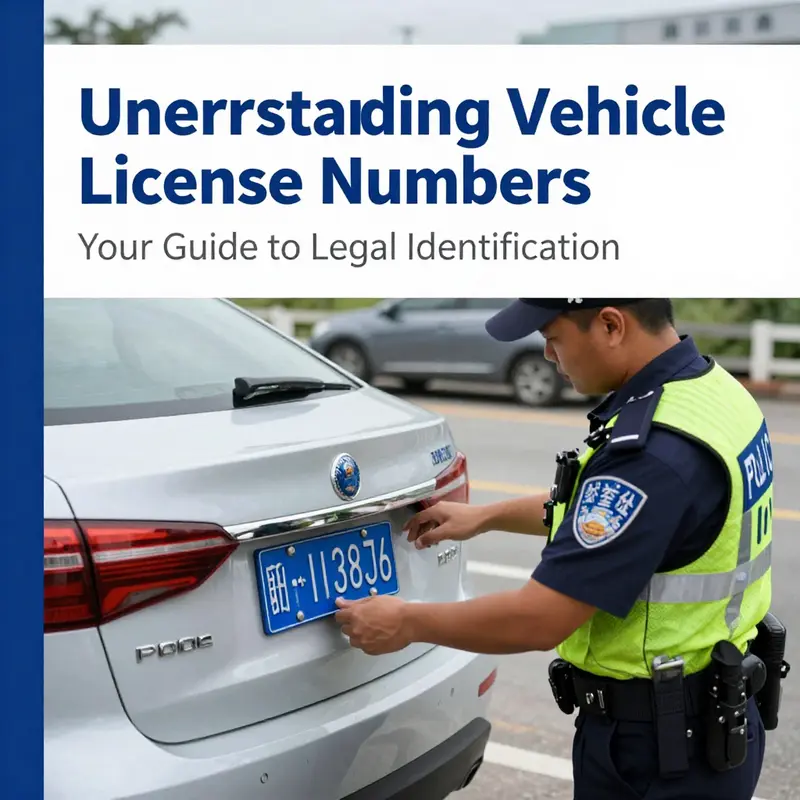
On every road, a small, unassuming sequence of letters and digits performs a quiet, indispensable job. It is a vehicle license number, the official identifier that ties a machine to a owner, a history, and a set of rules. Far from being a mere decorative label, the license number is the keystone of a sprawling system that governs who may operate a vehicle, what standards it must meet, and how the state keeps the roadways orderly and safe. Across jurisdictions, the form and cadence of these numbers may differ, yet the core purpose remains strikingly similar: a reliable key that unlocks a register of facts about the vehicle and its journeys. In many places the plate is not just front and back; it is a ticket, a record, and a map to accountability rolled into one compact marker that is meant to endure through miles, seasons, and a long chain of ownership transfers. In that sense, the license number is not an ornament but a functional instrument of governance, designed to be read quickly by humans in the wild and by machines when necessary.
The mechanics of issuing and displaying these numbers reveal a practical philosophy about how a modern transportation state treats its roads. A government authority, typically a motor vehicle department or its equivalent, assigns a unique combination to every registered vehicle. The structure of that combination—whether it blends letters, numbers, and occasionally symbols—serves a dual purpose. It must be dense enough to accommodate a large number of vehicles, yet structured enough to be decoded efficiently by law enforcement databases and automated systems. In some places the format hints at the geographic origin within the issuing authority, with a provincial or state prefix that offers a first layer of context. In others, the sequence is strictly numeric or alphanumeric, chosen to maximize identifyability and minimize confusion during high-speed interactions on the road or in a cluttered police database.
Consider the vivid example from one major economy that uses a provincial prefix along with a city descriptor and a serial component. Here, the province symbol marks a broad region, the city letter helps distinguish urban issuing areas, and the trailing numbers carry the unique identity of that vehicle within the local system. Across the ocean in another jurisdiction, a different design emerges: a blend of letters and numbers arranged in a pattern that operators learn to recognize, and which inspectors can parse rapidly. These variations illustrate a broader truth: the license number is a practical instrument crafted to function within the public safety and regulatory ecosystem, rather than a symbolic badge meant for admiration. The number, once assigned, becomes a hinge on which many separate policies swing—registration validity, insurance coverage, vehicle safety standards, and the right to be on the road at all.
The enforcement dimension of the license number rests on a straightforward premise. If a plate can be read, it can be linked to a vehicle record. That linkage enables authorities to verify ownership, confirm registration status, and check for flags such as outstanding warrants, theft reports, or a history of violations. When a vehicle is involved in a traffic incident or a suspected criminal activity, the license number becomes the first thread pulled in a chain of evidence. Investigators can trace the plate to the registered owner, verify who bears legal responsibility for the vehicle at the time, and examine whether the car has been reported as stolen, and whether it complies with street safety and emission standards. This ability to connect a plate to a person and to a vehicle history enhances the speed and accuracy of responses, which matters most in time-sensitive scenarios, such as a hit-and-run or a chase that ends in a traffic stop. The plate thus operates as a conduit, rather than a solitary mark, enabling a swift, reliable crosswalk of information between public safety and vehicle ownership.
In practice, the plate-related checks extend beyond criminal justice into everyday governance. Routine enforcement at checkpoints, during traffic stops, or as part of routine roadworthiness surcharges and inspections relies on the plate as a quick identifier. Lawful operability is not merely about having a plate; it is about keeping that plate linked to a live, current record. The license number is a key that unlocks access to up-to-date registration status, insurance coverage, and any compliance actions necessary to maintain legal operation. This interconnected system is designed to catch noncompliant vehicles—unregistered, uninsured, or those with unsafe conditions—before they pose risks to other road users. It also ensures that vehicles that meet standards remain on the road with the confidence of the state that they are properly configured and monitored. In this sense, license numbers function as instruments of public order that support both the rights of drivers and the responsibilities of owners to keep their vehicles compliant.
Technology has reshaped how these numbers are read and used, broadening the scope of what a plate can accomplish without increasing the friction of daily driving. Automated license plate recognition, or ALPR, has moved the reading of plates from a manual process to a rapid, automatic one that can scan hundreds of plates per hour and compare them against live databases in real time. The efficiency gains are evident in faster responses to incidents, quicker identification of stolen vehicles, and a heightened ability to detect uninsured or unregistered cars. Yet the reach of ALPR raises important considerations about privacy, data retention, and the governance of sensitive information. As with any powerful tool, there is a balance to strike between enabling swift enforcement and protecting the public’s right to privacy. Jurisdictions wrestle with questions about how long plate data is stored, who can access it, and for what purposes it may be used beyond immediate enforcement needs. The evolving policy landscape mirrors the technical evolution, underscoring that the license number is not merely a physical marker but a node in a vast bio of data that spans agencies and, increasingly, borders.
Beyond the moment of enforcement, license numbers anchor a broader regime of registration and regulation. In most places, a vehicle must be registered to be legally operated, and the license plate acts as the visible proof of that registration. Registration is more than a ceremonial requirement; it ties the vehicle to ongoing oversight that includes safety inspections, emissions checks, and proof of insurance. When a plate is scanned or observed by a police officer, the underlying database confirms that the vehicle exists within a legal framework that expects certain standards to be met and maintained. If any part of that framework is out of date—an address that is no longer valid, an insurance lapse, or a failed inspection—the record flags the vehicle for corrective action. The plate thus functions as an ongoing reminder to the owner and to the state that the vehicle belongs to a living administrative process, one that requires timely updates and accountability.
The address and contact information attached to the vehicle record are crucial yet sometimes overlooked elements of this system. Official guidelines emphasize that owners must keep their data current so that notices about registrations, renewals, or safety requirements reach the right person at the right address. When this information fails to update, it can lead to missed notices, fines, or more severe legal complications. The digital era has made these updates more accessible, with secure online channels that verify a person’s identity before allowing changes. This digitization does not erase the importance of the plate as a physical marker; it enhances the reliability of the entire ecosystem by ensuring that the information behind the plate stays synchronized with the reality of the vehicle and its ownership.
The ongoing integration of license plate data with broader public safety systems signals a future in which the plate serves as a gateway to many regulatory functions. We already see a convergence of records: registration data, safety inspection results, insurance statuses, and even warrants or incident histories can be connected to the plate in a matter of moments. This integration creates a more coherent picture of each vehicle, enabling authorities to act with precision while reducing redundancy and miscommunication. It also places a premium on data governance: accuracy, access controls, and responsible use are not optional add-ons but essential conditions for maintaining public trust. The license number embodies this governance ethos, acting as a stable reference point as new tools and databases emerge to help agencies monitor compliance, respond to emergencies, and plan for safer roads.
To place the notion of the license number in a wider context, it helps to compare how different jurisdictions approach the problem. In some places, the plate carries explicit geographic cues, such as a provincial symbol or city code, which can speed initial recognition and help observers parse a plate at a glance. Other systems favor a more abstract alphanumeric sequence that is optimized for computer matching across enormous datasets. The underlying logic, however, remains the same: to create a unique, trackable identity for every vehicle that can be matched to a trusted source of truth—the vehicle record—while still allowing for rapid human verification when needed. This balance between human readability and machine legibility is a design choice that reveals much about a jurisdiction’s priorities, whether it emphasizes accessibility for local enforcement, or robustness for cross-border information sharing.
As technology and governance continue to advance, the license number will likely become even more central to how roads are policed and regulated. The capacity to cross-link plate data with real-time traffic systems, vehicle telemetry, and even automated safety checks opens a horizon of possibilities for proactive road safety and faster incident response. At the same time, it invites thoughtful discourse about privacy, proportionality, and the limits of surveillance in public spaces. The challenge for policymakers is to preserve the effectiveness of enforcement and regulation while maintaining public confidence that plate data is used appropriately, stored securely, and retained only for legitimate purposes. In this sense, the license number remains a hinge between everyday mobility and the larger architecture of public governance it helps sustain.
For readers exploring how inspection regimes and registration workflows interlock across different states, the landscape is variegated but consistent in its aims. A plate does not simply certify that a car exists on a given day; it signals ongoing compliance with a suite of standards and obligations that ensure safe driving, fair accountability, and efficient governance. The front and back display of the plate is a visible reminder that with every mile traveled, there is a thread of data following the vehicle, a thread that connects street-level experience to bureaucratic processes designed to keep roads safer, cleaner, and more predictable for everyone. The license number thus anchors a complex, living system that translates the act of driving into a structured relationship between citizen, vehicle, and state. It is a unifying feature of modern mobility, a quiet enabler of safety, and a practical instrument that makes enforcement and regulation workable in the busy, imperfect, and interconnected world of the contemporary roadway.
For curious readers who want to understand how inspection and registration interact in real time, there is a wealth of state-level detail and practical guidance available through various official and educational resources. As part of navigating this landscape, the following internal exploration can be instructive: the US states vehicle inspection requirements. This resource offers a window into how inspection timelines, documentation, and compliance checks relate to the license plate system and the broader registration framework. Accessing this material can illuminate how the plate functions not only as a vehicle identifier but as a key that unlocks a chain of regulatory obligations, each part supporting the safety and accountability goals that define road use.
In sum, vehicle license numbers are far more than identifiers. They are the operational backbone of enforcement and regulation on the roads. They link vehicle to owner, vehicle to record, and record to action. They enable authorities to act quickly when safety or legal concerns arise, while also supporting routine governance that keeps the vehicle fleet in good standing. As technology evolves, these numbers will continue to knit together disparate data streams into cohesive, proactive safety systems. Yet the core purpose endures: to provide a reliable, legible, and legally recognized key that helps society manage mobility with clarity, fairness, and accountability. This is the practical truth behind a small plate that travels with every ride—the silent identifier that makes the idea of responsible road use possible in the modern era.
External resource: https://www.dmv.ca.gov/portal/vehicle-licensing/
null
null
License Plates Across Borders: Regulation, Identity, and Mobility
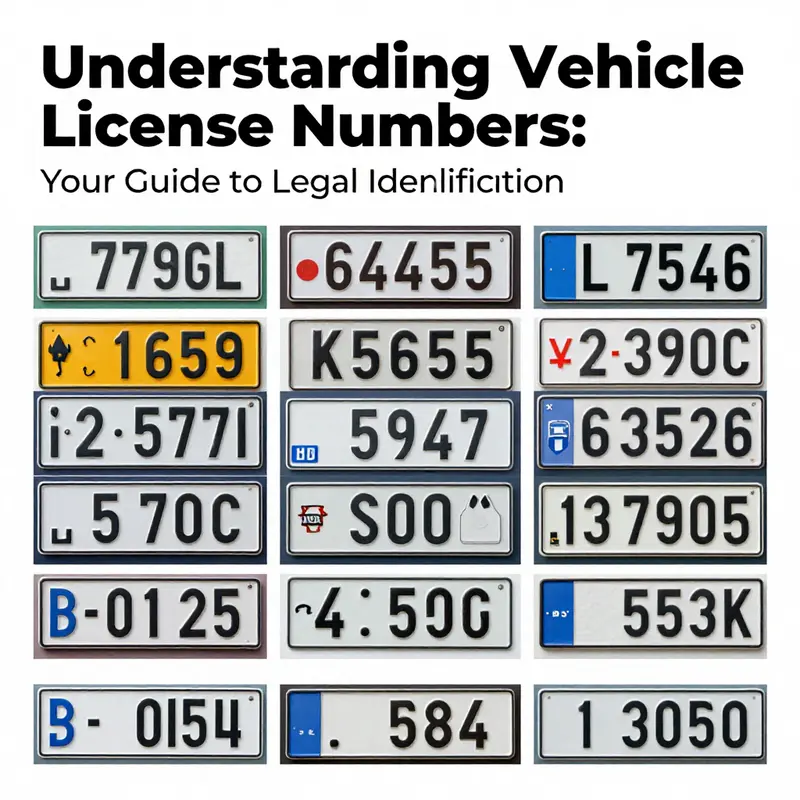
A license plate is more than a decorative badge on a car; it is a formal instrument of governance and mobility. Every plate encodes who issued it, where the vehicle is registered, and how it may be used on public roads. The design choices—alphanumeric patterns, regional prefixes, and serial conventions—balance human readability, machine recognition, and the needs of enforcement. Across countries, formats diverge for historical, administrative, and technological reasons, yet they share the goal of a durable, legible identifier that can travel with a vehicle across borders.
In many systems, plates are issued by a national or regional authority and linked to registries that track ownership, insurance, and compliance. A plate must withstand weather, fading, and tampering while remaining readable by cameras and readers deployed by police, tolls, and automated systems. To this end, designers incorporate features that deter falsification and support verification, from rugged typography to security marks and, increasingly, machine-readable codes.
Globally, three broad approaches shape plate formats. Some places favor flexible alphanumeric sequences to maximize capacity and local customization. Other regions rely on regional codes at the start of the plate to signal provenance. Still others pursue near-uniform designs with standardized dimensions and symbols that ease recognition by cross-border systems. Each approach reflects a balance between sovereignty and the practical demands of mobility, trade, and travel.
The evolution of plates tracks broader shifts in technology and governance. As digital registries mature, plates increasingly serve as anchors for data exchange, inspections, and remote verification. This transition raises questions about privacy, data sharing, and the need for interoperable standards that respect local authority while easing cross-border administration.
For travelers and fleets, understanding local conventions—what a code means, where to look for identification marks, and how to interpret expiry and class indicators—helps with compliance, insurance, and efficient transit. In this sense, the plate is both a physical object and a gateway to a network of records that underpin safe and lawful mobility.
Final thoughts
Understanding vehicle license numbers provides critical insight into their multifaceted role in legal operations, identification, and global standardization. From ensuring compliance with traffic laws to facilitating seamless administrative processes, these unique identifiers are essential for drivers and vehicle owners across jurisdictions. Furthermore, recognizing the global diversity in license number formats helps to appreciate the complexities of international vehicle regulations. For every stakeholder from new drivers to auto dealerships, staying informed about vehicle license numbers is vital in navigating the automotive landscape effectively.