
The process of vehicle registration is often misunderstood, particularly regarding the necessity of a driver’s license. Many New Drivers & Learners, Existing Drivers, and Vehicle Owners may find themselves in situations where they need to register a vehicle without holding a valid driver’s license. This article dives into the details of how vehicle registration operates independently of driving qualifications, the legal implications of such registrations, and the necessary documentation required. As we unfold each chapter, readers will gain a holistic understanding that empowers them to navigate the vehicle registration process confidently, regardless of their driving status.
Plates Before Credentials: Navigating Vehicle Registration Without a Driver’s License
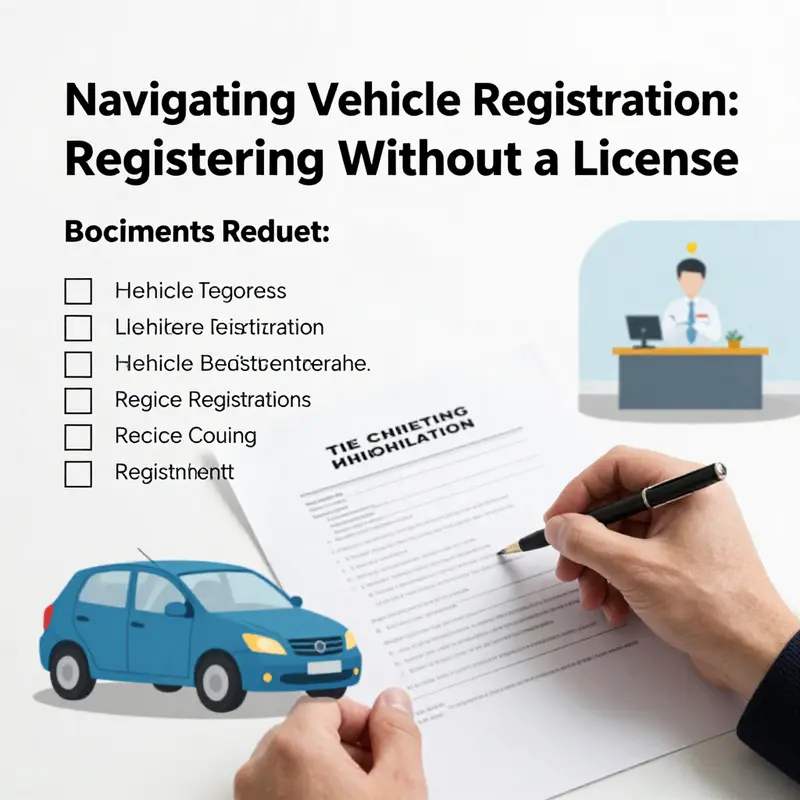
In the landscape of motor mobility, two threads run side by side but rarely coincide in the same breath: ownership and operation. Registration is the formal acknowledgment of ownership and the vehicle’s eligibility to appear on the public road network, while a driver’s license is a credential that certifies the holder’s capacity to operate a vehicle. It is entirely possible to separate these two duties in law and practice. You can register a vehicle even if you do not hold a driver’s license, because the registration process is about the vehicle itself—its origin, its taxes, its insurance, and its compliance with safety and environmental standards—rather than the owner’s ability to drive. This separation matters for families with multiple vehicles, for corporate fleets, or for individuals who acquire a vehicle with the intention of letting someone else, perhaps an employer or a licensed driver, handle the actual operation of the car. What emerges from this distinction is a practical pathway: you can secure the vehicle’s legal status, plate, and vital registrations while you navigate the separate, parallel track of obtaining or renewing a driver’s license. To many, this may feel counterintuitive, especially in jurisdictions that emphasize the driver as the central figure in the road-use equation. Yet the architecture of modern vehicle administration is designed to prevent a single person from unwinding the entire regulatory chain simply because they lack a license, enabling a vehicle to be bought, registered, insured, taxed, and prepared for road use in compliance with the law—so long as the eventual operation on public streets is performed by someone who holds the appropriate license and qualifications.
The practical consequence of this arrangement is clear: you can initiate and complete the registration process for a vehicle without presenting a driving credential. The focus lies squarely on the vehicle’s legitimacy, identity, and compliance with tax and insurance requirements. The regulatory framework makes explicit that a license to drive is a separate permit to operate, not a prerequisite for legitimate ownership or for the vehicle’s registration on the road. This separation helps accommodate diverse circumstances—family members who share a vehicle, businesses that own fleets but do not require every fleet member to hold a license at all times, and individuals who are in the process of obtaining a license or who may not intend to drive at all but need a legally registered vehicle for transport, commerce, or training purposes. It is important, however, to keep a crucial boundary in mind: while the vehicle can be registered, it cannot be legally driven on public roads without a valid driver’s license. Driving without a license remains a serious violation with consequences under the Road Traffic Safety Law, including fines, potential detention, and other penalties. The logic is simple and robust: registration is about the vehicle’s status; driving is about the operator’s qualifications.
As you consider the practical steps toward registering a vehicle without a license, the core requirements crystallize into a concrete set of documents and checks. The essence of the process is to verify the vehicle’s identity, trace its origin, confirm ownership, ensure tax compliance, and secure insurance coverage. In this sense, registration becomes a record of legitimacy in a system designed to prevent fraud, tax evasion, unsafe vehicles, and uninsured operation. The exact documents demanded can vary by region, but they tend to cluster around a familiar core: proof of identity, proof of ownership, documentation of the vehicle’s origin or conformity to standards, evidence of taxes paid or exemptions, proof of compulsory insurance, and proof of any applicable vehicle or vessel taxes. When these elements are present, the path to registration is straightforward, efficient, and increasingly digitized. The digital transition has moved from paper-heavy processes to online workflows that reduce turnaround times and offer the traveler a new degree of convenience—and, in some cases, the opportunity to complete almost the entire procedure from home.
Take, for example, a contemporary provincial example, where the local administrative framework has embraced a modern, citizen-centric approach to vehicle registration. The essential documents typically required start with the identity proof—the applicant’s valid national or regional ID card. This is not a license check; it is a verification of who you are as the registered owner of the vehicle. Next, you must present vehicle documentation that establishes ownership and the vehicle’s proven origin. This includes a purchase invoice, which ties the vehicle to a legitimate sale, and a certificate of conformity for domestically produced vehicles or an import certificate for imported vehicles. A vehicle registration certificate itself serves as a formal record of the vehicle’s identity and history. With this bundle, the registry can confirm that the vehicle exists, has a traceable origin, and is eligible for registration under the law.
Tax considerations follow closely behind. A certificate of payment for vehicle purchase tax—or a tax exemption certificate if applicable—demonstrates that the fiscal obligations associated with the vehicle have been addressed. Insurance is another non-negotiable pillar: a valid motor vehicle traffic accident liability compulsory insurance policy, often known as compulsory insurance, is required to ensure that any incident on the road has a defined path to coverage and compensation. Without insurance, the vehicle’s registration cannot proceed, because it would pose an unacceptable risk to other road users. Finally, there is the broader category of “other required documents,” which can include proof of payment of vehicle and vessel tax or any other documentation mandated by law. These elements, when assembled, create a robust picture of a vehicle’s eligibility for registration and the owner’s compliance with the broader regulatory regime.
The registration process itself has undergone a significant transformation in many jurisdictions. The convergence of regulatory clarity and digital technology has yielded online platforms that streamline the steps from purchase to plate. In regions that have implemented nationwide digital dashboards, the process can be completed entirely online, from selecting a vehicle model through to purchasing insurance, choosing a license plate, and finalizing the registration. The efficiency gains are not merely about convenience; they are about reducing friction, minimizing the risk of errors, and providing a verifiable digital trail that can be accessed by both citizens and authorities. When the submission is approved, the system generates and issues the new vehicle registration certificate, the license plates, and—in many cases—the driving license itself, if such a link is part of the governmental workflow, and sends them to the registered owner by mail. The ability to handle these steps remotely can be a relief to new car buyers, fledgling business owners, and residents of rural areas where in-person visits to government offices may demand significant travel time.
In this evolving ecosystem, the question of where the border lies between registration and licensing continues to be clarified by policy and practice. The emphasis on the vehicle’s legitimacy and the owner’s compliance with tax and insurance requirements helps to maintain road safety and fiscal integrity without creating unnecessary barriers to ownership or delayed access to mobility. Yet the rules are precise: enabling registration without a license does not equate to a license-free right to drive. The operator’s permission to operate remains contingent on possessing a valid driver’s license, and the law clearly reserves the act of driving on public roads to those who meet that credential standard. It is a distinction that protects both the vehicle’s legal status and the road users who share the streets. This separation is not an abstraction; it translates into practical steps for households of all types. A family may be buying a vehicle that a relative will drive on a limited basis, a company may own a fleet that is operated by licensed drivers, or an individual may purchase a car and arrange with a licensed driver to take the wheel. In all these scenarios, the vehicle can be registered, taxed, insured, and prepared for road use in a timely fashion, even while the owner navigates the licensing process or delegates driving duties to a qualified person.
A key feature of the modern registration landscape is accessible, user-friendly digital platforms. As of late 2025, many regions have launched or updated a centralized mobile application designed to streamline the entire process. The platform brings the entire journey into one interface: you can log in, verify your identity, upload or confirm the purchase invoice, attach the certificate of conformity or import certificate, confirm tax and insurance payments, and select a license plate—all within a secure environment. The convenience of completing these steps online cannot be overstated. For people who may be dealing with complex vehicle origins, such as imported vehicles or models that require conformity verification, the digital workflow can provide clear guidance on which documents are necessary and how to obtain them if any items are missing. In the real world, the path to registration without a license often unfolds as a sequence of checks and confirmations that the system can manage more efficiently than the traditional paper-based process. The guidance embedded in official platforms, and the clear demands of the documents themselves, reduce ambiguity and help applicants understand precisely what is expected of them before they can receive their new registration and plates.
One should also consider the practical realities of regional variability. Even though the core concept remains stable—that the vehicle’s legitimacy and the owner’s compliance must be demonstrated through appropriate documentation—the exact set of documents, the order of steps, and the availability of online submission can vary by province or city. It is always wise to verify locally with the vehicle management office or rely on official digital channels. The emphasis on verifying the vehicle’s origin and ensuring tax and insurance compliance remains constant, and the overarching objective is to create a secure, transparent, and efficient process that supports legitimate ownership while facilitating mobility. To this end, the official digital platform often provides direct access to the most current requirements and instructions, reducing the risk of outdated guidance or regional discrepancy creeping into the process.
What does all this mean in practical terms for someone who does not yet hold a driver’s license? It means that the door to vehicle ownership and the administrative recognition of that ownership remains open. You can purchase, register, insure, and plate a vehicle without a license, provided you are prepared to demonstrate the vehicle’s provenance, the proper tax treatment, and the required insurance coverage. It means you can queue up the necessary steps, gather the documents, and initiate the process online, with the assurance that your submission is anchored in a robust framework designed to prevent fraud and ensure accountability. It also means you must be explicit about your intentions for the vehicle’s use. If the plan is to operate the vehicle personally on public roads, then obtaining a driver’s license remains indispensable. The law does not permit driving without a license, and in the end, the dispatcher of the road—the law—safeguards this boundary for everyone’s safety. In other words, registration without a license is a practical, legitimate maneuver that enables ownership and administrative readiness; driving without a license, in contrast, is a legal infraction with tangible penalties.
For those who want to understand how these rules interact with broader policy and practice, it can be helpful to look at how different jurisdictions frame the relationship between licensing and registration. Some guidance emphasizes that the requirement to register the vehicle is not contingent on driving qualifications, while others stress that the right to operate a vehicle is separate and time-bound, governed by the status of the driver’s license. This nuanced landscape suggests that the path that makes sense in one region may require more comprehensive engagement in another. It reinforces the idea that information is not monolithic and that the best approach is to consult local authorities or official digital portals to ensure compliance with the exact documents and steps applicable to your circumstance. Acknowledging this diversity is not a concession to confusion; it is a recognition that jurisdictions balance ownership rights with public safety differently, and the digital era provides a common mechanism to navigate those differences with clarity and reliability. For readers seeking a deeper dive into how driver licensing policies can shape and constrain ownership and operation, a broader perspective is available through resources that discuss the interplay between state rules and driver licensing in various contexts.
To connect the topic to practical, real-world considerations, consider how this distinction influences planning for personal or business use. A family purchasing a second vehicle, for instance, may prioritize securing the registration and insurance first, especially if the vehicle is intended to be operated by a licensed driver who will take over the wheel once their license is valid. A business with a fleet may structure ownership and registration to ensure assets are legally registered and insured in advance of any drivers being assigned to them. This approach reduces downtime and ensures regulatory compliance while the licensing process continues in parallel. In a sense, registration acts as the scaffolding that holds up the broader mobility project, while licensing provides the final access that enables actual road use. The separation is not merely theoretical; it translates into a practical strategy for aligning the steps of ownership, compliance, and operation in a way that respects both individual circumstances and the public-interest objective of safe, insured, and taxed vehicle use.
As you prepare to navigate this process, a few mental anchors can help you stay oriented. First, remember that registration’s primary goal is to establish legality, ownership, and eligibility for road use in the abstract sense. It is not a verdict on your driving ability. Second, maintain vigilance about two non-negotiables: the vehicle must be insured with the mandatory policy, and taxes tied to vehicle ownership must be paid or properly exempted. Without these, the registration cannot be completed, and even if it is, any attempt to operate the vehicle on public roads would be unlawful. Third, take advantage of digital channels when available. A comprehensive online system can streamline submission, reduce the chance of missing documents, and provide the user with a clear, auditable trail of what has been submitted and what remains outstanding. Finally, recognize that the registration environment, while it permits ownership without driving, does impose a fundamental boundary: you cannot legally drive the vehicle on public roads without a license. This boundary acts as a safety net, ensuring that those who operate a vehicle on public streets have demonstrated the necessary qualifications, training, and competence to handle the responsibilities of driving.
For readers who want to complement this chapter with broader reflections on how licensing intersects with other vehicle-regulatory domains, an online resource offers additional context about how different jurisdictions address licensing requirements and their impact on vehicle use. State Rules Impact on Driver Licensing provides a thematic lens on the policy decisions that shape both ownership and operation. This cross-topic link can illuminate how regional variations in licensing influence the practicalities of registration, taxation, insurance, and enforcement. It is part of a larger ecosystem of information that helps readers understand the layered architecture of vehicle regulation—the kind of framework that makes possible the seemingly simple act of obtaining a plate for a car, even before the wheel ever meets the road under a licensed driver.
In the end, the vehicle registration workflow without a license is more than a bureaucratic curiosity. It is a purpose-built mechanism that recognizes the differentiated pathways of ownership and operation, enabling people to secure a vehicle’s legal status while the drive toward formal licensing continues. It reflects a mature regulatory design: one that reduces friction where possible, ensures accountability where it matters, and preserves public safety by ensuring that driving itself remains a licensed, trained, and accountable activity. If you are navigating this landscape, your best companion is a careful, organized approach to documents and deadlines, supported by official digital platforms that guide you step by step. With a clear understanding of the boundaries and a plan that aligns ownership with lawful use, you can move through the registration process with confidence, knowing that the vehicle’s legal status is sound, its taxes and insurance are in place, and the future path to driving will be charted in parallel with the appropriate licensing steps. And when you finally join the road as a licensed driver, you’ll do so on a vehicle whose public-status credentials are already impeccably in order, reflecting a comprehensive, responsible approach to mobility that honors both the letter of the law and the practical realities of everyday life.
External resource for digital registration and up-to-date official guidance: https://jyyz.12123.gov.cn
Registration Without a License: Navigating Ownership, Obligations, and the Tangled Line Between Paperwork and the Road
The idea that a vehicle can be registered without a valid driver’s license presents a paradox at the heart of modern road regulations. Registration is often described as the formal recognition of legal ownership and the means to ensure a vehicle meets safety, tax, insurance, and conformity requirements. Licensing, by contrast, is the credential that certifies an individual’s ability to operate a vehicle on public roadways. When these two processes are treated separately, the law creates a clear boundary: you may own and register a car without holding a license, but you cannot legally drive it on public streets without one. The practical implications of this separation extend far beyond the moment you receive plates or a registration certificate; they ripple into enforcement, insurance, liability, and everyday decision-making about who may use a vehicle and under what conditions.
To understand the legal terrain, it helps to anchor the discussion in the core purpose of vehicle registration. Registration is primarily an administrative mechanism designed to establish ownership, track the vehicle’s identity through its unique identifiers, ensure that the vehicle has passed or complies with safety and emissions standards, and verify that applicable taxes and insurance obligations have been addressed. In many jurisdictions, the registration process culminates in the issuance of license plates and a registration certificate that accompanies the vehicle on the road. The focus, in this sense, is the vehicle itself—the asset that travels on public roads—rather than the qualifications of any particular person who might operate it. This distinction clarifies why many regulatory frameworks permit registration without a licensed driver at the time of registration while simultaneously conditioning the actual act of driving on the possession of a valid driver’s license.
The practical reality, however, is that the two systems are deeply interwoven in everyday life. A car may be registered to an owner who does not hold a driver’s license, or to a licensed driver who does not currently possess the vehicle at every moment. The ability to register a vehicle without a license reflects a policy choice: ownership and the vehicle’s legality on the road are mechanisms separate from the driver’s qualifications. Yet this separation does not grant a carte blanche to drive. The moment the vehicle is put into motion on public roads, the driver’s license status becomes a determining factor of legality and safety. This basic distinction—ownership and vehicle compliance versus driver capability—frames the core legal implications explored in this chapter.
The narrative of legality begins with a recognition that the registration process is, at its core, an informational and enforcement tool. When a vehicle is registered, authorities verify that the owner’s identity is established, that the vehicle’s origin is accounted for (whether through a purchase invoice or other origin certificate), and that the vehicle conforms to safety and import standards as applicable. They also confirm that financial obligations tied to the vehicle—such as purchase tax, insurance requirements, and vehicle tax—are in place, or at least that exemptions or deferrals are properly documented. The purpose of this checklist is not to assess the driver’s competence but to ensure that the vehicle is trackable, accountable, and trackable in the sense of public safety and revenue collection. Across many regulatory landscapes, this is the essential logic: the vehicle is an asset that must be publicly recognized, taxed, insured, and deemed roadworthy, regardless of who is driving it.
That separation, though coherent in theory, becomes a source of tension in practice when drivers attempt to use a registered vehicle without meeting licensing requirements. The moment an unlicensed individual sits behind the wheel in a public setting, the law shifts its focus from vehicle status to operator qualification. Driving without a valid license is treated as a substantive violation in most jurisdictions, carrying a set of penalties designed to deter unsafe behavior and to preserve road safety. The consequences are not limited to the moment of a traffic stop. They cascade into financial penalties, administrative penalties, and potential impacts on an individual’s future driving privileges. The road safety framework treats the license as a gatekeeper: it ensures that the person behind the wheel has demonstrated the knowledge and skills deemed necessary to operate a vehicle with a measure of predictability and responsibility.
From a regulatory standpoint, the act of registering a vehicle without a license is not inherently illegal. It is the act of driving that triggers the most consequential legal questions. Law enforcement can and often does distinguish between the lawful status of the vehicle and the illegal act of driving without a license. This separation is why a vehicle can be legally registered and even have plates while the driver remains unlicensed. Yet the risk to the unlicensed driver is substantial, and the legal system accommodates that risk with a range of sanctions designed to reflect the seriousness of driving without proper authorization.
A core theme in this chapter is the spectrum of consequences that can flow from attempting to operate a registered vehicle without a license. First, the direct penalties for driving unlicensed are typically the most immediate and tangible. Fines, points on a driving record, and temporary or even longer-lasting suspensions of driving privileges are standard responses to the act of driving without a license. In some jurisdictions, repeated offenses amplify the severity of penalties, potentially elevating warnings to more severe outcomes such as longer suspensions or, in extreme cases, incarceration, particularly where other offenses intersect with the act of driving—such as driving under the influence or other dangerous behaviors. The cognitive and social costs also mount: a driver who has been cited for driving without a license may face higher scrutiny from law enforcement, heightened demand for proof of license in future interactions, and additional administrative hurdles when trying to regain driving privileges.
Beyond the criminal and administrative dimensions, insurance considerations loom large. Insurance providers operate under the assumption that a vehicle is being operated by someone with a valid driver’s license. The policy language—whether explicit or implicit—usually links coverage to the insured driver’s licensing status. When a licensed driver is not behind the wheel, or when an otherwise insured vehicle is used by an unlicensed operator, insurers often scrutinize coverage with heightened caution. The practical consequences can include higher premiums, policy cancellation, or denial of claims in the event of an incident. In some cases, the insurer may argue that the risk profile presented by an unlicensed driver falls outside the scope of the policy’s terms, thereby complicating or invalidating a claim. The result is not merely a legal worry but a real financial risk that can cascade into disputes over liability and who bears responsibility for damages and injuries.
The liability implications extend into civil law as well. If a registered vehicle is involved in an accident caused by an unlicensed driver, questions about fault, contributory negligence, and vicarious liability can become complicated. If the vehicle owner is not the licensed driver, questions arise about whether the owner had reasonable grounds to know that the vehicle would be operated by an unlicensed person, and whether the owner should have taken steps to prevent the vehicle’s use by someone lacking a license. The law may assign liability to the person operating the vehicle at the time of the incident, to the owner in certain circumstances, or to other parties who bore responsibility for ensuring safer usage. These determinations are not merely theoretical; they shape outcomes for people who suffer injuries, for the drivers who caused accidents, and for the communities in which the incidents occur.
The regulatory framework also recognizes the potential for complexity when an unlicensed individual is closely linked to the vehicle’s ownership structure. In many places, the owner of a registered vehicle bears certain responsibilities that go beyond keeping tax and insurance up to date. The owner may be expected to supervise the vehicle’s use, ensure that any person allowed to operate the vehicle is duly licensed, and implement reasonable safeguards to prevent prohibited use. If the vehicle is used by someone else without the owner’s knowledge or consent, questions about liability and accountability still arise, and the owner may face consequences under specific laws addressing negligent entrustment, supervision, or reckless endangerment. The law does not simply sanction unlicensed driving; it also scrutinizes the surrounding circumstances to determine whether the owner or custodian contributed to the risk by permitting prohibited use.
In this context, the policy aim of maintaining a bright line between ownership and operation becomes clearer. If you own a vehicle but do not yet hold a license, you can pursue registration as a matter of ownership and compliance with financial and safety prerequisites. The immediate step is to ensure that the vehicle is properly insured, that taxes and registration requirements are met, and that the vehicle remains in a condition that aligns with safety and conformity standards. The next practical question is how to manage the vehicle’s use until a license is obtained. One common approach is to designate a licensed driver to operate the vehicle or to restrict use to non-public settings where driving on public roads is not involved. Some jurisdictions provide mechanisms for temporary arrangements, such as storage or non-operational status, that allow vehicle owners to retain ownership and eligibility for continued registration without exposing themselves to the risk of unlicensed driving.
From a policy perspective, the separation of registration and licensing is defensible when the goal is to maintain clear lines around vehicle ownership, roadworthiness, taxation, and insurance. It allows the system to function even when an individual’s driving status changes—such as when someone acquires a vehicle but has not yet completed the licensing process. It also recognizes that licensing processes may lag behind or run parallel to vehicle purchases for reasons of access, cost, or administrative capacity. However, the practical reality remains that the road is a space governed by the presence of a qualified driver, and the public safety imperative ensures that driving is not casually permitted without proper credentials. The tension between a legally registered vehicle and a legally licensed operator is not a theoretical concern; it is a persistent feature of road governance that requires careful navigation by owners, drivers, insurers, and policymakers alike.
For individuals who see themselves in this position—owning a car but not yet licensed—the prudent path is to treat registration as a separate, essential step that does not grant driving rights. Maintain compliance with all registration, tax, and insurance obligations and plan a clear path to licensing before vehicle use on public roads. If you intend to keep the vehicle in a non-operational state while you complete licensing, confirm with your local authority whether you can place the vehicle in storage or temporarily suspend it from registration without losing ownership status. In jurisdictions where such options exist, they provide a practical bridge between ownership and operation, ensuring that the vehicle remains properly documented and financially accounted for while avoiding the penalties associated with unlicensed driving.
The broader lesson from this legal landscape is that the registry and the license are two pillars of road governance built to serve different ends. The vehicle registration system seeks to secure a transparent, accountable, and tax-compliant fleet, while the licensing system seeks to ensure that only qualified individuals operate those vehicles. When a vehicle is registered without a license, the system still functions, but the risk profile changes dramatically: the vehicle becomes a legally documented asset that cannot legally be used until the operator acquires a license. This is not merely a bureaucratic distinction; it is a public safety principle designed to reduce risk on the roads and to align accountability with responsibility. The chapter’s core takeaway is simple in principle but demanding in practice: registering a vehicle without a license is permissible in many places as a matter of ownership and compliance, but driving that vehicle without a license is not. The consequences—legal, financial, and civil—reflect the seriousness with which the law treats the act of driving and the responsibility that comes with controlling a vehicle on public highways.
In navigating these rules, one should consult official guidance specific to the local jurisdiction. While this discussion reflects broad patterns observed in many regulatory environments, the exact requirements and penalties can vary. For those seeking a concise and official overview of how vehicle registration intersects with driver licensing in a given locale, one useful point of reference is the broader discussion of state rules and their impact on driver licensing. See this resource for additional context: state rules impact on driver licensing. This link provides a gateway to understanding how different jurisdictions balance ownership, registration, and driving privileges within their legal frameworks.
The moral, then, is straightforward: do not treat registration as permission to drive. Retrieval of plates, completion of paperwork, and proof of taxes and insurance are essential for owning and presenting a vehicle in public. However, the right to operate a vehicle—and the license required to do so—remains dependent on meeting the driver qualifications set by the jurisdiction. If the goal is to avoid legal trouble, the prudent course is to ensure that both vehicle registration and driver licensing are pursued in parallel, with a clear plan for licensing before any use on public roads. In the end, the two systems reinforce a shared objective: to keep roadways safe, accountable, and orderly, by ensuring that every vehicle is properly identified, documented, and driven only by someone who has demonstrated the qualifications to do so.
For readers who want to anchor these ideas in the most authoritative guidance, local agencies such as the Department of Motor Vehicles or their equivalents provide the definitive rules and procedures. They explain what documents are required for initial registration, how to demonstrate ownership and vehicle origin, how tax and insurance obligations interact with registration, and what happens when a driver’s license status changes. While the exact forms and steps may differ, the underlying logic remains consistent: vehicle registration is about the asset and its status on the road; licensing is about the operator’s competence and legal ability to drive. Adhering to both tracks—ownership and operation—helps safeguard not only individual drivers but everyone who shares the road.
External resource: For official guidance on registration practices, see the California DMV Vehicle Registration page: https://www.dmv.ca.gov/online/vehicle-registration/
The Paradox of Ownership: How You Can Register a Vehicle Without a Driver’s License—and Why Driving Remains a Separate Right
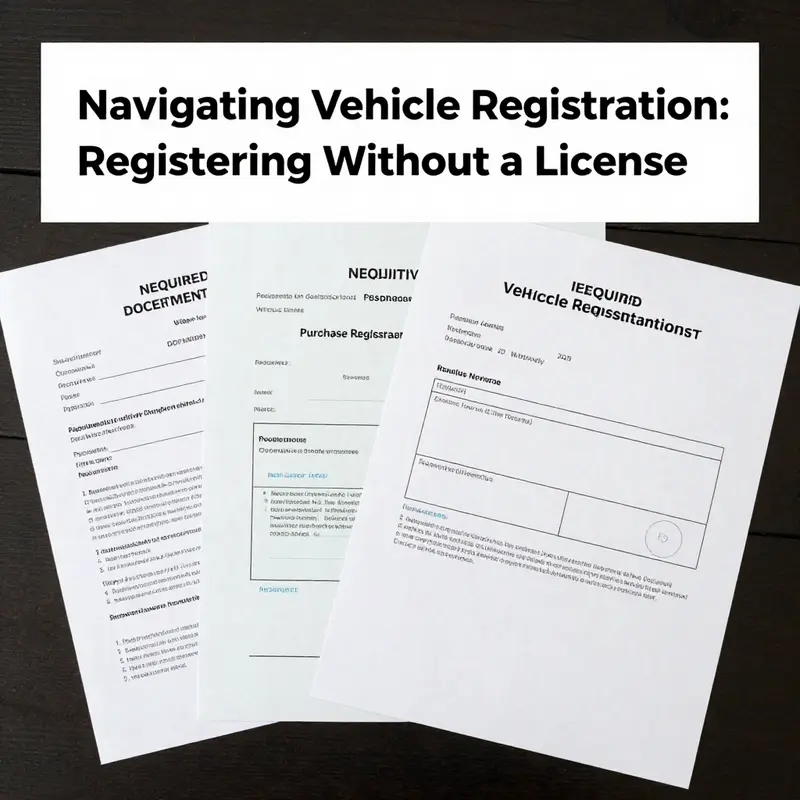
When people ask whether a vehicle can be registered without a driver’s license, they are touching a fundamental divide in traffic law and public administration: ownership versus operation. Registration is a civil, administrative act. It’s about who owns the vehicle, that the vehicle exists in a verifiable state, that it complies with tax and insurance obligations, and that the vehicle bears public accountability through documents such as ownership titles, conformity certificates, tax receipts, and insurance policies. Driving, by contrast, is a privilege grounded in competence and safety. It requires proof that the person behind the wheel can handle a machine of power and responsibility. The two processes sit side by side in many legal systems yet serve different purposes. In that sense, the question—can you register a vehicle without a license?—has a straightforward answer: yes, you can. The act of registration does not depend on your fitness to drive. The act of driving does. The separation is deliberate. It reflects a practical understanding that vehicle ownership, provenance, financial responsibility, and compliance with safety standards can be decoupled from the person who may or may not ever operate the vehicle on public roads.
To understand the mechanics of registration without a license, one must first hold in view the core objective of registration itself. The process is designed to establish legal ownership and to verify that a vehicle meets the necessary standards for use on public infrastructure. It is not a test of driving ability. In many jurisdictions, the documents required for initial registration are a bundle that confirms identity, ownership, vehicle origin, compliance with safety and tax regimes, and financial responsibility. The emphasis is on who has legal claim to the vehicle and whether that claim is supported by verifiable records, not on whether the registrant can drive it at that moment. This distinction is not merely clerical. It shapes access to ownership, liability in the event of a dispute, and the ability to transact or insure the vehicle in a legally recognized way.
From the perspective of a policy framework, the separation is reinforced by a constellation of requirements that collectively ensure the vehicle is trackable, taxable, insured, and safe for the public sphere. The owner’s identity is confirmed through government-issued documentation, guaranteeing that the person who appears as the registered owner can be held accountable for the vehicle. The vehicle’s provenance—whether purchased from a dealer or a private seller—is documented via a purchase invoice or title; this ensures there is an auditable chain of ownership. The vehicle itself is identified not just by its make and model but through the Vehicle Identification Number, a unique code that anchors the vehicle in a regulatory ecosystem. The registration process also demands proof that all applicable fees and taxes have been paid and that insurance coverage exists, typically in the form of a third-party liability policy. Collectively, these requirements cast a wide net to prevent fraud, ensure revenue collection for road maintenance and safety programs, and create a framework in which the vehicle can be traced in the event of theft or other criminal activity. In this sense, registration is a governance mechanism, not a judgment on a person’s ability to drive.
The practical implications of this distinction are seen in the way applicants approach the process. For someone who does not possess a driver’s license, the road to registration begins with a careful gathering of documents that establish identity and ownership while sidestepping any question about driving capability. The essential documents typically include proof of identity, such as a government-issued photo ID; proof of vehicle ownership, like a purchase invoice or a bill of sale; the VIN and the title or certificate of origin; proof that all applicable fees have been paid, including registration and taxes; and proof of insurance. Each component serves a discrete purpose. Identity documents confirm who is making the application. The title and VIN confirm what is being registered and that it is the rightful property of the applicant. Fee and tax receipts demonstrate that the public authority will not bear the burden of unpaid obligations related to the vehicle. Insurance documents reflect a requirement to compensate potential victims of road incidents, even before any person is behind the wheel. While none of these elements verify driving skill, together they create a robust profile of the vehicle’s status within the legal economy of road use.
In this framework, it becomes clear why a person can be the lawful owner of a vehicle without holding a driver’s license. The philosophical and legal logic is not that a license is irrelevant, but that the scope of the registration process is narrower than the full spectrum of ongoing rights and responsibilities that come with vehicle ownership. It is entirely possible for a person to complete the registration in order to establish ownership and to facilitate sale, storage, or financing arrangements. The title can be transferred, the vehicle can be insured, and taxes can be paid, all independent of the owner’s driving credentials. There are also practical channels for handling the process when the registrant cannot themselves complete the steps because of illness, travel, or other constraints. A Power of Attorney (POA) can appoint a licensed representative to act on the owner’s behalf. The POA holder, however, does not gain the right to drive the vehicle simply by virtue of the authorization to register; they remain subject to the conditions of the vehicle’s insurance policy and to the licensing regime that governs operation. The dynamic of POA underscores a broader truth: registration is an instrument of access to ownership and use in a highly regulated system, but it does not confer operational status on the vehicle in the public realm.
A more nuanced layer enters the conversation when financing the vehicle. Lenders, concerned primarily with the collateral and the borrower’s creditworthiness, typically do not base their decision on whether the borrower holds a driver’s license. They evaluate income, credit history, and the ability to meet payment obligations. The absence of a license does not automatically bar financing, provided other conditions are met. This reality highlights how the registration process, finance agreements, and driver licensing operate on different axes of risk assessment. Financing can occur in a context where the vehicle exists in legal ownership and has a valid registration, yet the person who will eventually operate it may still need to acquire a license to use the asset on public roads. The separation again reinforces the idea that the administrative hurdle of ownership is distinct from the personal qualification to drive.
The act of registration itself is often a structured, though not monolithic, procedure. In many systems, the applicant must present identity proof, vehicle origin documentation, a VIN verification, and evidence of tax and insurance compliance. The objective is straightforward: prove that the vehicle has a legitimate origin, that the person presenting it has enough identity to be recognized in the civil registry, that the vehicle is registered for the correct tax category, and that it will contribute to the public safety regime through insurance coverage. The documents are not a verdict on driving talent or readiness. They are, rather, a ledger of legal compliance that legitimizes the vehicle’s presence on the road. This ledger is essential not only for the state to collect revenue and regulate safety but also for future transfers. A registered vehicle can be bought, sold, or loaned with a clearer chain of title, reducing the risk of disputes and clarifying who bears responsibility when incidents occur.
The distinction between registration and operation also has implications for how communities manage traffic safety. If an unlicensed driver could automatically operate a vehicle, the risk calculus would shift dramatically. The safety net that registration creates—documented ownership, verified identity, insured status, and tax compliance—exists to facilitate accountability, not to ensure that every owner becomes a licensed operator. Public policy thus encourages the separation: people can own and even register vehicles without necessarily being qualified to drive them immediately. This approach acknowledges that life circumstances often require a temporary arrangement. A person might acquire a vehicle for a family member who plans to obtain a license later, or a business might secure a fleet on a conditional basis, with licenses pending. In such scenarios, the vehicle’s existence and legal status are secured first, while the authorization to operate is pursued in parallel. The chain of logic is deliberate and practical: the vehicle must be trackable and the owner identifiable, but the act of driving remains a separate, gate-kept privilege.
Within this framework, important considerations arise that deserve careful attention. First, the difference between ownership and operation must be communicated clearly to avoid misunderstandings. Anyone navigating the path from ownership to operation should understand that registration does not grant a right to drive. This understanding helps prevent inadvertent violations, such as driving a newly registered vehicle without a license, which could trigger penalties under the Road Traffic Safety Law or its equivalent in the local jurisdiction. The penalties for driving without a license are typically severe enough to deter casual risk-taking, ranging from fines to potential detention, depending on the specific legal regime and the nature of the offense. Second, the possibility of delegating the registration task to a licensed representative via a Power of Attorney adds a practical layer of flexibility, particularly for individuals who cannot be physically present. The POA can handle the administrative steps, but the ownership remains tied to the name on the documents, and the license status of the operator remains a separate matter governed by the driver licensing regime and the terms of the vehicle’s insurance policy. The POA holder’s privileges do not automatically extend to driving; rather, any person who will drive must be appropriately licensed and authorized on the insurance policy. This nuance underscores the importance of coordinating between ownership, loan or lease arrangements, insurance coverage, and licensing status to avoid gaps that could complicate later use of the vehicle.
The practical pathway to registration without a license, then, is a sequence of disciplined steps. Begin with identity verification. A valid government-issued photo ID confirms who you are and who is applying on behalf of the vehicle owner. Next, establish ownership through the title or original certificate of origin and the purchase invoice. The VIN serves as an immutable anchor for this entire process, ensuring that the vehicle being registered is the same one that is intended for operation in the future. Then, collect proof of tax and registration fee payments. Tax treatment can vary widely—from sales tax to vehicle use tax and other duties—so the applicant must demonstrate that all applicable charges have been settled, thereby preventing later disputes or liabilities connected to the vehicle’s registration. Finally, secure evidence of insurance. In most jurisdictions, proof of a valid auto insurance policy—often a third-party liability policy—is required before registration can be completed. The policy is essential because it provides a financial safety net for third parties in the event of an accident while the vehicle is operated on public roads. While insurance does not immediately confer driving rights, it completes the legal package that legitimizes the vehicle’s presence in the road system, shifting the risk from the public purse to private protection and guaranteeing some continuity of coverage in case of mishap.
In practice, the sequence is stable across many jurisdictions, albeit subject to local variations and nuances. A trusted checklist emerges from this common pattern: (1) identity verification, (2) proof of ownership, (3) VIN verification and title documentation, (4) proof of fee and tax payment, and (5) proof of insurance. The importance of these steps cannot be overstated. Each one serves to close a potential loophole—whether in the title chain, in the accuracy of the recorded VIN, or in the financial offsets that support road safety programs. Even though the license may be missing, the registration remains a formal acknowledgment that the vehicle can be managed within the public system, with the operator later becoming a licensed driver who can lawfully operate the vehicle in compliance with all applicable rules. The system, therefore, acknowledges the reality that ownership and operation can be decoupled, and it provides a stable scaffold for both to evolve in a regulated manner.
It is also worth noting a practical point that often surprises people. Financing arrangements, which hinge on the asset’s value and the borrower’s credit profile, do not mandate a driver’s license as a condition of approval. A lender’s primary focus is the collateral’s value, the title status, and the borrower’s ability to repay. This means a vehicle can be purchased and registered in a name that may later transfer to a licensed operator, even if the immediate buyer does not yet hold a license. Such arrangements emphasize the transactional dimension of vehicle ownership—one that is oriented toward establishing a secure, accountable asset base and ensuring that all statutory obligations are honored from the outset. The dynamic underscores a broader theme: ownership can be secured in advance of operation, and this sequencing matters for people in transition—between licensing, temporary custody arrangements, or business needs where the vehicle’s function precedes the driver’s readiness.
The chapter thus returns to the central takeaway: you can register a vehicle without a license, but you cannot legally drive it without a license. This dichotomy is not a loophole but a designed feature of legal systems that balance practical flexibility with safety and accountability. The registration status communicates that the vehicle exists in a regulated framework, with clear ownership and financial and safety commitments. The act of driving remains an activity reserved for those who meet the licensing standard, and this separation helps ensure that driving on public roads is performed by individuals who have demonstrated competence, knowledge, and the ability to respond to emergency situations. For people who plan to operate soon, the process allows them to progress toward licensing while their vehicle remains in a secure and legally recognized state. For those who only need to own or transfer ownership, the registration path provides a clear, legally sound route that does not hinge on the operator’s current driving credentials.
In practice, the best way to navigate this path is to approach registration as a structured, predictable process anchored in documents and formal requirements rather than personal driving status. When you align your preparation with the documented expectations—identity, ownership, VIN, fees, and insurance—you create a robust foundation that can support future operations, financing, and, eventually, lawful driving. And while you should always consult the local authority that governs vehicle registration in your area to confirm the exact list of required documents and the precise steps, the general architecture remains consistent across many jurisdictions. The overarching logic is straightforward: the state must verify who owns the vehicle, that the vehicle is compliant with safety and tax obligations, and that there is insurance in place to cover potential harm to others. The operator’s license, while vitally important, sits in a separate domain that governs when and under what circumstances the vehicle may be used on public roads. This division preserves both individual opportunity and public safety.
For those who are navigating this terrain, one practical piece of guidance is to view the registration task as a bridge between private ownership and public use. If you do not yet hold a driver’s license, you can still secure ownership and place the vehicle within the legal framework that governs all road users. As you prepare, remember to keep the process well organized, with all documents available and up to date. If you are unable to attend in person, consider appointing a licensed agent through a Power of Attorney to complete the necessary registration steps on your behalf. Just as the vehicle must be properly insured and taxed, the representative’s authority must be compatible with the policies and records that will eventually be updated to reflect the owner’s status and, later, the driver’s licensing status. The careful coordination of these elements minimizes delays, reduces the risk of misfiled paperwork, and helps ensure a smooth transition when the owner ultimately secures a license and begins to drive legally on public roads.
In short, the road to registration without a license is not a detour from responsibility but a distinct path that acknowledges the legitimate and separate domains of ownership and operation. It recognizes that a vehicle is a durable asset that can be held, sold, financed, insured, and taxed in its own right, even while the owner’s ability or intent to drive may be pending. It also emphasizes the central public purpose of registration: to certify that the vehicle exists in the public system with a traceable origin, a known owner, and the safeguards that protect other road users. This approach fosters accountability, reduces the risk of theft and fraud, and ensures that the public infrastructure remains funded and safe for everyone who will use it in the future. The result is a practical balance that serves individuals, businesses, and the broader community—a balance that makes it possible to own and manage a vehicle responsibly even if the road ahead requires patience before taking the wheel.
Where does that leave you, specifically? If you are ready to proceed with ownership and registration but have not yet earned a driver’s license, you can still begin the process with confidence. Gather the required documents, verify the VIN, confirm you have paid the applicable taxes and fees, and arrange for insurance coverage. If you expect to have someone else act on your behalf, plan the POA carefully, ensuring that the代理 holder has legitimate authority under both the registration rules and the terms of the insurance policy. When the time comes to drive, you will be equipped not only with the license but also with the confidence that your vehicle is registered, legally documented, and ready to participate in the traffic system in a responsible, regulated manner. If you need ongoing reassurance about the registration process, consult your local authority for the definitive checklist and the latest procedural updates. For readers who want to explore adjacent topics, an examination of how state rules influence driver licensing can provide further clarity on how different jurisdictions balance the scope of ownership and operation, and how these policies affect the real-world experiences of vehicle owners and drivers. state rules impacting driver licensing.
External resources can also offer deeper context on the practical steps involved in registration and the official processes you will encounter. For a comprehensive, jurisdiction-specific overview of how vehicle registration is conducted, the following external resource provides detailed guidance on the registration process, documentation, and the office that administers these procedures: https://www.dmv.ca.gov/portal/vehicle-registration-and-title-information/vehicle-registration-process/ . This external reference underscores the broader regulatory framework that governs vehicle ownership across many regions and connects the procedural details described here to the actual processes you will encounter in practice.
Final thoughts
Registering a vehicle without a driver’s license can be a straightforward process as long as the applicant is aware of the requirements and the legal implications. While verification of ownership and legal compliance with tax and insurance obligations is necessary, the absence of a driver’s license does not obstruct registration itself. However, it’s imperative to remember that while you can own and register a vehicle, the ability to operate it legally on public roads remains contingent on holding a valid driver’s license. Understanding these nuances can empower owners and prospective registrants to navigate their vehicle-related responsibilities effectively.