
Understanding how to find the owner of a vehicle using a license plate is crucial for new drivers, existing vehicle owners, and auto dealerships alike. Whether you’re addressing an incident or simply curious about a vehicle you’ve seen, knowing the legal methods available can save you time and ensure compliance with privacy regulations. This article guides you through the legally permitted methods for finding vehicle owners, highlights the illegal methods to avoid along with their consequences, and discusses essential considerations to keep in mind when initiating such inquiries. With this comprehensive overview, you’ll be equipped to navigate the complexities of vehicle ownership detection while respecting legal boundaries.
Navigating Legality and Privacy: Finding a Vehicle Owner by License Plate Through Official Avenues
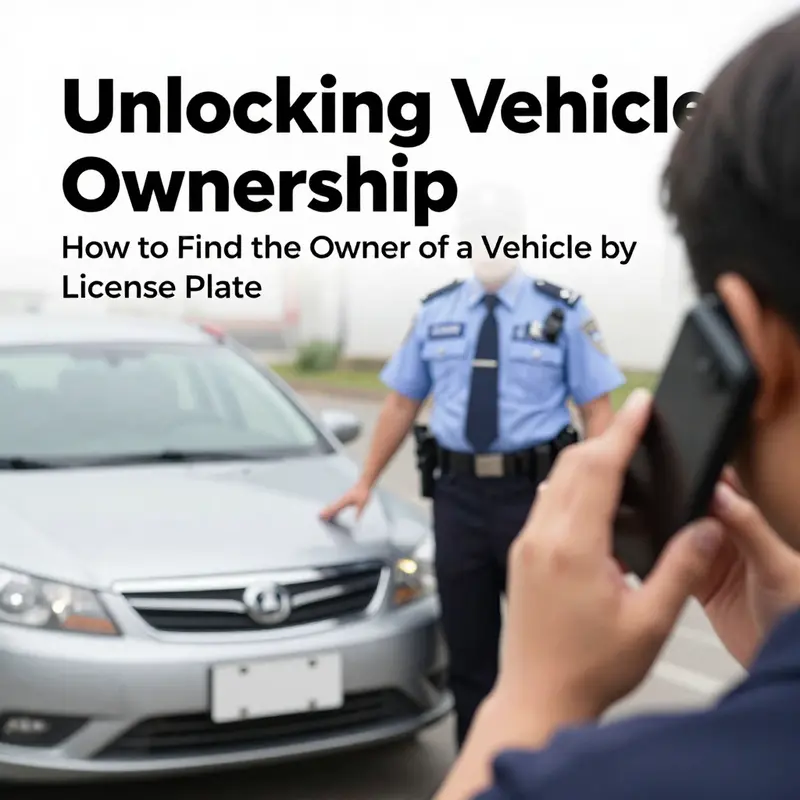
When people confront a situation involving a specific vehicle and a license plate, they often wonder if they can identify the owner to address a problem, share information, or seek accountability. However, privacy protections are a central barrier across jurisdictions, and for good reason: license plate data can reveal personal information about individuals, their routines, and their private lives. The goal, then, is not to bypass protections but to operate within them, using legitimate, traceable channels that respect the rights of vehicle owners while serving real public-interest needs. The chapter that follows offers a coherent, practice-forward overview of how to approach this task responsibly. It threads together the most effective official mechanisms, the conditions under which they operate, and the legal anchors that govern them. The emphasis remains on legitimate reasons—reporting a traffic incident, resolving a dispute about obstruction, or ensuring safety—rather than curiosity or punitive surveillance. By grounding the discussion in transparent procedures and documented processes, we can illuminate how to pursue a rightful outcome without crossing privacy lines or inviting legal repercussions. This approach is not simply about compliance; it is about building trust between the public, the authorities, and the institutions that manage vehicle data. In many places, the primary architecture of this effort rests on formal channels rather than open registries, and that distinction matters in practice. It also matters for the broader ecosystem of road safety, liability, and accountability, because when individuals rely on official channels, outcomes can be faster, more accurate, and legally sound, with a clear trail of documentation that can be reviewed if questions arise later.
The most recommended path begins with official government platforms designed to handle non-emergency situations in a privacy-preserving way. Take the example of a vehicle blocking a driveway or a parked car obstructing a narrow street. In such a context, the responsible course is to engage the official traffic management system rather than attempt to contact the owner directly. The toolset that governments provide for these circumstances—often through a dedicated application or a controlled reporting interface—enables a formal submission that is then routed through the appropriate channels. For instance, an official app might allow a user to enter the license plate number, attach a photo, specify the location, and select the nature of the issue. Behind the scenes, the system notifies the vehicle owner through sanctioned communication channels, such as SMS or in-app messaging, while preserving the privacy of the user initiating the request. The key here is that the process does not expose private contact details to the public; rather, it creates a controlled, auditable path in which authorities mediate the interaction. This structure respects privacy while delivering practical results, leveraging the administrative authority that has access to the relevant data for legitimate purposes.
In the context of China’s traffic management framework, for example, the official pathways emphasize verified incidents and legitimate needs. A feature commonly highlighted is the so-called “One-Click Move Vehicle” function, embedded within a state-supported app ecosystem. When a user reports an obstruction, the system forwards the case to local authorities who then contact the owner through official channels. The end result is not a public directory lookup but a managed notification process that reduces the risk of misidentification and protects sensitive data. The benefit extends beyond the immediate incident: it fosters a trusted interface between citizens and the public safety infrastructure, where outcomes are traceable and accountable. This model illustrates a broader principle that should guide any attempt to locate a vehicle owner by license plate: privacy-first design paired with legitimate necessity.
For those who face urgent or safety-related concerns, dialing the national traffic police hotline is an additional, legally grounded option. In many jurisdictions, the number is reserved for urgent situations—such as suspected theft, major accidents, or clear threats to public safety. Providing the license plate, a vehicle color, and precise location to trained responders ensures that the request is evaluated within the proper legal framework. The responders, equipped with official systems and protocols, can initiate contact with the owner or take necessary enforcement or investigative steps. The distinction between an emergency and a routine report matters, because hotline personnel operate under different privacy safeguards and data access rules than non-emergency channels. This separation helps prevent the unnecessary exposure of private information and preserves the integrity of ongoing investigations.
Another legitimate path, when feasible, involves visiting a local DMV or vehicle management office with the appropriate documentation. In some jurisdictions, a request supported by tangible proof of incident—such as updated incident reports, witness statements, and photographic evidence—may yield access to non-public owner information under controlled conditions. The staff at these offices verify the requester’s identity and evaluate the legitimacy of the inquiry, often requiring an explicit demonstration of a valid, real-world purpose. The outcome can vary: some jurisdictions may provide contact information directly to the requester, while others might simply facilitate a mediated contact through official channels or note that data access is restricted to law enforcement or authorized agencies. In all cases, the process is anchored in formal procedures designed to protect privacy and ensure that any disclosure is appropriate to the stated purpose.
A complementary, commonly understood route involves the vehicle’s registration certificate—the title or registration card. This document, typically in the owner’s possession or held by an insurer, lists the registered owner’s name and contact information. Access to this document is highly regulated. If a person has legitimate reasons consistent with the rules, they may obtain certain details through proper channels, often with consent required or through a formal, documented request. The path from plate to ownership through the registration certificate embodies the intended boundary between public information and private data. It reinforces the principle that ownership records are not casually accessible to strangers; their disclosure is contingent on a legitimate need, proper authorization, and an auditable process.
In scenarios where a known insurer is involved—such as a collision or a dispute requiring third-party communication—the insurer can act as a conduit. Insurance companies often have procedures for releasing information to claimants or chosen representatives, particularly when a claim process or safety investigation is underway. The insurer’s role is not to reveal private data indiscriminately but to facilitate contact in the context of a claim, a safety issue, or a legal requirement. Even here, the release of information is governed by data protection rules and company policy, and it typically requires sufficient justification and, at times, written consent or court-ordered authorization. This layer of coordination underscores a broader truth: while there may be several potential paths to connect with a vehicle owner, each one rests on a chain of authority designed to prevent misuse and protect privacy.
The legal landscape that frames these processes is not static. It rests on a confluence of national and regional privacy regimes, including comprehensive data protection laws and sector-specific rules for vehicle records. In the Chinese context, for example, the Personal Information Protection Law (PIPL) delineates how personal data can be accessed, processed, and shared. It emphasizes that access to personal information must be governed by lawful purposes, narrow in scope, and subject to safeguards that minimize risk to individuals. At a global level, frameworks such as the European Union’s General Data Protection Regulation (GDPR) and various privacy statutes in North America reinforce similar principles. They collectively enshrine the idea that private information is not a commodity to be traded or browsed at leisure, but a resource to be accessed only by authorized entities for clearly defined legitimate reasons. When people speak of “license plate lookup,” they are often tempted by the allure of direct access. The reality is that privacy protections exist to prevent intrusive or reckless use. The right approach is to understand the legitimate channels, follow the procedures, and document every step as part of a legal and ethical process.
The practical implications of these rules extend beyond the letter of the law. They influence how the public perceives safety, accountability, and fairness in everyday encounters with vehicles. When a car blocks a driveway or a hit-and-run incident occurs, the urgency is matched by an obligation to handle information responsibly. The official pathways—whether it is the official app, the hotline, or the DMV—and the conditions attached to data access create a predictable, accountable rhythm. This rhythm not only helps resolve a specific incident but also reinforces confidence that personal data is safeguarded. It is a reminder that locating a vehicle owner is not a trivial act of casual discovery; it is a carefully regulated procedure that aligns with broader societal commitments to privacy, civil rights, and the right to safety.
To bring these ideas into practical terms, consider how the official app and related procedures work together in real life. A driver discovers a car obstructing a gate or a fire lane. Instead of tracing the owner by gleaning data from third-party search sites or trying to call random contacts, the driver engages the official platform. The user logs in through verified channels, selects the reported incident type, and supplies the license plate number along with supporting evidence. The system routes this information to the appropriate authorities, who then carry out the next steps—assessing the situation, contacting the owner through sanctioned means, and coordinating any necessary on-site actions. The owner’s privacy remains intact because the information is not disclosed publicly. Only those with a legitimate role in the resolution—police, traffic management personnel, or designated agency staff—gain access to the data after verifying the requester’s legitimate purpose. A similar logic governs the emergency hotline, where responders perform triage and determine whether data access should proceed, given the immediacy and risk involved. If the incident requires it, they may initiate a formal contact with the owner or proceed with enforcement actions; if not, they guide the caller toward other steps that protect privacy while achieving safety outcomes.
One might wonder about the potential for misuse or abuse of these systems. The clear answer is that misuse is illegal and subject to penalties. No legitimate authority would publish a private owner’s contact details in a public forum, nor would they provide such data to a private party for harassment, doxxing, or competitive gain. The safeguards include verification of identity, a documented purpose, and adherence to data minimization principles. Even legitimate requests are subject to review and, if necessary, redactions to protect sensitive information. This layered approach reflects a mature balance between individual privacy and collective safety. It also implies that any attempt to bypass these safeguards—through hacks, fake consent, or commercial licensing schemes—will be detected and sanctioned. The lesson is simple: respect the boundaries that privacy laws establish, because those boundaries are designed to protect people as much as they are designed to protect data.
As policy researchers and practitioners examine these pathways, a related consideration emerges: the ongoing debate about how much information should be accessible to the public in the first place. Public access to owner information must be carefully weighed against the potential harms of doxxing, stalking, or aggressive debt collection. The public policy conversation, therefore, often centers on what is permissible in terms of disclosure, under what circumstances, and through which intermediaries. In the jurisdictional geography where these processes are most salient, the rule of thumb remains consistent: any effort to identify an owner through a license plate must be anchored in an explicit, legitimate purpose, supported by evidence, and executed through official channels. The alternative—unauthorized lookups or direct data extraction—risks not only legal penalties but a breakdown of trust in the institutions that regulate traffic safety and vehicle ownership.
For readers who want to deepen their understanding of the policy environment, the following connection to broader regulatory discussions may be informative: state rules impact on driver licensing. This concept captures how variations in regional policy shape the data that authorities may access, and how those policies influence everyday interactions with vehicles on the road. You can explore this topic further through the internal resource that examines how state-level licensing frameworks interact with privacy protections and public safety responsibilities. It serves as a reminder that the practical steps described here are not universal prescriptions but a structured approach that must be adapted to local laws and procedures. The takeaway is not a universal algorithm but a principled workflow that respects jurisdictional nuances while preserving the integrity of both individual privacy and public safety. For readers navigating cross-border concerns, awareness of these differences is essential, because the precise pathways, required documentation, and even the permissible purposes can vary from one jurisdiction to another. Always confirm the applicable rules in your area before initiating any request.
In the end, the most effective and responsible strategy is to engage through official channels whenever there is a legitimate, non-emergency need to contact a vehicle owner, or through the appropriate emergency mechanism when safety is at stake. The process is designed to be transparent, auditable, and privacy-preserving, with a clear line of authority and a defined scope for information sharing. For those who still doubt whether a license plate could ever reveal an owner’s identity, the answer is yes, but only through regulated means and with proper justification. The balance of interest—protecting personal data versus resolving a vehicle-related concern—depends on the rigor and legitimacy of the procedure followed. As the privacy landscape continues to evolve, so too will the safeguards that govern access to vehicle-related data. The evolving dialogue will likely refine which incidents qualify as legitimate grounds for disclosure and how authorities can demonstrate accountability in each case. The guiding principle remains steadfast: use official channels, document every step, and respect the rights of vehicle owners while ensuring safety, fairness, and public trust.
For readers seeking a concise summation of the practical workflow, remember this: first, determine if the situation is non-emergency and amenable to official channels; second, use the appropriate digital platform or the emergency hotline to initiate contact through authorized authorities; third, consider a DMV or vehicle management office visit when documentation supports a legitimate inquiry; fourth, recognize that the vehicle’s registration certificate and the insurer can play roles in legitimate communications, but only within the bounds of law and policy. The arc of this approach is a disciplined, privacy-conscious path that aligns with the social responsibility of managing road safety and accountability. If any doubt remains about the boundaries, the guiding principle is to consult the official resources and, when in doubt, err on the side of privacy and due process. The aim is not to locate and harass individuals but to resolve concrete issues with transparency and respect for the law. And as the landscape of data protection continues to mature, so too will the methods that enable legitimate discovery while keeping private information shielded from unnecessary exposure.
For readers who want to explore further policy discussions and practical considerations, a useful cross-reference to state-level licensing and privacy discussions can be found in dedicated policy discussions available through internal resources. These discussions illuminate how different jurisdictions balance robust safety enforcement with the protection of personal information, and how those choices influence everyday interactions with vehicles on the road. The enduring lesson is that legitimate ownership inquiry is possible and practical when approached through official channels, with the necessary documentation and a clear justification. It is a pathway that respects privacy, fosters accountability, and ultimately serves public safety in a predictable and principled manner. If you need to dive deeper into the policy underpinnings or track any updates in the regulatory environment, the internal resource on state rules and driver licensing provides a thoughtful lens for understanding how these rules shape the operational realities that everyday motorists encounter.
External resource for further reading: https://gdpr.eu/what-is-gdpr/
Internal resource for policy context: state rules impact on driver licensing
null
null
null
null
Final thoughts
Navigating the process of finding a vehicle owner via a license plate is a nuanced task intertwined with both legal stipulations and ethical considerations. By using the legally permitted approaches outlined in this guide, you can ensure that your inquiries are not only effective but also compliant with privacy laws. Whether it be through law enforcement, official applications, or direct inquiries, it’s vital to remain respectful of individual privacy rights. As vehicle owners and drivers become more aware of their legal responsibilities, understanding these processes enhances your ability to act responsibly while fostering a safer driving environment for everyone.