
Understanding the types of vehicles that can be operated without a driver’s license is essential for new and experienced drivers alike. This article delves into categories of vehicles that are exempt from licensing requirements, providing insights for new drivers and learners, existing drivers, vehicle owners, and auto dealerships. From bicycles and electric bikes to low-speed vehicles and accessibility devices, each chapter sheds light on how these vehicles can expand individual mobility without the traditional licensing barriers. By exploring key information about regulations and usage, readers will gain a comprehensive knowledge that empowers responsible and lawful operation of these vehicles.
Riding Without a License: Navigating Bicycles, E-Bikes, and the Non-Motorized Path to Freedom
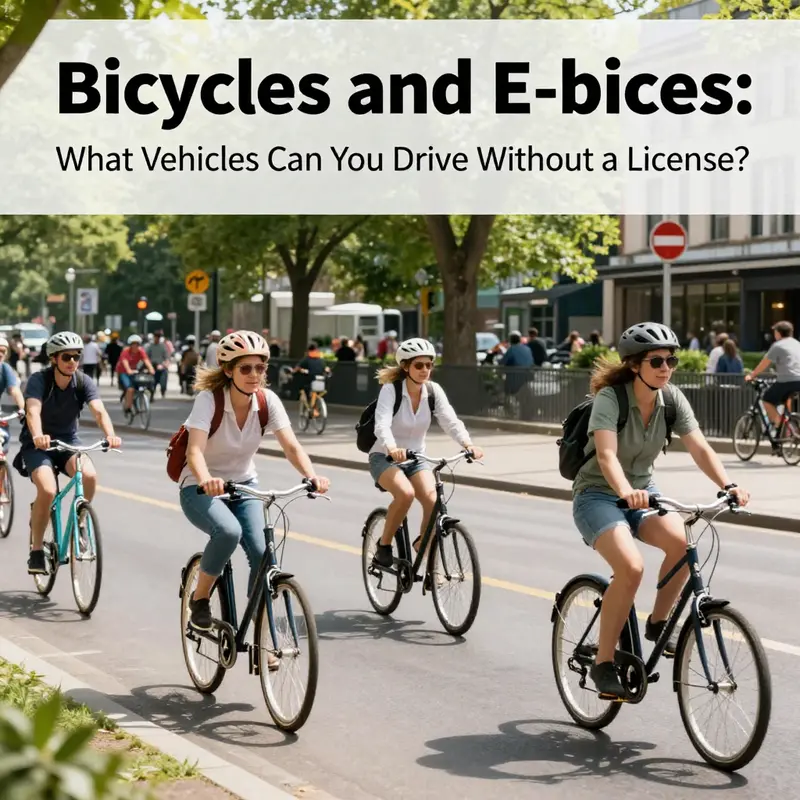
Riding without a license can feel like a quiet rebellion against the paperwork and delays that come with motorized travel. Yet the reality is more nuanced than a simple exemption from tests and fees. In many places, the freedom to move on two wheels or other low-powered devices is woven into the fabric of traffic laws. Bicycles, traditional and tricycles, sit in a category of their own—non-motorized by design and not treated as motor vehicles under the usual licensing regimes. They are allowed to share roads and streets, often with a flexible etiquette that relies on predictable behavior, attentive riding, and respect for pedestrians and other road users. The absence of a license does not mean a license to ignore rules. Even on familiar routes, riders shoulder responsibilities that are every bit as real as those faced by drivers who carry a formal credential. Lighting at night, helmets where required, reflectors, and obeying signals all remain essential. The bicycle, modest in power yet significant in its impact, embodies a mode of travel that people often embrace not as a shortcut around regulation but as a practical, accessible, and healthful means of moving through daily life. It is the simplest and oldest form of personal transport that still holds sway in modern cities, suburbs, and countryside alike. With that foundation, the category grows more complex as we add electric assistance into the mix, gradually expanding the boundary between “license not required” and “license needed.”
Electric bicycles, or e-bikes, represent a bridge between pure human power and motorized propulsion. They are built to be familiar, practical, and approachable. Depending on where you are, these devices can blend into the bicycle world or slip into the realm of regulated motorized vehicles. In many jurisdictions, e-bikes that provide assistance only when you pedal and that limit the top assisted speed to around 20 mph (about 32 km/h) are treated much like conventional bicycles. This distinction matters because it keeps the riding experience aligned with the expectations of non-motorized traffic while granting an extra boost when hills rise or trips lengthen. The practical reality is that these e-bikes still rely on human input for propulsion; the motor does not drive you unassisted. Because of that cooperative design, many regions decide that no separate license, registration, or special endorsement is necessary for standard e-bikes—though local rules can and do vary. The result is a patchwork of regulations that rewards the user for sensible riding and cautions against overreliance on electric power.
In the United States, the federal framework provides a baseline while state and local jurisdictions add their own flavors. Federal guidelines describe e-bikes that meet specific criteria as fitting into a category similar to ordinary bicycles, with no license required at the federal level. The crucial elements typically include pedal-assist operation and a maximum motor-assisted speed that does not exceed a set threshold. This means that when you ride within these parameters, you are generally not subject to the same licensing requirements as you would face on a motorcycle or scooter with a higher performance envelope. Yet, the same guidelines acknowledge that states can impose their own restrictions. Some states may require registration for certain classes of e-bikes, or they may designate where e-bikes can be ridden and who may ride them. These state-level rules create a spectrum of allowances, and the best practice is to be aware of the local landscape before rolling out on a new route. The core message endures: if the power and speed stay within the defined limits, the path toward license-free riding remains open in many places.
Across the Atlantic, the United Kingdom takes a similarly nuanced approach, though with its own terminology and thresholds. E-bikes that deliver motorized assistance up to 250 watts and a maximum supported speed of 15.5 mph (about 25 km/h) are classified as light electrically assisted pedal cycles, or LEAPCs. This classification recognizes a rider’s active engagement—pedaling remains essential—and places these bikes outside the licensing framework that governs mopeds and motorcycles. An important age guideline accompanies this framework: riders must typically be at least 14 years old, and the bikes themselves must come equipped with standard safety features like brakes, lights, and reflectors that work reliably. The LEAPC designation is not a blanket invitation to abandon safety discipline; rather, it is a recognition that a certain level of motorized assistance does not transform the vehicle into a motor vehicle in the licensed sense. As ever, the practical boundaries depend on how the law is interpreted where you ride, and on the ongoing dialogue between urban planning, public safety, and individual responsibility.
Beyond bicycles and their electric kin, the landscape expands further into devices that share sidewalks, bike lanes, or controlled corridors rather than open highways. Electric scooters and personal transport devices, including self-balancing models, often enjoy a license-free status in bustling urban centers when operated in appropriate zones. The conditions vary widely: some cities require helmets, some limit use to sidewalks or dedicated lanes, and others ban certain devices on pedestrian-dense routes altogether. This is not a universal invitation to speed, but a measured approach that seeks to manage risk in shared spaces. The same caution extends to off-road and specialty vehicles used in private settings or within defined facilities. Golf carts, when confined to golf courses, residential communities, campuses, or closed facilities, typically do not require a traditional driver’s license. They are designed for low-speed travel and restricted access, with public roads not in their intended purview unless they are modified to meet applicable state regulations and registered accordingly. In similar fashion, farm tractors and agricultural equipment, construction-site vehicles, and tourism-oriented shuttle vehicles often operate without a standard road-driving license as long as they remain within their authorized environments. These machines are not ordinary street vehicles; they are specialized tools for specific purposes, often governed by separate training, certification, or safety standards that reflect their intended use. Even when a license is not required, the common thread remains: safety first, boundaries respected, and the local rules consulted.
The reader may wonder how far these licensing exemptions extend when people with limited mobility rely on powered wheelchairs or mobility scooters. In many places, these devices are designed to aid people with disabilities and are not subject to the same licensing requirements as motor vehicles. Sidewalk use and pedestrian zones often become the default stages for such equipment, where speed and exposure to traffic are managed by design and by safety protocols. Yet even here there can be age restrictions or safety prerequisites, and jurisdictions can differ in how aggressively they regulate these aids. The goal, however, remains consistent: to maximize mobility and independence while preserving safety for everyone who shares public space.
Another facet of this landscape concerns low-speed electric vehicles, or LSEVs, and the related category of neighborhood electric vehicles. In some regions, LSEVs are allowed to operate without a conventional driver’s license if they stay within restricted speed envelopes—typically well below highway speeds—and travel on local streets or designated areas. Registration and safety compliance may still apply, and the exact thresholds vary. The result is a tiered system that accepts a broader set of personal transport options while maintaining boundaries that reflect the realities of traffic dynamics and the safety implications of higher speeds. The common denominator across all these categories is clarity about where the vehicle can operate, what the rider’s responsibilities are, and which pieces of the legal framework apply. The absence of a license does not absolve the rider from accountability. It simply means that accountability is assessed with different tools—context, speed, vehicle class, and location—rather than through a blanket licensing regime.
In practice, riders who move through this spectrum of license-free or low-licensing options should keep a few principles in mind. First, safety equipment matters. Helmets for riders, lights that work reliably, reflectors, and visibility considerations do more to prevent tragedies than any legal exemption can. Second, traffic rules remain non-negotiable. Even without a license, you must obey signals, yield correctly, and navigate intersections with the same courtesy you would extend to a driver who is fully licensed. Third, be mindful of boundaries. Sidewalks, bike lanes, and parks often have different safety criteria than public roads, and what is permissible in one jurisdiction may be restricted in another. Fourth, always verify the local rules before you ride. Jurisdictions adjust classifications, thresholds, and enforcement practices over time, and what is true today may change next year. The breadth of possibilities—from pure bicycles to LEAPCs, from shuttles within a park to mobility devices on a sidewalk—reflects a collective effort to balance mobility, safety, and the evolving character of cities.
To understand how regional variations shape these allowances, consider how state rules impact driver licensing. That phrase captures the way policy, enforcement, and public safety goals can tilt the balance in favor of wider access or tighter control. See the discussion on state rules impact on driver licensing for a closer look at how different jurisdictions interpret these categories and enforce the corresponding requirements. This is not merely a legal curiosity. It affects how a family plans a commute, how a student navigates campus life, and how a city designs its streets to be welcoming to riders who choose non-traditional modes of transportation. The movement toward inclusive policy—where more people can travel under their own power without the barrier of a license—rests on clear definitions, consistent safety standards, and practical enforcement that emphasizes education over punishment.
The practical takeaway is straightforward: you can often ride bicycles and certain low-powered devices without a license, but you cannot ride irresponsibly. The decision to ride without a license involves an awareness of both the vehicle class and the environment in which you operate. You should evaluate not only whether the device itself fits within a regulatory threshold but also whether the streets, sidewalks, or designated zones you plan to use are appropriate for your mode of travel. The path toward license-free riding is not a one-size-fits-all invitation; it is a carefully calibrated framework designed to allow mobility while preserving safety for everyone who shares the road. In the end, the rider’s responsibility remains the same: be predictable, be prepared, and be considerate.
For a broader context on how these allowances fit within the broader licensing landscape and to explore region-specific nuances, see the resource on state rules impact on driver licensing. It provides a structured lens through which to view differences across jurisdictions and how those differences play out in daily life on two wheels and beyond. And while the specifics may wander from one city to the next, the underlying logic is constant: do not assume that license status excuses you from following traffic rules, and never assume that a lack of licensing means a lack of accountability.
External resource for further reading: https://www.nhtsa.gov/vehicle-safety/bicycle-safety
License-Free Urban Mobility: Navigating Electric Scooters, Skateboards, and the Rules That Shape Them
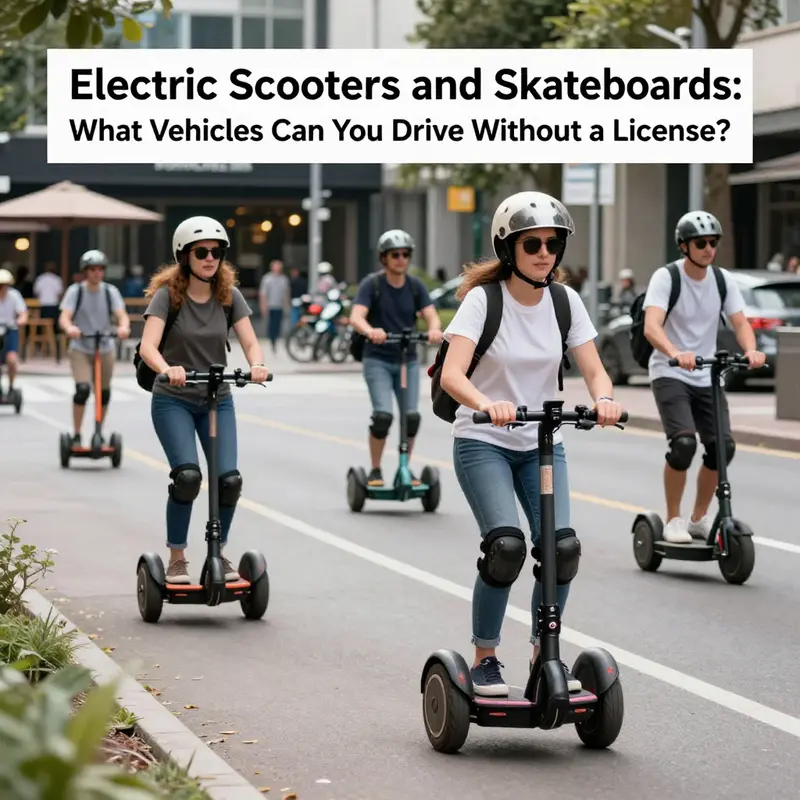
In the shifting mosaic of urban travel, electric scooters and skateboards have established themselves as familiar figures. They glide along bike lanes, zip through pedestrian zones, and park in the gray spaces between buses and bikes. For many riders, the most immediate question is whether a license is needed to operate these devices, especially when the same streets carry cars, trucks, and motorcycles that require formal licensing. The answer, as with so many questions about modern mobility, is nuanced. It hinges on the device’s classification, its top speed, where you ride it, and the local rules that govern that specific patch of asphalt and sidewalk. What begins as a simple inquiry—can I ride this thing without a license? unfolds into a broader reflection on how cities balance safety, accessibility, and the practical realities of moving people efficiently in dense environments. The journey from a basic definition to legal nuance is not merely legalistic; it shapes everyday choices about where to ride, how to ride, and who bears responsibility when things go wrong.
To understand why licensure often isn’t required for electric scooters and skateboards, it helps to first define what these devices are in the eyes of the law. They are usually grouped under the umbrella of personal mobility devices, or PMDs, which encompasses a range of electric and non-electric devices designed for short trips and light, human-scale travel. These categories are typically treated as low-speed or non-motorized options compared with automobiles or heavier motorized vehicles. The speed threshold matters as a practical boundary: once a device exceeds a certain pace, it begins to resemble a vehicle that demands more formal training, licensing, and registration. In many jurisdictions, PMDs are explicitly carved out from the definition of a traditional motor vehicle. That carve-out is what allows individuals to ride them without a driver’s license, provided they stay within the limits set by local rules. Yet the carve-out is not a blanket invitation to ignore safety or courtesy. It is, instead, a recognition that these devices operate in a different lane of the road ecosystem—a lane that requires different competencies and responsibilities.
In the United States and many other places, federal authorities have left PMDs largely to state and municipal governance. There is no universal federal license requirement for electric scooters or skateboards, which means your legal standing is decided on a city block or a county line. Some cities embrace PMDs as a vital part of last-mile connectivity, weaving them into bike-lane networks and transit hubs. Others impose strict limits, restricting riding to sidewalks or banning certain speeds in particular districts. The variability can be dizzying. A rider may discover that in one neighborhood a scooter is permitted on a protected bike path but prohibited on the sidewalk, while a few miles away the same device can share the sidewalk with pedestrians, as long as it travels below a certain speed and yields to foot traffic. The broader implication is that licensing, or its absence, is less about the device and more about the regulatory environment in which it operates.
This patchwork is not simply an abstract legal puzzle. It translates into real-world decisions about where to ride, when to ride, and how to protect oneself and others on busy streets. The speed cap is a central feature of most PMD regulations. Devices intended for urban micro-mobility typically top out well below highway speeds. A common threshold is to keep top speeds within approximately 15 to 25 kilometers per hour (roughly 9 to 15 miles per hour). Beyond that, the device may be treated more like a motor vehicle, inviting stricter controls, potential licensing demands, or outright prohibitions in certain zones. Even when a license isn’t required, safety standards still apply, and riders are expected to follow rules about where and how to ride. It is not enough to own or operate a device responsibly in a vacuum; the surrounding rules exist to protect pedestrians, riders, drivers, and the integrity of the urban environment itself.
Within this framework, a few core themes repeatedly surface: where PMDs can be ridden, who may ride them, and what safety gear is required. In many places, the sidewalk is a contested space. Pedestrians have right-of-way, and high-speed PMDs on sidewalks can pose a hazard to someone who is unsteady or has limited vision. As a result, many jurisdictions restrict PMD operation to bike lanes or dedicated PMD paths whenever available, reserving sidewalks for pedestrians or, in some cases, permitting very slow riding on sidewalks with strict speed limits and heightened pedestrian awareness. Some regions even prohibit PMDs from streets used by motor vehicles altogether, directing riders toward designated lanes, routes, or quiet streets. These rules are about managing interactions—how to minimize conflict points between faster, heavier traffic and lighter, more vulnerable users of the road network.
Age limits and helmet requirements frequently appear in the same regulatory bundles that govern PMDs. Some areas impose minimum age thresholds to ride without supervision, while others allow younger riders with proper equipment and supervision. Helmet use is a near-universal safety recommendation, and in many places, it is legally mandated for people riding PMDs, regardless of whether a license is required. The emphasis on protection reflects a straightforward calculus: PMDs, though small and nimble, carry real risk when misused or deployed in crowded, unpredictable environments. A helmet cannot prevent all injuries, but it remains one of the most effective tools to mitigate head trauma in falls or collisions. Lighting and reflectors further extend the rider’s visibility—especially at dawn, dusk, or after dark—and many jurisdictions require front and rear lights, as well as bells or audible signals to alert pedestrians and other road users.
The question of licensing, then, often becomes a question of liability rather than a mere credential check. If a rider without a license injures someone or damages property, the legal consequences can still be severe. Insurance coverage, accident liability, and the likelihood of enforcement actions depend on a constellation of factors: the jurisdiction’s licensing regime, the specific device, the location of the incident, and the presence or absence of protective gear. Even when a license is not required, a rider can face civil liability for negligence, and a responsible party—whether it is the rider, the device operator, the property owner, or the city—can be held accountable through lawsuits. In some systems, the absence of a license may influence the presumption of responsibility in a civil case, or affect the availability of certain indemnities or protections. This is not an invitation to flout rules; it is a reminder that legal accountability travels with a rider, regardless of licensing status.
The regulatory landscape is further complicated by the reality of enforcement. Police and transportation authorities interpret local laws in the context of daily traffic dynamics. In some jurisdictions, officers focus enforcement on high-risk behaviors: riding at excessive speeds, weaving through traffic, or riding on restricted surfaces like busy roadways or pedestrian-heavy zones. In others, enforcement may target specific age groups or times of day when PMD activity peaks. The result can feel inconsistent for riders who travel across city neighborhoods or on a commute that threads through several municipalities with different rules. The absence of a national licensing requirement does not translate into universal freedom. Rather, it creates a mosaic of localized expectations about what is appropriate, safe, and lawful in each neighborhood, business district, or university campus.
For riders who want to navigate this landscape with confidence, the practical approach starts with proactive research. Before hopping onto a PMD, check the local transportation or motor vehicle department guidelines for the city, county, or state where you plan to ride. Some regions maintain pages that explicitly spell out where PMDs can operate, the max allowable speed, helmet and lighting requirements, and any age restrictions. Others rely on broader traffic codes, which may reference PMDs in sections dealing with bicycles or motor vehicles, leaving interpretation to local authorities. In many cases, the rules may even change within a single city depending on the district or the calendar (for example, special events or construction zones). This variability makes informal guidance from friends or online communities insufficient for long-term compliance. Instead, turning to official sources helps ensure you are aligned with current norms and can adapt if rules evolve.
One practical step often recommended by policymakers is to prioritize riding in designated lanes and on surfaces designed for PMDs. Bike lanes and PMD paths are typically engineered with greater width, better surface quality, and clearer signaling than sidewalks in many dense urban cores. When a bike path exists, it tends to offer a comparatively safer corridor with fewer interactions with faster vehicles and heavier traffic. However, it remains essential to observe speed limits, yield to pedestrians when necessary, and maintain a predictable trajectory. Even on bike paths, riders should be mindful of pedestrian hotspots, crossings, and intersections where conflicts may arise. The overarching idea is simple: ride where the risk is lowest, stay visible, and respect the rights of others who share the space.
The question of whether you can ride without a license is, in many ways, a question about how much risk you are willing to take and how well you understand the local rules that govern that risk. The legal answer is not a universal yes or no; it is a nuanced mapping of device class, speed, location, and jurisdiction. In some places, PMDs enjoy broad latitude, enabling urban micro-mobility without licensing hurdles. In others, even modestly powered devices face restrictions that constrain where and how they can be used, or require registration and minimum safety standards. The common thread across these variations is a shared recognition that safety emerges from a combination of design, behavior, and regulation. The devices themselves are not inherently dangerous, but their impact on the urban fabric depends on how thoughtfully users integrate them into everyday life.
For readers seeking to understand their own status, one cue is the existence of an explicit internal policy or guidance around licensing, which might be summarized in a city’s PMD or bike-lease framework. If you encounter a reference to licensing, it often signals that there are ride-specific rules that you must follow. If, instead, the local statutes do not require a license for the device, you still face a series of practical obligations. You must wear appropriate safety gear, keep your device in good working order, and adhere to speed limits and traffic signals. You must also be prepared to yield to pedestrians and to stop when the environment demands extra caution, such as in school zones or hospital grounds. These expectations are not mere formalities; they are essential components of navigating shared spaces in a way that minimizes risk for everyone involved.
As cities continue to invest in pedestrian-first redesigns and flexible, multimodal transportation networks, PMDs like electric scooters and skateboards are likely to become even more integrated into daily life. The potential benefits are clear: lower emissions, reduced congestion, and improved access to transit where facilities support safe interchanges between modes. Yet the licensing question remains a barometer of how regulators manage new mobility technologies. It signals the degree to which a jurisdiction trusts riders to act responsibly in a shared space without the traditional credentialing that accompanies heavier, higher-speed vehicles. In many cases, the most constructive approach is a combination of clear local rules, robust safety education, and design choices that encourage predictable, courteous riding. The absence of a license does not absolve responsibility; it shifts the emphasis toward practical safety, situational awareness, and a culture of respect among all road users.
For readers who want to dig deeper into the regulatory landscape, one can consult state-level and city-level guidance to understand how rules are shaped in different locales. As a reminder of the broader context, consultState rules impacting driver licensing for a perspective on how licensing requirements can ripple across related mobility categories. This resource frame helps connect the dots between licensing status and everyday riding decisions, illustrating that the absence of a license does not translate into license to disregard safety norms or local regulations. The regulatory picture is inherently local, and riders benefit from treating it as a dynamic map rather than a fixed rulebook. That map can change as cities respond to shifting transportation needs, evolving technology, and feedback from residents and commuters who share the streets.
Ultimately, the central takeaway is straightforward: licensing status is only one element of a larger system. The other elements—road design, enforcement priorities, rider education, and the built environment—play equally critical roles in determining how safely PMDs can function in urban spaces. In some neighborhoods, PMDs are welcomed as allies in reducing car trips and improving access. In others, they are tightly constrained by rules meant to protect pedestrians and traditional motorists. The best approach for a reader is to stay informed about local regulations, practice safe riding habits, and respect the shared nature of urban mobility. Even when you do not need a license to ride, you still face a responsibility to yourselves and to others who move through the city on foot, on wheels, or in transit.
For those who want a practical, actionable checklist as they plan a ride, here are concise reminders: verify the device’s top speed and ensure it stays within legal limits; ride in appropriate zones, favoring bike lanes or designated PMD paths when available; wear a helmet, lights, and reflective gear; avoid sidewalks where prohibited or where pedestrians are dense; observe signals, stop signs, and crosswalk rules; yield to pedestrians and prioritize safety over speed; and keep informed about local rules, since even small changes can alter what is permissible. Pairing cautious behavior with up-to-date knowledge makes license-free PMD use a more predictable part of urban travel rather than a reckless exception. The aim is not simply personal convenience but a sustainable, safe, and inclusive approach to moving through a city that requires rapid adaptation from both riders and regulators.
External resource: NHTSA PMD Guidelines offer additional background on safety considerations and recommendations for personal mobility devices: https://www.nhtsa.gov/vehicle-safety/electric-scooters-and-personal-mobility-devices
Low-Speed Mobility, High Accessibility: Redefining Driving Without a License
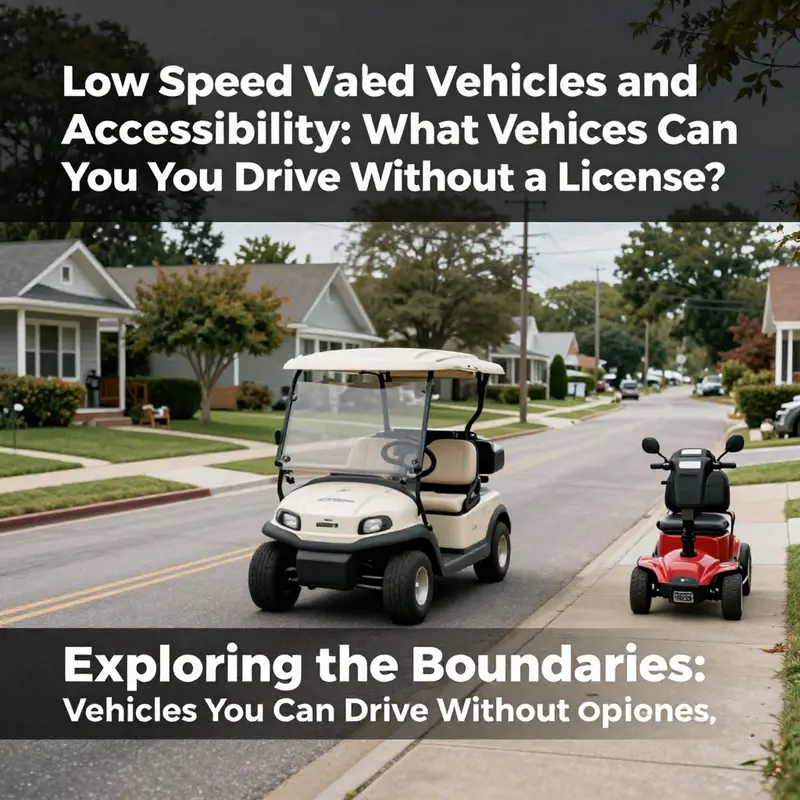
When we discuss what you can legally drive without a traditional driver’s license, the conversation often centers on speed limits and where you can operate. Yet the issue runs deeper, touching accessibility, urban design, and public safety. This chapter surveys low‑speed, neighborhood electric vehicles as a case study in how mobility options can be safe, practical, and inclusive without demanding a full license.
Low‑speed vehicles, typically designed to top out around 20–25 mph, are intended for short trips in controlled spaces such as campuses, retirement communities, gated developments, and certain resort or park settings. They are not meant for high‑speed highway travel, but for predictable, pedestrian‑friendly environments where the main goal is reliable mobility rather than long distance capability.
Technology and policy align around modest performance. Manufacturers emphasize compact size, electric powertrains, easy handling, and safety features suited to low‑speed use: seat belts, lights, signals, and sometimes windshields and wipers. Regulators in many places recognize a special category for these vehicles, allowing operation on select roads and subject to safety standards that are lighter than for full‑size cars. Importantly, exemptions are not universal; routes and requirements vary by jurisdiction, and noncompliance can create safety risks for all road users.
Accessibility is a central thread. For some people, these vehicles enable independence where a traditional car is impractical or unavailable. For others, they provide a practical last‑mile option when public transit is insufficient. At the same time, the social contract around shared spaces—pedestrians, cyclists, and slow movers—requires clear rules, predictable vehicle behavior, and adequate signaling to maintain safety.
The operational reality is local. A vehicle may be license exempt in one city but require a permit or insurance in another. Before adopting a low‑speed option, individuals and organizations should verify local rules, vehicle standards, and the permissible routes. The goal is not to erase rules but to implement them in a way that preserves safety while expanding mobility choices.
Finally, the broader takeaway is that licensing policies intersect with design, planning, and culture. Thoughtful street design, appropriate signage, and community outreach can help these vehicles coexist with walkers and cyclists, turning a license exemption into a pathway to greater autonomy and inclusion. The chapter closes with a reminder: always check local requirements before operating any low‑speed vehicle without a standard driver’s license, and consider how the vehicle’s capabilities align with the places you intend to travel.
Final thoughts
Understanding the various vehicles that can be operated without a driver’s license opens avenues for enhanced mobility. Whether utilizing bicycles, e-bikes, electric scooters, or low-speed vehicles, each category fosters an independent lifestyle while complying with local regulations. New and existing drivers, as well as vehicle owners, can find opportunities to explore these transportation options safely and lawfully. Emphasizing awareness of local laws and responsible operation can enhance overall safety and accessibility for all users.