
Vehicle registration is a necessary step for all vehicle owners, ensuring compliance with state laws and regulations. However, it raises an interesting question: do you need a driver’s license to register a vehicle? This article delves into the requirements and processes associated with registering a vehicle, even if you do not possess a driver’s license. We’ll explore how state-specific variations can impact this process, the legal implications, and practical considerations for new drivers, existing drivers, vehicle owners, and auto dealerships. In addition, we’ll provide essential guidelines for navigating the Department of Motor Vehicles (DMV), ensuring you have all the necessary information for a smooth registration experience.
null
null
License or Identity: Navigating State Variations in Vehicle Registration Without a Driver’s License
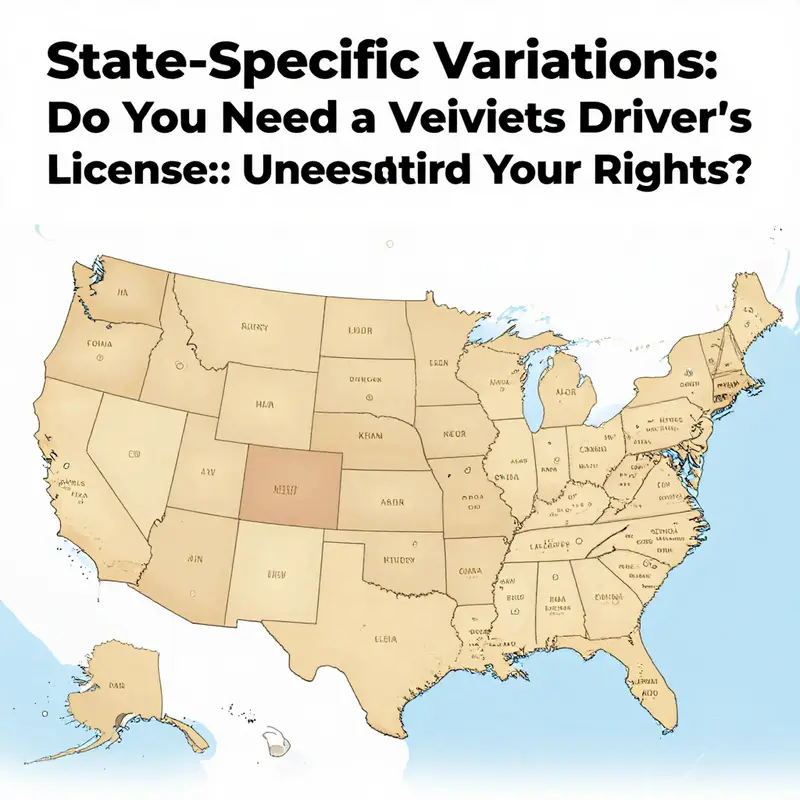
Ask most people whether a driver’s license is required to register a vehicle and you’ll likely hear a straightforward yes or no. In practice, the answer is more nuanced and deeply dependent on where you live. Across the United States, state governments design and enforce vehicle registration rules that reflect competing priorities: public safety, administrative efficiency, and the desire to balance individual rights with collective oversight. The result is a patchwork in which some states tie registration closely to driving privileges, while others decouple the two processes in meaningful ways. The question, then, becomes less about a single national rule and more about understanding the distinct rules of the state where the vehicle will be registered. That understanding requires patience, a willingness to read official guidance, and a clear sense of what counts as acceptable identification when a license is not in hand. It also means recognizing the practical purposes behind these rules: why proof of identity is required, what counts as residency, and how the state can verify ownership without needing to know whether the vehicle will be driven immediately or stored for a period of time. The journey from concept to registration can feel almost ceremonial in its precision, yet it is fundamentally about access—how easy or difficult it is for a person to establish legal ownership of a vehicle without holding a driver’s license.
In general terms, the landscape is diverse. Many states allow some process for registering a vehicle without a current driver’s license, as long as the applicant can present alternative forms of identification and proof of residency. In those states, the license remains important for operation, but it is not necessarily a gateway to ownership records. The same pattern can play out in different ways within the same state, depending on whether the vehicle is intended for regular use, occasional storage, or off-road activity. The distinctions matter: registration without a license is more likely to be feasible when the vehicle will not be operated on public roads, or when the state has a clear pathway for non-operators to establish legal ownership. The practical implication is that a person who does not hold a driver’s license might still be able to register a car, a boat, or a trailer, provided they can satisfy the identification, ownership, and residency requirements that the state has laid out in its vehicle registration regulations. This is not a universal universalism, but a spectrum with endpoints that reflect policy choices about safety, accountability, and administrative burden.
Consider California as a helpful illustration of the spectrum. In California, the key nuance is not simply a blanket ban or permission. The state requires a valid driver’s license for vehicle registration primarily when the driver will operate the vehicle. If you are registering a vehicle that you plan to drive, a license is typically required as part of the process. But if the vehicle is being registered for storage, or if it will be used only for non-operational purposes, there may be circumstances under which the standard license requirement can be bypassed. The distinction between operational and non-operational use is not merely a bureaucratic formality; it is a reflection of how the state weighs risk and oversight. When a vehicle sits idle in a driveway, a registration may still be necessary for recordkeeping and taxation, yet the presence of a license becomes less central to the administrative calculus. That is not to say the process becomes permissive without scrutiny. California still demands robust proof of identity and ownership, and it maintains strict rules about how information is verified and stored in state records. The net effect is a state that can appear both permissive and demanding, depending on the user’s intended use of the vehicle and the exact nature of the registration sought.
Elsewhere, the landscape tightens. In states like New York and Texas, the pattern leans toward a stronger alignment between driving privileges and vehicle ownership. These states often require a valid driver’s license as part of both the registration and the title issuance process. The logic is straightforward: the state has a direct interest in tying ownership records to individuals who have demonstrated the ability to operate motor vehicles on public roads. When someone lacks a license, the pathway to registration becomes complicated, and the state’s rules reflect a presumption that ownership and operation are intrinsically linked. This linkage is not merely ceremonial; it has tangible implications for how quickly a vehicle can be titled, registered, and legally documented as belonging to a particular person. If a person cannot demonstrate driving privileges through a license, they may encounter friction or even inability to complete registration in these jurisdictions, unless alternative mechanisms or exceptions are provided by law.
Florida offers a contrasting example that underscores the variability at the state level. In Florida, the appetite for flexibility often centers on scenarios where the vehicle is used for off-road purposes or stored on private property. In such contexts, Floridian rules may permit the registration of a vehicle without a traditional driver’s license. The emphasis here is not to erode safety or accountability but to recognize that not all vehicle ownership involves immediate operation on public roads. The state still requires adequate identification and ownership documentation, yet it calibrates the licensing requirement to the actual use case of the vehicle. This approach aligns well with a broader policy goal: avoiding unnecessary hindrance for individuals who possess legitimate stakes in vehicle ownership but who do not drive in the traditional sense—perhaps due to medical, legal, or personal reasons. The Florida model invites observers to consider how policy can be tailored to match real-world circumstances while still protecting public interests.
What these examples reveal is a core reality: the driver’s license, while a central symbol of driving privileges, is not a universally binding gateway to vehicle ownership. The administrative architecture surrounding vehicle registration is designed to verify ownership, confirm identity, and ensure that lawfully owned vehicles can be tracked within the state system. A license is one convenient and highly reliable proxy for those signals, but it is not the sole instrument. States that allow registration without a license typically require one or more alternative forms of identification, often government-issued photo IDs, passports, or state-issued identification cards. They also demand documentation that proves residency in the state—utility bills, lease agreements, or other official correspondence that demonstrates a person’s presence within the jurisdiction. The reason for this emphasis on residency is straightforward: registration serves as a basis for taxation, registration renewal, and enforcement actions if a vehicle is misused or misregistered. Without residency proof, a state cannot reliably attach the vehicle to a lawful owner, which would undermine the integrity of the system and complicate enforcement.
The mechanics of how these rules are applied can also vary in subtler ways. Some states allow a form of third-party registration, whereby a licensed agent or legal representative can complete the registration on behalf of someone who cannot, for reasons including disability or absence. This option expands access and ensures that people who lack the ability to navigate the DMV process personally still have a legitimate route to ownership documentation. It is not a blanket solution, however. Third-party arrangements come with their own verification requirements and oversight to prevent fraud, which means that the process, while more accessible in some respects, remains bound by precise documentary standards.
Documentation and identification sit at the heart of the registration conversation. The lack of a driver’s license does not automatically bar someone from registering a vehicle in many jurisdictions. In practice, what matters most is the quality and authenticity of the documents presented. Governments tend to accept a broad suite of identification options, especially when the applicant can corroborate identity and residency with additional materials. A government-issued photo ID often stands as a primary alternative, but passports and state-issued IDs frequently fill the same role with equal legitimacy. For ownership verification, titles and proof of purchase become critical. The DMV typically requires a bill of sale or a certificate of title to establish that the applicant is the rightful owner of the vehicle. When this documentation is in order, the absence of a driver’s license does not necessarily derail the process. The reality is more nuanced: the more the vehicle is intended for use on public roads, the more stringent the requirements become, and the higher the likelihood that a license will be necessary as part of the process.
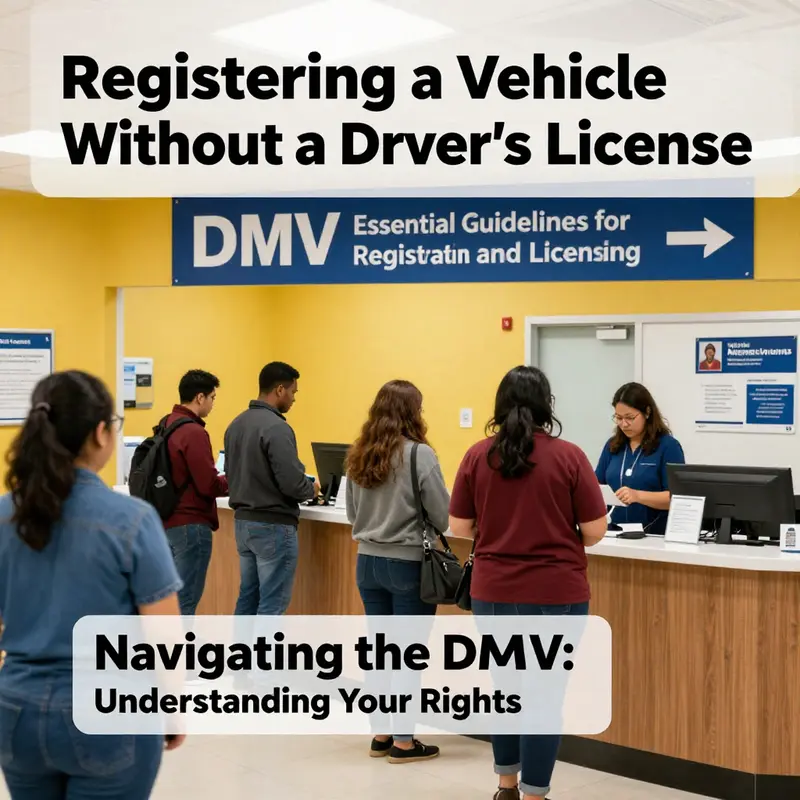
A practical way to approach registration without a driver’s license is to begin with the state’s official DMV guidance. Each state publishes its rules online, sometimes in dense legal language, sometimes in more user-friendly formats. The core questions to answer are clear: What forms of identification are acceptable? What counts as proof of residency? Are there exceptions for non-operators or for vehicles used exclusively off-road or for storage? Is third-party registration allowed, and under what conditions? The answers vary, but the throughline is consistent: do not assume a universal rule exists. A careful review of the state’s published requirements helps prevent delays and surprises at the counter.
For readers who find themselves navigating these rules without a license, there is value in thinking through the practical implications of the state’s choices. The decision to require a license for registration when a vehicle will be driven is not a capricious policy—it is a mechanism to link registration data with driving privileges, facilitate enforcement, and assign responsibility for vehicle use. When a state chooses to separate registration from operation, it often does so to reduce barriers for non-drivers while still preserving accountability through rigorous documentation. In this sense, registration is about owning a thing, while licensing is about controlling its use. The two are related but distinct, and understanding that distinction helps explain why some states are more accommodating than others.
The broader takeaway for anyone facing a registration task without a driver’s license is pragmatic rather than poetic. First, do not assume your situation is excluded. Second, gather a robust set of documents: a government-issued photo ID, proof of state residency, the vehicle’s title or bill of sale, and any supplemental documents that can establish ownership and identity. Third, be prepared to explain how the vehicle will be used. If the vehicle will be operated on public roads, you should anticipate that a license will be a necessary component of the registration process. If the vehicle is intended for storage, off-road use, or private property scenarios, you may be offered an alternative pathway that accommodates your situation. And finally, check the official DMV resources for your state with care. The wording can be nuanced, and the exact forms of acceptable documentation can change with administrative updates or legislative changes.
In the narrative of policy, the tension between licensing and registration is not merely a bureaucratic curiosity; it is a reflection of how a state calibrates access to a regulated system. The balance between making ownership accessible and ensuring accountability is delicate. Some states tilt toward inclusivity, providing avenues for individuals who do not hold driving licenses to register vehicles after presenting adequate documentation and, in some cases, naming a responsible person who can act on the owner’s behalf. Other states tilt toward stricter controls, reinforcing the link between the right to drive and the right to possess a vehicle, framed by considerations of safety and legal responsibility. The subtle hues of these choices—the line between permissive and restrictive—shape people’s ability to register a car after a move, after a lapse in a license, or when a license is temporarily unavailable for medical or personal reasons. Those who inhabit the space between the two extremes often find themselves navigating a maze of forms, counters, and notices that stress patience as much as accuracy.
The chapter you are reading now sits at the intersection of policy analysis and everyday life. It is a practical guide to an unfamiliar terrain: the idea that ownership and operation can be decoupled, at least in part, within the state’s administrative framework. If you approach this terrain with a clear checklist, you stand a better chance of achieving a lawful registration without a driver’s license. The first step is to identify the state’s official stance on registration for non-operators or non-licensed applicants. The second step is to assemble the required documents, including any alternatives to a driver’s license that the state will accept. The third step is to consider whether third-party registration is permissible and, if so, who can act on your behalf and what documents they must provide. The fourth step is to test the process through a pre-visit check of the DMV website or a quick phone call to confirm the latest requirements; regulatory updates can happen, sometimes with little public fanfare, and what was true last year may not hold today.
In practice, many readers will discover that the road to registration without a license is not a straight line but a corridor with doors that open under specific conditions. The corridor can be navigated with care: keep the paperwork clean, keep the documentation consistent, and keep your expectations aligned with the state’s stated rules. If you find yourself puzzled by a particular provision, do not hesitate to seek clarification from the DMV, or consult a legal aid resource that focuses on vehicle ownership and registration. The process may be intricate, but it is designed to protect both the individual and the broader public by ensuring that every registered vehicle has a traceable owner and a verifiable use-case.
This nuanced landscape is why linkages to authoritative resources matter. For a deeper dive into how state rules influence driver licensing and their impact on registration, see the discussion at state rules impacting driver licensing. The page offers context on why registrants should not assume uniformity and provides a lens for comparing how different jurisdictions treat the relationship between driving privileges and vehicle ownership. It is a useful complement to the state-by-state specifics a reader must check on the official DMV site. While the blog resource is not a substitute for official regulations, it helps frame the conversation and encourages readers to approach their own state’s rules with a careful, critical eye.
As you translate this understanding into action, keep in mind the broader purpose of vehicle registration itself: to document ownership, establish accountability for taxation and compliance, and provide a clear link between a vehicle and its human owner within a given jurisdiction. The fact that some states allow registration without a driver’s license does not erase those purposes; it merely shows that the state can achieve them through a different set of tools and procedures. For many people, this distinction is liberating, offering a path to ownership when driving remains out of reach. For others, it underscores the importance of staying current with regulatory changes and understanding how a license unit interacts with ownership records. Either way, the core discipline remains the same: be precise, be patient, and engage with the process with the seriousness it deserves.
External resource: For official guidance and current state-by-state information, consult the National Highway Traffic Safety Administration’s vehicle registration overview: https://www.nhtsa.gov/vehicle-registration-and-title-information
null
null
null
null
Final thoughts
In conclusion, understanding whether a driver’s license is necessary to register a vehicle depends significantly on your state and individual circumstances. Each state possesses unique registration requirements, influencing how vehicle owners, especially those without a driver’s license, navigate the registration process. Whether you’re a new driver, an existing vehicle owner, or involved in auto dealership operations, being acquainted with these regulations ensures smoother compliance and prevents potential legal pitfalls. Keep informed and proactive as you undertake the vehicle registration journey, making sure to consult local DMV resources when needed.