
Understanding the California Vehicle License Fee (VLF) is crucial for new drivers, existing vehicle owners, and auto dealerships alike. This comprehensive guide provides insights into how the VLF is calculated, the impact of local fees, depreciation factors, practical examples, and resources available for accurate fee estimations. Each chapter builds upon these essential topics, ensuring that all readers can navigate vehicle licensing with confidence and clarity.
null
null
The True Cost of California Vehicle Registration: How Local Fees Amplify the Vehicle License Fee
In California, paying for a registered vehicle is more than a single, straightforward line item. The Vehicle License Fee (VLF) sits at the center of this price tag and acts as a long shadow across every annual renewal. The VLF is calculated as 0.65% of a vehicle’s current market value, a figure the California Department of Motor Vehicles (DMV) updates each year to reflect depreciation. This means the fee isn’t fixed; it slides downward as a car ages and its market value declines. A new, well-kept car valued at $40,000 would incur a VLF of about $260 in its first year under this rule. That number is simple enough to compute, but it masks a broader reality: the VLF is the largest piece of the registration bill for many vehicles, especially newer or higher-valued ones, and it evolves in predictable yet sometimes surprising ways as time passes. The base VLF sits atop a set of other charges that can vary dramatically by county and city, all contributing to a price that can feel less like a single fee and more like a collection of local decisions layered onto a state framework. The base registration fee itself is a relatively modest, flat amount—traditionally around $46—but the VLF dwarfs this base for many drivers and, crucially, is the component that diminishes only with the car’s depreciation, not with the passage of time alone. In practice, the total is a moving target, and the difference between what you expect to pay at purchase and what you ultimately owe after a year or two can be striking once local charges are added to the mix. The first year’s math, therefore, is often a rough guide to the continuing story of what it costs to keep a vehicle legally registered in the Golden State, but the full picture emerges only when local and state systems are read together, as they are during every renewal cycle.
The interplay between state calculation and local levies is at the heart of the California registration cost puzzle. The VLF anchors the bill, but it exists inside a broader ecosystem of fees that state policymakers and local governments use to fund transportation, road maintenance, and environmental programs. One of the most important pieces of this broader ecosystem is its potential to double the overall cost in certain jurisdictions. Counties and, occasionally, cities implement surcharges to support transportation improvements or to address smog-related concerns, among other initiatives. These surcharges are not uniform. They can vary widely from one location to another, and their impact can be especially felt by households that own newer, more valuable vehicles. In effect, the better the car in the driveway, the more pronounced the local components can be, creating a true cost dynamic that can feel entirely distinct from the year-to-year depreciation of the vehicle’s market value.
In addition to the VLF and these local surcharges, there are other program-specific fees that can creep into the annual bill. The Smog Abatement Fee is one such example, and its presence depends on the vehicle’s age and emissions characteristics. For some vehicles, this fee may be a one-time charge when the vehicle is new or when certain criteria are met, while for others it may recur on an ongoing basis. There are also special program fees tied to initiatives like traffic congestion reduction or clean air projects. These charges, though they often appear as separate line items, collectively push the total upward in a way that many drivers do not anticipate at the moment they purchase or lease their vehicle. The California Highway Patrol (CHP) Fee also contributes to the overall cost, funding essential law enforcement and road safety operations that support the infrastructure behind every mile of travel. Taken together, these state and local charges create a layered and sometimes opaque pricing structure that can overwhelm new car buyers and remind long-time owners that ownership costs extend beyond the purchase price.
From a practical standpoint, what does this mean for a driver weighing the purchase of a new or used vehicle or simply planning annual renewals? It means that the price tag on registration is a moving target that responds to market values, depreciation, and a patchwork of local priorities. While the 0.65% VLF provides a clear baseline that is easy to calculate, the rest of the bill requires more careful scrutiny. For instance, a five-year window on a $40,000 car doesn’t simply yield a fixed VLF; it yields a sum that declines with depreciation, yet the overall registration cost can rise when you factor in rising local surcharges and ongoing program fees. In fact, even if the VLF portion decreases each year as the vehicle loses value, the total due at renewal can climb when local assessments are adjusted or when new regional initiatives are funded. A rough illustration helps here: the first year’s VLF on a $40,000 vehicle is about $260, and if the vehicle remains in the same family or is similarly valued over five years, the VLF portion across those years is likely to exceed $1,300 in total, even after depreciation. This aggregate figure is a meaningful reminder that the cost of vehicle ownership in California is a composite of state rules and local ambitions rather than a single, static rate.
To navigate this complexity, the DMV maintains a Vehicle License Fee Calculator designed to provide a more precise, location-specific estimate. The calculator takes into account the vehicle’s make, model, year, and the owner’s location, translating the state’s depreciation schedule into a concrete figure you can compare against a rough mental model. This tool is an essential resource for anyone trying to forecast their annual registration costs, whether they are evaluating a new purchase, planning a resale, or simply budgeting for the year ahead. The calculator’s capacity to reflect local surcharges makes it a crucial bridge between the broad state framework and the patchwork of local fees that are so often the most variable part of the bill.
For readers seeking broader context about how state and local rules shape licensing practices beyond the VLF, there are resources that discuss the interplay of policy and practice at the state level. In terms of navigation through policy specifics and licensing implications, a useful reference can be found under the topic of how state rules impact driver licensing. This resource provides a lens into how policy decisions at the state level influence the day-to-day reality of owning and operating a vehicle within a given jurisdiction. You can explore that discussion here: state rules impact on driver licensing.
For those who want a hands-on, numbers-focused path to understanding their own costs, the official DMV portal remains the definitive source. It hosts the Vehicle License Fee Calculator along with detailed fee breakdowns tailored to your specific vehicle and local context. In practice, this means plugging in your car’s value, age, and the county of registration to reveal a precise total that includes the VLF, base registration, CHP and any local surcharges, Smog Abatement Fee, and other program fees. This degree of specificity is invaluable when you are comparing options—buying a new vehicle, sticking with a used model, or evaluating the long-term cost of ownership. The DMV’s calculator is updated regularly to reflect shifts in depreciation schedules and the addition or removal of local assessments, so consulting it during renewal season is a prudent step for any California driver.
From a planning perspective, the key takeaway is that the VLF is not the sole determinant of registration cost. As depreciation reduces the vehicle’s current market value, the VLF portion declines, providing a measure of relief over time. However, local surcharges and program fees can escalate or reconfigure the total — sometimes substantially — depending on the county’s priorities and the broader fiscal environment. For the consumer, the practical effect is a cost structure that rewards timely budgeting and proactive fact-finding. Instead of assuming a static annual bill, a responsible approach involves running the numbers with the DMV calculator before any renewal and revisiting the estimate whenever there is a change in vehicle value, ownership, or local policy. This dynamic is especially salient for households with multiple vehicles, for buyers who are considering upgrading to a higher-valued car, or for those who are curious about how policy shifts—such as new transportation investments or environmental initiatives—could influence their annual registration costs.
In sum, California’s Vehicle License Fee is a carefully calibrated fraction of a vehicle’s current market value, weighted by the depreciating nature of the asset. Yet the total price of annual registration carries the signature of local governance—counties and municipalities translating transportation, safety, and environmental ambitions into line items that can add significantly to the bill. The net effect is that understanding the full cost of registration requires both a grasp of the state depreciation framework and an awareness of the local charges that apply to your locale. The DMV calculator is the practical instrument to bring these pieces together into a single, actionable number, enabling drivers to make informed decisions about vehicle ownership, budgeting, and renewal timing. For those who want to explore related policy discussions or broader licensing implications, the interconnected topics on state rules and licensing practices offer a complementary perspective that enriches the main question: how much is California’s vehicle license fee, and how do local fees shape the bottom line?
External resources: For the most current, location-specific figures and the official breakdown, consult the DMV portal. https://www.dmv.ca.gov/portal/
External link reference: https://www.dmv.ca.gov/portal/
Internal resource: If you’re curious about how different state rules influence licensing practices, you can also explore a related discussion on state rules impact on driver licensing: state rules impact on driver licensing.
Beyond the Sticker Price: How Depreciation and Local Surcharges Shape California’s Vehicle License Fee
Californians who register a vehicle face more than one cost. The Vehicle License Fee, or VLF, is billed every year and is not a fixed tax based on the original purchase price. Instead, the DMV uses the vehicle’s current market value at the time of registration to determine the amount. The official rate is 0.65 percent, and the value upon which that percentage is applied is set by a state-sanctioned depreciation schedule. This approach is meant to reflect how much a car is worth as it ages rather than how much the owner paid for it. Yet the math behind it can feel opaque, especially when local surcharges add another layer to the bill.
At the heart of the VLF is the idea of ongoing value. When you renew your registration, the DMV recalculates the fee using the vehicle’s current market value. That value is not static. It is adjusted by the depreciation schedule that the DMV uses to capture the way cars lose value as they rack up miles and age. The 0.65 percent rate is straightforward, but the value it applies to is not. It changes with model year, mileage, demand for the vehicle, and the broader market. The result is a fee that starts higher for new cars and gradually declines as the car becomes older and less valuable.
Some readers will notice a different way to think about the VLF, one that translates the idea of depreciation into a simple numeric model. The material here presents an illustrative formula often used to estimate the fee: Estimated VLF = 0.02 × Vehicle Value × Depreciation Factor. This is not the official DMV formula, but it helps readers visualize how depreciation factors can scale the fee downward as the value falls. The key point remains: the VLF tracks current market value, and depreciation factors push the fee lower as a vehicle loses value.
Returning to the official numbers, consider the clean arithmetic of a brand-new car with a value of $40,000. The base VLF at 0.65 percent would be $260. That is the starting point, before any local surcharges. The DMV’s depreciation schedule then reduces the assumed market value as the vehicle ages, producing a fee that mirrors the car’s fading worth. The practical effect is clear: a four-year-old sedan will often carry a much smaller VLF than a fresh-from-the-lot model, even if the car remains roadworthy and legally registered.
The depreciation factors are the critical gears in this machine. They encode the real-world observation that a car’s price falls quickly in the early years and more slowly later on. In a typical long horizon, the VLF’s share of the original price shrinks dramatically. In practical terms, a vehicle that has aged five or six years may see its VLF drop by more than half, and after ten years the fee is a fraction of the starting amount. The DMV defends this approach as equitable because it ties the annual fee to what the vehicle can realistically fetch in the market at the moment of renewal, not what it cost when new.
This design matters for households planning mobility budgets. The VLF interacts with other registration costs, insurance, fuel, and maintenance. Because local surcharges are added on top of the base VLF, the total annual cost can vary dramatically from one county to another. Some counties layer several surcharges, which can push the combined bill into a range that feels near double the base amount. Thus, two identical vehicles in different counties can end up with very different annual registration expenses. Understanding the depreciation schedule helps drivers anticipate how their bills will evolve over time.
County surcharges are not a universal constant. They reflect local needs, from road maintenance to public safety programs. The result is a patchwork of fees that accompany the DMV’s statewide rate. The variability means that even when you know your vehicle’s current market value, the final cost to register it next year may differ by dozens or hundreds of dollars depending on where you live. The idea behind this system is to distribute the burden roughly in line with local public services, but it also adds a layer of complexity for anyone budgeting for a vehicle’s lifecycle.
For most people, a precise total begins with the DMV’s official Vehicle License Fee Calculator. By inputting the vehicle’s details, the current value, and your locale, you can generate a more accurate estimate that includes base VLF and any applicable surcharges. The calculator uses the state’s depreciation schedule to translate a model year and condition into a current market value, then applies the 0.65 percent rate to produce the base fee. From there, the tool adds county-specific surcharges to deliver a near-final number you can use to plan your registration costs. While it may not capture every nuance, it’s the most reliable starting point for expectations.
Imagine a buyer purchases a new SUV priced at $40,000. At registration, the base VLF is $260. If the vehicle is five years old and its market value has fallen to around $18,000, the base VLF would be 0.65 percent of that value, roughly $117. While that sounds modest, the final figure can climb once the local surcharges are included, depending on the county’s rates. Now, apply the depreciation factors as the model ages—these factors push the effective value downward, so the VLF shrinks even as the car remains in service. The combined effect is a fee that stabilizes at a lower percentage of the article’s original price while remaining a meaningful cost for ongoing vehicle ownership.
Several themes run through these mechanics. First, VLF is not a one-time purchase tax; it’s an ongoing obligation tied to the vehicle’s current value. Second, depreciation is not merely aesthetic; it’s a legal instrument that makes the annual fee responsive to market realities. Third, local surcharges remind us that California’s vehicle system blends statewide rules with local finance needs, producing a cost structure that is both predictable in its logic and variable in practice. For many drivers, the most important takeaway is not the exact percentage, but the trajectory: the VLF begins at a higher level and gradually declines as the asset ages, shaping long-term ownership costs.
Knowing how depreciation shapes the VLF can influence decisions about when to replace or trade in a vehicle. In some cases, holding onto a car for several more years may reduce the annual tax bite, as the market value continues to slip more slowly but still declines. In others, a newer vehicle sponsored by incentives and favorable financing could yield a temporary spike in upfront costs, even if the monthly payment is approachable. For families, fleets, or individuals who rely on reliable, low-cost transportation, these subtleties matter when budgeting for maintenance, insurance, and registration year after year. That is why many readers want a clear, predictable approach to estimate what they will owe when they next register or renew.
To keep the discussion grounded, it helps to consult the official sources as the primary reference. The California DMV publishes the depreciation schedule and explains how the value is determined at each renewal. While popular explanations may oversimplify the equation, the core idea remains stable: the fee tracks the vehicle’s current market value, with depreciation factors smoothing the decline as the vehicle ages. The result is a system that seeks fairness, balancing revenue needs with the realities of ownership in a state whose climate, miles, and price levels vary widely across regions.
Ultimately, understanding the VLF depends on seeing how state rules tie into everyday licensing decisions. For a broader view of how state rules shape what you pay when you license your vehicle, see state rules impact on driver licensing.
For a deeper dive into the official depreciation framework that underpins the VLF, consult the California DMV depreciation schedule. This external resource provides the schedule and the rules that govern how the current market value is calculated for registration purposes: https://www.dmv.ca.gov/portal/dmv/online-services/vlf-depreciation-schedule/
Valuing the Ride: How California’s Vehicle License Fee Shapes the True Cost of Ownership
In California, the Vehicle License Fee (VLF) functions as a steady drumbeat beneath the broader rhythm of car ownership. It is not just a line item on a renewal notice; it is a value-based levy that reflects the state’s approach to funding transportation, public safety, and infrastructure. The heart of the VLF is simple in arithmetic, yet its real-world effect is anything but simple to predict: the fee is calculated as 0.65% of a vehicle’s current market value, a value that the California Department of Motor Vehicles (DMV) determines and periodically updates. The way that value is applied—annually, at registration or renewal, and adjusted as the vehicle’s price tag curves downward with time—means the VLF is intimately tied to how much a car is worth today, not merely what it was worth when new. The result is a cost that can feel almost invisible at the moment of purchase, only to loom larger years later in the driveway and the budget spreadsheet as the vehicle ages and depreciates.
The VLF sits at the intersection of policy and practical math. It is assessed every year, and the amount is based on the vehicle’s value at the time of registration or renewal. The base calculation is straightforward: take 0.65% of the current market value and you have the annual VLF. But the story doesn’t end there. The value itself is not static. California employs a declining value formula that recognizes depreciation—the vehicle’s market value drops as it gets older, possibly due to wear, mileage, aging components, and market dynamics. This depreciation mechanism means the VLF can start high for a brand-new car and steadily fall as the vehicle moves through its life cycle. The impact is most visible when you compare a new vehicle to a used one, even if both are the same model. A fresh showroom price does not remain an undiminished beacon; the value adjusts and so does the fee that accompanies it.
To understand the scale, consider a concrete example. A new car valued at $40,000 would incur a VLF of $260 per year, calculated as 0.65% of $40,000. That number, though seemingly modest, compounds across the years as the vehicle remains registered. Over a five-year horizon, the licensing cost for the VLF portion alone can add up to more than a thousand dollars, even before accounting for other registration charges. This is not merely a function of inflation or a one-time tax—it’s the consequence of tying the fee to the vehicle’s ongoing value. The proportional relationship makes the VLF a more significant component of the total registration bill for high-value or newer vehicles. The person buying a luxury or top-end used car can anticipate a higher VLF than someone who purchases a vehicle that is a few years old and carries a lower market value. The math tracks value; the cost follows in lockstep.
What many readers discover when they contrast different purchase scenarios is that depreciation changes the fee in meaningful ways. A five-year-old car, which has already lost value, will have a smaller VLF than a brand-new counterpart, even if they share the same make and model. If the vehicle’s current market value has fallen to, say, $20,000, the VLF would be about $130 per year. If you extend the logic to a car valued around $15,000, the annual VLF drops to roughly $97.50. These numbers are illustrative, but they reveal a pattern: depreciation translates directly into reduced annual fees, which can be a meaningful factor in long-term budgeting, especially for owners who keep a car for many years or who rely on reliable transportation without stepping up to the newest model every few years.
Yet the VLF does not exist in a vacuum. California adds another layer of cost in the form of local surcharges. Counties, districts, and other local authorities often levy additional charges that fund regional transportation projects and related services. The effect of these surcharges can be substantial, and in some locations they can nearly double the base VLF portion of the registration bill. In practice, even a modest depreciation in the vehicle’s value can be offset, or amplified, by local fees, making the total annual licensing cost highly location-specific. This means that a new car in one county could carry a markedly different annual registration burden than the same model in a neighboring county, purely as a function of local financing needs and regulatory structure. The interplay between state-level 0.65% calculations and local surcharges creates a mosaic of costs that varies from street to street, driveway to driveway.
For the reader budgeting for a purchase, renewal, or simply reconciling the ongoing costs of ownership, the most reliable guide remains the DMV’s official tools. The DMV provides a vehicle license fee calculator designed to yield precise results for a given vehicle and location. Because the VLF is sensitive to current market values, which shift with market conditions, mileage, and wear, using the calculator helps translate general rules into concrete figures tailored to a specific situation. This is especially important when planning to register a newer vehicle, where the base 0.65% fee may appear modest at first glance, but the cumulative effect over the life of the car, particularly in conjunction with local surcharges, can be substantial.
The broader finance of vehicle ownership in California is built around the idea that roadways, safety programs, and transportation initiatives are funded through a combination of state and local fees. The VLF is a cornerstone of that funding structure, a charge that directly reflects the value of what you own while contributing to public goods that benefit all motorists. When a person considers whether to purchase or retain a vehicle, the VLF is an intrinsic part of the cost calculus—one that scales with value and ages with the vehicle. It is not simply a tax levied on an asset; it is a mechanism that ties public investment to the private asset’s market position, aligning the cost of ownership with the vehicle’s current worth and the community’s ongoing needs.
For readers who want to explore the numbers themselves, there is no substitute for plugging a real model into a calculator. The DMV’s Vehicle License Fee Calculator offers projections that incorporate both the depreciating value and any applicable local surcharges. While the core rule remains 0.65% of the vehicle’s current market value, the calculator adjusts for the depreciation schedule and location-based fees to present a precise annual amount. The tool also helps illuminate how changes in value—from rapid depreciation in the first years to slower declines later on—translate into fee changes over time. The result is a clearer, more actionable picture of annual costs, which can be a meaningful input into decisions about ownership duration, trade-in timing, or the viability of keeping a high-value vehicle beyond its early years.
In the spirit of making the numbers tangible, consider the practical implications. A consumer weighing two near-identical cars, one with a higher sticker price and one with a lower price, might assume the cheaper car is always a better deal. But when the VLF is considered, the difference in yearly licensing costs can tilt the calculation, especially if the higher-value model remains in service for many years. The depreciation curve matters not only for resale value but for the ongoing cost of keeping the vehicle registered and road-ready. This nuance matters whether you are a practical commuter, a family needing reliable transport, or a small business fleet owner keeping tabs on operating expenses.
To further enrich the context, the chapter weaves in a broader view of how policy and practice intersect in California’s road funding model. The VLF exists alongside other registration-related charges, such as the annual registration fee, weight-distance charges, or other assessments that may apply depending on the vehicle type, location, and purpose. The total bill at renewal can therefore be a composite figure, with the VLF representing a significant, sometimes dominant, portion for newer or higher-value vehicles. For someone facing an annual renewal, the practical takeaway is to anticipate fluctuations driven by the vehicle’s market value; to plan for higher costs when purchasing or leasing a newer, more expensive vehicle; and to recognize that savings from depreciation can be partially offset by local surcharges in some counties.
Readers who are new to California or who are unfamiliar with how public finances intersect with everyday decisions may find value in drawing a clearer line from value to cost. The 0.65% figure is not arbitrary—it is a transparent, value-based approach that ties a portion of vehicle-related costs to the market reality of the asset. The depreciation schedule embedded in the DMV’s calculations recognizes that cars wear, age, and lose market value, which, in turn, reduces the fee over time. At the same time, the necessity of local funding means that the true price of ownership can vary substantially from one locale to another, making geography a crucial variable in any budgeting exercise. In this sense, the VLF becomes a lens through which buyers and owners can understand how policy, market dynamics, and local governance combine to shape a practical expense that accompanies every mile driven in the Golden State.
For those seeking a more interactive understanding, the DMV’s official calculator remains the most reliable resource for precise figures. It accommodates the specific value of the vehicle, the year, and the local jurisdiction, delivering an accurate annual VLF as part of the broader registration cost. As with any system tied to market values, the numbers you see can shift with the months, so a mid-year check can be prudent if you are negotiating a purchase or preparing for renewal. In the end, knowledge of the VLF—its base rate, its depreciation-driven reductions, and the potential local surcharges—empowers California drivers to plan more effectively and to approach the registration process with clarity rather than surprise.
For readers who want to explore related topics while staying grounded in California’s licensing framework, a related discussion on how state rules shape driver licensing can provide additional context. You can read more about that topic here: state rules impact on driver licensing.
As you navigate the nuances of the Vehicle License Fee, remember that the core idea is straightforward: the fee tracks the vehicle’s current market value, adjusted for depreciation, and then augmented (in some places) by local charges. The result is a cost that evolves with the asset you own and with the jurisdiction in which you operate. Where a car begins its life—its initial price, its year, and its value in the market—helps determine the first-year VLF, while its ongoing trajectory of depreciation and local surcharges determines the subsequent years. This dynamic makes the VLF more than a fixed percentage; it becomes a living part of the ownership cost, reflecting both the asset’s worth and the community’s investment in its roads and safety systems.
To close the loop, readers are encouraged to consult the official DMV resource for the most precise, up-to-date figures. Real-world numbers, especially for a new purchase or a renewal in a specific county, require plugging in the vehicle’s current market value and your location into the DMV calculator. The dynamic nature of depreciation and local surcharges means that the VLF you pay this year may look different next year, even if the vehicle remains the same. This is the practical reality of how California funds its transportation system: a value-driven fee that adjusts with the asset and a local revenue framework that adds its own layer of variation.
External resource: For a direct reference to the official mechanism and calculator, visit the California DMV’s Vehicle License Fee page at https://www.dmv.ca.gov/portal/dmv/topics/vehicle-license-fee/.
The Real Cost of California Registration: Decoding the 0.65% Vehicle License Fee and Its Local Add-Ons
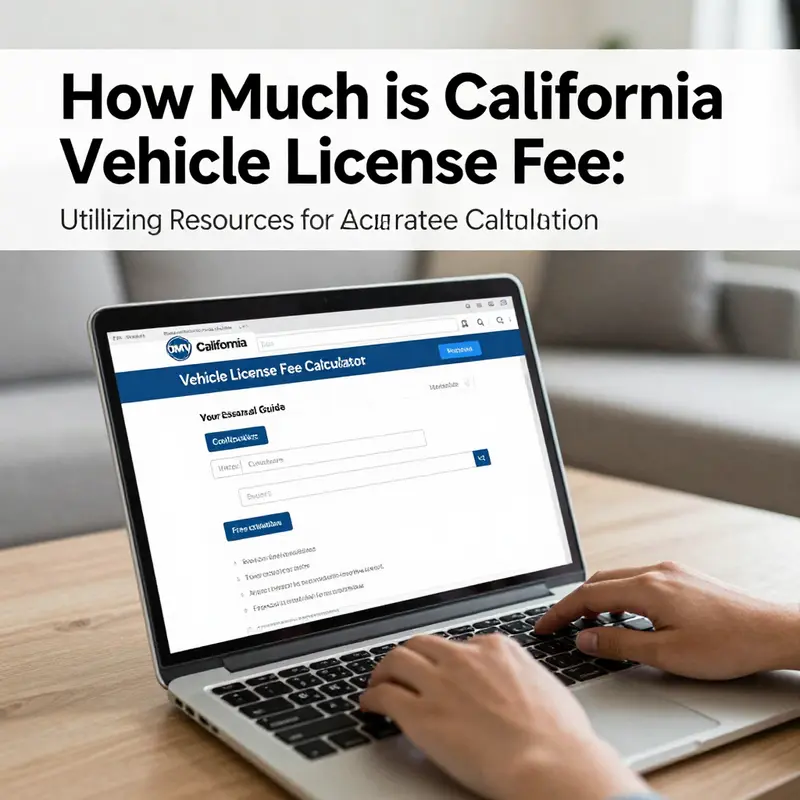
In California, vehicle ownership comes with a recurring price tag that often surprises new car buyers and long-time residents alike. The Vehicle License Fee (VLF) sits at the core of that annual bill. It is calculated as 0.65% of the vehicle’s current market value, a valuation that the California Department of Motor Vehicles (DMV) uses to determine what you owe at each registration or renewal. This means the VLF is not a one-time upfront cost tied to the purchase; it is a dynamic charge that follows the vehicle’s value as it changes over time. The calculation is straightforward in theory—0.65% of the current market value—but the practical impact can be more nuanced once you account for depreciation, local surcharges, and the other fees that ride along with the registration. The result is a cost that can be the largest line item on a renewal notice, especially for newer or higher-valued cars, and one that demands attention for anyone planning a purchase, budgeting for ownership, or deciding whether to keep a vehicle longer than initially planned.
The VLF is tied directly to the vehicle’s current market value, not the purchase price or the original sticker. The DMV employs a depreciation model that reduces the base value of a car as it ages and as its market value declines. In practice, this means that a brand-new car you bought for $40,000 will not carry a $260 annual fee forever, because the fee must reflect the car’s fading value over time. For a new vehicle, the annual VLF can be calculated as 0.65% of the current value, which begins at 0.65% of the initial price and then steps down as the vehicle’s value declines according to the depreciation formula. The math is simple enough: a $40,000 vehicle starts with a VLF around $260, but that number will shrink as the market value drops. This simple example helps illuminate why the VLF often makes up a substantial portion of the total registration cost in the first years after a purchase, when the vehicle carries the greatest value.
But the story does not end with the base VLF. California’s registration landscape includes a patchwork of county and local surcharges that can dramatically alter the bottom line. Counties and some districts have the authority to impose additional charges, and these can vary widely from one locality to another. In some cases, the local surcharges can nearly double the base amount, depending on where you register and what specific local fees apply. This is where the accuracy of your calculation hinges on using official tools that reflect both the state’s formula and your local context. If you move between counties, or if your vehicle’s use or registration location changes, those surcharges can shift as well, underscoring the importance of checking the most current figures for your exact address and vehicle. The DMV emphasizes that the official Vehicle Registration Fee Calculator is the right starting point for a precise estimate, since it integrates the base VLF with the various local components and any region-specific considerations.
When someone asks how much a California VLF will cost, the practical answer often centers on the sense that this fee is among the largest recurring charges tied to vehicle ownership. For many drivers, the VLF dwarfs other annual costs, such as basic registration, in certain years, particularly for newer or higher-value vehicles. Consider a scenario where a vehicle is valued at $40,000 when new; the base VLF is roughly $260 in the first year. As the car ages and its value declines, the VLF declines accordingly, but the total registration bill can rise or fall depending on any local surcharges or changes in applicable fees. The cumulative effect over five years can be substantial—easily exceeding $1,300 in a straightforward depreciation path for a vehicle that started with a $40,000 value. That figure does not include potential emissions-related fees or special charges that some counties apply, which can further affect the total.
To demystify the process and help residents forecast costs with confidence, California’s DMV provides an online Vehicle Registration Fee Calculator. This tool invites you to input the vehicle’s essential details—make, model, year, and location—and it translates those inputs into a precise annual VLF and a complete registration estimate. The calculator is designed not only to reveal the current year’s charge but also to show how the fee might evolve as the vehicle’s market value shifts and as local surcharges apply. Using this tool is a practical habit for anyone budgeting for a new purchase or deciding whether to hold a vehicle longer in a climate where depreciation and local fees can swing the numbers in meaningful ways. The tool’s emphasis on real-time data helps ensure you won’t be surprised by a mismatch between expectations and the actual renewal statement.
A more holistic understanding of the cost structure also means recognizing that the VLF sits alongside other fees that contribute to the total registration bill. While the 0.65% rate captures the core of the fee, other components—such as basic registration, wildlife or air quality fees, and any district-specific or county surcharges—sustain the broader administrative costs and regulatory programs that California administers. Emission-related considerations, for instance, can introduce additional charges that align with environmental and regional goals. The exact mix of these charges, again, is contingent on your location and vehicle profile, reinforcing the value of running a personalized calculation rather than relying on a rough figure.
With this layered understanding comes the practical advice many readers seek: how to plan ahead and avoid the surprise of an inflated renewal. First, keep in mind that the VLF is the most variable portion of the annual bill in the early years after purchase, when the vehicle retains the highest market value. If you anticipate purchasing a high-value vehicle, consider how the VLF will influence your total cost of ownership over the next several years, not just the sticker price. Second, when you relocate or when your vehicle’s usage changes (for example, if you switch counties or districts), re-run the DMV calculator to capture shifts in local surcharges. Third, leverage official resources whenever possible. The DMV’s calculator is updated to reflect policy changes and new fee structures, ensuring your planning remains accurate even as regulations evolve. In this way, the VLF becomes a predictable, manageable line item rather than a source of financial anxiety at renewal time.
As you navigate these calculations, it helps to remember that the VLF is deeply tied to your vehicle’s age and value, not simply to a static percentage of the original price. For a driver contemplating a switch—either trading up to a newer model or choosing to extend ownership of an existing one—the VLF remains a guidepost for cost comparison. It anchors the conversation about affordability, resilience, and long-term budgeting. And because local surcharges are a real wildcard, the possibility of substantial variation across counties means that the same model could carry noticeably different annual fees simply by changing registration locations. For a more complete grasp of how policy and locale intersect with licensing costs, readers can explore perspectives on how state rules shape driver licensing and related charges in nearby contexts via a focused discussion at state-rules-impact-on-driver-licensing.
Ultimately, the most reliable path to accurate, actionable numbers is to rely on the DMV’s official resources. The Vehicle License Fee Calculator, the DMV’s tariff pages, and related guidance are designed to reflect current law and the latest county surcharges, helping residents plan with clarity. While the broader lesson is straightforward—the VLF is 0.65% of the vehicle’s current market value, depreciated over time, plus local add-ons—the real value lies in methodically applying that rule to your own vehicle and location, not in trusting a generic estimate. The combined approach of understanding depreciation, acknowledging local variability, and using the DMV’s calculator equips residents to forecast renewal costs with confidence and to make informed decisions about when and how to renew, upgrade, or retain a vehicle.
For readers seeking a definitive reference and ongoing updates, the official DMV resources remain the most reliable authority. They offer real-time tools and detailed guidance on how the VLF is determined and applied, ensuring individuals can plan for ownership costs with greater certainty. Official guidance can be found at the California DMV’s Vehicle License Fee information page, which provides current rates, calculator access, and notes on local surcharges and additional fees. This resource serves as the anchor for anyone looking to move beyond rough estimates toward precise, location-specific budgeting and planning. https://www.dmv.ca.gov/portal/dmv/topics/vehicle-license-fee/
Final thoughts
Understanding the California Vehicle License Fee is essential for all vehicle owners and drivers. This guide highlights the key factors influencing VLF calculations, including local fees and vehicle depreciation. By leveraging the DMV’s resources and tools, such as the Fee Calculator, you can ensure you accurately assess the costs associated with vehicle registration in California. This knowledge empowers you to make informed decisions regarding vehicle ownership and registration processes.