
Acquiring a vehicle dealer license is an essential step for anyone looking to enter the automotive trade, whether you’re a new driver, existing vehicle owner, or an established dealership. Understanding the right type of license, eligibility requirements, application processes, and compliance documentation are all crucial elements in navigating this journey. This guide breaks down these aspects into manageable sections, making it easier for you to comprehend the steps involved in becoming a licensed vehicle dealer.
The Spectrum of Dealer Licenses: How Different Classifications Shape Your Road to a Legitimate Vehicle Dealership
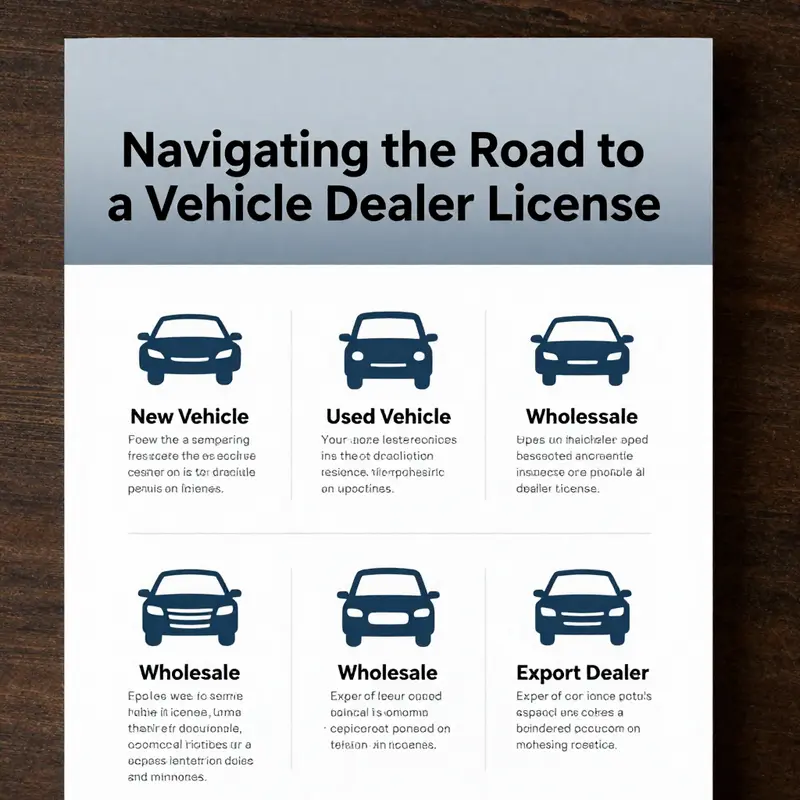
If you are stepping into the world of car commerce, the first map you need is not a showroom blueprint but a clear understanding of the license spectrum. The license you pursue will shape not just what you can sell, but where you can operate, how you must bond your business, and which regulators will scrutinize your day-to-day practices. In practice, the path you take depends on two big axes: the nature of your inventory and the way you intend to sell it. In the United States, and particularly in California, the landscape is defined by several distinct license categories. Each category corresponds to a different business model and carries its own requirements, obligations, and implications for growth. The Retail Dealer, for example, is intended for outfits that welcome customers into a storefront and sell vehicles directly to the public. The Wholesale Dealer, by contrast, focuses on transactions between dealers, not end customers, and therefore emphasizes different documentation, bonding, and showroom expectations. Other specialized avenues include licenses for motorcycles, rebuilt vehicles, and unique operations that may involve exporting or distributing to other dealers. This spectrum matters because a misalignment between your business plan and the license you pursue can create regulatory friction, darken your credit profile with noncompliance, and slow or stall growth before you ever place a single for-sale sign in the window. The distinctions matter more than a semantic quibbling over titles; they are the practical anatomy of legality in the automotive trade, and they determine in real terms what you can and cannot do as a licensed dealer.
In California, the toy box of license choices is a useful starting point for thinking about the broader model you want. A Retail Dealer license is designed for operations that present new and used vehicles directly to consumers. It is the most visible form of dealership activity and, with it, the state typically imposes a bond requirement to protect buyers. The bond amount, commonly around fifty thousand dollars, is not merely a fee; it is a financial instrument that underpins consumer trust and provides a remedy mechanism should places of business fail to uphold advertised terms, warranties, or other legal protections. A Wholesale Dealer license flips the focus toward interdealer transactions, which can streamline some compliance concerns while increasing the emphasis on accurate recordkeeping and transfer documentation. If your ambitions are to sell vehicles exclusively to other dealers rather than the public, wholesale can be a practical route. Other specialized licenses present a different kind of challenge and opportunity. A Motorcycle Dealer license, for instance, narrows the catalog to two-wheeled motor vehicles, with its own set of validation steps and safety standards. A Rebuilt Vehicle Dealer license recognizes a niche where vehicles have been damaged and rebuilt, demanding particular provenance documentation, repair histories, and branding disclosures to reassure buyers and lenders alike. And then there is the broader realm of Used Vehicle Dealer licenses, which acknowledge the growing market for pre-owned inventory while requiring robust controls to ensure every vehicle’s title, odometer readings, and history are accurately represented to consumers.
To a practitioner, these categories are not abstract labels but concrete operating lanes. The choice has ripple effects through every element of your business plan—from the premises you lease or own to the insurance you carry, from the training you provide staff to the way you advertise vehicles. For instance, a Retail Dealer’s obligations often extend to showroom and lot standards that reflect consumer protection expectations and local zoning requirements. A Wholesale Dealer, while offering the advantage of a narrower public-facing footprint, may demand deeper internal controls around vehicle histories and title transfers, given the nature of the buyers involved. The Motorcycle and Rebuilt Vehicle licenses channel the business into more specialized domains, which can be advantageous if your strategic vision targets those niches. In all cases, the licensing framework is a living system that interacts with tax compliance, environmental rules, and consumer protection statutes. You will not simply file a form and collect a new sign for your door; you will also align with bonding, insurance, and ongoing reporting requirements that maintain your authorized status and the trust of buyers and peers.
The practical takeaway is straightforward: define your business model before you begin the paperwork. If your goal is to sell new and used cars to the public, plan for a Retail Dealer license and the associated bond of record. If your aim is to operate a showroom that offers vehicles primarily to other dealers, structure your operation around a Wholesale Dealer license. If your vision includes a focus on motorcycles, rebuilt titles, or strict pre-owned inventories, pursue the corresponding specialized license early in the process so you build your facility, staffing, and paperwork around the right category. This approach is not merely about staying compliant; it is about positioning your business to access the right customer channels, financing partners, and brand agreements.
The path often begins with a careful inventory and a candid assessment of how you intend to interact with customers and other dealers. California provides a blueprint in its regulatory landscape, but the thread tying together all jurisdictions is the same: each license category establishes a baseline for your legal footprint, including where you operate, how you advertise, the kind of records you keep, and the safeguards you must maintain for buyers. To illustrate the breadth and the nuance, consider the general requirements that often accompany any dealer license, regardless of the exact title. A legally recognized business entity is a baseline—your LLC, corporation, or other permitted structure must be in good standing, with proper registration in the state and local registries. The financing piece is equally critical; most jurisdictions require some form of proof of financial responsibility, typically in the form of a bond or insurance that stands behind the promise to operate ethically and to compensate consumers in case of default or misrepresentation. A fixed physical location is not optional. The business must have a permanent address with signage that meets local zoning and safety standards and demonstrates that customers can visit a legitimate storefront. Qualified personnel are another common thread; you will need staff with relevant experience, training, and in some cases licensure to manage sales or appraisal duties, particularly in specialized licenses where vehicle valuations and histories demand careful expertise.
The application journey itself is an exercise in organization and credibility. In California, the process through the state-level agency is designed to evaluate not just the paperwork but the reliability of the business model you propose. You will encounter detailed documentation: the formal application, proof of business registration, evidence of a physical premises, the surety bond, and insurance certificates. Early in the process, it is common to prepare vehicle titles and registration information for inventory that you already hold, along with employee records or certifications where applicable. The regulatory review often includes background checks on owners and key personnel—safety nets that help regulators gauge the likelihood that the business will comply with advertising standards, protect consumer rights, and maintain accurate titling records. A facility inspection may be part of this initial phase, ensuring your premises meet safety, accessibility, and operational standards that buyers expect when they step onto a dealership lot.
As you move toward approval, the fee structure comes into sharper focus. Fees vary by jurisdiction and, in some cases, by license type or the scope of your operation. In California, the combination of application fees, licensing fees, and the bonding requirement creates a total upfront cost that you should plan for in your business plan. The range often cited for license-related expenses—before ongoing renewals—reflects the weight of the regulatory duties you are assuming. Once your license is issued, the journey does not end with a stamp and a badge. Ongoing compliance becomes the daily rhythm of your dealership: maintaining accurate records, timely renewals, and adherence to advertising and consumer-protection standards. Brand authorizations, when applicable, add another layer to the process. If you intend to sell specific brands under a franchise model, you must secure the manufacturer’s authorization in addition to your dealer license. This secondary stream of approvals can be critical, as it defines which brands you are legally allowed to represent and how you approach inventory, pricing, and marketing within legitimate franchises.
In the broader landscape, the types of licenses extend beyond the United States, and different nations approximate similar regulatory logic with local twists. In China, for example, there is no single universal “vehicle dealer license,” but businesses must navigate a suite of certifications that establish their legitimacy as automobile sellers. The core principle—combining a formal business registration with sector-specific permits and the capacity to ensure compliance with labeling, safety, and consumer protection—remains a constant. Across jurisdictions, the common thread is that the process is as much about building trust as it is about meeting paperwork requirements. This is why the initial focus on the right license category is so vital: the category frames the expectations regulators and customers will hold. It informs how you build your staff, structure your facility, and manage your records so that you are prepared for both the day you open and the many days of operation that follow.
An often-underappreciated facet of the license journey is the interplay with local rules and driver licensing considerations. The specific mechanics of driver licensing, while separate from selling vehicles, illuminate the regulatory culture of a given state. You can read more about how state rules impact driver licensing here: state rules impact on driver licensing. This cross-connection is not simply academic. It reflects how jurisdictions enforce discipline in vehicle-related commerce, shape dealership responsibilities, and coordinate with other agencies to regulate who can operate a dealership, who can oversee sales practices, and how vehicles are titled, registered, and insured. Understanding these cross-links helps ensure your license choice aligns with other regulatory commitments you will bear as a compliant dealer.
What does all this mean for the aspiring dealer? It means starting with a precise business model and then aligning it with the appropriate license category. If your plan is to welcome the public to purchase both new and used vehicles, you should prepare for a Retail Dealer license and the accompanying bond. If your plan centers on moving vehicles between businesses rather than to consumers, you should lay out the requirements for a Wholesale Dealer license. If your inventory or strategic ambition focuses on motorcycles, rebuilt vehicles, or strictly used cars, you should pursue those specialized licenses with their corresponding prerequisites. In all cases, you must maintain a solid foundation of business legitimacy—proper entity formation, fiscal responsibility, a verifiable physical location, trained personnel, and a disciplined approach to recordkeeping. This foundation is not merely bureaucratic; it is the scaffolding that supports credibility with customers, lenders, and brand partners, which in turn expands your market opportunities and resilience.
Finally, the chapter of your journey that often gets overlooked is the practical timeline and the sequencing of tasks. Start by choosing the license type that mirrors your business model and then assemble the core documents: a formal business registration, the necessary bond or insurance, proof of a fixed location, and evidence of your ability to meet staff qualifications. Prepare for background checks and facility inspections, and anticipate the possibility that some steps might occur in parallel rather than sequentially. Building a credible package early will smooth the review process and reduce the risk of delays. Always stay informed about the latest regulatory updates since laws and bonding requirements can evolve with changes in consumer protection statutes, tax administration, and environmental compliance frameworks. Above all, maintain a practice of transparent communication with regulators and potential buyers. Clarity in how you operate, how you present vehicles, and how you handle consumer protections will be the ultimate differentiator as your dealership grows from a hopeful idea into a compliant, trusted part of the automotive marketplace.
For readers who want to anchor their planning in official guidance, consult the official government resource that governs the new dealer application—this is the authoritative path to understanding exactly what documents you need, what fees apply, and how the review process unfolds. External resource: https://www.cdtfa.ca.gov/automotive/new-dealer-application.htm. This page outlines the New Dealer Application process, instructions, and contact details to assist applicants through California’s regulatory framework and ensures you are following the correct steps for your jurisdiction.
Securing the Keys: The Core Eligibility Milestones on the Road to a Vehicle Dealer License
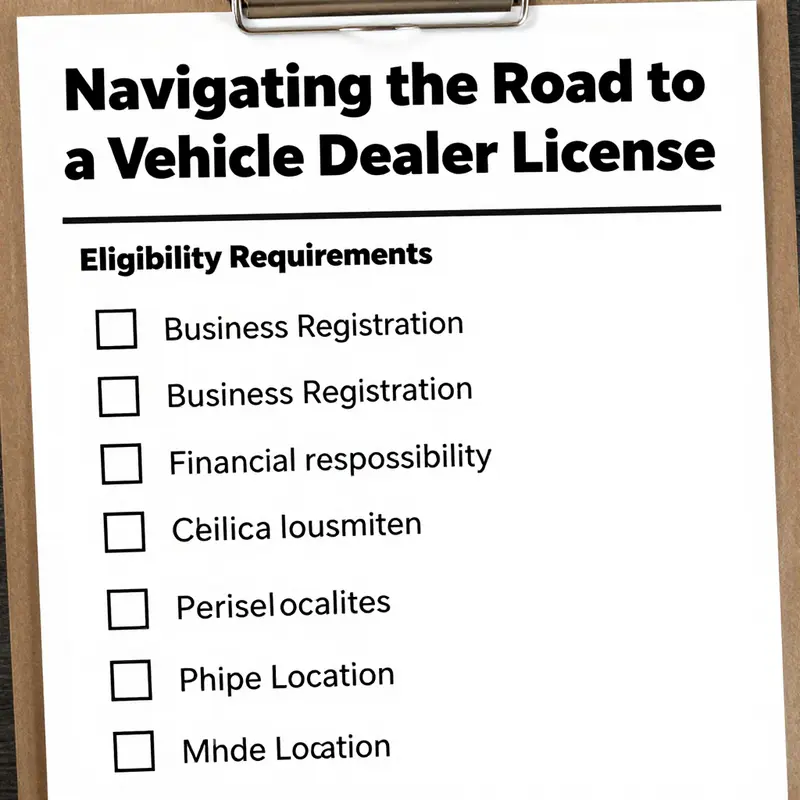
In the United States, getting a vehicle dealer license is not a one-size-fits-all procedure. There is no national license, and the rules are enforced state by state, with occasional local nuances that can shift timelines and requirements. This mosaic of regulation exists for a simple reason: vehicle sales touch many facets of commerce and consumer protection, from financial reliability to facility siting, from licensing integrity to ongoing accountability. The result is a journey that looks different depending on where you plan to operate, yet follows a remarkably similar logic across jurisdictions. If you map the path carefully, you can anticipate what regulators expect and prepare so that your application does not stall at the gate. This chapter concentrates on the core eligibility milestones that recur across most states, while noting where California and a few other jurisdictions illustrate typical patterns. It is practical, not theoretical, and meant to help you organize a startup plan that aligns with regulatory expectations while keeping focus on building a compliant, sustainable business in the long term.
The journey begins with the most fundamental decision: forming a legitimate business entity. Regulators do not grant a dealer license to individuals acting in a personal capacity; they grant them to entities that can be held to account for their conduct. The common structures — a limited liability company, a corporation, or a legally organized partnership — require official registration with the state. This step is more than a name on a document. It includes choosing a business name that is not already in use, defining the ownership and management structure, and ensuring the entity is properly formed under state law. Beyond the paperwork, you should secure internal governance practices that regulators can review if questions arise. An operating agreement for an LLC or bylaws for a corporation help demonstrate credibility, particularly when lenders, insurers, or the licensing authority requests evidence of sound management. In addition to the entity itself, you will need to anticipate potential branding concerns. If you intend to operate under a trade name that differs from the legal entity name, you should file the appropriate fictitious name with the state and ensure the board or owners authorize it formally. A legitimate business structure signals to the regulator that you understand the responsibility of operating with customers’ money and vehicles, and it sets the stage for the bond, the location, and the other pillars of eligibility that follow.
Once the entity is in place, regulators commonly require proof of financial responsibility. This does not mean you must be wealthy before you can apply; rather, it means you must demonstrate that you can absorb the risk of ongoing dealership activity and fulfill your financial obligations to customers, lenders, and the state. A surety bond is the most widely referenced instrument here, acting as a financial guarantee that protects consumers in the event of fraud, abandonment of vehicles, or other license-accelerating missteps. The bond amount varies by state, often in a range that starts in the low five figures and climbs based on local policy and the scope of your planned operation. In some states the bond is complemented or replaced by other forms of financial assurance, like a letter of credit or robust insurance coverage. The bond is not merely a formality; it is a risk-management tool that signals to regulators and customers that your business has the stability to honor commitments in vehicle transactions.
A physical, verifiable business address follows next on the eligibility checklist. No license can be issued to a home-based operation or to a glorified mailbox; regulators want to see a fixed showroom, an office, and, where applicable, an accompanying service or repair facility. The premises should be sufficient to support the volume and type of vehicles you intend to handle, with enough on-site space for customer ingress, display, inventory storage, and secure parking. The address must be verifiable through lease documents or property deeds and should be appropriate for dealership operations. Signage is often a practical signal of real establishment, and some jurisdictions require compliance with local zoning and traffic access standards. A robust physical footprint is not only about regulatory compliance; it also communicates reliability to customers and lenders, which matters when you are negotiating inventory financing or cooperating with manufacturers for brand representation.
Background checks and fingerprinting are a standard gatekeeping step in many states. Regulators want to know that owners, officers, and key personnel who will be involved in sales, management, or financial controls have demonstrated integrity. The process typically entails submitting personal information followed by state-administered background checks and fingerprinting. Depending on the jurisdiction, these checks can take a few weeks to several weeks. The scope may include verification of prior licensing history, court records, and other indicators of conduct that could impact consumer trust. If your leadership team has prior regulatory or financial discipline, that history will be reviewed with greater scrutiny; if not, view this as an opportunity to build a clean track record before applying.
With the structural and personal foundations in place, most states require you to undertake a formal application through the appropriate licensing or revenue agency. In California, for example, the process is routed through the California Department of Tax and Fee Administration, but the underlying framework — an official dealer application, fee payment, and supporting documents — is widely mirrored elsewhere. The application is not a single form but a collection of items that the state uses to assess eligibility. You will complete the official dealer application form, attach your business license or proof of business formation, provide the lease or deed for your dealership location, and include your surety bond documentation. You may also be asked to supply documents showing business ownership and identity of principals, including personal financial statements or disclosures as required by the state. The fee accompanying the application varies by state and sometimes by the type of license you apply for. The critical point is that a complete, accurate, and timely submission reduces the likelihood of rework and delays while the agency conducts its review.
The physical plant and the people who will operate the dealership come under the lens of facility-related requirements, including local zoning, signage, and safety compliance. Local zoning rules are not merely a formality; they determine whether a dealership can operate in a given neighborhood or commercial district. This is where the landscape can become intricate: a location might be perfectly suited for vehicle display but require a special use permit or variance for automotive uses, or it might trigger additional inspections to ensure safe traffic flow, lighting, and security. Engaging early with the local planning department or zoning board can save substantial time later; it also signals to the licensing authority that you have navigated the practical constraints of your site in advance rather than discovering them during the final review. The interplay between state licensing and local zoning reinforces a simple truth: readiness at the address level is as important as readiness at the paperwork level.
No license can progress without the right tax and insurance scaffolding, and a dealer is no exception. A sales tax permit issued by the state is typically mandatory to collect and remit sales tax on vehicle transactions. Without this permit, even a perfectly formed business cannot engage in lawful commerce. Insurance plays a parallel role. General liability coverage protects customers and your business from ordinary risks, while inventory coverage protects the vehicles on your lot from loss, damage, or theft. Some states also require additional coverages, such as garage liability or workers’ compensation for any employees involved in vehicle handling or sales. These insurance requirements are not mere administrative burdens; they underpin the dealer’s ability to operate responsibly in the event of accidents, customer disputes, or environmental exposures.
As a dealer who expects to handle multiple vehicles and documentation, you will encounter VIN verification processes and broader NMVTIS compliance. The National Motor Vehicle Title Information System, together with state-level VIN verification procedures, ensures that vehicle titles are clean, traceable, and free from fraud. For many dealers, complying with VIN verification is an ongoing operational discipline that begins at intake and continues through to title transfer. It reinforces the integrity of the marketplace, helps prevent title fraud, and supports fair consumer transactions. The practical implication for applicants is that your internal processes must align with NMVTIS requirements, including record-keeping, data accuracy, and timely reporting of vehicle movements. This is another reason why your facility, your staff, and your information systems need to be robust from day one. If you are seeking to understand the specific inspections or requirements that apply in your state, a referenced resource on state inspection expectations can be a helpful guide us-states-vehicle-inspection-requirements.
Another axis of eligibility concerns brand authorization and the scope of your operations. If you intend to sell specific car brands under a franchise arrangement, you cannot simply decide to stock a brand; you must secure the manufacturer’s authorization, which is a separate agreement governed by the terms of the brand and the state’s franchising laws. Brand authorizations are not universal; some manufacturers limit the number of authorized dealers or require demonstration of certain facilities and sales volumes. This is why many aspiring dealers begin with wholesale or used-vehicle licenses as a foundation before pursuing franchise opportunities that involve specific brand commitments. The path to brand authorization underscores the broader approach to eligibility: regulators and brand owners alike are looking to ensure that you can sustain an orderly, accountable, and consumer-friendly operation over time.
In parallel with these considerations, environmental and regulatory compliance sits as a practical duty that can influence both eligibility and long-run viability. In jurisdictions with aggressive environmental agendas or strong incentives for clean vehicles, dealers may encounter additional permitting or reporting obligations tied to the sale and servicing of electric or low-emission vehicles. While these requirements do not always determine whether you receive a dealer license, they affect your readiness to operate efficiently and lawfully once the license is granted. The intent here is straightforward: align your business practices with broader regulatory expectations surrounding environmental stewardship, waste management, and safety. If you anticipate working with electric vehicles or other advanced propulsion technologies, factor these considerations into your facility design, staff training, and supplier relationships from the outset.
Beyond the initial screening, states commonly impose ongoing compliance and renewal obligations. Dealer licenses are rarely one-and-done approvals. Most jurisdictions require annual or biennial renewal, accompanied by updated disclosures, proof of continued bond or insurance, and a review of your records and reporting practices. This ongoing aspect is not just about administrative housekeeping; it is a recital of responsibility in the industry. It ensures that a dealer remains financially stable, adheres to consumer protection standards, and keeps pace with regulatory changes that may affect licensing terms, taxes, and sales practices. Viewing the license as a long-term contractual relationship with the state helps you plan for continuity rather than chasing a renewal deadline at the last minute. Good record-keeping, systematic reporting, and proactive compliance checks across the year reduce the risk of surprise audits and penalty assessments, while also building trust with lenders, insurers, and customers.
A practical takeaway for anyone pursuing a dealer license is to build your timeline around these milestones rather than around a single application date. Schedule pre-application milestones, such as entity formation and bond procurement, several weeks apart to accommodate state processing times and potential backlogs. Engage early with the licensing authority, and prepare a checklist that confirms you have every required document before you submit. If a state requires fingerprinting or background checks for all owners and officers, plan for the time those steps take, and avoid last-minute scheduling that could derail the entire process. Likewise, align your facility readiness with local zoning approvals and lease signings, so that the address you present on the application is already validated and certified as compliant. The more you align these layers—the business entity, the financial underpinning, the physical site, the personnel checks, the regulatory filings, and the ongoing commitments—the smoother your path toward a license and the more durable your eventual operations will be.
A note on resources can help anchor your planning. While the precise forms, fees, and deadlines are jurisdiction-specific, the core ideas are stable: establish a legitimate business, secure financial assurances, confirm a compliant physical site, complete a thorough background process, submit a complete application with the required fees, ensure local zoning and tax considerations are met, obtain the necessary insurance, align with vehicle identification and title information systems, and prepare for ongoing compliance and renewal. Keeping a cross-reference of state-specific requirements, while staying anchored to these universal milestones, helps prevent missteps and reduces the risk of resubmissions due to missing documents or misaligned information. For those who want a practical pathway tailored to California, visiting the official New Dealer Application portal through the CDTFA provides the definitive instructions and the official form package, along with contact details for assistance. This connection is part of a broader approach to compliance that recognizes how state agencies coordinate with local jurisdictions to ensure a dealer operates with accountability and transparency.
In closing, the eligibility phase is less about one dramatic hurdle and more about aligning many moving parts so you can begin operating with credibility from day one. The process rewards careful preparation, honest disclosures, and a disciplined approach to meeting both state and local expectations. When you are able to demonstrate a solid business structure, reliable finances, a legitimate and ready facility, clean personal and corporate records, and the capacity to adhere to ongoing obligations, you are not just filling out forms—you are signaling your commitment to a regulated, consumer-protective marketplace. The road to a vehicle dealer license is not a sprint; it is a measured journey of building a compliant business platform that can weather regulatory changes, serve customers responsibly, and grow with confidence. For the reader who wants to dig deeper into a specific jurisdiction’s inspection expectations or to explore how states structure some of these requirements, a helpful starting point for state inspection considerations is referenced here: us-states-vehicle-inspection-requirements.
External resources can offer broader perspectives on dealership standards and industry expectations. A foundational reference from a national association provides a comprehensive view of the licensing landscape, consumer protections, and best practices that good dealers adopt to ensure sustainable operations. See https://www.nada.org/ for further context and guidance.
From Paperwork to Permit: A Cohesive Journey to Securing a Vehicle Dealer License
The path to becoming a licensed vehicle dealer is a careful, multi-layered journey that tests both your business acumen and your commitment to compliance. It is not a single form you fill out and forget, but a sequence of intertwined steps that must align with state rules, consumer protections, and the operational realities of running a showroom, a lot, or a wholesale operation. When you approach the process with a clear map in mind, you begin to see how each decision—how you structure your company, where you locate your lot, what kind of insurance you carry, and how you document every transaction—builds toward a license that stands up to regulators, lenders, and brand partners. In the United States, there is no universal federal dealer license; instead, each state defines its own prerequisites and processes. California, as one of the most regulated and populous markets, serves as a practical case study, illustrating both the common threads that run through most states and the unique twists that can push you to prepare more meticulously than you might expect. The result is a narrative of preparation, patience, and precise attention to regulatory detail rather than a sprint toward a single checkbox avoidance of risk. The chapter that follows treats the journey as a single, coherent arc—beginning with the foundational structure of your business and ending with the disciplined, ongoing compliance that keeps your dealership in good standing year after year.
If you are planning to operate as a licensed dealer, you will need to decide early how you want to position your business within the market. There are several license types to consider: a New Vehicle Dealer license for those who intend to sell new cars from a showroom, a Used Vehicle Dealer license for pre-owned inventory, a Wholesale Dealer license for sales to other dealers without retail customers, and an Export Dealer license for moves across borders. Understanding these categories helps you frame your investment, your staffing model, and the kinds of facilities you will need. The choice also influences the kind of background checks, financial proof, and facility standards you will be asked to demonstrate. The aim is not to lock you into a label but to align your operational reality with the regulatory expectations of your jurisdiction while preserving the flexibility to evolve as your business grows.
A fundamental starting point is the decision about your business structure. Will you operate as a sole proprietor, a partnership, an LLC, or a corporation? This choice affects everything from how you register your business name to how you file taxes and how you secure financing or bonding. In practice, most new dealers gravitate toward an LLC or corporation because those structures offer liability protection and a cleaner path to professional banking relationships. The structure you choose will cascade into the next steps: registering your business name, obtaining an Employer Identification Number (EIN), and preparing the financial statements and proof of capitalization that licensing agencies expect. The process is not merely bureaucratic; it is a test of long-term operational discipline. Registering a Doing Business As (DBA) name is often necessary when you plan to operate under a name different from your official business name. This step, typically filed with the Secretary of State or the relevant state agency, ensures you have a legally recognized trade name for signage, marketing, and contract purposes. An EIN from the IRS is your business’s tax identifier, a prerequisite for opening bank accounts, hiring employees, and handling tax reporting. The value of obtaining an EIN early cannot be overstated, because it anchors your financial readiness and helps you demonstrate seriousness to licensing authorities who want to see that you can separate personal and business finances from day one.
With a business entity in place, you move to the licensing landscape itself. Here is where the landscape diverges by state, but a few universal patterns emerge. First, you must decide which type of dealer license aligns with your inventory strategy and target customers. If your plan is to sell both new and used vehicles from a public showroom, you will likely pursue a New Vehicle Dealer license and a Used Vehicle Dealer license, sometimes under a single umbrella with specific endorsements. If your model is wholesale, you may focus on a Wholesale Dealer license, and if your dream is to sell to buyers overseas, an Export Dealer pathway may apply. Even if you start with one license type, many jurisdictions require you to demonstrate the ability to operate across related categories or to obtain separate endorsements for particular vehicle brands or lines. In California, for example, the licensing framework is complemented by tax and fee administration through the CDTFA, alongside substantive dealership criteria administered through the state motor vehicle authority. The practical upshot is that you must prepare for a dual-track validation: the financial and business suitability that tax and regulatory bodies assess, plus the physical and operational readiness that the motor vehicle agency scrutinizes. This dual-track reality underscores the importance of early planning and ongoing coordination with the chosen agencies.
Next comes the essential question of location and facility. Licensing authorities are keenly interested in whether your dealership has a real, permanent address, adequate space for vehicles, and a compliant display and customer area. A fixed business address is not a mere formality; it is a signal to regulators that you intend to sustain regular operations, manage customers, and maintain inventory in a traceable and accountable manner. Signage, a clean and secure lot, proper lighting, and a designated area for administrative work all contribute to the impression that you will operate with the diligence expected of consumer-facing businesses. The facility also needs to support the regulatory requirement for an appropriate insurance portfolio and a surety bond—sometimes called a dealer bond—designed to protect consumers and assure compliance with applicable laws. Bonds in this space serve as a financial backstop that underwrites consumer trust. While bond amounts can vary by state, a typical range might run from fifty thousand to one hundred thousand dollars, depending on the volume of business, anticipated inventory, and risk considerations particular to your location and market niche. The bond is not a penalty; it is a precondition for license issuance, a guarantee that you will comply with licensing terms and consumer protection statutes.
Insurance, too, plays a central role in the licensing calculus. General liability coverage is a common minimum requirement, often accompanied by vehicle dealer-specific insurance that covers additional hazards associated with selling, testing, and servicing vehicles. The exact policy mix and minimum limits will be dictated by state rules, but the overarching principle is straightforward: a robust insurance program reduces the financial shock to consumers in the event of misrepresentation, theft, or other misfortunes that can occur in the sales process. Insurance demonstrates financial responsibility and operational seriousness, two attributes licensing agencies look for when deciding whether to issue a dealer license. In many states, you will also need to demonstrate a clean, verifiable financial track record, and you should be prepared to provide bank statements, credit references, and evidence of a stable cash flow that supports the business plan you will present to regulators.
Alongside location and insurance, you should contemplate the formalities of tax compliance. The motor vehicle licensing process almost always intersects with sales tax collection and remittance. You will need a sales tax permit or a state tax registration that enables you to collect and remit tax on vehicle sales. This requirement aligns with broader financial stewardship obligations and signals to regulators that you will manage the fiscal responsibilities tied to consumer purchases. In practice, this means coordinating with your state revenue department or tax authority to secure the necessary permits, and ensuring your accounting systems can segregate tax obligations from other revenue streams. In California, for instance, the process involves interaction with the CDTFA, which administers certain dealer-related tax and fee aspects, alongside the DMV’s licensing requirements. The dual focus on tax compliance and dealership licensing is a reminder that the vehicle business sits at the intersection of consumer protection, taxation, and commerce regulation.
Even when you have the business structure, the facility, and the finances in place, you must still navigate the process of government review. A license application is not a mere form; it is a comprehensive statement of your business intent, your financial health, and your readiness to operate transparently. The application will require detailed information about the business, the owners and key personnel, and your experience in the vehicle industry. Expect to provide organizational charts, resumes, and evidence of relevant training or certifications for staff who will be involved in sales or management. Some states require fingerprinting as part of a background check, while others rely on standard criminal history reviews. In California, the application journey has its own cadence: you file with the relevant state agency, submit the official forms, attach the required documentation—such as the lease or deed for your facility, the proof of insurance, and the surety bond—and await the assessment that includes a background check and, in many cases, a facility inspection. The aim of these checks is to verify that you meet the baseline standards for consumer protection, financial integrity, and professional competence.
Documentation is the anchor of the license application. A typical submission package includes the official application form, proof of business registration, the lease or property deed to establish your dealership’s physical footprint, and the surety bond or insurance certificates that demonstrate financial responsibility. You will also provide vehicle titles and registrations if you already own inventory for sale, and you may be asked for evidence of a business bank account, accounting practices, and employee credentials. The exact documents vary by state, but the pattern is consistent: regulators want verifiable, auditable records that prove you can operate a licensed dealership with accountability, traceability, and compliance oversight. In California, applicants often work through the CDTFA portal for certain steps and through the DMV for others; a form such as OL 248N might be used in specific dealer categories, and the process will include guidance on where to submit each piece of paperwork. The message is uniform across jurisdictions: completeness and accuracy at the outset reduce delays and avert rejections that arise from missing or inconsistent information.
After submission, you should expect a period of scrutiny. A background check on owners and principal managers is a common requirement, sometimes accompanied by fingerprinting. A facility inspection is typical to confirm that your showroom, lot, office, and security measures meet the standards regulators expect for consumer-facing commerce. This inspection is not a punitive probe; it is a due diligence step intended to confirm that what you present on paper translates into a real, operational space that supports compliant business practices. If any issues are found, you will receive guidance on what to remedy before final approval. Once the review clears and all fees are paid, you will receive your dealer license. The licensing timeline varies by state but generally spans weeks to several months, and it typically includes a renewal cycle that you must navigate reliably every year or every two years, depending on jurisdiction. The renewal process emphasizes ongoing compliance: you must maintain your bond and insurance, continue to meet facility and personnel standards, and timely report any material changes to the licensing authority.
In practice, there are important, practical considerations that can shape the success of your application beyond the paperwork. Brand authorization—achieving a franchise agreement or a manufacturer’s authorization to sell specific lines of vehicles—often raises a higher bar, requiring a proven business track record, significant capital investment, and site criteria that align with the brand’s standards. If you intend to carry particular brands, you must anticipate these additional requirements and factor them into your business plan and location choices. On the environmental front, the market is increasingly mindful of the transition to electric and low-emission vehicles. Some jurisdictions require specialized permits or registrations for certain vehicle types, and even if not strictly required for licensing, these considerations can influence your ability to attract customers and access inventory in a compliant manner. As you plan, you may find yourself evaluating incentives or rebates offered for clean-energy vehicles at the state level, which can affect your display strategy and service capabilities.
All of these elements—structure, registration, bonds and insurance, facility readiness, tax permits, and the regulatory checks—come together in a remarkably practical way. The licensing journey is less about accumulating approvals and more about building a durable platform for customer trust. To that end, you should approach the process with a calendar, a checklist, and a clear understanding of what regulators expect at each stage. Pre-emptively assembling a robust documentation package—proof of business registration, lease agreements, license and bond certificates, financial statements, and staff credentials—will shorten the path from application to license issuance. The key is to treat every requirement as a tangible, actionable item rather than a distant rule. While the formal steps may feel abstract when you are drafting business plans, the reality is quite concrete: regulators want to see a legitimate storefront, stable finances, responsible management, and a commitment to consumer protection. When you meet those criteria, the existence of your license becomes a natural outcome of disciplined preparation rather than a desperate scramble to satisfy a checklist at the last minute.
As you navigate this landscape, a useful perspective is to see licensing as part of a broader ecosystem of state rules that govern driver-related commerce and vehicle safety. A resource that clarifies how state rules impact driver licensing can provide helpful context as you align your own dealership practices with regulatory expectations across jurisdictions. For an overview of that broader regulatory milieu, you can explore state-specific guidance and related considerations through your own state’s licensing portals and trusted regulatory references. This holistic view helps keep the dealership on a steady footing as you scale operations or adjust to regulatory updates over time. External and internal resources should inform your decision-making, not overwhelm it; deliberate planning and steady execution are the quiet engines behind a successful license grant.
In the example of California, the practical steps converge toward a disciplined workflow: decide the business structure, register the name, obtain an EIN, determine the license type, secure a physical location with appropriate signage and access, arrange insurance and a bonding mechanism, obtain the necessary tax permits, coordinate with the state agencies responsible for licensing, and prepare a thorough documentation package for submission. Then, anticipate the background checks and facility inspections that validate your readiness to operate. Finally, recognize that licensing is not a one-off event but an ongoing obligation. You will renew, you will report changes, and you will maintain compliance as you grow. The path requires patience, persistence, and a steady focus on consumer protection and regulatory accountability. But with careful planning and disciplined execution, the journey from concept to licensed dealer becomes a coherent, navigable process, one that supports a durable business with the credibility to engage banks, brands, and customers in a market that rewards integrity as much as it rewards competitive pricing.
Internal link reference: state rules impact on driver licensing
External resource: https://www.dmv.ca.gov
From Paper to Process: Mapping Documentation and Compliance for a Vehicle Dealer License
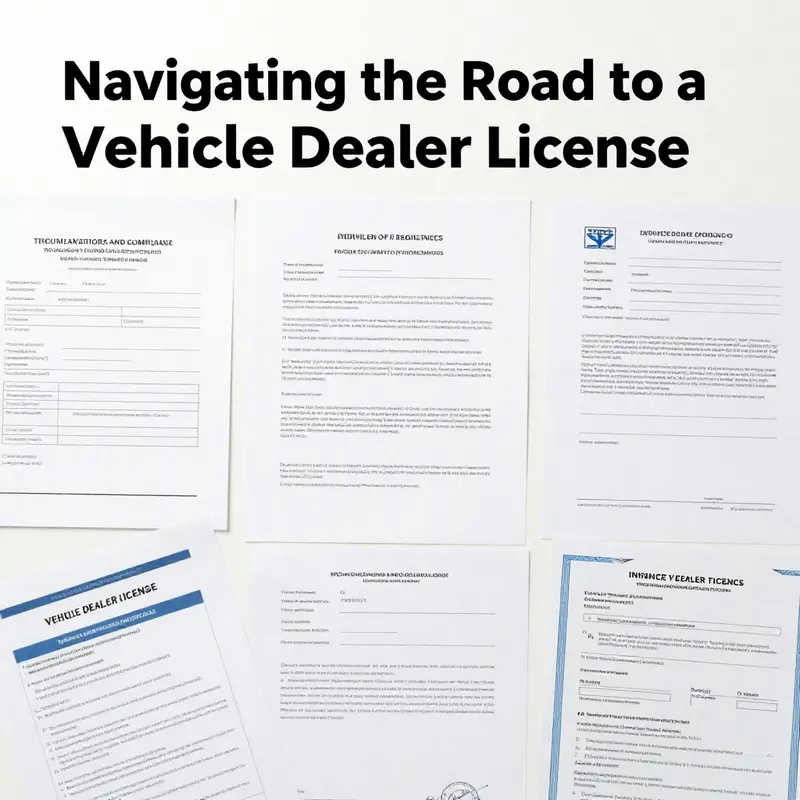
Securing a vehicle dealer license is more than submitting forms and paying fees. It requires a mapped, auditable set of documents and a governance mindset. This chapter explains how to map regulatory expectations into a practical, step-by-step documentation plan that you can implement and maintain over time.
First, define the licensing scope by understanding your state’s requirements for business structure, registration, and the bond or financial guarantee. The typical initial package includes: entity formation documents, state business registration, EIN from the IRS, proof of bonding or surety, proof of insurance, lease or deed for the dealership location, and policies that govern sales practices and data handling. Create a master checklist aligned with your state’s licensing portal, and attach source documents with consistent labeling, dates, and versioning.
Second, design a document-control system. Treat every regulatory artifact as a living document. Use a simple folder structure with a central index that indicates purpose, version, issuance date, and last review date. Establish clear ownership: who approves changes, who stores originals, and where to submit materials. Ensure every item can be traced back to a regulatory requirement so an reviewer can see the rationale behind each document.
Third, build the bond, insurance, and financial controls into your narrative. The bond is not a penalty but a guarantee to customers and regulators that you will fulfill obligations. Document the bond terms, the bonding company, and how you will renew or adjust the bond as your business grows. Pair this with insurance certificates, general liability, errors and omissions where applicable, and proof of required coverages.
Fourth, align your internal policies with expected regulatory practices. Document how you verify customer information, how you disclose terms and warranties, how you handle data privacy, and how you report suspicious activity. Include policies for employee training, access controls, data retention, and incident response. These internal documents help regulators understand your governance and act as a blueprint for day-to-day operations.
Fifth, plan for ongoing compliance. Many regulators run audits or renew licenses on a cycle. Build a renewal calendar, schedule periodic policy reviews, and designate owners responsible for annual updates. Maintain a history of changes to policies, and demonstrate how you adapt to evolving requirements such as privacy protections or consumer disclosures. Proactive education and routine self-audits reduce the risk of last-minute scrambles during an inspection.
Finally, consider practical readiness activities that can accelerate your licensing timeline. Prepare a concise package that presents the requested items in the order your authority expects. Include cross-references to the governing statutes or regulations when possible. If you operate across multiple jurisdictions, maintain jurisdiction-specific addenda that capture any local quirks in bonding, location requirements, or disclosure rules. By treating documentation as a strategic asset rather than a one-off checkpoint, you build a resilient framework that supports responsible growth and smoother license management.
Final thoughts
The journey to obtaining a vehicle dealer license involves understanding the types of licenses available, meeting eligibility requirements, navigating the application process, and ensuring compliance with documentation. By following this guide, you can confidently approach each step in the process, paving the way for success in the automotive industry. Whether you’re a first-time applicant or a seasoned dealer looking to expand, this comprehensive overview provides the information you need to take that important next step.