
Understanding vehicle licensing requirements is crucial for everyone, from new drivers and learners to seasoned vehicle owners and dealerships. While most vehicles on the road necessitate a driver’s license, several types do not. This article comprehensively explores various vehicles, including non-motorized types, electric bicycles, scooters, and specialized vehicles like golf carts. Each chapter will unravel the specifics of licensing exemptions related to these vehicles, ensuring you are well-informed about what you can operate legally and without a license.
Quiet Wheels, Clear Rules: Understanding Licensing for Non-Motorized Vehicles in a Regulated World
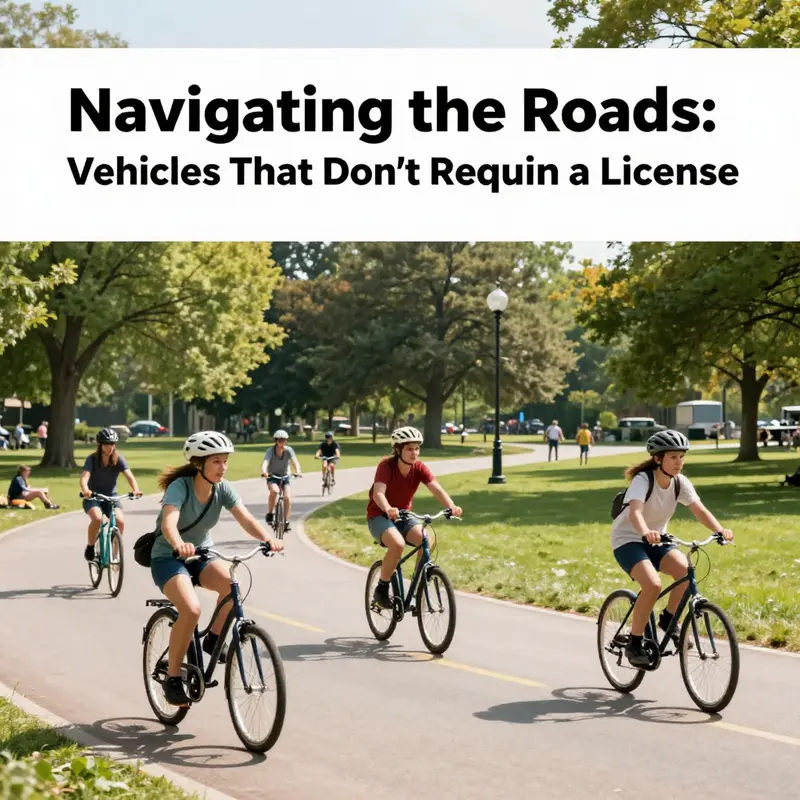
Across cities and campuses, quiet motion often travels without a driver’s license, yet that absence of a license is not a license to ignore rules. Non-motorized vehicles—bicycles and other human-powered rides—sit at the intersection of mobility convenience and public safety. The broader landscape is complex, because a vehicle may be technically non-motorized and yet still subject to registration, local registration schemes, and safety standards. The result is a nuanced ecosystem in which the simplest act of rolling forward becomes a reminder that governance and everyday transportation co-evolve. In the context of the larger article about which vehicles don’t require a license, non-motorized modes underscore a core truth: there is a spectrum, not a binary line, between “no license needed” and “license required,” shaped by speed, weight, purpose, and where the vehicle is used. This landscape grows even more intricate as cities and provinces push for tighter oversight, not to entangle riders but to reduce fire hazards, improve traffic safety, and shield the environment from reckless practices.\n\nA foundational distinction matters: non-motorized vehicles are typically classified as those that rely on human power or that move at such modest speeds that they are not treated like motor vehicles on public roads. Even within this broad category, regulation is not absent. In some contexts, electric assistance keeps a device within non-motorized classification if it adheres to precise standards. The line between allowed freedom and required compliance often rests on technical specifications, such as maximum speed, weight, and the presence of pedal-assist mechanisms. When a device exceeds those thresholds, it can slide into a motor vehicle category that carries licensing and registration obligations. This is why phrases like the “Electric Bicycle Safety Technical Specifications” and the standards GB17761-2024 become touchstones in debates about who should be licensed, where they can ride, and how safety is guaranteed for all road users. The central takeaway is not that licenses are a blanket necessity for all tiny electric shapers of mobility, but that each device’s classification is a balance of capability, risk, and the public’s expectation of orderly streets.\n\nIn academic and institutional settings, the line between freedom and regulation is sharpened by campus governance. Take the example of a large technical university where non-motorized vehicles must be registered with the security department prior to their first entry onto campus roads. This requirement is not merely ceremonial; it rests on the premise that the vehicle conforms to national safety standards and that the holder has complied with registration processes designed to keep traffic orderly. A university registration rule inspired by national standards emphasizes that only vehicles compliant with GB17761-2024 may be registered. This ensures that a student bike, a shared electric bicycle, or a campus electric assist device meets modern safety benchmarks before it is allowed to circulate on campus pathways. The implication for riders is clear: even without pursuing a traditional driver’s license, there is a predictable gatekeeping step—verification of compliance prior to operation in the campus environment. The effect is twofold: it improves safety in high-traffic zones and creates a transparent framework for accountability should incidents occur. In this way, the campus becomes a microcosm of the broader regulatory trend, where safety and accessibility are pursued through standardized testing, documented conformity, and digital record-keeping.\n\nUrban management policies further illuminate this landscape. In large metropolitan areas, jurisdictions have begun to regulate more stringently the ongoing growth of electric mobility. Consider major cities that have moved to prohibit the illegal assembly or refitting of electric bicycles, a step meant to curb unsafe modifications that can destabilize handling or alter performance. In these environments, even riders who do not require a license may face restrictions on how they operate—whether that means where they ride (sidewalks, bike lanes, or designated paths rather than main roads) or what equipment they must carry (helmets, lights, reflective gear). In Fujian Province, for instance, a revised approach to non-motorized vehicle registration mirrors these concerns. The updated GB17761-2024 standard is not simply a technical document; it represents a policy anchor that ensures new registrations pass a rigorous design and certification check. It also anticipates that commerce and service sectors—such as delivery operations that rely on electric mobility—align with safety expectations before they are permitted to register new devices after a set deadline. A practical consequence of these regulations is a gradual migration toward more uniform safety criteria across regions, reducing variances that previously allowed questionable equipment to circulate.\n\nTo cope with the administrative burden and to promote compliance, digital solutions have emerged as a pragmatic pathway. Regions adopting non-motorized vehicle oversight increasingly lean on electronic licenses, online registration, and digital archives. The shift toward a one-stop digital service simplifies the rider’s experience while preserving rigorous safety inspections and registrations. An electronic driving license, as a digital form of identification for riders, can streamline verification during registrations and on busy campus roads. Online registration speeds the process, enabling riders to complete documentation remotely, upload conformity certificates, and receive timely confirmation of compliance. Electronic archives support ongoing enforcement and auditing, making it easier for authorities to track a device’s certification history and to identify non-compliant equipment at the point of entry or during inspections. This trend reflects a broader policy objective: to balance the desire for easy, flexible mobility with the need for reliable safety standards that protect riders and pedestrians alike.\n\nThe spectrum of non-motorized devices also includes specialized vehicles designed for controlled environments. Golf carts, small park and resort shuttles, and similar low-speed vehicles are not typically intended for public-road use. In such contexts, the licensing burden is replaced by rules that govern safe operation within defined spaces. Similarly, material-handling machinery such as forklifts may fall under industrial safety regimes rather than passenger-vehicle licensing. Operators still receive targeted training, certification, and workplace-specific directives, but the requirement for a standard driver’s license is often circumvented by the specialized context and purpose of use. This distinction underscores a practical reality: the regulatory system does not merely penalize the absence of a license; it tailors oversight to the function, location, and risk profile of each device.\n\nMeanwhile, devices designed for accessibility—such as disabled person’s motorized wheelchairs—are treated with particular sensitivity. These vehicles typically move at low speeds and are operated in environments such as sidewalks or bike lanes where pedestrians and other riders share space. They usually do not require a conventional driver’s license, but they operate under a framework that sets speed limits, usage zones, and safety requirements to protect the rider and others. The overarching principle remains: even when a license is not required, users must navigate a structured, safety-oriented regime that prioritizes predictable behavior and accountability.\n\nA transitional space also exists for older, low-speed electric vehicles that predate current safety standards. In some regions, these vehicles can operate without a license during a government-defined transition period if they are properly registered or labeled. The policy intention is pragmatic: to allow continuity of mobility while the regulatory system catches up with a rapidly evolving landscape. Yet the caveat remains strong—these provisions are time-bound and region-specific, meaning riders must stay informed about local rules that could change as standards tighten and enforcement expands.\n\nUltimately, the central message for riders and policymakers alike is straightforward: always verify local regulations before riding any device that might be viewed within a regulatory gray area. A device that is non-motorized in one jurisdiction may be categorized as a motor vehicle in another, with licensing, registration, or equipment requirements accordingly. The ongoing trend toward digital governance and standardized safety criteria promises greater clarity, but it also demands ongoing vigilance from users who move through different regions or campuses. The most reliable practice is to treat each ride as potentially governed by a unique set of rules, and to approach compliance as an ongoing discipline rather than a one-time hurdle. For those who want a quick port of entry into the regulatory conversation, a key question to consider is how a given device is classified in your area and what documentation you must carry when you ride in public spaces. This simple awareness can prevent fines, protect others, and keep mobility flowing smoothly.\n\nFor readers seeking deeper context about how licensing rules evolve with state and regional policy, a useful resource discusses how jurisdictional shifts reshape driver licensing and related oversight: state rules impact on driver licensing. The chapter above ties these general dynamics to concrete cases—from university campuses to urban centers and provincial registries—illustrating how non-motorized mobility exists within a broader regulatory fabric rather than outside it. The ongoing push toward digital solutions, uniform safety standards, and targeted exemptions for truly assistive devices will continue to shape what rides freely and what must carry paperwork before it moves. It is a reminder that in the modern mobility ecosystem, licensing is less a single gate and more a map of paths, each with its own rules, thresholds, and responsibilities. External resource: Fujian Provincial Public Security Department Notice on Revising and Issuing the ‘Fujian Province Non-Motorized Vehicle Registration Regulations’
Licensing Light: How Standard Electric Bicycles and Other Low‑Speed Vehicles Move Without a Driver’s License
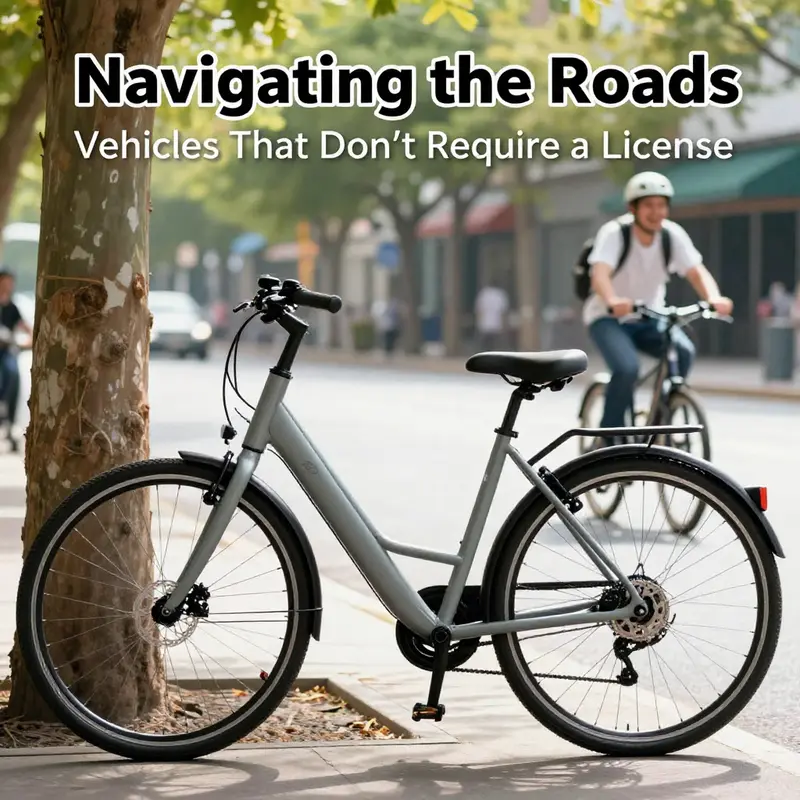
Across many cities and quiet towns, a new cadence of mobility has emerged. Pedal power remains the backbone, but electric assistance has loosened the grip of fatigue and hills. The result is a landscape where some vehicles glide along bike lanes and sidewalks with little regulatory friction, while others ride just beyond the edge of what a license typically covers. The focus of this chapter is to map that terrain with care: to explain why standard electric bicycles—the e-bikes most people encounter daily—often do not demand a traditional driver’s license, and to situate them within a broader family of non‑motorized or low‑speed devices that share a similar regulatory profile. The aim is not to promise uniform rules, but to illuminate how design, speed, and context shape licensing expectations, and why the boundaries matter for riders, pedestrians, and regulators alike.
At the heart of the discussion is the classification that many authorities use for standard e-bikes. These bicycles are typically divided into classes that reflect the nature of the motor and the speed at which assistance ends. In the United States, the Consumer Product Safety Commission has outlined two primary classes that frame everyday riding. Class 1 e-bikes provide motor assistance only when the rider is pedaling, and the motor cuts off when the bike reaches 20 miles per hour. Class 2 models rely on a throttle to propel the bike without pedaling, but they also cap assisted speed at 20 mph. Both classes share a max power ceiling—commonly 750 watts—and crucially, they must be operable by pedaling in order to qualify as bicycles rather than motor vehicles. This combination of pedal‑assist, capped power, and a modest top speed is what makes many jurisdictions treat standard e-bikes as bicycles rather than the drivers of a motor vehicle.
Because they are effectively bicycles, Class 1 and Class 2 e-bikes typically do not require a driver’s license to operate. They are seen as extensions of traditional cycling, not as motorized vehicles that demand licensing, registration, or insurance in most places. Yet the landscape is not uniform. State and local regulations can diverge in meaningful ways. Some jurisdictions impose age restrictions—sometimes minimum rider ages—to ensure riders have the maturity to handle traffic dynamics. Others require helmets in certain circumstances, or set rules on where these bikes may be ridden. A few places have introduced registration or inspection requirements for higher‑risk environments or for higher‑speed e-bikes, complicating the clean BYO license picture that the Class 1 and Class 2 framework suggests. The general pattern, however, remains: for most daily riders, a standard license is not a prerequisite simply because a bike carries electric assist.
A distinct thread runs through the discussion of e-bikes: higher‑speed variants and the way they shift the regulatory ground. E-bikes classified as Class 3 can reach speeds up to 28 mph, substantially altering risk calculations for both the rider and nearby road users. In many jurisdictions, Class 3 models face tighter oversight. Some places require helmet use, explicit registration, and even licensing or operator qualification to ride them on public roadways. The extra speed changes how the bike is perceived within traffic, often prompting a rethink of whether a license should be required, or at least whether it should be accompanied by more formal training, insurance considerations, or age rules. The public policy question is not merely about speed; it is about the channeling of risk. When a person rides a fast electric bike on busy streets, the interaction with other motor vehicles and pedestrians becomes more complex, and regulators respond by tightening control or restricting access to certain corridors. The result is a spectrum where the same category of vehicle can be treated quite differently depending on local norms and safety priorities.
Beyond e-bikes, a family of devices commonly falls under a licensing horizon that feels near but not exactly the same as traditional motor vehicles. Non‑motorized bicycles—the simplest, most familiar form of human‑powered transport—remain license‑free in most places. This category also includes a wide range of human‑powered devices that rely on human energy alone. Although these vehicles do not carry electric motors, their legal status depends on the same care that governs any street or sidewalk user: adherence to traffic laws, proper signaling when appropriate, and respect for pedestrians. The absence of a license requirement is not an invitation to ignore rules; it is a reflection of the reduced risk profile associated with slow, predictable, and human‑powered travel.
Electric scooters and skateboards occupy a murkier middle ground. In many jurisdictions, these devices are not classified as motor vehicles and thus do not require a conventional driver’s license. Yet they are seldom free from rules. Sidewalk or bike‑path use, speed limits, and designated riding zones are common constraints. This regulatory pattern echoes the broader principle that the appearance of a “vehicle” does not automatically grant it a free pass from traffic governance. The same applies to self‑balancing personal transporters, sometimes described as electric balance devices. Like scooters, these machines are usually treated as non‑motorized or lightly motorized devices, with licenses rarely required, but with usage rules designed to keep riders and bystanders safe in shared spaces.
In certain environments, some specialized vehicles exist that are not intended for public roads and thus do not require a driver’s license in the same way. Golf carts designed for use within golf courses, parks, or private communities typically operate at very low speeds and on restricted paths. Park and resort shuttle vehicles, which ferry passengers within closed campus or resort grounds, share a similar profile: they move slowly, have limited reach beyond controlled spaces, and are regulated by the facilities’ own safety standards rather than by highway‑traffic laws. In industrial settings, forklifts and other material‑handling equipment play a crucial role in shipping yards and warehouses. Operators may need specific training or certification for safe operation, but the vehicle itself does not demand a standard driver’s license.
A distinct category for some readers is the mobility aids used by people with disabilities. Specialized motorized wheelchairs and other assistive devices are designed for safe operation in designated areas and typically do not require a conventional driver’s license. They do, however, come with their own regulatory framework—speed limits, device safety standards, and usage zones—that prioritize accessibility while maintaining public safety.
The regulatory tapestry becomes even more nuanced when a region introduces transitional measures. In some areas, older, lower‑speed models of multi‑seat or three‑ and four‑wheeled electric vehicles—often described as low‑speed or neighborhood vehicles—may operate without a license during a government‑defined transition period. These provisions are intended to bridge gaps as newer safety standards come into force. What remains constant through these transitions is the requirement to register or label vehicles appropriately and to operate within the boundaries set by local authorities. It is a reminder that licensing is not a static gate but a living framework that evolves with technology, infrastructure, and public expectation.
All these threads point to a straightforward practical takeaway: even when a license is not required, the rules do not vanish. Riders and operators must respect where they ride, how fast they go, and what safety equipment is in play. The rules often distinguish between roadways, bike lanes, and sidewalks, and they tend to vary by age and helmet requirements. The layered reality is that the absence of a license does not grant exemption from general traffic laws, nor does it shield a rider from fines for unsafe behavior or from liability in the event of an accident. For a deeper look at how state rules shape licensing, see State rules impact on driver licensing.
In forming expectations about what can be ridden without a license, it helps to anchor the discussion in the broader regulatory environment. Local authorities often publish clear guidelines on where different devices can operate. Some jurisdictions preserve bike lanes as the preferred corridor for Class 1 and Class 2 e‑bikes, while restricting certain devices to sidewalks or multi‑use paths where pedestrian traffic dominates. Others require that higher‑speed devices stay off sidewalks and only share roadways when safety conditions are met. Helmet use frequently appears as a matched safety requirement for riders of various electric and non‑electric mobility devices, reflecting a cautious approach to head protection in mixed traffic without imposing license prerequisites.
For individuals navigating this landscape, a disciplined approach is essential. Start with the basics: confirm whether your device is legal for use in your exact locale and whether it falls under bicycle or motor vehicle categories. Next, check age requirements, helmet mandates, and any registration or inspection obligations that might apply. If your device qualifies as Class 3 or sits near a regulatory edge, seek official guidance from your state or city transportation authority. And if you ride in a state where the rules are especially fluid, it can be prudent to monitor changes announced by local government portals and to keep an eye on updates from national safety agencies. The goal is not to trap riders in rigid classifications but to give them a reliable framework for safe, lawful mobility.
From the standpoint of the broader article, understanding Standard Electric Bicycles and their licensing status provides a foundational lens for considering other non‑licensed or lightly regulated vehicles. It helps explain why many people can navigate urban environments without a traditional driver’s license while simultaneously recognizing the limits and responsibilities that accompany those freedoms. The contrast between the relative simplicity of bicycle‑like devices and the nuanced complexity of higher‑speed or externally regulated modes is where policy makers, urban planners, and riders collectively converge. The evolving map of micro‑mobility is a reminder that technology often outpaces old categories, and that sound governance requires clear, consistent rules without stifling the innovations that make urban travel safer, more efficient, and more inclusive.
External resource: For a comprehensive, state‑by‑state overview of e‑bike laws and related regulations, consult Electric Bike Laws by State (Updated 2026) | U.S. Ebike at https://www.usebike.org/laws-by-state/.
Riding Without a License: How Electric Scooters and Skateboards Fit Into the Licensing Landscape
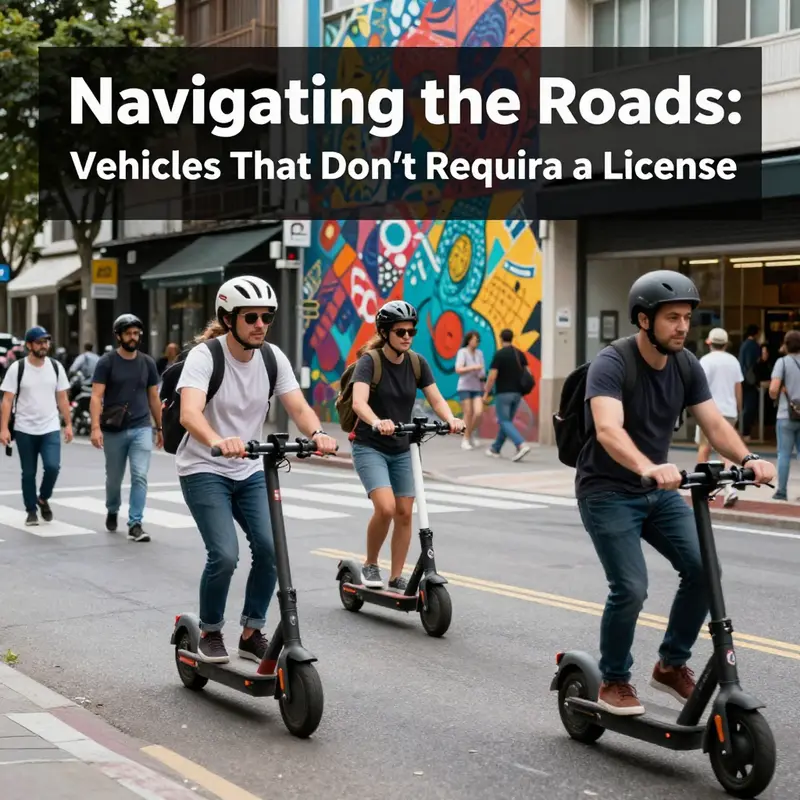
Across cities and suburbs, a regulatory tension sits at the intersection of mobility needs and road safety. Electric scooters and skateboards have surged in popularity because they offer rapid, flexible short-distance travel without car ownership. Yet the question of licensing for these devices is not straightforward. In many places these devices are treated as a distinct class of personal mobility devices rather than motor vehicles, a classification that unlocks exemptions designed for urban life: quick, low-speed travel that often uses sidewalks, bike lanes, or designated paths rather than busy streets. The practical effect is that riders can frequently ride without a driver’s license, but the exemptions come with guardrails—speed ceilings around 20 mph, limited motor power, and required safety features—that vary by locale. These rules are not to hinder riders but to keep devices controllable in mixed-use environments. Enforcement matters too: even when a license isn’t required, riders must obey traffic laws, yield to pedestrians, and often wear helmets or use lights after dark. Local rules shape how exemptions are applied, with California, Portland, and Austin offering examples of zone-based operation and age limits. The overall message is that licensing freedoms exist within carefully defined arenas, not as a blanket permission to ride anywhere. Riders should check local regulations before traveling across jurisdictions, as rules can change with new safety data and transportation priorities. The National Highway Traffic Safety Administration provides national context for safety expectations around electric scooters and personal mobility devices, though it is not a substitute for local law: https://www.nhtsa.gov/vehicle-safety/electric-scooters-and-personal-mobility-devices. In the end, licensing remains a balance between mobility and safety, with exemptions designed to support short trips while keeping riders predictable and responsible.
Electric Balance Cars: Classification, Exemptions, and the Quiet World of License-Free Mobility
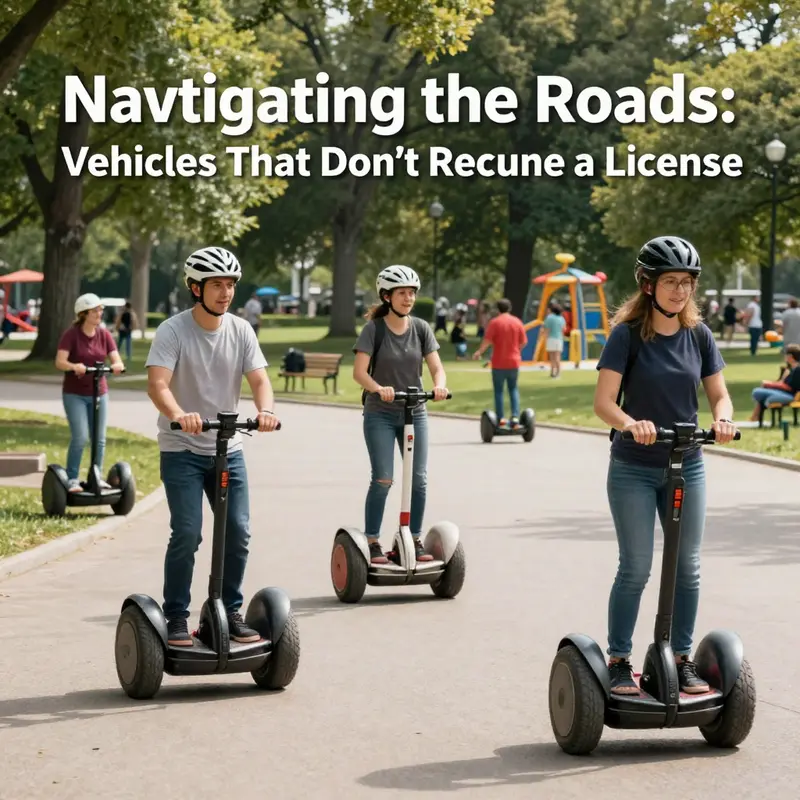
Electric Balance Cars sit at the edge of what people often think about when the license question arises. They are not cars, trucks, or motorcycles, yet they are more than simple toys. These devices—often described in regulatory language as self-balancing personal transporters or as part of the broader category of Personal Light Electric Vehicles (PLEVs)—are built for individual use and derive their character from how they move, how fast they go, and how they interact with streets and sidewalks. The result is a regulatory picture that is not a single universal rule but a careful blend of speed thresholds, weight limits, and safety requirements. The outcome is that Electric Balance Cars can enjoy licensing exemptions in some places while facing restrictions in others. The common thread is a balance between enabling convenient, low-impact mobility and protecting people who share public space.
Classification rests on a practical triad: speed, weight, and design intent. Electric Balance Cars typically operate at low speeds, usually around 10 to 15 kilometers per hour. They are compact and light enough to be carried or parked easily, and they are designed for short trips rather than long commutes. That combination nudges regulators toward treating them as non-motorized or low-speed personal transporters rather than standard motor vehicles in many jurisdictions. Yet the exact lines are not universal. Some places follow rigid categories that map speed and mass directly to licensing obligations, while others allow regulators to apply more flexible, safety-based criteria. The result is a landscape in which one street can be license-free in one city and regulated in another.
Licensing exemptions emerge from how the device is framed within that classification. In several regions, devices that meet conservative speed and weight criteria and demonstrate basic safety standards can fall under a non-motorized or low-speed vehicle umbrella. In practice, that means three practical exemptions: no driver’s license required; no vehicle registration required; and no compulsory insurance for the device itself. But these exemptions are not universal. They hinge on whether the device is intended primarily for personal use in private property or designated public paths, and whether it is legally allowed to share space with pedestrians and cyclists on sidewalks, bike lanes, or shared corridors. It is not a blanket pass; operators are still expected to follow traffic rules, signal their intentions, and employ protective gear where required. The aim is to permit convenient, low-risk mobility without the overhead of full motor-vehicle regulation.
Where these devices can be used matters a great deal. On open roads or in heavy traffic, even a very light, slow-moving device may face prohibitions or restrictions that call for alternative arrangements. Sidewalks and bike lanes are common operating spaces, but those areas carry their own rules about speed, pedestrian rights-of-way, and shared-use etiquette. If a device ventures beyond its approved area, enforcement can interpret that as non-compliance with local traffic regulations, even if the device would otherwise qualify for a licensing exemption in another context. The practical upshot is clear: before relying on a license-free status, users should map out where the device can be operated legally in their locale, and be prepared to adapt if rules change or if the device’s speed or weight increases beyond the thresholds.
A further nuance arises with transitional provisions. Some regions have enacted transitional arrangements for older models of low-speed electric vehicles, sometimes described as neighborhood vehicles, purchased before new safety standards. In these cases, operators may be allowed to run without a standard driver’s license, provided they remain properly registered or labeled according to the transition rules. The concession helps communities adjust gradually to safer equipment while preserving access for people who relied on these devices for everyday tasks. Yet transition allowances are time-bound and location-bound, and they tend to fade as new regulations fully take effect. For Electric Balance Cars, this means monitoring the local regulatory timetable is essential; what is permissible today might be constrained tomorrow as lawmakers refine definitions of speed, weight, energy storage, and protective devices.
From a practical perspective, the licensing conversation is not merely about forms and approvals. It centers on everyday responsibilities that accompany a device designed for private, low-speed mobility. Operators should be mindful of helmet use, visibility through lights and reflectors, and audible signals in shared spaces. They should adopt predictable riding behavior that respects pedestrians and other vulnerable users. Even when license, registration, or insurance is not required, the device remains subject to rules about where and when it can travel, how it should be parked, and what safety equipment is mandatory. These requirements aim to mitigate conflicts with other road users and to reduce the risk of slips, falls, and injuries. They also reflect a broader policy choice: to encourage practical micro-mobility while maintaining a safety net that helps non-users and vulnerable travelers feel secure.
The regulatory conversation is inherently local, shaped by community priorities and traffic realities. A reader trying to understand what applies to Electric Balance Cars should begin with the broad principle that many jurisdictions treat them as non-motorized or low-speed devices when they meet defined criteria, then verify those criteria locally, because exemptions, registration, and insurance requirements can drift over time. For those seeking a clearer map of how state rules influence driver licensing, a related discussion is available through the article that examines how state rules shape licensing practices: state rules impact on driver licensing. This resource helps connect the general framework described here to the concrete rules in a given jurisdiction, reminding readers that the absence of a license does not automatically imply universal freedom to roam. The same logic applies to environments such as parks, campuses, and private communities, where operators must follow posted signage and the preferences of the managing authority.
Ultimately, Electric Balance Cars occupy a nuanced niche within the broader spectrum of mobility options. They are designed to offer compact, accessible, and efficient movement for individuals while avoiding the complexity and expense of full motor-vehicle regulation. But that boundary is not fixed; it shifts with speed thresholds, weight limits, safety requirements, and the permissible spaces in which the devices operate. The central takeaway is that licensing exemptions are real in many places, but they hinge on precise regulatory language, local interpretations, and ongoing policy conversations about how best to balance convenience with safety. As with any device that moves people in public or semi-public spaces, the prudent approach is to verify the current rules before taking a ride. Check the local authority’s guidance, test your device against the threshold criteria, and steer your usage toward the zones that are clearly designated for low-speed, non-motorized or lightly regulated travel. This is not merely a matter of paperwork; it is a frame for responsible mobility that recognizes the value of compact, accessible transportation while keeping streets safer for everyone.
Families and commuters alike should appreciate that the difference between a license-free device and a heavily regulated one can hinge on a single local ordinance. This is why precise, up-to-date information matters more than ever. For further context on how local statutes shape these choices, consult the state-focused resource linked above. And for a broader picture of the national framework on electric mobility and law, external guidance remains essential. External resource: https://www.gov.uk/guidance/electric-vehicles-and-the-law
Beyond the Fairway: The Curious World of License-Free Specialized Vehicles
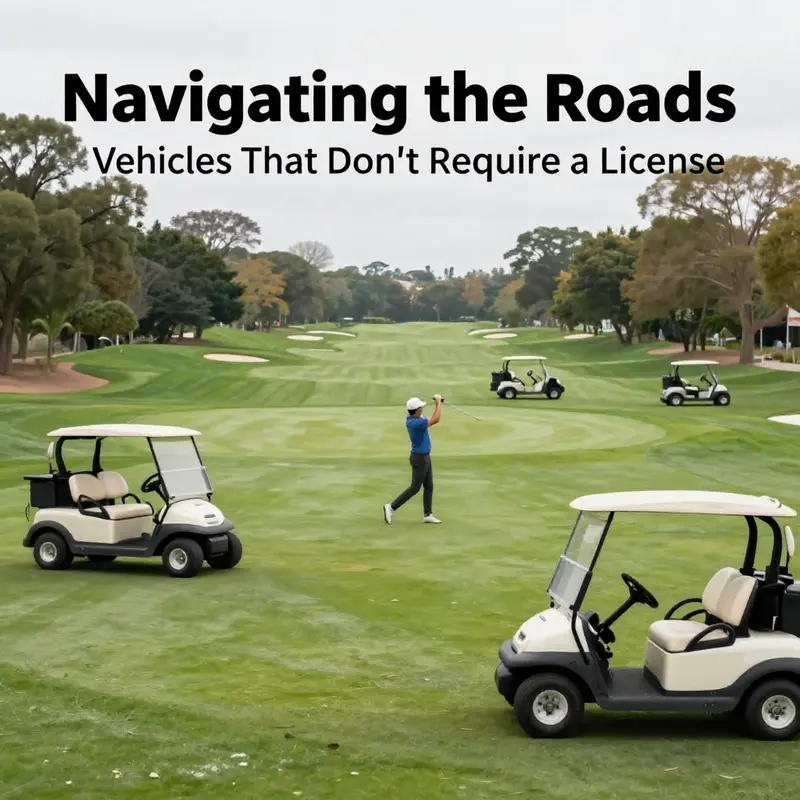
A quiet distinction threads through everyday mobility: certain small, low powered vehicles can be used without a traditional driver license in specific places, but not everywhere. They are designed for controlled environments such as golf courses, campuses, resorts, or private properties, with speed limits and zones that keep pedestrians safe. Because they are slower and lighter, regulators often grant license exemptions, yet they still impose safety rules, equipment standards, and restricted operating areas. Local laws vary, so users should check their state or local regulations to understand where these vehicles may operate and what training or inspections may be required. The goal is practical on site mobility without erasing responsibility for safety.
Final thoughts
In conclusion, awareness of vehicles that can be operated without a driver’s license is crucial for various groups, including new drivers, vehicle owners, and even auto dealerships. From non-motorized options like bicycles to specialized vehicles such as golf carts, understanding the regulations surrounding these vehicles enables safer and more informed choices. This knowledge empowers users to maximize mobility options while adhering to traffic laws.