
Driving is a fundamental skill that blends freedom with responsibility, underscoring the importance of understanding the legal landscape surrounding vehicle operation. Whether you are a new driver keen to hit the roads or an existing driver looking to refresh your knowledge, grasping the nuances of licensing is crucial. This guide will provide vital insights into why a driver’s license is necessary, detailing the types of licenses available, the specific rules for foreigners, the potential consequences of driving without a license, and how technology is transforming the licensing process. With this knowledge, you will be better prepared to navigate the road ahead safely and legally.
Licensing the Road Ahead: A Comprehensive Look at the Legal Framework for Driving
The question of whether you need a license to drive a vehicle is not a mere bureaucratic hurdle; it is a foundational question about legality, safety, and social responsibility on public roads. Across the world, and with particular emphasis in large economies like China, operating a motor vehicle on public streets is conditioned on holding a valid driving license issued by the competent authorities. This is more than a formality. It is the legal infrastructure that translates training, testing, and health standards into daily road safety. When you pull out onto a highway or a city avenue, your license is the official proof that you have met a minimum standard of competence and are recognized as accountable under the law. The core principle is simple: without a license, the act of driving on public roads is not just risky; it is illegal. Penalties vary by jurisdiction but commonly include warnings, fines, or more serious consequences like vehicle confiscation or suspension until proper documentation is produced. Yet the landscape is not black and white. It is nuanced, with evolving forms of proof, region-specific requirements, and practical pathways for travelers and temporary residents that reflect modern mobility’s demands.
In China, the regulatory framework rests on the Road Traffic Safety Law, which codifies the essential premise that driving a motor vehicle on public roads requires a legally obtained license. This rule applies across the spectrum of vehicles—cars, motorcycles, and other motorized conveyances—and serves as the backbone of enforcement and public safety. What makes the Chinese system distinctive is the layered approach to licensing, shaped by regional implementations, the growth of digital documentation, and explicit provisions for foreigners who want to drive while staying in the country. The law’s intent is straightforward: ensure all drivers meet minimum health and safety standards and are familiar with local traffic rules before they are allowed to operate a vehicle. This alignment between competence, safety, and accountability is not merely theoretical; it is reflected in administrative processes, examination requirements, and the ongoing development of accepted forms of proof, including electronic licenses that mirror traditional paper documents.
A central practical nuance is the recognition of electronic licenses in many regions across China. As the government modernizes, many jurisdictions officially recognize electronic driver’s licenses as having the same legal standing as their paper counterparts. This shift toward digital documentation responds to the realities of daily life where a phone can serve as a reliable wallet for official credentials. When a region supports it, a displayed electronic license on a smartphone becomes legally sufficient for proof of status while driving, reducing the need to carry a physical card at all times. The move toward digitization also reflects broader aims: to streamline verification by law enforcement, reduce administrative friction for travelers, and promote a seamless interface between licensing authorities and everyday mobility.
For foreign nationals and residents who arrive with a foreign driver’s license, the system provides clear pathways to legality rather than a simple barrier. Foreigners can, under specified conditions, obtain licenses that are valid within the Chinese regulatory framework. The process for converting or recognizing a foreign license involves a defined set of steps and documents designed to ensure that the foreign license holder has the requisite understanding of Chinese traffic law and the ability to meet health and safety standards. A temporary driving permit is available for foreigners who hold a valid foreign license and wish to drive in China for a short period, usually up to three months. This arrangement acknowledges the realities of short visits, business assignments, and tourism, while maintaining the integrity of licensing through a requirement to complete a course on Chinese road safety regulations before issuance. Importantly, the temporary permit must be carried together with the foreign license, and the holder must be in compliance with the course completion, ensuring a baseline familiarity with local norms and rules.
For longer stays or residency, there is a path to a permanent Chinese driver’s license, which involves passing a written examination focused on Chinese traffic laws. The testing language options in major cities often include English and other languages to accommodate international drivers, though the content centers on the specifics of local regulations, road signs, and safe driving practices. The transition from foreign license to local qualifications underscores a fundamental commitment: driving is a regulated activity that benefits from standardized knowledge and regularly re-evaluated competencies. In practice, this means that even those who begin with a foreign license are expected to align with Chinese standards if they intend to remain and drive for an extended period. The overarching objective remains consistency—ensuring that every driver on Chinese roads has demonstrated knowledge of traffic laws and a consistent level of preparedness for real-world driving conditions.
The documentation demands for applicants—whether they are mainland residents seeking a new license or foreigners seeking recognition or conversion—are precise and health-focused. A key component is the Physical Condition Certificate for Motor Vehicle Driver, issued by a qualified medical institution. This health check ensures that drivers meet requisite physical and mental fitness standards necessary for safe operation of a vehicle. The medical certificate is complemented by standard identification documents, the foreign license (with certified Chinese translation if the license is not in Chinese), and personal photographs. The exact list may include an original and a copy of identification documents, three one-inch color photographs with a white background, and other stipulated documents such as travel identifiers for residents. These requirements serve multiple ends: they verify identity, assess readiness for driving duties, and create a traceable record that can be consulted by licensing authorities.
The health and safety orientation embedded in the licensing regime is more than a formality. It is an explicit recognition that the ability to control a vehicle carries significant responsibility for the driver, passengers, and the broader public. Licensing agencies use the health screening to screen out conditions that could impair judgment, reaction time, or physical performance, ultimately reducing the risk of accidents. The health checks, the testing regimes, and the standardized documentation together create a coherent system designed to produce drivers who are not only legally authorized but also adequately prepared to respond to the hazards of road travel. In this light, the license is both a credential and a safeguard—an assurance to the public that the operator has met a defined threshold of knowledge, health, and compliance.
The practical consequences of this framework extend beyond the letter of the law. Law enforcement and road safety campaigns rely on a visible body of licensed drivers who are accountable for their actions on the road. Driving without a valid license is treated as an illegal act, and the penalties—ranging from warnings and fines to temporary vehicle confiscation—serve to deter unqualified driving and to reinforce the social contract that binds all road users to the rules. Whether a driver is navigating urban traffic, rural routes, or high-speed highways, the license is the essential instrument of legitimacy. It is a social guarantee that the vehicle is being operated by someone who has demonstrated competence and compliance with established norms, and it is a tool for accountability in the event of violations or accidents.
In this evolving landscape, the form of proof—paper versus electronic—reflects a broader trend toward digital governance. When electronic licenses are accepted, the practical reality is that drivers can present legitimate proof of status without rummaging through pockets for a card, while authorities can verify authenticity through digital systems designed to prevent fraud. The transition to digital formats does not erase the need for due process or the underlying standards; rather, it seeks to preserve them while increasing efficiency and accessibility. It also invites ongoing attention to data security and privacy, ensuring that the convenience of a digital credential does not compromise the integrity of licensing processes or sensitive personal information.
For readers seeking a broader understanding of how regional rules shape licensing, a closer look at how state-level or province-level decisions impact driver licensing can be informative. A helpful companion is the discussion of how state rules influence licensing procedures and the balance between national standards and local implementation. state rules impact on driver licensing
As this chapter progresses, keep in view the thread that connects all these points: the license is not a static document but a dynamic instrument that reflects evolving legal standards, safety expectations, and technological advances. In China, this dynamism is evident in the recognition of electronic licenses, the structured pathways for foreigners, and the insistence on health clearances. It is under this umbrella that drivers are expected to operate with awareness of local laws and with respect for the safety of others. The practical implication for both residents and visitors is straightforward: before you drive, ensure you have the appropriate license in the form recognized by the region where you intend to operate a vehicle, along with the necessary health checks and any region-specific documents. The system is designed to be protective rather than punitive, encouraging drivers to be responsible stewards of road safety.
Ultimately, the legal framework surrounding licensing is a map of responsibilities that translates into everyday practice. It asks drivers to be honest about their status, diligent in maintaining up-to-date paperwork, and prepared to demonstrate competence through testing and compliance. It acknowledges the realities of modern mobility—the presence of foreign residents, the convenience of digital documentation, and the need for health assurance—without compromising the core objective: to keep roads safe for everyone. This chapter thus presents not just a set of requirements, but a philosophy of driving that centers on legitimacy, safety, and accountability. In the chapters that follow, the discussion will expand to how these principles interact with practical workflows, such as obtaining a license in a new country, navigating different testing environments, and understanding how regulatory trends might shape the licensing landscape in the years ahead. For now, the essential message remains clear: to drive legally is to drive with a license that reflects competence, health, and an abiding respect for the laws that govern the road.
External resources for further reading on health examination requirements and official processes can be found through the Beijing Municipal Health Commission, which provides detailed guidelines and lists of authorized medical institutions for driver’s license applications in Beijing. https://www.bjhealth.gov.cn/zwgk/xxgkml/yljg/202510/t20251019_3987654.html
Licenses to Move: Navigating China’s Rules, Digital Proofs, and Foreign-Resident Pathways to Driving
The central question—do you need a license to drive a vehicle?—lands at the intersection of law, public safety, and everyday mobility. Across most countries and regions, the straight answer is simple in theory: yes, you must hold a valid driver’s license to operate a motor vehicle on public roads. Yet the reality behind that requirement is nuanced. In practice, what counts as a valid license, how it’s issued, and how it is recognized can vary not only from country to country but from city to city, region to region, and even from one driver to another’s situation. This landscape matters because driving is a public act with consequences beyond personal convenience. It implicates other road users, personal accountability, and the state’s responsibility to regulate who may pilot heavy, fast-moving machines through shared space. In this context, the question becomes less about whether a license exists and more about the form, validity, and provenance of the license you carry while behind the wheel.\n\nAcross China, the baseline rule remains intact: you must have a valid driver’s license to operate a motor vehicle on public roads. Driving without one is not simply frowned upon; it is treated as an illegal act that can invite warnings, fines, or more serious administrative measures such as temporary impoundment of the vehicle until proper documentation is produced. But the enforcement envelope is not a monolith. It bends with regional practice, the type of vehicle, and the vehicle holder’s status—whether they are a resident, a tourist, or a foreign national planning a stay. In this sense, the core principle—legal authorization to drive—must be understood as a framework whose specifics depend on how and where you plan to drive, as well as who you are and how long you intend to stay in the country.\n\nTwo layers of practical nuance often surface early in any such discussion. The first is the growing recognition of electronic licenses. In many parts of China, the license you need can be presented electronically, via a smartphone, with the same legal standing as a physical card. This shift toward digital proof is not merely a convenience; it reflects an administrative push to streamline verification on the road. If your jurisdiction supports it, showing your electronic license can suffice for legal driving on public roads, so long as the device and application are functioning properly at the moment of inspection. The second layer concerns the special pathways available to foreigners, which underscore how mobility can be both welcome and regulated. For visitors and temporary residents, there are distinct routes to legality that do not require a full Chinese driving test at once. A forensic look at these options reveals a carefully calibrated balance between welcoming foreign presence and maintaining stringent road-safety standards.\n\nTemporary licenses for foreigners provide a bridge for those who hold a valid license from their home country but will be in China only briefly. Such individuals may drive for up to three months under a temporary permit, provided they carry both their foreign license and the temporary permit, and they complete a course on Chinese road safety regulations. This arrangement acknowledges that unfamiliarity with local traffic rules can create risk, so it couples practical access with a learning requirement. It also means that the foreign license acts as a passport of sorts to the road, but the temporary permit anchors that passport to the Chinese legal framework. Those who intend a longer stay face a distinct pathway: a permanent Chinese driver’s license. Achieving this involves passing a written examination that tests knowledge of Chinese traffic laws. The test is offered in multiple languages, including English, particularly in major cities, recognizing the diversity of residents and visitors who may eventually become full participants in China’s driving ecosystem.\n\nThe licensing landscape is also organized around vehicle types, exerting a practical influence on who can drive what. Broadly speaking, licenses are categorized by the class of vehicle they authorize the holder to operate. The typical ladder of categories—Class A for large trucks or buses, Class B for medium and small trucks, Class C for cars and light vehicles, and Class D for motorcycles—reflects a design that aligns with the risk profile and skill set required for each vehicle type. Specialized licenses exist for particular operations, such as tractors or transportation of hazardous materials. In China, these classifications map to procedures, training, and testing that are tailored to the vehicle category, ensuring that a driver’s competencies match the demands of the vehicle they will operate. The practical effect is clear: not every license allows you to drive every type of vehicle. A person qualified to drive a passenger car does not automatically have the right to pilot a heavy truck or a motorcycle without additional testing and authorization. This is not mere paperwork; it is a safety framework designed to minimize risk on crowded roads and highways.\n\nBeyond classification, several foundational requirements shape who may begin the licensing journey and how it unfolds. Most jurisdictions impose a minimum age, health standards, and vision requirements. They also require a combination of knowledge-based assessments and practical driving tests. The health element, often overlooked by casual observers, is crucial because vision clarity, reaction time, and physical coordination directly impact a driver’s ability to manage complex traffic environments. Renewal cycles remind us that licensing is not a one-off event but an ongoing relationship with the state and the road. Rules on renewal depend on local policy, but the general expectation is periodic re-evaluation that keeps up with evolving traffic laws, road infrastructure, and public safety expectations. In the international arena, a separate, though related, concern is recognition of licenses across borders. Some jurisdictions honor foreign licenses under international frameworks—most notably frameworks connected to the Geneva Convention on Road Traffic—though the exact conditions can be intricate and require careful verification for travelers or expatriates.\n\nTurning specifically to foreigners who wish to drive in China, the process becomes a study in navigating both international familiarity and local authority requirements. If you hold a foreign driver’s license and want to drive legally in China, you must, in effect, acquire a Chinese driver’s license. The process typically involves submitting identification documents, including a passport and a form of identification, along with your original foreign license. In most cases you must also provide a certified translation if your license is not in Chinese, along with several passport-sized photos. A distinctive requirement is the “Physical Condition Certificate for Motor Vehicle Driver”—a medical certification proving fitness to drive. This certificate must be issued by an approved medical institution, such as a designated hospital or health center. Some regions allow online submission of this certificate, minimizing the need for physical paperwork, while others still require a physical copy. The Beijing context is instructive here, as it illustrates both the core documents and the procedural steps that applicants may encounter in major urban centers.\n\nIn addition to the medical certificate, applicants must present the foreign license itself and its translation, if applicable. The official process often specifies that the applicant provide both the original license and the translation, along with photos and possibly additional identity documents depending on whether the applicant is a resident of mainland China or a foreign visitor. For mainland residents, there may be further documentation considerations tied to household registration status and permits related to travel between regions. The overall flow emphasizes a careful alignment of foreign credentials with Chinese legal expectations, and it requires attention to the precise submission methods and supporting documents that the local authorities specify. A practical consequence of this detailed process is that foreign drivers should anticipate a period of administrative preparation before they can legally operate a vehicle on Chinese roads beyond the temporary, test-based entry pathways mentioned earlier.\n\nThe operational takeaway is straightforward and urgent: always ensure you have proof of your legal driving status whenever you intend to drive. A license in hand is only as good as its recognized form and validity in the jurisdiction where you are driving. If you are exploring driving options in China, verify whether your region recognizes an electronic license and whether your situation qualifies for a temporary permit or a full Chinese license. When in doubt, consult local authorities, car rental agencies, or driving schools that can provide up-to-date information on the current requirements. For nuance and deeper understanding of how state or regional rules shape driver licensing—particularly the way differences in state policies can influence the trucking, passenger vehicle, and motorcycle licensing landscapes—readers may consider exploring analyses such as state rules impact on driver licensing. The embedded discussion there can illuminate how local regulations, administrative practices, and cultural expectations shape practical outcomes on the road.\n\nThe complexity of licensing in China should not deter proper preparation. Instead, it should encourage a thoughtful approach to stabilizing your legal status before you head out to drive. For visitors who anticipate only a short stay, the temporary permit route can provide a clear, rule-based entry point, paired with a compulsory safety course to ensure basic familiarity with Chinese road regulations. For those who intend longer residence, the path toward a domestic Chinese license—completed successfully through written examinations and adherence to medical and documentation requirements—ensures that you are not just compliant in theory but fully integrated into the country’s traffic safety regime. This integration is supported by the very structure of licensing in China: a multi-tier system that links vehicle type, driver competency, health standards, and administrative processes into a coherent framework designed to minimize risk for all road users.\n\nIf a reader needs a practical, first-hand guide to the medical and administrative steps, the Beijing health and traffic management authorities provide the specific requirements, including the permissible channels for submitting medical certificates and the exact documents to present. The official Beijing Municipal Health Commission page outlines the medical examination requirements for driver’s licenses, including eligible institutions and digital submission options. For further, region-specific details on applying for a Chinese license when you already hold a foreign license, local service centers and the Traffic Management Division’s portals are the recommended next stops. These resources, when used together with the general guidelines discussed here, help to convert the abstract principle—drive legally with a valid license—into a practical, navigable process that respects both individual circumstances and the safety of the broader driving public.\n\nExternal resource: Beijing Municipal Health Commission – Medical Examination Requirements for Driver’s Licenses. https://www.bjw.gov.cn/zwgk/tzgg/202510/t20251019_3967824.html
Licensing on Foreign Wheels: Navigating Temporary and Permanent Paths for Foreigners in China
Entering China as a foreigner opens many doors, but driving on its streets requires a clear respect for a rule that is simple in principle and layered in practice: you must hold a valid driving license. The core requirement is uniform across the country, yet the path to compliance shifts with how long you plan to stay and how you intend to use the vehicle. The law covers every motorized vehicle on public roads, and in the bustle of modern cities like Beijing, a license is more than a formality. It is proof that you understand the road signs you will meet, the traffic patterns you must navigate, and the responsibilities that come with operating a vehicle in a densely populated, complex traffic environment. The system is designed to balance mobility with safety, offering a bridge for short visits and a stable route for longer stays. For a foreign driver, this means embracing both the letter of the law and the practical realities of Chinese road culture, and recognizing that the form of the license—paper or electronic—can vary by region while still carrying the same legal weight. The landscape is not static; it shifts with policy updates, administrative practices, and regional adaptations, so a careful approach that starts with official sources is essential for anyone who intends to drive here.
Temporary driving permit for short term visitors stands out as a pragmatic gateway. The arrangement acknowledges that a person may arrive with a foreign license and a need to move around, whether for business, study, or family reasons. Within two days of entry, the foreign traveler may apply for a temporary driving permit that permits operation of a small passenger vehicle in the C1 category or a small automatic transmission vehicle in the C2 category. The absence of a driving test at this stage does not bypass the requirement to learn the local rules. Applicants must complete a brief study session on Chinese road safety regulations before the permit is issued, a step designed to ensure that temporary drivers are aware of the local conventions, including right of way at intersections, pedestrian priorities, and basic penalties for violations. The document itself rests on a foundation of documents that any traveler should organize well before travel: a valid passport, a visa that extends beyond three months, or a residence permit, proof of accommodation registration, and the original foreign license. If the license is not in Chinese, a certified translation is required, and one inch color photos with a white background are part of the package. For vehicles leased in China, proof of lease becomes a necessary supporting document. Vehicle restrictions accompany the permit, and the boundaries are clear: the permit covers only small passenger vehicles, not trucks or buses. The application takes place at the traffic administration department of the public security organ in the city where one will drive or at the location tied to the rental unit. This pathway provides immediate legality for a short visit, while keeping the door open to longer-term solutions if the stay becomes more lasting.
To drive legally with a temporary permit, it is crucial to be aware that the permit and the foreign license function together as proof of your status behind the wheel. Carrying both documents is not merely a courtesy; it is a practical necessity that helps authorities verify your eligibility and the scope of your permissions. The temporary route is, in effect, a bridge to a longer relationship with the local licensing system. It offers a tested environment to learn the traffic rules in situ, to practice driving in China’s unique traffic context, and to observe how the local norms play out in real traffic scenarios. The decision to pursue a permanent license often stems from longer term plans—work assignments, study commitments, or a desire to integrate more fully into daily life. In that sense, the temporary permit is not a dead end but a stage in a continuum toward broader mobility, one that respects the realities of living in a country where road rules are both universal in intent and regionally tailored in application.
For foreigners who plan to reside in China for an extended period and drive regularly, the permanent driver license represents a more comprehensive commitment. The path toward a permanent license requires a valid residence permit and a careful compilation of documentation that demonstrates both identity and fitness to drive. The essential documents include the original foreign driver license, its certified Chinese translation if needed, a medical certificate—often called the Physical Condition Certificate for Motor Vehicle Drivers—issued by a qualified medical institution, five one inch color photos, and copies of identification. The medical certificate is not a mere formality; it validates that the applicant meets the physical requirements to operate a vehicle, a consideration that aligns with public safety goals and reduces the risk of medical issues on the road. Age requirements for different vehicle classes reflect safety considerations and driving demands. For small cars in the C1 and C2 categories, eligibility typically spans 18 to 70 years; motorcycles and low speed vehicles generally accept 18 to 60; city buses and large trucks often have a more restrictive window, commonly 20 to 50, with large buses typically 26 to 50. These ranges are not arbitrary; they are designed to balance opportunity with risk assessment in a diverse driving environment. In major cities, including Beijing, there is an additional feature designed to ease access for foreigners: the option to take the written exam in English or other languages. This language accommodation recognizes that knowledge of Chinese traffic laws is essential, yet not all applicants are fluent in Mandarin, so the exam structure seeks to accommodate a broader audience while maintaining the integrity of the assessment.
Beijing provides a vivid example of how the general framework can manifest in a real city with its own administrative nuances. Permanent license applications in Beijing typically go through the Vehicles Management Office, with several offices that handle different aspects of the process. The Beijing system illustrates the principle that the foreign resident should present a comprehensive package of documents, including valid identification, a residence permit, the foreign license and its translation, the medical certificate, and suitable photographs. While the precise office locations can adjust with time, the underlying logic remains stable: the relevant public security organ, through its Vehicles Management Office, coordinates the documentation review, the health screening, and the evaluation of the applicant through any required tests. In Beijing, the process may involve designated branches such as the Jingbei branch in Changping or the general office in Chaoyang, and it can include arrangements for foreign affairs or medical certification at specific offices. By observing these concrete steps in a major city, a foreigner can better understand how a permanent solution unfolds in everyday life, with the recognition that other cities may present their own variations while staying within the same overall framework.
For travelers and residents alike, the decision to pursue either a temporary permit or a permanent license hinges on practical realities and personal plans. The temporary permit serves as a legitimate, low friction option that allows immediate mobility while you assess your longer term choices. The permanent license, by contrast, is a more substantial commitment that aligns with a longer tenure in China and a more regular driving routine. The process requires organization, foresight, and an understanding of the local administrative pathways, including medical certification and translation requirements. In this sense, licensing for foreigners in China is not a single destination but a progression, a sequence that mirrors the length and intention of your stay. The experience of navigating this system underscores a broader truth about driving across borders: licensing is less about the paper or plastic you carry and more about your capacity to learn, adapt, and comply with the rules of the road in a new context.
Beyond the procedural steps, a few practical considerations can ease the transition from temporary to permanent status. First, always verify current regulations through official government portals, as licensing procedures can shift with policy updates or reforms at the regional level. This diligence protects you from outdated requirements and ensures that you present the correct documents in the correct language. Second, recognize that the requirement is not solely about possession of a license; it is about proof of your legal driving status and your ability to operate a vehicle safely within the local framework. Third, prepare for the local driving culture by learning the everyday expectations of drivers, pedestrians, and cyclists. This situational awareness reduces the risk of violations and helps you assimilate into the local traffic ecology more smoothly. If the stay is temporary and mobility is casual, public transit remains a viable alternative; if you choose to drive, approach the process with a plan that includes translations, medical checks, and the realistic assessment of vehicle categories you will be handling. In this way, the licensing journey is not simply bureaucratic paperwork but a pathway that enables you to participate more fully in daily life while respecting the safety and order that govern China’s roads.
For readers keen to situate this discussion within a broader context, it helps to consider how licensing regimes evolve in practice across regions. State rules influence licensing in ways that vary by jurisdiction, and understanding that variability can illuminate the experience of foreigners navigating different systems. If you wish to explore this broader pattern, you can read about the concept of how state rules impact driver licensing here: State rules impact on driver licensing. The essential takeaway is that although a license is a universal prerequisite to drive, the specific path to obtaining and maintaining that license depends on residency status, duration of stay, vehicle type, and the local administrative practices of the city or province you call home. In China, the regime is designed to accommodate both short visits and long term residence, balancing mobility with public safety and a standardized understanding of driving competence. This balance is the backbone of the licensing system and the reason a foreign driver should approach the process with a clear plan, reliable documentation, and a readiness to engage with local authorities in good faith. The Beijing example demonstrates how this balance plays out in a concrete urban setting, while the broader framework provides a lens for comparing licensing experiences across borders.
External resource: https://www.beijing.gov.cn/
Licensing or Losing the Right to Roam: The Legal Bounds and Penalties of Driving Without a License
When you take the wheel in any society, you step into a framework of rules designed to protect everyone on the road. A driver’s license is more than a certificate that proves you can operate a vehicle; it is a tangible sign that you have met agreed standards of knowledge, skill, and responsibility. The idea behind licensing is simple, even stark: if you drive, you should know the rules, understand the risks, and be prepared to accept the consequences if you fall short. This is especially true in places where road use is dense, mechanics complex, and traffic patterns unforgiving. In that spirit, the question “Do you need a license to drive a vehicle?” has a clear, universal answer: yes. Yet the real landscape behind that simple question is nuanced, varied by jurisdiction, and tightly linked to how societies balance safety, mobility, and personal freedom.
In many jurisdictions, the legal obligation to hold a valid driver’s license when operating a motor vehicle on public roads is foundational. The premise is straightforward: a license is a gateway to public road use because it certifies that a person has demonstrated a minimum level of competency and knowledge about traffic laws, safe driving practices, and the consequences of poor judgment. When a driver is caught behind the wheel without that credential, the system treats it as an unsafe condition that needs immediate correction. The penalties are designed to reflect not only the act of driving unlicensed but the potential risk that act creates for the driver, passengers, pedestrians, and other road users. In practical terms, this can translate into warnings, fines, or more intrusive measures such as temporary confiscation of the vehicle until proper documentation is produced. Even when the offense seems singular, the potential for escalating consequences exists, particularly if it recurs or if it leads to an accident or other aggravating factors.
The exact shape of penalties, of course, depends on where you are. Some places impose a straightforward monetary fine, while others layer on penalty points that accumulate on your driver’s record. In certain systems, unlicensed driving can trigger a temporary or even permanent disqualification from operating a motor vehicle. These penalties serve multiple ends: they deter unlawful driving, provide a mechanism to pause risky behavior, and create an opportunity for authorities to verify competency before the person returns to the public road. Imprisonment, for a single unlicensed driving incident, is uncommon in many jurisdictions. It tends to be reserved for repeat offenses, or for offenses that coincide with harmful outcomes, such as causing injury or property damage through reckless behavior. The emphasis remains on moving the driver toward compliance rather than punitive confinement, but the range is wide enough that a single unlicensed moment can carry more weight than one might expect.
Across borders, these rules look different, yet the underlying logic remains consistent: driving without a license is a signal that the road system cannot rely on your assumed abilities, and the consequences must reflect that risk. For travelers and temporary residents, the landscape often feels more complex still. International experience adds layers of nuance: some countries require a formal International Driving Permit (IDP) in addition to a valid local license, while others rely on translations or rely solely on the home license if it is presented with adequate documentation. In the broad sense, having a driver’s license gives you access to the road; driving without one denies that access and invites a mixture of legal and financial penalties that can disrupt travel plans, employment duties, and daily life.
Consider the international dimension with care. When you move from one country to another to live, work, or travel, your license’s portability becomes a practical concern. For many travelers, an IDP is a convenient bridge, a translation of your license that helps authorities understand your qualifications. In some places, however, the IDP is not strictly required, and a translated version of your license can suffice, especially if local authorities recognize the foreign license as valid for a temporary period. The exact rules vary, and even when an IDP is not mandated, having an official translation can smooth interactions with law enforcement and rental agencies alike. This is particularly important for short visits or work assignments that involve driving in unfamiliar traffic environments where the local expectations of driving behavior and knowledge can differ markedly from what you are used to back home.
Within this global mosaic, a particularly instructive case concerns how foreign visitors and expatriates navigate licensing while staying in a country for a longer period. In some contexts, foreign nationals who possess a valid license from their home country are able to apply for a temporary driving permit for a limited window—often measured in months. This permit can be valid for up to three months in certain jurisdictions and may require completing a course on local road safety regulations before you can drive legally. Importantly, even with a temporary permit, you must carry both your home-country license and the temporary permit, making it clear that the driver is authorized for the short-term scenario and subject to local safety requirements. For those who intend to stay longer, there is often a pathway to obtain a permanent local license. This process may involve a written examination, and in major urban centers the test may be offered in several languages to accommodate international residents. The content of such exams typically covers the country’s traffic laws, signage, right-of-way rules, and safe driving practices that are specific to local conditions such as driving on the left or right side of the road, speed limits on varied road types, and the handling of road hazards unique to that region.
Amid these formal structures, the digital transformation of licensing is reshaping how people present proof of competence. In many regions, electronic licenses have gained official recognition and hold the same legal standing as traditional paper licenses. The idea is simple and pragmatic: a digital credential can streamline verification at checkpoints, rental counters, and traffic stops while maintaining the integrity of the underlying credential. A smartphone screen can substitute for a physical card in regions where this practice is supported, provided the digital format is issued by the competent licensing authority and is kept up to date. This shift does not dilute the importance of the license; rather, it acknowledges that modern mobility hinges on reliable, readily verifiable credentials that do not require carrying a bulky card everywhere. Still, the need to comply with local laws remains nonnegotiable: if you’re driving, you must be licensed in the jurisdiction where you are operating a vehicle.
With the focus returning to the core topic—the necessity of a license—the takeaway is pragmatic: you should verify your status before driving. The universal requirement to hold a license is not a mere formality; it is a protective mechanism designed to ensure that every driver on the road has demonstrated baseline knowledge of the rules and a reasonable expectation of safe practice. If you find yourself behind the wheel without that credential, you should anticipate penalties and rectify the situation promptly. This often means stopping and obtaining the appropriate license, or promptly presenting the required documentation to authorities if you have a legitimate temporary arrangement in a foreign city or country.
For readers who are planning to drive in a foreign country or in a place with a different licensing framework, the practical next steps are clear. Confirm whether your home license will be recognized, whether an IDP is needed, or whether you must obtain a local license after passing a country-specific exam. Engage with official sources and local licensing authorities to understand any language requirements, translation needs, or course obligations tied to road safety education. The process can seem bureaucratic, but the payoff is meaningful: it reduces the likelihood of penalties, insurance complications, and the risk of being stranded without legal coverage in a traffic incident. A good rule of thumb is to treat the license as a non-negotiable prerequisite for driving and to view any gaps in licensing as a red flag that should be addressed before you start the engine.
For readers seeking a bridge between theory and practice, consider how local rules intersect with your broader mobility goals. Knowledge of licensing rules and penalties helps you map out a safer, more predictable journey, whether you’re navigating a crowded city street, joining a long highway corridor, or crossing borders for work or study. The literature and official guidance emphasize the same core theme: legal access to drive hinges on meeting the standards that the responsible authorities set, and penalties for unlicensed driving exist not to punish for its own sake but to preserve safety and order on the roads. If you want to explore how regional nuances shape licensing and enforcement, you can look into resources that discuss how state rules influence driver licensing, shown in some local contexts as a useful reference point. For readers considering travel or long-term stays, these insights are not merely academic; they inform decisions about when and where to apply for licenses, how to plan for safety training, and how to align driving practices with local legal expectations.
Ultimately, the question of whether you need a license to drive a vehicle is answered by the same principle everywhere: if you drive, you must be authorized to do so legally. The penalties for driving unlicensed are real, and they are designed to reinforce the responsibility that comes with the privilege of motion. In practical terms, this means showing up with the right credential at the right time, staying aware of any digital alternatives that your region recognizes, and preparing for the administrative steps required to obtain or renew your license if you intend to use a vehicle regularly in a given jurisdiction. It also means recognizing that the nature of those requirements can shift as technology, mobility patterns, and cross-border travel continue to evolve. The license is not merely a piece of paper or a digital credential; it is a signal that you have earned the right to participate in a system designed to protect you and those around you.
For readers who want a concise, practical anchor as they prepare to drive in a new country, consider this: always start with verifying licensing requirements in the specific location where you plan to drive, including any temporary permits, language requirements, and testing options. If you are moving between countries or regions for an extended period, anticipate the transition from a home license to a local credential and schedule the necessary steps ahead of time. This approach minimizes the risk of unlicensed driving and the penalties that follow, and it helps you maintain access to mobility that is safe, legal, and aligned with local expectations. In short, licensing is the threshold you pass to join the road community; it is not a hurdle to be endured, but a shared standard that ensures the journey remains safe for everyone.
As you plan your next journey, you may wish to consult official overseas guidance to understand how different jurisdictions treat driving licenses for travelers and expatriates. For a broad view of overseas licensing rules, see the official guidance on driving licenses abroad. Additionally, to explore how local rules can influence the licensing landscape in a more granular way, you can refer to resources on state rules impact on driver licensing. These materials provide useful context without replacing the value of speaking with local authorities or licensing offices in the destination you plan to visit or reside in. The goal is not to induce fear but to equip you with a clear, actionable path to driving legally and safely wherever your road takes you.
External resource: Official overseas driving guidance
Licensing in a Tech-Driven Roadscape: Why Technology Has Not Replaced the Need to Hold a Valid Driver’s License
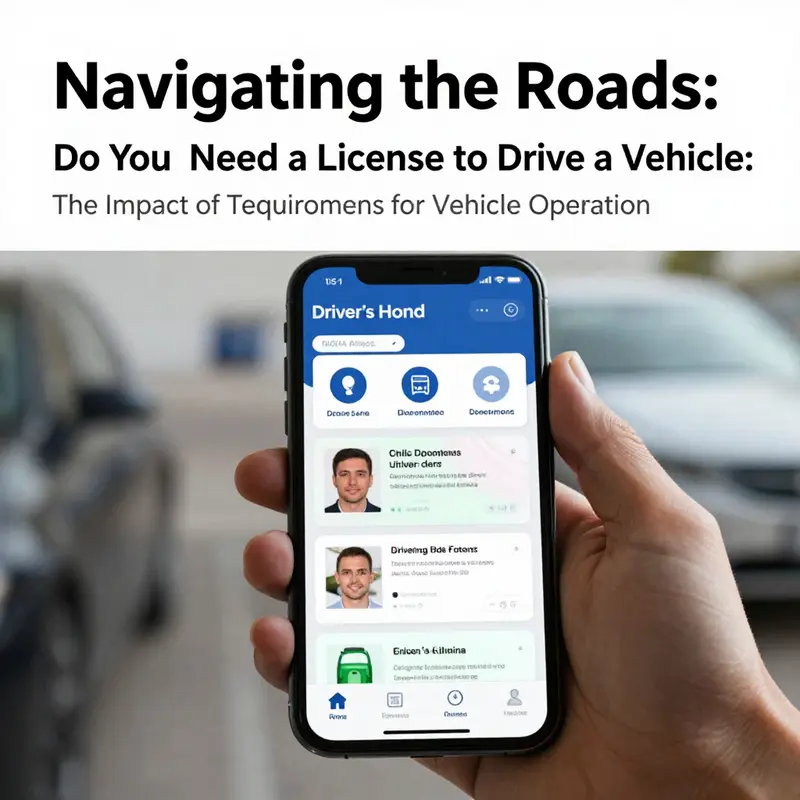
The question of whether a license is required to drive a vehicle is often treated as a straightforward legal checkbox. Yet in practice, it is a doorway into a larger conversation about safety, accountability, and the evolving role of technology on the road. A license is more than a permit to operate a machine; it is a compact between a driver, the state, and the public that the person behind the wheel has met a minimum threshold of knowledge, training, and fitness. This chapter traces how that threshold persists even as digital tools, data networks, and increasingly capable vehicles reshape how we prove and verify qualification to drive. It is a story of continuity and change, where the core obligation remains constant even as the shape of the license and the ways we obtain or display it continue to adapt to new technologies. The result is a road system that prizes safety and clarity over convenience alone, and where individuals must remain responsible for maintaining legal status just as they maintain their vehicles and their skills.
In the modern landscape, the tangible act of pulling out a paper card or flashing a digital screen is only the surface of licensing. The fundamental purpose—ensuring that every operator on public roads has demonstrated the ability to handle a vehicle safely—remains. Technology, however, changes how that proof is produced, stored, verified, and updated. Digital records, online renewals, and electronic licenses have become a practical reality in many regions. A license is increasingly portable across platforms; a smart device can display it, and a centralized database can confirm its validity in real time. Yet this advance does not dissolve the requirement itself. The driver must still meet the standards that justify the license’s existence. In other words, the switch from paper to electronic verification is a modernization, not a repeal, of the licensing principle.
The global pattern mirrors this mix of continuity and innovation. Traffic safety regimes continue to hinge on standardized testing, medical fitness checks, and ongoing compliance with traffic laws. Digital tools can streamline the process, but they do not substitute for the fundamental authorizations that license holders carry. The law in many jurisdictions—China among them—explicitly anchors the obligation in public safety and accountability. Driving without a valid license is not merely an administrative misstep; it signals a breach of a social contract that aims to reduce risk and protect all road users. The penalties, whether warnings, fines, or temporary vehicle confiscation, reflect that ongoing commitment to enforceable responsibility. In this sense, technology reshapes the experience of licensing—how it is issued, displayed, and verified—but not the underlying principle that someone who drives on public roads should be legally permitted to do so.
Few places illustrate how this balance between new tools and old rules plays out more clearly than the framework around foreign drivers in China. For travelers and expatriates, the path to driving legally is sometimes more complex than the act of driving itself. Even with a valid foreign license, entering the Chinese driving landscape requires meeting a set of concrete, well-documented steps. Applicants must present original identification, a medical fitness certificate from an authorized institution, and the foreign license accompanied by a certified Chinese translation if the original is not in Chinese. They must also supply three small photos, one-inch color portraits. These requirements emphasize the principle that licensing is not mere recognition of competence; it is proof of formal status, identity, and medical fitness that can be authenticated in a potentially high-stakes environment—the open road. The process may feel meticulous, but the emphasis on verifiable documentation aligns with the broader safety architecture that technology helps manage rather than replaces.
Technology’s role in this space is twofold. First, it accelerates and simplifies the administrative flow. Electronic licenses, digital verification, and online applications can reduce friction and speed up approvals, allowing drivers to meet requirements more efficiently. Second, technology creates new opportunities and new risks. The ability to verify a license in real time and across borders strengthens enforcement and compliance. But it also raises questions about data privacy, system integrity, and the possibility of new forms of manipulation. Consequently, regulators continue to refine the licensing apparatus to harness technology while preserving the safeguards that keep roads safe. In many countries, including China, this evolution is ongoing. The licensing process is adapting to accommodate innovations like smart cards, mobile verification, and even automated decision support in the back end of licensing offices. Yet the core objective remains stable: to ensure that every person who operates a motor vehicle on public roads is both legally permitted and adequately prepared to handle the responsibilities that come with driving.
Within this evolving context, foreigners planning a stay or long-term visit encounter a clear, standardized pathway. A temporary driving permit may be issued to foreign nationals with a valid license from their home country, valid for up to three months, but the arrangement comes with two conditions: they must not only carry both their foreign license and the temporary permit but also complete a course on Chinese road safety regulations. For those who intend to stay longer, options exist to obtain a permanent Chinese driver’s license, typically by passing a written examination on Chinese traffic laws. The exam is offered in English and other major languages in some cities, acknowledging the practical needs of an international population while preserving the requirement that knowledge of local rules is demonstrably sound. The emphasis on language-accessible testing reflects a broader understanding that clear comprehension of traffic regulations is essential to safe operation. It also reveals how licensing, even in a globalized environment, remains anchored to evidence of understanding and competency rather than to any single language or format.
From the driver’s perspective, this regulatory mosaic means that preparation for licensing—whether your registration is for a domestic, foreign, or electronic license—must be thorough, timely, and aligned with local guidance. For example, the documentation ecosystem in Beijing and other major cities includes official guidelines that outline exactly what needs to be presented. While the specifics can vary by city and circumstance, the consistent thread is that licensing rests on verifiable proof of identity, medical fitness, and demonstrated knowledge of the rules. The persistence of these requirements underscores a critical point: technology can streamline and standardize the process, but the obligation to demonstrate qualifications remains non-negotiable. This is not a rejection of innovation but a rationale for why checks and balances must endure as road technology advances.
As technologies such as advanced driver-assistance systems and the broader movement toward autonomous driving become more common, the licensing discussion often shifts to what a driver is legally responsible for supervising. Even when vehicles offer increasing levels of automation, the driver remains accountable under the law for supervising the vehicle’s operation, ready to take control when needed. This reality further cements the licensing principle. If the law expects a driver to be able to respond to an unfolding traffic situation, then the driver must have proven competence and continuity of status through a valid license. Technology can aid in demonstrating and verifying that competence, but it cannot dispense with the necessity of having met the baseline requirements. The road network, after all, operates on a shared trust: you can rely on others to follow the rules, and you must prove that you are yourself prepared to do so.
The narrative of licensing and technology also invites a practical reminder about the safeguards that exist in enforcement practice. Even as digital tools improve accuracy and speed in license checks, they also highlight the risk of misuse if oversight is lax. That tension is precisely why stories about licensing integrity—such as concerns around fraudulent documentation or schemes that undermine safety—remain relevant. A comprehensive reminder of this reality can be found in discussions around CDL integrity and related public safety concerns. For a detailed look at one such issue, see the discussion here: CDL cheating scheme exposed: public safety at risk. This link points to a broader truth: technology must be paired with robust governance, transparent processes, and continuous auditing to ensure that the fidelity of licensing is not compromised in the name of convenience.
The cultural and regulatory fabric surrounding licensing is further reinforced by formal, government-backed guidance on foreign driver procedures. In Beijing, and in many other places, the official framework emphasizes a structured approach to foreign driver licensing, with clear steps and documentation requirements. The emphasis on medical clearance, identity verification, and language-accessible testing reflects a widely shared view that the license is a social instrument, designed to protect all road users and to facilitate lawful, accountable driving. The ongoing modernization of licensing procedures—through digital records, online testing, and regional recognition of electronic licenses—demonstrates how policy can evolve without sacrificing core safety standards. This balance between technological advancement and regulatory rigor is what keeps the licensing system credible as vehicles become more sophisticated and traffic environments more complex.
For individuals navigating this landscape, the practical takeaway is straightforward. When you plan to drive, you must ensure you possess a license that is valid in the jurisdiction where you intend to operate. If you are a foreign national, your path may include translation, medical certification, and temporary permits or a formal examination appropriate to the duration and nature of your stay. If you are in a region that supports electronic licenses, you can benefit from digital verification, provided the license is current and legally recognized. The bottom line remains constant: a valid license is the minimum legal credential required to operate a motor vehicle on public roads. Technology can make it more convenient to prove that status, but it cannot replace the need to have earned it through proper testing, medical fitness assessment, and regulatory compliance.
In closing, the evolution of licensing in the tech era is not a surrender to automation but a refinement of safety practices. The licensing framework continues to advance in tandem with vehicle technology, data transparency, and cross-border mobility. As ADAS and autonomous driving technologies mature, regulators will likely expand the scope of what licensed drivers must know and demonstrate, while maintaining the essentials: identification, medical fitness, knowledge of traffic laws, and the ability to drive responsibly. The road ahead will likely feature more digital integration, more multilingual testing options, and clearer pathways for foreign drivers to obtain and maintain appropriate licenses. Those pathways will, in turn, depend on the same core principles that have guided licensing for decades: the driver must be qualified, the public must be protected, and the license must reflect, in a verifiable way, a real and ongoing competence on the road. For travelers, residents, and long-term visitors, understanding this balance will be essential to navigating the practical realities of driving in a world where technology shapes every mile traveled but cannot erase the obligation to drive legally and safely.
External resource for further context on international licensing in dynamic regulatory environments: https://www.beijing.gov.cn/zhengce/zhengcefagui/2025-10/19/43a6b7f3-8e3c-4b4e-8e51-7d3b8b5f8c1c.shtml
Final thoughts
Understanding the landscape of driving licenses is essential for anyone looking to operate a vehicle legally and safely. From the foundational legal frameworks to the varying types of licenses and the penalties for non-compliance, knowledge empowers drivers to make informed decisions. As technology continues to evolve, it will further enhance the process of obtaining and verifying licenses, leading to greater accessibility and convenience. Whether you’re a new driver or an experienced one, staying informed will help you comply with regulations and enjoy the freedom that comes with driving.