
Navigating the regulations surrounding vehicle registration and license plates is critical for new drivers, existing vehicle owners, and auto dealerships alike. The question of whether old license plates can be transferred to a new vehicle often arises, leading to confusion and potential legal issues. This article delves into the legal implications, state-specific regulations, and the reasons why putting old license plates on a new vehicle may be considered illegal. By the end, you will have a clearer understanding of your rights and the necessary steps to take when registering a new vehicle.
From Keepsake to Compliance: Navigating the Real Rules Behind Old Plates on a New Vehicle
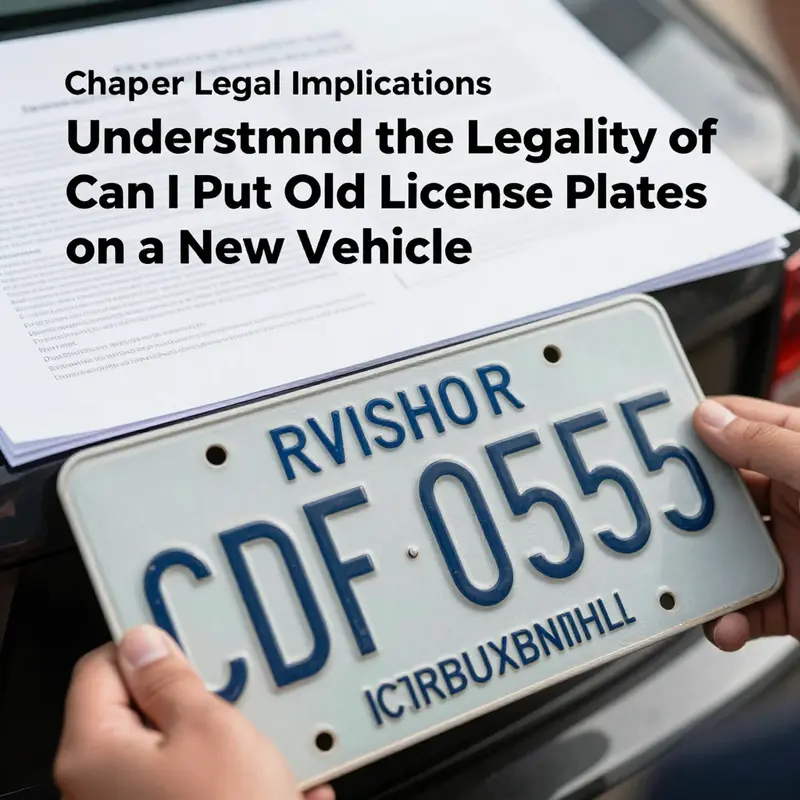
When you ask whether you can slap a familiar set of digits onto a brand-new ride, you’re poking at a sticky corner of the road law that governs every plate that leaves the DMV. The short answer, in most places, is no. A license plate is not a personal heirloom that travels across vehicles with you; it is a piece of the vehicle’s official record, tethered to a specific car through a chain that links the plate, the VIN, the owner, and the registration itself. The logic is practical and, in many ways, administrative: a plate must reliably identify the vehicle it’s mounted on, and that identification must be current in the state’s system so law enforcement can match plate to vehicle to owner to address in real time. To a dispatcher, a plate is a key that unlocks the exact registration file that lives in the state’s database. Swapping that key onto a different vehicle would jam that lock and confuse the entire tracking system. The consequences of such a mismatch aren’t theoretical; they are tangible and enforceable, often with penalties that grow quickly once you’ve been flagged for noncompliance.
The law, at its core, treats license plates as a public credential. They are not the private property of the person who buys them; they are the government’s way of saying this vehicle is legally on the road, belonging to this registered owner at this address, assigned to this VIN. Registrations are the record that travel with the vehicle and are updated when ownership changes hands, when a car is relocated, or when the plate itself is rotated out of service. States have built these rules to standardize how vehicles are tracked, to keep accurate records for safety inspections, tax collection, insurance verification, and roadside enforcement. That is why, when you buy a new car, the typical and prudent path is to obtain a fresh set of plates that match the new registration for that car. Old plates, even if they appear perfectly usable, are usually treated as expired or noncompliant if you try to reuse them on the new vehicle. The regulatory architecture assumes that the plate’s life is bounded by the specific vehicle and its current registration status. Any deviation invites not just a fine, but a deeper audit of your vehicle’s documentation, and in some cases, the possibility of the car being taken off the road until the matter is resolved.
A useful way to picture this is to imagine the registration as a living file that travels with the vehicle. The plate acts as a physical pointer to that file. The VIN serves as the permanent digital trace of the car’s identity, while the owner’s name and address anchor the registration to a person who is legally responsible for the vehicle. When you attempt to place an old plate onto a new vehicle, you create a misalignment. The VIN on the new car does not correspond to the old plate’s registration record, and the state’s database records will reflect that discrepancy. Law enforcement will see a plate that does not match the vehicle’s registered information, triggering checks and potential penalties. In practical terms, the mismatch can lead to a citation for using an invalid or improper plate, and in more severe scenarios, your vehicle could be impounded until the correct registration and plate are documented and validated. The bottom line remains constant: operating a vehicle with a plate that is not legally tied to the vehicle and its current registration is a risky and, in many jurisdictions, illegal move.
The specifics do matter, though, because state rules vary. A broad rule across most jurisdictions is simple: the plate must reflect the vehicle’s current registration and be issued through the official channels for that vehicle. However, there is a nuance worth noting. Some states permit a process sometimes called plate retention or plate transfer, which allows a driver to keep a plate when buying a new car—provided the plate’s status, the vehicle’s location, and the owner’s consent align with the DMV’s procedures. In these cases, the old plate does not vanish or become a casual keepsake; instead, it is formally transferred to the new vehicle or reissued to the owner for use on the same vehicle type, under a documented transaction and for a specified fee. In practice, this means that if you want to carry over your familiar plate, you won’t do it by simply placing the old metal on the new car. You will go through an official retention or transfer process, complete the required forms, pay any applicable fees, and wait for the DMV to update the registration linkage in their system. Some states explicitly allow this, while others do not, or impose strict conditions about domicile, vehicle type, or plate category.
To anchor this discussion in real-world variety, it’s helpful to consider how plate management can differ even within the same broad framework. In the nation’s landscape, states that operate a plate rotation program—where certain plates are cycled out of service on a scheduled timeline—illustrate another layer of complexity. A plate that looks perfectly usable in your garage may, by rule, be considered expired or non-compliant under the state’s rotation policy. The eight-year rotation, for example, means a plate track is resets on a timetable that has nothing to do with the physical condition of the plate itself. Once a plate is rotated out, it cannot legally be used on any vehicle again until and unless the state approves a formal reissuance, which generally occurs through the DMV and with the appropriate paperwork and fees. This is not a conspiracy against sentimentality; it is a mechanism to ensure plates reflect current, verifiable registration data and to preserve the integrity of the enforcement framework. If you still have the old plate physically, you may be tempted to reuse it; the rules, however, are clear that its continued use on a new vehicle typically constitutes noncompliance unless a formal legal pathway has been completed.
The potential consequences of skirting the official process extend beyond a simple fine. Using an old plate on a new vehicle can set off a chain of regulatory alarms. The plate is tied to a registration record that must be consistent with the VIN and the owner’s information. A mismatch can trigger an inquiry in the DMV’s system, leading to administrative warnings, official notices, or more punitive outcomes such as vehicle inspection suspensions, plate confiscation, or impoundment until the issue is resolved. In a world where every state maintains a detailed database of registered vehicles, any attempt to bend the rules gets flagged. The enforcement logic is not about chasing personal sentiment but about maintaining a reliable, auditable trail of who owns what vehicle, where it is, and how it moves through the system. It is not an exaggeration to say that the consequences can ripple through insurance records, registration renewals, and even eligibility for certain types of plates, including personalized or specialty plates that demand strict compliance with the current vehicle and address records.
But the story is not purely punitive. There is a constructive path for people who want to keep a beloved plate or who are moving between vehicles within the same state. The option of plate retention exists in a number of jurisdictions, and even where it does not, there is usually a documented transfer process. The essential takeaway is that you must engage with the DMV or equivalent agency, rather than attempting to bypass it. The process typically involves confirming your vehicle’s VIN, your current address, the intended new vehicle’s registration details, and any necessary fees. In many cases, you’ll need to provide proof of ownership and proof of insurance for the new vehicle, alongside the forms that authorize the transfer or retention of your plate. When done correctly, retention or transfer can be a smooth, legitimate route that preserves the plate’s identity while ensuring it remains properly linked to the correct vehicle and the correct registration file.
The question then becomes: how do states differ in their approach to plate retention and transfer? In practical terms, there is a spectrum. Some states, recognizing the value of personal identity and brand continuity, allow drivers to keep their plates when purchasing a new car, but this is not a universal rule. When retention is possible, it is typically under strict conditions: the plate must remain linked to the owner’s identity and the resident’s address, the new car must be registered in the same state, and the transfer must be completed through an official process with a set fee. In other places, retention is limited to specific plate types, such as personalized or specialty plates, or is restricted to within-state transfers only. The core principle remains: any retention or transfer requires formal documentation and a clear, trackable authorization trail with the DMV. If you’re moving to a new state altogether, the rules change again. In most cases, you cannot simply migrate your plate across state lines; you will need to secure a new plate that corresponds to the new state’s registration, or you must go through that state’s own plate transfer or surrender process if you continue to operate a vehicle there.
When we ground these distinctions in everyday practice, a few practical patterns emerge that can guide a car owner through a purchase or relocation without tripping the legal wires. First, always confirm the current policy with your state’s DMV or motor vehicle agency before you remove your old plate and attempt to mount it on a new vehicle. The official site is the most reliable source for the exact steps, fees, and documents required. Second, if you value a particular plate—whether it is a sentimental sequence or a personalized design—invest the time to explore retention or transfer options rather than risking noncompliance. The process may involve a fee, a form, a grace period, or a specific timing window around your new vehicle’s registration, but completing it through the proper channel ensures you’re on the right side of the law and on the road without interruption. Third, if your situation is unique—perhaps you are moving to a different state, purchasing a different class of vehicle, or dealing with a plate rotation schedule—start the inquiry early. States handle these transitions with varying urgency and compliance demands, and a little proactive planning can prevent last-minute surprises that could interrupt your drive.
An important nuance for readers who might be dealing with the practical realities of today’s automobile ownership is the availability of authoritative guidance that aligns with common-sense interpretations of the rules. While the core principle—that you should not attempt to reuse an old plate on a new vehicle without authorization—remains consistent, the precise pathways differ. Some states provide clear, published guidelines for plate retention, including eligibility criteria and the steps to initiate the transfer. Others describe the process in more general terms, requiring direct DMV engagement to determine whether a plate can be kept, transferred, or must be surrendered. In this sense, the landscape is not one-size-fits-all. Your responsibility as a vehicle owner is to obtain the official, up-to-date rules for your jurisdiction and follow them meticulously. The temptation to simplify or shortcut the process can be strong, especially if the old plate holds sentimental value or if time constraints loom large. Yet the consequences of a misstep can be costly, time-consuming, and legally risky. The disciplined approach—consulting the DMV, understanding plate status, and completing any retention or transfer, when available—offers the most reliable path to road-ready compliance.
To illustrate the diversity of this landscape without getting lost in endless hypotheticals, consider how different jurisdictions articulate the same overarching rule. In many places, the initial step remains registration and plate issuance. A new vehicle demands new plates issued in that vehicle’s name and registered address. In some states, there is a formal and well-publicized mechanism to carry over a plate, but it comes with a price tag and paperwork that must be completed before the vehicle can be driven legally. In others, the only truly permissible option is to surrender the old plate at the time of purchase and apply for a new plate package for the new vehicle. The precise language—what counts as proper ownership documentation, how to verify plate status, and which fees apply—appears in the DMV’s published guidance, which is why it is essential to consult those resources rather than rely on word-of-mouth or personal assumptions. Even in states that emphasize plate retention as a valued convenience for the public, the policy is conditional and transactional, not automatic. The overarching narrative, therefore, is not about resisting sentiment but about upholding a framework that ensures every on-road vehicle is properly identified and registered in real time.
If you are tempted to keep your old plate for the sake of continuity or nostalgia, pause and consider the broader implications. Continuity is possible only through an officially sanctioned channel. Without that channel, a driver risks operating with an apparently valid plate that, in truth, no longer matches the current registration of the vehicle or the owner’s identity. The risk is not merely a ticket. It is the potential for a court, a DMV enforcement action, or a temporary impoundment while the matter is resolved. In the worst-case scenarios, noncompliance can escalate into criminal charges depending on the jurisdiction and the specific circumstances of the plate misuse. This is not sensational rhetoric, but a sober reminder that plates form part of a critical public safety and regulatory infrastructure. The system is designed to be auditable, traceable, and enforceable, which is why the rules around transferring or retaining plates are careful, particular, and not to be bypassed.
For readers navigating this topic, it helps to anchor the discussion in practical steps you can take today. Start with a direct inquiry to your state’s DMV or motor vehicle office. Ask whether plate retention is available and under what conditions. If retention is possible, request the exact forms, the required proofs of ownership and address, the timeline for processing, and the total fees. If the policy does not permit retention, ask about the proper method to transfer the plate to a new vehicle within the same registration jurisdiction, or confirm that you must surrender the old plate and obtain new plates for the new car. Gather the documents you will need in advance: your driver’s license, proof of insurance for the new vehicle, the VIN of the new vehicle, proof of ownership (like the title or bill of sale), and any registration renewal notices that are in effect. This preparation pays off by making the DMV experience smoother and less frustrating, especially during busy periods when lines and processing times can extend the timeline from days to weeks.
A note on how this topic intersects with broader accessibility and efficiency goals of the motor vehicle ecosystem. The plate system is designed to be efficient, but it also has to be airtight. The public-facing rules exist to protect drivers, ensure road safety, and support the integrity of enforcement and tax compliance. While it may feel regulatory and sometimes abstract, the practice of keeping plates properly linked to the vehicle is a direct contributor to the reliability of license verification, emission and safety inspections, and successful insurance claims should anything go wrong on the road. In that sense, the question of can I put old license plates on a new vehicle becomes less about personal sentiment and more about compliance, accountability, and streamlined administration that benefits everyone on the road. It is a reminder that a seemingly simple act—reusing a plate—exists inside a complex system designed to protect the public, and following the official pathway is the safest and most straightforward route.
To summarize, the prudent path is clear. Do not attempt to mount an old plate on a new vehicle unless you have explicit, documented authorization from the appropriate state authority, and you have navigated the required registration or transfer process. If you want to preserve a sense of continuity, explore plate retention or transfer options through your DMV, recognizing that these options vary by state and are governed by formal procedures and fees. When in doubt, the safest and most lawful approach is to register the new vehicle with new plates or to complete a properly documented transfer, so the plate and the car remain in perfect alignment with the state’s records. In this way, you protect yourself from fines, vehicle impoundment, or worse, and you preserve the integrity of the road system that makes driving predictable and safe for everyone.
For readers seeking a closer look at related regulatory considerations that can influence how inspections and plate usage align in your region, a helpful resource can be found in the broader discussions within the industry. In particular, you can explore guidance that synthesizes state-by-state variations in vehicle inspections and plate handling at this consolidated reference: US States Vehicle Inspection Requirements.
External reference: For authoritative state-by-state guidance on plate issuance, retention, and transfer, you can consult the California Department of Motor Vehicles portal: https://www.dmv.ca.gov/portal/
Old Plates, New Car, New Rules: Navigating State Regulations on Keeping or Transferring License Plates
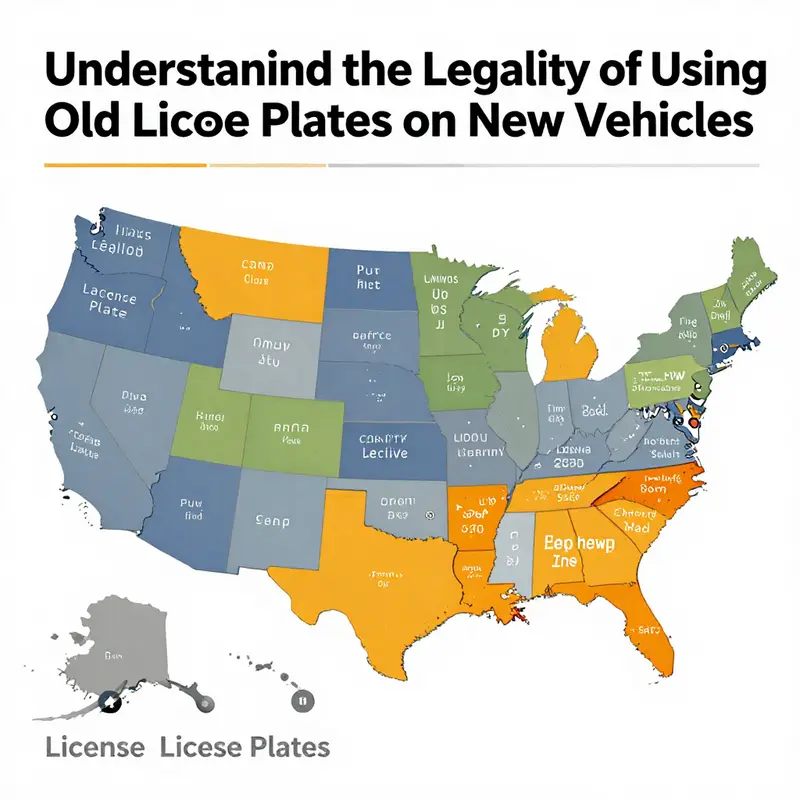
When people buy a new vehicle, a common question tends to surface with a surprising amount of emotion and confusion: can I reuse the old plates, or must I attach new ones to the new ride? The simple answer—No, not automatically—hides a much larger framework of state regulations, registration records, and safety considerations that help keep roadways orderly and accountable. In most places, license plates are not portable property you can move from car to car at will. They are pieces of a broader system that connects a plate to a vehicle through the vehicle’s registration and its VIN, and that system is regulated by state departments of motor vehicles or equivalent agencies. The consequence of treating plates as interchangeable is not just a bureaucratic hiccup; it can create legal exposure, fines, or other penalties if the transaction is not handled through the proper channels. The knowledge about plate transfers, replacements, and rotations you might have heard from friends or found in a casual FAQ can be tempting, but the rules are enforced with a seriousness that mirrors how states manage vehicle safety, taxation, and accountability for driving records.
To understand why old plates rarely move with a new vehicle, it helps to step through the logic of how plates are issued and tracked. A plate is issued as part of the vehicle’s registration process. The state’s DMV records tie that plate to a specific vehicle, identified in the system by its VIN, and to a registered owner. That linkage is what enables the state to manage registrations, track who is driving what, and ensure that a plate’s identity lines up with the actual vehicle on the road. When you register a brand-new vehicle, the registration information for that vehicle—its VIN, its owner, its insurance, and its status—must align with the plate that will appear on that vehicle. If you tried to physically place an old plate on a brand-new car without the proper transfer or replacement, you risk creating a misalignment that the DMV will flag as out of compliance.
States also have ongoing plate management programs that touch more than infancy-era rules about what plate is allowed where. For example, some regions implement a rotation program, designed to refresh plates after a certain number of years. In places with a plate rotation policy, even if a plate is physically usable, it may be deemed expired or non-compliant under current regulations. The practical effect is that a plate you’ve kept from a previous vehicle may not be eligible for use on a new vehicle just because you still have it in your possession. The rotation policy is not about the plate losing its stealthy charm or its personal history; it’s about ensuring plates meet standardized design, security features, and record-keeping updates that cities and counties rely on for enforcement and safety.
Another layer of complexity comes from how a plate is tied to the registration and to the owner’s record, not to the plate itself as a standalone object. In essence, a plate’s legitimacy rests on its pairing with the correct VIN and the corresponding registration. If you take an old plate and slap it onto a different car, the system sees a mismatch: the physical plate may still bear a valid looking number, but its association in the database may not align with the new vehicle’s VIN, its registered owner, or its inspection status. This misalignment can trigger a cascade of enforcement actions—backup checks, possible fines, or even temporary vehicle impoundment—depending on the state’s enforcement posture and the seriousness of the mismatch.
The practical upshot is that the old-plate-on-a-new-vehicle scenario is almost universally disallowed without a formal process. There are rare situations where a transfer is possible, but these occur only through explicit authorization, eligibility checks, and a fee structure designed to regulate the process. In some states, for example, you can transfer plates between vehicles of the same type—such as passenger cars to another passenger car—within a specific window after purchase or transfer of ownership. In others, personalized or specialty plates may be retained only if you go through a formal transfer or reissuance program that preserves the plate identity under the new registration. The key point is not the date on the plate or the sentiment attached to it, but whether the state’s official records reflect a legally valid transfer that matches the new vehicle’s VIN and ownership details.
Consider how this plays out in practice. Suppose you buy a new car from a dealer and you want to keep the plate you’ve always had for its sentimental value or for the sake of consistency on your driving record. In many states, you will not be allowed to simply transfer that plate to the new car without a formal process. You may need to apply for a plate transfer, which will involve an eligibility check, a payment of fees, and a requirement that the new vehicle meets the same category as the old one (for example, a passenger car must become a passenger car under the transfer). In other circumstances, you may be able to retain a personalized plate that is still available and in good standing, but even that requires administrative steps: ownership documentation, name alignment with the registration, and often a short waiting period to finalize the transfer. These steps are what help prevent a plate from serving as a loophole for misrepresenting the vehicle’s identity across state records.
It’s also useful to recognize that different states think about plate transfers in different ways, and the nuance matters. In Texas, for instance, there is a transfer option, but it is constrained. A plate can be moved to a new vehicle if the two vehicles are of the same category (like from one passenger car to another) and the transfer occurs within a designated timeframe after purchase, typically requiring a formal application through the county tax office or an online portal. Importantly, this is not an automatic handoff. It involves verification that the new vehicle passes the relevant checks and that the plate belongs to the same owner on the new registration. California approaches plate transfers with its own set of rules, and while it is possible to request a transfer, it likewise depends on the plate type, the registration name alignment, and timely submission of the transfer request.
Across states, the common thread is clear: the plate is a part of a regulated system, not a free-floating artifact. That system is designed to ensure the plate’s identity maps to the right vehicle and to the right owner for purposes of law enforcement, taxation, and road-safety data. When people ask, “Can I put my old plate on a new car?” the instinct to preserve a sense of continuity must contend with this larger regulatory architecture. The right path is to start with the state’s official guidance, confirm the eligibility for any transfer, and complete the formal process if you wish to move a plate. This is where the “best practice” becomes practical advice: always verify with the DMV before attempting any plate transfer, obtain the necessary forms, and be prepared for potential fees and documentation requirements. The process is not just about the plate’s appearance; it is about maintaining consistent, compliant records that align with the VIN, the registered owner, the vehicle’s inspection status, and the state’s safety considerations.
A useful way to think about the transfer question is to imagine your registration record as a ledger. Each plate number corresponds to a line item tied to a particular vehicle’s VIN and to an owner’s record. When you buy a new car, the ledger needs updating to reflect the new VIN and the new vehicle status. If you try to reuse the old plate without updating that ledger, the mismatch becomes visible in the DMV’s audit trails. In most cases, that audit would flag the plate as non-transferable without the formal steps. Even if the old plate could physically fit onto the new vehicle, the legal system seldom allows it to pass without a documented transfer. This is where the language of the regulatory guidance becomes more than bureaucratic jargon: it is a safeguard against misidentification on the road, a mismatch between the vehicle and its legal records, and a potential vector for issues ranging from traffic violations to insurance confusion.
For those who cherish their current plate numbers—whether they are standard, personalized, or otherwise special—the opportunity to carry them forward exists only when the state permits and when you complete the required steps. In states that do allow plate transfers, the process generally begins with the DMV or county tax office, proceeds through an application that confirms vehicle category and ownership, and ends with payment of a transfer fee and the issuance of a new registration that reflects the plate’s new pairing. In some regions, if you are replacing a totaled or scrapped vehicle, you may be eligible for a replacement plate, but that is still a controlled exception rather than a free pass. The upshot remains the same: there is no universal rule that you can simply swap old plates onto a new vehicle. The exact path is state-specific and hinges on formal approvals, eligibility, and documented compliance with the relevant filings.
With these structural realities in mind, the practical steps become clearer. First, contact your state’s DMV or its official online portal to confirm whether plate transfer is possible in your circumstances. If you are in a situation where the old plate can be transferred—for example, you are purchasing a similar vehicle type, you are within the transfer window, and the registration records can be aligned—collect all required documents. This typically includes proof of ownership, identification, proof of insurance, and any forms that demonstrate the transfer of registration from the previous owner to you when applicable. If you are purchasing a vehicle from a private party and want to retain your plate, you will want to verify whether a plate transfer is permitted for private-party purchases, and what deadlines apply, since some states require you to complete the transfer within a short window after purchase.
In parallel, consider the case for simply obtaining new plates. The new-plate route is the default in many circumstances. It sidesteps the potential friction of a transfer, ensures that the plate aligns with current design standards and security features, and avoids the risk that an unapproved plate could be flagged as non-compliant. If you choose new plates, you will still need to register the vehicle, secure the new plate, and ensure that your insurance, your address, and your driver license information are all up to date. The exact steps—where to go, what forms to fill out, and which fees apply—will vary by state, but the broad workflow remains consistent: register the vehicle, obtain plates that match the current registration, and keep the DMV records synchronized with the VIN and ownership.
The practical realities of plate transfers come with important caveats. Unauthorized use of an old plate on a new vehicle is illegal in most jurisdictions and can expose you to fines, registration suspension, or other penalties if authorities discover the discrepancy during a traffic stop, an accident investigation, or a vehicle inspection. The risk is not hypothetical. In states that emphasize plate integrity as part of enforcement and safety programs, mismatches can trigger a cascade of compliance actions, including the revocation of registration until the records are corrected. This is not about pedantic enforcement; it is about maintaining a reliable mapping between vehicles, their owners, and their official records so officials can accurately attribute offenses, assess taxes, and ensure that roadworthiness checks apply to the right vehicle.
To navigate this terrain effectively, it helps to adopt a disciplined approach. Start by identifying your state’s official policy on plate transfers. Look for the exact terms used by the DMV—whether they call it a transfer, a replacement, or a plate reissuance—and pay particular attention to any deadlines, eligible vehicle categories, and required documentation. If you see a phrase like “plate transfer within 30 days of purchase” or “transfer only between same-type vehicles,” treat it as a concrete constraint rather than a vague possibility. Then, gather your documents in advance: proof of ownership, current registration, the VIN for the new vehicle, proof of insurance in the same name as the registration, and any ownership history or sale documents that may be required. When there is a transfer option, complete the formal application through the official channels—online portals are increasingly common—but do not assume completion is automatic. After you submit the transfer, verify that the new registration reflects the plate as soon as the state processes the request. If your state allows you to retain a personalized or specialty plate, you’ll want to ensure the request is explicitly approved and that the plate’s status remains in good standing without lapses.
All of these considerations—legal compliance, the integrity of DMV records, and the desire for continuity—point back to a simple but crucial practice: check with the state’s DMV before trying to move a plate. Plate transfer rules vary widely, and the exceptions to the general rule are often few and carefully bounded. A careful reader will note the pattern across jurisdictions: when plate transfers are possible, they require explicit authorization, timely action, careful documentation, and fees. When transfers are not possible, the only secure option is to register the new vehicle with new plates and keep your old plate for another time or for future opportunities, if permitted.
As you plan the transition from one vehicle to another, think of it as a coordinated update to a single, living system rather than a personal memento you can carry across. The plate is not just about the number visible to others. It is the visible interface of a much larger set of records that govern how your vehicle is registered, insured, inspected, and tracked in the state’s regulatory framework. The more you align with that framework, the smoother the transition will be, and the less likely you are to encounter friction with law enforcement, administrative agencies, or your own insurance provider. And if there are any doubts along the way, a helpful touchstone is to consult the guiding materials that states provide for plate transfers and to consult the linked resources that offer deeper dives into how state rules shape driver licensing and vehicle registration policies. For a concise overview of how state rules interact with driver licensing in this context, see the guidance on State Rules Impact on Driver Licensing.
If you want a more formal, state-by-state look at where transfer is permissible and what the requirements look like in practice, you can explore official state guidance pages. These resources are essential because they distill legal language into actionable steps: which documents you’ll need, what fees apply, how long you have to complete the transfer, and what inspections or verifications must be completed before the plate may be reassigned. The landscape is not uniform, but the underlying logic—plates anchored to registrations and VINs, governed by a registry that must stay coherent—remains consistent. That coherence is what protects the public, helps law enforcement identify vehicles accurately, and supports the integrity of road-safety programs across the country.
In closing, the question of whether you can put old plates on a new vehicle does not have a one-size-fits-all answer. It depends on the state, the vehicle type, and the specific circumstances surrounding the purchase or transfer. The reliable path is to treat the plate as part of a regulated registration system and to proceed only through official channels. If you find your situation is eligible for a transfer, prepare the necessary documentation and be ready to pay the required fees. If not, plan for new plates and move forward with the registration in a timely, compliant way. Either route keeps you on the right side of the law and ensures that your vehicle, your records, and your driving history align perfectly with the state’s accountability framework. For readers seeking additional context and state-specific nuance, a helpful reference point is the State Rules Impact on Driver Licensing resource linked earlier, which provides a broader lens on how plate-related decisions intersect with broader licensing considerations. For further official guidance on plate transfers and other registration steps, consult the California DMV’s official site as an external resource to see how a large, well-established system approaches these questions and to compare with your own state’s procedures: https://www.dmv.ca.gov
Why Reusing Old License Plates on a New Vehicle Is Usually Illegal—and What It Means for You

When you buy a new car, a familiar question often surfaces with the same energy as nostalgia: can I reuse the old plates I already own on this new ride? It’s tempting to see a plate as a personal keepsake, a numeric badge that travels with you from car to car. Yet license plates are not simply personal possessions to be swapped at will. They are components of a state’s vehicle identification framework, tightly bound to specific registration records, particular vehicles, and the current status of those records. The logical impulse to preserve the familiar number makes sense, but the legal and administrative machinery behind vehicle registration is designed to protect accuracy, traceability, and security. In practice, this means that for most people, the old plates stay behind on the car you’ve traded in, rather than moving to the new vehicle in your driveway. The result is not a moral judgment against sentiment, but a sober reminder that license plates serve as a visible, concrete link to a vehicle’s registration history, its VIN, and the integrity of the state’s traffic management and enforcement systems. The question is not only about whether a plate can physically fit onto a different car, but whether doing so would align with the laws, regulations, and registration databases that govern every licensed vehicle. And that alignment matters: it reduces the risk of penalties, seizures, and the confusion that arises when a plate and a VIN disagree in a state’s records, or when a plate’s status no longer matches the vehicle it’s attached to. In turn, this makes the guidance clear and practical, even as it might feel restrictive to someone who is attached to a particular number or design. The core answer, especially in the context of this chapter’s focus, is that you generally cannot transfer old plates to a new vehicle and simply continue as if nothing has changed. The process rarely, if ever, supports a casual swapping of plates between cars. The correct pathway is to go through the official registration framework, obtain new plates that reflect the new car’s registration, and protect yourself by ensuring every associated record—your address, your registration status, and your VIN—stays in lockstep with the right vehicle. The system is designed this way for a reason: it keeps track of which car is on the road, who owns it, and what plates are currently valid for a given registration. It also helps law enforcement and tolling systems recognize vehicles quickly and accurately, reducing the risk of misidentification that could lead to fines or enforcement actions. In short, while it may be possible to physically mount a plate that looks familiar, doing so on a new vehicle is a legal risk that most states will not permit. This is especially true in jurisdictions with strict plate management programs, like the eight-year rotation scheme in South Carolina, which helps ensure plates on the road are up-to-date with the latest security features and registration records. Even if the old plate appears intact and perfectly usable, the state’s rotation timing and the immunities built into the registration system mean that the plate is considered retired once its cycle advances. The old plate’s ongoing legitimacy is therefore not guaranteed, and any attempt to reuse it would be a breach of current policy. The practical takeaway is straightforward: when you purchase a new vehicle, you should expect to obtain a fresh plate that corresponds to the new vehicle’s registration. If you cherish a particular plate design or number, explore the formal transfer options offered by the state’s Department of Motor Vehicles for personalized or special plates. This path preserves the identity you care about, but it does so within a framework that ensures all records stay synchronized and compliant with the law. This is not merely a bureaucratic exercise; it guards against a host of issues that can spring from a misaligned plate and registration pair. For instance, a plate that no longer matches the vehicle’s VIN or administrative status can trigger red flags with law enforcement, create mismatches in automated recognition systems, and lead to stops or fines that disrupt your daily mobility. In economies and communities where traffic management relies on precise plate-VIN linkage, the registry’s integrity is a critical public good, not a mere convenience. In that sense, the law’s insistence on using a current plate with a current registration is about reliability, safety, and the efficient functioning of the road network, rather than about curbing personal preference. South Carolina, a case in point, operates an eight-year plate rotation, where plates are retired and replaced on a defined cycle. The rationale behind this approach includes ensuring compatibility with updated security features, aligning plates with current registration databases, and maintaining a consistent, verifiable record of who owns which vehicle at any given time. The practical effect is that when you register a new vehicle, you are expected to receive and display a plate that reflects the current cycle and registration status. If your old plate has not yet entered its retirement phase, you may still be tempted to reuse it, but you should be aware that the state considers it retired according to its cycle, and its continued use would be noncompliant. Beyond rotation, the linkage between plate and registration remains the central principle. Each plate carries identifiers that tie it to the vehicle’s VIN and its active registration status. A plate that predates a new car can create a mismatch that the state’s systems are designed to detect. Modern enforcement and verification strategies rely on fast checks against VIN, plate, and registration data. When a plate is moved to a different vehicle without updating the underlying records, these checks can fail, producing a cascade of consequences: a stop by law enforcement, an administrative notice, fines, or even the impoundment of the vehicle until the issue is resolved. The risk is not hypothetical; it is embedded in how traffic law and state vehicle databases operate in real time. The same logic extends to federal-level considerations. National and federal compliance programs, including identity verification standards and post-2015 real-ID transitions, depend on the accuracy of vehicle identification. While a plate-centric approach might seem minor, it is a piece of a broader ecosystem that ensures that every vehicle’s ID aligns with its official records. If a plate’s data conflicts with a vehicle’s VIN or the current registration, the entire chain of verification can be compromised, with potential implications for travel, insurance, financing, or even auto-related registrations in other contexts. That is why authorities emphasize keeping records up-to-date and ensuring that every plate in use corresponds to the correct vehicle. The situation becomes more complex if the plate has a storied past—if it was reported lost or stolen, for instance—because then it is invalid for reuse. A plate flagged in this manner cannot be reactivated, even if it is recovered. This protective measure prevents fraud and preserves the integrity of plate-based identity across the system. Attempting to reuse a plate that has been marked in this way would be illegal, and it could involve criminal charges in addition to civil penalties. In such cases, the best course is to obtain a new plate or pursue the official transfer path for any plates that remain eligible, always under the supervision of the DMV. The transfer pathway itself is not a casual swap. It is a formal, document-driven process that may involve surrendering the old plate, presenting proof of ownership, and paying transfer and processing fees. The exact steps vary by state, but the general pattern remains consistent: you cannot simply affix an old plate onto a new vehicle without abiding by the official procedures that ensure the plate remains properly associated with the correct registration and VIN. If you are set on preserving a specific plate number or design, the transfer option becomes your primary conduit for doing so, and the DMV’s guidelines will specify whether your plate is eligible for transfer and what records must be updated. It is worth noting that some states are more flexible than others when it comes to plate retention, especially with personalized plates. In those jurisdictions, you may be allowed to carry a plate over to the new vehicle via a formal transfer, rather than being forced to accept a completely new plate. In other states, including those where the plate rotation is rigid and the matching of plate to registration is non-negotiable, the only permissible path is to register the new vehicle and receive the new plate on file. This variability underscores a fundamental point: there is no universal rule across all jurisdictions, but the guiding principle remains constant—the plate must reflect the current registration and the vehicle it is attached to. If you move between states or purchase a vehicle in a different jurisdiction, understanding the local rules becomes even more important. States differ in how they treat plate ownership, plate transfer, and the responsibilities of the vehicle’s new owner. Some states may allow short-term use of a temporary plate while you complete the transfer process; others may require you to display the new plate within a strict deadline. The horizon of possibilities is shaped by the local regulatory landscape, and the right course is always to consult the local DMV’s published guidance before attempting any transfer or reuse. In practice, a careful buyer or new vehicle owner will approach the question with a plan. The plan starts with confirming the plate status on the previous vehicle and whether any transfer options exist. If the old plate is still within a valid rotation cycle and you can legally transfer it, you proceed with the formal transfer. If not, you accept the new plate and log the change in all related records. Either path—transfer or new plate—requires attention to fees, timelines, and the updating of the vehicle’s address on file. These steps protect you from the risk of penalties or registration issues that could arise if the plate and the vehicle records diverge. The bottom line remains consistent: you should not attempt to place an old plate on a new vehicle unless the state explicitly permits the transfer and you complete all required steps and documentation. Even when a personalized plate is involved, the process is a legal one, designed to preserve the plate’s identity while ensuring proper linkage to the new vehicle’s VIN and registration. The goal is to maintain accurate, secure identification across all vehicles in your household, and to do so in a way that satisfies both state regulations and the realities of modern fleet management. For those who want a broader perspective, the policy environment often extends beyond a single state’s boundaries. See State Rules Impact on Driver Licensing for a broader view of how local regulations shape decisions about plates and registrations. And when you need the definitive, state-specific guidance, consult your state’s DMV in addition to this article. For instance, in South Carolina, where plate rotation and register linkage are actively managed, you should rely on official guidance from the South Carolina Department of Motor Vehicles—Vehicle Registration to stay compliant. The program’s structure emphasizes that new vehicles receive new plates and that existing plates transition within a defined cycle, while the transfer of a plate when allowed remains a formal, fee-based process. To ensure you comply and avoid penalties, check the official DMV page and confirm any recent changes to the rules before you act. See official guidance at: https://www.scdmv.com/vehicle-registration/.
Final thoughts
In summary, using old license plates on a new vehicle can lead to significant legal complications. The application of various laws and specific state regulations must be understood and followed to ensure compliance. Whether you’re a new driver, an experienced vehicle owner, or an auto dealership, it’s crucial to navigate these regulations carefully to avoid penalties or legal issues. Always consult your state’s Department of Motor Vehicles (DMV) for guidance on the appropriate processes for registering vehicles and obtaining license plates.