
Navigating the complexities of vehicle ownership and registration can be daunting, especially for new drivers and learners. One common query among potential vehicle owners is whether it’s possible to register a vehicle without possessing a driver’s license. This article seeks to unravel this critical question, shedding light on the pertinent legal frameworks, documentation requirements, ownership conditions, state variations, and the implications of driving without a license. Each chapter will equip readers with comprehensive insights, fostering a clearer understanding of the relationships between vehicle registration and licensing requirements.
Ownership Without a License: Navigating Vehicle Registration When You Can’t or Won’t Drive
The question can feel paradoxical at first glance: can you own and register a car without holding a driver’s license? In many places, the answer is yes, and the distinction between ownership and operation becomes a crucial frame for understanding modern vehicle administration. Registration is the formal recording of who owns a vehicle and that the vehicle meets basic standards and tax obligations. Licensing is the permission to operate the vehicle on public roads. The two processes are coordinated by different branches of government and driven by different concerns: ownership proof, taxation, vehicle safety, and insurance versus the competence and responsibility required to drive a vehicle on public highways. When you separate these threads, it becomes clear why you can legally register a vehicle without a license even as you remain barred from driving it until you obtain the proper credentials. The logic is practical: a person may inherit a car, purchase a vehicle for a household, or move to a jurisdiction where they do not drive at all, yet still need to record the asset in their name for ownership, registration, or financing purposes. This separation also helps explain why many rules emphasize documentation and identity over the ability to operate the vehicle. In other words, ownership can be established and documented, while the right to operate is a separate question governed by licensing requirements, age restrictions, and insurance mandates.
The core documents most often involved in the registration process reflect this separation. Typically, you will be asked to present proof of identity, proof of ownership like a title or a bill of sale, the vehicle’s certificate of conformity or equivalent compliance documentation, and evidence of purchase tax payments and insurance. A purchase invoice or certificate of origin may be required in some jurisdictions, while others rely on the title transfer alone to establish ownership. The vehicle identification number, the vehicle’s current mileage, and a description of the vehicle are standard details, but the emphasis is always on establishing a clear, unambiguous chain of ownership. In many places, you will also be asked to show proof of address, which helps tie the vehicle to a particular household and region for taxation and regulatory purposes. Compulsory insurance, often known through an insurance certificate or policy, is another common denominator. In practical terms, this often means you can walk through the registration office with your government-issued ID, the purchase paperwork, proof of insurance, and the title, and you can complete the process even if you have no license to drive.
Within this framework, the nuance becomes sharper when you look at different jurisdictions. In the United States, for example, registration largely focuses on ownership verification, safety and emissions compliance, and fee collection. The law generally requires proof of identity and ownership, such as a title or bill of sale, and it does not necessarily mandate a valid driver’s license as a prerequisite for registration. This means that individuals who do not hold a driver’s license—non-drivers, new residents awaiting a license, or those who simply choose not to drive—may still register a vehicle in their name. The exact requirements, however, can vary by state. Some states may request alternative forms of identification or additional verification steps if a license is not presented. Others might require a state-issued non-driver identification card or a separate form of identity authentication. Either way, the administrative objective remains constant: prove who owns the vehicle and that the vehicle is properly documented and insured.
From a practical viewpoint, the ability to register without a license does not grant a blanket permission to operate. Driving a car without a valid license on public roads is illegal in most places. The penalties can be substantial, ranging from fines to DMV penalties and even vehicle impoundment in certain circumstances. Insurance implications are also significant: some policies are designed to follow the driver’s status rather than the vehicle’s title, and many insurers require the driver to have a valid license or a permitted learner’s status to maintain coverage on a vehicle. Even if the vehicle is registered in your name, driving without proper authorization is a separate risk, and it can affect future licensing, insurance premiums, and the ability to legally operate the vehicle when needed. For those who own but do not drive, there is often a routine of arranging a responsible driver under the policy or ensuring the vehicle is stored or used in ways that do not require on-road operation until the appropriate license is obtained.
The question of documentation also invites a broader look at the administrative ecosystem surrounding vehicle ownership. In many countries, even when the license is not required for registration, authorities expect the vehicle to meet safety and environmental standards, to be insured, and to be properly taxed. The registration certificate functions as a public record of ownership and a basis for taxation and regulatory oversight. It acts as a gateway to future steps, such as transfer of ownership, evaluation for taxes, or registration renewal. The relationship between ownership records and licensing is not merely procedural; it is fundamental to ensuring that vehicles in a jurisdiction are traceable, that accidents are resolved with clear accountability, and that a system of penalties or incentives aligns with public safety goals.
In considering the broader landscape, it is important to acknowledge that the specifics can differ across borders. A country with centralized vehicle administration may have a more straightforward alignment between registration and licensing rules, whereas a federal system can yield a patchwork where one state allows registration without a license while another imposes stricter identity or consent requirements. The underlying principle, however, remains consistent: the right to own and register a vehicle hinges on clear ownership and compliance with taxation and safety standards, while the right to operate on public roads rests on licensing, insurance, and other driving credentials. For readers navigating this terrain, the call to action is practical—confirm local requirements with your motor vehicle agency, prepare a complete set of documents, and keep in mind that the path to ownership does not automatically grant permission to drive.
This distinction also intersects with personal situations. A person moving into a new state or country may need to register a vehicle promptly to establish residency or to meet local regulations, even as they pursue the process of obtaining a driver’s license. In such cases, having the vehicle in the owner’s name with all necessary documentation reduces friction around taxation, insurance, and potential resale. It also supports lawful vehicle storage, maintenance, and transfer when circumstances change. To readers who are weighing the decision to purchase a vehicle without a license, this framework helps separate the practicalities of ownership from the responsibilities of driving. It clarifies what can be done now, what must wait until licensing is secured, and how to proceed in a way that minimizes legal risk while preserving the flexibility to adapt to future licensing outcomes.
For those seeking deeper nuance or jurisdiction-specific guidance, a closer look at how state rules shape licensing—and, by extension, how those rules interact with registration—can be illuminating. The link below points to a resource that explains how state rules influence driver licensing, offering a broader lens on the relationship between ownership, registration, and operation. State Rules Impact on Driver Licensing
In practice, the pathway is largely a matter of reading the registry, understanding the local definitions of ownership and identification, and gathering the expected documents. The documents you present for registration tend to be standardized around identity, ownership, and taxation rather than driving status. You may be required to demonstrate that the vehicle meets safety standards and that it is properly insured, but there is no universal mandate that a license be held to register. And even when you have registered the vehicle without a license, you should anticipate the need to secure a license in the future if you intend to operate the vehicle on public roads. The distinction between owning a vehicle and driving a vehicle remains one of law and policy more than of personal preference. When you plan to engage in any on-road use, you will need to align your authorization to drive with the regulatory framework in your jurisdiction, to maintain up-to-date insurance, and to comply with annual registration renewals and safety inspections where required.
As readers consider their next steps, a practical approach emerges: gather the typical registration documents, check with the local motor vehicle department for any state-specific quirks, and weigh your intentions about driving against the formal rules that govern ownership. If you are not planning to drive regularly, you can still maintain full ownership and control of the vehicle, but you should be mindful that future changes—such as obtaining a license or transferring registration—may bring additional requirements. Reading official guidance, speaking with a representative, and preparing a complete file before you begin a registration transaction will reduce the chance of delays. In addition, keeping a clear record of all documents and ensuring they are up to date will pay dividends if ownership changes hands, if the vehicle is sold, or if laws shift in your jurisdiction.
For readers seeking a concrete touchstone, the California Department of Motor Vehicles offers a comprehensive framework for registration procedures and the interplay with licensing within its jurisdiction. While policies vary, the underlying logic described here—ownership and registration as one track and licensing as another—persists across many regions. For official guidance, consult the California DMV at https://www.dmv.ca.gov/.
Paperwork Without a Permit: Navigating Vehicle Registration Without a Driver’s License
At first glance, the question can I register a vehicle without a driver s license seems to bundle two separate tasks into one. Ownership and registration are administrative steps; driving is a separate legal act. Many people assume you must hold a license to own a car, or that registration requires the same credential you would use to operate the vehicle. In reality, across different jurisdictions, you can complete the ownership and registration without a license, while the right to drive remains separate and regulated. This distinction matters not only for people who are in the process of learning or who never intend to drive at all, but also for those who are guardians or family members purchasing a car for a non-driving relative. The consequences of confusing these steps can be costly or confusing, especially when the car is meant to be parked or stored rather than driven every day.
Turning to international practice, the example of how a country handles registration can illuminate why paperwork sometimes trumps practical driving ability. In China, for instance, obtaining a driver s license is not a prerequisite for purchasing or registering a vehicle. The registration process hinges on documents such as a valid ID, the vehicle purchase invoice, the certificate of conformity, the vehicle purchase tax certificate, and the CTPL policy. The vehicle exists in the ownership of the person who signed for it, and the state records reflect that ownership. This arrangement underscores a straightforward principle: the right to drive is legally separate from the right to own or register a car. It is a helpful reminder that for many people around the world, the barriers to vehicle ownership can be lower than the barriers to operating one on public roads.
In the United States, the picture is more complex but broadly accommodating. Registration offices and motor vehicle departments generally require proof of ownership and proof of insurance, plus evidence of residency and a completed application together with the appropriate fees and taxes. A valid driver s license is frequently requested as proof of identity and residency, but in many states it is not a hard requirement for the act of registering a vehicle in your name. Some jurisdictions accept alternative forms of identification, such as a state-issued non-driver ID, a passport, or even a birth certificate, especially if the vehicle will not be driven. The exact mix of documents varies by state and even by county, so the best answer often begins with a call or a quick online check with the local DMV or motor vehicle agency.
California, as one of the largest and most scrutinized registration systems, illustrates the nuanced approach. A driver s license is common for identification during registration, but a non-driver ID card issued by the same agency can also be accepted. The state emphasizes the core requirements: proof of ownership, proof of insurance, proof of residency, and the payment of fees. The identification element can be satisfied with alternatives, provided they meet the state s standards for identity verification. This flexibility is vital for people who do not have a driver s license yet still own a car that must be registered for legal purposes or storage. The broader message is clear: your personal status as a driver or non-driver does not automatically bar you from having a vehicle on paper.
New York offers another example of variation, showing that the line between ownership and operation can shift with precise documentation. You may register a vehicle without a license if you provide other acceptable forms of identification and meet the residence requirements. The nuance is not about circumventing rules but about acknowledging that ownership documents and residency proofs can establish legitimacy in place of a driving credential. This approach can be helpful for individuals who are in the process of obtaining a license, are temporarily unable to drive, or are purchasing a vehicle for someone else s use. It also underscores the importance of consulting the exact statute and DMV guidance to avoid mismatches between what you present and what the department expects.
Across states, the central proofs—ownership, insurance, residency, and a formal application—remain stable, ensuring the vehicle is tied to a real person and a real place. Insurance is nearly universal; you will usually need to show coverage in force for the vehicle you register. The types of insurance accepted vary, with some states requiring the minimum liability policy and others offering more flexible options. Yet the legal reality remains firm: owning a vehicle does not inherently grant permission to drive it on public roads. Driving without a license is illegal, and penalties can include fines, license suspension, and in some cases vehicle impoundment. Even if you are the registered owner, the car remains a tool that requires appropriate authorization to operate, which is why many registrars stress that registration and driving are two different rights supported by different sets of rules.
When approaching registration without a license, a practical, calm approach helps. Start by confirming your identity options with the local DMV and gathering the documents you already hold: the signed title or bill of sale to prove ownership; a current proof of insurance; a document showing your residence, such as a utility bill or lease; a completed registration application; and the registration or transfer fee. If the state allows alternative IDs, collect a non-driver ID, a passport, or another form of proof that the department accepts. If you are registering a vehicle for a family member or for storage rather than driving, note that some jurisdictions require you to indicate the intended use and to provide alternative contact details for consent or verification. You may also need to pay sales tax or vehicle-related taxes; those payments are commonly tied to the transaction as part of the registration process rather than the act of driving the vehicle.
For anyone contemplating later driving, a path exists. After you complete the paperwork and the vehicle is legally registered, you can begin the process of obtaining your driver s license. There can be practical hurdles, such as ensuring you have a valid address consistent with DMV records and completing the required tests or training. In the meantime, if the vehicle is operational, it should not be parked on public roads without the right to drive. Some people choose to use the car only for storage or private, off-road use until a license is obtained. Others arrange for a licensed driver to operate the vehicle for a brief period before the license arrives. The moment you pass the driving requirements, your license status can be updated in DMV records, harmonizing ownership with the right to operate on public thoroughfares.
Because rules shift from state to state and occasionally year to year, the safest move is to consult the official sources. The state DMV or motor vehicle agency will publish the exact list of acceptable documents, the residency standards, and the precise fees. The official California DMV portal, for example, remains a primary reference for how identification and ownership proofs are treated in that state. Within this broader landscape, you may also encounter references to broader state rules and how they impact driver licensing. state rules impacting driver licensing. This link helps frame the idea that the line between ownership and operation is not uniform nationwide.
Understanding the nuance of registration without a license helps demystify the administrative path that leads to ownership. It clarifies why a person can possess a vehicle legally and have it appear in their name even if the individual cannot or will not drive. This distinction becomes particularly important for guardians, estates, or individuals coordinating a vehicle purchase for a family member or for use in a business context where driving privileges are temporarily paused. As the article moves forward, the focus will shift to how licensing interfaces with insurance, safety checks, and the practical steps for converting ownership into road use once the driver s credentials are obtained. For readers seeking a concrete reference, the California DMV portal stands as a comprehensive resource on registration processes and acceptable forms of identification. External resource: https://www.dmv.ca.gov/portal/
Registration Without a Driver’s License: Navigating Ownership, Insurance, and Driving Rights Across Jurisdictions
Buying a car can feel like stepping into a realm where ownership and everyday use are tightly tied to a driver’s license. Yet in many places, the legal mechanics are different. You may be able to register a vehicle in your name without holding a license, and doing so focuses on who owns the car rather than who can legally operate it on public roads. This separation between ownership and operation lies at the heart of understanding what is possible and what remains off limits. For someone who uses a car solely as a storage asset or as a means of showing a vehicle in a household, the question may be less about ability to drive now and more about securing the formal rights that accompany ownership.
In parallel, international practices remind us that the rules are not uniform. In China, for instance, owning and registering a car in your name does not hinge on having a driver’s license. The process emphasizes identification, proof of purchase, and conformity documents, along with a valid insurance arrangement. The license remains a separate gate that must be opened before you can legally drive. This contrast helps illuminate why people sometimes assume registration grants driving rights and why it is essential to distinguish the two.
Within the United States, the landscape is similarly nuanced. Across many states, you can register a vehicle under your name without possessing a driver’s license. The registration office focuses on ownership, proof of identity, and insurance coverage. You may need to present the vehicle title or a bill of sale to demonstrate clear ownership, along with a valid photo ID and evidence of residency. In some states, an active insurance policy in the registered owner’s name suffices. In others, the rules are stricter or incorporate additional steps such as vehicle VIN verification or emissions compliance. While the exact requirements vary, the common thread remains: registration is about ownership and accountability, not the license status.
For people who live in states like California or New York, the principle holds that you can register the car in your name even if you do not hold a driver’s license, as long as you meet other standards—proof of residency, current insurance, and the appropriate documentation proving ownership. These examples demonstrate that a non-driver can still appear on the official records as the owner. However, the moment you take the car onto public roads, the license rules apply. There is a clear, legal distinction between owning a car and operating it. The risk of confusion is real, especially when friends or family borrow the vehicle. The car’s registration does not grant the right to drive; the license does.
Registration itself is a procedural exercise. You assemble documents that prove ownership, identify you, and show the vehicle is insured. A title or bill of sale is typically the anchor of ownership. You may need the vehicle identification number, odometer reading, and proof that the vehicle has passed any required inspections, if those inspections are a state condition for registration. The process also requires you to submit an application and pay fees, with some jurisdictions collecting a use tax or requiring payment of a vehicle or highway tax. The vehicle must be insured before the registration is finalized in most places, and a lapse in coverage can stall or invalidate the process. While the exact documents vary, the underlying logic is consistent: the government wants to know who owns the vehicle, that it is legally insured, and that it is safe to be on the road in general terms.
Beyond the paperwork, there is the practical consequence: you cannot legally drive without a license. If the vehicle will be driven by someone else, that person must hold a valid license and be authorized to operate the car under the policy’s terms. Insurance policies often require the named insured or listed drivers to be clearly defined; someone driving without a license may be considered an excluded operator, which could invalidate coverage. Penalties for driving unlicensed vary by jurisdiction but can include fines, points on a license, vehicle impoundment, and even criminal charges in certain circumstances. These enforceable rules are designed to keep road users safe and to ensure that those who control vehicles are properly vetted and trained.
From a planning perspective, owning a registered car without a license invites a measured approach. If your immediate goal is mobility, you may arrange for a licensed driver to operate the vehicle or choose alternatives such as car-sharing, rental, or ridesharing until your license is obtained. If you own more than one vehicle, you might designate one as a non-driving asset while you focus on the licensing process for yourself. The key is to separate the concept of ownership from the right to drive and to align insurance, registration, and licensing in a way that keeps you compliant and protects you from avoidable penalties.
To navigate this terrain with confidence, start by consulting your local regulator’s guidance. The official portal for your state will list the exact documents, the order of steps, and the timing for when you can expect registration to be approved. If you want to understand how different rules affect the licensing path across states, a comparative view of state rules impacting driver licensing can offer helpful perspective. This broader lens highlights where the lines are drawn and how policy choices translate into everyday consequences for owners and drivers alike. state rules impacting driver licensing.
Across borders and across states, the core principle remains consistent: owning a vehicle and being allowed to drive it are two different things, governed by distinct processes and protections. You can complete the registration formalities to secure ownership, while you work through licensing requirements to gain the privilege to operate. The practical takeaway is simple: plan, verify the documents, and recognize the boundaries between registration and driving. For the most current rules, refer to the official DMV resource: official DMV resource.
Registration Without a Driver’s License: Navigating Ownership, Driving Privileges, and State Variations
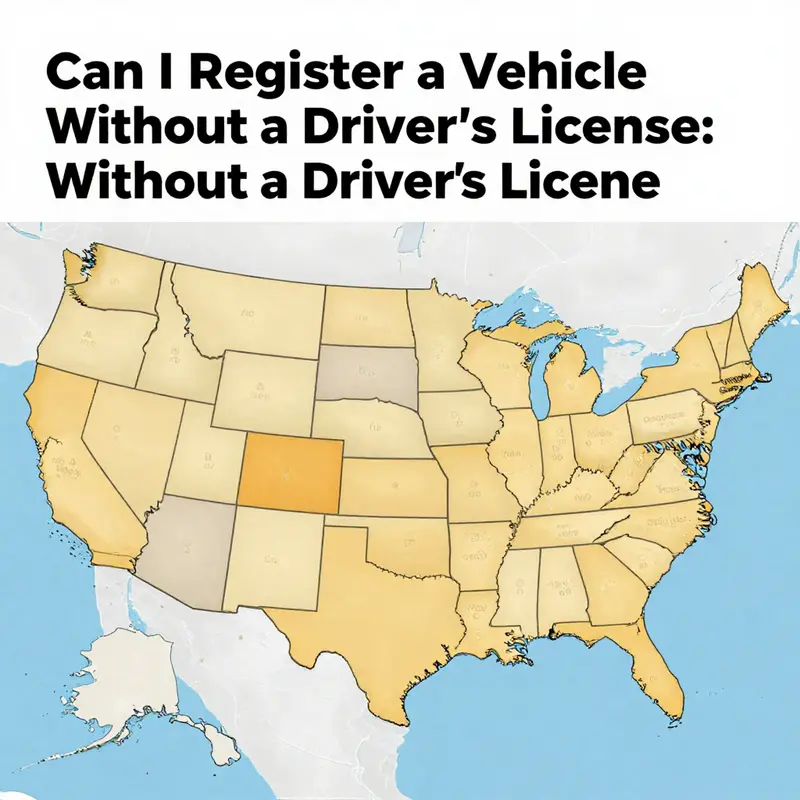
The question of whether you can register a vehicle without a driver’s license tends to hinge on the distinction between ownership paperwork and the privilege to operate a vehicle on public roads. In many jurisdictions, the act of registering a car in your name is a matter of ownership, identity, and financial responsibility rather than a direct indicator of your right to drive. This separation is not a mere technicality; it reflects how different branches of government manage ownership records, taxation, and vehicle safety compliance, while driving privileges are handled under traffic laws, licensing regimes, and enforcement rules. As you navigate this landscape, it becomes clear that the rules vary by place and by the purpose of the registration itself. You may own or hold a vehicle as an investment, a fleet asset, or a personal possession, and you may need to complete certain administrative steps even if you do not intend to operate the vehicle yourself on public roads. In practice, this means that a person can be the registered owner without holding a current driver’s license, so long as the relevant jurisdiction allows registration to proceed on the basis of identity, ownership, and the vehicle’s compliance with safety standards.
Taking Western Australia as a concrete example helps illuminate how this works in a real regulatory environment. The Department of Transport in WA explicitly enables individuals to register a vehicle for personal use or investment without requiring a valid driver’s license at the time of registration. The process prioritizes the person’s identity, proof of ownership, and the vehicle’s compliance with safety criteria, rather than the applicant’s driving credentials. In WA, the primary requirements typically include proof of identity, proof of ownership (such as a bill of sale or a transfer document), payment of registration fees, and evidence that the vehicle meets relevant safety and emissions standards. These elements establish the state’s official record of who owns the vehicle and who is responsible for the ongoing registration costs and compliance obligations. The vehicle’s safety checks and emissions standards are not mere formalities; they are prerequisites that help ensure that every vehicle on the road meets baseline standards, regardless of who ultimately ends up driving it.
This arrangement underscores a simple but crucial distinction: registration is about ownership and accountability to the public system, while driving is a privilege governed by a license, tests, and ongoing compliance with traffic rules. If you plan to drive the vehicle yourself, you will still need to obtain a license. If someone else will operate the vehicle—whether a family member, a colleague, or an employee—you can proceed with registration in your name, while the other person uses the vehicle on the road under the appropriate licensing framework. The practical upshot is that you can set the legal terms of ownership and responsibility without immediately acquiring the ability to drive. The registration documents then reflect who is the registered owner, who is liable for taxes and insurance, and who must ensure the vehicle remains compliant with safety and emissions standards.
The WA example also highlights a broader principle that tends to recur across different jurisdictions: the administrative act of registration is a public record of ownership and obligation, not a guarantee of driving privileges. This distinction has real consequences for how you plan to use, insure, and manage a vehicle. If you intend to lease, loan, or transfer the vehicle, your registration status can influence the terms of the agreement and the parties who must provide or maintain insurance, proof of ownership, and compliance documents. It also matters for people who acquire vehicles through estate transfers, business acquisitions, or fleet applications where the registered owner and the operator are different entities or individuals.
For readers seeking more granular guidance about where licensing requirements interact with registration rules in various places, a broader discussion of how state rules impact driver licensing can be informative. See the related resource on state rules impacting driver licensing for a deeper look at how different jurisdictions balance ownership, registration, and driving privileges. state rules impacting driver licensing
Beyond WA, the core concept remains: registration serves as the public record of ownership and a mechanism to ensure the vehicle meets safety standards, while driving remains governed by the licensing regime. Some jurisdictions may impose stricter conditions on registration if the applicant cannot demonstrate ownership or fails to provide certain documents, while others may allow broader latitude for non-licensed individuals to register vehicles that they own or control. The exact combination of required documents and standards can differ, so it is essential to consult the official registry or transport authority in your area. In many places, you will find that proof of identity is non-negotiable, proof of ownership is essential, and the vehicle must meet safety and emissions criteria before registration is approved. The emphasis is on creating a reliable ownership record and ensuring roadworthiness, not on granting driving rights.
As you move from planning to action, consider how the timing of registration aligns with your driving plans. If you expect to drive soon, begin the licensing process in parallel with the registration steps. If the vehicle will not be driven in public spaces, registration can proceed while you arrange the necessary insurance and storage considerations. In practice, this means coordinating with insurers to secure appropriate coverage for the vehicle under your ownership, even if you are not the driver yet. Insurance requirements, while separate from registration, are another piece of the regulatory puzzle that reinforces the boundary between ownership and driving privileges. You may need to present the registration documentation and proof of ownership when negotiating insurance terms, and you will likely update your policy if the registered owner and the driver are different people.
The broader takeaway is that the question you asked—whether you can register without a license—is not universally answered with a simple yes or no. It depends on where you live and on what you want to do with the vehicle. In jurisdictions like Western Australia, the pathway is clear enough: you can register in your name without a license, provided you meet identity, ownership, and compliance requirements, while the right to drive remains contingent on obtaining the appropriate license and abiding by driving laws. In other regions, the rules may be tighter or looser, reflecting local priorities around how vehicles are purchased, registered, and taxed, as well as how the traffic system is designed to manage safety risks. To avoid missteps, always verify with the local transport authority and review the official registration guidance for your area. If you are researching this topic across multiple jurisdictions, the contrast can be instructive, revealing how societies separate ownership from operation and how practical concerns—such as tax collection, vehicle safety, and liability—shape registration rules.
In sum, ownership and registration rights can exist independently of driving privileges, and the precise requirements to register differ by location. In places like Western Australia, the procedure is transparent and focused on identity, ownership proof, and compliance with safety standards. This structure provides a predictable path for individuals who own vehicles but do not yet hold a driver’s license, or for those who may not need to drive at all but still want to maintain ownership or manage a vehicle within a broader business or investment context. The important step is to align your plans with the specific rules of your jurisdiction, ensuring that you securely document ownership, fulfill safety and emissions prerequisites, and recognize that the act of registering does not confer driving rights until a license has been obtained and appropriate driving permits are in place. For readers who are navigating this topic across different states or countries, the conversation around licensing and registration is a reminder that governmental oversight often treats ownership and operation as distinct responsibilities, each with its own set of rules, obligations, and implications for everyday life. External resource: https://www.transport.wa.gov.au/vehicle-and-driver-licensing/vehicle-registration
Ownership Without a Driver’s License: Unpacking Vehicle Registration and the Road-Use Paradox
Many people assume that driving a car and owning one share the same gate, but the rulebook often separates the two. In many jurisdictions you can register a vehicle in your name even if you do not hold a valid driver’s license. The act of registration is primarily about ownership—who legally bears the responsibility for the car—and about taxes, safety compliance, and official records. It creates a public record that the vehicle exists, who owns it, and how it will be taxed and insured. The right to operate the vehicle on public roads, by contrast, rests on a separate credential: a license that demonstrates knowledge and driving ability. This distinction is not only bureaucratic; it is a safeguard designed to align responsibility with use. If you confuse the boundary, you risk fines, vehicle impoundment in some places, or complications when you need to make an insurance or legal claim after an incident.
Registration requirements vary by country and even by region. A general pattern, however, centers on a short, specific set of documents. In many places you will need a valid identification document, such as a resident identity card or passport, proof of purchase like the invoice, and a certificate that the vehicle conforms to safety and emissions standards—the certificate of conformity, or its local equivalent. You will also typically provide proof that the purchase tax has been paid, and proof of the compulsory traffic accident liability insurance, sometimes known as CTPL. These elements create a chain of accountability: the state can verify that the car is legally owned, that taxes are paid, that the vehicle meets environmental requirements, and that there is coverage if an accident occurs. Importantly, none of these items automatically confer the right to operate the vehicle; ownership and operation remain separate functions in most systems. The same set of documents may be necessary whether you’re registering the vehicle in your own name, in a family member’s name, or under a business entity, a detail many people do not anticipate until they start the process.
Sometimes you might register under someone else’s name—the spouse, a parent, or a company—when you don’t intend to drive yourself, or when a business needs to own the vehicle for tax or liability reasons. The legality of this arrangement depends on local rules and the reasons behind it. In some jurisdictions, the registration must reflect the operator’s status or the person who will bear the ongoing responsibilities and insurance obligations. Even when allowed, transferring or naming someone else can complicate ownership, taxation, and liability if the vehicle is involved in an incident or if there is a dispute about who was driving at a given time. A practical note follows: the police and insurers will often look to the registered owner as part of the framework for determining liability, even if the actual driver was another person. For this reason, people who choose to register under a different name should ensure that all parties understand their respective roles, and that records and insurance policies reflect the arrangement clearly. See how state rules impacting driver licensing can shape these choices: state rules impacting driver licensing.
Yet registration does not confer a license to act behind the wheel. Driving without a license is illegal in most places and invites penalties. Fines are common, but more serious outcomes can include vehicle impoundment, suspension of registration, or even criminal charges if the offense is combined with reckless behavior or an accident. Insurance coverage can also be jeopardized; many policies exclude coverage for an unlicensed driver, or may deny a claim if the driver was not properly licensed at the time of the incident. These risks extend beyond the moment of a traffic stop. When the driver lacks a license, proving eligibility to operate the vehicle becomes a tangled process that can complicate liability in the event of a crash or dispute. In some jurisdictions, a police officer may impound the vehicle until a licensed driver is present as an operator, or until the owner demonstrates compliance through the appropriate testing or licensing steps. The practical effect is that the car remains on the owner’s record even if someone else controls the keys, which can create a mismatch between use and ownership that is awkward to unwind later during insurance claims or court proceedings.
Jurisdictions differ in how strictly they couple license status to registration. Some places require proof of identity and residency, and a valid driver’s license may be part of the application package even if the registration itself does not require it to be granted. Others may allow registration to proceed even if the owner cannot demonstrate the ability to drive, as long as the vehicle is not intended for immediate operation on public roads. In practice, these differences matter because they directly affect what happens when you decide to move the car from a private driveway to the public roadway. For people who move across borders or who plan to use the vehicle in a different state or province, understanding these nuances can prevent a lot of confusion and potential penalties. The broader lesson remains: registration is about the vehicle’s identity and financial responsibilities, while licensing is about the operator’s credentials and privileges. The gap between these two processes is where many people stumble, especially when they try to bridge ownership with operation without a license.
In some places, including China, the process is more permissive about the relationship between ownership and licensing. There, obtaining a driver’s license is not a prerequisite to purchasing or registering a vehicle. This can make the initial step of ownership accessible, but it does not grant the freedom to operate on public roads. Public road use still requires the appropriate license, and authorities reserve the right to enforce penalties for driving without a license. The China example illustrates a broader point: the rules that govern ownership, registration, and operation are distinct and can diverge in meaningful ways. If the goal is to avoid legal trouble, it is essential to separate the act of ownership from the act of operation and to respect the legal framework that governs driving privileges.
With that in mind, the practical path for someone who does not presently hold a license but wants to engage with vehicle ownership is straightforward: verify the exact requirements in your jurisdiction, gather the standard documents, and plan for licensing long before you intend to drive. If licensing is not immediately feasible, you may still own and register the vehicle, subject to local rules that limit or govern use. In many systems there may be an explicit prohibition on driving until a license has been obtained, and there may be consequences for any attempt to operate the vehicle otherwise. The most reliable way to proceed is to reach out to the local motor vehicle authority, or an official website, to confirm the current rules and the documents you will need. If it helps, you can consult a guide that compiles common requirements and clarifies how ownership and operation interact, and consider speaking with a qualified attorney if your situation involves business ownership or complex liability structures.
Ultimately, this boundary between ownership and operation has real implications. It affects not only what you can do on the road today, but how you manage financial responsibility in the event of a crash, and how insurers will handle a claim. It also shapes decisions about how you structure vehicle ownership for families, businesses, or shared-use arrangements. Understanding that registration is a record of ownership and tax obligations, while licensing governs your ability to drive, helps prevent overreaching expectations and reduces the risk of disputes later on. For readers who want a quick reference, the official guidance in the specific region you inhabit will provide the definitive answer; consult it before moving forward with any registration steps. For more detailed and up-to-date information, refer to the official website of your local DMV or motor vehicle agency. External resource: California DMV – Vehicle Registration FAQs: https://www.dmv.ca.gov/vehicle-registration/vehicle-registration-faqs/
Final thoughts
Understanding the intricacies of registering a vehicle without a driver’s license is vital for both aspiring vehicle owners and seasoned drivers. While the ability to own a vehicle without a license provides a level of flexibility, it is essential to remain aware of the legal restrictions surrounding driving. Each state has varying laws, and it is crucial to remain informed to avoid penalties. This collective knowledge empowers individuals to make educated decisions in their vehicle ownership journey.