
Registering a vehicle is a critical step for every vehicle owner, but what if you do not hold a driver’s license? In many regions, including China, you can register a vehicle without having a valid driver’s license. This article delves into the nuances of vehicle registration without a license, covering the necessary legal documents, potential penalties, and practical considerations to aid new drivers, existing vehicle owners, and auto dealerships. You’ll learn about the documentation needed for registration, the legal implications of doing so without a license, and essential tips for a straightforward registration process.
Registration vs. Driving: Debunking the Myth of Registering a Vehicle Without a License
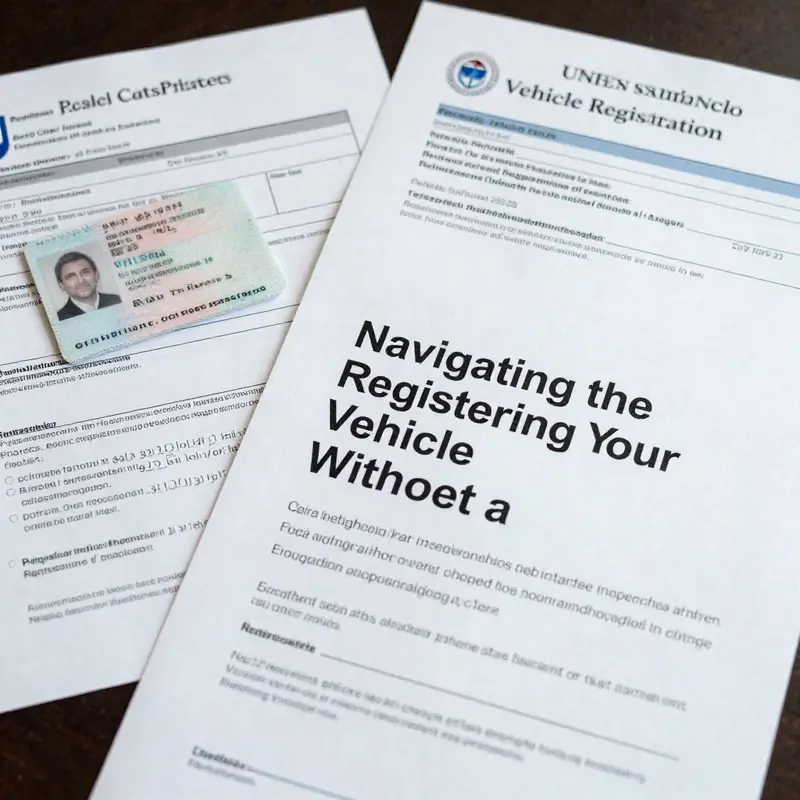
When someone asks, can I register a vehicle without a license, the instinctive reply in many places is to pause and think through the chain of steps that bring a car onto public roads. The question seems simple, but it sits at the crossroads of ownership, registration, and the right to operate a vehicle. In practice, the landscape is layered and rules differ depending on the jurisdiction. In the context of China, the most careful reading of the regulations makes one thing crystal clear: a vehicle can be registered in a person’s name without presenting a driver’s license as part of the registration documents. The Regulations on Motor Vehicle Registration enumerate a set of materials that establish ownership, origin, conformity, taxes, and mandatory insurance. A driver’s license does not appear among those required documents. This fact commonly fuels a powerful misconception: that registration and the legal right to drive are one and the same thing. They are not. The two processes are distinct, even if they intersect in everyday usage. Ownership and plate issuance do not automatically confer the legal right to operate on public roads. Driving a vehicle requires a separate credential—the driver’s license—which is governed by another body of laws and sanctions. The separation is deliberate. It reflects a core public policy principle: register the vehicle to acknowledge its existence, ownership, and compliance with vehicle standards; ensure the driver, or operator, holds a separate credential that proves capability and eligibility to drive. The practical upshot is straightforward yet frequently misunderstood: yes, you can complete the registration and obtain license plates for a vehicle in your name even if you do not hold a driver’s license yourself, but you cannot legally drive the vehicle until someone with a valid license takes the wheel. The distinction matters for anyone planning to acquire a car, transfer ownership, or navigate the sometimes murky interplay between what it means to own a vehicle and what it means to drive it on public roads. This distinction is not merely pedantic; it has real consequences for personal liability, insurance, and road safety. The logic behind registering a vehicle without a license rests on a practical framework. The registration process is designed to establish a legal identity for the vehicle and to ensure that the vehicle meets safety and regulatory standards before it enters the traffic system. The ownership record is essential for transferring ownership, securing insurance, and enabling lawful taxation and enforcement. For many people, this means that the vehicle can be bought, sold, or held in a family name, and its plates can be issued in accordance with the registration record. The license, meanwhile, is a separate credential that proves the operator’s competence to drive and complies with road safety obligations. This dual structure can be perplexing for first-time buyers or those unfamiliar with how these administrative layers interact. It becomes even more complex when considering temporary registrations, import paperwork, or cross-border concerns where the sequence of documentation can appear to blur the boundary between registration and driving. Still, the most consistent principle in both Chinese and many other regulatory environments is that the license is the gateway to operation, not a prerequisite for ownership documentation alone. The confusion is often reinforced by the way some lists of required documents are presented. A straightforward enumeration of ownership proofs and conformity documents can give the impression that the license is optional. In reality, what those documents guarantee is that the vehicle has a legal identity and is eligible to be parked, sold, or insured in the system. The license is what authorizes a person to exercise the right to drive, and it is a separate protective mechanism that law enforcement uses to regulate behavior on the road. It is helpful to consider an analogy: owning a house and having a mortgage is different from actually living in the house and using its facilities. The mortgage documents may prove ownership and financial obligation, but your right to live there depends on your status as a resident or occupant under a different set of rules. In the same way, vehicle registration proves ownership and compliance for the vehicle, while the license proves the operator’s legal capacity to operate it. This distinction is not merely theoretical. It translates into concrete practice and potential legal exposure. If a person registers a vehicle in their name without a valid license, the registration may proceed, but any attempt to drive that vehicle will be illegal without a license. If the unlicensed driver gets behind the wheel, penalties apply under road traffic laws. In China, the Road Traffic Safety Law explicitly criminalizes unlicensed driving. Penalties can include a fine from 200 to 2,000 yuan, detention for up to 15 days, and confiscation of the vehicle until the proper documentation and penalties are addressed. The consequences intensify if an accident occurs as a result of unlicensed driving, when civil damages become the driver’s responsibility and criminal charges may follow in the event of serious injury or death. These provisions underscore a practical reality: ownership and operation are governed by different legal channels. The owner may secure registration and plates, but the actual driving must be performed by a person who holds a valid driver’s license. The law thus reinforces a core public safety principle: vehicles may exist in a legal, registered state even when they are not being operated by someone who has a license at that moment. This is not an encouragement to operate without proper credentials, but rather a clear articulation of how the system treats ownership and operation as distinct steps in a broader process. It is essential to acknowledge that this distinction does not suggest a loophole to exploit. Rather, it highlights the careful separation of responsibilities within the vehicle management framework. Misunderstandings often arise from the shorthand way people speak about “registering a car” and “driving a car.” In everyday life, the act of registering a vehicle is a bureaucratic moment that creates a legal record of the car and its owner. Driving, by contrast, is a dynamic activity governed by a different set of rules that demands an up-to-date license. The practical implication is that the driver must be licensed at the time of driving, and the owner must keep the registration current, with all the checks that implies for ownership, taxation, and insurance. A fuller understanding also requires acknowledging other essential registration requirements that attend the registration of a motor vehicle. The owner’s identification proof, typically an ID card, remains a foundational document. Proof of the vehicle’s origin, such as a purchase invoice, confirms the vehicle’s provenance. The vehicle’s certificate of conformity or import certificate verifies compliance with manufacturing or import standards. The vehicle purchase tax payment certificate or exemption confirms tax compliance, and the compulsory traffic insurance policy acknowledges financial responsibility in the event of a road incident. In combination, these components ensure that the vehicle is a legal, traceable asset within the public system. They also create a robust chain of accountability that supports enforcement, taxation, insurance coverage, and road safety oversight. The absence of a driver’s license from the list of required documents does not mean the license is irrelevant. It means the license is not a prerequisite to register the vehicle itself. The license remains the necessary credential for operation. In practice, many people who register a car without a license may rely on a licensed driver to operate the vehicle, or they may plan to obtain a license later while the vehicle sits in the registered state. This nuance is crucial for readers who are weighing the timing of purchases, transfers, or usages of a vehicle. It is also important to recognize that temporary registrations or transitional declarations can add to the confusion. Temporary registration schemes exist in some jurisdictions to bridge the period between purchase and full registration. These temporary measures are designed to allow the vehicle to be driven legally while formalities are being completed. Even in those temporary arrangements, however, the driving must be performed by someone who holds a valid license, and the temporary status typically comes with its own set of limitations and conditions. The medium- and long-term takeaway is that the path from ownership to operation is a structured sequence governed by distinct criteria and authorities. If you are considering purchasing a vehicle, the practical implication is straightforward: ensure you understand both tracks—the ownership record and the driving license—before you embark on a transaction. From the owner’s perspective, the registration is a gateway to lawful possession, ease of transfer, insurance coverage, and the ability to receive plates. From the driver’s perspective, the license is the gatekeeper to lawful operation on public roads. The two ideas reinforce one another in the broader ecosystem of traffic safety, vehicle taxation, and road management. For readers who want to see how these principles play out in a jurisdiction like China, the official framework is explicit about the required documents that accompany a registration application. While it may be tempting to point to lists that omit the driver’s license as a required item, the overarching legal landscape remains clear: only the operator’s license confers permission to drive. The distinction matters for all stakeholders in the vehicle ecosystem, including prospective buyers, family members who may be named as owners, and organizations that manage fleets. It also matters for those who may become involved in a dispute or accident, where the separation between ownership and operation becomes a critical factor in liability, insurance claims, and regulatory compliance. The framing of this topic therefore rests not on a single document but on a coherent understanding of how the system is designed to work. A vehicle’s legal life begins with its registration and ends in the net of regulatory oversight that includes road safety, insurance, and accountability for the operator. In explaining why a license is not required for registration, it is important to balance clarity with caution. The rules are not a loophole; they are a defined part of a structured system that aims to separate ownership from driving while preserving the integrity of both processes. For readers who want to explore how licensing rules can impact registration in other jurisdictions, there is a broader conversation to be had about how states and countries balance ownership, operation, and public safety. To deepen that understanding and connect it to a global perspective, consider examining shifting patterns in licensing, registration, and inspection requirements across different legal environments. The dialogue around these issues continues to evolve as transportation, technology, and enforcement strategies advance. In summary, while you can register a vehicle without a license in certain regulatory frameworks, you cannot drive it legally without a valid driver’s license. The registration legitimizes the vehicle’s existence and ownership within the public system, but the license authorizes the act of driving. This fundamental distinction should guide every decision about purchasing, transferring, or using a vehicle. If the goal is to avoid legal risk and ensure smooth operation, the prudent path is to secure a valid driver’s license before engaging in any on-road driving, and to arrange for a licensed operator if you plan to use a vehicle while you pursue or update your license. For those who want a broader context on how licensing regimes interact with vehicle management, a broader look at state rules impacting driver licensing can illuminate how different jurisdictions handle similar questions. See here for an overview of how licensing rules can shape registration decisions: state rules impacting driver licensing.
For readers seeking an official regulatory reference, the governing framework in China is laid out by the Ministry of Public Security. The official site provides the authoritative description of the required documents and procedures for vehicle registration, confirming that a valid driver’s license is not listed among the mandatory registration documents. This official resource helps situate the discussion in the practical realities of how registration operates within the broader system of road safety and vehicle management. External resource: https://www.mps.gov.cn/n10774569/n10774618/c27233475/content.html
Ownership Without Driving: Navigating the Legal Tightrope of Vehicle Registration Without a License
When a person purchases a car or inherits one, the instinct is to imagine cruising down a road with a license plate. But law keeps two threads in tension: ownership and operation. A vehicle can belong to a person, be registered in that person s name, and carry the weight of ownership without granting the right to steer on public roads. This distinction between ownership through registration and driving privilege creates a legal field of tension that can feel counterintuitive in everyday life. The chapter draws on international practice and United States state nuances, and from the documents required for registration to the licensing obligations that govern who may operate a vehicle. It helps illuminate why the topic matters for registrants, insurers, authorities and accident victims who are touched by these choices.
To begin, understand the purpose of vehicle registration. Registration establishes who owns the car and that the vehicle meets roadworthiness requirements within the issuing jurisdiction. It is a public record that ties the vehicle to its owner, assigns responsibility for taxes or fees, and enables the vehicle to be identified as it passes through checkpoints and is recorded in enforcement systems. Importantly, registration is not the same as the right to drive. Ability to operate a vehicle on public highways is a separate privilege, licensed through driver testing, medical standards, and traffic law compliance. These two strands are designed to work together but can be disjoint in practice. This separation can allow someone to own a vehicle, have plates, and even have insurance, while facing a prohibition against driving until a license is obtained.
The international landscape shows that registration and licensing can be divorced by design. Registration records ownership and status while a driver license certifies competency to operate on public roads. The two systems intersect when it comes to liability, insurance and the capacity to exercise the privileges attached to ownership. The overarching principle that ownership does not automatically confer the right to drive holds in many places and creates both clarity and potential confusion for newcomers.
Consider a global comparator: registration requirements typically hinge on proving ownership and safety compliance, with documents such as identification, proof of origin, and tax receipts. A driver license is not always required for initial registration, but the right to drive remains contingent on possessing a valid license. This separation is deliberate and reflects public policy that only those who are properly tested may operate a fleet on public roads.
In specific jurisdictions like China, the Regulations on Motor Vehicle Registration require the owner s identification, proof of origin, conformity or import certification, tax payment certificate, and compulsory insurance. The driver s license is not required for registration. The practical implication is that one may own and register a vehicle without a license, but cannot legally drive it without a license. Unlicensed driving carries penalties that can include fines, detention or even vehicle confiscation until proper documentation and penalties are paid. In the event of an accident, civil and potential criminal liability can be triggered. This framework encodes a deterrent against driving unlicensed while allowing ownership and registration to proceed independently.
In the United States, the pattern is similar but with state by state nuance. You may register a car without a license in many cases, but driving on public roads requires proper licensing. California allows title and registration without a license, with driving without a license remaining illegal and subject to fines and possible impoundment in some circumstances. New York separates registration and licensing and makes driving with an invalid or missing license a prosecutable offense. Insurance is generally conditioned on proof of a valid license, and policies may be limited or canceled if a driver fails to obtain or maintain a license.
The consequences of misalignment extend to fraud and misrepresentation concerns. Registration processes often check information to ensure consistency with licensing and insurance records. Failing to disclose the absence of a license can be viewed as misrepresentation and may carry civil or criminal exposure later, even if not strictly enforced at the point of registration. The broader ecosystem of insurance, enforcement and liability reinforces the practical distinction between ownership and operation.
So what does this mean for someone who owns a vehicle but does not yet hold a driver s license? Treat registration as a pathway to ownership and regulatory compliance, not a workaround for licensing. Plan for insurance that fits the status of the owner and any licensed operator, and avoid driving until a license is in hand. The emotional and logistical dimensions matter too; ownership can be a useful asset for mobility, family logistics, or as a value store while pursuing a license. However, the legal realities must be acknowledged. Driving without a license is risky and the penalties can be severe.
If you seek jurisdiction specific guidance, consult the local motor vehicle department for rules on registration and licensing. State guidance will differ in material requirements and enforcement for unlicensed driving. In many places, keeping registration and ownership in one name while designating a licensed driver to operate the vehicle is a common approach, provided it is transparent and compliant with local rules.
To illustrate practical lifecycle, an owner may complete registration, obtain plates, and secure insurance aligned with ownership, while a licensed driver uses the vehicle for daily travel. If the owner later earns a license, ownership and registration can remain in place with the licensee driving. If never licensed, the owner faces ongoing limitations on use, insurance considerations, and liability for any unauthorized operation. Ongoing compliance with tax, registration and insurance remains crucial to avoid penalties and enforcement.
The core message is clear: owning a vehicle and driving it are two distinct acts governed by different rules. Protect mobility by securing the license before operation and by aligning registration, ownership and insurance with local requirements. When in doubt, consult the exact language in your jurisdiction s DMV or transportation authority. For broader context, you can compare how different regions design vehicle oversight and how that translates into real outcomes for drivers and non drivers alike. The chapter offers a window into these complexities and emphasizes that mobility is built on documents, permissions and a clear separation between ownership and driving.
Registering a Vehicle Without a Driver’s License: Ownership, Plates, and the Road to Use
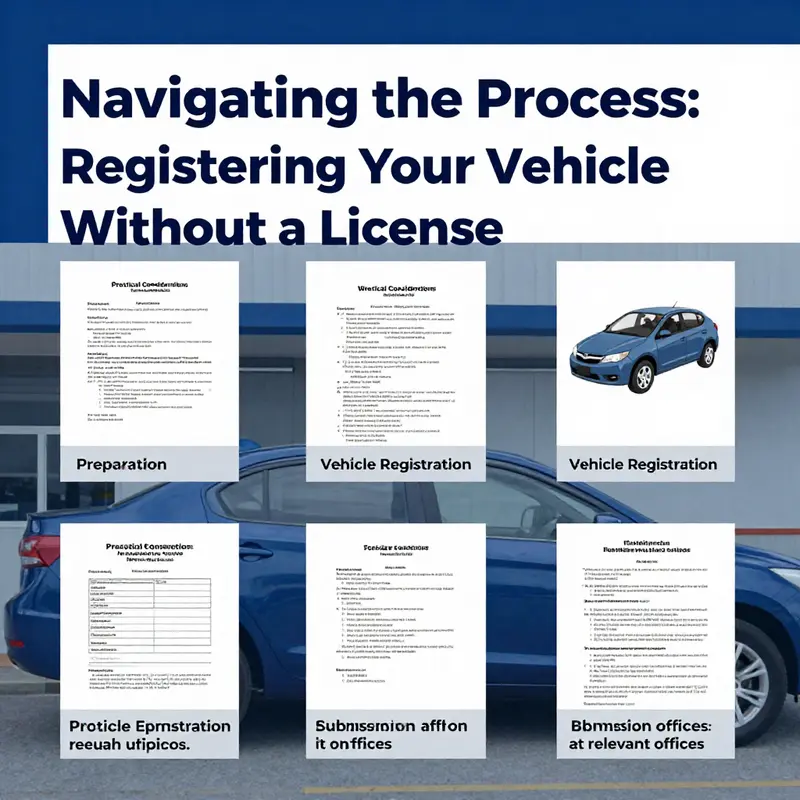
Registering a vehicle without a driver’s license is often allowed because registration concerns ownership and vehicle identity rather than the operator’s credentials. The license governs driving, not ownership, and rules vary by jurisdiction. In many places you can complete registration and obtain plates if you can prove ownership, identity, and vehicle compliance, even if the operator does not yet hold a valid license. However, driving the vehicle without a license is typically illegal and may trigger fines, detention, or vehicle impoundment, along with potential civil or criminal liability in the event of an accident. Insurance and financing terms may also assume a licensed driver, which can affect coverage or terms if the operator is unlicensed. If your license is not available, you may use alternative documents or seek guidance from the local registry, understanding that you must obtain or transfer the license before operating the vehicle on public roads. Jurisdictional differences exist, so check local rules and consider consulting a registrar or attorney to avoid missteps. The practical takeaway is to separate registration from operation: secure ownership and plate status if you cannot yet drive, then pursue licensure to enable lawful on-road use.
Final thoughts
In conclusion, while it is indeed possible to register a vehicle without a driver’s license, understanding the legal framework and practical steps is crucial. Ensuring that only a licensed individual operates the vehicle will save you from potential legal troubles. Whether you’re a new driver or a seasoned vehicle owner, remaining informed about your rights and responsibilities regarding vehicle registration is key to a smooth ownership experience.