
Understanding the legal landscape surrounding driving a vehicle without a license plate is crucial for new and experienced drivers alike. The absence of a license plate can lead to serious legal repercussions, heighten safety concerns, and varies significantly depending on state laws. This article will explore three major aspects: the legal implications of operating a vehicle without a plate, the safety risks involved, and the different regulations that exist across various jurisdictions. Navigating these elements provides drivers, vehicle owners, and auto dealerships with essential knowledge to ensure compliance and safety on the roads.
The Invisible Identifier: Legal and Safety Realities of Driving a Vehicle Without a License Plate
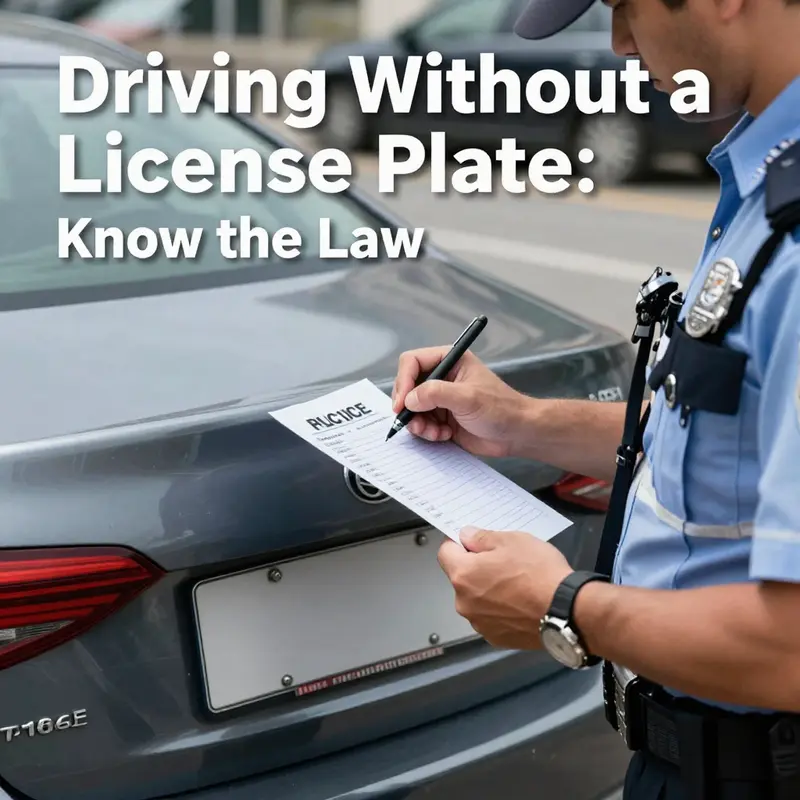
A license plate is more than a decorative badge on the rear or front of a vehicle. It is the most visible sign of a vehicle’s legal status, a public record of registration, insurance, and compliance with safety standards. When that sign is missing, the car becomes an anonymous traveler on the road, and the law responds with heightened scrutiny. The question can you drive a vehicle without a license plate does not have a simple yes or no answer, because the answer depends on jurisdiction, context, and the surrounding conduct of the driver. Yet the core principle is consistent across many legal systems: a plate is a necessary condition for lawful operation on public roads. The absence of one is usually treated as evidence of non-compliance with several intertwined requirements—registration, insurance, safety inspections, or even license status—that a well‑ordered traffic regime relies on to protect the public. To understand the implications, it helps to think about the plate as a public identity for a moving entity. It signals who owns the vehicle, where it is registered, what coverage it carries, and whether it has met the minimum safety criteria that keep roads safer. Without that signal, authorities must fill the gap with more intrusive investigative steps, and the risk of harm or liability rises in ways that go beyond a simple traffic infraction. In discussing the legal terrain, it is essential to connect the dots between plate absence, the broader regulatory framework, and the consequences that flow from every missing plate incident. This is not only about penalties on a ticket; it is about the red flags raised by the lack of a plate that touch issues of registration, insurance, unlawful operation, and the chain of accountability that underpins road safety.
In many jurisdictions, the rule is clear: you cannot lawfully operate a motor vehicle on public roads without a valid license plate, because a plate is the public license to use that vehicle. In practice, the absence of a plate often triggers multiple checks in a single encounter. Police may verify whether the vehicle is properly registered, whether it has current insurance, and whether it has passed necessary safety inspections. These checks are not isolated boxes to be ticked; they establish a coherent picture of the vehicle’s regulatory status. A plate absence thus becomes a proxy for potential non-compliance across several dimensions, and that is why enforcement tends to be swift and comprehensive. When a plate is missing, a driver may be stopped and the vehicle impounded, depending on the jurisdiction and the surrounding circumstances. The consequence is not just a monetary fine but a temporary loss of the vehicle, an interruption in mobility, and an escalation of the legal process that follows when authorities must determine fault, liability, and the vehicle’s ongoing eligibility to be on the road.
The legal architecture behind license plates rests on a couple of dependable pillars. First is registration: every vehicle must be registered with the appropriate authority, and that registration is what the plate encodes in public view. Second is evidence of financial responsibility: insurance or liability coverage is expected to be active and verifiable. Third is safety compliance: the vehicle should meet minimum safety standards and have up‑to‑date inspection where required. When any of these elements falters, the absence of a plate becomes a signal that the vehicle might be unregistered, uninsured, or unsafe, and law enforcement responds in ways designed to protect the public and maintain the integrity of the road network. In a practical sense, a missing plate reduces immediate traceability. If an accident or a crime occurs, the absence of a license plate makes it more challenging to identify the vehicle’s owner, confirm coverage, and determine responsibility. This is not a hypothetical concern; it translates into real-world investigations that rely on corroborating evidence—VINs, interior and exterior identifiers, witness statements, surveillance footage—and it can slow down or complicate resolution and accountability.
The conversation about driving without a license plate is inevitably shaped by the legal culture of each country. In the United Kingdom, the law treats the absence of a plate in connection with an accident with particular seriousness. The guidance emphasizes that if a vehicle involved in an incident lacks a license plate, an inspection label, or an insurance label, the driver has a duty to preserve the scene and report the incident promptly to the police. This obligation is not merely procedural; it serves the investigative process aimed at determining liability and addressing any underlying violations related to the vehicle’s status. Failure to comply can give rise to charges beyond the initial misstep of driving without a plate, including obstructing a police investigation or failing to report an accident. The UK framework thus situates plate non-compliance within a broader accountability regime designed to ensure transparency and fairness in the aftermath of road incidents.
In parallel, the broader non-compliance narrative—driving without a plate as a telltale sign of deeper regulatory breaches—has a cross‑jurisdictional resonance. The absence of a plate is often correlated with other gaps in compliance, such as the absence of insurance or the possibility that the vehicle fails a mandatory safety inspection. Authorities frequently underscore that plate status should prompt a wider verification process. The practical effect on enforcement patterns is tangible: law enforcement bodies actively highlight the importance of reliable identification mechanisms to ensure road safety and proper regulation of vehicles and drivers. When a plate is missing, it is not just a single violation; it can be a gateway to a cascade of compliance issues that multiply potential penalties and reduce the likelihood of a quick, isolated resolution.
For the individual driver, the consequences of operating a vehicle without a plate extend beyond the immediate ticket. In many systems, a conviction for driving without a plate can generate points on a driving record, which in turn can lead to higher insurance premiums and, in some circumstances, a reduction in driving privileges. Repeat offenses may invite more severe outcomes, including license suspension or revocation, and, depending on the jurisdiction and the facts of any accompanying conduct such as impaired driving or recklessness, imprisonment can become a real possibility. The punitive trajectory is designed not merely to punish a single lapse but to deter patterns of non-compliance that put other road users at risk. The entire arc—from the initial stop through to potential court proceedings—can be lengthy and costly, with implications for employment, mobility, and personal finances. These stakes reflect a broader principle: the license plate is a public safety instrument as much as a regulatory obligation, enforcing visibility, accountability, and traceability on the road.
The accident scenario described in many jurisdictions, including the UK, illustrates how the plate’s absence matters in the chain of events that follow a collision. When a vehicle involved in an accident does not display a plate, investigators must work harder to reconstruct what happened and who is responsible. This includes establishing who was driving, whether the vehicle was properly insured, and whether any contributing factors in the accident stem from non‑compliance with vehicle regulations. The process often involves documenting the scene, collecting witness statements, and cross‑checking with licensing and insurance databases. The plate, in many ways, serves as the bridge between the scene and the administrative records that determine liability and the distribution of legal and financial responsibility. A missing plate therefore does not merely complicate the immediate aftermath; it can shape the trajectory of the entire case—how liability is assigned, how damages are calculated, and which authorities pursue enforcement actions against the vehicle’s owner or operator.
The ethical dimension is also worth acknowledging. Driving a vehicle without a plate signals not only a regulatory breach but a potential willingness to evade oversight. This perception matters because it can influence how other drivers behave, how emergency responders allocate resources, and how communities perceive safety on the roads. The broader public interest rests on the assurance that vehicles are registered, insured, and maintained to acceptable standards, and that when incidents occur, the chain of accountability remains intact. In this sense, the plate is a governance tool as much as a numeric symbol—an emblem of legitimacy that enables swift, fair, and proportionate responses when things go wrong.
Within this landscape, one can observe a recurring pattern: plate absence frequently points to a broader mosaic of risk factors. A missing plate can be a sign of a revoked license, a vehicle that has fallen out of compliance, or a deliberate attempt to conceal a vehicle’s identity. In some cases, drivers or owners may be trying to avoid detection by authorities for a variety of reasons, ranging from unpaid fines to more serious offenses. While not every missing plate reflects criminal intent, the public safety calculus remains consistent: when identification is weakened, the potential for harm increases, and law enforcement and regulatory agencies respond with heightened vigilance. The moral and practical implication is straightforward—maintain proper plate display, stay compliant with registration and insurance, and address any issues swiftly when a plate is damaged, lost, or stolen. Proactive maintenance of these regulatory signals is the most reliable guard against the downstream consequences of non‑compliance.
To ground this discussion in concrete practice, it is useful to understand common enforcement responses to plate absence. Authorities may issue citations for the immediate regulatory violation, compel the vehicle to be moved to a safe location, or arrange for impoundment. In an accident scenario, where the absence of a plate complicates liability assessment, police can impose orders to preserve the scene and to report the incident, which helps safeguard the integrity of investigations and ensures that the insurance and registration records are properly reconciled. The consequences can cascade into administrative penalties, such as temporary suspension of the right to drive pending confirmation of registration and coverage, and, in more serious circumstances, criminal charges that reflect the degree of non‑compliance and the potential risk posed by the vehicle and its operator. A chain of accountability thus forms around the plate, turning a seemingly minor omission into a focal point for evaluating a driver’s fitness to participate in road traffic.
Amid these considerations, it is worth noting the practical steps a responsible driver can take if confronted with a missing plate or if a plate becomes damaged or detached. The prudent course is not to press onward in defiance of the law. Instead, the driver should halt in a safe place, avoid driving further if possible, and contact the relevant licensing authority to arrange replacement and to verify the correct display of plates. If a plate has fallen off or become illegible, the vehicle owner should arrange for replacement plates to be issued promptly and address any related registration or insurance issues to restore compliance. When a plate is missing due to theft, the owner should report the theft to the police and to the licensing authority, ensure a police report exists to support any subsequent claim, and follow the official procedures to obtain replacement plates. In this light, maintenance of proper plate status is not merely about avoiding penalties; it is about preserving lawful mobility and ensuring that the vehicle remains a transparent and traceable part of the public roadway ecosystem.
Finally, the public policy dimension deserves emphasis. License plates act as a public ledger in motion. They provide a practical mechanism for policing and for prosecuting wrongdoing, and they support the efficient administration of registration, insurance, and safety records. When plates are present and legible, authorities can more quickly match a vehicle to its records, verify compliance, and pursue enforcement where necessary. This clarity reduces the time and cost of investigations and improves the likelihood that victims and the public receive fair, timely accountability in the event of incidents. The chapter thus returns to the central question with a nuanced understanding: while a straight answer to can you drive a vehicle without a license plate depends on jurisdiction, the underlying logic is consistent across systems. The plate is a normatively essential feature of lawful road use, and its absence triggers a compendium of legal obligations, safety considerations, and public‑interest protections designed to keep roads safer, more transparent, and more orderly for everyone who shares them.
For readers who wish to explore related discussions on how plate status intersects with broader vehicle compliance, one relevant line of inquiry examines how some stakeholders have explored loopholes or shifts in compliance regimes. A discussion item worth noting concerns practices that undermine public safety, which researchers and policymakers continually scrutinize to reinforce legitimate use of vehicles and deter unlawful behavior. In this vein, see discussions such as the one highlighted in CDL cheating schemes that risk public safety, which illustrates how non-compliant practices extend beyond a single administrative defect and can contribute to systemic harm. CDL cheating scheme exposed public safety at risk.
In summary, the absence of a license plate is not a trivial administrative oversight. It is an indicator of broader compliance gaps that have practical consequences for the driver, other road users, and the state’s ability to regulate and protect the road network. The vehicle’s plate functions as a small but powerful signal—a signal that communicates ownership, accountability, and safety compliance. When that signal is missing, the law responds not with mere punishment for a single error but with a robust framework aimed at restoring regulatory alignment, preserving the integrity of accident investigations, and safeguarding public safety. The road to compliance is straightforward: keep the vehicle properly registered, maintain current insurance, ensure the plate is securely displayed and legible, and address any plate-related issues promptly so that driving remains a lawful, traceable, and safe activity. For drivers and riders who rely on the freedom of the open road, that is the enduring takeaway.
External resources for further guidance include official government guidance on driving without a license plate, which provides jurisdictional specifics and procedural details for incidents and enforcement. See the public resource for authoritative information: https://www.gov.uk/government/publications/driving-without-a-license-plate
When Plates Are Missing: The Safety, Liability, and Law Behind Driving Without a License Plate
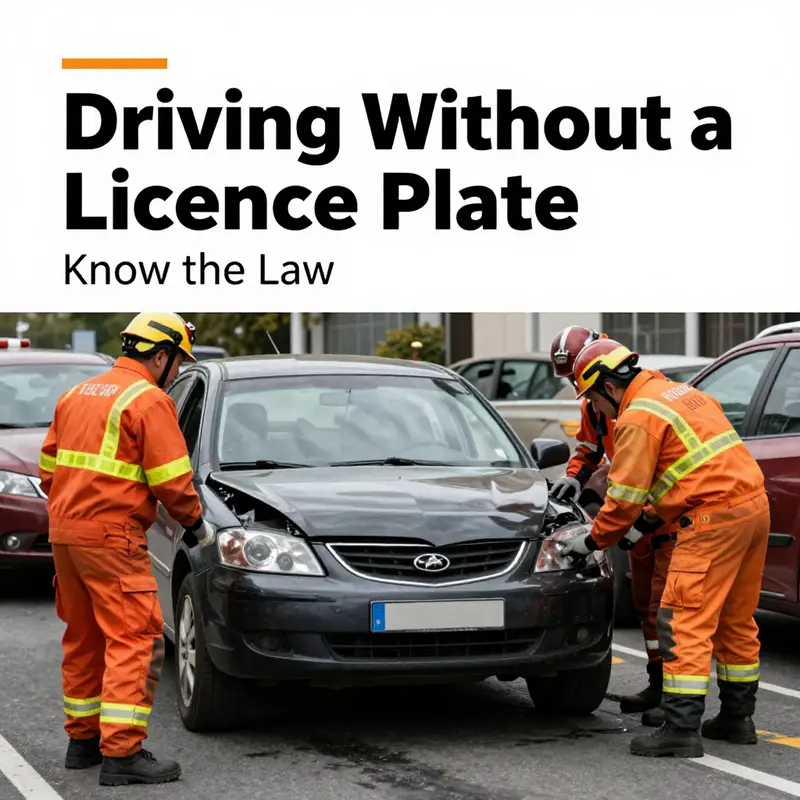
On busy urban streets and quiet rural lanes alike, a license plate is easy to overlook—until it is gone. Yet the plate is not mere decoration or a bureaucratic symbol. It is a practical tool that anchors a vehicle to a tangible identity in a system built to manage risk, establish accountability, and enable fair resolution when things go wrong. The question of whether you can drive a vehicle without a license plate cuts to the core of how modern traffic governance works. It is not simply about a procedural requirement; it is about the social contract that makes crowded roads navigable for everyone. In many places, the law treats the absence of a plate as a red flag that signals a potential exception to ordinary accountability. The implications ripple through enforcement, insurance, safety, and the broader trust that underpins traffic safety programs. And when the plate is missing, the consequences are rarely limited to a single ticket or a minor sanction. They reveal a broader pattern of risk that society seeks to mitigate through clear rules and swift penalties.
In the specific context of China, the Road Traffic Safety Law makes it explicit: operating a motor vehicle on public roads without a registered license plate is a serious violation. This is not a loophole to be exploited or a bureaucratic nuisance to endure. It is a legal condition that carries tangible penalties and practical hazards. The state treats a plate as more than a registration number; it is a bridge between the vehicle and a documented record that includes ownership, maintenance, and liability status. The law’s emphasis on registration, inspection, and insurance is not arbitrary. It reflects a design to reduce uncertainty at the moment of a crash, during a police inquiry, or in the maze of insurance claims that follow an incident. When a plate is missing, that bridge weakens, and the system’s ability to respond—swiftly, fairly, and comprehensively—diminishes accordingly.
The penalties are explicit and severe enough to deter casual noncompliance. Driving without a plate attracts fines ranging from 20 to 200 yuan, a monetary penalty that signals that the offense is far from trivial. More consequential still is the deduction of nine points from the driver’s record. In traffic systems that track behavior over time, points accumulate and translate into escalating restrictions, or even the suspension of driving privileges. The structure of this penalty—fine plus points—recognizes that plate absence is not merely about the vehicle’s appearance or a momentary lapse; it often correlates with broader risk factors, such as improper registration, weak safety oversight, or deliberate evasion of regulatory scrutiny. If the unlicensed vehicle is operated by an unlicensed driver, penalties can compound, potentially including administrative detention. The layered penalties reflect a philosophy: when a vehicle and its operator sidestep registration and licensing, the risk to others escalates, and so do the consequences.
Beyond these immediate penalties lies a more consequential dimension: identification and accountability in the event of a crash or a dispute. A license plate is a practical locator. In the chaos of traffic, it helps authorities trace a vehicle to its owner, verify insurance status, check registration validity, and establish responsibility for damage or injury. When a plate is absent, the ability to reconstruct events is compromised. Investigators may struggle to identify the vehicle’s owner, linking a vehicle to a location, a motorist, or a history of maintenance becomes more difficult. This delays or even derails fault determination, which, in turn, affects victim compensation and the fair allocation of liability. The absence of a plate thus introduces a delay mechanism into the justice process, increasing frustration for victims, complicating negotiations with insurers, and potentially undermining public trust in the efficiency of the system.
Insurance coverage hinges on proper registration and compliance with safety inspections. A vehicle without a valid plate is often outside the regular regulatory orbit. It may lack up-to-date inspection labels and proof of insurance, both of which are central to determining coverage in a dispute. In practice, the absence of a plate raises the question: is the vehicle truly insured? If the vehicle has no current safety inspection or insurance documentation, the driver may face unanticipated financial exposure after an accident. This misalignment between legal status and practical responsibility creates a moral hazard: a driver who takes to public roads without full compliance may encounter a cascade of financial and legal consequences after a collision, leaving victims uncompensated and authorities with a more challenging recovery process. The safety net that normally protects all parties in a crash frays when registration is missing and the legal framework cannot readily confirm coverage.
The public safety implications extend beyond the technicalities of registration, inspection, and insurance. The absence of a plate is associated with what traffic authorities describe as road disorder. An unregistered vehicle lacks the visible, traceable presence that a plate provides. This traceability has a deterrent effect; it helps curb risky behaviors that endanger others. When a vehicle moves without a plate, the driver may feel less bound by ordinary norms, and others on the road may respond with heightened caution or fear. The literature and enforcement practice converge on a simple point: missing plates can become a symptom of broader risk-taking, including speeding, reckless overtaking, and ignoring traffic signals. In a system designed to maximize safety through visibility and accountability, removing the plate undermines the moral and social cues that restrain risky driving. The result is not just a single act of noncompliance; it is a signal of increased exposure to harm for the driver and for everyone else sharing the road.
From an enforcement standpoint, the plate serves as a practical instrument for monitoring and control. Modern policing relies on a network of physical checks, camera systems, and traffic stops to enforce registration, insurance, and safety compliance. A vehicle that lacks a plate creates a blind spot in this network. Without a plate, the police cannot quickly cross-reference with databases to verify ownership, registration status, or any prior incidents tied to that vehicle. This gap can slow down the response in a crash scene, during a traffic stop, or when follow-up inquiries arise. It is not merely a procedural hitch; it is a real impediment to efficient law enforcement and to the timely delivery of justice. The issue transcends the moment of a traffic stop. It affects the capacity of the system to identify vulnerable road users, to ascertain whether a vehicle has been reported stolen, or whether it has a tainted insurance record. Each of these elements contributes to a safer, more predictable traffic environment when plates are present.
The ethical dimension is inseparable from the legal one. When a vehicle can move without a plate, it creates an implicit challenge to the social contract that governs collective road use. People expect others to comply with basic rules; they trust that a driver on the road bears responsibility for the vehicle and for its impact on others. Plate absence erodes that trust. It invites questions about whose liability applies when something goes wrong and about whether the system is capable of ensuring fairness for victims. The law’s emphasis on plate registration, ownership linkage, and liability transparency is a deliberate design choice to preserve the social integrity of the road network. In this sense, the question of whether you can drive without a plate is less about a single rule and more about whether a traffic system can reliably translate behavior into predictable, just outcomes for all road users.
The broader takeaway is that a license plate is not an optional accessory but a cornerstone of modern traffic governance. The specific penalties laid out by the Road Traffic Safety Law reflect a deliberate effort to maintain order and accountability on the road. The nine-point deduction, for example, is not a mere tally; it is a mechanism that modulates driving behavior over time, encouraging motorists to comply with fundamental requirements. The potential for administrative detention in more serious cases underscores the seriousness with which authorities view noncompliance, especially when the driver is unlicensed. These measures are calibrated to deter not only the act of driving without a plate but the broader pattern of risky behavior that often accompanies it.
For readers seeking a precise, official framing of these expectations, the guidelines from the Ministry of Public Security provide the authoritative reference point. They articulate the statutory posture toward unregistered vehicles and illuminate how enforcement interacts with the broader goals of road safety and public order. This official perspective anchors the practical considerations discussed here and reinforces the argument that license plates function as a fundamental lever for safety, accountability, and fair compensation in the event of mishap. If you want to see the formal wording and the latest regulatory stance, the ministry’s guidance is the definitive source. https://www.mps.gov.cn/n2254173/n2254186/n2254238/c2606252/content.html
As this discussion unfolds, it is useful to situate the issue within a wider ecosystem of driver licensing and vehicle compliance. The question of plates sits alongside the broader questions of how societies regulate who may drive, under what conditions, and with what assurances of safety and accountability. A chapter on license plates inevitably touches on related themes—vehicle registration, roadworthiness inspections, criminal and civil liability, and the economics of insurance settlements. A comprehensive understanding requires recognizing that plates are embedded in a legal architecture designed to minimize uncertainty and distribute risk. When any component—plate, registration, inspection, or insurance—falls out of alignment, the system’s ability to deliver timely justice and protect all road users is strained. The resulting tension is not a nominal enforcement concern but a real public safety issue that touches victims, drivers, insurers, and law enforcement alike.
Within the broader discussion of how state rules shape driver licensing, this chapter echoes the ongoing debates about balancing enforcement with accessibility. For readers exploring how different jurisdictions handle these elements, a related analysis considers how state rules impact licensing decisions and the practical consequences for drivers. See the discussion on state rules and licensing here: state rules impact on driver licensing.
In the end, the question of driving without a license plate returns to a simple truth: the plate is a compact instrument of accountability. Its presence is a signal to the system—an acknowledgment by the driver that they, their vehicle, and their obligations are registered, visible, and answerable. Its absence is a breach not only of procedure but of trust, fairness, and safety on the roads. The penalties, the enforcement realities, and the potential for harm all reflect a shared aim: to keep the road network coherent, predictable, and reliable for everyone who depends on it. This is why, across jurisdictions and legal frameworks, driving without a license plate remains a troubling and consequential choice, one that law, law enforcement, and social norms treat as incompatible with responsible road use.
Missing Plate, Real Consequences: Navigating State-by-State Rules on Driving Without a License Plate
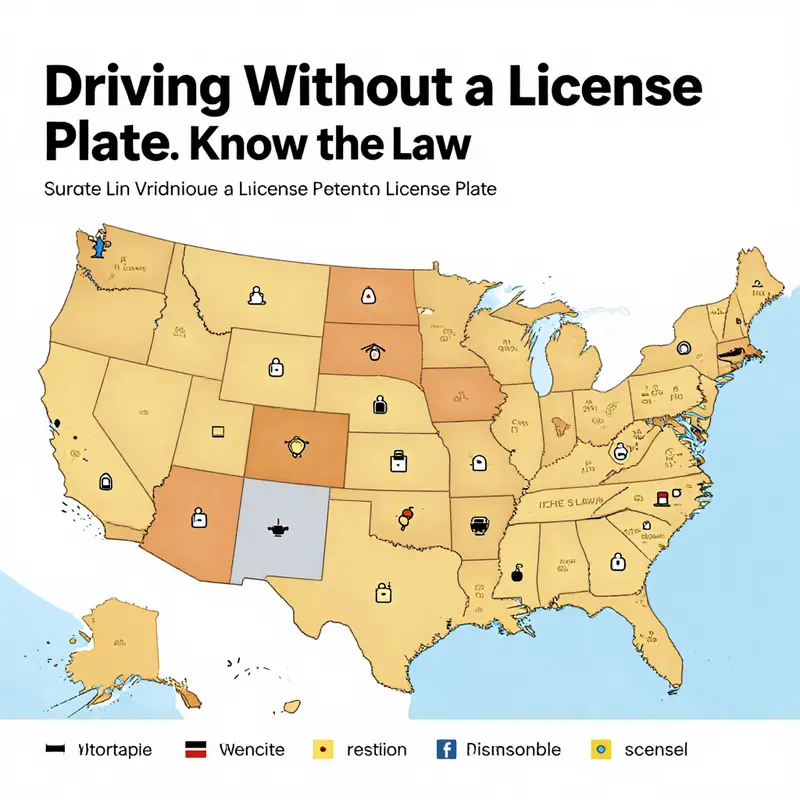
Across continents and cultures, the license plate is more than a decorative badge on the back of a car. It is a visible, enforceable marker of ownership, registration, and accountability. The simple act of displaying a valid plate on public roads anchors a web of legal responsibilities that extends from the driver to the state, and beyond to insurers, law enforcement, and the courts. When the plate is absent, obscured, or deemed invalid, the system’s balance can tilt quickly toward penalties, uncertainty, and the danger of a mislaid identity on the roadway. This chapter looks at how the question of driving without a license plate unfolds across the United States, where the law is not uniform but instead a mosaic of state-specific statutes, procedures, and penalties. It is a practical map for anyone who might find themselves in a situation where a plate is missing, delayed, or legally contested, and it is written to illuminate not only what is prohibited but what is required to keep a vehicle legitimately and safely on the road. It also situates the United States within a broader global frame, where different jurisdictions treat plates with various degrees of severity, while the underlying logic remains clear: plates help identify vehicles, track registrations, and foster accountability in traffic incidents. The discipline of enforcement is not merely punitive; it is about maintaining order on crowded streets, ensuring that vehicles can be traced after collisions, and enabling authorities to confirm that a car is properly insured, registered, and in a condition that makes it legally operable. In practice, the reality is that most drivers will encounter scenarios in which a plate is temporarily absent or in need of repair. The question is not just whether one can drive without a plate but how the law responds when a plate is missing, how quickly a driver should act to remedy the situation, and how the penalties may escalate if the issue is not resolved. To understand this fully, it helps to start with the broad principle: in the United States, every vehicle on public roads is expected to display a valid license plate that corresponds to the vehicle’s registrant and its registration status. This expectation rests on several pillars. First, the plate serves as an immediate identifier for law enforcement and for the public. Second, it ties the vehicle to its registration and insurance status, creating a chain of documentation that can be inspected at stops, during accidents, or in enforcement checks. Third, it supports the system of penalties and incentives designed to maintain orderly registration, reduce fraud, and deter noncompliance. Yet the practical application of this principle varies widely across states, reflecting historical precedents, administrative capacity, political choices, and local enforcement cultures. The result is a patchwork in which a driver who has just purchased a car, a vehicle awaiting new plates, or a car with a temporary tag can experience a range of outcomes depending on where they are and how the authorities interpret the circumstances. In California and New York, two large states with dense traffic and vigilant enforcement cultures, driving without a plate or with a plate that appears to be attached to the wrong vehicle can trigger a statutory violation that is treated as a class 3 misdemeanor in many cases. That classification carries real consequences: fines that can exceed five hundred dollars, the possibility of points on a driver’s license, and the risk of vehicle impoundment depending on the facts surrounding the stop, such as whether the plate is stolen, misregistered, or appears to be counterfeit. Even in less populous regions, the underlying seriousness is not softened by a large urban setting. Rhode Island, Maryland, and several other states, while differing in exact terminology, routinely treat plate-related offenses as offenses that carry at least monetary penalties and, in some cases, license-action consequences if the driver has a history of similar violations. The exact phrasing matters because it informs how a case is adjudicated and how the penalties accrue. In practice, this means that a driver who forgets to display a plate, or who drives with a plate that does not match the vehicle, may face an encounter with law enforcement that hinges on the precise circumstances: whether the plate fell off, whether the registration is expired, whether the plate is obscured by a bumper or a cargo item, and whether the driver can provide the necessary documentation to prove lawful possession and upcoming renewal. The stakes escalate with repeat offenses, which many states treat as an indicator of noncompliance rather than a one-off oversight. The pattern across states is not uniform, yet there are discernible threads. For one, several states distinguish between “no plate” and “wrong plate” or “plate not matching the vehicle.” A stop may be treated as a fix-it ticket in some jurisdictions, especially if the observer can be assured that the underlying registration and insurance are current and the plate issue is transient. In others, a stop can quickly escalate to an order to impound the vehicle or to file criminal charges when the absence of a plate signals broader concerns about registration lies, stolen plates, or attempts to evade law enforcement. There is a nuanced difference between a temporary violation and a chronic pattern. A state may issue a warning or a minor fine for a first-time lapse involving a temporary plate or an administrative oversight. The same state may treat repeated offenses with more severe penalties, including higher fines, DMV holds, or limits on driving privileges until the issue is resolved. The law often recognizes the reality that new vehicles sometimes face administrative gaps as registrations are processed, while older vehicles might accumulate a history of plate-related issues that reflect broader registration compliance challenges. Such nuances are often described with specificity on state DMV websites, and the public is advised to consult those official sources for the precise, case-by-case rules. The variances around temporary plates and registration tabs add another layer of complexity. Some states recognize and regulate temporary permits designed to bridge the period between purchase and permanent registration. Arizona, for instance, has a 90-day window during which a temporary permit is valid, giving the buyer time to complete the official registration without facing immediate penalties for non-permanent plate display. Illinois follows a similar logic with a 30-day temporary sticker for newly purchased vehicles. The practical effect is straightforward: if a driver finds themselves within those windows, the rules allow a grace period, but failing to replace temporary permits with permanent plates within the allotted time commonly triggers penalties. These rules are not uniform either. In some states, a temporary plate is treated as legitimate evidence of registration, while in others, authorities might require the final, permanent plate to be displayed promptly, or a proof-of-registration document in the vehicle may suffice for a limited period. The risk here is not only a monetary fine but also potential administrative action, such as a registration hold, which can complicate future dealings with the vehicle, including insurance adjustments, annual renewals, or even recall-related recalls. The key for drivers, as they navigate these rules, is not to assume that a descriptive label on a tag is a guarantee of immunity from enforcement. Instead, drivers should understand that the plate is part of a system that links a vehicle to its owner and to the status of its registration, insurance, and compliance with local rules. A driver who is aware of these linkages is more likely to respond quickly to plate-related issues, thereby reducing the risk of penalties and the disruption that can follow a stop. It is worth noting that the United States is not the only country with a strong emphasis on license plates. The broader context includes international experiences where plates are essential to the functioning of traffic safety regimes. In some places, authorities impose immediate penalties for even minor plate irregularities, while others adopt more forgiving measures that prioritize corrective action over punishment. Still, the underlying objective is common: to ensure that every vehicle on the road can be identified, tracked, and held accountable for its compliance with safety standards, registration rules, and insurance requirements. The practical consequences of failing to display a plate can ripple through a driver’s life in unexpected ways. A stop that leads to a citation may trigger points on a license, which can affect insurance premiums and the driver’s record. In some states, a record of plate-related violations can influence the renewal process for vehicle registrations or even the ability to obtain certain types of driving privileges. The enforcement equilibrium also interacts with how people initially acquire or transfer vehicles. When a car changes hands, the new owner must register the vehicle in their name and obtain plates that correspond to the vehicle’s new registration. If the new owner uses a temporary tag or retains old plates in a way that creates confusion about ownership, the likelihood of a stop increases. The law, in essence, rewards clarity and upholds the integrity of the registration system. It is not an entitlement system; it is a governance framework designed to prevent misrepresentation, theft, and fraud, while facilitating safe, accountable driving. Readers should be aware that ignorance of the precise rules is not a defense in most jurisdictions. Each state’s DMV website and official publications are the authoritative sources for the current requirements, the acceptable forms of temporary and permanent plates, and the penalties associated with violations. For those who want a consolidated view, there are national references that synthesize state-by-state rules while still pointing back to the original regulatory texts. A practical way to approach this topic is to treat the plate as a key piece of evidence that a vehicle is legally registered and insured. When a plate is missing, the driver should act promptly to avoid escalation. This might involve moving the vehicle only if lawfully permitted, visiting a DMV office to rectify registration or obtain a temporary permit, or arranging for the vehicle to be towed to a compliant location if necessary. In the end, the state’s approach to missing plates reflects a balance between discouraging noncompliance and recognizing that administrative processes can create unavoidable gaps. The best course of action for any driver is to stay informed about the exact rules that apply to their place of operation, maintain up-to-date registration and insurance, and respond quickly to plate-related issues. A quiet, precautionary step—checking the plate regularly, ensuring it is visible, clean, and legible, and confirming that its registration matches the vehicle—can prevent many common problems before they arise. For those who rely on public information to guide their behavior, a careful reading of a state’s DMV resources, along with a quick consult of reputable summaries, can provide a solid sense of the boundaries and expectations. The interconnected nature of the system means a change in one element, such as a new vehicle purchase or a delayed registration renewal, can ripple through to enforcement practices and affect penalties. The broader lesson is clear: driving without a license plate is not uniformly tolerated or tolerated with equal leniency across the United States. Instead, each jurisdiction calibrates its response with a mix of warnings, fines, administrative action, and, in more serious or repeated cases, criminal implications. The goal of these rules is not to trap drivers but to ensure that the vehicle on the road is properly identified and accountable, a standard that ultimately serves everyone’s safety and the orderly functioning of the traffic system. For readers seeking a concise, practical reference to the nuances of state-by-state differences, the following resource provides a comprehensive overview while guiding readers toward official sources for the exact statutes and penalties. state rules impact on driver licensing. In addition, when exploring the regulatory landscape and how it shapes driving behavior—especially in the context of plate-related enforcement—it can be instructive to consult broader overviews that compare inspection regimes, registration processes, and licensing consequences across states. These perspectives illuminate how plate visibility intersects with other driver obligations and why a plate is a central element of the broader traffic-safety ecosystem. For readers who want to cross-check or explore related topics such as vehicle inspection requirements and related compliance frameworks, a reliable reference is available at DMV.org, which offers state-by-state summaries and practical guidance on registration, inspection, and related penalties. This resource underscores the importance of aligning personal knowledge with official, up-to-date information, since the specifics of a plate-related offense can hinge on a single phrase in a statute or a newly revised administrative rule. In short, while the core idea is simple—that driving without a license plate is generally illegal and can carry penalties—the real-world implications depend on a careful reading of local rules, proactive maintenance of registration and plate status, and timely action when a plate issue arises. The road rules are designed not to trap drivers but to help authorities verify who is driving, whether the vehicle is properly registered, and whether it is insured, and to do so in a manner that preserves safety and accountability on busy roads. If a reader leaves with only one takeaway, let it be this: the plate is more than a symbol; it is a functional component of a much larger system that keeps roads safer, helps resolve incidents, and makes the system legible to the people and institutions that rely on it. For those starting from the premise that a plate is optional or easily overlooked, the practical reality is different. The best practice, when in doubt, is to treat the plate with the seriousness it deserves and to rectify any missing or misaligned plate situations quickly—and to rely on official sources for the precise rules that apply in your state or territory. The legal landscape is dynamic, and enforcement patterns reflect evolving priorities and administrative improvements. Staying informed and compliant does not require memorizing every statute; it requires a willingness to check in with the relevant DMV resources, acknowledge the legitimacy of the plate’s function, and act promptly to correct any lapse before it becomes a violation with consequences that extend beyond a single traffic stop. For further context and a practical, up-to-date reference, see the state-focused guidance linked above and the broader, authoritative summaries that consolidate state-by-state expectations. state rules impact on driver licensing. The conversation about license plates, accidents, and accountability would be incomplete without acknowledging that the Chinese legal framework also prioritizes plate display as a fundamental requirement for road use. Under the Road Traffic Safety Law of China, a vehicle involved in an accident without a license plate, inspection label, or insurance sticker must stop the vehicle, preserve the scene, and report the incident to the police. This emphasis on immediate reporting and scene preservation serves a different but complementary purpose to the American emphasis on registration and plate verifiability. It highlights that the underlying principle in many jurisdictions is the same: plates and registration are not mere formalities but essential elements of traffic safety and accountability. The differences between countries reflect distinct administrative cultures and enforcement priorities, yet the common thread remains clear. A missing plate is not a harmless omission; it is a signal that the vehicle’s legal status may be in question. The practical guidance is universal in spirit—even where the precise penalties diverge: know the rules, keep the documentation current, and address plate-related issues promptly to avoid compounding problems. In this light, the plate represents not just an identifier but a bridge between a vehicle and a community’s rules, safety standards, and the responsible conduct expected of drivers. The ability to drive without a plate, then, is not a universal right but a conditional circumstance that depends on jurisdiction, vehicle status, and the speed with which a driver can bring the vehicle back into full compliance. The broader narrative of plate enforcement is a narrative about trust and verification on the road. It is about the public interest in knowing who is behind the wheel, whether the vehicle is properly registered and insured, and whether the operator is subject to the same rules that guide all other drivers. In this sense, the license plate is both a practical tool for enforcement and a symbol of civic responsibility. For readers seeking more depth on how these principles play out in real life—with case examples, statutes, and enforcement practices—the resources cited above offer pathways to authoritative information. The landscape continues to evolve in response to administrative reforms, changes in registration procedures, and shifting priorities in traffic safety. Staying informed is the pragmatic choice for anyone who moves through our road networks with a vehicle, whether a compact city car, a family SUV, or a work vehicle that travels across state lines. The interconnection of registration, plate status, and road safety is a continuous thread through the fabric of modern driving, and this thread is strengthened by awareness, timely action, and a commitment to legal compliance at every mile of the journey. External resources can provide a broader perspective and additional examples of how different jurisdictions handle plate-related offenses, ensuring that readers are grounded in practical, up-to-date information as they navigate the road ahead. For those who want to follow up with a consolidated overview and official sources, the end of this discussion points toward reliable summaries and state-specific guidance, while the cited external reference clarifies how these practices fit into the larger landscape of vehicle regulation and road-safety policy. DMV.org offers a broad, accessible picture of license plate requirements, registration timelines, and the consequences of noncompliance across states, which complements the more targeted state-level information presented here. In short, driving without a license plate is not a simple matter of personal discretion; it is a regulated action that carries consequences calibrated to the specifics of each jurisdiction. The essential takeaway is that compliance—keeping the plate, ensuring it matches the vehicle, and renewing registration on time—remains the most reliable, straightforward path to staying on the road with confidence. The road is designed to be navigable, predictable, and legible, provided drivers respect the rules that give the plate its purpose and power. This is the core idea that threads through state variations and the broader global context: license plates are more than metal and ink; they are a shared instrument of road safety, enforcement, and accountability that keeps traffic moving, responsibly and fairly, for everyone.
Final thoughts
Driving without a license plate poses significant legal risks and safety hazards that every driver and vehicle owner must understand. The differences in state laws further complicate this issue, highlighting the need for proper registration and compliance with vehicle regulations. To navigate your driving experience safely and legally, always ensure that your vehicle is fully outfitted according to local laws. Understanding these components will empower drivers to avoid penalties and promote road safety.