
Licensing a vehicle typically hinges on having a valid title, a critical document that establishes ownership. For new drivers, learners, existing drivers, and auto dealerships alike, understanding the implications of title ownership can make a profound difference in the vehicle registration process. This article delves into the essential role of the title in licensing, the alternatives available if you lack a title, the variations in regulations across states, and the process for obtaining a replacement title. Each chapter builds a comprehensive understanding of the nuances that accompany vehicle licensing when a title is missing.
From Paper to Plates: Navigating Licensing When You Don’t Have a Vehicle Title
A vehicle title is more than a decorative bit of paper tucked somewhere in a glove box. It is the official record that ties you to a specific vehicle and, crucially, it is the primary document most DMVs use to verify who owns a car, who can register it, and who can lawfully place a license plate on it. The licensing process is built around this document because it establishes clear ownership, spares the system from duplicating or contesting ownership later, and protects both the seller and the buyer from fraud. When the title is missing, damaged, or not yet in your name, the road to license plates becomes a detour filled with questions, delays, and the risk of legal missteps. The reality is straightforward: in nearly every jurisdiction, you cannot reliably license a vehicle without a valid title in your name or a path that establishes equivalent ownership documentation. The title acts like a gatekeeper at the DMV, ensuring that the person who asks for a license is the actual owner or a legally authorized transferee. Without that gate, the process stalls, and the consequences go beyond a simple denial. The vehicle sits in a kind of administrative limbo where you cannot renew plates, register a new owner, or legally operate it on public roads. In short, the title is not optional; it is the key that unlocks the entire licensing sequence, and without it, the system will hesitate, question, and often refuse entry until ownership questions are resolved. This is not a minor bureaucratic hurdle but a foundational requirement tied to accountability, traceability, and public safety on the roadways we share. The title confirms you are the rightful owner and that no competing claim exists, a safeguard that protects every driver on the road from the kind of uncertainty that can lead to disputes, accidents, or worse. If you have ever watched a buyer and seller try to complete a transfer without a title, you have seen the friction firsthand—the fear that the deal could unravel, and with it the risk that the new owner might not be able to license the vehicle at all. The title is the proof that the transfer happened, and the DMV will rely on it to finalize ownership records and to issue plates and registration that legally authorize operation on state roads. In this sense, the title is both a legal instrument and a practical passport for a vehicle in the public system, a compact bundle of facts that anchors ownership in the eyes of the authorities and the eyes of the insurer who will want to know exactly to whom the policy applies when the vehicle hits the road. And ownership is not a mere formality; it is a protective feature that keeps fraud at bay and preserves the integrity of the vehicle register that every state maintains to keep track of who drives what across its highways. When the title is present, the process is clear. The DMV can verify that the name on the document matches the applicant, confirm that there are no conflicting claims, and, if the vehicle features a lien, identify the lienholder and advance steps to satisfy or release that lien as part of the transfer and licensing sequence. Lenders, in particular, have a vested interest in keeping the title under their control until their loan is repaid. This is one reason why financing a vehicle creates a practical dependency on the title: the lender holds a security interest, and until that interest is satisfied, the title or a lien notation on it may govern what can and cannot be done with the vehicle. The result is a straightforward, if sometimes tedious, logic: a clean title or a clear path to a lien release is the passport to registration and plates; a flawed or missing title raises the risk of delays, partial approvals, or outright denial. When a title exists, the process often proceeds with a straightforward sequence. The applicant brings proof of identity, the vehicle’s current registration details, and the title itself. The name on the title must align with the applicant’s name on the registration and the identity documents. If the vehicle is financed, the lienholder’s information must be addressed—whether that means ensuring the lien is paid off or securing permission to transfer ownership with the lien intact. In many cases, the DMV will require a payoff statement from the lender or a lien release before it will issue new plates or transfer ownership into the new owner’s name. In all of this, the title is the anchor. Without it, the anchor can slip, the vessel of ownership can drift, and the licensing process can fail to secure the necessary authority to operate the vehicle. The consequences extend beyond a simple administrative hiccup. A missing or invalid title can delay essential processes such as the renewal of registration, which might affect not only your legal ability to drive but also your insurance coverage, traffic enforcement exposure, and the ability to prove ownership in a dispute or accident. If you are in the process of buying a vehicle, the title acts as the ultimate check on the seller’s claimed ownership. It is not enough for the seller to possess keys, a bill of sale, or even a valid registration. The title is the document that confirms the seller’s authority to transfer, that the vehicle is not stolen, and that the transfer will be recognized by the state as a legitimate change of ownership. For buyers, verifying the title is an essential part of due diligence. This is not just about avoiding a bad deal; it is about ensuring that the vehicle can be lawfully licensed, insured, and operated without a dark cloud of ownership dispute hanging over it. A common pitfall in this phase is assuming that the presence of keys and a current registration indicates clear title. That assumption can be costly. The title has a distinct role; it is the bridge between the buyer and the public records that certify ownership. The public record is what the DMV consults when it assesses an application for license plates, and if the record shows an outstanding lien, multiple owners, or a vehicle that has been reported as stolen, the licensing process can stall or end before it begins. When a title is missing, the DMV will typically ask for a replacement title first. The replacement process is a standard administrative path, but it requires careful preparation. The steps usually include filling out a title application form, presenting proof of identity such as a driver’s license, paying the replacement fee, and often supplying additional documents that corroborate ownership. In some cases, a bill of sale can help corroborate the transfer, or a notarized affidavit of loss may be used to support the replacement request. The precise requirements vary by state, which is why it is essential to consult the official state DMV specifications. In this context, the idea of a replacement title is not merely about obtaining a new document; it is about reestablishing a clean chain of ownership in the public record. Once the replacement title is issued, the owner can then proceed with the licensing step with much greater confidence. The replacement title becomes the new anchor for the vehicle’s ownership narrative—the official confirmation that the person presenting the document has the right to license, register, and insure the vehicle for operation on public roads. There are circumstances under which a state might permit licensing with alternative documents when a title cannot be produced promptly. In rare cases, this can include specialized forms like bonded titles or other exceptions that acknowledge ownership despite gaps in the traditional documentary chain. However, these pathways come with significant caveats. They require specific procedures, may impose additional fees, and often involve longer processing times. They are not standard practice and should be pursued only after careful consultation with the DMV or an official source of guidance. The existence of such alternative pathways underscores a broader principle: ownership proof is not merely ceremonial; it is a practical instrument that protects both public safety and private interests. The idea that you can gloss over the title requirement with a substitute document is appealing in theory, but in practice it is a path lined with procedural hurdles, heightened scrutiny, and, in some cases, legal risk if the alternative documents do not perfectly reflect the true ownership status. For this reason, most applicants are well advised to pursue the traditional route first. If the title is lost or unavailable, the replacement process should be undertaken immediately, with a clear understanding of the steps and the timeline. This approach minimizes disruption to licensing and reduces the chances that the vehicle will sit idle for an extended period. When a purchaser asks how to proceed without a title, the response is pragmatic and grounded in the realities of how the system operates. Begin by locating the state DMV’s official guidance on title replacement. Gather necessary documents, such as proof of identity, proof of ownership if you have any alternative evidence, and any documentation that links you to the vehicle, such as a bill of sale or prior registration. Be prepared to pay a replacement fee and to wait for processing, which can take days or weeks depending on the jurisdiction and whether the title is in an outstanding loan scenario. If the vehicle is financed, contact the lienholder early in the process. They may require payoff confirmation or a lien release before the DMV will finalize licensing. It is also wise to verify that the vehicle’s information on all documents matches exactly. Discrepancies—such as differences in name spelling, address, or vehicle identification number formatting—can trigger delays or even accusations of fraud. In the end, the chapter of licensing a vehicle without a title is one of careful verification, patient persistence, and a readiness to substitute certainty for expediency. The title is not a mere backdrop; it is the instrument on which the legality of ownership and operation rests. When you embrace the title as the central document it is, you approach licensing with a discipline that protects you, the seller, and the broader community. It keeps the process coherent, predictable, and aligned with the public safety framework that governs our roads. For those navigating the nuanced terrain of ownership verification across different states, a useful way to frame the conversation is to consider how state rules shape driver licensing more broadly. The landscape varies, and understanding how each jurisdiction shapes the requirements can prevent needless detours. For a concise overview of how state rules impact driver licensing, you can refer to a resource that maps these differences and clarifies where flexibility exists and where the bar remains fixed. state rules impact on driver licensing This tends to be a practical guide for recognizing the points at which a title might be replaced or supplemented with alternate documents, and it highlights the importance of consulting official sources early in the process. It is also worth noting that licensing procedures frequently update in response to changes in ownership documentation practices, so always verify the current requirements on the official DMV website for your state. In the dynamic circle of ownership, disclosure, and registration, the title remains the center of gravity. It anchors the legitimacy of ownership, the ability to insure, and the right to operate. It is the element whose absence triggers the question of how to move forward with licensing and registration in a way that is both legally sound and practically efficient. The dialogue about licensing without a title, then, is not a resignation to bureaucratic rigidity; it is a pathway to understanding why the documents we rely on exist in the first place. It calls for careful attention to documentation, proactive communication with lenders and authorities, and a willingness to engage in the replacement process promptly should the original title be misplaced or never issued. After all, the road to legal operation begins with the document that proves you belong to the vehicle in the eyes of the public record. Without it, the road remains blocked. With it, licensing proceeds, plates are issued, and the vehicle becomes a fully integrated part of the state’s transportation system. In that sense, the title is the indispensable hinge that keeps ownership, registration, and operation in proper alignment. For readers who want a deeper dive into the official guidance and nuanced state-specific rules, consulting the official DMV resources remains the most reliable approach. External reference: DMV.org offers comprehensive guidance on vehicle titles and their role in registration, ownership verification, and legal compliance. https://www.dmv.org/vehicle-title/
The Paper Trail to the Open Road: Why a Vehicle Title Is Central to Licensing—and What If It’s Missing
A vehicle title is more than a stack of papers; it is the formal link between ownership and the right to operate on public roads. When people ask whether they can license a vehicle without a title, the simple answer in most places is that you cannot. The title serves as the official record that you own the vehicle, that there are no unresolved liens against it, and that the vehicle exists in a verifiable state within the public registry. Licensing, by contrast, is the permission slip that allows you to drive on public streets. It is the practical acknowledgment that the vehicle is roadworthy under the framework of state rules. The two procedures—proof of ownership and permission to operate—are tightly intertwined. Without the title, the pathway from ownership to licensing stalls, and for many, that stall can feel like a dead end. The title is the document that confirms you have a legal stake in the vehicle and that you are authorized to register it and place it on the road. This is not merely bureaucratic formality. It is a safeguard that prevents a vehicle from being registered to someone who does not own it, or to a lienholder who still has a hold on the asset until a loan is paid down. In this sense, the title is the certificate that links the state’s records to the physical car, a bridge between paper and pavement. When this bridge is missing, the journey toward licensing becomes uncertain and, in many cases, impossible.
The practical implications of this arrangement extend far beyond simply needing a document. The title is a compact record that carries information about ownership history, the current owner’s identity, and any encumbrances against the vehicle—most commonly a loan held by a financial institution. If a car is financed, the lienholder’s name is typically noted on the title. The lien is the lender’s security interest in the vehicle, and until it is released, the title may not be fully in the hands of the owner who intends to license the car. This is not just a formality. States commonly require a lien release or payoff statement as part of the licensing process. The absence of that release leaves the DMV with a question mark about who actually owns the vehicle and whether any third party has a claim to it. Here again, the title becomes the critical piece of the puzzle. It is the paperwork that the DMV relies on to verify ownership, confirm the status of any liens, and authorize the issuance of license plates and registration. In this context, licensing a vehicle without a title is not simply discouraged; it is often discouraged for good reason. The state authorities want to ensure that the legitimate owner is driving the vehicle and that there are no conflicting claims that could complicate the sale, registration, or even the eventual transfer of ownership. The risk to the public and to the vehicle’s value is too great to permit a loophole that bypasses this essential verification.
There are circumstances in which the absence of a title creates a unique challenge, yet the underlying principle remains unchanged: the title is the official proof of ownership and the key to unlocking licensing. If you have lost a title or never received one, the standard path is to apply for a replacement through the local DMV. The replacement process is designed to reestablish that formal chain of ownership. It typically begins with a title application, a proof of identity, and the payment of a fee. Some states also require documentation such as a bill of sale or a notarized affidavit of loss. In many cases, the replacement title can be issued within a few weeks if you provide all required documents and there are no unresolved liens or disputes about ownership. The steps are straightforward, but the precise requirements can vary from one state to another, so checking the official DMV process is essential. Even in straightforward cases, a delay can occur if the vehicle has a loan, if the owner’s information does not match DMV records, or if there is a need to verify the vehicle’s identification number (VIN) against the records. The variance across states is why a direct, state-specific check is invaluable. It is easy to assume a universal rule, but the reality is often more nuanced. The DMV’s website is the most reliable resource for this, outlining the exact form names, the documentation required, the fees, and the expected processing time. The replacement title is not merely a ticket to licensing; it is the cleanest and most durable way to ensure you can register, insure, and legally operate the vehicle.
There is also a broader arc to consider: how the vehicle moves from the factory floor to the street. New vehicles may begin life with a Manufacturer’s Certificate of Origin, or a similar document that serves as the initial proof of ownership before the title is issued. In many states, the MCO or its equivalent is sufficient for the dealer to complete the initial transfer of ownership and to begin the registration process; the title is still the ultimate formal record. When a brand-new car is purchased, the journey to licensing usually follows a sequence: the paperwork to establish ownership, the title is issued in the name of the owner, and then the registration and license plates are granted. This pathway underscores the central place of the title in the licensing ecosystem. It is also a reminder that even in cases involving brand-new vehicles, the titling process is a prerequisite for the official operation of the vehicle on public roadways. The system is designed to prevent two outcomes that would undermine road safety and consumer protection: vehicles being driven without recognized ownership, and vehicles entering the traffic system without a clear responsibility chain for liability and accountability.
There are rare and specialized scenarios where alternative documents might be entertained to facilitate licensing when a title is missing or disputed. Some states have explored mechanisms such as bonded titles, designed for situations in which ownership is difficult to prove due to a lost title or contested ownership. A bonded title requires the applicant to post a surety bond with the state and to provide a credible chain of ownership, often accompanied by affidavits and additional corroborating documents. This path is not common, and it demands careful compliance with the rules that govern its use. The procedures surrounding bonded titles are deliberately rigorous, reflecting the high stakes involved: misrepresentation of ownership or the sacrifice of due process can lead to replaced documents with flawed histories. The bonded title concept illustrates that, while it is possible under certain conditions to license a vehicle without a traditional title, those routes are complex, expensive, and time-consuming. They are designed for edge cases, not as a standard workaround.
Beyond bonded titles, some states may consider alternative documents in narrow, specific circumstances. For example, a bill of sale, previous registrations, or a VIN verification might be used to establish a reasonable claim of ownership when a title is temporarily unavailable. Yet these options do not replace the title; they are provisional tools that may help move a transaction along, but licensing and registration often hinge on the eventual issuance or release of the formal title. The practical reality is that the DMV wants to be certain of five things: ownership, the absence of conflicting claims, the vehicle’s identification, the lien status, and the proper assignment of responsibility for registration and liability. If any of these are in doubt, the licensing process stalls for reasons that protect the public and the owner. The ultimate objective is straightforward: ensure that every vehicle on the road can be traced to a lawful owner, that any outstanding financial claims are resolved, and that the vehicle can be insured and operated safely.
For those who find themselves in a situation where the title is missing or delayed, there is a path forward, but it is not a shortcut around the rules. The core strategy is to coordinate with the DMV, the seller (if the vehicle is in a private sale), and any lienholders to assemble the necessary documentation. If the title has not reached you after a purchase, the next steps may include obtaining a copy or replacement, securing a lien payoff statement, and ensuring the seller’s information aligns with the vehicle’s VIN. It is worth noting that in some private sales, the seller may remain the titleholder until a successful transfer is recorded; in other situations, the eventual ownership transfer is dependent on the issuance of a new title in the buyer’s name. In this intricate ecosystem, communication is essential. A calm, organized approach—collecting documents, confirming the VIN, verifying the lien status, and confirming the expected timeline for title processing—can prevent the frustration of a delayed license. While these processes may feel tedious, they have a purpose: to prevent counterfeit ownership claims, to ensure the vehicle’s history is clear, and to protect both the buyer and the public from potential disputes that could arise later if the vehicle were used without a clear, enforceable ownership record.
The practical takeaways are simple but powerful. First, if licensing a vehicle is the goal, the title is not optional; it is the essential keystone of your paperwork. Expect to provide proof of ownership and, where relevant, proof that any lien has been addressed or released. Second, if you have lost or never received the title, initiate a replacement process through the DMV promptly. Delays in obtaining a title almost always translate into delays in licensing, insurance, and sale or transfer of the vehicle. Third, if you encounter a situation where the title is genuinely inaccessible, educate yourself about rare alternatives such as bonded titles and other state-specific provisions. Recognize that these options are exceptions rather than the rule and require meticulous adherence to procedures that are often more demanding than the standard path. Fourth, stay vigilant about the ownership trail during private transactions. Verify the seller’s ownership, request a lien payoff, check for any liens, and obtain any necessary documentation that corroborates the chain of ownership. Nothing replaces the certainty that a clear title provides. Finally, consult the state DMV’s official guidance for your exact jurisdiction, because the rules change from state to state and even from year to year. For a broader context of how state rules shape licensing decisions, you can explore related considerations at an internal resource that discusses how state rules impact driver licensing: State Rules Impact on Driver Licensing. By examining this broader landscape, you gain a clearer picture of why the title acts as a foundation for licensing and why missing it disrupts the entire process.
How State Rules Shape Whether You Can License a Vehicle Without a Title
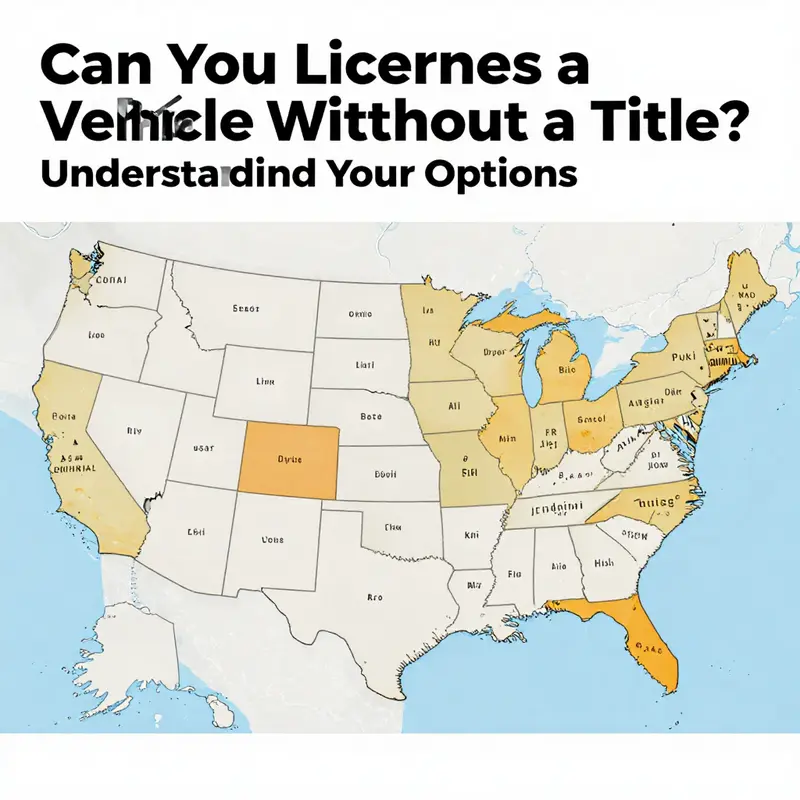
The short answer many drivers face is that a vehicle title is central to licensing. The long answer is more complex. State DMVs set rules that reflect each state’s priorities: proof of legal ownership, lien tracking, theft prevention, and revenue protection. Those priorities lead to widely different processes when a title is lost, missing, or disputed. Some states will not issue any registration without a proper title. Others provide narrowly defined exceptions, such as temporary registrations, bonded titles, or court-ordered transfers. Understanding the ways states handle these situations will help you choose the right next step and avoid costly delays.
Across most jurisdictions, the vehicle title serves three roles. First, it proves legal ownership. Second, it records liens or security interests. Third, it creates a clear chain of custody for the vehicle. Because these roles matter to law enforcement and lenders, DMVs usually require a title before they issue a license or registration. That requirement is the baseline. From there, states differ in how they allow exceptions or remedies when the title is not in hand.
Some states operate with a strict rule: no title, no registration. Under that approach, the vehicle owner must obtain a replacement or duplicate title before licensing. The replacement process typically requires an application form, proof of identity, vehicle identifiers such as the VIN and license plate number, and a fee. Many states also require an affidavit of loss or a notarized statement verifying how the title was lost. For vehicles with liens, the lienholder must either provide release documentation or remain listed on the title before registration can occur. When a lender still holds a title, the state will often require that the lender’s rights be addressed before plates are issued.
Other states build in pathways that let you use alternative documentation to reach a temporary solution. For instance, some allow temporary registrations for short-term use when a title is delayed by clerical error, inheritance paperwork, or a court transfer. These temporary licenses are usually conditional. They do not replace the title. Instead, they buy time while you secure the permanent documentation the DMV needs. New York is an example of a state that can issue temporary registration in certain circumstances. If you can produce a valid bill of sale and supporting paperwork in specific scenarios—such as an inheritance or a court-ordered transfer—New York may permit a temporary registration. That option helps owners move a vehicle legally while they finish the steps required to receive the title.
Another remedy available in some states is the bonded title. A bonded title is a special certificate that protects future owners who might claim the vehicle later. To obtain one, you typically buy a surety bond for an amount tied to the vehicle’s value. The bond backs any successful claim by a person who proves they were the rightful owner before you. Bonded titles often come with a multi-year waiting period. If no legitimate ownership claim arises during that period, the title holder can convert the bonded title to a regular one. California allows a bonded title procedure in cases where the original title cannot be located. This approach provides a path to registration when the title is absent, though it requires purchase of the bond and acceptance of the waiting period.
Some states limit exceptions to narrow, clearly documented situations. For example, when a vehicle is transferred by inheritance or court order, courts may issue papers that substitute for the title for the purpose of registration. Similarly, transactions involving licensed dealers often move under different rules. Dealers may have access to electronic title systems or dealer-specific documents that allow temporary licensure while they process a title transfer. Those processes reduce friction for legitimate sales but do not open general exceptions for private parties.
The processes for out-of-state titles add another layer of complexity. If you bring a vehicle with an out-of-state title to your new state, the receiving DMV usually requires a VIN inspection and proof that the out-of-state title is genuine and unencumbered. If the out-of-state title is missing, some states will allow registration after a thorough check, but most will insist that you obtain a duplicate from the issuing state first. If you imported a vehicle with no title history, or with a title from another country, expect stricter scrutiny and extra steps.
Salvage, rebuilt, and junk vehicles also trigger special title and licensing procedures. When a vehicle has a salvage history, the DMV wants to ensure that it has been properly repaired and inspected. Some states will not register a salvage vehicle without a certified inspection and a document that converts the salvage title to a rebuilt title. Without that rebuilt title, licensing is usually not permitted. These rules protect buyers and the public by ensuring that damaged vehicles meet safety standards before returning to the road.
Lienholders and financing complicate the picture further. When a lender holds the title as collateral, the title will show the lienholder’s name. Registration often requires the lienholder’s cooperation. If you attempt to title or license a vehicle where the lender’s interest is active, the DMV will want documentation showing the lien status, payoff, or agreement for release. If the lienholder refuses to cooperate, you will likely be unable to obtain a new registration until the lien is resolved.
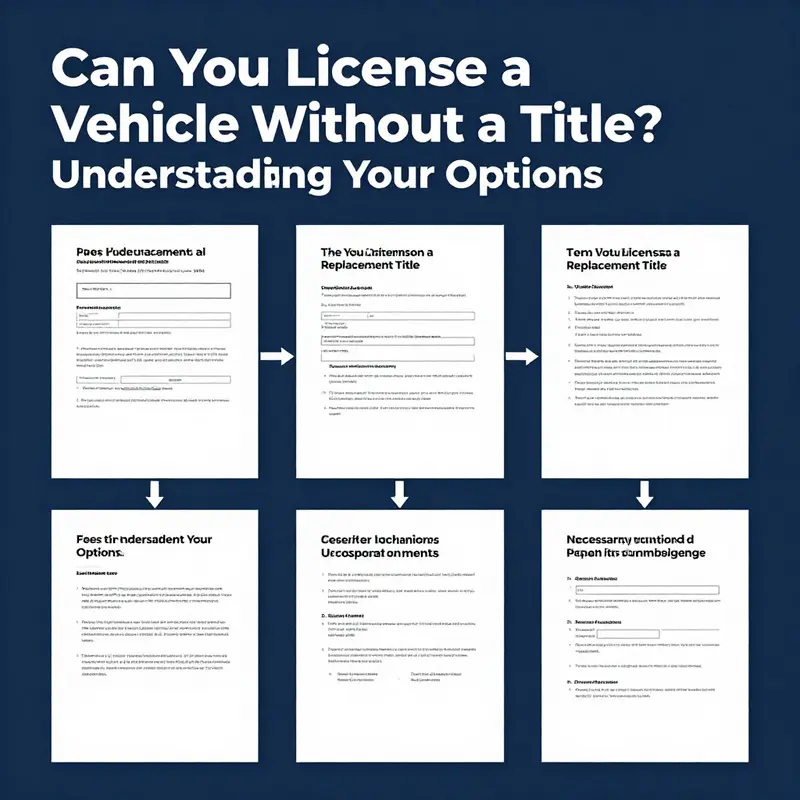
When the title is genuinely lost, the common remedy is a duplicate title from the state that issued the original. The duplicate title application usually asks for specific vehicle information, owner identification, and an explanation of how the title was lost. Fees apply. Processing times vary by state and may be longer if the DMV requires a more detailed investigation. If your situation is urgent, ask if the DMV can issue a temporary registration while it processes the duplicate. Not all jurisdictions offer such temporary relief, and those that do may set strict limits.
Affidavits and notarized statements are another frequent tool states use to bridge gaps in documentation. An affidavit of ownership or an affidavit of loss signed under penalty of perjury can establish, in the DMV’s view, a prima facie case of ownership. Some states accept these affidavits only in tandem with other documents, such as a bill of sale, VIN inspection, or proof of tax payment. Affidavits helped many vehicle owners, but they are not a universal fix. Their acceptance depends on state law and office-level discretion.
If you are faced with a missing title, here are practical steps that align with how states typically operate. First, confirm the law in the issuing state. That is critical because title law is state-specific. Second, gather all available documents: bill of sale, registration history, insurance records, maintenance receipts, and any documentation from a lender. Third, contact the DMV to ask about the specific remedies they permit: duplicate title, temporary registration, bonded title, or affidavit acceptance. Fourth, if the vehicle has a lien, contact the lienholder to resolve the security interest. Fifth, consider whether a VIN verification or inspection will be required and arrange it early if possible. These steps reduce surprises and shorten the time to lawful registration.
Mistakes are common and often costly. A private seller who transfers a vehicle without a proper title can create a legal tangle. Likewise, acquiring a vehicle with unclear title history—such as an online auction vehicle without paperwork—creates risks you may later have to resolve through the courts. When ownership is disputed, courts can sometimes issue orders that substitute for a title. Those procedures take time and incur legal fees, so they are best avoided by thorough due diligence before buying.
Finally, remember that state rules about licensing without a title are subject to change. Policy updates, changes to electronic title systems, and legislative reforms can alter what documentation a DMV accepts. If your situation involves a particular state, consult that state’s DMV website for the most current instructions. For an example of the duplicate title process in one state, see the California DMV’s duplicate title guidance: https://www.dmv.ca.gov/portal/vehicle-title-and-registration/apply-for-a-duplicate-title/.
If you want to understand how these state differences connect to broader licensing rules, review material on how state regulations impact driver licensing and vehicle administration. That resource explains how rule variation affects owners, dealers, and lenders across states. For quick reference, see this brief on how state rules impact driver licensing: state rules impact on driver licensing.
In practice, most vehicle owners will need a title to secure a standard, permanent registration. Exceptions exist, but they are narrow. Knowing which exceptions apply where helps you plan the right course: get a duplicate title, apply for a bonded title, obtain temporary registration, or pursue a legal remedy. Acting with correct documentation prevents delays and reduces the chance of losing access to your vehicle. When in doubt, contact your state DMV and request clear guidance for your exact situation.
null
null
Final thoughts
Understanding the critical role of a title in vehicle licensing can help drivers navigate the complexities of ownership and registration. While the absence of a title does present challenges, alternative options and state-specific regulations offer pathways to successful vehicle registration. Familiarizing yourself with these aspects permits owners and potential buyers to make informed decisions.