
License plates serve as official identification for vehicles, including military ones. While they are distinct from civilian plates, understanding their role is crucial for both drivers and the public. This article delves into military vehicle licensing, specifically focusing on regulatory aspects, case studies like China, challenges of misuse, government actions against fraud, and implications for military operations and public safety. Each chapter will provide insights aimed at new drivers, existing drivers, vehicle owners, and auto dealerships, fostering a comprehensive understanding of the topic.
Under Lock and Plate: How Military Vehicles Are Licensed, Regulated, and Protected from Misuse
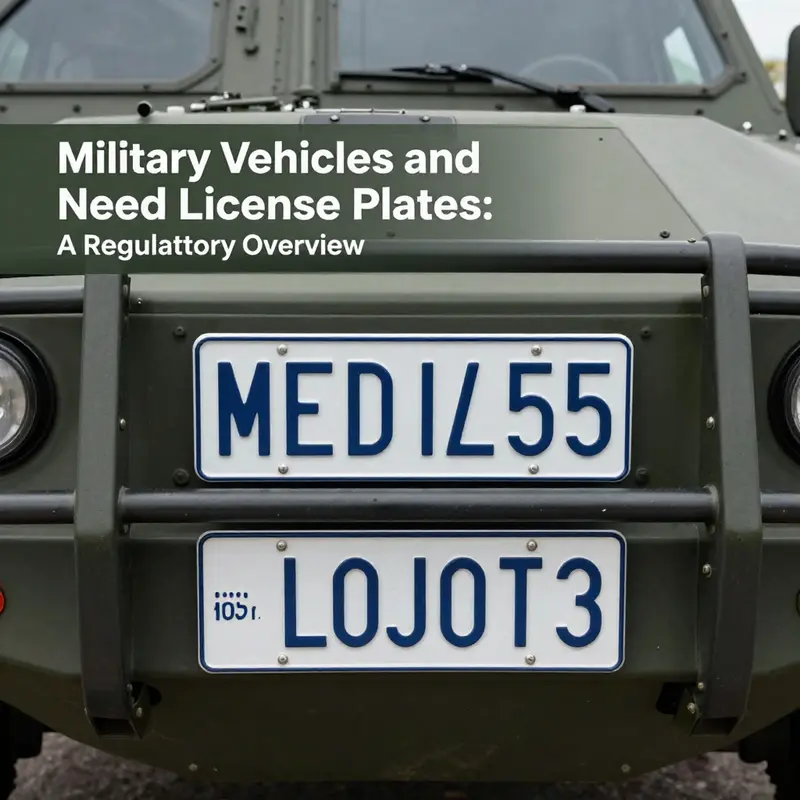
License plates are everywhere, yet the plates that ride on military wheels are not just about tint and style. They are tools of accountability, security, and governance. In many nations, including China, military vehicles carry license plates that look different from civilian plates and are governed by a distinct, tightly controlled set of rules. This arrangement is not a mere bureaucratic formality; it is a carefully designed system intended to ensure that military assets can be identified, tracked, and inspected within a framework of public safety, national security, and legal compliance. The idea that a vehicle associated with the armed forces should display a recognizable emblem of its authority is not unique to one country. It reflects a broader principle: when public sector resources and security operations rely on mobility, the vehicles that move them must be auditable, traceable, and bound by clear standards. The implementation of such standards, however, reveals a tension between legitimate uses and opportunities for abuse that must be continually reconciled by policy, enforcement, and culture.
At the core of the matter is the recognition that military vehicles differ from civilian ones in purpose, deployment, and governance. They may operate under different rules for possession, operation, and designation, and their plates serve as official identifiers rather than mere registration numbers. In practice, this means special plates are issued through a military vehicle management authority, a body charged with ensuring that every plate corresponds to a vehicle that belongs to or is authorized by the armed forces. The regulations governing these plates are not casual; they encompass who may request a plate, what information must accompany the plate, the conditions under which a plate can be displayed, and the penalties for unauthorized use. As a result, the existence of military license plates reinforces a chain of custody for military assets, enabling authorities to determine at a glance whether a vehicle on a road or at a checkpoint is operating under proper authorization.
China provides a clear illustration of how such a system functions in practice. The national approach emphasizes that military license plates are not interchangeable with civilian ones. They are distinctive, issued under a tightly regulated process, and monitored to prevent misuse. The state recognizes that misusing military plates can undermine the credibility of genuine military operations, create unfair advantages, and complicate law enforcement. This is not an abstract risk: counterfeit plates have appeared in scenarios involving smuggling, theft, or attempts to evade taxes and tolls. In some reported cases, counterfeit plates found their way onto smuggled or stolen luxury vehicles, or onto overloaded trucks painted in army green. The goal of such misuse is to bypass inspections, evade tolls, or dodge parking and tax obligations. When a vehicle that presents itself as a military asset is used for nonmilitary purposes, it erodes public trust and undermines the authority that legitimate military plates are meant to convey. The response from authorities has been to tighten verification procedures, increase penalties for fraud, and intensify enforcement activities so that the distinction between authentic military vehicles and impostors remains meaningful.
The regulatory architecture around military plates is designed to minimize ambiguity. Issuance procedures, plate design, and ongoing monitoring are the pillars that ensure misrepresentation is difficult and costly. Military vehicle management authorities oversee allocation and renewal, track plate numbers, and coordinate with law enforcement and border agencies to verify legitimacy. In this setup, plates serve not merely to identify a vehicle as military, but to signal that the vehicle is operating within the ambit of official duty and abiding by the rules that govern military mobility. This has practical implications for how roads, ports, and checkpoints are managed. With a clearly identifiable plate, authorities can quickly validate whether a vehicle is authorized, whether its duties align with its designation, and whether it has the requisite clearances for the route it is taking. The system, in short, is designed to balance mobility with accountability.
The public concern surrounding plate misuse stems from a fundamental principle: when a government issues a special identifier, the public expects consistent, enforceable standards. Counterfeit or illicitly obtained plates create holes in the regulatory fabric. They enable illegal exemptions, such as avoidance of tolls or inspections, or gaps in tax enforcement. They also complicate traffic safety and public order. The risk is not simply that a private actor might gain an unearned advantage but that legitimate activities can be misinterpreted, delayed, or obstructed when plates are forged or misused. Responding to this risk requires a multi-layered approach: robust licensing controls, verification at the point of display, audits of plate inventories, and penalties that deter fraudulent activity. It also requires a public-facing commitment to transparency so that civilians understand why the system exists and what is at stake when it is circumvented. This combination of deterrence and accountability is what keeps military license plates credible and functionally useful in complex, crowded environments.
A nuanced dimension of the discussion is the cross-jurisdictional comparison. While the specifics of plate design and issuance differ from country to country, the underlying logic remains similar. Special plates for military vehicles enable rapid recognition by civilian authorities, facilitate lawful oversight, and prevent the concealment of nonmilitary traffic under the banner of state authority. The balance between accessibility and security is delicate; it requires ongoing dialogue among policymakers, military leadership, law enforcement, and the public. In some jurisdictions, there is ongoing debate about whether to broaden access to certain classes of military vehicles for humanitarian missions, training, or joint exercises. In others, the emphasis is on tightening controls to prevent exploitation by criminal networks. Regardless of the local approach, the central objective endures: to ensure that mobility does not undermine security, and that the privilege of using the road under a military designation does not become a vehicle for illicit activity.
The practical implications extend beyond enforcement. For military planners, the licensing framework informs how fleets are managed, how maintenance cycles align with deployment needs, and how risk is assessed on the road. Plates simplify the process of tracking mileage, scheduling service, and reconciling operational expenditures with fleet accounts. They also provide a clear audit trail in the event of an incident or inquiry, enabling investigators to determine when and where a vehicle was authorized to be, and what duties it performed along the way. For civilian authorities, plates act as a signal of legitimate alignment with state operations, enabling cooperation, rather than confrontation, when vehicles cross into public roadways or enter civilian-controlled zones. The shared expectation across these stakeholders is that license plates will be a reliable indicator of permitted activity. When the system functions as intended, it reduces friction, speeds up verification, and supports a smoother intersection between military mobility and everyday life.
In discussing these issues, it is important to acknowledge the broader governance context. The issuance and control of military plates sit at the intersection of defense policy, transport regulation, and public administration. Success relies not only on rules on paper but on the institutional culture that enforces them. Staff responsible for plate allocation must be trained to recognize legitimate authority, detect anomalies, and respond decisively to suspected fraud. Law enforcement must be empowered with access to accurate plate records and the authority to take timely action when a plate is misused or a vehicle is found operating under questionable authorization. The public’s role is also significant. Citizens should expect accountability and report suspicious activity when a plate appears on a vehicle that does not seem to perform a legitimate military function. This collective vigilance helps preserve the integrity of the licensing system and, by extension, the rule of law in everyday life.
The chapter on licensing for military vehicles is not simply about a bureaucratic gatekeeping device. It sits at the heart of questions about trust, legitimacy, and the practicalities of national security. When the state identifies a vehicle that carries military plates, it signals that this asset is part of a collective effort—one that serves not only the armed forces but the public, by maintaining order, safety, and predictable governance on shared spaces like roads and ports. The presence of a special plate becomes a reminder that security is a system, not a single act. It embodies the idea that mobility, even in times of rapid change and global complexity, can be organized in a way that honors both authority and accountability. And when misuse occurs, as history shows, the response—fierce enforcement, tightened controls, and ongoing reform—demonstrates a political will to preserve the legitimacy of public power and the trust of the society it serves.
For readers who want to situate this discussion within a global framework, the point remains clear: licensing frameworks for military vehicles are not optional add-ons. They are essential components of how a state governs the movement of its military resources, maintains accountability, and protects the public from exploitation. The special plates act as a recognizable signal of legitimate authority, a practical tool for enforcement, and a symbol of the rule of law in motion. When crafted and implemented with care, they help ensure that the roads bear not only the weight of traffic but also the weight of public trust. In this sense, the question of whether military vehicles need license plates becomes a question about the architecture of security itself—the architecture that binds approval, operation, and oversight into a coherent system that serves the state and its citizens alike.
For readers seeking a comparative lens on how different regions handle broader vehicle governance, see the discussion on US states vehicle inspection requirements. It offers a useful contrast to the military-plate framework by illustrating how civilian vehicle oversight emphasizes safety, compliance audits, and regular inspections as part of everyday mobility. Such comparisons illuminate how countries balance security needs with practical everyday use, and they remind us that licensing is not merely a bureaucratic formality but a living mechanism that shapes behavior, safety, and public confidence. The existence of a rigorous licensing regime for military vehicles, including the use of distinctive plates, stands as a testament to the principle that authority on the road should be visible, verifiable, and accountable to the people.
External reference: authoritative details on the Chinese approach to military vehicle identification and regulation can be explored through official sources, such as the Ministry of National Defense. https://www.gov.cn/zhengce/2013-05/02/content_2468791.htm
Behind the Iron Plate: China’s Military Vehicle License System and the Persistent Challenge of Misuse
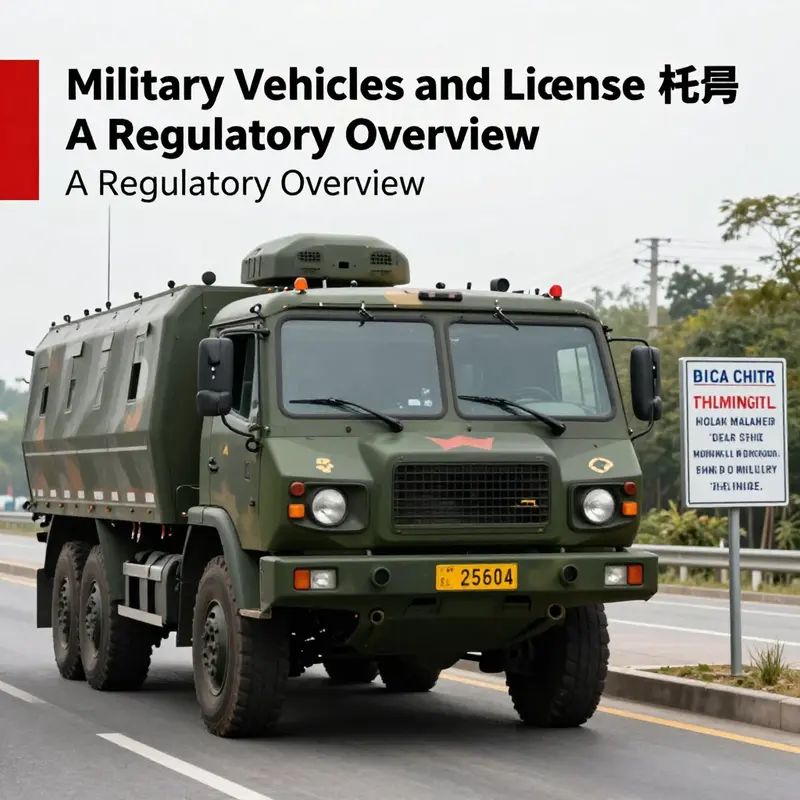
The question of whether military vehicles need license plates forces a closer look at how a nation threads security, accountability, and practicality through everyday life. In China, the answer is yes, but the license plates are not a cosmetic addition to security. They are the visible edge of a carefully designed system that keeps military transport distinct from civilian traffic while preserving precise control over who uses what resources, when, and for what purpose. These plates, issued under a dedicated framework, serve as official identification for military-owned or military-operated vehicles and stand at the intersection of discipline, governance, and public trust. They are not mere symbols; they are a functional mechanism that helps law enforcement, border officials, toll operators, and traffic managers distinguish between forces on the move and ordinary travelers. In this sense, license plates for military vehicles embody a structured approach to accountability that is essential in a modern state where mobility, logistics, and security are tightly braided together.
The issuance of military license plates in China reflects a system built to protect integrity through rigor. The military maintains a specialized registry and identification regime that goes beyond the civilian process. Plates are not handed out casually or regurgitated through generic channels; they emerge from procedures that incorporate verification, authorization, and ongoing oversight. This separation is deliberate. It prevents the casual replication of military identifiers and reduces the likelihood that a private vehicle could inappropriate use a military tag to access privileges such as toll exemptions, priority lanes, or unchecked passage. What distinguishes these plates is not merely their design but the accompanying controls: alarms or warnings tied to unauthorized use, cross-referenced records, and a chain of custody that accompanies each vehicle from assignment to deployment. The result is a tightly controlled ecosystem whose purpose is to ensure that military resources stay within their proper mission, rather than drift into civilian life where temptations and ambiguities proliferate.
Within this framework, the regulatory landscape is more than a traffic rulebook. It embodies a philosophy of stewardship over sensitive assets. The authorities tasked with issuing and managing military plates operate under strict supervision, with clear lines of responsibility and enforceable consequences for violations. The goal is straightforward: ensure that the privilege of displaying a military plate is reserved for legitimate military purposes. This separation supports not only operational efficiency but also public confidence. Citizens are less likely to doubt the legitimacy of military operations when there is a transparent and enforceable system that can be audited and explained. Yet, even with rigorous systems in place, a thorny challenge persists—a challenge that sits at the core of modern governance: the misuse of military license plates.
Misuse takes shape in several troubling forms, each exposing a vulnerability in the public’s trust and in the enforcement architecture. Counterfeit or forged military plates have been observed as crude tools for enabling privilege without accountability. When such plates appear on vehicles, they blur the line between lawful military movement and private mobility. The consequences extend beyond the illegal acts themselves. They ripple through fiscal channels—taxes, tolls, and inspections—eroding the financial and regulatory safeguards designed to keep roads fair and safe for all users. The misuse cuts deeper still when counterfeit plates are affixed to smuggled or stolen luxury cars. In those cases, the symbol of state service becomes a veneer for illicit wealth and criminal networks. Even more troubling are cases where overloaded transport vehicles are painted in army green and paired with military-style plates to evade scrutiny. These manipulations do more than chart a misleading silhouette; they undermine the credibility of genuine military transport and invite public resentment toward a set of privileges that many perceive as out of reach or misused.
Public sentiment around these issues is a constant undercurrent in the narrative of military plates. When people notice military vehicles at tourist sites during holidays or busy travel periods, a mixture of curiosity and concern can surface. Observers may wonder whether these appearances reflect real operational needs or discretionary allocations that favor certain routes or sites. Such moments highlight a nuanced tension: the necessity of keeping military assets ready and ready-to-deploy, versus the expectation of fairness and transparency that governs civilian life. The perception of privilege, whether fully deserved or not, can undermine the social compact that supports a nation’s security. In response, authorities emphasize that the integrity of the system rests on the premise that only authorized military vehicles carry these plates. They argue that strict enforcement—across drivers, operators, and the institutions that issue plates—is essential to prevent abuses and to preserve public trust. Still, the episode underscores a larger truth about governance: even robust systems must evolve in the face of sophisticated misuse and only through continuous monitoring can they maintain legitimacy.
From a policy perspective, the battlefield is not merely the road or the toll booth. It is the interface where security, efficiency, and accountability meet. The measures described by authorities—strict supervision, disciplinary actions for violations, and ongoing oversight—are signs of a governance regime that recognizes the stakes. They acknowledge the real possibility that unauthorized use of plates could distort incentives, erode revenue streams, or weaken inspections and deterrence. The response is not to abandon the concept of military plates but to tighten the safeguards around their issuance, denial of unauthorized use, and the rapid detection of anomalies. In practice, this means more frequent audits of plate registries, better verification of vehicle identity at the point of issuance, and more robust cross-agency data sharing so that a plate’s history can be traced without delay. It also implies technological enhancements—tamper-proof features on plates, more reliable alarms tied to geofenced or time-bound operations, and integrated systems that flag suspicious activity in real time. These are not mere upgrades; they reflect a mature recognition that security systems must be both resilient and adaptable when confronted with evolving strategies of abuse.
A deeper layer of the discussion concerns the balance between security and public accountability. Military plates, by their function, encode a privilege: access to certain lanes, exemptions, or exemptions that civilian authorities monitor to maintain order. The public interest hinges on ensuring that privilege remains tethered to legitimate need and authorized authority. This tension invites a pragmatic approach: maintain secrecy around certain operational details where necessary for security, while maintaining transparent, auditable processes for registration, renewal, and enforcement. It is a delicate balance—one that requires ongoing dialogue among military authorities, civil regulators, law enforcement, and the public. The aim is not to create a climate of suspicion but to deepen confidence that the system can withstand abuse and that violations will be met with appropriate consequences. The reality is that even strong safeguards can be overwhelmed if incentives align with illicit gains and if the detection mechanisms lag behind the sophistication of counterfeiting and forgery. Hence the emphasis on continuous improvement: refined vetting, improved physical security features on plates, and stronger interagency coordination.
To illustrate the scale and tone of the concern, consider the kinds of misuse that have prompted government action and public debate. Fake military plates have been used to shield illicit activities or to circumvent the tax and regulatory regime that accompanies civilian vehicles. The issue is not limited to a single city or province; it cuts across regions where the sheer volume of traffic and the diversity of actors heighten the risk of exploitation. The stigma attached to these abuses can be corrosive. When members of the public observe armed or military-looking transport operating with questionable legitimacy, trust in the system—comprising lawmakers, enforcement agencies, and the institutions that manage these plates—can be damaged. The response has been a blend of deterrence and technical reinforcement, with officials publicly reaffirming that unauthorized use is a serious violation and promising further steps to curb illicit activity. If one were to read the public record on these issues, one would find a pattern of initial gaps followed by intensified enforcement and a more fortified regulatory backstop. That trajectory mirrors the broader trajectory of governance in sensitive domains, where risk management must outpace potential abuse.
Within this narrative, the internal mechanisms matter as much as public messaging. The system’s credibility rests on the ability to demonstrate that the process of plate assignment, monitoring, and enforcement is coherent, consistent, and capable of withstanding pressure from those who would seek to bend the rules. The military vehicle management body bears primary responsibility, but it operates in a web of related authorities that include civil traffic agencies, border and customs officials, toll operators, and tax authorities. The challenge is to synchronize these disparate parts into a functioning whole. When a plate is registered, it carries a digital footprint as well as a physical tag. If a plate is found outside of its authorized assignment, an alert can trigger a rapid investigation. If a vehicle with a plate is involved in a violation, the chain of accountability becomes the guiding principle. In such a framework, even a well-intentioned vehicle that is temporarily in the wrong place can trigger a corrective process rather than a punitive one, provided the system is designed to differentiate between a genuine operational need and a breach of rules.
The case also invites reflection on how other nations manage similar questions, and what lessons can be drawn without oversimplifying a complex security architecture. The core insight is not that a state must hide military activity behind a wall of secrecy, but that it must cultivate an evidence-based approach to oversight—one that couples robust identification with transparent, enforceable safeguards. The Chinese case demonstrates that a strong licensing framework can coexist with stringent controls and public accountability, even as it confronts persistent challenges. It is a living example of governance in action: a system built to ensure that a sacred task—military readiness and safety on public roads—does not collide with the everyday realities of law, taxation, and civil order. It is also a reminder that the legitimacy of military resources depends on the public’s belief that those resources are managed with discipline, equity, and vigilance.
For readers who want to explore the broader conversation about regulatory safeguards and the risks of misuse in related licensing domains, a related discussion highlights how schemes designed to protect public safety can be undermined by cheating or illicit manipulation. See a detailed examination of how credentialing and licensing integrity are threatened in other sensitive sectors: CDL cheating scheme exposed: public safety at risk. This link offers a complementary perspective on how vigilance, reporting, and accountability mechanisms function when identities or privileges are at stake. CDL cheating scheme exposed: public safety at risk
In sum, military vehicles in China do carry license plates, and they do so within a framework engineered to balance control with necessity, confidentiality with accountability, and security with public trust. The path forward involves reinforcing the layers that prevent misuse while preserving the operational freedoms that such a system must guarantee for legitimate military movement. The ongoing challenge is not to abandon the concept of a military plate but to ensure that every plate stands as a reliable signal of authorized use, backed by a robust registry, active enforcement, and a governance culture that accepts scrutiny as a tool for improvement. As policymakers and practitioners pursue this balance, the conversation will continue to revolve around transparency, deterrence, and the resilience of a licensing regime designed to safeguard both national security and the everyday flow of life on the road.
External resource: https://www.chinadaily.com.cn/china/2013-02/19/content_15978799.htm
Plate and Privilege: Military Vehicle Licensing and Public Trust in China
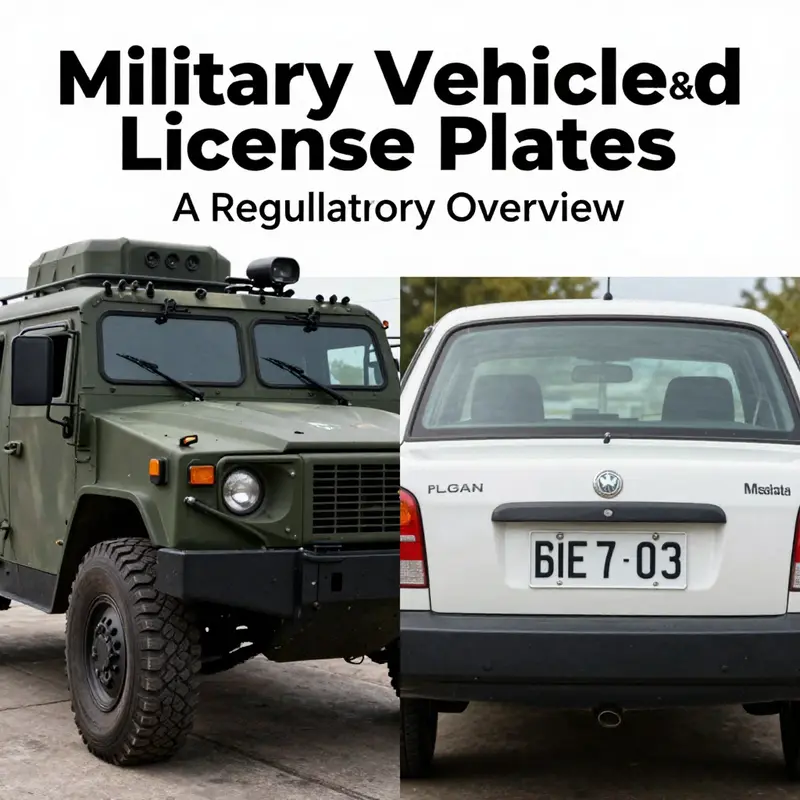
The question of whether military vehicles should display license plates sits at the intersection of legitimacy, oversight, and the balance between operational needs and the public’s confidence in road rules. In China, military plates signal official status within the civilian traffic ecosystem, carrying exemptions and privileges that reflect national defense responsibilities while demanding rigorous verification to prevent abuse. Since 2013 reforms introduced more secure plates and strengthened verification, authorities have aimed to deter forgery, tighten registration, and ensure that only authorized military vehicles enjoy exemptions from taxes, tolls, inspections, and certain parking rules. Yet counterfeit plates, forged identities, or vehicles painted in military colors continue to threaten public trust and the integrity of enforcement. The policy response emphasizes cross-agency cooperation, standardized data backbones, and robust authentication mechanisms to close loopholes and make illicit use costly and detectable. The broader public policy takeaway is that licensing for military vehicles is not a ceremonial privilege but a governance tool whose legitimacy depends on credible safeguards, consistent application of exemptions, and transparent accountability to civilian road users. External references and ongoing monitoring remain essential to ensure the system preserves public trust while allowing legitimate military mobility.
Guarding the Line: How Military License Plates Enforce Order and Foil Fraud
The issue of whether military vehicles should carry license plates is not merely a matter of administrative formality. It sits at the intersection of governance, accountability, and rule of law on public roads. In societies that rely on centralized authority to manage mobility, the visibility of a vehicle’s affiliation—military or civilian—on the road is a concrete signal of responsibility, compliance, and safety. In China, this signaling is formalized through military license plates that are distinct from civilian plates. They are issued under specific military regulations and are governed by authorities charged with the stewardship of military mobility, trackable and auditable in ways civilian plates are not. The underlying purpose is twofold: to identify vehicles that are under military control and to ensure that those vehicles move within the same framework of road usage, safety standards, and legal obligations that apply to all road users, albeit with the appropriate exemptions and privileges that come with national service and security concerns. The system is designed to preserve legitimacy for the use of force and logistics on civilian road networks while protecting the integrity of the state’s transportation network from abuse, misrepresentation, or exploitation by those who would seek to gain unwarranted advantages.
The regulatory architecture behind military license plates rests on clear delineations between military and civilian assets, and it starts with the authority that issues and oversees the plates. A dedicated military vehicle management authority administers the licensing process, ensuring that plates are issued only to vehicles that are genuinely owned or operated by the military. This is not a mere clerical step; it is an assertion of official status, backed by records and physical devices that align with broader security and traffic-control objectives. The plates themselves function as official identification, linking a vehicle to its unit, its lawful operator, and the specific permissions that accompany military use on public roads. They are not just decorative markers; they are part of a comprehensive regulatory package that includes compliance checks, maintenance of communications equipment, and adherence to safety and access controls that keep military operations from conflicting with civilian traffic management. The governance framework thus serves the dual aim of enabling legitimate military mobility while preventing any drift toward anonymity or impunity that could jeopardize public safety or national security.
Within this framework, licensing regulations extend beyond the mere issuance of a plate. They encompass a wider set of controls for additional equipment that may accompany the vehicle—alarms, sirens, and other signaling devices—designed to ensure that military operations on public roads remain identifiable, predictable, and in harmony with traffic rules. The presence of such equipment is not a cosmetic feature but a functional requirement that helps law enforcement and road users understand when a vehicle is performing official duties, what kind of priority or exemptions it may be entitled to, and how it should interact with civilian traffic norms. This attention to auxiliary equipment is part of a broader effort to prevent misuse and to preserve the value of the license plate as an instrument of accountability. When a plate is properly issued and paired with appropriate hardware and documentation, it closes gaps that could otherwise be exploited to evade inspections, tolls, or regulatory scrutiny. The intention behind these provisions is to create a transparent, auditable trail that makes it difficult for unauthorized actors to misrepresent military identity on the road.
Yet, even with a rigid framework, problems of misuse have emerged and tested the resilience of the system. Reports and investigations point to a troubling pattern: individuals have obtained or forged military license plates not for genuine military purposes but to gain illicit benefits. Some have attempted to secure exemptions from vehicle taxes or tolls intended to fund maintenance and infrastructure, while others have exploited gaps to evade routine vehicle inspections or parking restrictions. The most conspicuous manifestations of these abuses have involved smuggled or stolen luxury vehicles displaying counterfeit military plates, as well as overloaded transport trucks painted in army green that use military plates to bypass inspections and tolls. This is not a trivial fraud; it strikes at the credibility of the entire licensing regime and can distort the incentives that underwrite road safety, revenue collection, and regulatory compliance. When the public perceives that a badge of military affiliation can be misused for personal gain, trust in both the military institutions and the civil authorities responsible for road management erodes. The impact extends beyond individual scams, shaping how the road network is policed, how tolls are collected, and how penalties are applied when rules are breached.
To address these challenges, the government has pursued a robust crackdown. The response is multifaceted, combining stricter verification, enhanced monitoring, and severe disciplinary actions for those who violate the rules. Military drivers who fail to comply with license-plate regulations face not only internal discipline but also legal repercussions. This deterrent approach sends a clear message that the system is designed to be self-correcting and resistant to manipulation. Enforcement efforts are complemented by ongoing policy refinement, improved data sharing between military and civilian authorities, and a renewed emphasis on the integrity of the identification system on the road. The aim is not only to punish fraud but to strengthen the systemic protections that prevent it from occurring in the first place. In practical terms, that means more rigorous background checks, tighter controls on who may apply for and display military plates, and closer scrutiny of vehicles that are found to operate under suspicious conditions, such as mismatched inspection records, inconsistent plate numbers, or anomalies in the accompanying equipment. The broader objective is to preserve the credibility of the licensing framework and maintain the orderly coexistence of military and civilian mobility on shared road spaces.
This struggle against abuse resonates with discussions in other domains where license legitimacy is essential. For instance, debates about licensing integrity in related sectors underscore the universal importance of credible identification in ensuring public safety and compliance. The CDL cheating scheme exposed: public safety at risk serves as a reminder that when verification processes are bypassed or corrupted, the consequences ripple through the entire transportation ecosystem. Such examples, while not identical in detail, illuminate a common logic: where authority provides credentials, those credentials must be protected by rigorous verification, transparent procedures, and enforceable consequences for fraud. In the context of military plates, the same logic applies at a higher scale, because the identity attached to a vehicle on a public road carries implications for national security, traffic safety, and the equitable enforcement of laws that govern all motorized travel. The internal learning from these broader licensing debates informs how the Chinese authorities frame their response to military plate abuse. It reinforces the view that a license plate is more than a symbol; it is a system of trust that rests on accurate data, traceable ownership, and a clear chain of accountability.
In considering the structural purpose of military license plates, it is helpful to reflect on the broader social contract that governs road use. Civilian drivers are subject to inspections, tolls, parking rules, and safety requirements because a shared space demands predictable behavior and verifiable identity. When a vehicle communicates that it belongs to the state’s military apparatus, that message carries additional weight. It signals priority in certain operational contexts, discretion in sensitive situations, and a duty to cooperate with civilian authorities to minimize risk to the public. The licensing regime, with its specialized plates and associated equipment, is designed to balance these operational needs with the imperative of accountability. The crackdown on fraud is not simply punitive; it is restorative. It restores confidence that the rules apply equally to everyone and that those who operate under military authority on public roads do so within a transparent and enforceable framework. The ultimate goal is to sustain the legitimacy and effectiveness of military mobility while preventing abuses that could compromise safety, tax integrity, or regulatory compliance.
For readers seeking official policy updates and the formal statements that ground these actions, important sources include the processes and announcements from the PLA General Logistics Department and the Ministry of Public Security. These channels provide the authoritative context for how license plates are issued, what equipment must accompany a vehicle, and how violations are investigated and adjudicated. While the specifics of procedures are continually refined in response to evolving circumstances, the core principles endure: license plates must reflect genuine military status, be backed by accurate records, and be subject to rigorous enforcement when misused. The contemporary narrative thus revolves around a persistent tension between the need for controlled military mobility on public land and the necessity of maintaining a trustworthy credentialing system that deters fraud and protects the public interest. A robust enforcement regime is essential to preserve the balance between operational necessity and democratic accountability on the nation’s roads.
Internal link for related considerations on licensing integrity in connected sectors can provide further perspective on the broader ecosystem of credentialed mobility. See the discussion linked here: CDL cheating scheme exposed: public safety at risk.
As the chapter moves toward the next stage of the article, the central question remains: do military vehicles need license plates? The answer, grounded in current practice and the observed enforcement trajectory, is yes. They must bear plates that signify legitimate military use, under a governance regime designed to prevent abuse and to ensure that the privileges of military mobility are not subverted by fraud. The system hinges on the integrity of the entire identification chain—from plate issuance to the accompanying equipment and the associated regulatory obligations. When this chain is strong, the road network benefits from clearer accountability, more predictable enforcement, and a stronger public sense of safety and order. When it is weak, opportunities for illicit gain proliferate, eroding trust and inviting broader noncompliance. The ongoing crackdown embodies the state’s commitment to preserving that integrity, showing that the licensing of military vehicles is not a relic of bureaucracy but a living instrument of public safety, national security, and the rule of law on the open road.
External reference for policy context and enforcement actions: https://www.mps.gov.cn
License Plates Under Fire: How Special Military Identifiers Guard Operations and Public Safety
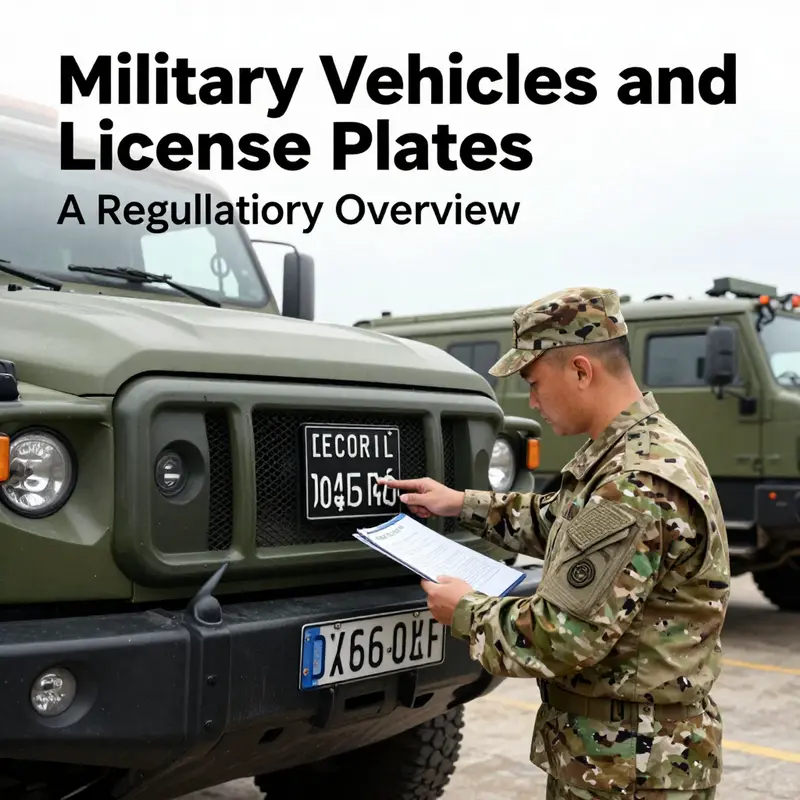
License plates are a familiar feature on every road, a visible badge of legality that signals ownership, authority, and responsibility. Yet when the plate belongs to a military vehicle, the symbol system shifts from civilian convenience to strategic tool. Across many nations, including China, military vehicles carry license plates that are purpose-built for military use. They are not merely decorative identifiers; they are part of a carefully managed framework designed to support urgent operations, enforce accountability, and preserve public safety. The plates function within a tightly controlled ecosystem that separates military mobility from ordinary civilian traffic while still harnessing the same broader logic of identification, traceability, and regulatory compliance. The distinction is subtle in appearance but significant in consequence. A plate that reads as one thing in a civilian context can carry different meanings when issued under military authority, and the implications ripple through road networks, logistical corridors, border checkpoints, and the perception of legitimacy in the eyes of the public.
In the Chinese context, military vehicles are required to display special military license plates. The design, issuance, and display of these plates are governed by strict regulations that exist outside the public registration systems that regulate private and commercial vehicles. This separation is deliberate. It helps ensure that military mobility can occur with the agility required by doctrine and operations, while still providing a traceable, accountable record of which vehicles are authorized to operate on civilian infrastructure. The underlying logic is not merely about stamping a number on a bumper; it is about creating a framework in which movement is auditable, routes are monitored, and access is controlled in ways that support both safety and security. When a convoy rolls along a highway or enters a port facility, the presence of a plate that signals military affiliation instantly communicates a legal status, a set of privileges and obligations, and a chain of accountability that is recognizable to traffic authorities and civilian observers alike.
The purpose of these plates extends beyond coarse identification. They help ensure that legitimate military operations can proceed with a minimum of friction while maintaining rigorous oversight. Vehicles bearing special plates are typically linked to specific authorizations, routes, and time windows. They may be granted access to restricted lanes, priority in certain tolling contexts, or exemptions aligned with national defense needs. But this privilege comes with responsibility. Military operators are expected to follow precise usage rules, maintain vehicle readiness, and comply with driver conduct standards that reflect the high stakes of defense work. The separation from civilian registration does not imply a lack of regulation; rather, it reflects a deliberate design to centralize oversight within military administrative channels while preserving lawful integration with the broader traffic ecosystem.
Design, issuance, and oversight of these plates are shaped by a broader regulatory philosophy. In practice, military plates are issued through internal systems that track vehicle assignment, unit affiliation, and the intended scope of operation. The design elements, such as color schemes, serial codes, and insignia, communicate essential information about the vehicle’s role and its command relationship without exposing sensitive operational specifics. This balance—between visibility for lawful identification and concealment of sensitive details when appropriate—helps reduce the risk of misuse while maintaining the public-facing accountability that road users expect. The effect is a quiet but powerful form of governance: a regularized mechanism by which the state can identify, verify, and, if necessary, intervene in military mobility on public streets and highways.
With such a system in place, the risk of misuse still persists if people attempt to imitate or counterfeit these plates. The research materials highlight a troubling pattern: individuals seeking to gain illicit advantages or to veil illicit activities sometimes obtain or forge military license plates for personal gain. In some cases, fake plates have been seen on smuggled or stolen luxury cars, or on overloaded trucks painted in army green to obscure their true identities and evade tolls, inspections, and taxes. The consequences of such exploitation extend beyond tax revenue and lane performance; they strike at the credibility of genuine military operations and can place the public at risk. A vehicle that appears to have military authorization but lacks legitimate backing undermines the rule of law and complicates enforcement for legitimate authorities. The public’s trust in the integrity of the road system depends on the ability to differentiate real military mobility from counterfeit or unauthorized activity in real time, a challenge that grows with scale and complexity when illegitimate use crosses jurisdictional boundaries.
To counter these threats, authorities have implemented a suite of enforcement and accountability measures designed to preserve the integrity of the license-plate regime while ensuring that military mobility remains functional. The Chinese military, for example, has established stringent protocols surrounding the issuance of military vehicle plates. These protocols extend beyond the mere allocation of numbers and colors; they encompass the allocation of emergency signaling devices—such as sirens—alongside robust monitoring of vehicle usage and driver conduct. Such provisions ensure that a military vehicle can respond quickly to urgent situations while remaining within the bounds of official authorization. The drivers and operators behind these vehicles are subject to penalties for violations, underscoring the seriousness with which authorities regard breaches of military plate regulations. This approach reinforces internal discipline within the armed forces and sustains public confidence that genuine military activity is properly identified and not exploited for illegitimate purposes.
The enforcement framework is not simply punitive; it is preventive. It includes continuous verification of vehicle credentials, routine checks of the plate’s legitimacy, and cross-referencing with official rosters to ensure that each plate remains tied to a legally recognized asset. When violations occur, responses are calibrated to deter repetition and to preserve the credibility of both the military and civilian enforcement communities. Such measures help prevent a breakdown in the information flow that connects plate identification to actual road safety. For the public, this means fewer opportunities for misrepresentation and a clearer signal when confronted by a vehicle bearing genuine, regulated military plates. For the military, it means maintaining control over a critical logistical asset, ensuring that movement orders and security protocols are not undermined by counterfeit plates or unauthorized use.
The public safety dimension of this regime cannot be overstated. On busy highways, toll roads, and border crossing points, clear, enforceable identification reduces the possibility of mistaken identity and helps police and traffic monitors make rapid, correct decisions. When a vehicle with legitimate military designation moves through a civilian traffic ecosystem, authorities know what special considerations apply: certain routes may be prioritized for convoys, certain times may be designated for sensitive movements, and certain traffic control measures can be employed to safeguard pedestrian and vehicle safety. The system also supports civil-military coordination by providing a predictable framework that civilian authorities can rely on when coordinating with military units, whether for disaster response, training exercises, or large-scale public events. In short, the license plate is not simply a tag; it is a control point in a complex web of public safety, operational readiness, and legitimate governance that requires constant vigilance and adaptive management.
From an operational perspective, the presence of a distinct military plate helps preserve the efficiency and security of military movements. Planners can route convoys along corridors that minimize interference with civilian traffic while maintaining an auditable trail of how and where a vehicle travels. Unit commanders can verify that the vehicles assigned to a mission are indeed the ones enhancing readiness and not inadvertently exposed to higher risk of diversion or misdirection. At the same time, the enforcement regime must be adaptable. The mobility footprint of the armed forces evolves with doctrine, training schedules, and international commitments, and plate regulations must accommodate these shifts without compromising safety or accountability. This tension—between flexibility for defense needs and rigidity to prevent abuse—drives continuous policy refinement, technology integration, and interagency cooperation. It also underlines a broader principle: the legitimacy of military mobility on public space rests on a transparent, verifiable system that the public can see and trust.
The discussion here ties into a wider conversation about how governments regulate vehicle identification in a modern, interconnected world. The same logic that governs civilian licensing and inspection programs informs the way military plates are managed, albeit with adaptations appropriate to defense requirements. For instance, the broader regulatory ecosystem shaping driver licensing in various jurisdictions—how licenses are issued, renewed, and revoked, and how compliance is verified—offers a useful point of comparison. This topic is explored in resources that examine state rules and their impact on licensing practices more generally, which helps illuminate why military registration must sometimes diverge from civilian norms while still adhering to core principles of accountability and road safety. See the discussion on state rules impacting driver licensing for a sense of how regulatory design aims to balance public safety with operational needs. State Rules Impact on Driver Licensing.
In sum, the question of whether military vehicles need license plates has a straightforward answer: yes, they do. But the plates are not just about labeling; they are forged into a durable, resilient system that supports command, safety, and the public’s confidence in the rule of law. The Chinese example demonstrates how plate design and issuance can be harmonized with emergency readiness, secure movement, and strict accountability. It also shows how misuse—whether through forged plates, illicit repurposing, or evasion of tolls and inspections—frustrates operational goals and erodes public trust. The response is a layered one: rigorous control over plate issuance, tight integration with monitoring and enforcement, and constant vigilance to adapt to evolving defense and security needs. The legitimacy of military mobility on civilian infrastructure depends on this intricate balance, a balance that weighs the necessity of rapid, flexible movement against the imperative to prevent abuse and preserve public safety. For readers seeking official corroboration of these regulatory tenets, the authoritative source remains China’s Ministry of National Defense, which outlines the principles and regulations governing military vehicle identification and use on public roads. External resource: https://www.mod.gov.cn/
Final thoughts
Military vehicles require unique license plates that serve a critical function in identifying and regulating military operations. Understanding the implications of misuse, including public safety risks and regulatory challenges, underscores the importance of stringent enforcement. As the government continues its efforts to combat fraud, it enhances the credibility of genuine military operations. Ultimately, these regulations serve to protect not only military operations but also the public, reinforcing the symbiotic relationship between authority and accountability.