
Driving a vehicle is a significant responsibility that comes with the legal requirement of holding a valid driver’s license. This crucial document symbolizes not only the permission to operate a vehicle but also the assurance that the driver has met specific standards of knowledge and safety. The necessity of a driver’s license varies across regions, but the common thread remains the need for legality and safety on our roads. This article will explore the reasons behind the requirement for a driver’s license, the potential legal consequences of operating a vehicle without one, and the variations in licensing regulations across different jurisdictions. By understanding these facets, new drivers, existing drivers, vehicle owners, and auto dealerships can grasp the importance of adherence to licensing laws.
The License Line: Why a Driver’s Credential Is Non-Negotiable for Safe, Legal Driving on Public Roads
A driver’s license is more than a card to stash in a wallet. It is a public declaration that the holder has met a threshold of knowledge, skill, and responsibility deemed necessary to operate a motor vehicle on the roads that everyone shares. It is the formal instrument governments use to translate a personal capability into a social safeguard. This isn’t a matter of personal convenience or preference. It sits at the intersection of individual competence and collective safety, a boundary that helps reduce risk for pedestrians, cyclists, passengers, and other drivers. On the surface, the license may look like a simple, bureaucratic milestone. Dig a little deeper, and you discover why it exists, how it is earned, and what it means when it is missing. The license encapsulates a history of road use that has always hinged on public accountability. When society first allowed motorized vehicles onto the street, there was a recognition that a shared space demands rules, boundaries, and predictable behavior. The license system formalizes that agreement. It is the public acknowledgment that a driver has absorbed the laws of the road, understands basic vehicle operation, and can make decisions that protect others in dynamic, high-stakes environments. This is not merely about passing tests. It is about establishing a credible signal that the driver has internalized essential habits—scanning for hazards, signaling intentions, maintaining control, and adapting to weather, traffic, and unforeseen events with a level of prudence that minimizes harm. The license, in short, is a social contract expressed in a credential. It marks the point at which private competence becomes a publicly verifiable standard. In many landscapes, the journey to that credential begins with a recognition that driving is a skill, not a privilege granted without scrutiny, and it ends with a legal acknowledgment that the person is ready to participate in traffic with others’ safety in mind. The chapter that follows this opening reflection links these ideas to concrete mechanisms: how tests are designed to reveal knowledge, how vision thresholds safeguard against impairment that could blind a driver to danger, and how the practical exam demonstrates the capacity to manage a vehicle under real-world conditions. It is a reminder that the license is built on accountability as much as it is on ability, a combination that helps maintain a system where operation of a vehicle remains a serious, honor-bound activity rather than a casual, unregulated action. In this broader frame, licensing becomes a core pillar of road safety, a structure through which the public signals trust in the driver and the state signals responsibility to the public. The requirements may differ by country, by state, or by region, but the underlying rationale holds: driving on public roads demands a baseline of knowledge, skills, and judgment that can be tested, certified, and enforced. When someone holds a license, others have a clear reference point—a verified standard to expect and hold to account. When someone operates a vehicle without a valid license, the system’s line is crossed. The penalties, the potential for deterrence, and the impact on insurance and liability all flow from the same core premise: driving is too consequential to be left to chance. The license thus serves as a bridge between personal autonomy and communal safety, a bridge that relies on ongoing adherence to rules, updates to knowledge as laws change, and a willingness to revalidate competency when required. It is a living instrument, not a static badge, because roads, vehicles, and human behavior continue to evolve. In this sense, the need for a driver’s license is not a relic of the early automotive era, but a continuing commitment to a shared standard of driving that keeps communities safer as speeds rise, traffic volumes grow, and technology introduces new ways of learning, monitoring, and enforcing driving behavior. The journey toward earning, renewing, and sometimes relinquishing a license mirrors the dynamic balance between individual freedom and public responsibility that defines modern road use. The license does not seal away risk, but it does reduce it by ensuring that the individual behind the wheel has demonstrated the capacity to anticipate, plan, and respond with a level of discipline that lowers the probability of harm. This is why the legal framework around licensing emphasizes not only the tests themselves but also ongoing accountability. In many regions, the validity of a license is tethered to conditions such as vision standards, medical fitness, and periodic renewals that reflect a continuing expectation of competence. The public interest rests on the premise that drivers who progress through the licensing process maintain their abilities over time. The focus extends beyond the moment of issuance into a lifecycle of driving where periodic checks, reexaminations, and adjustments reflect changes in health, perception, or experience. That lifecycle is essential because drivers do not operate in a vacuum. They travel through neighborhoods, schools, and workplaces where the safety of others depends on predictable, lawful behavior. In this sense, the license becomes a real-time signal to law enforcement and the public that the driver remains within the boundaries of assessed knowledge and skill. In short, the license is a practical technology for public safety. It standardizes competence, enables accountability, and creates an interface between the individual and the state that governs road use. The result is a system in which people can navigate shared space with a clearer expectation of behavior and consequences for unsafe actions. That clarity is invaluable in reducing unpredictable interactions on the road and in enabling clearer enforcement when violations occur. The chapter ahead will trace the mechanics by which this license is earned: the tests, the screenings, and the assessments that together shape the threshold between driving as a routine activity and driving as a regulated, monitored responsibility. It will also explore the consequences and competing pressures that influence real-world obedience to licensing rules, from the penalties of driving without a license to the broader question of how licensing adapts to evolving traffic realities. Across this terrain, one constant remains: a driver’s license is a public instrument designed to align private competence with public safety, ensuring that the act of getting behind the wheel serves the common good as reliably as possible. The discussion to come ties these structural elements to lived experience, showing how the license touches nearly every aspect of driving—from the day-to-day decisions behind the wheel to the legal implications when those decisions go wrong. And it draws attention to a simple, enduring truth: lawful driving depends on a credential that society has agreed is necessary to participate in the orchestration of traffic. It is a line drawn with care, one that both honors individual independence and safeguards the shared spaces where countless journeys unfold every day. The narrative thus moves from the abstract to the concrete, from the rationale for licensing to the tangible steps that bring a person from curiosity to credentialed driver, and from there to the day-to-day reality of living with the responsibilities that credential entails. In the end, the license is not merely a document but a commitment—one that confirms a driver’s readiness to contribute to a safer, more predictable road environment for all who depend on it. This is the core principle the chapter keeps returning to: the need for a driver’s license to drive a vehicle arises not from a desire to police personal freedom alone but from the imperative to protect lives in a shared public space. The practical tests, the vision checks, the behind-the-wheel demonstrations, and the ongoing accountability all exist to uphold that premise. The road, after all, is a shared institution, and the license is the public acknowledgment that each participant accepts a responsibility that goes beyond personal convenience. It is this shared responsibility that makes the licensing system a cornerstone of modern road safety, a point the narrative will continually return to as it threads through the norms, the processes, and the lived realities of earning and holding a driver’s license across different jurisdictions. In the pages that follow, readers will encounter a detailed view of how these elements come together in practice, how policies shape the practicalities of obtaining and maintaining a license, and how the public conversation about licensing continues to evolve in response to new technologies, shifting demographics, and evolving traffic patterns. The overarching theme remains clear: driving legally and safely hinges on a credential that reflects a vetted readiness to shoulder the complex responsibilities of operating a vehicle in a busy, diverse environment. This grounding sets the stage for a more nuanced look at the mechanisms by which licenses are earned, the safeguards that protect the public, and the consequences that follow when the line between lawful driving and unlawful operation is crossed. An appreciation of these dynamics helps illuminate why the license is a steadfast feature of transportation policy in most regions and why it remains a central question in discussions of road safety, personal autonomy, and public accountability. For those seeking a deeper dive into how state rules shape the licensing landscape, see the resource on the state rules impact on driver licensing. This connection underscores how legal variation across regions still converges on the same fundamental aim: to ensure that anyone who gets behind the wheel does so with knowledge, skills, and responsibility that make roads safer for everyone. As you move forward, you will find that understanding the need for a driver’s license is not merely about compliance; it is about grasping how a society organizes risk, trains citizens, and assigns accountability in the shared space of the modern roadway. External resources can provide official overviews of these standards and their ongoing updates. For a formal, authoritative overview, consult the U.S. Department of Transportation’s Driver Licensing page: https://www.transportation.gov/road-safety/driver-licensing
Unlicensed Driving: The Hidden Costs and Lifelong Risks of Skipping a License
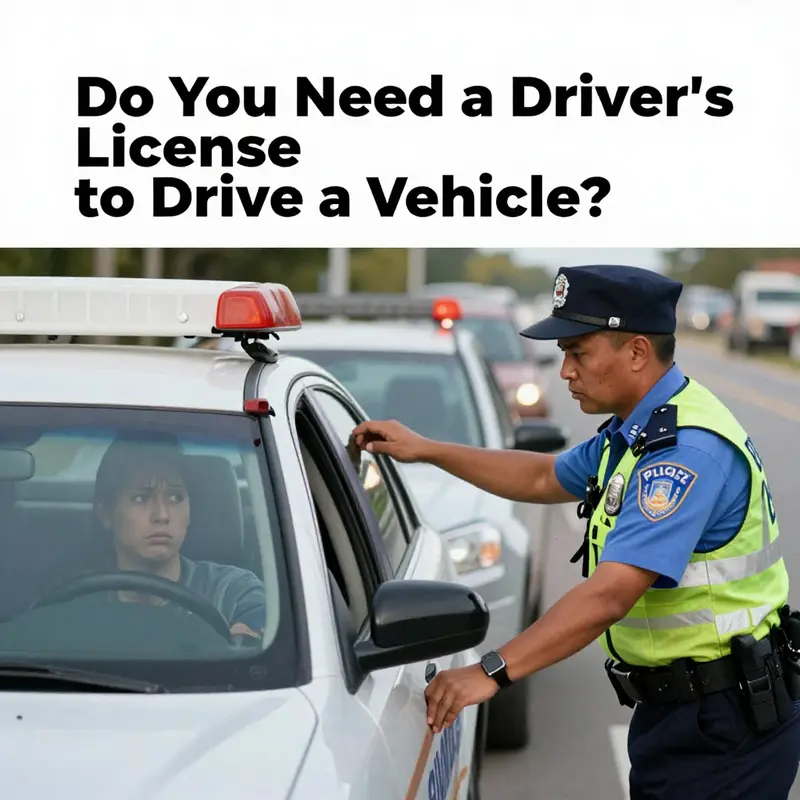
In every corner of the world, the act of operating a motor vehicle on public roads rests on a social contract that begins with a credential: a driver’s license. It is not merely a permit to drive; it is a formal affirmation that a person has demonstrated the knowledge, skill, and fitness deemed necessary to navigate complex traffic environments. This chapter opens with that premise and follows the thread into the legal labyrinth that awaits anyone who chooses to ignore it. While the specifics vary by country and even by region within a country, the core logic is consistent: driving without a license is not a minor infraction but a breach with potentially severe consequences that ripple across finances, personal freedom, and long-term life opportunities. The narrative here places a sharp focus on the Chinese context to illuminate how the law translates the risk into measurable penalties, while keeping the broader question in view: do you need a license to drive a vehicle, and what happens if you don’t have one?
The most immediate reality for someone who takes to the road without a valid license is administrative punishment. In China, the Road Traffic Safety Law governs this offense through Articles 19 and 99, which together frame the day-to-day enforcement landscape. On the ground, a driver found behind the wheel without proof of license faces a mandatory fine ranging from 200 yuan to 2,000 yuan. That range is not arbitrary; it reflects the authorities’ effort to calibrate punishment to the perceived seriousness of the offense and the offender’s history. A first-time slip might be treated more leniently than a repeat violation or one that occurs in conjunction with risky behavior or vehicular handling that jeopardizes others. Yet even at the lower end of the scale, the financial burden is real enough to deter casual risk-taking for most people who rely on a vehicle for work, family, or essential errands. In some cases, the penalty can extend beyond money: detention for up to 15 days can be imposed in addition to or in place of a fine. A period of administrative detention is not a mere administrative nuisance; it is a deprivation of freedom that interrupts daily life, work, and responsibilities. The possibility of detention becomes more likely for repeat offenders, for drivers who cause or threaten harm, or for those who attempt to obstruct law enforcement. And alongside fines and detention, the vehicle itself is not automatically free to proceed on its own. The public security traffic management department can seize the car until the driver provides proof of a valid license, or until the violation is resolved through administrative or legal channels. The immediate triad of penalties—fine, detention, vehicle seizure—has three components that reinforce one another: the financial sting, the risk of loss of liberty, and the practical disruption of mobility. Together they deter unlicensed driving in the most practical sense: they make the act costly and inconvenient at once.
But the financial and custodial penalties form only the surface of the legal risk. Driving without a license then enters the civil realm in the event of a collision. Civil liability in this setting is not a matter of a private debt-collection dispute that might be settled out of court; it is the transfer of responsibility for damages directly onto the unlicensed driver. If an accident occurs and the driver is unlicensed, the consequences can extend far beyond the immediate incident. The driver faces full compensation responsibility for all damages arising from the crash. This includes medical expenses for the injured, costs of property repair or replacement, and lost income for victims who cannot work while they recover. In this context, the insurer’s role becomes a crucial hinge. Insurance companies have broad powers to deny claims when the policyholder was driving without a valid license. The logic is straightforward from the insurer’s perspective: the policy is designed to cover risk that the insured is authorized to bear. If the insured action falls outside the license framework, the insurer may decline coverage, leaving the at-fault driver personally liable for potentially catastrophic sums. This dynamic can transform a traffic accident from a manageable incident into a financial catastrophe, with consequences that reverberate through mortgage payments, retirement savings, and family stability.
The civil risk compounds dramatically when injury or loss of life occurs. In such circumstances, the offense moves from civil liability into the realm of criminal liability. Under Chinese law, serious outcomes from a traffic incident carried out by someone driving without a license can reach the threshold of the crime of “causing a traffic accident” (交通肇事罪). The wording matters here: the crime does not require the same level of culpability or statutory harm as the more stringent offenses that apply to licensed drivers; it recognizes the significant harm that unlicensed operation can precipitate. A conviction for this offense can carry a prison sentence of up to seven years. The gravity of the sentence can escalate further if the driver fled the scene—an act that compounds harm with additional culpability and lengthens the path to legal accountability. The criminal potential is not a distant threat; it is a concrete, enforceable risk that becomes a central component of the case against an unlicensed driver, especially where serious injury or death occurs.
These penalties, however, are not merely theoretical. They translate into a lasting, sometimes lifelong, set of consequences that extend beyond the courtroom. A driving conviction of any kind can leave a permanent mark on a person’s record. In many jurisdictions, a record of illegal driving becomes part of a broader profile that potential employers, landlords, and financial institutions can access during routine background checks. The long-term impact is not limited to impressions of character or trust; it can affect practical realities such as eligibility for loans, insurance premiums, and even the ability to secure housing or certain forms of employment. In the Chinese system, another long-term consideration follows from the possibility of license revocation. If the offense results in a serious refusal or revocation, the law prescribes an extended waiting period before re-application for a driver’s license. Articles within the Road Traffic Safety Law outline that a revoked license cannot be re-applied for for a minimum period, typically three years. The three-year deferment becomes a structural barrier to reentry into driving life, effectively realigning a person’s daily routines, transportation options, and career paths for years.
Beyond the procedural mechanics lie the human dimensions of unlicensed driving. The targets of the penalties—drivers, passengers, pedestrians, and motorists alike—are not abstractions. Real people bear the weight of administrative detentions, medical emergencies, and financial liabilities. The penalties aim to deter reckless behavior and to ensure that driving competence is verified through education and testing rather than assumed through in-the-mild risk. The penalty structure also reflects a societal stance on accountability: when someone sits behind the wheel without the credentials that public safety systems expect, they are stepping outside a system designed to anticipate and mitigate risk. This is not merely a personal risk; it is a public risk with tangible costs borne by others, including healthcare systems, insurance pools, and public authorities who must enforce the law, investigate incidents, and manage the aftereffects of crashes.
The overarching logic of these penalties—administrative, civil, and criminal—frames the unlicensed driver’s world as a high-stakes environment where choices are quickly weighed against irreversible costs. The severity of the penalties, and their cascading effects on livelihoods and future opportunities, is intended to dissuade the impulsive decision to drive without a license. Yet the consequences also reveal a more nuanced picture: licensure is a threshold that keeps not just the driver accountable, but the broader road system itself institutions capable of supporting safe mobility. The license process—testing knowledge of traffic laws, proving competence behind the wheel, and meeting health and vision requirements—functions as an imperfect but essential safeguard. It seeks to ensure that competence is not assumed in high-velocity traffic but demonstrated through a standardized, accountable procedure. When that threshold is crossed without meeting the prerequisites, the whole system responds with penalties designed to reflect both the immediacy of the violation and its potential to cause harm.
From a policy standpoint, the China-specific framework illustrates why many regions reserve the most severe responses for those who bypass licensing and then engage in high-risk or harmful conduct. The risk calculus extends beyond the act of driving itself and considers the downstream effects: the burden on emergency services when unlicensed drivers collide with others, the possibility that unlicensed driving reduces the ability to claim insurance protection for victims, and the societal cost of criminal proceedings that follow a serious incident. The cascade of consequences—fine, detention, vehicle seizure, civil liability, and potential criminal conviction—reflects a layered approach to public safety that recognizes the fault line created by driving without credentials. In practice, those who contemplate such a path often discover the limits of this approach: the penalties do not just punish the act; they shape a person’s lifestyle for years and create a record that shapes future opportunities across multiple domains.
This chapter, while anchored in the Chinese legal context, also invites reflection on how the ethics and pragmatics of licensing operate in other jurisdictions. The core premise remains consistent: licensure serves as a verification of capability and a commitment to safety on shared roadways. The penalties for bypassing that system are designed to be proportionate to the risk—the more severe the potential harm, the heavier the penalties. Yet even where penalties differ, the practical consequences resemble one another in essential ways. Financial hardship, disruption of daily life, and lasting criminal or civil exposure are common threads that run through unlicensed driving cases around the world. The precise thresholds—how much a driver is fined, whether detention is available, how long a license may be suspended or revoked, and the exact scope of civil and criminal liability—depend on local law. The practical implication for readers is clear: if your goal is safe mobility and long-term personal security, licensing is not a hurdle to be endured but a protective framework worth engaging with fully and promptly.
To anchor this discussion in a sense of real-world risk and policy relevance, it helps to consider how different systems articulate licensing thresholds. Variations exist in how early a provisional license can be obtained, how vision and medical standards are enforced, and how the process of testing and issuance is structured. These differences matter for individuals moving across borders, for employers, and for policymakers evaluating how best to balance accessibility with safety. For readers seeking a comparative lens on how regions shape licensing requirements, a concise overview of how state rules impact driver licensing can be enlightening. See the analysis of State Rules Impact on Driver Licensing to explore how jurisdictional configurations influence who can drive, how tests are designed, and what consequences follow unlicensed driving in different settings.
The core message remains consistent across contexts: the license is more than a formality. It is the credential that anchors responsibility, accountability, and safety on the road. Driving without it is not simply a violation; it is a gateway to a cluster of penalties that can alter the course of a person’s life. The administrative penalties remind drivers that the act is illegal in itself, even before any collision or harm occurs. The civil liability dimension underscores a fundamental principle of traffic governance: harm suffered by others should be addressed and compensated, and if the driver lacks license-based protections, the cost does not vanish but transfers into personal liability. The criminal liability facet—where serious harm occurs—caps the risk with a potential prison term, highlighting how the state sanctions egregious deviations from the social contract surrounding road use. And beyond the immediate legal outcomes, the long-term consequences imprint a lasting barrier to re-entry into the driving world and can ripple into career prospects, housing, financial stability, and social standing.
These realities are not just legal abstractions; they shape everyday decision-making. The prospect of fines, detention, or seizure is a tangible deterrent for many would-be unlicensed drivers. The prospect of civil claims that could overwhelm a household budget is a reminder that safety requires collective accountability. The possibility of criminal liability adds a moral dimension to the risk calculus: driving without a license is not simply a personal gamble but a decision that can injure or kill others, triggering serious sanctions and lifelong consequences. In telling this story, it is not our aim to sensationalize, but to illuminate how a simple act—getting into a car and taking to the road—exists within a complex network of laws designed to preserve life, property, and trust in public safety systems.
In discussing these themes, it is important to recognize that laws evolve, and enforcement priorities shift with changing circumstances. The penalties described here reflect a particular legal framework and historical context. They also reveal a consistent underlying principle across many jurisdictions: licensure is a gatekeeping mechanism that aligns individual capability with collective safety. The path back from unlicensed driving is rarely a quick or easy one. It requires navigating administrative processes, potentially re-taking tests or meeting new prerequisites, and living with the consequences of a record and its impact on future mobility. For those who may be tempted to rationalize the risk, the chapter’s through-line remains stark: the price of driving without a license is high and long-lasting, and the safer choice is to invest in the license, begin the process of qualification, and commit to driving only when legally cleared to do so.
External reading keeps the discussion anchored in authoritative sources. For the official legal framework within China that governs these penalties, see the Road Traffic Safety Law text and related provisions. And for readers who want a broader comparative lens on licensing rules and their enforcement, the broader literature and policy analyses across jurisdictions offer a complementary understanding of how different systems balance safety with access. External reference: https://www.gov.cn/zhengce/zhengceku/2022-12/16/content_5730883.htm
The License Line: A Global View on Who May Drive, How They Earn It, and Why It Matters
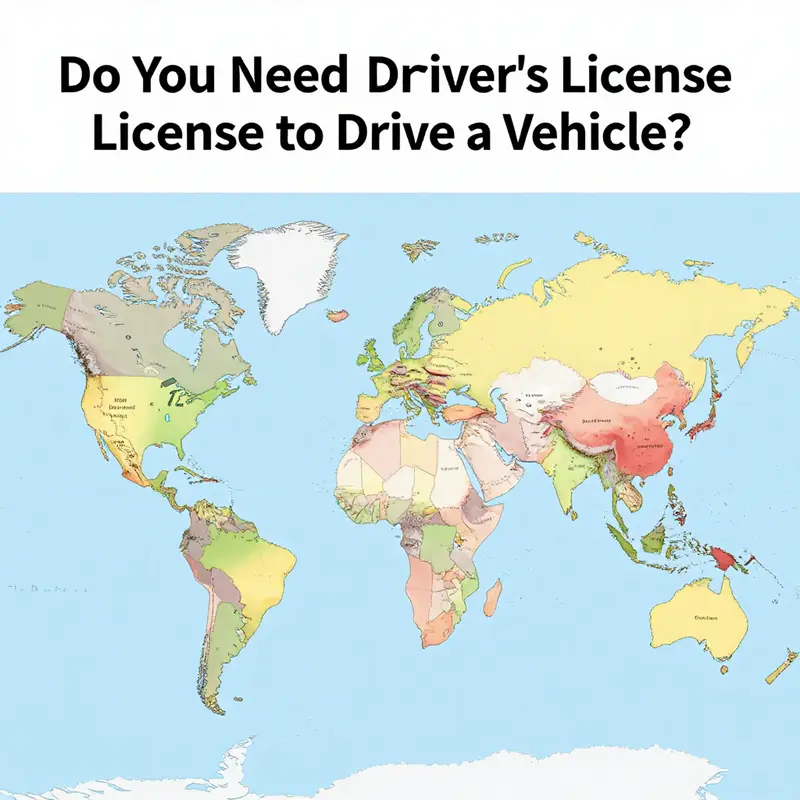
Driving legally requires a license that reflects a country’s rules for knowledge, skill, and fitness to operate a vehicle in public.
Across regions, licensing thresholds vary because laws, cultures, and road realities differ.
This chapter surveys how age requirements, testing regimes, enforcement, and ongoing education shape access to driving, and what these differences imply for road safety and mobility.
A driver’s license is a social contract between the individual and the public: it certifies readiness to share road space with others, while accountability and oversight help maintain safety.
Where the barrier to licensing is high, driving becomes a regulated privilege; where it is low or uneven, unlicensed driving can rise.
We examine notable regional patterns, including age gates (18 in many places, with earlier or staged paths in some regions) and the balance between theory and practical testing, to show how policy choices influence risk, compliance, and mobility.
The chapter also discusses how international alignment might support cross-border travel while allowing local adaptation.
Finally, practical guidance is offered for readers relocating or traveling: verify local requirements, plan for training and testing, and recognize that licensing systems are designed to manage risk and sustain public trust in road use.
Final thoughts
In conclusion, obtaining a driver’s license is not merely a regulatory formality; it ensures that drivers have the necessary skills and knowledge to navigate the complexities of the road safely. The legal and personal consequences of failing to comply with licensing laws serve as a reminder of the seriousness of this responsibility. By understanding the requirements and variations in driver licensing, all road users—from new drivers to vehicle owners—can contribute to safer and more responsible driving practices. Emphasizing adherence to these laws benefits both individuals and society as a whole.