
Embarking on the journey to become a licensed motor vehicle dealer is an intricate process filled with specific steps and legal obligations. This path is vital for those aiming to thrive in the automotive industry. Understanding the complexities of state-specific requirements, establishing a legitimate business entity, meeting financial criteria, and navigating manufacturer franchise agreements can drastically improve your chances of success. Each chapter of this article will deepen your understanding of these essential aspects, ensuring you are well-equipped to launch your dealership successfully and comply with all regulations.
Navigating the Licensing Landscape: How State Rules Shape Your Path to Becoming a Licensed Motor Vehicle Dealer
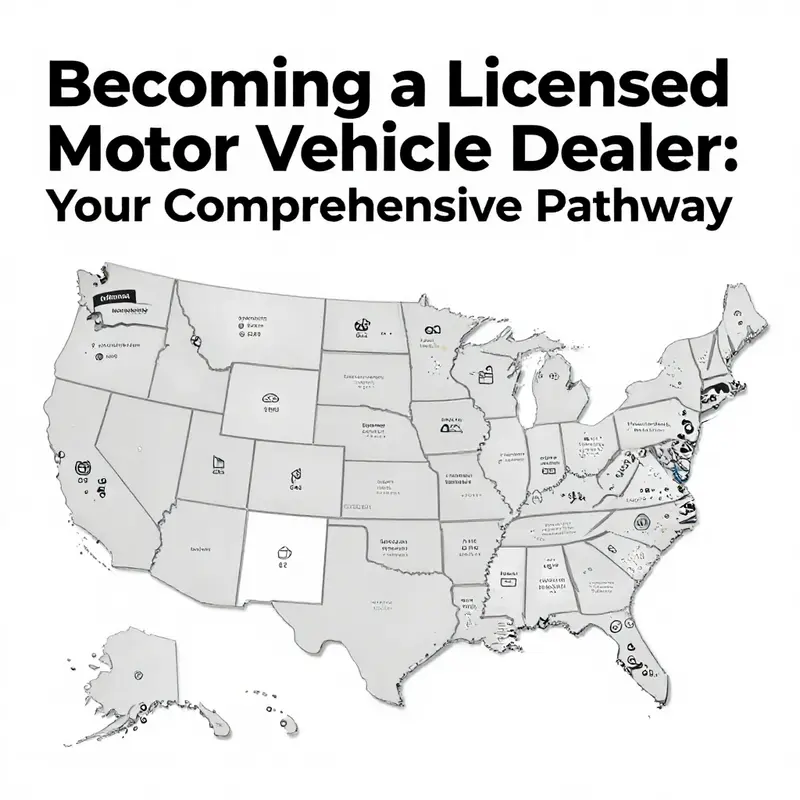
The path to becoming a licensed motor vehicle dealer unfolds as a multi-state journey. While the destination is the same—legitimate authority to buy, display, and sell vehicles—the route changes with every jurisdiction. This is not a single, one-size-fits-all checklist but a landscape defined by state statutes, regulatory priorities, and the practical realities of local markets. To thrive, aspiring dealers must learn to read the terrain: what each state requires, where the paperwork lives, how much financial cushion is needed, and what a compliant showroom really looks like in practice. The broad contours are consistent enough to provide a workable roadmap, yet the specifics—bond amounts, training mandates, and licensing timelines—vary enough to demand careful, state-by-state attention. A disciplined, organized approach can turn a daunting regulatory maze into a manageable program of milestones rather than a single overwhelming hurdle.
At the core of every licensing process is the requirement to establish a legitimate business entity. States expect you to form a legal structure—whether a corporation, an LLC, or a sole proprietorship—before you apply for a dealer license. The entity is not just a legal shell; it is the vehicle through which your business finances are managed, your liability is defined, and your dealings with customers are conducted. This step also determines how you will hold assets, sign contracts, and comply with financial reporting obligations that accompany the dealership business. It is common to encounter a parallel requirement to secure a separate business license from city or county authorities. In practice, this means coordinating with multiple layers of government from the outset, and recognizing that a delay in one licensing stream can stall the entire operation. The early focus on entity formation is not simply bureaucratic housekeeping; it sets the stage for the bonds, permits, and insurance that regulators will later scrutinize.
Another recurring pillar is bonding. Most states require a surety bond or an equivalent form of financial responsibility that protects consumers from potential fraud or misrepresentation. The bond amount is a function of state policy and sometimes the dealer’s intended scope of operations. In California, for example, the bond requirement is numerically explicit, and the bond amount becomes a tangible symbol of the dealership’s commitment to accountability. The bond is not merely a cost of doing business; it is a risk management tool that signals to regulators and customers that the business intends to operate with reliability and transparency. The process of obtaining and maintaining this bond—through a surety company or an approved insurer—also introduces ongoing compliance tasks, such as maintaining the bond in force and addressing any claims promptly. These obligations reinforce the broader truth: licensing is as much about safeguarding the public as it is about granting business rights.
Registration in the state’s revenue or motor vehicles department is another foundational requirement. Dealers must register the business, provide documentation of their legal status, and demonstrate compliance with local zoning and business practices. This registration often dovetails with background checks and financial disclosures. The background checks themselves are a common-sense safeguard; regulators want to ensure that individuals entrusted with selling vehicles—and handling customers’ money—are of good legal standing. A clean record is not a guarantee of success, but it profoundly affects applicants’ ability to move forward without delay. Some jurisdictions may combine these checks with a review of the proposed dealership location, ensuring that the premises meet regulatory expectations for safety, accessibility, and consumer protection.
Central to the licensing puzzle is the actual dealer license issued by the state DMV or an equivalent agency. The application tends to be detailed and time-consuming, requiring a thorough account of ownership structures, financial resources, and operational plans. Expect a non-refundable fee, which can range from a few hundred to several thousand dollars, depending on the state and the licensing tier. Beyond the financials, regulators typically demand proof of ownership or a long-term lease for the dealership premises, along with evidence of physical space that satisfies minimum display, office, and parking requirements. These location standards are not academic; they are the practical conditions that enable a legitimate, customer-facing operation. A well-prepared application package helps the regulator see that the business is ready to function according to state rules, protect consumers, and contribute to the local economy.
Financial readiness is a thread that runs through nearly every state’s licensing fabric, even when the explicit numbers differ. While there is no universal federal requirement, states and manufacturers—where applicable—often impose significant thresholds. For new-car franchises, particularly for brands with stringent brand standards, the capital outlay can be substantial. Inventory costs, showroom and facilities expenses, staffing, insurance, and working capital all factor into the dealer’s financial profile. Some jurisdictions impose minimum net worth requirements or liquidity tests to ensure the business can withstand typical market cycles and regulatory obligations. These financial gatekeepers are not punitive by default; they aim to ensure long-term viability, protect customers, and maintain brand and marketplace integrity. If you are planning to pursue a franchise, you should be prepared for a deeper dive into financial projections, credit history, and ongoing capital reserves.
In most states, the path also includes purchasing a surety bond as a formal consumer protection mechanism. The bond amount varies, but the principle is consistent: it creates a financial backstop against missteps in sales practices or other regulatory failures. The bonding process is more than a transaction; it is a public-facing affirmation that the business operates with accountability. Even for dealers who work only in used vehicles, the bonding requirement often persists as a baseline expectation. Recognizing the bond’s purpose can also help an applicant frame a robust compliance program—from recordkeeping to disclosures—to minimize the risk of claims that might jeopardize the bond and the license.
For those considering new-car franchises, the landscape becomes more intricate. Manufacturer franchise agreements—if you seek to sell specific brands—require not only financial strength but also a demonstrated track record, leadership capability, and an operations plan that aligns with brand standards. The manufacturer’s approval process can be highly selective and regional, resisting expansion into markets that fail to meet their criteria. Even in such cases, states can shape the feasibility by imposing location density requirements, facility specifications, and ongoing training expectations. This dynamic adds a strategic layer to planning: securing the right location, assembling the right management team, and building a facility that satisfies both regulator and brand expectations. It is a multi-year, multi-faceted commitment that requires careful alignment of regulatory compliance with business strategy.
Training and education often sit at the interface of regulatory requirements and professional practice. Some states mandate pre-licensing courses or continuing education for dealers and sales personnel. These programs are more than rote compliance; they are designed to boost consumer protection awareness, honest advertising, and ethical sales practices. They also serve as a practical primer on how to handle disclosures, warranties, and customer rights. The requirement to train staff is a reminder that licensing is not a one-off event. It is part of an ongoing obligation to maintain standards, stay current with evolving laws, and uphold the trust that customers place in licensed dealers. The time and resources devoted to training should be viewed not as an expense but as an investment in long-term reputation and competitiveness.
Another anchor in the licensing process is the administrative infrastructure that supports the business’s operation—showroom space, an office with appropriate records, and parking to accommodate customers and deliveries. The requirement to secure a permanent physical location is more than an aesthetic preference; it is the visible commitment to a stable, service-oriented business. Dealers must demonstrate to regulators that their facility is suitable for customer access, inventory display, and administrative duties. The specifics of what constitutes an acceptable showroom can vary, with some states permitting modest facilities while others demand larger, brand-aligned spaces. In practical terms, this means early site visits, negotiations with property owners, and a clear plan for complying with safety and accessibility standards. The physical footprint becomes a tangible expression of the business’s seriousness and credibility in the market.
Once these structural pieces—the entity, bond, registration, license, location, and training—are aligned, the licensing journey shifts toward ongoing compliance and governance. Tax registration and sales tax collection are non-negotiable duties. Dealers must register with the state revenue department or equivalent agency, set up tax collection mechanisms, and file regular returns. The tax component is not merely procedural; it influences pricing, profitability, and cash flow management. A disciplined approach to accounting and tax compliance supports smooth operations, helps build lender confidence, and reduces regulatory risk over time. It is easy to underestimate how much financial discipline underpins successful dealership operations, but the reality is that a well-run compliance program can be as critical to profitability as competitive pricing or aggressive marketing.
The practical path through this regulatory terrain is rarely linear. It demands parallel progress on multiple fronts: legal, financial, logistical, and operational. A typical sequence begins with an honest assessment of the state’s requirements, followed by a formal business formation, then the procurement of necessary bonds, registrations, and licenses. Simultaneously, you should secure a suitable physical site, assemble a management team with clear roles, and begin the licensing process with the DMV or equivalent agency. If pursuing a franchise, you must engage with the manufacturer and meet their criteria, all while maintaining good standing with state regulators. Throughout this process, you will need to prepare and maintain a robust set of documents—proofs of ownership or lease, financial statements, background checks, insurance certificates, and details of the dealership’s planned operations. The better organized you are from day one, the more smoothly the review processes will proceed, and the less time you will spend in back-and-forth corrections, clarifications, or resubmissions.
An essential takeaway for anyone charting this course is the value of prioritizing official sources and verifications. The licensing landscape is dynamic; rules change, and updates can alter the cost, duration, or even viability of a dealership project. Therefore, the most reliable compass is the official guidance provided by the state DMV or the equivalent licensing authority, complemented by state revenue departments and, where applicable, manufacturer agreements. For a practical illustration of how these directions translate into real-world decisions, consider how state rules influence licensing choices and the overall feasibility of a venture. See how state rules impact on driver licensing for a broader view of how regulatory philosophy shapes licensing processes and expectations across jurisdictions. State rules impact on driver licensing.
In summary, the journey to becoming a licensed motor vehicle dealer is not a single leap but a sequence of calibrated steps, each anchored in state policy and public protection. It requires a disciplined preparation of business structure, bonding, registration, and location, followed by the regulatory diligence of license issuance, financial readiness, and staff training. The path is further complicated—and enriched—by the possibility of pursuing brand franchises, which introduce another layer of regulatory scrutiny and operational benchmarks. Yet, with a clear plan, a proactive approach to compliance, and access to official resources, aspiring dealers can transform a daunting regulatory proposition into a solid, sustainable business. The chapters that follow will build on this foundation by exploring the practicalities of preparing the physical dealership, assembling the management team, and coordinating the licensing timeline with financial and operational realities. For readers seeking a concrete example of how one state outlines dealership requirements, the California context offers a detailed framework that highlights the interplay between bonding, training, and the dealership’s record-keeping obligations. For broader, state-specific navigation, researchers should consult official DMV and revenue department resources to tailor a plan that fits their jurisdiction. As you map your path, keep in mind that licensing is both a legal obligation and a strategic asset—one that, when managed well, can set the tone for a trustworthy, customer-centric business in the competitive automotive landscape.
External resource: California DMV Vehicle Dealer Information provides official guidance on dealer licensing requirements and related procedures. California DMV Vehicle Dealer Information.
From Idea to License: Building the Legal Scaffold for Your Motor Vehicle Dealership

Establishing a motor vehicle dealership begins long before the first lot sign goes up. The idea of selling cars is exciting, but the legal framework that underpins every transaction, every finance agreement, and every customer interaction is what keeps a dealership viable, scalable, and protected. The decision about how to structure your business is the quiet engine of your entire operation. It shapes liability protection, tax obligations, financing options, ownership dynamics, and the ability to enter important contracts with lenders, service providers, and manufacturers. In many ways, the entity you choose will determine not only how you pay taxes, but also how you negotiate with banks for working capital, how you allocate profits among partners, and how you assign responsibility for compliance, risk management, and day-to-day management. The right choice helps you weather storms, seize opportunities, and position your dealership for steady growth rather than precarious survival. This chapter unpacks that choice, clarifying why most new dealers lean toward a particular structure while also acknowledging when another path might better serve a specific vision. It situates entity formation within the broader licensing journey, noting how your corporate skeleton intersects with DMV requirements, bond compliance, and the eventual ability to secure franchise rights or dealership agreements. The aim is not to advocate for a single universal recipe but to illuminate the practical tradeoffs so you can select, customize, and implement a legal framework that aligns with your goals and the realities of your state’s regulatory landscape. Your path to licensing begins with understanding the rules in your jurisdiction, and this foundation will influence every subsequent step you take toward becoming a fully authorized dealer. For licensing considerations tied to state regulation, you can explore how rules shape credentialing and compliance through resources focused on state licensing dynamics, such as the state rules impacting driver licensing resource.
Choosing and configuring the right entity is more than a tax or a paperwork ritual. It is a decision about risk, governance, and capital stewardship. In the simplest terms, you want a structure that protects you personally from the debts and liabilities of the business, while also enabling orderly growth, easy transfer of ownership, and transparent, auditable financial practices. The common options include sole proprietorship, partnerships, limited liability companies (LLCs), and corporations, with an additional consideration for S-corporation status in some cases. Each path carries its own logic and tradeoffs, and the choice is rarely dictated by a single factor. Instead, it emerges from a careful blend of how many people will own the business, how you want to manage it, how you plan to scale, and how you intend to treat profits, losses, and distributions for tax purposes. For most first-time dealers, an LLC represents a practical middle ground. It delivers liability protection that shields personal assets from the company’s obligations, offers flexible management structures that accommodate a single owner or multiple partners, and typically provides pass-through taxation that avoids the double taxation sometimes associated with corporations. Yet an LLC is not a one-size-fits-all solution. If you envision rapid scaling with a large equity base, or if you foresee complex equity arrangements or multiple rounds of investment, a traditional corporation or even a C-corporation structure might be more suitable. In those scenarios, the corporate form can facilitate stronger capital formation and a more formal governance model, though it brings with it stricter compliance, potential tax implications, and more elaborate administrative requirements. An S-corporation, where eligible, can offer similar pass-through benefits to an LLC but with its own set of eligibility constraints, including limits on the number and type of shareholders. The conversation around structure is not merely theoretical; it translates directly into how you will hire, how you will compensate, and how you will manage risk exposure in the many layers of dealership activity, from vehicle acquisition and inventory financing to customer financing and service operations.
To approach the decision with clarity, you should begin by mapping the practical realities of your plan. How many owners will there be? Do you want to manage the company yourself, or will day-to-day decisions be shared among several partners? What are your long-term goals for growth, including possible geographic expansion, multiple locations, or bringing in outside investors? How will profits and losses flow through to owners for tax purposes, and how will you structure distributions to align with your personal tax strategy and cash needs? These questions guide the structural choice and help ensure the entity you form aligns with both current requirements and future ambitions. While the economics of a dealership are compelling, they won’t matter as much as the integrity of the legal framework that supports them. A correctly chosen structure serves as a platform for lawful operations, clear governance, and enforceable contracts, including those with lenders, suppliers, and manufacturers should you pursue franchise opportunities.
The decision between sole proprietorship, partnership, LLC, and corporation hinges on a blend of risk, governance, and financial strategy. A sole proprietorship is the simplest path and can be tempting for a one-person operation looking to minimize initial complexity. Yet it offers no liability protection beyond personal assets, which means a lawsuit or debt against the business could imperil everything you own. A partnership extends that exposure to co-owners, making a clear partnership agreement essential to prevent disputes, misaligned goals, or unequal contributions, especially as profits are shared and decision-making power is divided. In both cases, personal liability is a defining risk; personal assets can be at stake in business obligations, from lawsuits to financial judgments. An LLC provides a meaningful shield, separating personal assets from dealership liabilities while maintaining flexibility in management and taxes. Members can decide who runs the business and how profits are allocated, and the IRS generally treats LLCs as pass-through entities for tax purposes, avoiding double taxation on profits that pass through to owners. The business still must meet certain formalities, but the ongoing administrative burden is typically lighter than that of a corporation. Corporations, by contrast, establish a formal governance framework with a board of directors, regular meetings, and detailed records. This structure can be advantageous for rapid growth, multiple owners, or complex equity arrangements, especially if you expect to seek significant outside investment or pursue large-scale franchise development. C-corporations face double taxation in many circumstances, while S-corporations offer pass-through taxation but impose limits on who can hold shares and how many shareholders you may have. The practical takeaway is that for most new motor vehicle dealerships, an LLC delivers the balance of liability protection, flexible governance, and tax efficiency that supports early growth and prudent risk management. If your vision includes public investment, a broader ownership base, or a highly regulated multi-location expansion, you may eventually transition to a corporate structure. Regardless of the path, you will benefit from documenting operating rules up front, drafting a lean set of bylaws or an operating agreement, and aligning ownership interests with a clear plan for distribution of profits and capital calls. These documents are not mere formalities; they establish expectations, define decision rights, and provide a roadmap for resolving disputes, all of which matter when you are negotiating with lenders, lease providers, and suppliers who will scrutinize governance and financial discipline as part of their underwriting.
The practical steps to bring your chosen structure to life are straightforward in sequence, but they require careful attention to state-specific requirements and timelines. First, you will need to select a unique business name that preserves your brand’s identity while complying with state regulations. This name must be registered or reserved with the appropriate state agency, typically the Secretary of State, to prevent conflicts with existing entities. The naming step is not merely cosmetic: in many states, it governs how your bank, customers, and suppliers perceive your business, and it can influence branding consistency across licenses and permits. Second, you will file formation documents appropriate to your chosen structure. For an LLC, this means Articles of Organization; for a corporation, Articles of Incorporation. These filings establish your entity’s legal existence and set forth essential information about ownership, management, and purpose. Third, you will obtain an Employer Identification Number (EIN) from the Internal Revenue Service. The EIN functions as your business’s social security number for tax reporting, employment, and banking purposes and is indispensable when you hire employees or open commercial accounts. Fourth, enable your governance framework by drafting the primary internal documents. An LLC should have an Operating Agreement detailing ownership interests, voting rights, profit sharing, and procedures for admitting new members or dissolving the entity. A corporation should implement Bylaws outlining board structures, officer roles, meeting cadence, and mechanisms for handling corporate actions. These documents set the standard for how the business will be run, how disputes are resolved, and how decisions are made in times of growth or stress. Fifth, secure the necessary licenses and permits to operate as a motor vehicle dealership. While specific dealer licensing rests with the state DMV or equivalent agency, many states also require a general business license from the local city or county authority. Meeting these local and state requirements signals your commitment to lawful operation and ensures you can legally display vehicles, process sales, and engage in financing programs. The process may involve background checks, evidence of financial responsibility, and, in some cases, bonds or surety obligations that demonstrate your ability to cover customer obligations and regulatory duties. Sixth, separate your personal and business finances from the outset. Open a business bank account in the entity’s name and maintain consistent accounting records. This separation is essential for liability protection and for clean financial reporting to lenders and regulators. As you build your accounting practices, consider engaging a qualified accountant or advisor who understands dealership operations, inventory management, and retail sales flow. They can help you structure depreciation and inventory accounting to maximize tax efficiency and cash flow management, a consideration that becomes particularly acute when inventory cycles and floor plans are part of your working capital strategy. Seventh, anticipate ongoing regulatory obligations that accompany your chosen structure. Depending on your location and business scale, you may owe monthly or annual reports, franchise taxes, or annual fees to maintain good standing. A registered agent might be required to receive service of process, and you must ensure your registered address remains accurate. The care you devote to these formalities today pays dividends in the form of smoother licensing processes, favorable financing terms, and fewer surprises in audits or reviews. Eighth, consider the insurance and risk management framework that will support your operation. A motor vehicle dealership confronts diverse risks, including property exposure, general liability, auto-related liabilities, workers’ compensation if you hire staff, and cyber risk as you handle customer data and online transactions. Your entity type influences which policies you need, how premiums are calculated, and how you allocate coverage among owners and managers. Ninth, prepare for long-range partnerships with manufacturers if you intend to sell new vehicles. Manufacturer franchise agreements often come with their own corporate prerequisites, including governance standards, financial strength metrics, location criteria, and management qualifications. In such cases, your entity’s structure and governance must align with those expectations, and you may need to demonstrate a solid operating history, credible capitalization, and a robust business plan to be considered as a franchise partner. While the path to franchising can be competitive and regionally constrained, the right legal entity acts as a credible, stable platform that manufacturers can trust when they evaluate your readiness to operate at scale. Finally, as you press forward, keep in view the ongoing need for compliance training and education for you and any leadership team. Some states require pre-licensing coursework or continuing education for dealership operators and sales personnel. This training reinforces the expectations surrounding consumer protection, advertising standards, and regulatory compliance. While these requirements vary, they are a recurring thread in the journey toward a licensed and trusted dealership, and they underscore that a strong entity structure supports—not substitutes for—professional development and ethical operations.
All these steps interlock with the broader licensing pathway, underscoring that your entity’s form is not a mere legal formality but a strategic instrument. The right structure provides a foundation for sound financial management, clear internal governance, and enforceable enterprise-wide controls. It gives you a platform on which to build a visible, credible brand that regulators, lenders, and customers can rely on. It also positions you to respond more effectively to the shifting regulatory landscape and market conditions that characterize automobile retail. As you schedule filings, name reservations, and organizational meetings, you will notice how each action reinforces the others: your entity structure supports your licensing posture, which in turn influences how you negotiate with suppliers and banks, and how easily you can attract skilled management and affordable financing. In this sense, establishing a legal business entity is less about choosing a label than about laying a durable, scalable foundation for the complex machine that is a modern motor vehicle dealership.
For deeper practical guidance on navigating these steps, consider consulting the U.S. Small Business Administration’s resources on forming and growing a small business. Their guidance can help you translate the legal and regulatory requirements into a concrete, executable plan that respects both state law and industry realities. In addition, to connect with authoritative, jurisdiction-specific licensing considerations, you can review the state rules impacting driver licensing, which highlights how licensing ecosystems interact with business formation and ongoing compliance: state rules impacting driver licensing. This awareness will keep you aligned with the permissions and responsibilities that accompany a licensed operation. As you progress, you’ll integrate these insights with the day-to-day work of building a dealership that stands up to scrutiny, earns customer trust, and endures the test of time.
External resource: For comprehensive, practical guidance on forming and growing a small business, you can visit the U.S. Small Business Administration at https://www.sba.gov. Here you will find checklists, templates, and expert guidance that complement state-specific licensing requirements and your chosen business structure. By weaving together the legal scaffolding with hands-on operational planning, you create a more resilient platform for your dealership—one that supports compliant sales, responsible lending, and a clear path to licensed success.
Solid Foundations: Financial Readiness and Surety Bonds on the Path to Becoming a Licensed Auto Dealer

Becoming a licensed motor vehicle dealer rests on more than paperwork and showroom appeal. It hinges on financial discipline, a clear plan for capital, and the security net provided by a surety bond that protects the buying public. In many ways, the financial and bonding requirements are the quiet architects of a dealership’s credibility. They speak first to regulators and lenders, and only then to customers who walk onto a lot expecting to buy with confidence. The journey toward licensing, therefore, begins with a realistic assessment of what it will take to finance inventory, staff a competent operation, meet regulatory obligations, and weather the inevitable volatility of automotive sales.
At the heart of this journey is the surety bond. A bond is not a line of credit; it is a guarantee to consumers and the state that the dealer will operate honestly and can respond to claims arising from misrepresentation, failure to deliver, or other regulatory violations. Technically, the bond is a contract among three parties: the principal (the dealer), the obligee (the state DMV or regulatory agency), and the surety (the bonding company). If a consumer makes a valid claim that exceeds the dealer’s ability to resolve it, the surety may be called to cover the cost, up to the bond amount. The dealer remains obligated to reimburse the surety for any amounts paid out. This mechanism protects customers and creates a financial discipline that benefits the dealer in the long run by enforcing ethical practices and reliable operating standards.
The amount of the bond, and the financial requirements surrounding it, are not uniform from state to state. They reflect local consumer protection priorities, the level of risk regulators are willing to accept, and the scale of the dealership that regulators expect to oversee. In practical terms, most states set a bond range that starts around ten thousand dollars and climbs to well over one hundred thousand dollars for certain classes of dealers, such as new-car franchises or larger used-car operations. The exact figure matters because it becomes a ceiling for potential consumer claims and signals the state’s assessment of the dealer’s responsibility to safeguard customers and meet financial obligations. For example, in California, the bond landscape is more specific due to the size and diversity of the market. A new-car dealer typically needs a bond around fifty thousand dollars, while a used-car dealer’s bond is commonly twenty-five thousand dollars. Those figures may sound straightforward, but they sit atop a framework of daily operational realities that a prospective dealer must anticipate and prepare for.
Beyond the bond itself, many states require a minimum net worth or some form of financial capacity that demonstrates a dealer can cover significant, recurring business costs and potential liabilities. While there is no single universal federal standard, the logic is clear: regulators want assurance that a dealer has enough liquidity to purchase and sustain inventory, lease or own suitable premises, pay staff, and absorb the costs of service and warranty obligations, all while meeting bond obligations. Net worth requirements can be explicit—stated as a minimum threshold—or implicit, inferred from the bond amount and other financial prerequisites. Either way, they shape the capital plan that a new dealership must assemble long before the first vehicle hits the lot.
For someone entering the field, the practical implication is that the path to licensure is paved with financial planning that aligns with the bonding process. It is not enough to scrape together the cash for a few vehicles and hope the rest falls into place. You must demonstrate, on paper, that you have enough capital to weather slow months, to fund ongoing purchases of vehicles, to cover payroll and facility costs, and to respond to consumer claims without risking personal solvency. The bond is a safety net, but the net is built on the underlying strength of the business and its owners. This is why the bond amount and any stated net worth or liquidity requirements are considered foundational elements of the licensing process.
Preparing the financial foundation begins with a candid assessment of the capital stack you will bring to the venture. Inventory financing, facility costs, licensing fees, insurance, and working capital all require funding. Some state regimes also expect a reserve or operating cushion to remain in place even after the dealership has opened. A prudent plan accounts for the fact that it can take weeks or months before revenue from vehicle sales reaches a stable level, while expenses such as lease payments, utilities, payroll, and taxes continue on every month. In this light, the bond is not merely a regulatory hurdle; it is a mechanism that incentivizes prudent financial management. It signals to regulators and lenders that the business has the capacity to absorb shocks and continue meeting its obligations to customers and to the state.
The underwriting of a surety bond is rarely a one-and-done event. It is part of an ongoing relationship between the dealer, the bonding company, and, by extension, the state. The process typically begins with the dealer presenting a detailed application that includes business plans, ownership structure, lease or deed for the dealership premises, and a compilation of financial statements. The bonding company will review the applicant’s credit history, the business’s cash flow projections, and the balance sheet. Personal credit history often matters, especially for sole proprietorships or family-owned entities, but as the business grows, the emphasis shifts toward the company’s financials and the strength of its management team. The premium—the annual fee paid to maintain the bond—reflects the risk the underwriter perceives. Rates can vary broadly based on credit, the bond amount, the business’s sector experience, and the stability of the proposed operation. Common industry benchmarks place the annual premium in a range roughly from under one percent to several percent of the bond amount. A dealer with robust financials and a well-documented plan may enjoy more favorable terms, while newer ventures or weaker credit profiles can see higher rates.
For aspiring dealers, the practical steps to secure the bond begin long before the license application lands on the regulator’s desk. Build a solid financial narrative: organize tax returns for several years, compile profit-and-loss statements and balance sheets, and prepare cash flow projections that reflect realistic sales cycles and seasonality. Gather evidence of liquid assets, such as bank statements or lines of credit, that can reassure the underwriter of your ability to cover working capital needs. If the business is a new entity, your personal financial history often serves as a bridge to establish credibility, but as the company grows, you will want to demonstrate that the business itself can sustain the bond obligations independent of personal guarantees.
It’s also essential to align your capital plan with the specifics of the state you are pursuing. Although many states share a common framework—bonds, net worth, and license-related fees—the exact numbers and thresholds can differ. A dealer who intends to operate a new-car franchise in a populous state will face different financial requirements than someone starting a modest used-car operation in a smaller market. Understanding those nuances is not a luxury; it is a prerequisite. Early conversations with a reliable bonding agent or a financial advisor who specializes in dealership licensing can illuminate what the state will expect and what kind of collateral or reserves you will need to secure favorable bond terms. In some cases, the bonding company may require collateral or a personal guarantee, especially if the applicant lacks an established business history. You should plan for scenarios where the bond underwriter asks for additional assurances, such as audited financial statements, a business plan with milestones, or a demonstrable history of debt service and tax compliance.
This is precisely why many prospective dealers integrate their bond readiness with broader licensing preparedness. The bond, while a distinct instrument, is part of a broader architecture that includes forming the correct legal entity, securing a suitable dealership location, obtaining a business license, and building the financial bedrock that demonstrates to regulators and manufacturers that you are capable of operating with integrity and professional stewardship. It’s no accident that the licensing ecosystem emphasizes both financial strength and regulatory compliance. These elements work in tandem to minimize risk to consumers and to maintain the integrity of the market for new and used vehicles alike. When you view the bond as a strategic instrument rather than a mere compliance expense, you can align your capital plan with a realistic timeline for opening the doors of your dealership.
The interplay between bond requirements and other licensing steps also has practical implications for business planning. If you intend to pursue a new-car franchise in a brand-holder’s network, you will likely face additional criteria that touch financial readiness, location strategy, and managerial qualifications. Even if you start with independent or used-vehicle operations, maintaining a robust bond and healthy financials remains essential. The state’s oversight is designed to ensure that any dealership entering the market can meet ongoing obligations—customer restitution, compliance audits, tax remittance, and regulatory reporting—without destabilizing the consumer market. In this sense, the bond and financial thresholds are not obstacles to entry; they are safety rails that guide the business toward sustainable operation.
As you move through these considerations, you may encounter references to broader regulatory dynamics that affect licensure generally. The licensing ecosystem is interconnected; changes in driver licensing rules, vehicle inspection standards, or tax compliance can influence how regulators assess a dealer’s readiness. A candid note: state rules impacting driver licensing, among other regulatory shifts, can ripple through the licensing process for dealers. This is why many practitioners emphasize staying informed about the broader regulatory landscape as part of ongoing compliance. state rules impact on driver licensing
In addition to the bond and net worth, many states require ongoing education, periodic license renewals, and annual disclosures. A prudent dealer treats these obligations as part of a disciplined business rhythm rather than an episodic checklist. Keep the bond active and in good standing, maintain up-to-date financial statements, and renew your licensure on time. Regular audits, financial reviews, and proactive risk management can help you anticipate regulatory questions before they arise and avoid costly delays or penalties. Importantly, this disciplined approach pays dividends in the market. A dealership that can demonstrate solvency, a reliable claims history, and a stable financial footprint often enjoys smoother interactions with lenders, insurers, and manufacturers, which in turn supports smoother onboarding for franchise opportunities or expanded inventory financing.
For those seeking concrete, state-specific guidance, California’s framework provides a path to understanding how bond amounts map to licensure expectations and how to prepare the accompanying financial documentation. The California DMV’s vehicle dealer bond information page offers a focused reference point that codifies many of the principles described here. While California presents a particular case due to its large market, the underlying logic—bond as consumer protection, net worth as financial credibility, and ongoing compliance as a life-cycle requirement—applies across jurisdictions. You can review the state’s bond details here: California DMV Vehicle Dealer Bond Information.
In sum, the road to becoming a licensed motor vehicle dealer demands a careful alignment of capital, risk management, and regulatory readiness. The surety bond is not a unilateral cost; it is a lever that signals to regulators and the market that you are prepared to operate ethically and responsibly. The financial requirements—bond amount, net worth, liquidity, and capital reserves—are not arbitrary hurdles; they are the financial architecture that supports a business model capable of delivering reliable vehicles, timely service, and a fair, transparent buying experience. By approaching these requirements with a comprehensive plan that marries accurate financial forecasting with a credible bond application, you position yourself not only to obtain licensure but to sustain a dealership that earns customer trust, withstands market fluctuations, and grows over time with the same discipline that regulators expect. This is the core of credible dealer readiness: a solid financial foundation joined to a responsibly managed bonding framework, enabling you to serve customers well and to contribute to a stable, trustworthy automotive marketplace.
Franchise Frameworks and the Road to Licensure: How Manufacturer Agreements Shape the Path to a Legal Motor Vehicle Dealer

Becoming a licensed motor vehicle dealer is rarely a straight line from a paperwork stack to a showroom floor. The real texture of the journey lies in how a manufacturer’s franchise agreement threads together with state licensing rules, local zoning, and the financial muscle needed to sustain a compliant business. This chapter traces how franchise agreements function as a governing lattice for licensure, guiding not only whether you can sell new or used vehicles, but how you must operate once you have the license. It is a narrative about the balance between independence and obligation, where the car you want to sell sits inside a broader system designed to protect customers, preserve brand integrity, and ensure dealers carry the weight of compliance, capital, and capability that regulatory bodies demand. In practical terms, the agreement with the manufacturer often determines the prerequisites you must meet before you can apply for a state dealer license, and it shapes ongoing obligations during licensure, renewal, or potential termination. This intertwining of contract and license means that prospective dealers must view the licensing process not as a checklist of forms, but as a negotiation of standards—facility, inventory, staffing, and performance expectations—that regulators and manufacturers alike insist you meet. The federal landscape provides a backdrop for this negotiation, anchored most notably by statutes designed to curb unfair terminations and to require transparency in the relationship between franchisor and franchisee. The Automobile Dealers’ Day in Court Act (ADDA), enacted in the 1950s, is often cited as a guardrail against arbitrary or retaliatory actions by manufacturers. It protects dealers from termination or non-renewal without good cause, a standard that is interpreted within the specifics of state law and the particular franchise agreement. Yet the ADDA does not run the dealership’s day-to-day operations; it sets a framework that encourages fairness and predictability in how a franchise may be terminated or renegotiated. For anyone focused on licensure, this means recognizing that the manufacturer’s stance on franchise viability can become a gating factor in obtaining the license, and in maintaining it, if the approval to operate hinges on being deemed an appropriate and capable representative of a brand. A prospective dealer should therefore begin with a deep dive into the franchise terms—territory rights, performance expectations, facility standards, and the schedule of support and incentives—and align them with the licensing criteria that the state will evaluate. The interplay between franchise demands and state requirements is never abstract. In each jurisdiction, licensing authorities expect proof that the applicant can meet the operational standards the franchisor requires. These standards often map directly to the physical plant described in the license application: showroom space, office areas for contracts and compliance documents, and a suitable lot for vehicle display and customer parking. The alignment is not incidental; it is a core condition of licensure because regulators want to see a real, functioning dealership ready to deliver vehicles according to the brand’s service and sales standards. When the franchise terms specify a certain level of showroom exposure, inventory flow, and qualified personnel, regulators expect the business to be prepared to meet those demands from day one. That creates a practical sequence: secure land/building rights and a lease that satisfies the franchisor’s location criteria; then secure a business entity and a dealer license; then finalize the franchise agreement with the manufacturer, knowing that any misalignment can complicate or even derail an application. The exact content of franchise agreements can vary widely, but several common elements consistently influence licensure and ongoing operations. Territory rights, which may grant exclusive or non-exclusive sales rights within a defined geographic area, can affect where you are allowed to market vehicles and how you allocate inventory. Pricing policies and marketing support obligations determine how much control you must concede over advertising and promotional activities, a matter often scrutinized by state regulators to prevent deceptive practices. Service standards and training requirements specify how staff must be educated, how service bays must operate, and which certifications are mandatory for technicians and sales personnel. Each of these elements has a direct corollary in the licensure process: facilities must meet specifications, staffing must align with state rules and the franchise agreement, and financial plans must demonstrate the capital and working capital necessary to sustain the business at the brand’s expected level. The state-specific dimension of this equation cannot be overstated. California, New York, Florida, and other states each bring their own statutes and administrative rules that govern how a dealership is built, how many vehicles must be kept in stock, and what disclosures must be provided to customers. In California, for example, the vehicle licensing framework includes explicit facility and licensure criteria that dealers must satisfy before a license is issued. In other states, statutes might emphasize franchise disclosure requirements or dispute-resolution mechanisms embedded in the relationship between dealer and manufacturer. The variety among jurisdictions means that a dealer must not only prepare a strong business plan and solid corporate structure but also anticipate the specific franchise terms that the chosen state will scrutinize during the licensure review. The franchise agreement can also influence the dealership’s access to new vehicle inventories, which in turn affects capital planning and the ability to meet market demand. Manufacturers, as gatekeepers of supply, may condition terms on demonstrated access to a stable inventory supply, robust credit facilities, and a proven track record in sales and service. If a franchisor requires a minimum level of inventory or a certain mix of new versus pre-owned vehicles, the dealer’s license application will be judged in light of whether the business model can sustain those requirements. This is not simply a theoretical concern; it translates into the need for substantial upfront capital, secure long-term leases or ownership of premises, and a credible plan to manage working capital. The economic reality is that becoming a dealer—especially one that handles new vehicles from a major brand—often entails substantial investment in inventory, facility construction or adaptation, and staff development. Some states or manufacturers set minimum financial thresholds, net worth requirements, or liquidity targets. Even if the federal framework does not enforce a single universal financial floor, the combination of state law and brand requirements can place a high bar on capital readiness. Here the franchise agreement becomes a decision-making compass. It tells you not only what you must promise to do but also what you must be able to fund. The dealership’s loan packages, surety bonds, and insurance lines are navigated in light of the franchise terms, because financiers and surety providers will want to know that you can sustain both the volume and the service standards demanded by the brand while remaining compliant with state licensing rules. The surety bond, a common requirement across many states, is both a safeguard for customers and a signal to lenders about the operator’s commitment to lawful, fair dealing. The bond amount varies by state and can reflect the franchise agreement’s expectations about customer protections, inventory handling, and disclosure obligations. From a licensing perspective, this bond is not a mere checkbox; it is a financial instrument that signals credibility and risk management readiness, which in turn can influence whether you are approved to operate and under what conditions you hold the license. Given all these layers, preparation for licensure requires a disciplined, integrated approach. Prospective dealers should engage with legal counsel who understands automotive franchise law, as well as state regulatory processes. Legal counsel can help interpret the fine print of the franchise agreement, identify clauses that may affect licensure, and flag potential conflicts between franchise terms and state requirements. Early counsel also helps in shaping a negotiating posture with the franchisor. For example, you may negotiate alignment between facility plans and the franchise’s expectations for showroom, office, and parking space. You may seek clarity on exclusive territories or on performance obligations that could trigger franchise terminations if unmet. Your due diligence should verify that the dealership premises meet specific criteria in the franchise and in the state’s licensure standards, including lease terms, health and safety compliance, accessibility, and environmental considerations. An important practical step is to assemble a robust business and financial plan that demonstrates capacity to implement the franchise terms while meeting ongoing regulatory obligations, such as sales tax collection, reporting, and periodic audits. This plan should translate into concrete documents for the licensing authority: a proof of physical location, a detailed floor plan, projected inventory levels, staffing grids, and a clear outline of the compliance program that will govern sales, financing, and service activities. It is also crucial to understand that disputes can arise between the franchisor and dealer, sometimes delaying licensure or complicating renewal. The federal framework discourages arbitrary actions, but enforcement and interpretation of “good cause” can hinge on state courts or regulatory agencies. Disputes concerning contract interpretation, performance metrics, or alleged breaches can stall licensure processes or threaten continued operation even after licensure has been granted. For this reason, prospective dealers should approach franchise negotiations with a risk-aware mindset, ensuring that timelines for construction, licensing, and enrollment align with the franchise’s expectations and state deadlines. The broader regulatory ecosystem also expects dealers to stay current with changes in franchise terms. States periodically update statutes, and manufacturers periodically revise terms to reflect market conditions, brand strategy, or operational realities. Staying aligned requires ongoing due diligence and a readiness to adapt both the business model and the compliance program. As you move through the licensure process, a thread connecting all milestones is the need to harmonize expectations across multiple actors: the state licensing authority, the franchisor, financiers, and, ultimately, customers. A misalignment—such as a building that cannot meet showroom standards or a staffing plan that falls short of the franchise’s training prerequisites—can jeopardize the license or the brand relationship. Hence, the license is not merely a permit to sell; it is a recognition that the dealer will operate within a defined ecosystem, where accountability, performance, and customer protection are not optional add-ons but core competencies. For readers navigating this terrain, consider this practical guidance: start with a comprehensive assessment of the franchise terms and how they align with state licensing criteria. Build a presentation for the licensing authority that demonstrates equivalency between the franchisor’s expectations and the state’s requirements. Prepare a transparent capital plan that shows you can meet both the upfront and ongoing financial commitments, including inventory, facility upkeep, staff training, and bonding. Seek counsel with attorneys who specialize in automotive franchise law, because the interplay between contracts and regulation creates a specialized landscape where precise language can prevent costly missteps. In short, the path to licensure is a negotiated journey across legal regimes and business imperatives. The franchise agreement does not merely specify how you can sell; it defines what you must be able to prove you can do to earn and keep the license. This perspective helps you anticipate roadblocks, structure your negotiations, and present a credible case to regulators and financiers alike. And it keeps the focus on the central objective: creating a compliant, customer-focused, financially sound operation capable of delivering value to the brand and to the community it serves. For dealers who want a clearer map of these regulatory contours, a deeper dive into how state rules interact with licensing—and how those rules shape the content of franchise agreements—can provide important context. For a broader understanding of the federal perspective on automotive franchising and enforcement practice, see the U.S. Department of Justice resource on Automotive Franchise for authoritative guidance and enforcement considerations: https://www.justice.gov/civil/automotive-franchise. Additionally, to connect this chapter with practical policy discussions and related regulatory implications, consider reviewing the focused state-level discussions that explore how franchise terms map to licensing requirements and operational readiness within your jurisdiction, including this concise overview on state rules impacting driver licensing: state rules impacting driver licensing. This internal reference can help align your expectations with the realities of licensure and the obligations you will undertake once your license is issued. In the end, licensure is less about crossing a single threshold and more about sustaining a compliant, well-capitalized, and well-managed enterprise that can deliver on the brand promise and protect the consumer—every day in every transaction. The franchise agreement is the instrument that makes that vision possible, and understanding its implications is an essential discipline for any aspiring dealer who seeks to operate within the framework that state regulators require and manufacturers demand.
Final thoughts
In conclusion, becoming a licensed motor vehicle dealer involves navigating a complex landscape of regulations, financial responsibilities, and strategic business decisions. By understanding the state-specific requirements, establishing a sound business entity, complying with financial obligations, and effectively negotiating franchise agreements, you can position yourself for success in the automotive industry. This guide offers a solid foundation for your journey, empowering you to take the necessary steps towards operating a licensed dealership with confidence.