
Disposing of vehicle license plates is an important step when selling, scrapping, or transferring your vehicle. Each scenario requires specific actions to be taken to comply with local regulations. For new drivers and learners, understanding this process is crucial to avoid penalties or legal issues. For existing drivers and vehicle owners, it ensures that their obligations are fulfilled when parting with an old vehicle. Auto dealerships must also navigate these procedures diligently to manage inventory and customer relations effectively. This guide provides a detailed breakdown of how to properly dispose of vehicle license plates, encompassing the processes involved in selling your vehicle, scrapping it, and ensuring all requirements are met. Each chapter will contribute to a comprehensive understanding of license plate disposal—making sure you have the knowledge to proceed confidently.
From Sale to Reassignment: Navigating China’s Rules for Your Vehicle License Plate When You Sell
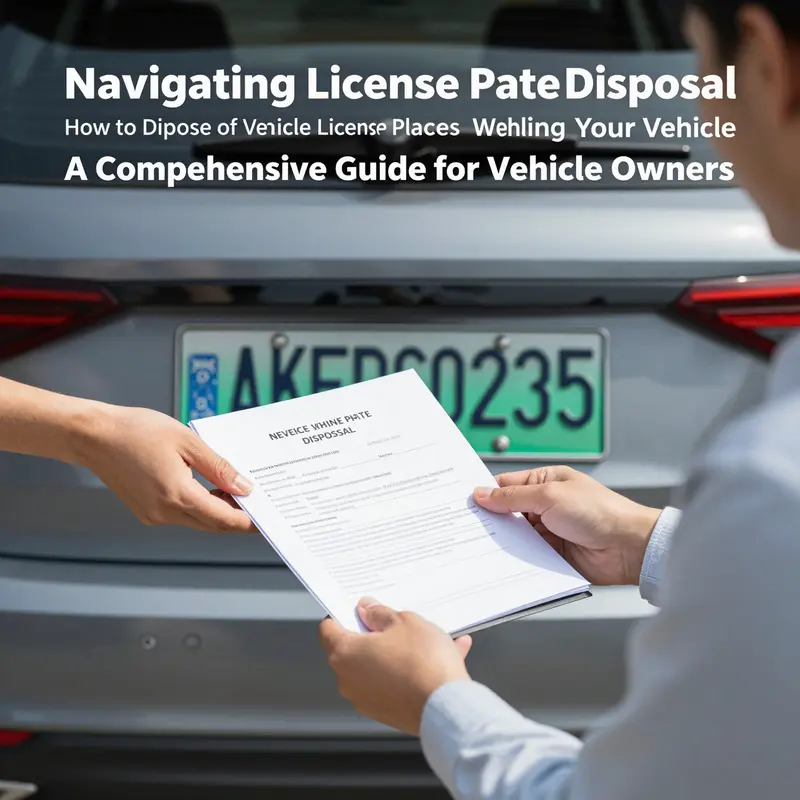
When you decide to sell a car in China, the fate of the license plate is not a side detail—it is a central part of the transfer process. Plates are not personal property; they are a public resource tied to the vehicle’s registration and to the licensing system that the government administers. As a seller, you will encounter a set of options and obligations that can feel intricate, but when followed carefully they keep the process legal, orderly, and efficient for both you and the buyer. The core principle is simple: the plate follows the vehicle, not the person, and in most circumstances a plate cannot be privately sold or transferred to the new owner. This principle shapes every available path after the decision to sell. The most common outcomes revolve around whether you intend to keep the plate for future use, whether the buyer wants to reuse it, or whether you simply let the system reclaim and reissue the plate to the pool of available numbers. Across China, local regulations do vary, and not every option is open in every city. The national framework, however, provides a clear set of steps and considerations that apply in most jurisdictions and offers a reliable road map for you to follow. To begin, imagine the act of selling as two intertwined processes: transferring ownership of the vehicle and determining the plate’s next destination. If you plan to keep the plate, you enter a retention pathway; if you and the buyer agree that the plate should stay with the car but you don’t want to retain it yourself, the plate may stay with the vehicle through the sale with the new owner, depending on regional rules and whether the buyer and seller meet specific conditions. In many regions, the simplest and most consistent outcome when selling is that the plate is automatically canceled from the selling vehicle and becomes available for reassignment to another vehicle registered through the standard procedures. Yet even this straightforward-sounding step is governed by precise checks, including the status of any traffic violations or unresolved accidents related to the vehicle. An overlooked detail at the time of sale can complicate subsequent registration, so it is wise to approach the process with a comprehensive checklist in hand and a clear sense of how your local Vehicle Management Office (VMO) handles plate status after you deregister or deregister and transfer the vehicle.
One of the most important distinctions to keep in mind is literal ownership versus operational use. The license plate is a component of the vehicle’s registration record. When the vehicle is sold and ownership is transferred, the plate assigned to that vehicle is typically deemed no longer valid for the previous owner’s use. In practice, that means you, as the seller, should not expect the plate to be usable on a different vehicle you own in the future unless you go through the specific retention process. The retention option is neither universal nor automatic; it depends on several eligibility criteria and on timely action. If you meet the conditions, you can request to keep the same plate number for use on a new vehicle. If you do not meet the conditions, or if your regional rules do not permit retention, the plate is reclaimed by the VMO and reissued to the pool of available numbers for future registrations. The practical implication is straightforward: plan early, verify the retention window, and ensure your vehicle’s registration history is clean before you complete the sale. Any unresolved violations or accidents connected with the vehicle must be cleared before or during the transition, or they may impede your ability to retain the plate or to deregister smoothly. The emphasis here is on accuracy, completeness, and compliance with documented procedures. The local Vehicle Management Office or the Traffic Management platform will be your primary sources for the exact requirements and deadlines that apply to your city or province. A quick, practical note: you will often find that the retention window—if you are eligible—extends from a point within one year of the transfer and deregistration, sometimes up to two years in certain jurisdictions. This is where regional nuances matter most. If you intend to purchase a new vehicle and reuse your plate, you should coordinate with the registration process for the new car. The new registration can typically request to use the retained plate during its own registration steps. In this way, a continuous thread is maintained from your old vehicle to your new one, preserving your familiar plate number and potentially your preferred sequence or number.
The most common route for many buyers is the straightforward cancellation of the plate when the seller deregisters the vehicle and transfers ownership. In this path, the plate is officially reclaimed by the local Vehicle Management Office and becomes available for reassignment to another vehicle through normal registration channels. If you anticipate purchasing another vehicle in the near future and you wish to use the same plate, keep in mind the retention option described above and avoid letting the plate drift into the pool without action. The cancellation is not a punitive measure; it is simply the administrative step that closes the current registration of the plate with the old vehicle and frees the plate to be allocated anew. The procedure for cancellation requires that all records linked to the vehicle, including any traffic violations and accident reports, be fully settled. The integrity of your record is essential. When all issues are resolved, you present the required documents to the VMO, and the cancellation is issued. You will receive confirmation that the plate has been canceled and is no longer associated with the sold vehicle. This confirmation matters: it protects you from any unforeseen liability tied to the old registration and provides a clean baseline for the buyer’s registration process.
If your region allows the plate to be transferred to the new owner, you face a more delicate sequence. Some jurisdictions permit the plate to stay with the vehicle and be transferred, though not all. Where permissible, the new owner can apply within the required window to continue using the same plate number. This path often involves the presence and consent of both parties, documentation verifying identity and residency, and recognition that plate retention remains contingent on meeting eligibility criteria, which can include time-based restrictions and mutual agreement on the vehicle transfer. The technicalities can be complex because they intersect with regional policies, residency requirements, and the systems used by local DMVs or VMOs. To avoid missteps, you should confirm local options directly with your VMO and, if possible, obtain written confirmation of the approval status before finalizing the sale. In some cities, the option is readily available; in others, it is subject to stricter controls or may not be offered at all. This emphasizes a broader truth: the plate is tied to the local administrative framework, and that framework can differ from one city to another. The risk of assuming that a retained plate path exists in your area is real, unless you verify it with the administering authority.
In any scenario, the online channel provided by the national Traffic Management platform offers a convenient way to engage with the process. Through the Traffic Management 12123 app or website, you can initiate plate cancellation, check the status of your applications, and access service guidelines. The online channel is designed to streamline procedures, reduce the need for in-person visits, and provide up-to-date information about changes to rules or deadlines. Even if you prefer to handle matters offline, the online interface serves as a valuable reference point to confirm what documents you will need and what steps lie ahead. If you choose to pursue plate cancellation, the app will guide you through the required forms and the sequence of steps to ensure your registration is properly closed. If you seek a replacement plate or a replacement for a lost or destroyed plate, the same app can help you manage those requests and track their progress. In short, the national platform is a central, authoritative resource that complements your local VMO as you navigate the sale of your vehicle.
A nuanced but essential note concerns the possibility of a buyer requesting the plate. In most cases, private sale agreements in which the buyer pays for and takes ownership of the plate separately from the vehicle are not permissible. This is generally prohibited by policy, and the plate remains a component of the vehicle’s registration rather than a personal asset that can be detached and transferred privately. The legal and regulatory framework is designed to prevent the speculative transfer of plates, which helps maintain fairness and order in the plate allocation system. As such, even if a buyer expresses interest in keeping the plate, you should direct them to work through the official channels and the local VMO to confirm what is allowable. If the buyer insists on maintaining the same plate, the transaction should proceed with full compliance to regional rules and only through approved administrative steps. In practice, this means avoiding informal arrangements that bypass official procedures. The risk is not small: violations in this regard can lead to fines, penalties, and the invalidation of plate use.
For sellers who want to keep the plate for a future vehicle, the retention path remains a feasible option in many places, but the eligibility and timing are the keys. To determine whether you qualify, you will need to review your vehicle’s history, confirm that all traffic violations have been resolved, and verify the window within which you must apply. This is where the local VMOs’ guidance becomes indispensable. Because regional policies can diverge on whether a two-year retention period is allowed, or whether a one-year window applies after deregistration, you should approach the matter with careful planning and a readiness to adapt to local rules. The practical takeaway is to treat plate retention as a conditional privilege rather than a guaranteed outcome. If you meet all the criteria and complete the required steps within the specified window, you can retain your plate and reuse it on a future vehicle, preserving your number and any personal significance it may hold. If you fail to meet the criteria or miss the window, you can still deregister and surrender the plate to the VMO, knowing that it will re-enter the pool of numbers available for new registrations.
The scrapping route offers a different and equally structured pathway. When a vehicle reaches the end of its life and is taken to a licensed scrap yard, the process becomes more formal and its impact on the plate is direct. The yard conducts an inspection and dismantling process, and it issues a specific certificate—the Vehicle Scrap Recycling Certificate—upon completion. With this certificate in hand, you must present yourself to the local VMO along with the vehicle’s registration certificate (the registration book), the license plate itself, your driving license, and the Scrap Recycling Certificate. The VMO then validates the documents, cancels the vehicle registration, reclaims the plate, and issues a cancellation receipt. The cancellation receipt is a critical document that confirms the plate’s discharge from the old vehicle and its withdrawal from any future use by you under the former registration. It serves as proof that the vehicle’s registration was closed in accordance with the rules and that the plate is no longer associated with the dismantled vehicle. It is important to complete this whole sequence within any legally mandated timeframe after the scrappage threshold is reached. If the scrappage process lags or the required steps are not completed in time, the VMO may issue public notices to void the plate and related records. This is not a punitive tactic, but a regulatory action meant to prevent lingering, unresolved registrations and to maintain the integrity of the plate allocation system.
Across all these pathways, the common thread is that accuracy, authenticity, and timeliness are non-negotiable. You must present genuine documents, ensure that all vehicle-related records are clean, and avoid any attempt to manipulate or short-cut the system. The goal is a seamless transition that respects the public nature of license plates while accommodating reasonable needs—whether you want to retain a cherished plate for a future car, hand it back to the system for reallocation, or navigate a straightforward cancellation after sale. The regional variability means that a one-size-fits-all rule does not exist, but the core structure—clearance of violations, proper documentation, and alignment with the VMO’s processes—holds everywhere. The practical experience of many sellers who have navigated this path successfully is to begin with a clear plan, confirm the retention options as early as possible, and keep communication lines open with the VMO and, when relevant, with the buyer.
To support you in making informed decisions, the national platform provides practical, accessible guidance. The platform outlines the required documents, the expected timelines, and the procedural steps for each option. It is a reliable source for checking the status of your applications, and for understanding any changes to policy that may affect your city or province. When you prepare to sell your car, it is prudent to review these guidelines before you finalize the deal. A careful approach reduces the risk of post-sale complications and helps ensure that both you and the buyer proceed with confidence. Ultimately, the chapter you are reading is designed to help you move through the process with clarity and predictability, minimizing surprises and enabling you to make choices aligned with your personal preferences and regulatory realities. If you want to see how plate rules are applied in other jurisdictions, you can explore the discussion on how different regions handle driver licensing as a point of comparison: State rules impact on driver licensing.
For ongoing accuracy, always verify procedures with your local Vehicle Management Office (VMO) or consult the official Traffic Management 12123 platform, which is the national conduit for vehicle and driver services. The platform and the local offices work together to ensure that plate handling—whether retention, transfer to a new owner, or cancellation—follows standardized, transparent processes that protect both the public interest and individual needs. The chapter you have followed here is designed to help you navigate a typically practical and sometimes intricate administrative landscape, with a focus on legality, efficiency, and clarity. As you proceed, keep in mind that the ultimate objective is to ensure that your vehicle’s registration status is legally resolved, that your plate’s lifecycle is properly managed, and that the buyer’s registration can proceed smoothly without friction. The national, regional, and local authorities all share this imperative, and they provide the channels, documents, and deadlines that guide you every step of the way. If you want to verify or begin the process online, the Traffic Management 12123 app is a valuable starting point for these tasks, and it serves as a bridge to the in-person procedures you may need to complete. For official guidance and current rules, consult the official platform at 12123. And when you are ready to reference broader regulatory context or look for related information beyond the scope of vehicle plates, you may find useful insights in comparative discussions of licensing policies across jurisdictions. External resource: https://www.12123.gov.cn
From Plate to Paper Trail: Navigating License Plate Disposal When Scrapping a Vehicle
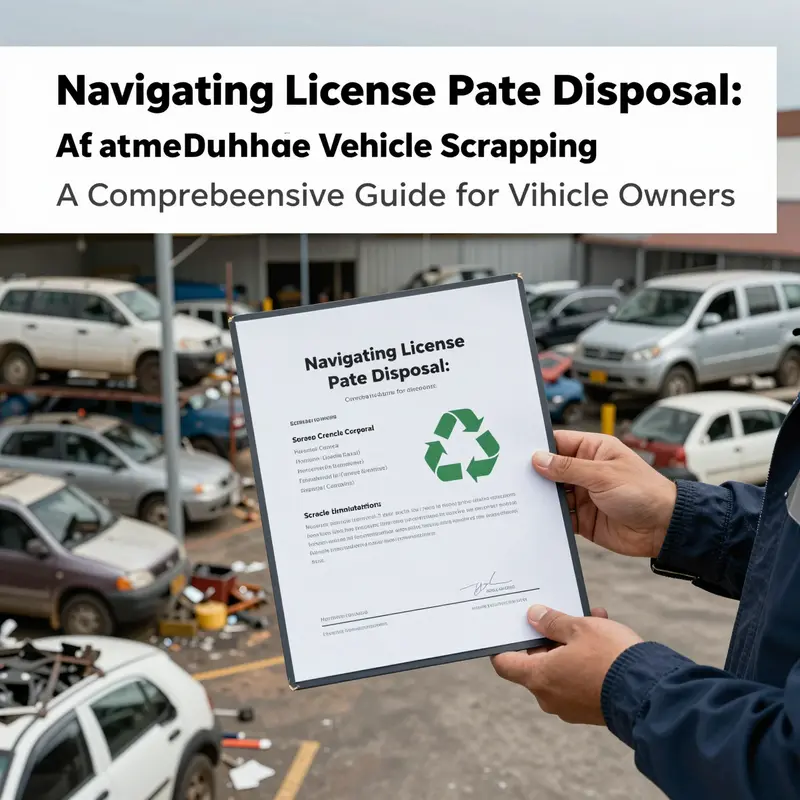
Note: The above chapters weave a continuous narrative of plate disposition during scrapping, with careful attention to official procedures, retention options, and the crucial distinction between cancellation and reallocation. Readers are encouraged to consult the national platform for the most up-to-date forms, guidelines, and site-specific variations before initiating any formal steps.
Legitimate Closure: Navigating the Key Requirements for Disposing Vehicle License Plates Across Jurisdictions
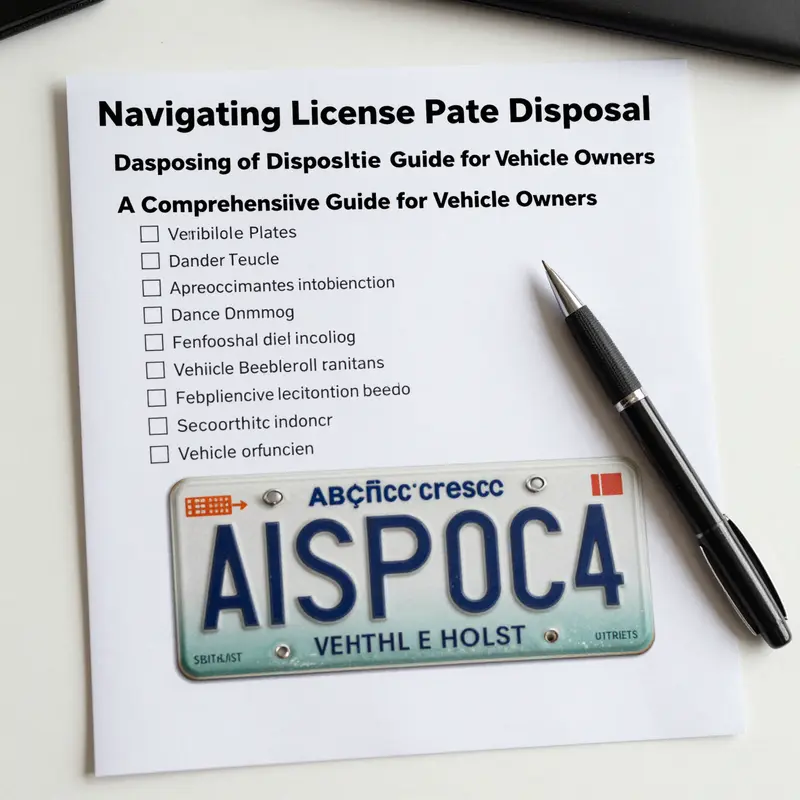
Disposing of a license plate is not merely a formality. It marks a deliberate closure of one chapter and a careful opening for the next. The act sits at the intersection of regulation, responsibility, and practical logistics. Whether you are selling a car, scrapping a vehicle, or transferring ownership, the central aim is the same: formally deregister the vehicle, reclaim the plate, and ensure the plate cannot be misused after it leaves your possession. The steps and terminology may differ from place to place, but the logic remains consistent. The path you follow hinges on your goals for the plate, the status of the vehicle, and the rules of the local motor vehicle authority. In a global landscape shaped by national and local regulations, the chapter that governs plate disposal demands a careful, patient approach rather than a quick, hopeful assumption that a plate can simply be discarded or handed off informally. The discipline of proper deregistration protects you from lingering liability and protects other road users from ambiguity on the street. The journey often begins with a clear understanding of the three main routes that people pursue when disposing of a plate: retain, transfer, or cancel. In many jurisdictions, including those with a strong digital footprint for vehicle management, the road ahead is defined by official platforms and formal documentation rather than ad hoc arrangements. The first choice, retaining the plate, is attractive to some sellers who plan to purchase a new vehicle and reuse the familiar number. The criteria tend to be strict: a minimum ownership period, a narrow window after sale or cancellation within which to apply, and a clean slate with regard to violations tied to the plate. The second choice, transferring the plate to the new owner, is often path dependent. Some regions allow the number to pass along to the buyer if both parties satisfy residency or relationship conditions and there is mutual agreement. Others do not permit plate transfers at all, reserving plates for the original owner’s future use. The third route, canceling the plate, clears the plate back into the pool for reassignment and requires that all prior infractions and unresolved incidents associated with the vehicle be fully settled. This option is the most universal in effect, because it explicitly severs the link between the plate and the old vehicle, reducing the risk of confusion or liability in the future. In many countries, a national or local platform consolidates the process under one digital umbrella. In China, for instance, the Traffic Management 12123 system functions as a national gateway for vehicle and driver services, including plate cancellations, lost plate replacements, and status checks. The platform helps standardize procedures that otherwise would vary widely across provinces and cities. The emphasis on an official channel is not merely bureaucratic habit; it reflects the aim to keep records precise, to prevent plate reuse on unregistered vehicles, and to ensure that every action is properly documented and traceable. When you embark on the disposal journey, the practical next steps flow from the chosen path. If the decision is to sell and retain the plate for future use, eligibility hinges on a combination of ownership duration, timing, and compliance with outstanding violations. The rule of thumb in many jurisdictions is that the plate can be kept if the vehicle has been registered in the same name for at least one year, and if you apply to retain the plate within a year of the transfer or cancellation of registration. There is often a window during which the original owner must act, and during that window all traffic violations and unresolved accidents tied to the vehicle must be cleared. If, after these checks, you buy a new vehicle within a specified period—often several months to a year—and your region approves, you may reuse the same plate. The caveat is explicit: this option is generally available only to the original owner and under strict eligibility terms. If the plate is to stay with the old owner only for a limited period, or if the new owner wishes to keep the plate, the local Vehicle Management Office or its equivalent must be engaged. In some regions, the transfer to the new owner is possible if both parties comply with the required conditions, such as verified IDs, residency, or a formal transfer agreement. Other jurisdictions do not allow plate transfers at all, instead treating the plate as part of the vehicle’s registration that must be reissued to the new owner or to a new vehicle entirely. When neither retaining nor transferring seems feasible, cancellation becomes the default option. Canceling a plate triggers a formal reclaim by the Vehicle Management Office and reintroduction of the plate into the general pool of available numbers. After cancellation, future vehicle registrations begin afresh with a new plate. Across all these pathways, a thread runs through every step: accuracy and completeness. The plain fact is that missing, inaccurate, or incomplete documents derail the process and invite delays or penalties. Regardless of jurisdiction, you will be asked to present a standard set of documents that verifies identity, proves ownership, and demonstrates that the vehicle’s legal status is clear of any outstanding issues. In China, this often includes your identification, the vehicle registration certificate, the license plate itself, and the driving license, complemented by proof of sale or scrapping where applicable. The national platform 12123 can guide the submission, provide service guidelines, and inform you of the status of your application. The emphasis on documentation is not arbitrary; it underpins the integrity of the plate management system. Without consistent and truthful records, the risk of plate misuse rises, as does the risk that a vehicle remains improperly registered, creating liability for the owner and potential danger to the public. The online option adds another layer of accessibility. The Traffic Management 12123 App offers a way to begin and monitor processes such as license plate cancellation, replacement or reissue for lost or destroyed plates, checking application status, and viewing service guidelines. This digital convenience helps align physical actions with online verification, ensuring that the moment of plate disposal is reflected in the official registry. Yet the online route does not erase the need for in-person verification or documentation in many cases. For example, while a formal cancellation can often be started online, the ultimate confirmation might require submission of original documents to a local Vehicle Management Office, or the presentation of a cancellation receipt that verifies the plate is no longer part of a registered vehicle. The practical choreography thus blends digital and on-site steps. A typical sequence might begin with assembling the necessary documents and identifying the disposal path—retain, transfer, or cancel. Next comes a visit to the local Vehicle Management Office to confirm eligibility, provide the documents, and receive the official cancellation or deregistration confirmation. If the plate is to be scrapped or the vehicle is to be scrapped as well, the process includes a certified scrap yard that issues a Vehicle Scrap Recycling Certificate, and a subsequent trip to the VMO to finalize the deregistration and plate reclamation. In a well-governed system, timing is not a mere afterthought but a central consideration. Time limits exist for different actions and may vary by city or province. For example, the recommended window to apply for retaining a plate after sale is typically within a specific period from transfer or cancellation, and the process must be completed before that window closes. Similarly, the scrapping pathway often carries a strict timetable. If the scrappage standards are reached but the owner delays, the VMO may declare the plate and documents void by public notice, a reminder that regulatory timelines enforce accountability as well as legality. The interplay of time and paperwork underscores a broader principle: the disposal of license plates is a transition that must be managed with foresight. The aim is not merely to erase the plate from a car but to preserve the integrity of the registration system. When the plate is canceled or recycled, the old number returns to the pool where it can be reassigned to a future vehicle, subject to the jurisdiction’s allocation rules. The implications are practical. If you attempt to privately sell or transfer a plate outside the regulated framework, you are courting penalties, fines, or other enforcement actions. Because the plate carries the registration identity of a vehicle, improper handling can blur accountability for traffic violations, insurance liabilities, or road safety responsibilities. This makes the official route all the more important. In China, the option to retain a plate requires meeting a set of eligibility criteria that protect both the owner and the system. The option to transfer to a new owner, though region dependent, reflects a recognition that some plates have enduring appeal or utility for someone else. The most universal approach—cancel and reclaim—addresses the risk of plates slipping into unregistered use, where misidentification and liability concerns multiply. Regardless of the chosen path, the core prerequisites are unwavering: resolve all traffic violations and accidents tied to the vehicle, submit genuine and complete documentation, and avoid private plate transfers that fall outside the law. The guidance is explicit in its caution, and the 12123 platform stands as a reliable portal for initiating these processes and understanding the nuanced rules across provinces and cities. The cross-jurisdictional nature of plate disposal becomes even more evident when one looks beyond a single country. In the United States, for instance, the deregistration step is the formal trigger that removes the vehicle from the registry. The Washington State example, drawn from the detailed results, shows the similar intent: to deregister the vehicle through the state Department of Licensing, to physically invalidate the plate by removing tabs and bending or otherwise rendering it unusable, and to complete the administrative checks with the relevant certificates and documents. The Washington pathway emphasizes that deregistration is not just a bureaucratic box to check but a process designed to ensure the plate cannot be misused in the future. The required documentation in such cases typically includes the vehicle title or registration certificate, the license plates themselves, the driving license, and a completed application form for vehicle registration, transfer, or cancellation. There is often a certificate of destruction or recycling when the vehicle is dismantled, and the process culminates in a formal deregistration confirmation issued by the governing authority. In some jurisdictions, this final confirmation is called a Vehicle Cancellation Notice or a Certificate of Deregistration and serves as the official proof that the vehicle and its plates have been removed from the registry. This cross-border texture—deregistration, plate invalidation, and official confirmation—highlights a shared logic across systems: the plate is more than a number. It is an instrument tied to road safety, accountability, and the public registry that tracks every vehicle on the road. The principle from every jurisdiction is consistent: do not improvise. Rely on formal steps, document thoroughness, and official channels. It helps reduce risk for you as the owner and sustains the integrity of the broader traffic management framework. The practical upshot for the reader is straightforward. Plan ahead, gather the necessary documents, and consult the official venue closest to your location—your local Vehicle Management Office or its digital portal—to confirm the exact requirements. The 12123 portal becomes particularly valuable when you must navigate regional differences, when you need to verify the current status of an application, or when you want to confirm whether you can retain a plate or must cancel it. It is the bridge between a local practice and a nationally coordinated standard. And while the domestic template may differ across provinces and counties, the underlying discipline remains: treat the disposal of a license plate as a formal, traceable, and responsible action. For readers who want to see how other jurisdictions handle the matter, a broader look at state level rules can be enlightening. The topic of how state rules impact driver licensing and plate management adds texture to this chapter, reminding us that local rules shape everyday decisions about ownership, registration, and plate reuse. For more on that broader landscape, you can refer to discussions on US states vehicle inspection requirements, which illuminate how different regions enforce compliance in related areas. US states vehicle inspection requirements.
As a final practical note, remember that the disposal path you select should align with the exact instructions of your local authority. In China, you should verify the current rules with your local Vehicle Management Office or with the official Traffic Management 12123 portal before taking action. If the process calls for online initiation, the 12123 app can guide you through the steps, keep you informed about status, and provide service guidelines to ensure you complete the process correctly. The combination of gatekeeping and digital support helps maintain a well-governed system in which plate numbers can be allocated to new owners and used responsibly, without the risk of misappropriation or misregistration. In closing, the act of disposing a license plate—whether through retaining a plate for future use, transferring it to a new owner, or canceling it for reissuance—should be approached with care, diligence, and respect for the regulatory framework that exists to keep the roadways safe and the registry accurate. The guidance offered here aims to illuminate the core requirements and the practical steps that an informed owner can follow, while acknowledging that local variations exist. When in doubt, begin with the official portal and schedule a consultation at the local Vehicle Management Office. The path you choose should reflect your intentions for the plate, your compliance with regional rules, and your commitment to operating within the law. For a broader, state-focused perspective on deregistration and related procedures, see the external resource linked here: https://www.dmv.org/how-to-deregister-your-vehicle.php
Final thoughts
Properly disposing of vehicle license plates is essential for legal compliance and to avoid unnecessary penalties. Whether you are selling your vehicle, scrapping it, or transferring ownership, understanding the procedures will help you navigate the process smoothly. Always ensure that any previous traffic violations are resolved, and all necessary documentation is complete before proceeding. By following the guidelines provided in this article, you can ensure a seamless transition when managing your vehicle’s license plate status, contributing to responsible vehicle ownership.