
Understanding how to identify vehicle owners through their license plates can be crucial for new drivers, existing drivers, vehicle owners, and auto dealerships alike. Whether you’re dealing with a parked vehicle that’s blocking your drive, involved in an accident, or simply curious, knowing the right channels to get this information is key. The following chapters explore legitimate methods: contacting local authorities for urgent needs, utilizing official online services designed for finding owners, and reaching out to insurance companies and property management for assistance. By navigating these resources effectively, you’ll gain the knowledge needed to address your vehicle-related inquiries responsibly.
Tracing a Plate to a Person: Legal Pathways for Identifying Vehicle Ownership Through Local Authorities

The impulse to uncover who owns a car simply by reading its license plate is strong, especially when a vehicle is blocking a driveway, repeatedly appearing in a busy crosswalk, or involved in a minor dispute. Yet the reality is more restrained. Personal information linked to a license plate is tightly protected by privacy laws in most jurisdictions. Public directories do not reveal owners; and the temptation to search through private databases or to hire unvetted investigators can cross the line into unlawful behavior. A chapter built around legitimate practice must start with this constraint. It should, in turn, illuminate the legal avenues that allow a proper authority to identify a vehicle owner when there is a justified and documented need. The narrative that follows ties concrete steps to a broader understanding of how official channels balance the rights of vehicle owners with the public’s interest in safety, order, and accountability. The result is a practical, ethically grounded pathway that keeps the process within the lines drawn by law and by professional standards.
First, the most straightforward and reliable route is to contact local authorities when there is an urgent or official reason. A car that obstructs a driveway, a vehicle that poses a hazard in a fire lane, or a hit-and-run incident demands immediate attention. In these scenarios, you are not seeking private information for its own sake; you are seeking assistance to restore access, secure safety, or facilitate a police report. When you call, you should be ready to provide precise identifiers: the exact license plate number, the color and model of the vehicle if you can describe them, the precise location where you saw it, and the time window of relevance. This information helps the responding officer or the traffic management unit search through official, authorized databases to verify ownership and to coordinate the proper next steps. Once the officers receive the information, they can determine whether there is a registered owner linked to that plate and whether notifications should be sent to the owner. In many systems, the goal is not to hand over personal details immediately but to issue a notice or to request movement of the vehicle. This approach preserves privacy while enabling a quick resolution to a concrete problem.
In practical terms, reliance on authorities begins with knowing how to reach them. In North America, dialing 911 is appropriate for emergencies and can connect you to police dispatch. In many municipalities there is a non-emergency line for traffic or parking issues, a route that avoids tying up emergency resources while still ensuring a formal record. Off the coastlines and in other regions, different numbers and procedures apply, but the underlying principle remains: an official request backed by a legitimate concern is the proper gateway to information that is otherwise protected. The same logic governs encounters in other countries, where traffic departments often provide centralized hotlines or online portals for reporting obstructions or violations. The key advantage of this path is that it leverages trained personnel and audited systems designed to protect both the public and private rights. It also reduces the risk of misidentification or miscommunication that can occur when information is pursued through informal channels.
A second route, equally grounded in legality, is to file a formal report with law enforcement following an incident or a dispute. This approach is particularly relevant when the matter is not an urgent safety threat but involves recurring disputes, suspected theft, or damaged property. The formal report creates an official record, a necessary precondition for any subsequent inquiry into vehicle ownership through sanctioned means. After you submit the report at a police station, your documentation — including photographs, witness statements, or evidence of the incident — becomes part of the case file. With that material, officers can initiate a targeted review of registration records through official channels. The legal framework allows them to access the motor vehicle registration or equivalent databases to identify the owner, but this access is not granted casually. It requires a legitimate purpose, clear documentation, and often the involvement of a sworn officer who can justify the request under the rules that govern access to personal information. The result is a transparent, accountable process in which the rightful owner can be contacted in a manner that respects privacy and due process. This pathway is especially important in civil or property-related disputes where a court or a prosecutor can align authorities’ actions with the specific legal claim at hand.
Beyond immediate police action, there is a formal mechanism available in many legal systems that allows a court to direct an investigation into vehicle ownership. This is a more procedural, yet equally legitimate, avenue. When a civil suit or a contested matter requires definitive proof of ownership, attorneys can seek an investigation order, sometimes called a subpoena or a judicial inquiry, from the appropriate court. The effect is to authorize the Vehicle Management Office, or the traffic police unit, to disclose the necessary ownership information to counsel. The availability and scope of such orders vary by jurisdiction, but the core idea is consistent: ownership data can be accessed lawfully where there is a concrete legal basis and a properly licensed professional guiding the request. The process generally demands rigorous justification, including the relevance to the case, specific identification of the plate, and a demonstration that other, less intrusive methods have been considered or exhausted. For readers who are navigating civil friction or disputes, this third pathway emphasizes that ownership data is not a casual commodity. It is a piece of evidence that can influence outcomes in court, and its disclosure is carefully guarded by procedural safeguards to prevent abuse.
A fourth, increasingly common, channel involves official government services designed to handle non-intrusive coordination, particularly in contexts such as parking enforcement or obstruction reporting. In some jurisdictions, structured online services exist that enable the public to report an illegally parked or obstructing vehicle and to request action without exposing private information. The key feature of these services is that they operate within the bounds of privacy protections. The system accepts a license plate and a contact method, then notifies the vehicle owner to move the vehicle. This approach respects the owner’s privacy while giving both parties a means to resolve a parking issue efficiently. It is important to verify that such tools are sanctioned by the local government and that they are intended for the specific purpose described. A useful principle here is to ensure that the use of these services aligns with the objective of preserving access, reducing hazards, and maintaining orderly streets and private properties. In regions where these services are available, they function as a bridge between the public need to solve a problem and the driver’s right to privacy; they avoid ad hoc, invasive attempts to locate an owner and instead rely on a documented notification mechanism that the owner can respond to without fear of being tracked or exposed to unauthorized third parties.
In addition to these channels, there are practical steps you can take when you encounter a vehicle that seems to violate local rules or create a safety hazard. If the car is parked in a private lot, for instance, the property management office or the parking facility staff are often empowered to address the issue. They typically maintain rosters of vehicles registered to residents or tenants and can help coordinate a response, which may include notifying the owner or arranging towing under the lot’s rules. This approach respects the rights of the owner while providing a clear avenue for enforcement within the context of the property. It also keeps you within the boundaries of what is permissible and auditable, which is essential if the situation escalates or if there is a dispute about the handling of the matter.
A note of caution runs through all these pathways. The urge to search for an owner through private databases, third-party apps, or surveillance is exactly what privacy laws aim to prevent. Such methods can trigger serious legal consequences, including breaches of personal information protections and potential civil or criminal penalties. The responsible course is to rely on official channels and to document every step of the process. If you pursue a formal inquiry or a court-directed investigation, keep precise records of communications, dates, and the outcomes of each action. These records will be valuable should your case require further legal validation or if questions arise about the propriety of the actions taken.
Within this framework, you might wonder how this works in practice across different jurisdictions. Local rules, the exact forms of authorization, and the thresholds for action vary, but the principle holds: ownership data are protected, yet accessible to authorities when there is a legally recognized purpose. The procedures often include safeguards designed to prevent abuse, such as verifying the incident details, requiring proof of legitimate interest, and limiting access to officials with appropriate clearance. This balance between privacy and accountability is the cornerstone of lawful interaction with vehicle ownership information. It protects everyone involved and allows for the efficient resolution of problems that affect the public’s safety and daily life.
For readers seeking more tailored guidance rooted in a specific legal framework, it is useful to consult official guidance that describes how authorities handle these requests. Some regions provide clear online pathways or public-facing portals that spell out the steps, the documentation needed, and the expected timelines. While these resources can differ, their shared purpose is to ensure that ownership information is accessed only through proper channels and for valid reasons. If you are navigating a case that involves a potential ownership issue, you can begin by contacting the local traffic management or police department, then follow up with any required reporting, whether through a formal report or a court-ordered process. If a non-emergency, non-urgent service exists to address a minor parking problem, consider using that channel as a first line of action to avoid unnecessary escalation.
In practice, the path from plate to owner is a carefully choreographed sequence. It starts with a clear statement of purpose and a precise record of the incident or concern. It proceeds through the appropriate official channel, with a readiness to provide documentation that supports the request. It may culminate in notifications to the owner, a resolution of the problem, or the preparation of a court-directed inquiry that yields the information needed for a legal remedy. At every step, the emphasis remains on legality, proportionality, and respect for privacy. This is not a shortcut to personal data; it is a structured process that recognizes the legitimate needs of individuals to maintain safety, order, and accountability on public and private property.
To deepen your understanding of how regional policies influence access to ownership data, you can explore the discussion on state rules impact on driver licensing. That resource offers a grounded perspective on how different jurisdictions construct their rules around information access, enforcement, and the preservation of privacy. It helps readers appreciate that while the basic pathways described here are widely recognized, the exact mechanisms, the required documentation, and the permissible purposes can shift with legal reforms or adjustments in local governance. The important takeaway is that the legitimate and responsible approach to finding a vehicle owner through a license plate is anchored in official procedures, not in private inquiries or speculative tracing. You can consult locally to confirm which channels apply in your area and to learn about any region-specific steps that govern how ownership information may be requested, disclosed, and used.
In addition to legal avenues, there is value in understanding the broader ecosystem surrounding vehicle ownership data. Municipal and national authorities often publish guidelines to help residents navigate these processes without exposing themselves to risk. These guidelines emphasize transparency, due process, and the protection of personal data. When in doubt, start with the most formal, verifiable route: contact the local police or traffic authority, file a formal report if the situation merits it, or pursue a court-ordered investigation if a civil or legal matter demands it. If a non-emergency service exists to address the issue, consider using it, ensuring that your actions are consistent with the intent of the service and with privacy protections. By following these steps, you maintain integrity while achieving a practical outcome: the ability to address neighborhood concerns or safety issues without compromising anyone’s rights.
As you move through this landscape, keep in mind the distinction between general curiosity and legitimate need. If your reason involves personal safety, immediate risk, or compliance with a legal process, you are more likely to be within the bounds of permissible action. If your aim is to locate the owner for reasons unrelated to safety or legal obligations, the prudent choice is to refrain from pursuing information outside the approved channels. The guidance above is designed to help you act responsibly, preserve privacy, and engage with authorities in a way that increases the likelihood of a favorable and lawful resolution. The best outcome is a quick resolution to the problem at hand, coupled with a clear, legally sound record of how the issue was addressed. In turn, this approach protects you, the vehicle owner, and the public at large from unnecessary risk or miscommunication.
For readers who want to explore official, region-specific options beyond this overview, a practical next step is to verify whether your locality offers a dedicated online service for car-related notifications. These services are typically designed to handle common, non- confrontational issues such as illegal parking and temporary obstructions. They usually require you to submit the license plate number and your contact details, after which the system will notify the owner to move the vehicle. This method reduces friction and accelerates resolution while staying within privacy and regulatory boundaries. If such a service is available, it represents a helpful first line of action before escalating to formal procedures or law enforcement. It also demonstrates how public systems can creatively address everyday problems without compromising personal information.
Finally, it is worth acknowledging the cultural and legal diversity across borders. The mechanisms described here are most effective when adapted to local law, language, and institutional practices. In some places, the state or national government may maintain centralized platforms or apps that streamline the process of reporting an obstruction or a violation and then channel the request to the vehicle owner through a privacy-preserving notification. In others, the process may be spread across multiple agencies, with jurisdiction determined by the location where the vehicle was observed. Regardless of the structure, the thread that runs through all legitimate approaches is clear: use official channels, provide accurate information, document your actions, and respect the privacy and rights of others. This disciplined approach not only increases the chance of a prompt resolution but also protects you from potential legal trouble that could arise from improper methods.
As you prepare to apply these principles in your own locale, remember the invaluable role of documentation. A well-kept dossier of the steps you took, the dates, the authorities you contacted, and the responses you received provides a solid foundation if the matter evolves into a formal inquiry or a legal proceeding. It also reassures any involved party that you pursued a lawful and responsible course of action. While the goal of identifying a vehicle owner can sometimes be frustratingly complex, the disciplined use of official channels rewards you with reliability, accountability, and the confidence that you are acting within the law. And if a regional guideline or an official portal offers a streamlined process, such as a one-click movement service for obstructing cars, it can transform a potentially tense encounter into a straightforward, transparent resolution. The path from plate to owner is not magical; it is navigable through sanctioned procedures that protect privacy while serving the public interest.
For readers who want to explore a regional resource that discusses how such procedures are framed within broader driver-licensing rules, consider the resource linked above about state rules impact on driver licensing. It provides context for how information access is shaped by policy, not just by the capabilities of individual agencies. And for those seeking up-to-date, official guidance on how to request ownership information or to handle a car that is blocking access, consult the government portal dedicated to traffic management. It is at this portal that you will find criteria, timelines, and contact channels that reflect current practice in your area. Practical, lawful steps, coupled with thorough documentation, yield the most reliable outcomes while upholding the rights of vehicle owners and the public alike.
To connect this chapter with real-world practice and further reading, consider consulting the local authority resources available in your area and following the official channels described. For readers curious about broader regulatory contexts, the external reference below provides direct access to authoritative guidance from the national traffic management framework. This reference supports the principle that ownership information is accessible only through appropriate, authorized processes, ensuring safety, privacy, and fairness remain central to any decision to identify a vehicle owner by license plate.
External resource: https://jgj.122.gov.cn
Internal reference for further context: state rules impact on driver licensing
From Plate to Policy: Navigating Official Online Channels to Link a License Plate to Its Owner
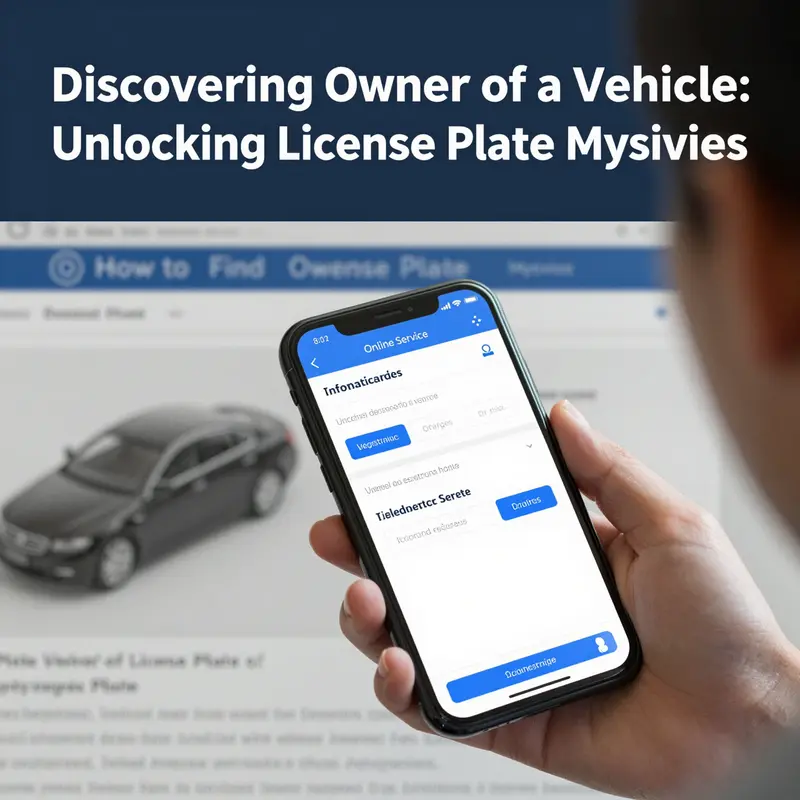
A license plate sits on a vehicle like a public signature, signaling that the machine is registered and roadworthy. Yet behind that plate lies a person whose name, address, and contact details are protected by privacy laws and distributed only through official, tightly controlled channels. In this chapter, we explore a practical, legal pathway that some jurisdictions provide for situations that require accountability—when a vehicle is blocking a driveway, parking in a reserved space, or otherwise creating a non-emergency disruption. The aim is not to reveal private information or to circumvent privacy protections, but to leverage legitimate, official processes that balance individual rights with the needs of neighbors, property owners, and public safety. The approach described here foregrounds caution, legality, and respectful use of public resources, and it does so in a way that integrates with the broader governance framework that governs driver licensing and vehicle records.
For readers who want to anchor this discussion in the broader tapestry of rules around vehicles and licensing, it helps to recognize that official online services exist within carefully drawn privacy protections. These platforms do not hand you the owner’s phone number or home address; instead, they channel a formal request through the appropriate database, triggering a notice to the vehicle owner and prompting responsible action. In many places, this means the notification is sent by the system rather than by a private party, preserving accountability while limiting exposure of sensitive data. The idea is simple at heart: create a verifiable, auditable mechanism for addressing a concrete nuisance, without turning every plate into a direct line of contact to the person who owns the car.
The most reliable, non-emergency pathway to initiate this kind of contact is an official online service operated by the local or regional traffic authority or government department responsible for vehicle management. The essence of the process is straightforward, even when the underlying data flows are complex. You access an official portal or a government-backed app, sign in with your own verified identity, and locate a feature designed for relocating or reassigning a vehicle that is blocking public or private access. The language may vary—one-click relocation, automated notification, or a dedicated parking-violation service—but the function remains consistent: you provide the plate number, specify the location, and attach evidence that supports your claim. This evidence is important because it helps the system verify that your request is legitimate and not the product of a misunderstanding or a prank.
The steps are pragmatic and user-friendly, which is essential for encouraging lawful use in everyday life. First, you obtain the official channel. In many regions, this is a trusted government app or a government-hosted web portal that is designed specifically for vehicle-related matters. The emphasis here is on official access rather than third-party services. Once you have the channel, you log in using your own personal information—information you’ve already supplied to the government in some form to obtain identification, eligibility, or access to public services. This login serves as a safeguard, ensuring that requests come from real people, not anonymous individuals who might misuse the system.
Inside the tool, you will typically find a dedicated function for situations where a vehicle needs to be relocated or moved to relieve obstruction. The process is not a search for an owner in the sense of a private investigator’s monograph. It is a controlled request that leverages the government’s vehicle registry in a narrowly defined context. You enter the license plate number, you specify the exact location where the car is parked, and you upload a clear image showing the obstruction. The required evidence is more than a casual snapshot; it should demonstrate a concrete impact, whether the car is blocking a driveway, impeding emergency access, or violating posted parking regulations. The app or portal then triggers a notification to the vehicle owner, typically through official channels like system-generated text messages or in-app alerts, asking the owner to move the vehicle.
Crucially, this notification is designed to protect privacy. It does not reveal the owner’s personal contact information to you. Instead, the system uses its internal communications mechanism to inform the owner that someone is requesting reconsideration of their parking behavior. The owner can respond directly through the channel, or the agency can take follow-up steps if the vehicle remains in the obstructive position. The architecture of this workflow reflects a careful balance: it respects the right to privacy while providing a timely, verifiable remedy for legitimate concerns. In places where privacy laws are robust, this approach is explicitly codified to ensure that data processing is transparent, that only necessary data are used, and that there is an auditable trail of all actions taken through the platform.
To appreciate how this works in practice, imagine a typical scenario: a car parks in a residential driveway during a crucial hour, blocking access for a resident who needs to leave for work or an emergency visit. The resident consults the official channel for addressing parking violations and provides the plate, location, and evidence. The system then dispatches a notification to the vehicle’s owner, inviting them to move the car within a specified window. If the owner complies, the problem is resolved without further escalation. If not, the authorities can step in, potentially issuing a warning, a citation, or other enforcement measures, depending on local rules. Throughout this process, neither side gains access to private contact details beyond what is necessary to resolve the incident. The technology merely acts as a liaison service, a middleman that facilitates communication within the boundaries set by law and policy.
The design of such online services also reflects a broader commitment to safety and order. By channeling requests through official channels, municipalities reduce the risk of miscommunication or misinterpretation that could arise from direct, informal contact between strangers. The platform’s logs create a dependable record of who initiated the request, when it was submitted, what evidence was provided, and what actions followed. This is essential not only for resolving the immediate situation but also for maintaining accountability in the broader system of vehicle regulation. It aligns with the public interest in maintaining safe streets and accessible driveways, and it acknowledges the legitimate concerns of property owners who bear the burden when obstructive parking or blocking issues arise.
For those who may wonder how this fits into the wider ecosystem of driver licensing and vehicle ownership, the connection is less obvious at first glance but deeply meaningful upon closer look. Licensing and registration are not merely about the vehicle in motion; they are part of a framework that governs who is allowed to operate on public roads and how information about vehicles is managed, shared, and protected. The online relocation feature is an example of how modern governance seeks to resolve everyday frictions—like a car blocking a driveway—without compromising the privacy of individuals or transforming routine disputes into a data breach. It demonstrates that when public agencies deploy technology to address concrete problems, they do so in a way that is transparent, auditable, and proportionate to the harm at stake.
As you engage with this process, you will encounter a few practical realities that help set expectations. First, not every jurisdiction has an online relocation service, and even when such a tool exists, its scope may be limited to specific circumstances—such as blocking restrictively parked vehicles or obstructing accessibility routes. If the online option is unavailable where you live, the next best step remains contacting local authorities through official channels. The idea is to escalate through the proper avenues with patience and documentation. Second, the information you obtain through these official channels is controlled. You won’t receive the owner’s private details; you will, instead, obtain a formal notification and, if required, the agency may coordinate with the owner on your behalf. Third, the system’s reliability depends on clear evidence and precise location data. A blurry photo with an unclear license plate or a misidentified location can delay resolution or lead to an inappropriate action. Therefore, clarity and accuracy are essential when you submit your request.
This approach also underscores a broader etiquette around neighborly disputes and private space. Addressing a vehicle that encroaches on your property requires care. The goal is to restore access or parking rights without creating a confrontation, exposing yourself to unnecessary risk, or venturing into vigilantism. The official online pathway nudges both parties toward a lawful resolution, guided by documented procedures and enforced by trained authorities. It does not substitute for enforcement actions; rather, it can accelerate them by providing verified information and a clear, legitimate basis for intervention. In short, it is a measured, accountable way to use technology for everyday civic needs while respecting privacy and the rule of law.
It is worth noting that the availability and specifics of these online tools vary across regions, and readers should verify the exact process with their local government or traffic authority. Some areas may require a formal report, a civil claim, or a different digital service for similar purposes. Others may offer a broader set of options, such as submitting evidence for a parking violation or reporting a vehicle that poses a hazard to pedestrian traffic. Regardless of the exact naming or interface, the core principle remains: leverage an official, privacy-respecting mechanism designed to connect a plate with an actionable outcome—without disclosing sensitive personal data to the requestor.
For readers who want to situate this approach within the wider framework of vehicle ownership, licensing, and governance, it is helpful to recognize that the online service sits at the intersection of public safety, urban management, and data privacy. It acknowledges that a license plate is more than a number; it is a gateway to responsible action when a vehicle disrupts daily life or creates risk. Yet it also recognizes that the privacy of the individual behind the plate is not a casualty to be swept aside in the name of convenience. The system thus embodies a carefully calibrated balance: enough information to prompt timely action, but not so much that it becomes a portal to private data exploitation. In many jurisdictions, the regulatory language around these processes includes explicit protections for personal information, with clear limitations on who can access it and for what purposes. Those protections are not mere formalities; they are the backbone of trust that allows residents to engage with public services in a straightforward and safe manner.
To connect this discussion to practical decision-making, consider the following guidance as you prepare to use an official online relocation feature. First, confirm that the issue is legitimate and documentable. A driveway obstruction or a clearly posted parking restriction is a strong basis for filing an official request. Second, gather precise details: the plate, the make and model if possible, the exact location, the time you observed the issue, and photos that capture the obstruction clearly. Third, use the official channel rather than informal channels. This preserves the integrity of the process and ensures that any ensuing actions are legally grounded and traceable. Fourth, be patient and prepared to engage with the owner through the platform’s messaging system, if available, rather than attempting to contact them directly through private channels. This maintains a clear chain of communication that can be reviewed if there is any dispute.
Nevertheless, even with a robust online mechanism, there are situations where additional steps may be necessary. If the target vehicle is involved in an accident, or if there is a credible safety concern, immediate police involvement is appropriate. The online service can serve as a prelude to formal action, helping authorities assemble the facts quickly. If there is any risk to life or property, do not delay in calling the local emergency number; safety comes first. And if you are unsure whether your circumstance qualifies as a legitimate use of the online relocation feature, consult your local traffic authority’s guidance. They can clarify whether your scenario fits within the service’s scope and what evidence will strengthen your request.
In the broader arc of how to find the owner of a vehicle with a license plate through official channels, this approach offers a targeted and responsible path. It treats the plate as a prompt to action within a framework that respects privacy, follows legal processes, and aligns with public safety objectives. It is not a shortcut for personal data, nor a substitute for professional enforcement. It is a regulated, auditable instrument that helps restore order when a vehicle disrupts daily life. For stakeholders—including residents, property managers, and neighbors—it represents a practical, defensible way to address a common urban friction without drifting into invasive or unlawful behavior. And for readers who are charting a course through the maze of vehicle ownership and licensing, it demonstrates how modern governance translates a simple plate into a carefully mediated, legitimate, and humane response to a concrete problem.
For those who seek further reading on how regulatory frameworks surrounding driver licensing intersect with privacy and data protection, the topic is wide and nuanced. A useful touchstone is a resource devoted to state-level considerations and the impact of rules on licensing practices. This material helps illuminate why certain online services exist, how access to information is structured, and what safeguards are in place to prevent abuse. You can explore this broader context at: State Rules Impact on Driver Licensing. State Rules Impact on Driver Licensing.
In closing, the online relocation pathway is not merely a technical feature; it is a symbol of how civic technology can address everyday inconveniences with discipline and care. It offers a transparent, accountable way to prompt movement of a vehicle that encroaches on private or public space, while upholding the privacy protections that shield individuals from unwarranted exposure. It anchors the act of resolving a neighborly dispute in a framework of legitimate authority, verified identity, and clear, auditable steps. It is a reminder that technology can assist with simple, practical problems without eroding the fundamental rights that underlie a free and orderly society. For readers who want to deepen this understanding, consider the broader regulatory landscape that governs who can access ownership information, under what conditions, and with what safeguards. And when in doubt, lean on the official channels designed for these situations. They exist precisely to balance convenience with accountability, ensuring that a license plate can prompt action without becoming a channel for intrusion.
External resource: For authoritative guidance on privacy protections and reporting processes related to vehicle-related concerns, consult credible official resources such as the National Highway Traffic Safety Administration at https://www.nhtsa.gov.
Identifying a Vehicle’s Owner: Practical, Lawful Channels
When a license plate raises questions about ownership, the safe, lawful approach is through established channels. Public records do not reveal owner details to the general public, and privacy protections limit disclosure. Practical options typically include contacting the vehicle’s insurer and, when appropriate, property management if the car is parked on private property. Insurance can verify policy status and facilitate communication with the policyholder without exposing private contact data; they may relay messages or coordinate a safe handoff of information through authorized processes. If official digital tools exist in your area to report a blocking vehicle, use them and follow their instructions, always with accurate documentation and consent where required. The property management route relies on resident and visitor records and posted rules, and staff can determine who is registered to a plate or arrange needed action such as towing or notification, while preserving privacy. In urgent situations, or when safety is at risk, contact local authorities. Throughout the process, document dates, locations, and conversations, remain respectful, and stay within the law. This approach balances accountability with privacy and helps resolve issues without exposing private data or escalating conflicts.
Final thoughts
Finding the owner of a vehicle using a license plate number can be approached through various legitimate and lawful methods. Contacting local authorities offers a timely avenue for urgent situations, while online services provide a convenient option for less pressing matters. Additionally, engaging with insurance companies and property management can yield results based on your unique circumstances. By following these outlined strategies, you can navigate the complexities of vehicle ownership identification responsibly and effectively. Remember to respect privacy regulations and utilize these resources appropriately.