
When you’re on the road, the sight of a vehicle can evoke numerous questions-especially if it appears to be involved in dubious activities or if you’re curious about who owns that eye-catching car parked nearby. Finding the owner of a vehicle using its license plate is more important than just satiating curiosity; it can provide vital information for safety concerns, accident inquiries, or even potential purchases. This article aims to guide you through the various methods available for tracking down a vehicle’s owner through their license plate. Readers can expect to learn about legal avenues, online resources, and practical steps to enhance your search. Whether you are a new driver looking to understand the rules of the road or an auto dealership needing to verify vehicle information, this comprehensive guide will equip you with the knowledge to make informed decisions regarding vehicle ownership information. Additionally, we will delve into related topics such as vehicle inspection requirements that may impact your searches and general vehicle safety considerations.
Methods to Find a Vehicle Owner Using a License Plate
Finding the owner of a vehicle through their license plate can be challenging due to privacy laws and regulations. However, there are several methods available that can assist in this process. Here’s an ordered list of each method:
-
Using DMV Services
The most reliable method involves contacting the Department of Motor Vehicles (DMV). They maintain records of vehicle registrations and ownership details. However, access to this information is restricted, and users must provide a legitimate reason to gain the details. You can visit your local DMV office or use their online service features. -
Insurance Information Requests
If you can identify the vehicle’s insurance provider, you may reach out to them. Information can often be found on the insurance sticker on a vehicle’s windshield. By providing the license plate number and other relevant details, insurers might pass your message to the owner, particularly in instances of accidents or disturbances. However, direct access to personal information is typically not permitted due to privacy policies. Learn more about vehicle insurance. -
Reporting to Law Enforcement
If you observe a suspicious vehicle or it is obstructing traffic, you can report it to local law enforcement. They have access to vehicle registration databases and can assist in contacting the owner, provided the report is legitimate. This method is especially useful in emergencies. -
Using Mobile Applications
Many states have mobile apps, such as the DMV app, that allow you to report issues related to obstructions from specific vehicles. By entering the license plate number and vehicle location, users can notify the owner directly through the app without disclosing sensitive information. -
Utilizing Online Directories
While there are services that claim to provide owner information based on a license plate, most are illegal and violate privacy laws. Instead, using legal channels ensures compliance and protects both your and the vehicle owner’s rights. The safest route is through official websites and government resources.
Each of these methods comes with its own set of regulations and requirements, so ensure you have a valid reason for your inquiry. Always prioritize anonymity and privacy in your search. For further insights on vehicle regulations, check out our guides on state rules impacting driver licensing.
Legal Considerations
When attempting to find a vehicle owner using their license plate, it is crucial to be aware of various legal implications and considerations, primarily surrounding privacy laws and restrictions. The Drivers Privacy Protection Act (DPPA) is a federal law in the United States that governs the accessibility of personal information in Department of Motor Vehicle (DMV) records, including details related to vehicle ownership.
Privacy Laws and Restrictions
The DPPA restricts the ability of individuals to access personal information linked to license plates unless there is a legitimate purpose. Legally permissible reasons include:
- Accidents: Obtaining information to contact involved parties after a traffic incident.
- Insurance Claims: Verifying details necessary for processing claims.
- Legal Processes: Accessing data under court orders or subpoenas.
Accessing license plate information through non-official channels or for reasons outside of those mentioned can lead to severe legal repercussions. For instance, any unauthorized access may incur civil penalties, potentially amounting to $2,500 per violation, and could lead to criminal sanctions if the misuse is deemed willful. A notable case highlighting these issues involved a Pennsylvania data broker fined $325,000 for illegally selling DMV data to marketing companies without proper authorization.
Examples of Illegal Access
Situations where accessing license plate owner information might be illegal include:
- Harassment or Stalking: Using information to pursue someone without consent.
- Non-Legal Investigations: Attempting to gather information for personal vendettas or unapproved inquiries.
Individuals or entities looking to access this information must approach the request via official channels, such as law enforcement, insurance companies, or court orders. Compliance with privacy laws is essential, as violations are actively pursued and enforced by regulatory authorities. For further insights into privacy legislation affecting driver licensing, you can learn more about state rules or visit our guide on public safety concerns.
Here’s a brief overview of the Drivers Privacy Protection Act illustrated in the chart below:
State-Specific Requirements for Accessing Vehicle Ownership Information by License Plate
Finding the owner of a vehicle using its license plate can be a challenge due to stringent privacy laws in the United States. Here, we summarize the requirements and processes in three different states: California, Florida, and New York.
1. California
- Public Access: No, limited public access available.
- Verification Process: Individuals must demonstrate a legitimate interest, such as law enforcement or insurance claims. A formal request is required through the California DMV or via court order.
- Restrictions: Personal data linked to license plates is protected under California’s privacy laws, preventing misuse. Access is typically restricted to authorized entities.
2. Florida
- Public Access: No, restricted.
- Verification Process: Must be obtained through official channels like the Florida DMV or law enforcement. Users need to provide a valid reason (e.g., for accident reporting).
- Restrictions: Direct public online lookup is not available, and data can only be accessed for specific purposes like insurance claims.
3. New York
- Public Access: No, not available for public inquiries.
- Verification Process: Access requires a formal request to the New York DMV, where applicants must justify their need related to law enforcement or insurance.
- Restrictions: License plate information is private, with strict penalties for unauthorized use.
| State | Access Level | Verification Process | Key Restrictions |
|---|---|---|---|
| California | No | Formal request needed | Protected under privacy laws, limited access |
| Florida | No | Valid reason required | Only accessible for specific purposes like claims |
| New York | No | Justified request | Private data under strict legal conditions |
For detailed guidelines, visit the California DMV or New York DMV.
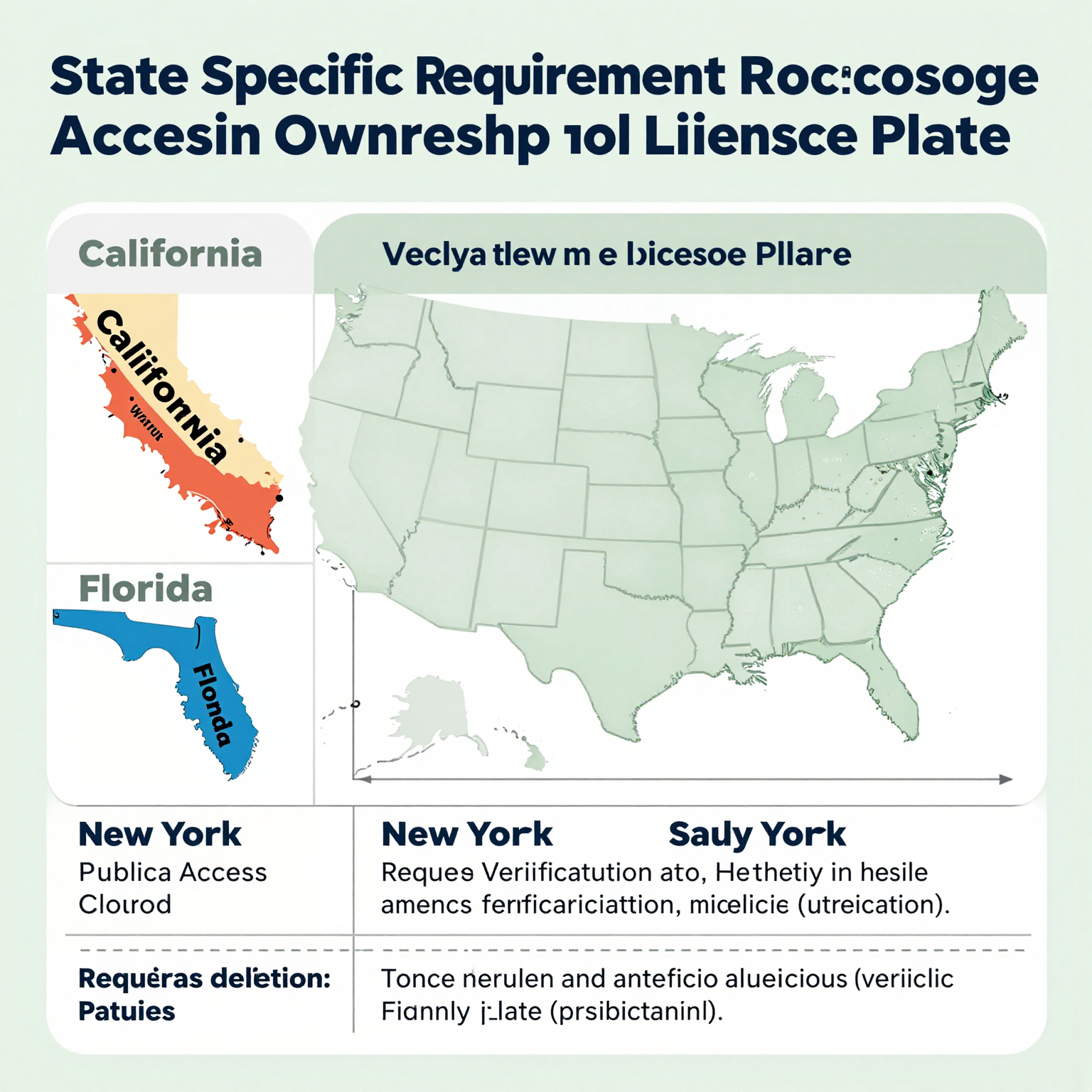
Understanding your state’s regulations regarding vehicle ownership inquiry is crucial for lawful information retrieval.
| Service Name | Features | Cost | Limitations |
|---|---|---|---|
| AutoCheck | Vehicle history report, accident records | $24.99 | Does not provide owner info directly, privacy laws restrict data access. |
| Nolo License Plate Lookup | Legal guidance, third-party services | Varies | Limited access to personal information; must involve law enforcement. |
| Consumer Reports | Practical methods and legal considerations | Free | No direct access to owner data; relies on public records and privacy laws. |
In conclusion, understanding how to find a vehicle owner using a license plate can be both useful and necessary in many situations, from seeking accountability after an accident to resolving parking disputes. However, with this knowledge comes the responsibility to act cautiously and legally. It is essential to recognize that accessing personal information without consent can infringe on privacy rights, which varies by state regulations. Therefore, always ensure your methods align with local laws to avoid potential legal consequences. Engaging in responsible and ethical behavior not only fosters trust but also maintains the integrity of the information being sought. For additional guidance, consider exploring resources on state vehicle inspection requirements or understanding how other state rules impact driver licensing. By staying informed and prioritizing legality, you can navigate vehicle ownership inquiries effectively and respectfully.
Ethics and Legality of Searching Vehicle Ownership
Searching for vehicle ownership through license plates raises important ethical and legal considerations. Accessing personal information without a lawful reason is not only unethical-it can also be illegal. Under laws such as the U.S. Driver’s Privacy Protection Act (DPPA), vehicle registration data, including owner details, is protected. Unauthorized access can result in serious consequences, including civil penalties of up to $2,500 per violation and potential criminal charges.
“Accessing personal information from a license plate without a lawful reason is not only unethical-it’s illegal in many jurisdictions.”
- Legal & Ethical Driving Resources
The legal framework varies across states and countries, but individuals generally must demonstrate a valid reason, such as law enforcement purposes or court orders, to access such information. Violations of privacy laws can lead to significant legal repercussions, underscoring the necessity for individuals to comply with these regulations when attempting to discover vehicle ownership.
To navigate these complexities, one might consider reporting any issues related to unknown vehicles to local authorities. This ensures compliance with privacy laws while allowing real-world concerns regarding unauthorized vehicles to be addressed. For further insights on the relevant state rules impacting driver licensing, visit our detailed section.
Are you ready to elevate your vehicle to a whole new level? At Summit Fairings, we understand that vehicle ownership is more than just having a car; it’s about making it uniquely yours and ensuring it reflects your personal style. Our premium custom-fit fairings are designed to enhance both the aesthetics and functionality of your ride, ensuring a perfect fit and a standout appearance. Don’t settle for ordinary when you can transform your vehicle with high-quality materials and expert craftsmanship. Explore our custom solutions today and discover how Summit Fairings can redefine your driving experience!

Frequently Asked Questions (FAQs) about Finding Vehicle Owners by License Plate
1. How can I find the owner of a vehicle using its license plate?
In the U.S., individuals cannot directly obtain the personal details of a vehicle owner from just a license plate number due to privacy laws. Only authorized entities like law enforcement, insurance companies, and vehicle-related agencies have access to this information under specific circumstances. If you are involved in an accident or need to report a stolen vehicle, contact your local police department or state DMV for assistance.
2. What should I do if I need to identify a vehicle owner after an accident?
If you’ve been in a car accident and need to find the vehicle owner’s information, you can report the incident to your local police department. They can assist in identifying the registered owner of the vehicle if there’s a legitimate reason for the request, such as filing an insurance claim.
3. Are there online services to look up vehicle owners by license plate?
Some states offer limited online services via their official DMV websites, but these are typically restricted to authorized users like law enforcement or licensed auto dealers. Always ensure that your use of such services complies with federal and state privacy regulations. Common online resources include the U.S. Department of Transportation DMV Resources for more information.
4. Can anyone access vehicle ownership information?
Vehicle ownership information is protected under privacy laws, and unauthorized individuals cannot access this data. Entities such as law enforcement, the courts, and licensed insurance providers may access this data under specific circumstances, such as handling a traffic violation or case.
5. What laws protect the privacy of vehicle ownership information?
In the United States, laws such as the Fair Credit Reporting Act (FCRA) regulate access to personal information, including vehicle ownership records. It’s essential to follow these legal guidelines to avoid potential legal issues when seeking information about vehicle owners.
6. What happens if I encounter a service that claims to provide vehicle owner information by license plate?
Be cautious of third-party websites that claim to provide vehicle owner information via license plate lookup. Many of these services may violate privacy laws, and some could be scams. It’s advisable to rely on verified government resources or consult local law enforcement or your state’s DMV if you need assistance with vehicle ownership inquiries.
For additional information on drivers’ licensing and vehicle regulations, you can learn more about the importance of following state rules that impact driver licensing and be aware of CDL cheating schemes which may further affect public safety.