Introduction
When it comes to ensuring safety and compliance on the road, obtaining a North Carolina (NC) vehicle inspection license stands as a fundamental requirement for vehicle owners and auto dealerships alike. This crucial licensing not only helps to maintain the integrity of vehicle safety standards but also plays a vital role in upholding public safety and environmental regulations. For existing drivers, having a thorough understanding of the inspection process can lead to better vehicle maintenance and prolonged lifespan of their vehicles. New drivers, on the other hand, gain a significant advantage from familiarizing themselves with the essential components of vehicle inspections, promoting responsible driving from the start.
Auto dealerships, which serve as a primary contact point for vehicle acquisition, must also navigate the complexities of NC’s vehicle inspection licensing to reassure their customers about vehicular safety and compliance. With increasing emphasis on vehicle reliability and safety regulations, understanding how to acquire and maintain this license is vital. Not only does it ensure that vehicles conform to legal standards, but it also establishes a level of trust between dealerships and their clients, fostering a safer driving environment for everyone. This article will guide you through the intricacies of obtaining an NC vehicle inspection license, heeding the importance of this essential step for all drivers-new and experienced alike.
As you delve into this process, consider reviewing related topics such as the impact of state rules on driver licensing and vehicle inspection requirements by state. Understanding these areas will enhance your knowledge and preparedness on this critical aspect of vehicle ownership and operation.
Requirements for Obtaining an NC Vehicle Inspection License
To obtain a vehicle inspection license in North Carolina, applicants must fulfill various requirements. These include age, educational prerequisites, and necessary documentation. Below is a detailed list of these requirements:
-
Age Requirement:
-
Applicants must be at least 18 years old.
-
Prerequisites:
-
Completion of a state-certified Safety Inspection Course (8 hours). This course covers essential knowledge necessary for conducting vehicle inspections.
-
It is mandatory to pass the course provided by a North Carolina-approved training provider.
-
Documentation Required:
-
Valid government-issued identification.
-
Proof of completion of the Safety Inspection Course.
-
Application form for the inspection license, which may be obtained from the North Carolina Department of Transportation or the DMV.
-
Any additional documents specified by the inspection station application requirements.
-
Additional Steps:
-
Applicants must apply to become an authorized official inspection station through the North Carolina Department of Transportation (NCDOT).
-
Successful completion of any examinations required by the state upon application submission.
-
Experience:
-
Previous experience or a background in automotive repair may be beneficial but is not explicitly required.
-
Ongoing Requirements:
-
Inspectors may also need to undergo periodic training and refresher courses as mandated by the NCDOT.
It’s crucial to stay updated with the NCDOT Vehicle Safety Inspection Requirements for any changes in licensing regulations and standards.
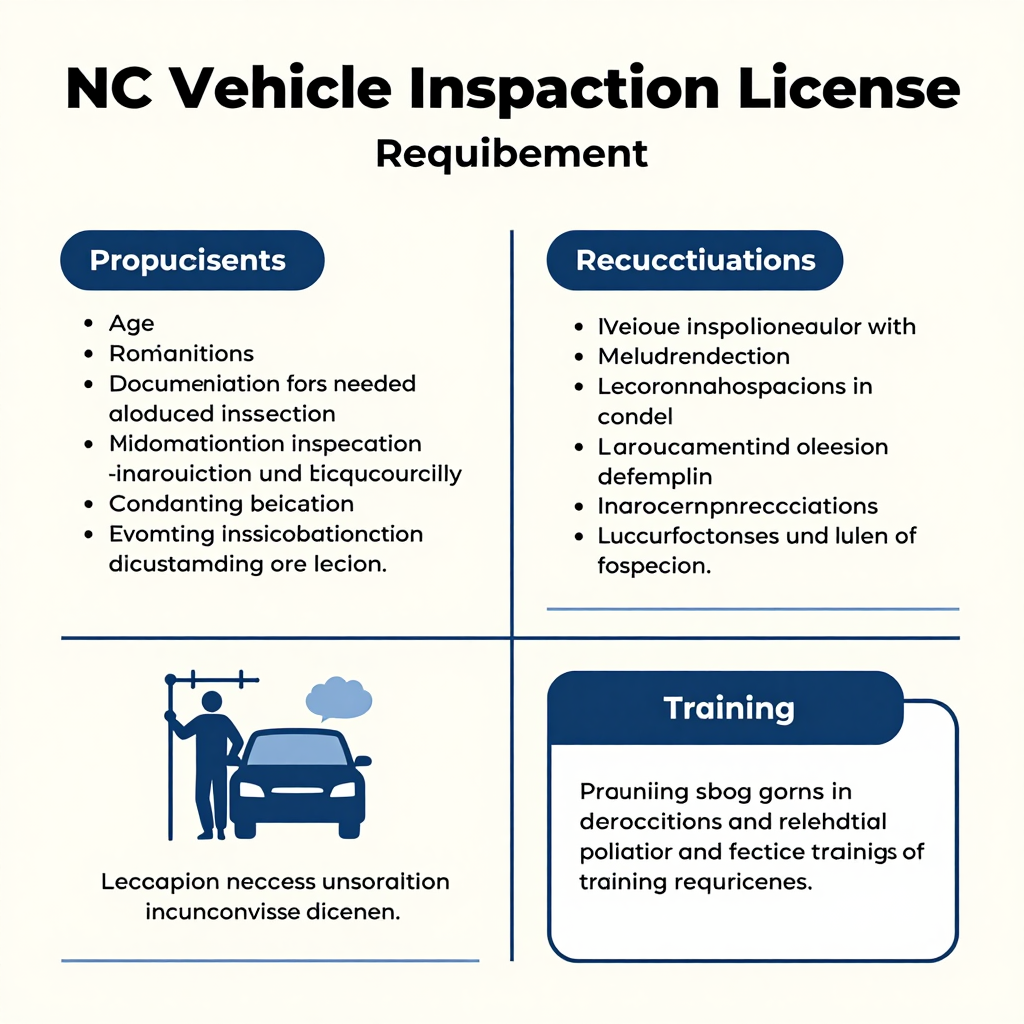
An infographic detailing the requirements for obtaining an NC vehicle inspection license.
For those interested, more information on related state rules and inspections can be found here.
Application Process for an NC Vehicle Inspection License
The process of obtaining a vehicle inspection license in North Carolina involves several key steps to ensure that applicants meet the necessary qualifications and standards. Below is a guide to help you navigate through this process smoothly:
| Step | Description |
|---|---|
| 1. Eligibility | To become a licensed safety inspection technician in North Carolina, you must be at least 18 years old and possess a valid North Carolina driver’s license. You must also have a background check completed by the North Carolina Division of Motor Vehicles (NC DMV). |
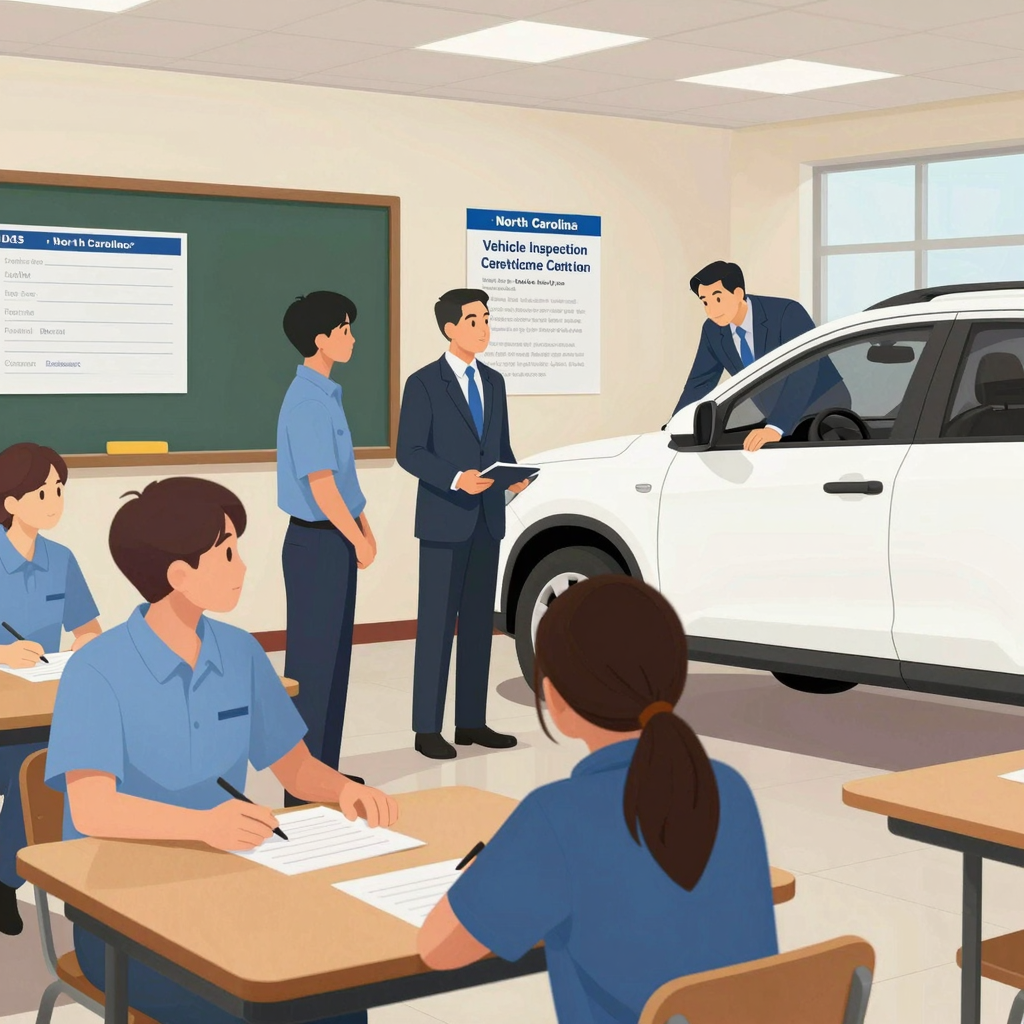
| 2. Training | Attend and pass an eight-hour Safety Inspection Course offered by a North Carolina-approved training provider. This course covers vehicle inspection procedures, safety standards, and regulatory requirements. |
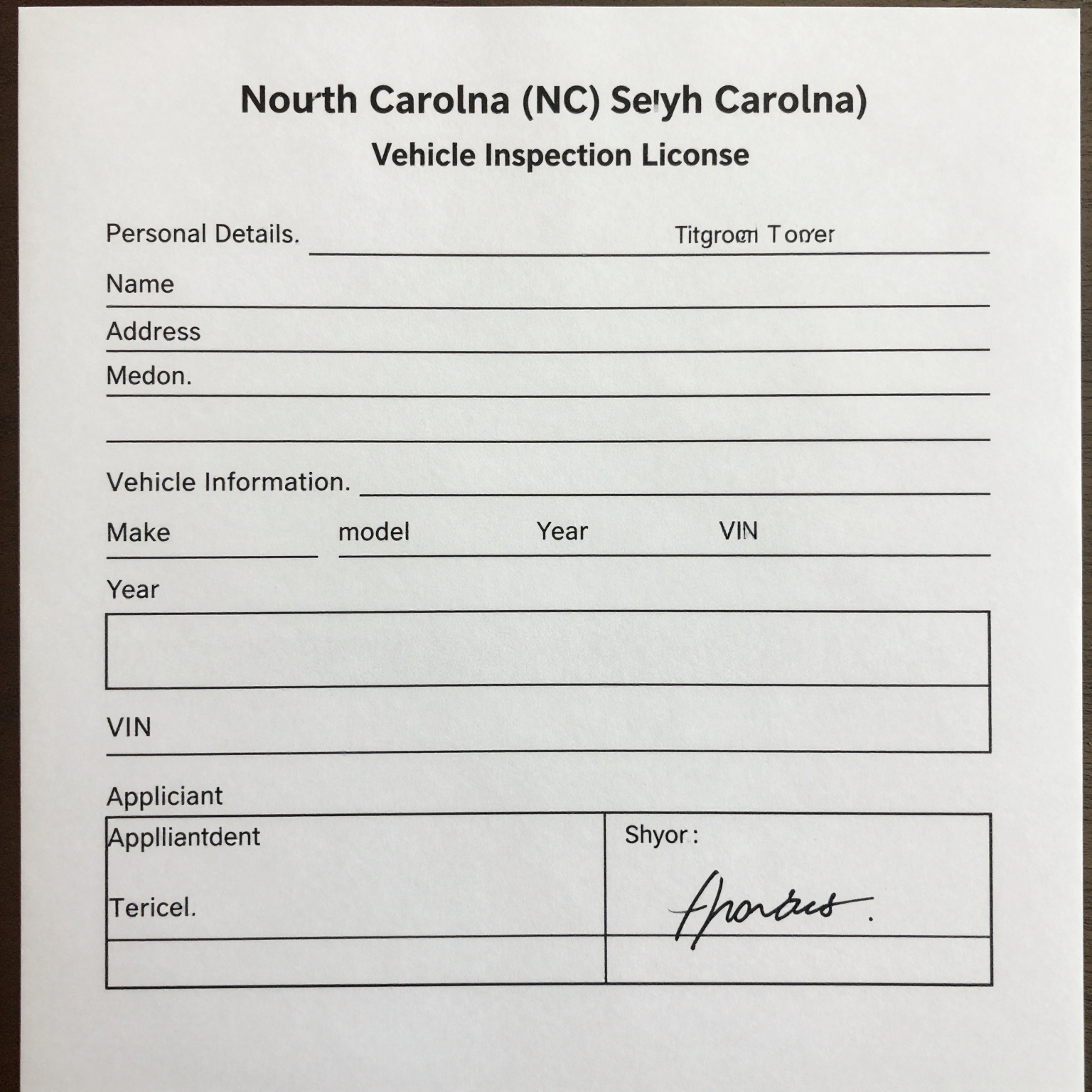
| 3. Application Submission | Complete the “Application for Safety Inspection Technician” form (Form MVD-500) available through the NC DMV website or local DMV office. Submit the form along with required documentation, including proof of training completion, identification, and payment of applicable fees. |
| 4. Examination | Pass a written examination administered by the NC DMV that tests knowledge of vehicle safety standards, inspection procedures, and state regulations. The exam is typically taken after submitting the application and paying the fee. |
| 5. License Issuance | Upon passing the exam, you will receive a temporary certification. After verification by the NC DMV, your official Safety Inspection Technician license will be issued. You may begin conducting inspections once the license is active. |
Key Certification Requirements
| Requirement | Details |
|---|---|
| Age Requirement | Must be at least 18 years old. |
| Training Completion | Must successfully complete an eight-hour Safety Inspection Course approved by the North Carolina Division of Motor Vehicles (NC DMV). This course covers vehicle safety standards, inspection procedures, and state regulations. |
| Knowledge of Safety Standards | Demonstrated through passing the NC DMV-approved Safety Inspection Course exam. Technicians must understand all applicable federal and state safety standards for vehicle inspections. |
| Background Check | A criminal background check is required. Individuals with certain felony convictions may be disqualified from becoming certified inspectors. |
| Certification Process | After completing training and passing the exam, applicants must apply to become an Official Inspection Station through the NC DMV. Stations must pass a facility inspection to ensure they meet equipment and procedural requirements. |
| Renewal Process | Certification must be renewed every three years. Renewal requires completion of continuing education credits and payment of a renewal fee. The NC DMV will notify stations prior to expiration. |
For more detailed information, visit North Carolina Vehicle Inspection License Requirements or check out resources provided by the NC State Board of Examiners.
Costs Associated with Obtaining an NC Vehicle Inspection License
Obtaining a vehicle inspection license in North Carolina involves several costs that prospective inspectors should be aware of. Here we break down the major financial aspects:
Application and Licensing Fees
The primary cost of obtaining an NC vehicle inspection license is the application fee associated with vehicle inspections. While the North Carolina Division of Motor Vehicles (NC DMV) does not charge a separate application fee, it does require payment for vehicle registration and inspection. The standard fee for a vehicle inspection is approximately $35, encompassing the safety and emissions checks required for vehicle registration. It’s essential to note that this fee may vary depending on vehicle type, particularly for commercial vehicles.
Training Costs
Before receiving a license, applicants must complete a state-approved training program. The initial certification training program often costs around $295, which includes course materials and the certification exam. Some accredited training providers may charge between $1,200 and $3,500 for their programs, usually ranging from 6 to 12 weeks in duration. These programs combine classroom instruction, practical lab work, and preparation for the DMV certification exam. For refresher courses or if the exam is not passed on the first attempt, additional fees of approximately $75 may apply.
Ongoing Expenses
Once licensed, vehicle inspectors must maintain their certification by adhering to state regulations. Depending on the type of inspection work performed, inspectors may incur additional costs related to equipment, continuing education, and compliance with the latest safety regulations. It’s crucial for inspectors to budget for these recurring expenses as part of their operational costs.
For further detailed information on regulatory aspects, consider checking out state rules that impact driver licensing and vehicle inspection requirements for various states.
Summary
Understanding the costs involved in obtaining an NC vehicle inspection license can help you prepare effectively and mitigate unexpected financial burdens. From training fees to license costs, potential inspectors should factor these elements into their planning to establish a successful inspection business.
Overview of Vehicle Inspection Certification Training in North Carolina
In North Carolina, obtaining a vehicle inspection certification is essential for those looking to work as licensed safety mechanics and technicians. Here are the key details regarding training options, costs, and locations.
Training Program Options
The primary path for becoming a certified vehicle inspector in North Carolina includes the completion of an eight-hour Safety Inspection Course. Here are some notable training providers:
| Program Name | Details |
|---|---|
| Safety Inspection Course | Offered by authorized providers across the state, covering vehicle inspection standards, procedures, and safety regulations. |
| Duration | 8 hours |
| Cost | Pricing details may vary; generally, costs have not been publicly disclosed but can range from $100 to $300, depending on the provider. Contact specific providers for confirmation. |
| Locations | Offered by various institutions across North Carolina. Verification of training providers can be done through the NC AUTO official website. |
There are several authorized providers listed by the North Carolina State Board of Examiners, which ensures that all instructors meet state standards. For more details, visit the North Carolina State Board of Examiners.
Certification Process
After completing the course, candidates must also pass both a written and a practical skills examination administered by the North Carolina Department of Transportation (NCDOT). This ensures that only qualified individuals are certified to perform vehicle inspections.
Key Benefits of Certification
- Career Opportunities: Certification opens up various job opportunities in auto repair shops, service stations, and even as independent inspectors.
- Ensured Compliance: Knowledge gained through the course ensures that inspectors understand and can apply state-specific safety and emissions standards, significantly contributing to road safety.
Locations for Training
Training is widely available throughout North Carolina in various locations made available by authorized training facilities. Details on specific address and contact information can be directly accessed through the NC AUTO and the NCDOT websites to inquire about the nearest centers.
Conclusion
Becoming certified in vehicle inspection in North Carolina requires dedication to understanding safety standards, regulations, and practical skills. By completing an approved course and passing the necessary examinations, individuals can obtain their certification and contribute positively to traffic safety in the state. This comprehensive approach not only enhances personal skill sets but also impacts the overall safety and reliability of vehicles on the road.
For additional insights on inspection requirements, you can explore vehicle inspection requirements by state.
Comparison of Vehicle Inspection Training Programs
| Program Name | Duration | Cost | Delivery Format | Certification Outcomes |
|---|---|---|---|---|
| ASE Vehicle Inspection Program | 40 hours | $695 | Blended (Online + In-person) | ASE Certified Vehicle Inspector credential |
| Advanced Vehicle Inspection Program | 80 hours | $1,295 | Hybrid (40% Online + 60% In-person) | ATC Certified Vehicle Inspector (CVI) valid for 3 years |
| NVQ Level 3 & Level 4 Courses | 12-24 months | £2,500 – £4,500 | Workplace-based | Formal NVQ qualifications recognized by DVSA |
This table provides an overview of various vehicle inspection training programs, which is crucial for anyone looking to earn their NC vehicle inspection license. Depending on your needs-such as duration, cost, and preferred learning format-you can choose the program that best fits your career goals. For more information on state-specific vehicle inspection requirements, check out this guide on our website.
Common Mistakes to Avoid When Applying for the NC Vehicle Inspection License
Applying for the North Carolina vehicle inspection license can be a meticulous process, and several common mistakes can hinder your application’s success. By being aware of these pitfalls and taking steps to avoid them, you can enhance your chances of a smooth and successful application experience.
1. Incomplete or Incorrect Application Forms
One of the most frequent errors made by applicants is providing incomplete or incorrect information on their application forms. This can include missing signatures, wrong details about the inspection station, or inaccurate personal information. To avoid this mistake:
- Double-Check Your Application: Carefully review your application for completeness and accuracy before submission.
- Follow the Guidelines: Adhere to the specific instructions provided by the North Carolina Division of Motor Vehicles (NCDMV).
2. Insufficient Documentation
Another common mistake is failing to provide all required documentation. Applicants often overlook necessary documents such as proof of insurance, business registration, or the qualifications of inspecting personnel. To prevent delays due to missing documents:
- Prepare Ahead: Make a checklist of required documents needed for the application, and verify that you have all of them ready to submit.
- Consult Official Guidelines: Refer to the NCDMV’s website or relevant resources for a complete list of required documentation.
3. Incorrect Fees
Many applicants neglect to confirm the exact fee associated with their license type, leading to payment errors. Each type of vehicle inspection license may have different fees, and insufficient payment can lead to application rejections.
- Verify Fee Structure: Always check the latest fee schedule on the NCDMV’s official site before submitting your application.
4. Failing to Understand Licensing Types
Some individuals misinterpret the types of inspection licenses available and apply for the wrong category, such as passengers versus commercial vehicles. This confusion can delay the license issuance.
- Review Licensing Options: Ensure you fully understand the various levels of vehicle inspection licenses before applying by consulting the NCDMV’s vehicle inspection overview.
5. Not Keeping Contact Information Updated
Applicants sometimes fail to keep their business contact information current. Providing outdated information can create issues particularly regarding communications about the application status.
- Update Regularly: Always keep your business contact details up to date during the application process to ensure quick communication with the NCDMV.
By avoiding these common mistakes, you can significantly enhance your chances of successfully obtaining your NC vehicle inspection license. For more detailed insights into the vehicle inspection process and additional tips, visit the official NCDMV resources or check out articles such as the one on how to avoid common errors on your application.
Impact of the NC Vehicle Inspection License
Obtaining the NC vehicle inspection license can significantly impact your career and personal growth. As one successful license holder from Charlotte, North Carolina, shared:
“Obtaining my NC vehicle inspection license was a turning point. It gave me credibility with customers and allowed me to expand my business beyond basic repairs. I now run a certified inspection station, which has significantly increased my income and job satisfaction. More importantly, it taught me discipline and attention to detail that I apply in every aspect of my life.”
- North Carolina Department of Transportation Success Story
learn more about inspection license success stories
This quote illustrates the positive effects the license can have on one’s professional journey, emphasizing the growth in credibility, income, and personal development. Such stories encourage new drivers and learners to consider pursuing their license as a valuable step in their automotive careers.
Conclusion and Call to Action
Obtaining your North Carolina vehicle inspection license is a significant step for both new and existing drivers, vehicle owners, and auto dealerships. As outlined in this article, the process entails ensuring that your vehicle meets safety and emissions standards, which are mandated by the North Carolina Division of Motor Vehicles (NCDMV). Key requirements include a valid vehicle registration, current proof of insurance, and a successful completion of the inspection process, which is required every two years.
For auto dealerships, having a license is vital not only for legal compliance but also for instilling trust in customers. Vehicles that fail inspections must be repaired promptly and re-inspected to avoid any disruptions in the dealership’s ability to sell vehicles legally. This emphasis on safety protects consumers and helps maintain high standards for vehicular operations throughout the state. Learn more about vehicle inspection requirements in North Carolina here.
Moreover, it is crucial for vehicle owners to prioritize inspections, ensuring that their vehicles contribute to road safety and environmental responsibility. Failure to comply with inspection regulations may result in fines and complications during registration renewal, thereby making it essential to keep up with these requirements.
In closing, we encourage you to take the next steps toward obtaining your NC vehicle inspection license. Whether you’re a new driver eager to ensure compliance, a vehicle owner understanding obligations, or an auto dealership aiming to meet regulatory standards, action is key.
Ready to Get Started?
Visit Summit Fairings for a comprehensive guide on NC vehicle inspection licenses and discover everything you need to ensure your vehicle meets required standards and that your business complies with all necessary regulations. Don’t wait-start your path to compliance and safety today!