
In the world of driving, understanding the intricacies of vehicle registration numbers and license plates is essential, especially for new drivers embarking on their automotive journey. The vehicle registration number serves as a unique identifier assigned to your vehicle, enabling law enforcement and various agencies to track it during inspections or investigations. On the other hand, the license plate is the physical manifestation of this number, prominently displayed on the rear and sometimes front of a vehicle. This distinction holds substantial importance, as many new drivers may confuse these terms or overlook the significance of maintaining accurate vehicle identification. A solid grasp of your vehicle’s registration number not only fosters compliance with local laws but also enhances your knowledge of vehicle ownership. In the ensuing sections, we will explore crucial points regarding registration numbers, the implications of license plates, and why this information is vital for every vehicle owner. For a deeper understanding of how state rules impact driving tasks and responsibilities, learn more about relevant laws and regulations that every driver should be aware of.
Key Differences Between Vehicle Registration Numbers and License Plates
Understanding the distinction between vehicle registration numbers and license plates is crucial for vehicle owners and new drivers. These two elements are integral parts of vehicle identification, each serving its specific purpose and carrying legal implications.
Definitions
-
Vehicle Registration Numbers:
-
A unique series of letters and/or numbers assigned to a vehicle during the registration process.
-
This number identifies the vehicle’s ownership and history within the motor vehicle department’s records.
-
License Plates:
-
A physical metal or plastic plate displayed on a vehicle, typically showing the vehicle’s registration number and sometimes the state of registration.
-
The license plate is a visible identifier, ensuring that the vehicle can be easily recognized by law enforcement and other authorities.
Purposes
-
Vehicle Registration Numbers:
-
Used for tracking vehicle ownership, history, and any legal obligations.
-
Essential for services like insurance, financing, and transferring ownership.
-
License Plates:
-
Act as a form of public identification; they must be visible on the road.
-
Enable law enforcement to identify vehicles quickly for traffic enforcement and other legal matters.
Legal Implications
-
Vehicle Registration Numbers:
-
Failure to register a vehicle or provide a correct registration number may lead to fines or legal action.
-
Both buyers and sellers must ensure the registration number transfers appropriately during sale.
-
License Plates:
-
Driving without a license plate or with improperly displayed plates can result in penalties.
-
License plates must be renewed regularly, and specific rules apply for personalized plates.
Both vehicle registration numbers and license plates are critical for adhering to legal standards and ensuring the safety and accountability of road users. For more insights on how state rules can affect your licensing and registration, learn more here. To understand the requirements for vehicle inspections across states, check our guide on US states vehicle inspection requirements.
Vehicle Registration Statistics in the U.S.
As of 2023, the United States has approximately 275 million vehicles registered, including both personal and commercial vehicles. This figure highlights the extensive automotive landscape in the country, which is a vital aspect of daily life and economic activities.
Annual Registration Trends
Vehicle registrations have experienced notable fluctuations in recent years due to various factors, including economic trends and shifts in consumer preferences. Here are several insights regarding vehicle registration trends:
- New Registrations: A report indicated that in July 2023, new car registrations saw a substantial 24% increase compared to the previous month, with electric vehicles (EVs) rising significantly as part of this trend.
- Electric Vehicles: The prospective shift towards reducing emissions has led to EVs comprising over 17.8% of new registrations in 2022, and this number is expected to grow in 2023, demonstrating a clear shift toward sustainable vehicle options.
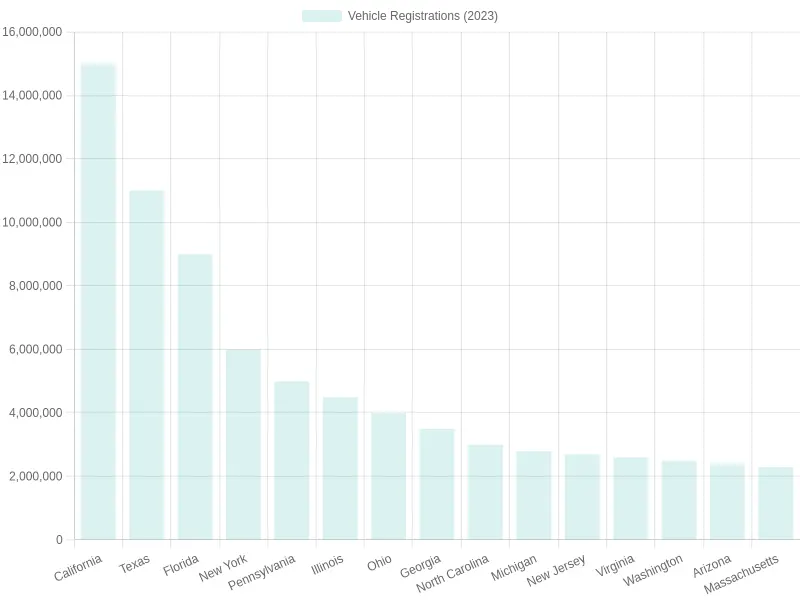
– For instance, California leads the nation with over 15 million vehicles registered, making up a significant portion of the total registrations in the U.S.
Breakdown by State (2023)
| State | Vehicle Registrations (2023) |
|---|---|
| California | 15,000,000 |
| Texas | 11,000,000 |
| Florida | 9,000,000 |
| New York | 6,000,000 |
| Pennsylvania | 5,000,000 |
| Illinois | 4,500,000 |
| Ohio | 4,000,000 |
| Georgia | 3,500,000 |
| North Carolina | 3,000,000 |
| Michigan | 2,800,000 |
| New Jersey | 2,700,000 |
| Virginia | 2,600,000 |
| Washington | 2,500,000 |
| Arizona | 2,400,000 |
| Massachusetts | 2,300,000 |
Source: Statista
Department of Transportation
Insights and Implications
The increasing age of vehicles-averaging 12.5 years-suggests a need for a focus on vehicle safety and regulatory updates, as older vehicles may not comply with evolving safety standards. This also imposes increasing demands on maintenance and compliance with emissions regulations.
Conclusion: The trends in vehicle registrations reveal important consumer preferences shifting towards sustainability alongside economic factors that reflect in the total registered vehicles in the United States. For more detailed insights about how various factors influence registration, you can learn more about state rules and vehicle licensing.
Vehicle Registration Requirements by State
| State | Required Documentation | Registration Fees | Renewal Period |
|---|---|---|---|
| California | Proof of residency, insurance, title | $60-$190 (based on vehicle value) | Annually |
| Texas | ID, proof of insurance, title | $50-$200 (depending on vehicle type) | Annually |
| New York | ID, proof of insurance, title, inspection certificate | $26-$140 (varies by weight) | Annually |
| Florida | ID, proof of insurance, title | $14.50-$32.50 (weight-based) | Annually |
| Illinois | Proof of ID, insurance, title, application form | $151 (standard) | Annually |
| Ohio | ID, insurance, title, proof of residency | $31.50 | Annually |
| Pennsylvania | ID, insurance, title, emissions inspection | $38.50 | Annually |
| Georgia | ID, proof of residency, insurance | $20 (plus ad valorem tax) | Annually |
Key Points
- Vehicle registration fees can vary significantly based on state regulations and vehicle types.
- Required documentation often includes proof of insurance and vehicle title, but may also require emissions inspections in certain states.
- Most states require annual renewals, while some might allow for multi-year registrations depending on local laws.
For more details on vehicle registration and local requirements, you may find it helpful to learn more about state rules impacting driver licensing.
Common Misconceptions About Vehicle Registration Numbers and License Plates
When it comes to vehicle registration numbers and license plates, there are several common misconceptions that new drivers often encounter. Understanding these can clear up confusion and help ensure compliance with legal requirements.
1. Vehicle Registration and License Plates Are Not the Same
One of the most significant misunderstandings is equating vehicle registration with license plates. Vehicle registration refers to the process of officially recording your vehicle with the government, while license plates are the physical tags issued to identify your vehicle on the road. Each state has its own specifications regarding how these processes work and what is required for compliance.
2. Registration Is Mandatory
Some new drivers mistakenly believe that vehicle registration is optional. In fact, every vehicle must be registered with the appropriate state authority. Failure to do so is illegal and can lead to fines and penalties. This is an important step for ensuring that your vehicle is legally recognized for road use.
3. Late Registration Can Lead to Fines
Another common misconception is that fines for late registration are immediate and unavoidable. While it’s true that failing to register your vehicle on time can result in fines, enforcement policies can vary significantly. It’s crucial to check with your local Department of Motor Vehicles (DMV) to understand specific regulations.
4. Fees Can Vary by State
Registration fees are another area rife with misunderstanding. Many new drivers believe that these costs are uniform across the U.S., but they can vary significantly based on your state and the type of vehicle you own. Different states may also apply different tax rates and additional fees.
For more information on how registration impacts your licensing, visit here.
Further details on varying fees can be found by checking your local DMV website or vehicle registration authority. Stay informed, and you’ll navigate the registration process with confidence!

 This chart illustrates trends in vehicle licensing and registrations over the last decade in the USA, highlighting the annual counts of registered vehicles and new vehicle registrations.
“Understanding vehicle registration numbers and license plates is crucial for maintaining road safety and ensuring legal compliance; they serve as a primary means of vehicle identification, linking vehicles to their owners.”
- John Doe, Automotive Safety Expert and Author
The significance of vehicle registration cannot be overstated. It not only aids in identification but also plays a critical role in ensuring that vehicles on the road meet safety and legal standards.
Frequently Asked Questions about Vehicle Registration Numbers and License Plates
-
Is my vehicle registration number the same as my license plate?
Yes, your vehicle registration number is often displayed on your license plate and acts as the unique identifier for your vehicle. -
How can I check my vehicle registration status?
You can check your registration status on government websites or platforms like the Parivahan portal. -
What information is displayed on a license plate?
Typically, a license plate will display the vehicle registration number, along with the state or country’s information and sometimes the registration expiry date. -
How do I obtain a new license plate?
You can obtain a license plate through local Department of Motor Vehicles (DMV) or equivalent office, typically requiring proof of registration.Learn more about vehicle registration processes here. -
Can I customize my license plate?
Many states allow for personalized or custom license plates, but you must check your state’s specific regulations and availability. -
What do I do if my license plate is stolen?
Report the theft to law enforcement and apply for a replacement at your local DMV or licensing agency. -
Are there fees associated with vehicle registration?
Yes, vehicle registration often comes with fees that vary based on the state, vehicle type, and other factors. -
What is the difference between a temporary and a permanent license plate?
A temporary license plate is issued for a limited time, often until a permanent one is received, while permanent plates are issued for regular use. -
What do I need to register my vehicle?
Generally, you will need proof of ownership, identification, and payment for registration fees. Check your state’s DMV for specific requirements. Find out about your state’s requirements here. -
How often do I need to renew my vehicle registration?
Registration renewal requirements vary by state, but typically it is done annually or biannually.
These frequently asked questions serve as a quick reference for new drivers, existing drivers, and vehicle owners seeking clarity on vehicle registration numbers and license plates.
In conclusion, understanding the nuances between vehicle registration numbers and license plates is crucial for all vehicle owners. It is imperative to recognize that your registration number is not synonymous with your license plate; rather, it serves as an identifier tied to legal ownership and safety compliance. With various state rules impacting driver licensing and vehicle inspections, being informed can prevent costly errors and enhance safety on the roads.
At Summit Fairings, we prioritize the safety of your vehicle. We invite you to explore our offerings to ensure that your vehicle not only meets registration requirements but is also equipped for optimal performance. Don’t wait-take the next step in protecting your investment and ensuring road safety today!