
In recent months, Alberta has taken decisive action in response to ongoing concerns regarding the safety and training of commercial drivers, leading to a significant crackdown on Commercial Driver’s License (CDL) programs. This initiative has resulted in the sudden closure of five truck driver training schools and the deregistration of thirteen trucking companies, raising alarm bells within the industry.
The implications of these drastic measures extend far beyond immediate enforcement; they threaten the availability of quality driver training in the province and pose challenges to maintaining rigorous safety regulations. With a troubling percentage of surveyed drivers suspected of being misclassified, this situation highlights urgent needs for regulatory oversight and proper training to ensure that Alberta’s trucking industry can operate safely and effectively.
The repercussions of these closures may resonate deeply, affecting not only new drivers but also the broader safety landscape of the province’s roads.
| Statistic | Number |
|---|---|
| CDL Schools Closed | 5 |
| Fines Issued | Over $100,000 |
| Licenses Revoked | 12 |
| Companies Removed | 13 |
| Drivers Misclassified (Estimated) | 20% |
Impact on CDL Schools
In October 2025, the Alberta government implemented strict measures to enhance road safety, resulting in the closures of five commercial truck driver training schools, including the notable 10 & 2 Driving School in Red Deer County. This crackdown was driven by a series of compliance failures and fraudulent practices reported within these institutions.
Reasons for School Closures
- Fraudulent Reporting: Investigations revealed that certain schools were falsifying training records, allowing students to bypass essential classroom and in-cab training hours. This lack of appropriate instruction left many drivers inadequately trained, raising substantial concerns about road safety.
- Regulatory Non-Compliance: The affected schools did not meet the regulatory requirements and safety standards set by provincial authorities, leading to government intervention to protect both the public and aspiring drivers.
Future of Driver Training in Alberta
- Class 1 Learning Pathway: Launched in April 2025, this program mandates that trainees complete 125 to 133 hours of in-truck training, significantly exceeding national minimum standards. This model is intended to elevate driver competency and enhance road safety for all users.
- Stricter Oversight Mechanisms: New regulations impose stringent licensing requirements on driver training schools. They now must adhere to enforced safety equipment standards and have their instructors closely monitored to ensure that training quality is consistently high.
- Temporary License Moratorium: Effective from January 2025, Alberta has paused the intake and approval of applications for new driver training schools until a comprehensive evaluation of the training framework can be conducted. This moratorium has caused uncertainty but is aimed at ensuring that only qualified establishments can operate in the future.
These comprehensive measures demonstrate Alberta’s commitment to maintaining a robust regulatory framework for driver education, ultimately striving to ensure safer roads and well-trained drivers. As the province moves forward, these changes are expected to shape a more reliable and effective driver training environment that benefits all stakeholders involved.
Impact on Fleets in Alberta
The recent crackdown on Commercial Driver’s License (CDL) schools and trucking companies in Alberta has far-reaching consequences for the state’s fleet operations. The province’s intensified regulatory actions led to the closure of five driving schools and the deregistration of thirteen trucking companies. These initiatives have not only affected the companies directly involved but have also imposed broader challenges across the trucking industry, reshaping operations significantly.
Shutdown of Trucking Companies
Several trucking companies faced shutdowns due to non-compliance with safety regulations and operational standards. Among the notable cases was People Express Transport, a Calgary-based firm that declared bankruptcy, impacting over 130 employees and contractors. Such closures contribute to job losses and further strain the already stretched workforce within the industry.
Regulatory Changes Impacting Operations
The Alberta government’s enforcement measures have introduced enhanced training standards aimed at improving driver competency. For instance, the Class 1 Learning Pathway mandates that trainees complete a minimum of 125 to 133 hours of practical training, surpassing national standards. While this initiative aims to cultivate better-trained drivers, it also signifies increased training costs and duration, affecting new entrants to the workforce.
Monitoring and Compliance
In an effort to combat practices like misclassification of drivers, Alberta’s regulatory framework now mandates stricter oversight. The focus on eliminating ‘chameleon’ carriers—those that evade supervision by changing names—has resulted in several companies being suspended. The province is actively developing a national database to effectively monitor these entities and ensure accountability within the trucking sector.
Shift in Safety Culture
The cumulative effect of these measures is a shift towards a more safety-conscious culture in the trucking industry. By enforcing compliance and aiming to protect against fraudulent practices, Alberta is working to enhance overall safety on the roads. The recent inspections indicated that approximately twenty percent of surveyed drivers had been misclassified, highlighting the urgent need for better practices and enforcement in the industry. The long-term goal involves not just regulatory compliance but also raising the overall safety standards and reputation of trucking operations in Alberta.
In summary, the impact of recent regulatory changes in Alberta is multifaceted, resulting in operational challenges for trucking companies while striving to enhance safety measures and professionalize the industry. The road ahead will require adaptation and commitment from all stakeholders to navigate the evolving landscape of Alberta’s trucking sector.
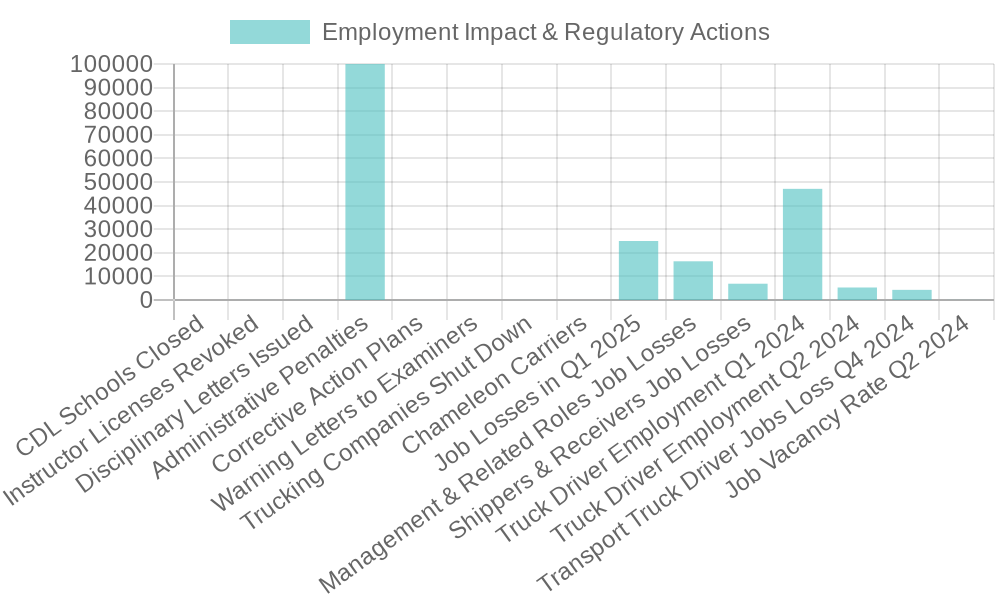
Graph showing employment impacts due to school closures in Alberta, illustrating job losses and regulatory actions across CDL schools and trucking companies.
Quotes and Insights from Industry Leaders
Although specific quotes directly from Jim Ward regarding the crackdown on CDL schools and trucking companies in Alberta were not found, he has consistently advocated for enhanced training standards throughout his leadership with the Truckload Carriers Association (TCA). In a recent discussion, Ward emphasized the necessity for comprehensive training programs that would not only address the burgeoning driver shortage but would also play a crucial role in improving road safety. He remarked,
“Trucking must prioritize rigorous training standards to ensure our drivers are adequately prepared for the challenges they face on the road.”
The recent enforcement action in Alberta, which resulted in the closure of five commercial driver training schools and the removal of thirteen trucking companies, reflects a significant push to eliminate unsafe practices. The province undertook these measures to bolster the quality of driver training, aiming to protect public safety.
Industry Response and Context
Although Trimac Transportation executives have not issued public statements specifically regarding the crackdown, the Alberta government’s actions have been met with support from various industry leaders. Don MacDonald, the operations manager at CCA Truck Driver Training and interim chairman of the Professional Truck Training Alliance of Canada, pointed out that such initiatives are essential for elevating training standards in the industry. He stated,
“Improving training standards is vital for professionalizing the trucking sector and ensuring we provide safe, qualified drivers on our roads.”
With concerns over misclassification among drivers becoming more prominent—recent inspections indicated that approximately 20% of surveyed drivers were suspected of being misclassified—industry stakeholders assert that resolving these issues is critical for enhancing both training and oversight.
Overall, while direct quotes from Jim Ward and specific responses from Trimac Transportation are scarce, the overarching consensus among industry figures is a strong support for the Alberta government’s efforts to advance safety and professionalism within the trucking industry.
In conclusion, the recent crackdown on Commercial Driver’s License (CDL) schools and trucking companies in Alberta marks a critical turning point in the province’s efforts to enhance truck driver training and safety. By closing non-compliant CDL schools and deregistering unsafe trucking companies, Alberta is addressing long-standing issues that have compromised road safety and driver training standards.
This proactive approach not only aims to eliminate fraudulent practices within the industry but also fosters a culture of accountability and professionalism. Looking ahead, these measures are essential for establishing a more robust framework for driver education and ensuring that all new drivers possess the necessary skills and knowledge to operate safely on the roads.
As the trucking industry evolves, it becomes increasingly imperative for all stakeholders, from training schools to trucking companies, to remain committed to upholding high standards of safety and training. Together, they must work towards a future that prioritizes the well-being of drivers and the public, ultimately shaping a safer and more reliable trucking environment in Alberta.
One major concern linked to misclassified drivers is the increased risk of accidents. When drivers are misclassified, they often feel pressured to work longer hours to make ends meet. This pressure can lead to fatigue, which makes them more likely to have accidents on the road. Furthermore, many of these drivers may use older, poorly maintained vehicles because they struggle to afford the costs of compliant trucks. This situation not only raises risks for the drivers themselves but for everyone on the road. Without proper truck driver certification, which provides essential training, these risks can grow even more.
Related Articles for Further Reading
Here are some informative articles that delve into CDL training regulations and the trucking industry in Alberta:
-
Alberta cracks down on unsafe trucking schools and carriers
Source: TruckingTrend
Date: October 3, 2025
Summary: The Alberta government has intensified efforts to enhance road safety by shutting down five truck driver training schools and penalizing several trucking companies. Actions include issuing over $100,000 in penalties, revoking 12 instructor licenses, and banning 13 trucking companies. -
Class 1 Learning Pathway
Source: Alberta.ca
Summary: Effective April 1, 2025, Alberta introduced the Class 1 Learning Pathway, which replaces the previous Mandatory Entry Level Training (MELT) program, aiming to support new drivers in their career development. -
Small trucking fleets pushed out of Alberta by insurance gridlock
Source: Insurance Business Canada
Date: September 23, 2025
Summary: Alberta’s small trucking fleets are facing challenges due to a broken insurance framework that favors larger carriers, pushing smaller operators into higher-cost insurance. -
Alberta’s new Class 1 training: More in-cab training hours, Red Seal certification
Source: Truck News
Date: April 4, 2024
Summary: Starting in 2025, Alberta’s new Class 1 training program will require 103.5 hours of mandatory training with an emphasis on in-cab instruction, aiming for truck driving to be recognized as a skilled trade. -
Alberta cracking down on bad actors in trucking industry
Source: CityNews Calgary
Date: October 4, 2025
Summary: The Alberta government is increasing inspections and audits to enhance oversight on carriers and training schools, addressing the urgent issues of safety and compliance.
Driver Training Effectiveness Study
A comprehensive summary of Australian and international research on driver training programs, highlighting that while these programs can improve knowledge and skills, their impact on reducing crash rates is mixed. The emphasis is on the need for scientifically-based evaluations to assess the true effectiveness of such programs in enhancing road safety.