
In the vast landscape of the trucking industry, the road to success is often fraught with pitfalls, particularly for drivers who are eager for independence yet vulnerable to exploitation. Predatory lease-purchase programs are a growing menace, luring hardworking individuals with the false promise of ownership and a brighter future. Instead, many find themselves ensnared in cycles of crippling debt, with little to show for their sacrifices.
The recent push to audit the Federal Motor Carrier Safety Administration’s oversight of Commercial Driver’s License (CDL) testing programs is a critical move to ensure that aspiring truck drivers are equipped with the right skills and knowledge to navigate not just the highways but also the treacherous financial landscapes they may face.
This intersection of CDL testing and predatory leasing practices presents a crucial moment for the trucking industry, as it calls into question the protections in place for those who form the backbone of our freight system. As the threat from predatory leasing continues to loom, understanding these dynamics becomes imperative for the future of truck drivers.
“Current predatory leasing arrangements exploit hardworking truck drivers who are simply trying to build a career and support their families.” – Congresswoman Julia Brownley
This quote encapsulates the emotional toll that predatory leasing practices inflict on dedicated drivers. It serves as a powerful reminder of the struggles faced by those who aspire to succeed in the trucking industry, highlighting the injustice that exists within these exploitative arrangements.
“These scams dangle the promise of ownership but leave drivers broke, trapped in debt, and kicked to the curb with nothing to show for it.” – Todd Spencer
This quote serves to further illustrate the grim reality that many drivers face when entangled in predatory lease-purchase programs. It highlights the deceptive nature of these agreements, emphasizing the urgent need for reform and protection for those in the trucking industry.
Key Facts About the Predatory Truck Leasing Prevention Act (H.R. 5423)
- Introduced by: Congresswoman Julia Brownley to combat unregulated lease-purchase agreements in the trucking industry.
- Objective: Aims to prohibit predatory lease-purchase programs within one year of its enactment, protecting truck drivers from exploitation.
- Endorsements: Supported by the Owner-Operator Independent Drivers Association (OOIDA) and the Teamsters, highlighting significant industry backing.
- Task Force Recommendations: The Truck Leasing Task Force recommended a comprehensive ban on carrier-managed lease-purchase programs to ensure fair practices.
- Impact Focus: This legislation underscores a commitment to improve conditions for truck drivers, ensuring they are not misled by false promises of ownership.

The impact of predatory lease-purchase programs on truck drivers
These agreements often lure individuals with false promises of ownership and financial independence. However, the reality is usually quite different:
-
Debt Traps: Many truck drivers end up in spiraling debt. This occurs due to:
- Inflated truck prices
- High fees
- Unfavorable contract terms
- Financial Stress: The stress from these predatory contracts affects not just the drivers, but also their families. They struggle to meet financial obligations and often work long hours without adequate compensation.
- Cycle of Poverty: For many, these agreements create a cycle of poverty. The hard work they put in does not lead to expected rewards. Instead, it leads to financial ruin.
This troubling situation illustrates the urgent need for regulation. Protective measures are essential to guard truck drivers against exploitation. Legislative efforts, such as the Predatory Truck Leasing Prevention Act, aim to ensure that drivers can build careers in trucking without the fear of financial disaster. Establishing such regulations is critical not only to eliminate predatory practices but also to secure the future of a workforce that has historically been vulnerable.
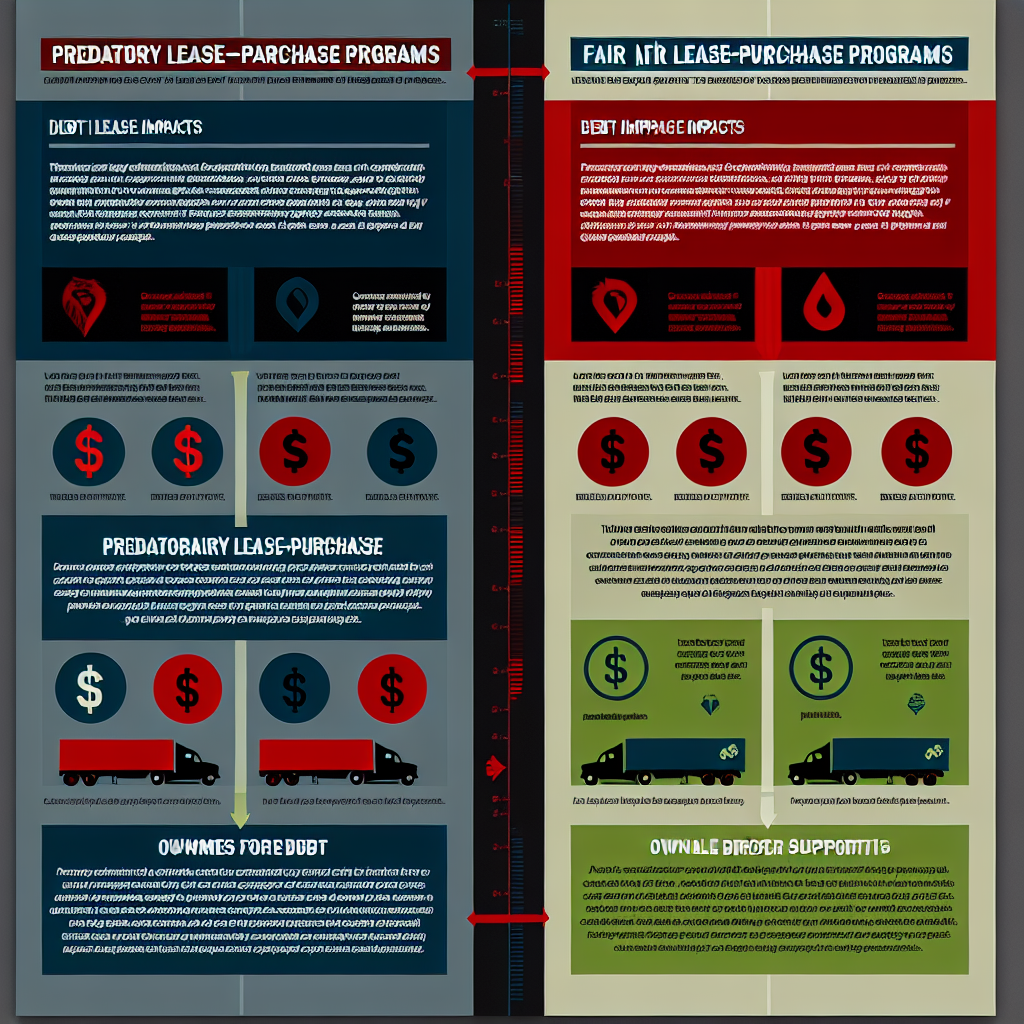
| Feature | Predatory Lease-Purchase Programs | Fair Lease-Purchase Agreements |
|---|---|---|
| Terms | Often vague and complex, leading to confusion | Clear and transparent terms |
| Costs | High initial fees and additional hidden costs | Reasonable fees with clear cost breakdown |
| Ownership | Ownership remains elusive; often a trap | Genuine pathway towards ownership |
| Driver Support | Minimal support and guidance, leaving drivers isolated | Supportive, providing resources and assistance |
| Financial Outcomes | Leads to debt and financial instability | Promotes financial stability and growth |
| Contract Flexibility | Rigid contracts with penalties for early termination | Flexible terms, allowing for changes if needed |
| Regulation | Often unregulated and exploitative | Subject to regulations ensuring fairness |
User Adoption Data and Significance of Oversight in CDL Testing Programs
In the past few years, there has been a notable focus on state Commercial Driver’s License (CDL) testing programs as the trucking industry grapples with a growing driver shortage and heightened regulatory scrutiny. Understanding user adoption rates of these testing programs is crucial to assessing their effectiveness in preparing aspiring drivers for a career in trucking.
Current User Adoption Trends
According to a report from the American Trucking Associations, the demand for truck drivers is projected to reach a shortfall of 160,000 drivers by 2028. This necessitates robust CDL testing programs capable of efficiently certifying new drivers. However, recent data suggests that while a significant number of applicants are entering CDL testing, the pass rates have varied significantly across states. For instance, some states report pass rates as low as 50%, indicating that many candidates struggle to meet testing standards. Factors contributing to these challenges include inadequate preparation resources, difficulty in accessing testing locations, and the complexity of regulations that vary by state.
(Source: American Trucking Associations)
Challenges Faced by Users
New CDL applicants face numerous barriers, including:
- Inconsistent Testing Standards: Variations in testing criteria across states can confuse candidates, leading to higher failure rates.
- Access Issues: In many regions, particularly rural areas, candidates often have to travel long distances to reach testing facilities, creating logistical challenges.
- Insufficient Study Materials: Many candidates report a lack of quality study resources, making it difficult to adequately prepare for the written and practical components of the CDL exam.
The Importance of Audits
In light of these challenges, the recent push for audits of CDL testing programs is essential. These audits aim to:
- Enhance Accountability: By evaluating the effectiveness of testing procedures and ensuring compliance with national standards.
- Identify Improvement Areas: Providing feedback that can be utilized to adjust training materials and testing methods, increasing overall pass rates.
- Strengthen Public Trust: Ensuring that state CDL testing programs operate transparently and equitably, fostering trust in both the regulatory process and the trucking profession as a whole.
In conclusion, the oversight of CDL testing programs is critical not only for improving user adoption rates but also for ensuring that prospective drivers are adequately prepared to enter the trucking industry. As the sector evolves, effective audits and program enhancements will play a vital role in mitigating the driver shortage crisis and safeguarding the future of truck driving as a profession.
User Adoption Data and Significance of Oversight in CDL Testing Programs
In the past few years, there has been a notable focus on state Commercial Driver’s License (CDL) testing programs as the trucking industry grapples with a growing driver shortage and heightened regulatory scrutiny. Understanding user adoption rates of these testing programs is crucial to assessing their effectiveness in preparing aspiring drivers for a career in trucking.
Current User Adoption Trends
According to a report from the American Trucking Associations, the demand for truck drivers is projected to reach a shortfall of 160,000 drivers by 2028. This necessitates robust CDL testing programs capable of efficiently certifying new drivers. However, recent data suggests that while a significant number of applicants are entering CDL testing, the pass rates have varied significantly across states. For instance, some states report pass rates as low as 50%, indicating that many candidates struggle to meet testing standards. Factors contributing to these challenges include inadequate preparation resources, difficulty in accessing testing locations, and the complexity of regulations that vary by state.
(Source: American Trucking Associations)
Challenges Faced by Users
New CDL applicants face numerous barriers, including:
- Inconsistent Testing Standards: Variations in testing criteria across states can confuse candidates, leading to higher failure rates.
- Access Issues: In many regions, particularly rural areas, candidates often have to travel long distances to reach testing facilities, creating logistical challenges.
- Insufficient Study Materials: Many candidates report a lack of quality study resources, making it difficult to adequately prepare for the written and practical components of the CDL exam.
The Importance of Audits
In light of these challenges, the recent push for audits of CDL testing programs is essential. These audits aim to:
- Enhance Accountability: By evaluating the effectiveness of testing procedures and ensuring compliance with national standards.
- Identify Improvement Areas: Providing feedback that can be utilized to adjust training materials and testing methods, increasing overall pass rates.
- Strengthen Public Trust: Ensuring that state CDL testing programs operate transparently and equitably, fostering trust in both the regulatory process and the trucking profession as a whole.
In conclusion, the oversight of CDL testing programs is critical not only for improving user adoption rates but also for ensuring that prospective drivers are adequately prepared to enter the trucking industry. As the sector evolves, effective audits and program enhancements will play a vital role in mitigating the driver shortage crisis and safeguarding the future of truck driving as a profession.
In conclusion, the alarming rise of predatory lease-purchase programs poses a significant threat to the financial well-being of truck drivers who are misled by false promises of ownership and prosperity. These exploitative agreements often trap individuals in a cycle of debt, undermining their ambitions and jeopardizing their livelihoods. As the trucking industry faces a pressing need for skilled drivers, it is equally crucial to enhance oversight in state Commercial Driver’s License (CDL) testing programs. By ensuring that aspiring drivers receive comprehensive training and that testing standards are adequately maintained, we can mitigate the risks associated with these predatory practices. The implementation of stronger regulations is essential—not only to protect drivers from exploitation but also to foster a more stable and equitable trucking industry for all. As we move forward, a commitment to safeguarding the rights and futures of those who keep our economy moving must remain a top priority.
“Predatory lease-purchase agreements target decent hardworking people looking for careers in the trucking industry only to lead them to financial ruin.” – Sean M. O’Brien
This quote underscores the grave consequences of these predatory practices and serves as a rallying cry for reform.
In conclusion, the alarming rise of predatory lease-purchase programs poses a significant threat to the financial well-being of truck drivers who are misled by false promises of ownership and prosperity. These exploitative agreements often trap individuals in a cycle of debt, undermining their ambitions and jeopardizing their livelihoods. As the trucking industry faces a pressing need for skilled drivers, it is equally crucial to enhance oversight in state Commercial Driver’s License (CDL) testing programs. By ensuring that aspiring drivers receive comprehensive training and that testing standards are adequately maintained, we can mitigate the risks associated with these predatory practices. The implementation of stronger regulations is essential—not only to protect drivers from exploitation but also to foster a more stable and equitable trucking industry for all. As we move forward, a commitment to safeguarding the rights and futures of those who keep our economy moving while promoting truck driver financial independence must remain a top priority.