
The process of purchasing a vehicle can often seem complex, especially if you lack a driver’s license. However, it is essential to understand that owning a vehicle in many jurisdictions, including China, does not necessitate holding a valid driver’s license. For new drivers and learners, existing drivers, and auto dealerships, grasping this concept, along with the relevant legal, documentation, and operational ramifications, is crucial. This article delves into the legal framework and requirements surrounding vehicle purchases without a license, the documentation and registration processes involved, the implications for ownership and usage, and practical considerations and alternatives for vehicle operation without a license. By the end, you will have a comprehensive insight into how to navigate the landscape of vehicle ownership sans a driver’s license.
Owning Without Driving: How the Law Treats Buying a Vehicle When You Have No License
Owning Without Driving: How the Law Treats Buying a Vehicle When You Have No License
Buying a car and legally driving a car are two separate legal events. Many people assume you must hold a valid driver’s license to purchase a vehicle, but across many jurisdictions that is not the case. Ownership is a civil matter: a transaction between buyer and seller governed by contract and property law. Licensing is a regulatory matter: a public safety measure that controls who may operate a motor vehicle on public roads. Understanding how these two threads—ownership and operation—pull apart and rejoin is essential when you consider buying a vehicle without a license, whether you are an international visitor, a new resident, or someone who plans to never drive the car yourself.
At the point of sale, dealerships and private sellers generally focus on identity, payment, and the legal capacity to enter a contract. In many places, including the United States and China, a driver’s license is not a prerequisite for the sale to proceed. You will, however, need valid identification. For non-residents or visitors in the U.S., acceptable forms of ID can include a passport combined with an I-94 arrival record, or a state-issued identity card where available. The dealership’s interest is confirming who you are, verifying funds or financing, and completing sales paperwork. Financial institutions that provide loans concentrate on creditworthiness and the legal capacity to borrow; a license is irrelevant to those determinations.
Vehicle registration and titling—the administrative steps that record ownership with the state—follow their own rules. In many jurisdictions the paperwork required for registration includes proof of identity, a bill of sale or purchase invoice, a certificate of compliance or conformity, proof of tax payment, and mandatory insurance. These documents establish that the person named on the title is the legal owner. Crucially, most registries do not require a driver’s license to add a vehicle to their database. In China, for example, the Civil Code treats car purchases as civil transactions; the traffic management authorities require identity and vehicle documents but not a driver’s license to register the vehicle in the buyer’s name. Similarly, in many U.S. states a state ID or passport suffices for title transfer and registration.
That legal separation creates practical possibilities. You can buy a car to be driven by licensed family members or friends. You can purchase a collector vehicle you intend to store and maintain but not drive on public roads. You can invest in a vehicle for business use and hire licensed drivers or a professional chauffeur. But ownership without a license does not confer the legal right to drive. Operating a motor vehicle on public roads without a valid license is an offense in most jurisdictions and carries penalties. These penalties range from fines and license suspensions to vehicle impoundment and, in some cases, criminal charges that can result in a record and even detention. The magnitude of consequences varies by location and circumstances—repeat offenses and incidents that endanger others typically result in harsher sanctions.
Insurance adds another critical layer. Legal ownership does not guarantee insurance coverage if the named owner cannot show a valid license or if the person who will drive the car is unlicensed. Insurers assess risk based on who is likely to operate the vehicle and whether they are legally permitted to do so. Many standard auto insurance policies demand that drivers be licensed. If an unlicensed owner places the car in operation, the insurer may deny coverage, leaving owner and passengers exposed to financial and legal liabilities. For owners who do not drive, it is important to list the primary drivers on the policy and ensure they hold valid licenses. In commercial arrangements, businesses often maintain fleet insurance that covers licensed employees. For private owners who intend to hire drivers, a contractual agreement specifying driver licensing and insurance responsibilities protects all parties.
Cross-border and state-to-state differences further complicate the picture. A driver’s license issued in one country or state may not be recognized in another. For example, holders of Chinese driver’s licenses generally cannot exchange them directly for a U.S. state license; they need to meet local testing requirements. In Australia, a vehicle licensed in another state must be re-licensed under the destination state’s rules before it is lawfully driven there. If you must move a vehicle before completing local licensing, some regions provide temporary movement permits, but relying on such permits requires careful planning and compliance with the issuing authority’s conditions. These distinctions show how ownership portability can be easier than operation portability—ownership can follow the buyer across borders more readily than the right to drive.
Practical steps before purchasing without a license include checking local registration rules, insurance requirements, and any finance company conditions. If you plan to finance the purchase, speak with lenders ahead of time about acceptable forms of identification and the rider requirements for drivers. If you will rely on others to operate the vehicle, ensure they are properly licensed and named on the insurance policy. If you are a temporary visitor, confirm how long you may keep and register a vehicle with your identification before local residency rules kick in. For international buyers, translation services and multilingual support at motor vehicle departments can help resolve documentation questions.
Owning a vehicle while not being permitted to drive it privately carries responsibilities and liabilities you must accept. If your vehicle is involved in a crash while driven by someone else, you may still face civil liability as the registered owner. Courts often look at who authorized the use of the vehicle, whether the driver was negligent, and whether the owner failed to exercise reasonable care in selecting or supervising the driver. Some jurisdictions impose vicarious liability rules that can make an owner financially responsible for damages caused by someone they allowed to use their vehicle. For this reason, vetting hired drivers, maintaining proper insurance, and keeping detailed records of agreements and permissions are essential precautions.
There are also scenarios where people buy vehicles for reasons other than personal transportation: hobby collectors, restoration projects, or business assets for a company are common examples. In these cases, it may be advantageous to register the vehicle in the name of a business entity rather than an individual, or to use specialized insurance that covers non-driving risks such as theft, storage damage, and transit. If you plan to never drive the car on public roads, make sure local law allows vehicles to be stored without registration, or understand the requirements for licensed off-road or private property use.
Navigating the gray areas requires attention to administrative deadlines. Many jurisdictions require registration and titling within a set period after purchase—commonly 30 days—to avoid late fees or penalties. Missing these windows can complicate ownership records and may hinder future attempts to license the vehicle for use. Similarly, if you expect to obtain a driver’s license, plan the timing so that registration, insurance, and any provisional driving permits align with your licensing process.
Finally, whether you are buying through a dealership or a private sale, document everything. Keep purchase invoices, payment receipts, registration documents, insurance policies, and any correspondence with authorities. If you anticipate someone else driving the vehicle, create written agreements that outline responsibilities for maintenance, insurance, and adherence to licensing requirements. These documents can be invaluable if disputes arise or if legal authorities question the arrangement.
Ownership without a license is legally possible and, in many circumstances, practical. But it shifts the burden from the freedom to operate a vehicle to the duty to manage legal, financial, and safety obligations through others. The law treats purchase and operation differently: buying is a civil act; driving is a regulated privilege. If you are considering buying without a license, verify registration rules in your jurisdiction, secure appropriate insurance that names licensed drivers, confirm any finance or lender requirements, and prepare to take responsibility for consequences that may arise when someone else operates your vehicle. For an overview of how state rules can influence driver licensing and vehicle operation, read this analysis of state rules and driver licensing.
For an example of region-specific licensing and movement rules, see the Western Australia Department of Transport guidance on vehicle licensing: https://www.transport.wa.gov.au/vehicle-licensing
Buying Without a License: How Ownership, Documentation, and Registration Forge Legality Before You Take the Wheel
Across many legal landscapes, the act of buying a car is distinct from the act of driving it. You can sign a purchase contract, transfer funds, and complete a title or registration in your name even if you do not yet hold a valid driver’s license. The separation between ownership and operation is not a loophole; it is simply how law typically separates civil transactions from the privilege of operating a vehicle on public roads. In practice, this means that the paperwork—proof of identity, a bill of sale, the vehicle’s title, tax forms, insurance—centers on ownership and financial responsibility, not on whether you can legally steer the vehicle away from the dealership lot. The implications are practical and consequential. You own the car and bear the financial obligation to maintain it, but you must refrain from driving until you obtain the proper license. The vehicle exists in your name, its ownership secured through a process that is administrative in nature, not contingent on your ability to operate it. This distinction matters for anyone contemplating a purchase who hasn’t yet earned their license, or for someone who plans to rely on a licensed driver to take the wheel while they complete the path to licensing.
To understand this dynamic clearly, it helps to sketch the sequence most people encounter when buying a car, then separate the steps that concern ownership from those that enable lawful driving. The moment you commit to a purchase, a contract is formed. If you have the financial capacity to pay, you can sign the agreement, make the payment, and receive the necessary documents from the seller. In many jurisdictions, the vehicle’s title is then assigned to you, and the path to registering the vehicle in your name begins. Registration is a matter of public record and regulatory compliance. It requires verification that the vehicle is legitimately titled, that there are no liens pulling the car away from you, and that the appropriate taxes and fees are settled. The registration process is less about whether you can drive and more about whether you own a legally recognized asset and can prove that ownership to the state.
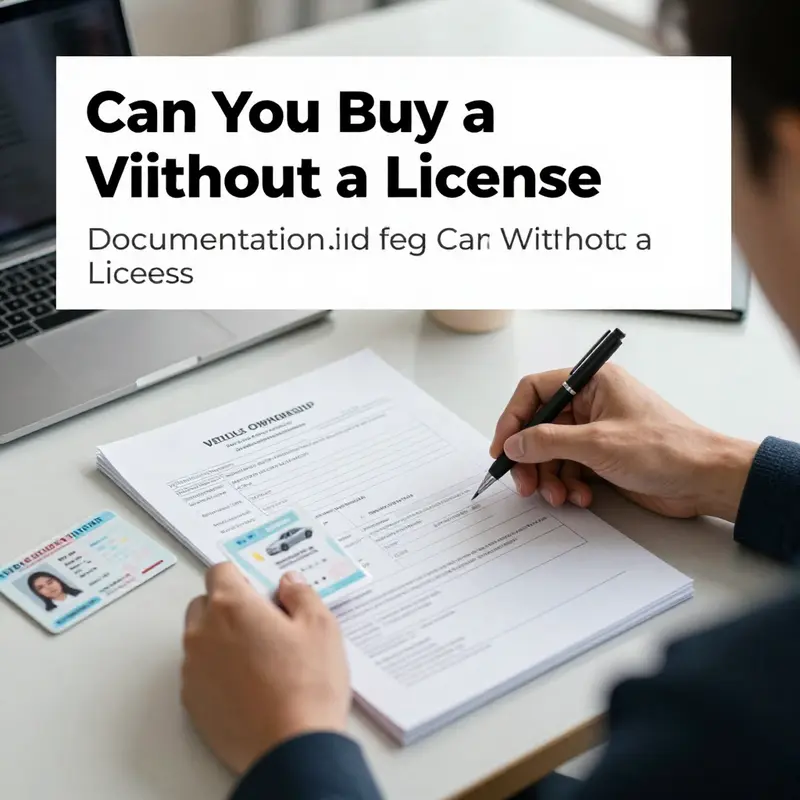
The documents you need to assemble tend to fall into several broad categories. First is proof of identity. A government-issued photo ID is standard across most regions. This need not be a driver’s license; a passport or state-issued identification card generally suffices to establish who you are. The second category centers on proof of ownership. You’ll typically require a bill of sale, a title transfer form, and sometimes a signed purchase agreement. These documents demonstrate that you are the rightful purchaser and that the seller has the authority to transfer ownership. The third category concerns the vehicle itself: the Vehicle Identification Number (VIN) must be verified during registration, and the vehicle must pass safety and, in some cases, emissions checks if your jurisdiction requires them. The fourth category is insurance. Even if you cannot legally operate the vehicle yet, many places require you to show proof of liability insurance before the vehicle can be registered in your name. Some regions also demand tax documentation—proof that sales tax has been paid or a valid exemption form has been issued. Finally, you may need to submit a title application to the local motor vehicle department, a formal request to record the transfer of ownership in public records.
As a buyer without a license, your experience with the registration office is not about demonstrating driving competence; it is about establishing lawful ownership and ensuring the vehicle is properly encumbered and taxed. The process typically begins with a simple, straightforward visit or online submission, followed by a review where the registrar verifies the VIN, checks for any outstanding liens or recalls, and confirms that your documents align with the vehicle’s legal status. In many places, the registration office will also take photographs of the vehicle, issue license plates, and deliver a registration card and title in your name. The key takeaway is that the registry’s primary concern is that the vehicle is legally yours and that all fees are paid. Whether you can drive it away that day is a separate matter governed by the licensing authority and the laws about operating a vehicle on public roads.
Nevertheless, the reality remains clear: owning a car does not grant immediate permission to drive. Driving without a valid license is illegal in most jurisdictions and carries tangible penalties. Fines vary, and in some areas they can escalate quickly, potentially leading to detention or more serious consequences if the offense involves reckless behavior or repeat violations. Insurance considerations are equally crucial. If you drive without a license, you may face higher premiums, a denial of coverage for certain incidents, or even a policy cancellation. Insurance underpins the financial risk of owning a vehicle; losing coverage for unlicensed operation undermines the reasons you might own the car in the first place. These legal and financial consequences reinforce a simple, but vital rule: you may own a vehicle without a license, but you may not legally operate it on public roads until you have earned and validated that license.
What, then, is a practical path if you find yourself in this situation? The straightforward option is to arrange transportation for the vehicle from the seller to your home or garage once ownership is established. This can be accomplished with a licensed driver—perhaps a family member or trusted friend who already holds a valid license—who can take responsibility for the vehicle during the post-purchase phase. Another option is to hire a licensed professional driver or use a towing or vehicle delivery service that operates under proper licensing and insurance. These arrangements keep you compliant while you complete the licensing process, which may involve studying, testing, and meeting any state-specific requirements for obtaining a license. In some cases, buyers choose to postpone the legal operation of the vehicle for a short period, arranging short-term storage or a temporary holding arrangement until a licensed driver can transport the vehicle and until the license itself is secured.
The broader significance of this separation—owning without driving—extends beyond the mechanics of a single transaction. It underscores the fundamental difference between civil ownership and the privilege of operation. This distinction can be confusing if you approach vehicle purchase with the expectation that the license should be a precondition for ownership. In reality, the civil framework in many jurisdictions treats the sale and the title transfer as a contract between private parties, a transaction governed by contract law and property law rather than by traffic licensure. The registration step, while requiring certain personal and vehicle-related information, serves chiefly as a registry of ownership and a mechanism to ensure that the vehicle is properly taxed and insured. The end result is a legally recognized ownership record, even if the person named on the title is not yet authorized to drive. This arrangement is practical: it permits people who are in the process of obtaining their license to prepare for mobility, without forcing them to abandon the possibility of car ownership entirely.
To recognize the nuanced landscape across states and countries, many readers find it helpful to consider how licensing and licensing rules interact with registration. Some jurisdictions maintain a nuanced framework where certain licensing or permit prerequisites affect the ability to register a vehicle in a buyer’s name, especially if the buyer is not a resident or lacks a local driving record. In other places, the two systems are more neatly decoupled: ownership and registration proceed with standard documentation, while licensing is a separate track that requires proof of competency before the keys are turned in and the engine comes to life. For readers seeking a deeper dive into how state rules affect licensing, a concise overview can be found here: state rules impacting driver licensing.
Throughout this discussion, a recurring theme emerges: the paperwork you assemble at the outset matters a great deal more for ownership and registration than it does for the question of whether you can legally drive the vehicle on public roads. The purchase contract, the bill of sale, the title, the VIN verification, the proof of insurance, and the tax documentation all exist to establish a clear chain of ownership and a clear financial obligation. They do not confer driving rights. That is the license’s domain, a separate requirement that protects the driver, passengers, and other road users. Understanding this boundaries-based approach helps buyers navigate the process without unnecessary confusion or risk. It also clarifies why some shoppers proceed with ownership first, then secure the license, and finally arrange the most efficient route to the road—whether that means driving themselves once licensed, relying on a trusted, licensed driver, or using professional services to bridge the gap between ownership and operation.
In practice, the journey from purchase to driving is a multi-act play: you buy and own, you register, you insure, you may even obtain a temporary plate or dealer plate in some jurisdictions, and only then do you pursue the license that will validate your day-to-day mobility. This order preserves the integrity of the process and keeps you compliant with the letter of the law while you work through your licensure. The result is a vehicle that sits ready for use, a legal title free of liens, and a path laid out for obtaining the necessary license so that, when you are ready to drive, you do so with full legal authorization and the confidence that you are aligned with both ownership rights and road safety obligations. The broader takeaway is practical and empowering: owning a vehicle can precede driving, but driving requires the license. By handling the paperwork with care and following local rules, you can secure ownership, establish your status as a responsible owner, and position yourself to navigate the licensing process smoothly, without being forced to delay the possibility of car ownership altogether. As readers move forward, the next chapter will continue to weave together the practical steps of compliance with the broader questions of mobility, safety, and personal readiness on the road ahead.
External resource: https://www.dmv.ca.gov/portal/
null
null
Owning a Car Without a License: Practical Steps, Risks, and Smart Alternatives
Owning a Car Without a License: Practical Steps, Risks, and Smart Alternatives
It is possible to own a vehicle without a driver’s license. Ownership is a civil and financial arrangement. Buying and registering a vehicle is about proving identity, paying for the vehicle, and transferring title. These actions do not, in most jurisdictions, require you to hold a driving license. That creates a space for people who cannot or choose not to drive but still want the legal and financial benefits of vehicle ownership. Yet ownership and operation are separate. The law treats them differently, and understanding that difference is essential to avoid legal trouble and unnecessary expense.
The mechanics of buying and registering a vehicle tend to be straightforward. A buyer provides identification, completes purchase paperwork, and arranges payment. For registration, authorities typically ask for the buyer’s official ID, the purchase invoice, the vehicle’s certificate of conformity or equivalent, proof of tax payment where applicable, and evidence of mandatory insurance. These documents establish ownership and let the vehicle be recorded in the owner’s name. In many places, the traffic or vehicle registration office does not ask for a driving license during registration because the process concerns ownership, not the right to drive. That means you can hold title and enjoy rights tied to ownership, such as selling the vehicle, consenting to modifications, or leasing it to others.
Owning a car without a license creates both opportunities and responsibilities. On the positive side, ownership allows you to control how the vehicle is used. You can hire a driver, rely on family members to transport goods or people, or place the vehicle in storage while keeping the option to use it later. Owners can also claim certain tax benefits or depreciation where applicable, and having title simplifies legal and insurance matters compared to relying on someone else’s vehicle. Ownership also gives you the ability to insure the vehicle in ways that suit your needs. Many insurers allow non-drivers to be the named owner, provided the policy covers the actual drivers. That separation can be useful for people who possess purchasing power but lack a license.
At the same time, several practical and legal risks demand careful attention. The most significant risk is operating the vehicle yourself. Driving without a valid license is an offense in most countries and can attract fines, penalties, and even criminal charges. Penalties may extend beyond the person caught driving. Depending on local laws, the registered owner may face administrative repercussions if they knowingly allow an unlicensed person to operate the vehicle. Insurance coverage is another concern. If an uninsured or unlicensed driver uses the car and causes damage, insurers may refuse claims or reduce payouts. That can leave the owner financially exposed for repairs, medical costs, or third-party claims.
Given these risks, owners without a license should adopt clear policies for vehicle use. First, restrict who may drive the car. Keep a written list of approved, licensed drivers and require them to provide proof of license and insurance coverage if they are not covered under your policy. Second, set expectations with drivers about maintenance, permitted uses, and reporting. Require that drivers notify you immediately after any incident or moving violation. Third, consult your insurer and get clarity on how coverage applies when multiple drivers use the vehicle. Make adjustments to the policy if necessary, such as adding named drivers or using a hire-driver endorsement.
There are practical alternatives and complementary strategies that let you own a vehicle without driving it yourself. Hiring a licensed driver is the most direct option. A professional driver can offer regular transport, logistical support for family needs, or secure handling of high-value vehicles. For occasional needs, contracting a driver through a service provider offers flexibility without long-term commitments. Renting or leasing with a driver is another route; some rental companies provide a driver for the duration of the rental, which can suit short-term needs or special events. Relying on ride-hailing or chauffeur services reduces the need for a private driver while keeping mobility flexible. Each option has cost implications, so weigh them against the convenience and control you want.
Some owners place their vehicles in storage for long periods. This can make sense when the owner plans to obtain a license later, expects to move to a location where they will drive, or uses the vehicle for non-road purposes such as display, collection, or off-road recreation where local rules permit. When storing a vehicle, maintain proper insurance, disable direct-start systems if recommended, and keep documentation current to avoid fines for unpaid taxes or expired registration.
Corporate ownership is another dimension. Companies can purchase and register vehicles under the business name, and those vehicles can be driven by employees or contractors with valid licenses. That structure can simplify liability and operational logistics in some cases. If you are considering buying a vehicle on behalf of an organization, ensure clear policies govern driver eligibility, vehicle maintenance, and incident reporting. For personal ownership through a business entity, be mindful of tax rules and liability implications. If the vehicle is titled to a company, different rules about personal use, insurance, and depreciation will apply.
When buying a vehicle without a license, pay attention to the paperwork. Make sure the transfer of title is complete and accurately recorded. Keep copies of all documents, including the purchase invoice, registration certificate, and insurance policy. If you intend to loan the car to others, consider a written loan agreement that defines responsibilities. That agreement can include a clause requiring the borrower to hold a valid license, maintain insurance, and reimburse the owner for any fines or damages caused during the loan period. Such clarity reduces disputes and helps protect the owner’s legal and financial interests.
Even if you do not plan to drive, learning about driving rules and safety is useful. Understanding road laws, vehicle maintenance basics, and insurance terminology helps you manage your asset intelligently. It also prepares you to obtain a license in the future if you decide to drive. Joining a driving school, observing licensed drivers, or reviewing local traffic regulations are practical ways to build knowledge before taking formal tests.
One final practical consideration is regional variation in rules. While many places do not require a license to buy or register a car, administrative practices and specific forms may differ. For example, some jurisdictions require a power of attorney or a local address to complete registration. Others have unique inspection or emissions rules that affect registration. If you plan to own a vehicle in a state or nation that enforces strict inspection regimes or registration demands, check local guidelines in advance. For a broader view of how regional rules can affect driver licensing and vehicle-related requirements, see this overview of how state rules impact licensing and regulation: https://drivernvehiclelicensing.com/state-rules-impact-on-driver-licensing/.
Ownership without driving is a legitimate choice for many people: those who are medically unable to drive but need a vehicle for family logistics; expatriates awaiting local licensing; collectors who buy vehicles for restoration or display; and parents who buy cars for adult children who are not yet licensed. In every case, careful planning, clear communication, and appropriate insurance coverage make the arrangement workable. Keep documents current, set firm rules for drivers, and consult legal or insurance professionals when in doubt.
The gap between legal ownership and legal operation is central to this topic. Buying a vehicle without a license is often a straightforward civil transaction. Driving without a license is a separate matter and typically prohibited. Approaching ownership with that distinction in mind lets you enjoy the benefits of control and security while avoiding the risks tied to unlicensed operation. For specific procedural guidance and official rules about buying and registering vehicles, consult authoritative government guidance relevant to your country or region, such as the national vehicle licensing or registration authority. For further reading on official purchasing and registration requirements, see the government guidance cited in the research: https://www.gov.uk/guidance/buying-and-selling-vehicles
Final thoughts
Purchasing a vehicle without a driver’s license is indeed possible, governed by specific legal frameworks and requirements. Whether you are a new driver considering your first purchase, an existing driver interested in understanding the nuances of ownership, or an auto dealership assessing your customer base, this knowledge is essential. While the transaction itself may be straightforward, the implications of ownership and usage necessitate diligent consideration and planning. Always ensure compliance with traffic laws when operating your vehicle and explore alternatives for driving, such as relying on licensed individuals. Recognizing your rights and responsibilities as a vehicle owner without a driver’s license is key to navigating this unique aspect of vehicle ownership effectively.