
In China, the ability to purchase a vehicle without holding a driver’s license raises important considerations for new drivers, vehicle owners, and auto dealerships alike. While the Civil Code allows individuals with full civil capacity to engage in vehicle transactions without a license, the implications extend beyond mere ownership. This article explores the legal framework behind such purchases, outlines the steps involved in acquiring a vehicle, discusses the consequences of ownership without a license, and offers alternative solutions for vehicle operation. By delving into these aspects, we provide a comprehensive understanding for potential buyers, whether they are new drivers and learners, existing drivers, vehicle owners, or auto dealerships.
Buying a Vehicle Without a Driver’s License in China: Ownership, Law, and the Path to Driving
When the question arises whether you can buy a car without a driver’s license in China, the short answer is yes. Legally, owning a vehicle is a civil transaction governed by the Civil Code of the People’s Republic of China, and the law does not demand that the buyer hold a license to purchase. In practical terms, the act of buying a car—the signing of a sale contract, the exchange of money, arranging insurance, paying the vehicle purchase tax, and completing registration—can all be completed without a driver’s license. The civil act of purchase rests on capacity and the ability to engage in civil legal acts, not on the ability to steer a car down a public street. This distinction between ownership and operation is essential for anyone considering mobility in a country whose roads demand proper licensing for actual driving. The distinction becomes even clearer when we consider the Road Traffic Safety Law, which places driving squarely under the requirement of a valid license. In other words, you may legally own a vehicle, but you may not legally drive it on public roads without meeting the licensing prerequisites. Fines, detention, or other penalties await those who take the wheel without meeting those standards. The practical implication is straightforward: if you plan to use a vehicle you own, you must either rely on someone with a valid license to operate it, or obtain your own license through the proper training and examination routes before you ever turn the key and move the vehicle on a public road.
This framework applies broadly, including to foreigners who come to China with the intention of purchasing a car for business needs, family life, or personal mobility. The act of buying remains the same whether you are a local citizen or a foreign resident. You can present a valid passport and residence permit, complete the necessary paperwork, and proceed through the standard purchase and registration steps just as a Chinese citizen would. What changes with foreign status is the subsequent use of the vehicle: to drive it, you must navigate China’s licensing system and, for many, the process of converting a foreign license into a Chinese license or obtaining a Chinese license through the local vehicle management office (VMO).
From the moment you decide to buy, the journey unfolds in predictable stages. A sales contract is signed to establish the terms of sale, ownership transfer, and delivery timing. Payment follows, and once the funds have settled, attention turns to the administrative responsibilities that accompany ownership. You will encounter the vehicle purchase tax, which is part of the national tax regime for vehicles, and you will be guided through insurance choices. In China, vehicle insurance is not merely a courtesy; it is a legal safeguard that supports compensation and risk management should accidents occur. The registration procedure is the last legal step to grant you formal ownership in the eyes of the state. Importantly, none of these steps relies on a driver’s license. You can register a car under your name with valid identification documents, the purchase invoice, and the other materials required by the local registry office.
Yet the same processes that enable ownership also reveal a fundamental constraint: driving a vehicle on public roads demands a license. This boundary is not merely a bureaucratic formality but a public-safety framework designed to ensure that drivers possess the knowledge, skills, and responsibility expected on crowded Chinese streets. The penalties for driving without a license are serious and consistent with the broader traffic-safety regime. They include fines and potential detention, depending on the circumstances. The law makes no exception for owners who are still in the process of obtaining a license, or for foreigners who have not yet synchronized their foreign credentials with Chinese requirements. Therefore, if your plan involves operating a vehicle, you must proceed with the licensing route in parallel to ownership.
For foreign residents, the logic of ownership being separate from operation is particularly pertinent. The purchase process remains accessible to both Chinese citizens and foreigners, provided that the buyers have the necessary documentation—typically a valid passport and a residence permit. Owning a vehicle becomes a practical option for navigating daily life, business operations, or logistical needs, especially in places where public transportation does not fully meet the demand. The opportunity to own a vehicle without a license offers a way to secure mobility while you map out the steps toward legal driving. That path, however, requires attention to the licensing landscape and the specific procedures that apply to foreigners who wish to drive in China.
The key to transforming ownership into mobility lies in understanding two connected channels: the licensing route and the practical realities of obtaining a Chinese driving license as a foreigner. The licensing route typically involves a choice between converting a foreign license or pursuing the Chinese licensing process anew. The correct pathway depends on your longer-term plans in China, your residency status, and the compatibility of your current license with Chinese rules. The conversion option, when available, is often the most straightforward path for those who have already demonstrated driving competence abroad. It requires engaging with the local vehicle management office (VMO) in the jurisdiction where your residence permit is issued or where you have registered your domicile. This process can be influenced by factors such as the length of stay and the local administrative guidelines, which may vary from one city to another. The alternative—completing the Chinese licensing process—entails the typical routes of theory tests, practical exams, and meeting the medical and language requirements, all tailored to Chinese driving standards and road regulations.
The practical truth that emerges from this framework is clear: you can buy, own, and register a vehicle without a driver’s license, but you cannot legally drive it on public roads until you have the right license. This separation has implications for planning and daily routines. If you are a foreigner, you might purchase a car to support your work or family life while you arrange licensing steps in the background. You may also choose to hire a licensed driver or arrange for a trusted companion with a valid license to operate the vehicle during the transition period. The decision depends on your needs, the local traffic rules in your area, and your ability to secure the required documentation and approvals for driving.
In practical terms, those who arrive with a sense of how mobility unfolds in China will recognize the value of starting the licensing process early. The registration and sale steps you already complete lay a foundation that remains intact regardless of your driving status. As you approach the moment where you intend to drive, you will need to align with the licensing system. For foreigners, this alignment often means navigating the foreign-license recognition pathway and, if warranted, converting your license through the VMO. This route emphasizes the importance of knowing where to go and what documents to prepare. While rules can vary by locality, the general approach remains consistent: establish residence, present valid identification, and demonstrate your driving competence through the required examinations or conversions. The local vehicle management office serves as the gatekeeper for these processes, providing the official guidance for your particular city or province.
It is also important to consider the broader ecosystem that surrounds vehicle ownership and driving in China. Insurance remains indispensable, and vehicle registration is tightly linked to the owner’s identity, whether you are a citizen or a foreign resident. The purchase tax is a national element that accompanies the act of buying, and ensuring compliance with insurance, tax, and registration sets a stable legal footing for your car. To the extent that you might be balancing work, residence, and travel plans, the choice to buy before you drive allows you to secure the asset while you navigate the licensing landscape. It also posits a practical workaround if you anticipate delays in obtaining a Chinese driver’s license—the car remains a resource you can leverage for work or daily life, with a licensed driver or a future license in hand.
For readers who plan to pursue driving in China as a longer-term goal, the chapter’s trajectory now points toward the licensing side. The foreigner who intends to stay and operate a vehicle will eventually engage with the VMO to convert a foreign license or to complete a Chinese licensing program. The precise steps can vary by city, as local guidelines shape the order and requirements of documentation, testing, and medical examinations. This is not a detour; it is a natural progression that respects both the civil-rights of ownership and the public-safety obligations of driving. In practical terms, you will want to keep track of your residence status, ensure your address registration aligns with your vehicle’s registration, and maintain all necessary documents in order. A well-managed approach reduces friction when you move from ownership to operation and helps you integrate into the broader traffic-regulation framework that governs every motorist in the country.
As you contemplate this landscape, the internal crosswalk from ownership to operation becomes a crucial consideration. The purchase creates a legal asset that can be employed for mobility once you meet the licensing requirements. The distinction is not merely academic; it translates into real-world decisions about scheduling, budgeting, and daily routines. If your aim is to maximize flexible mobility while you secure a license, buying a car without a license can be a pragmatic step. It is essential, though, to maintain an awareness of the legal restrictions that govern driving and to anticipate the concrete steps needed to obtain the necessary authorization to operate on public roads. The path to driving, for many foreigners, begins not at the wheel but in the office of the VMO—the place where IDs, permits, and driving records converge to determine whether you can legally navigate the streets in a car you already own. And while the Chinese system offers a clear route to license conversion or license acquisition, it is the responsibility of the vehicle owner to align ownership with operation in a way that respects both the Civil Code’s protections of civil acts and the Road Traffic Safety Law’s mandate for safe driving.
For readers who want to explore practical routes further, a better understanding of how licensing rules impact driving during a stay in the United States or other contexts can illuminate broader patterns of driver licensing. The evolving nature of state rules and licensing requirements, and how they affect both foreign and domestic drivers, is worth observing as you navigate a new mobility environment. You can consult the broader literature on how regulatory frameworks shape driver licensing across jurisdictions, and consider how similar principles apply in different governance contexts. This chapter keeps you anchored in the specific Chinese framework while acknowledging universal themes around ownership, licensing, and road safety. As you finalize your decision about buying a car and planning to drive, remember that the crucial hinge is licensing—and that ownership can precede operation, long before you ever turn the ignition.
Internal link to related considerations: state rules impacting driver licensing.
For those seeking official guidance on licensing as a foreigner, the following resource offers country-specific guidance and step-by-step instructions for first-time driving-licensing procedures in the Chinese context: https://english.beijing.gov.cn/livinginbeijing/firsttimeapplicationfordrivinglicense/
Ownership Without the Wheel: Navigating Vehicle Purchases Without a License in China
In China, the act of buying a car can reflect a broader truth about civil life: ownership does not automatically confer permission to operate. The question, can I buy a vehicle without a license, touches on two distinct legal realities that coexist in the same system. On one hand, the purchase itself is a civil transaction governed by the Civil Code of the People’s Republic of China, designed to regulate property acquisition, contract formation, and the transfer of ownership. On the other hand, the privilege to operate a motor vehicle on public roads rests under separate traffic-safety provisions that require a valid driver’s license. The practical implication is not a paradox of the law, but a clean separation of ownership and operation, each framed by its own rules and safeguards. For a prospective buyer who does not yet hold a license, this distinction matters because it clarifies what is legally permissible at the point of sale, what is prohibited at the point of use, and how to navigate the path from ownership to legitimate driving.
From a legal standpoint, the fundamental premise is straightforward: you can purchase a vehicle even if you do not hold a driver’s license. The Civil Code recognizes civil capacity and enables individuals who can independently carry out civil acts to enter into a vehicle purchase contract, sign the necessary documents, and complete the financial aspects of the deal. In practice, this means you may need to present valid identification and a set of documents that demonstrate your eligibility to engage in civil transactions and to register a vehicle in your name. Commonly accepted materials include an ID card, the purchase invoice, and a variety of supporting documents such as a vehicle qualification certificate, a tax payment receipt, and proof of insurance. The exact set of required materials can vary by city and by the particular vehicle transaction, but the underlying principle remains: the law does not demand a driver’s license for the act of buying. The emphasis is on civil capacity and identification rather than on driving credentials. This practical arrangement aligns with how civil transactions are designed to function in many jurisdictions: the transaction is about ownership and transfer, not about the right to operate.
As a buyer who foresees the need to drive eventually, it is essential to keep the distinction between ownership and driving in mind as you move through the process of purchase. The steps involved—signing a sales contract, arranging payment, paying the vehicle purchase tax, obtaining insurance, and completing the registration procedures—form a sequence that is navigable without ever presenting a driver’s license. The registration process, in particular, requires you to provide the relevant identification documents, the invoice, and other materials to associate the vehicle with your name. In many cases, this is where the journey toward legitimate ownership ends and the journey toward lawful operation begins, because the right to drive is governed by a separate framework.
Despite the permissibility of ownership without a license, there is a strict boundary around driving on public roads. The Road Traffic Safety Law of the People’s Republic of China explicitly prohibits operating a motor vehicle without a valid driver’s license. This prohibition is not merely a formal rule but a cornerstone of road safety, designed to ensure that anyone behind the wheel has demonstrated the requisite knowledge, skills, and judgment to manage the complexities of traffic. The penalties for driving without a license are real and enforceable: fines, detention, and even the impoundment of the vehicle. These consequences reflect the seriousness with which traffic safety authorities treat the act of driving without authorization. The law is clear enough to deter casual experimentation and stringent enough to create a strong incentive to obtain the license before attempting to drive, regardless of whether you own the vehicle already.
For individuals who purchase a vehicle without a license, the practical implications extend beyond the letter of the law. Insurance is a critical area where the separation between ownership and driving can become tangled. Many motor insurance policies are structured to cover the vehicle itself, rather than the driver, which means the policy may be valid regardless of who is driving. However, insurers frequently scrutinize claims more closely if the registered owner does not hold a driver’s license or if the operator at the time of an incident cannot be identified as a licensed driver. In such situations, a claim could be subject to heightened investigation, or coverage could be narrowed if the insurer concludes that driving without a license contributed to the incident. This dynamic underscores a broader caution: while the act of buying may be legally straightforward, the conditions under which insurance coverage applies can become more complex when the owner lacks a license or when an unlicensed driver is involved in a loss.
The decision to purchase without a license inevitably raises questions about who will drive the vehicle during the interim period before licensing is obtained. One option is to arrange for a licensed driver to operate the vehicle. This arrangement, while common in practice, must be managed carefully to remain compliant with both civil and traffic laws. The arrangement should be documented in a clear and legitimate manner, with the licensed individual recognized as the actual operator while the owner remains responsible for the vehicle’s registration, insurance, and compliance with applicable regulations. Alternatively, the owner can pursue the process of obtaining a driver’s license, which typically involves training, testing, and compliance with licensing authorities. While this path requires time and effort, it ultimately grants the privilege of driving and aligns with the long-term goal of full legal use of the vehicle on public roadways. The importance of moving toward licensing quickly cannot be overstated, since it reduces legal and financial exposure and ensures smoother daily operation once the vehicle enters regular use.
To the extent that readers seek broader context about how licensing rules vary by jurisdiction or evolve over time, one might explore related discussions on state-level licensing frameworks and their implications for vehicle ownership and operation. See the discussion on State Rules Impact on Driver Licensing for a broader comparative perspective. State Rules Impact on Driver Licensing. This reference can help illuminate how different regulatory environments shape the practical realities of owning a vehicle without a license, even as the Chinese framework remains distinct in its separation of ownership and driving rights. It also reinforces a central point: ownership and driving are governed by related but separate rules, and navigating them requires attention to the appropriate legal channels and official guidance.
In practice, the path from purchase to driving often unfolds through a sequence of deliberate steps. Begin with the purchase contract, which formalizes the transfer of ownership and sets out all terms of sale. Ensure that the contract is clear about the vehicle’s identity, the price, and any warranties or seller obligations. Next comes the financial arrangement and the timely payment of the purchase tax, which is a statutory obligation tied to vehicle ownership. The insurance piece should be arranged in parallel with registration; while insurance might not depend on license status for the vehicle itself, securing coverage early protects against unforeseen events and establishes a baseline of risk management. Finally, complete the registration in your name, presenting the required identification and the sale invoice. These steps collectively establish your legal ownership and enable you to meet the regulatory requirements for possession. Only after these steps are completed should you contemplate driving, and only after you have secured or earned a license should you take to public roads.
The broader message for prospective buyers is simple in its core: you can acquire a vehicle without a license, but you cannot drive legally without one. This distinction is not an obstacle to ownership but a gatekeeper to safe, lawful road use. It invites a careful, proactive approach to licensing and to the practicalities of vehicle management. If you are planning to purchase a vehicle primarily for display, storage, or non-driving use, the legal framework supports that intention as long as the vehicle is not operated on public roads. If, however, you intend to drive, the prudent course is clear: pursue the license with diligence, complete the required training and examinations, and ensure that the person who operates the vehicle is fully licensed and responsible for road safety.
The realities of insurance, registration, and ongoing compliance also remind us that ownership carries duties beyond merely holding title. The owner bears responsibility for ensuring that the vehicle remains properly registered, insured, and maintained in a manner that aligns with local regulations. The interplay between ownership and operation thus becomes a practical governance question: how to manage the asset in a way that respects the law, protects the owner’s interests, and upholds public safety. In this sense, the chapter on purchasing a vehicle without a license serves not as a loophole but as a precise articulation of how civil rights translate into everyday commerce while road safety standards govern how those rights are exercised behind the wheel.
As you consider your options, it may be helpful to reflect on your timeline and priorities. If your immediate need is to legally own a vehicle for purposes other than direct driving, the process is straightforward and well within civil law. If your goal is to become a licensed driver, the sooner you engage with the licensing process—the training, the exams, and the regulatory steps—the sooner you can unify ownership and operation under one legal framework. The law supports both paths, with its own safeguards, so the prudent strategy is to align your actions with the legal requirements from the outset. By doing so, you minimize regulatory risk, clarify insurance expectations, and lay a solid foundation for safe, compliant driving when you obtain a license. This approach respects both the Civil Code’s emphasis on civil capacity and the Road Traffic Safety Law’s insistence on driver qualifications, reminding us that legal life in a modern society often requires managing multiple, sometimes divergent, obligations without compromising either.
External reference: Ministry of Public Security of the People’s Republic of China – Road Traffic Safety Law. https://www.mps.gov.cn/n1054368/n1054371/c2313793/content.html
Owning Without Driving: The Legal and Practical Path to Buying a Vehicle When You Don’t Have a Driver’s License
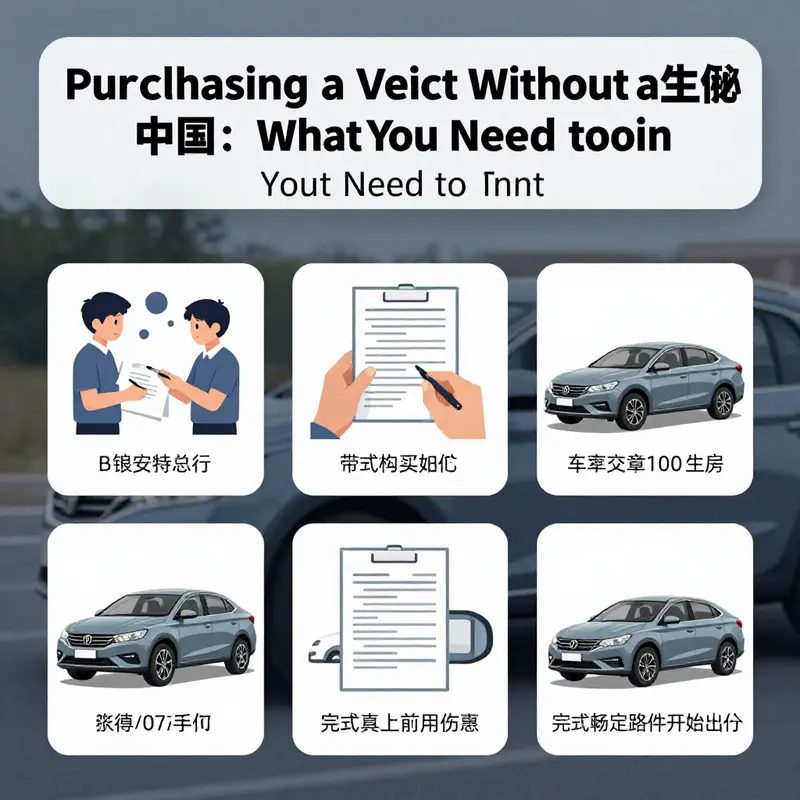
When you imagine spending days or weeks researching a car, the last detail you expect to trip over is whether you hold a driver’s license. Yet for many shoppers, especially those juggling time, budget, or licensing delays, the question is not if you can own a vehicle, but whether you can buy one without a license. The core truth, grounded in civil law in many jurisdictions, is simpler and more nuanced at the same time: ownership of a vehicle is a civil act. It is separate from the right to operate it on public roads. In this sense, you can complete a purchase, sign the sales contract, transfer funds, and register the car in your name even if you do not yet hold a valid license. The legal framework treats the acquisition as a civil transaction, governed by the Civil Code and related regulations, not a license prerequisite. You are free to become the vehicle’s owner, but your ability to drive on public streets remains restricted by the license requirement. This distinction matters, because it shapes the entire buying process and sets practical boundaries on how you can use the car the moment you sign the deal.
In practice, the steps involved in buying a vehicle without a license follow a clear sequence, though the specifics can vary by country and region. Typically, you will sign a sales contract, arrange payment, pay any applicable vehicle purchase tax, secure insurance, and complete registration procedures. Each of these steps hinges less on your ability to drive than on your identity, your address, and your financial capacity. Identification documents, the purchase invoice, and documentation proving ownership are the pillars of the process. In many places, none of these steps requires you to hold a driver’s license. The contract formalizes the transfer of ownership, the payment settles the price, and the registration records you as the legal owner. Insurance, though, introduces a potential wrinkle: insurers often ask for a license number to issue a policy, which can complicate the path to coverage. Even so, there are strategies to secure coverage that does not rely solely on the license, such as owner-only policies, or listing a licensed primary driver if permitted by law. The practical choreography of these steps becomes a dance between civil rights, consumer protections, and the separate road-use rules that govern driving.
A crucial clarification often travels with the topic: owning a vehicle does not confer the right to operate it. The Road Traffic Safety Law or its equivalents in various jurisdictions typically require a valid driver’s license to drive a motor vehicle on public roads. Driving without a license is an offense with potential penalties, including fines or detention, depending on how a jurisdiction enforces traffic laws. This separation between ownership and operation can feel counterintuitive at first. It means you can own and register a car while relying on a licensed friend, family member, or coworker to drive it, or you can take steps to obtain your own license before you ever put the key in the ignition. Understanding this distinction helps you plan realistically: you should arrange for a licensed driver if you intend to use the vehicle soon, or begin the licensing process concurrently with the purchase, so you do not confront a long wait after you own the car.
The legal landscape is not identical everywhere. In China, for instance, the civil code clearly supports the notion that a buyer without a driver’s license can acquire ownership and complete the registration process, provided they have full civil capacity and can independently conduct civil acts. The law does not require the buyer to hold a license for ownership. Yet the same framework insists that driving on public roads requires a valid license. The practical upshot is that a person may legally own a car and have it registered under their name, while the right to operate the vehicle remains contingent on licensing and training. This dynamic underscores a broader truth shared by many jurisdictions: the act of purchasing and the act of driving are governed by different legal regimes, each with its own criteria and consequences.
To navigate this terrain with clarity, you should approach the buying process as a sequence of discrete, nonoverlapping steps. Start with understanding the regulations that apply to your place of residence or the place where you intend to register the vehicle. Ownership is largely a civil matter; what happens afterward—registration, taxation, and insurance—depends on the administrative rules of the local authority and the insurance market. Some regions may require proof of address, proof of identity, and the vehicle’s purchase invoice, while others may add checks related to taxes or plate issuance. The practical implication is simple: read the local rules, prepare the documents, and proceed with the purchase as a civil transaction even if you have not yet earned the right to drive.
When you search for a vehicle, you have several avenues. Private sellers, dealerships, and online marketplaces each present their own trade-offs. Private sales can be attractive for price or negotiation flexibility, but they may require you to shoulder more of the paperwork yourself, including the bill of sale, title transfer, and the coordination of any warranties or disclosures. Dealerships typically manage much of the paperwork, and they may even file the title transfer and registration on your behalf. Regardless of the channel, you will need valid identification and proof of residency, and you will want to obtain a signed bill of sale and the purchase invoice as part of the transaction. The contract itself is a binding arrangement that secures your transfer of ownership and sets the terms of payment, while the registration documents formalize your role as the owner in the eyes of the authorities.
A nuanced but essential element of the buying process without a license is insurance. In most markets, you will be expected to carry some form of motor vehicle liability insurance. The irony is that insurers often ask for a license number when issuing a policy, and some may require a driver to be listed as the operator. If you do not yet hold a license, you can explore a few avenues. One option is to obtain an owner-only policy or a policy that designates a licensed driver as the primary operator while the car remains in your name. Another possibility is to list a trusted licensed driver as the named insured or to work with insurers who offer flexible requirements for non-driving owners. Each option carries implications for cost, coverage limits, and eligibility, so it is wise to shop around and ask direct questions about how a policy can be structured to accommodate ownership without driving. Insurance is not merely a cost; it is a safeguard that protects you and others on the road, and its availability shapes how quickly you can complete the ownership phase of the transaction.
The registration phase is the final bridge between purchase and ownership. Registration, in most places, confirms your ownership of the vehicle, assigns you the vehicle’s title, and often initiates the process of obtaining license plates or a vehicle registration number. The requirements for registration can be deceptively simple or surprisingly detailed. You will typically need the purchase invoice, the signed transfer of ownership, the vehicle identification number, proof of insurance, and your identification. In many jurisdictions, it is possible to register the vehicle under your name even if you do not yet hold a license to drive. The practical reality is that registration establishes your legal linkage to the vehicle; it does not, by itself, provide the right to drive it. Only after you pass the licensing prerequisites, or if you designate a licensed driver, can you operate the vehicle legally on public roads.
An important element of the conversation about buying without driving is the public policy and safety context. Driving a motor vehicle without a license undermines traffic safety systems and can put other road users at risk. This is why the licensing requirement exists, separate from ownership. It also explains why the process of acquiring a vehicle without a license is bounded by insurance practices, registration rules, and the need for a licensed operator to use the vehicle on public roads. For readers who want to understand how these factors interplay in a broader policy framework, the topic of state rules and their impact on driver licensing offers a useful touchstone. You can explore a concise overview of how state rules influence licensing at this resource: state rules impact on driver licensing.
As you weigh the decision to buy without a license, think about your short-term needs and long-term plans. If your goal is to have access to a vehicle for occasional use—perhaps for a business task, a weekend trip, or a temporary commute—the ownership route makes sense, provided you are prepared to arrange licensed driving elsewhere. If your aim is sustained use, you will likely want to begin the licensing process in parallel with the purchase. You can enroll in driver education courses, schedule the required tests, and arrange practical training while the vehicle is in your name and registered in your possession. This approach minimizes downtime between ownership and operation and helps you align your legal rights with your practical needs.
It is worth noting that information can vary widely by jurisdiction, and even within a country, local policies may create exceptions or additional steps. Therefore, the most reliable path is to consult official resources in your area—the local vehicle registration authority, the tax office, and the insurance providers you plan to use. In China, for example, official sources like the Ministry of Public Security provide guidance on the separation between ownership and driving rights, highlighting that a car can be owned and registered without a license, while driving requires proper licensing. This distinction is essential for anyone considering a purchase without immediate driving rights. By grounding your actions in official guidance and practical planning, you can navigate the purchase confidently, avoid missteps, and position yourself for a seamless transition from ownership to operation when your licensing journey is complete.
Finally, as you map out the entire process, maintain a clear sense of boundaries between civil acts and road use. You may own the vehicle, insure it, and register it under your name, but the act of driving requires a license. This clarity helps prevent legal trouble and ensures you can enjoy the vehicle responsibly when you are legally permitted to drive. For readers seeking a broader perspective on licensing policy and its practical effects, the linked resource above provides a compact overview of state-level considerations, while a widely cited external article offers additional real-world guidance on buying a car without a license and the steps involved in various jurisdictions. If you are unsure which path matches your situation, you might start with a simple checklist: confirm eligibility to sign a sales contract, verify the required documents for ownership transfer, assess insurance options for non-driving owners, and plan the licensing steps that will unlock your ability to drive. That approach keeps the process orderly and reduces the risk of backtracking as your circumstances evolve.
External resource: https://www.cars.com/articles/can-you-buy-a-car-without-a-license-132847/
null
null
Rethinking Mobility: Navigating Vehicle Ownership and Alternatives When a Driver’s License Isn’t In Hand
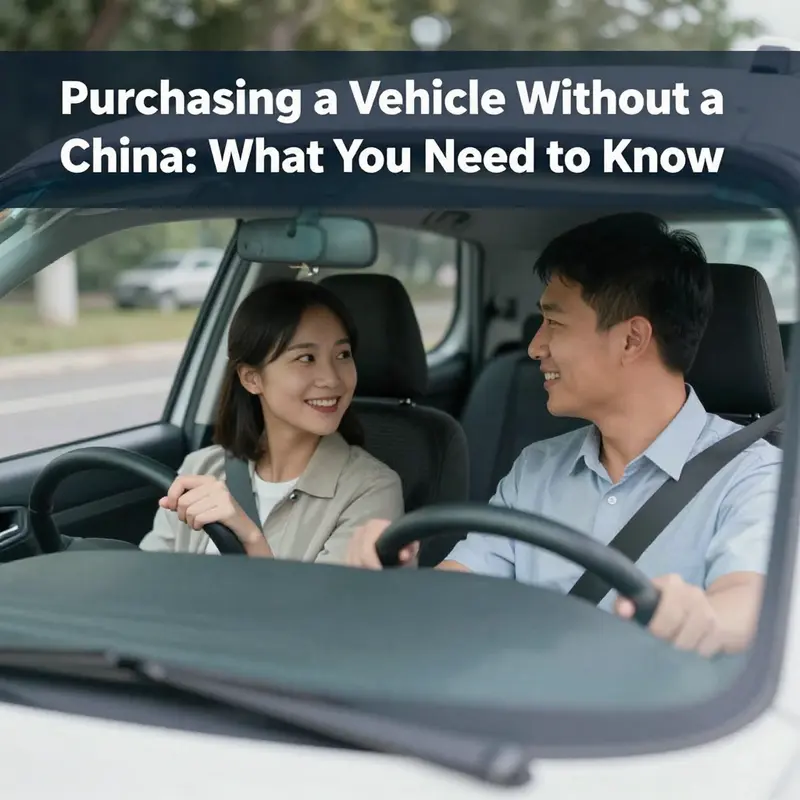
The question of whether you can buy a vehicle without a license sits at the crossroads of civil law and everyday mobility. In China, as the civil code makes clear, purchasing a car is a civil act. If you possess full civil capacity and can independently carry out civil legal acts, you are eligible to buy a car. The law does not require the buyer to hold a driver’s license. The purchase itself—signing a contract, paying the price, handling taxes, arranging insurance, and completing registration—does not hinge on possession of a license. The practical friction, however, changes the moment you turn the key and plan to drive. Driving a motor vehicle on public roads requires a valid license under the Road Traffic Safety Law. That ban is not simply bureaucratic; it is a safeguard designed to ensure that the person behind the wheel has received training, understands traffic rules, and has demonstrated competence. So you can own without driving, but you cannot legally operate a vehicle on public streets without meeting licensing requirements. If you find yourself in a situation where you have bought a car but do not yet hold a license, the sensible path is to arrange for a licensed operator, or to pursue the license through proper training and examination before attempting to drive. The practical implication is clear: ownership and operation are two different rights and responsibilities, even when they share the same object. To grasp how this split shapes the broader landscape of mobility, it helps to look beyond ownership and consider how people get from A to B when driving themselves is off the table or profoundly inconvenient.
The absence of a license, however, does not consign a person to streets empty of mobility. It simply pushes the question toward alternative models of access and use. The legal framework allows individuals to hold title to a vehicle and to engage with the market in terms of ownership, financing, and maintenance, while the act of driving remains tethered to the licensing system. This separation is propitious for imagining new configurations of mobility that do not depend on personal licensure. One such configuration is the emergence of autonomous driving technologies that can, under controlled conditions, operate without a human driver. Such technologies are not yet a universal replacement for the license, but they reveal a pathway in which mobility becomes less about who is behind the wheel and more about who is in the control software that steers the vehicle. In countries and cities where pilots exist, these systems are designed to be tested under strict oversight, with safety protocols, geofenced zones, and remote monitoring. They represent not just a technical achievement but a cultural and regulatory shift toward a more flexible interpretation of what it means to be mobile.
The technical frontier in this space is not a vague ideal; it rests on a hierarchy of automation that scholars and engineers have codified. At Level 4 autonomy, vehicles are designed to operate without a human onboard in defined areas and weather conditions, guided by high-definition mapping, robust sensor suites, and sophisticated decision-making algorithms. In practice, Level 4 systems can navigate urban environments with a degree of reliability that begins to resemble human driving in routine scenarios. They are not universally available everywhere, and their operation is typically bound to preapproved geographies or times of day under regulatory oversight. Yet they signal a plausible future for individuals who cannot or choose not to drive because these systems can be summoned, rather than owned and operated personally. A growing portion of mobility providers envisions fleets of such autonomous vehicles that people can access on demand, much like a ride-hail service but without a human driver. The appeal is straightforward: for elderly residents, people with mobility impairments, or those in areas with sparse public transit, a self-driving fleet can translate a vehicle’s ownership into genuine mobility without the need to obtain a license or learn to drive.
This shift toward autonomous and shared mobility is not simply a matter of technology; it is deeply entwined with public policy and urban design. Governments and cities are experimenting with regulatory frameworks that allow controlled testing and gradual deployment of autonomous capabilities. Pilot programs in select urban centers have started to demonstrate how robotaxi-style services can be integrated into existing transportation ecosystems. The emphasis in these programs is safety, accountability, and equitable access. Rather than replacing human drivers overnight, the aim is to validate scenarios in which autonomous vehicles can complement or supplement traditional transport options, particularly in environments that create barriers to license-based driving. Such pilots help regulators understand risk, road usage patterns, and the kinds of protections needed when vehicles operate without a human operator. The result is a landscape in which mobility becomes less about possessing a license and more about the infrastructure, governance, and technology that enable safe, reliable transportation for people who may not drive themselves.
Within this evolving framework, it is useful to anchor the discussion in the practical realities of what it means to own a car without a license today. You can sign the contract, complete the registration, insure the vehicle, and manage maintenance. You can own the asset, but you cannot legally drive it on public roads unless you obtain the appropriate license. This separation invites a broader contemplation of alternatives that preserve access to mobility without the burden of license attainment for everyone. It also raises important questions about how society wants to allocate responsibility—who bears consequences in the event of a fault, how insurance policies adapt when the operator is a software system, and how cities will adapt their traffic management and charging facilities to accommodate autonomous fleets. In thinking through these questions, it becomes clear that the path to mobility is not a single route but a network of options that can coexist with traditional licensing regimes.
As you navigate these options, a crucial nuance is the difference between truly autonomous operation and what is often marketed as self-driving. The ISO/SAE PAS 22736 standard helps separate the hype from the reality by clarifying the distinctions among levels of automation and the capabilities that genuinely qualify as autonomous driving. This standard provides a framework for understanding what a vehicle can and cannot do without human intervention, and it helps prevent the public from conflating partial automation with full autonomy. For readers who want a more granular technical grounding, this standard offers a reference point that informs both policy discussions and consumer expectations about what “autonomy” means in practice. In other words, owning a car without a license sits within a broader ecosystem where technology, regulation, and personal circumstances converge to shape mobility options in meaningful ways. The practical upshot is that you can maintain ownership and access to a vehicle while you until you secure a license, or while you explore service-based mobility options that do not require personal licensure.
For those who want to explore the regulatory texture around licensing more deeply, the landscape is nuanced and varies by jurisdiction. The ability to own a vehicle without a license does not automatically grant driving rights. This distinction matters for urban planning, insurance underwriting, and even personal financial planning, because the costs, liabilities, and responsibilities shift depending on whether you are the vehicle owner, the driver, or a designated operator. If you wish to understand how different state or provincial rules intersect with licensing requirements, a detailed look at the evolving regulatory discourse can be illuminating. See the discussion on state rules impact on driver licensing. The broader point is that policy is actively adapting as technology redefines what it means to move through space. The rights to own and to operate are increasingly decoupled, and smart mobility thinkers are beginning to design systems that acknowledge this decoupling without compromising safety. Those who pursue ownership while awaiting a license may soon find themselves at the cusp of a mobility system where access is decoupled from license status in a controlled, constructive way.
The practical takeaway for a reader who asks, “Can I buy a car without a license?” is not simply a legal yes or no. It is a prompt to imagine mobility as a set of options that can be tuned to different life circumstances. If you cannot or do not want to drive, ownership remains a viable path to custody, value, and responsibility over a durable asset. If you want to be mobile in the near term, you can rely on licensed drivers, arrange an autonomous or semi-autonomous service, or participate in pilots that demonstrate how autonomous fleets can bridge gaps in traditional transit. The conversation expands when you consider the financial, ethical, and social implications of each option: the costs of insurance and registration, the risk allocations under different regimes, and the potential for inclusive mobility that serves seniors, people with disabilities, and residents of underserved neighborhoods. In a broader sense, this chapter reframes the topic from a narrow question of legality to a broader inquiry about what mobility means in a modern city where technology, law, and personal circumstance interact in complex ways.
If the curiosity continues, it is worth returning to the core point: owning a vehicle does not equal the right to drive it. The separation is not merely technical; it reflects a deliberate policy choice to safeguard road safety while accommodating varied paths to mobility. The coming years will likely bring a mosaic of solutions—private ownership paired with licenses for drivers, private ownership with conditional use through autonomous operation, and large-scale fleets that people can summon when needed. Each option carries implications for liability, insurance, maintenance, and urban infrastructure. While the landscape evolves, the practical advice remains stable: you can buy a vehicle without a license, but you cannot legally drive on public roads without one. If you pursue a license, you will unlock direct operation of the vehicle; if you pursue alternative mobility models, you will gain access to a different kind of movement that may align more closely with your needs. Either path contributes to a broader vision of mobility that prioritizes safety, accessibility, and smart use of technology. For readers seeking a deeper technical overview of the autonomy spectrum that underpins these mobility options, consult an external resource on autonomous capabilities, which provides a rigorous, independent framing of the levels of driving automation: https://www.smartbuy.com/self-driving-car-licenses
Final thoughts
In conclusion, purchasing a vehicle without a license in China is legally permissible, yet it comes with significant limitations regarding operation. This understanding is crucial for new drivers, vehicle owners, and dealerships as they navigate this complex terrain. While ownership is possible without a driving license, it stops short of allowing you to drive the vehicle legally on public roads. Engaging someone with a valid license for operation or obtaining your own license eventually remains the best course of action. By considering the implications and available resources, individuals can make informed decisions regarding vehicle ownership.