
California’s vehicle license fees are a critical consideration for both new and existing drivers, as well as auto dealerships and vehicle owners. This article delves into the various registration fees applicable to electric vehicles (EVs), plug-in hybrid electric vehicles (PHEVs), and standard vehicles. Understanding these fees is essential for budgeting when purchasing a vehicle, whether you’re a learner seeking your first car or a dealership aiming to serve customers effectively. We will explore how electric vehicle fees are structured, implications for traditional vehicles, and the broader effects on vehicle adoption in California. Additionally, a comparative analysis with other states will provide insights into the regional standards and variations in licensing fees. Let’s navigate the complexities of California’s vehicle license fees to empower informed choices for every driver and dealer.
Electric and Plug-in Hybrid Vehicle License Fees in California: Decoding What You Pay and Why It Matters
California’s approach to vehicle licensing sits at the intersection of infrastructure funding, environmental policy, and practical affordability for drivers. The state has long relied on gasoline taxes to finance roads and transit, a model that faced revenue volatility as the vehicle fleet shifted toward electric and plug-in hybrid options. To address this shift without compromising the budget for roads, California introduced a set of specific registration fees for electric vehicles (EVs) and plug-in hybrid electric vehicles (PHEVs), layered on top of the standard registration framework that already varies by vehicle value and weight. The result is a complex but coherent system in which EVs and PHEVs contribute to the maintenance and improvement of the state’s transportation network while still offering clear incentives and considerations for consumers who choose cleaner vehicles.
At the core of the revised structure are several distinct charges that people will encounter when they register an EV or a PHEV, as well as the ongoing charges that apply to conventional gasoline-powered vehicles. The most straightforward point of entry is the idea that EVs have a dedicated annual fee tied to them, and PHEVs face a tiered approach depending on the vehicle’s value. These numbers were designed not only to approximate the lost gasoline tax revenue but also to reflect the broader goals of California’s clean-energy agenda. For someone leasing or buying a new EV, or trading in a PHEV, these fees should be considered alongside purchase price, tax incentives, and fuel savings, all of which influence the total cost of ownership over time.
The public-facing logic behind the EV/PHEV fees begins with a recognition that EVs do not burn gasoline, and thus do not contribute to gas tax revenue in the same way as conventional vehicles. The state’s policy response has two layers. First, there is a general, ongoing base registration framework that applies to all vehicles and is calculated by factors such as the vehicle’s value and weight, and sometimes by regional considerations like county-specific fees. This base layer ensures that responsible users of the roads contribute to the upkeep of the very system they rely on, regardless of the energy source powering their vehicle. Second, California introduced targeted charges for EVs and PHEVs that reflect the shift away from gasoline as a revenue source while still preserving a predictable funding stream for infrastructure projects. These targeted charges have appeared in different incarnations across years, and the numbers can vary by model year or by specific program adjustments. When a driver registers an EV or a PHEV, they should be prepared for both the standard base charges and the supplemental, vehicle-type-specific fees.
To illustrate the current landscape, consider the two clear examples that often anchor discussions about the price of license fees for new electric and plug-in hybrid vehicles. For fully electric vehicles, a dedicated annual registration-related charge has been set at a level that encodes the government’s interest in ensuring EVs contribute to the state’s transportation funding. In many cases, this manifests as a flat, annual EV-specific fee—historically around a modest hundred-dollar range. In the most recent framework described in public-facing summaries, this EV-specific annual amount is commonly cited as $100. It’s important to understand that this fee is in addition to the standard base registration and any other applicable charges that every registered vehicle incurs, such as those related to county or weight classifications and optional plate fees. The intent here is straightforward: EVs should participate in infrastructure funding in a way that parallels other vehicle owners, even as they avoid fuel taxes altogether.
Plug-in hybrids, which combine an internal combustion engine with an electric propulsion system, sit in a slightly different policy space because they still utilize gasoline to some degree. For PHEVs, the fee approach in earlier phases of the program used a tiered annual structure tied to the vehicle’s value. Specifically, vehicles valued at $5,000 or less faced a lower annual fee, while those valued above $60,000 faced a higher annual fee, with a mid-range category in between. The result was a nuanced, value-based scheme intended to align ownership costs with the vehicle’s overall market position and the anticipated wear on infrastructure contributed by higher-value, often heavier, vehicles. While real-world numbers can be updated, the framework has emphasized that PHEVs would not pay a one-size-fits-all amount; instead, the annual PHEV charge would scale with vehicle value in a way that recognized both affordability and equity across different price points.
Beyond these flat or tiered charges, California’s fee system for EVs and PHEVs also includes a separate, more technical instrument designed to support ongoing infrastructure improvements. This instrument is known in policy circles as the Revised Fee, or RIF. The RIF is a dedicated annual charge intended to help finance broader transportation infrastructure work, including maintenance, modernization, and capacity enhancements that keep pace with evolving travel patterns and vehicle technologies. In the latest public-facing summaries, the RIF is set at $61 annually for PHEVs and $122 annually for EVs. The logic behind the RIF is straightforward: as the state pivots to cleaner vehicles, the cost of maintaining and upgrading the road network must be funded through charges that reflect the vehicles’ impact on the system and the need for future resilience. The RIF thus represents a parallel stream of revenue that supplements the base registration and any vehicle-type-specific fees.
Together, these components create a layered fee structure that can appear complex at first glance but reveals a coherent philosophy when examined in detail. The base registration fee remains the core, applying to all vehicles and calibrated by local factors. This base is not a static, one-size-fits-all number; it adapts to county governance structures and the weight class of the vehicle, acknowledging that heavier vehicles impose different wear profiles on road surfaces and maintenance needs. In addition to the base, EV owners face the flat $100 annual EV-specific registration charge, ensuring a minimum contribution to road funding. PHEV owners face a bifurcated landscape, with a tiered value-based annual fee in the traditional sense on top of the RIF’s contribution, which helps ensure stability in funding for infrastructure while encouraging the adoption of cleaner technologies. The end result is a system where the total annual registration cost for a given vehicle is the sum of the base registration, any PHEV-specific or EV-specific charges, and the Revised Fee, plus any applicable local, specialty plate, or service-related fees.
The policy rationale for maintaining both a base registration framework and vehicle-type-specific charges becomes more intelligible when one considers the broader policy objectives. First, the base registration mechanism aligns with a long-standing principle of driver responsibility: vehicle owners contribute to the upkeep and expansion of the transportation network that enables mobility, regardless of how their vehicle is powered. Second, the EV-specific and PHEV-specific charges are designed to reflect the reduced gasoline tax contributions while maintaining fairness across the user base. In other words, as electric and plug-in hybrid vehicles become more prevalent, the state seeks to preserve a predictable, steady stream of revenue for roads and bridges. The RIF, particularly, embodies a forward-looking approach: it creates a dedicated fund line for infrastructure improvements tied to vehicle usage patterns, anticipated maintenance demands, and evolving traffic demands linked to new vehicle technologies.
For drivers trying to estimate what they will pay, a practical approach is to think in layers. Start with the base registration fee, which varies by county and weight class. Then add the EV or PHEV-specific components: the flat $100 EV fee, or the PHEV’s tiered amount plus the RIF. The tiered PHEV amounts—$25 for vehicles valued at $5,000 or less, and up to $175 for vehicles valued over $60,000—reflect considerations about ownership scale and the ability to contribute to the infrastructure fund via more expensive automobiles. The RIF—$122 for EVs and $61 for PHEVs—functions as a separate, ongoing contribution to infrastructure. It is crucial to recognize that these figures can shift with policy updates, model-year adjustments, or legislative changes. The California Department of Motor Vehicles (DMV) publishes the authoritative, up-to-date numbers, and any planning for a vehicle purchase or lease should include a check against the DMV’s current schedule of fees.
An element that often garners attention in conversations about license fees is the total cost of ownership, and how it changes over the lifetime of a vehicle. For EVs, while the upfront purchase price may be higher and fuel savings accrue over time, the ongoing annual charges can be substantial when viewed in the aggregate. The EV-specific $100 annual registration fee, plus the RIF, can add a meaningful annual increment to operating costs. With PHEVs, the landscape is a bit more nuanced because the tiered base fee interacts with the RIF, creating a blended annual cost that can rise steeply for high-value vehicles. In practice, this means that someone choosing a mid-range PHEV could see a different annual cost trajectory than someone purchasing a higher-end PHEV, even if both drive similar miles. These differences can influence decisions about which vehicle type to buy or lease, how much to drive, and how to budget for ownership over several years. The structure also sends a broader signal: California is balancing the encouragement of clean technologies with the need to sustain a robust funding stream for transportation infrastructure without relying solely on fuel taxes.
In the broader conversation about license fees, it is worth noting that the system also includes other costs that arise in the normal course of ownership. All vehicles may incur standard county or weight-based charges, and there may be fees for specialty license plates, local assessments, or services such as transfers, titling, or duplicate registrations. These potential add-ons mean that even a seemingly straightforward EV or PHEV registration can become a bundle of several line items. For someone planning a move to an electric or plug-in hybrid vehicle, awareness of these multiple components is essential to avoid surprises at the DMV window or in annual budgeting. And because fees are subject to revision, it is prudent to verify the latest figures through official channels before finalizing a purchase decision.
For readers who prefer to anchor their understanding in public sources, the California DMV’s official site remains the definitive reference point. This resource provides the latest fee schedules, any exemptions or incentives that may apply, and guidance on how fees are calculated in practice for a given vehicle and locale. In addition to numerical specifics, the DMV site often outlines the policy rationale behind the fee structure, the timeline for any changes, and the interplay between state transportation funding and environmental objectives. As with any regulatory framework, the real-world experience of vehicle owners will depend on individual circumstances—the vehicle’s value, the county of registration, and the particular services or plates selected. Yet the overarching pattern is clear: a layered, policy-driven approach that seeks to keep California’s roads and bridges well-maintained while continuing the transition toward a cleaner, more sustainable fleet.
Within this framework, it is also useful to consider how the system interacts with practical incentives and access that accompany cleaner vehicle ownership. In California, EV owners sometimes enjoy ancillary benefits such as access to carpool lanes, which can translate into time savings and convenience, particularly during peak travel periods. While incentives and benefits can vary by vehicle type and program year, these tangential advantages often accompany the financial components of ownership. The price you pay on a renewal notice or at the DMV is more than a sterile number; it is part of a broader calculus that drivers weigh when deciding how to power their next vehicle, how many miles they plan to roll each year, and how to align those choices with the state’s environmental goals.
To connect these ideas to real-world decision-making, imagine a buyer evaluating a fully electric vehicle versus a plug-in hybrid. The EV carries the flat $100 EV-specific annual registration fee plus the RIF of $122, alongside the base registration determined by value and weight. A PHEV, depending on its value, faces the tiered annual fee plus the RIF of $61, in addition to the base registration. For a vehicle with a higher purchase price, the PHEV’s tiered base could be near the top end of the range, and the RIF’s presence would add another predictable annual cost. For a lower-priced PHEV, the $25 base fee would be a smaller initial impact, though the RIF remains an ongoing obligation. In practical terms, the long-term cost advantage of an EV or PHEV compared with a traditional gasoline vehicle will be affected not only by electricity and fuel costs but also by these annual license fees. The balance of costs and benefits shifts with changes in vehicle price, energy prices, and any updates to the fee schedule, underscoring the importance of staying informed through official channels and planning ahead for ownership costs.
From a policy and communications standpoint, presenting these numbers in a way that is both accurate and accessible is a challenge. The DMV provides the authoritative, current framework, while independent explanations can help translate the numbers into budgeting terms for owners and prospective buyers. The language around the Revised Fee, EV and PHEV charges, and the base registration can seem dense because it sits at the intersection of budgeting, transportation planning, and environmental strategy. Yet the essence is straightforward: the state seeks to maintain a financially robust transportation system as it pivots toward cleaner mobility, and it does so by layering charges that reflect vehicle type, value, and usage, rather than relying solely on one revenue source. When readers encounter a renewal notice, the best approach is to parse it layer by layer—base registrations by county, vehicle-value-based components, EV-specific or PHEV-specific charges, the Revised Fee, and any additional fees—before arriving at the total due. This layered understanding not only clarifies the mechanics but also reveals the policy logic guiding the numbers.
For readers who want to dig deeper beyond the overview, internal discussions at industry forums and policy blogs sometimes surface comparisons across states or debates about the equity implications of these fees. One internal resource discusses licensing practices and fee integrity in a broader licensing ecosystem, offering a cautionary perspective about how oversight and compliance can shape public safety and revenue. See this discussion on licensing integrity for a broader context: CDL cheating scheme exposed—public safety at risk. While the focus here is on California’s fee structure for EVs and PHEVs, the reference underscores a common thread in all license-related policy work: clear rules, transparent administration, and consistent enforcement are essential to both system performance and public trust.
As readers chart their own paths through the data, one practical takeaway remains constant: California’s license-fee framework for electric and plug-in hybrid vehicles is designed to support a cleaner transportation future without sacrificing the reliability of the road network. The base fees are the backbone, the EV-specific and PHEV-specific charges reflect the energy transition, and the Revised Fee anchors ongoing infrastructure funding. The numbers themselves may evolve, but the underlying logic—funding roads and bridges while encouraging cleaner mobility—remains the throughline. For the most up-to-date figures, always consult the DMV’s official resources, which lay out the current fee schedules, any exemptions or incentives, and the precise method by which a particular vehicle’s annual registration is calculated. The process is not merely bureaucratic formalism; it is a structured approach to managing a public good in a time of rapid technological change.
External resources can provide additional context and official guidance. The California DMV site offers the most accurate and current information about license fees, as well as details on how to estimate costs based on your vehicle and location. For readers seeking direct, authoritative information, visit the official DMV resource. California DMV official site.
External resource note: To verify current schedules and any updates to the fee structure, refer to the California DMV’s official publication of fees and policy explanations. This ensures you have the latest numbers and any transitional guidance that may affect your registration year.
Beyond the Sticker: How California Vehicle License Fees Are Calculated and What They Really Cost
Registration in California is more than a yearly obligation to renew a plate; it is a complex ledger that blends fixed charges with value-based calculations and a tangle of local levies. The topic of how much license fees cost is not merely about a single line item on a bill. It is about a system designed to fund infrastructure, regulate vehicle use, and nudge households and fleets toward efficiency and cleaner energy. In California, the annual ride of ownership begins with a set of standard charges that every driver will see, but it quickly adds layers that depend on what the vehicle is, how much it is worth, and where it is registered. The nuance matters because the total annual cost of ownership hinges not only on sticker prices but on a set of rules that change with vehicle type, value, and even location. As discussion follows the evolving landscape of transportation policy, readers come to see how fees connect to budgets, road maintenance, and the broader ambition of a cleaner transportation system.
A fundamental piece of the landscape is the distinction between standard fees and the value-based Vehicle License Fee, or VLF. The standard registration costs, the base charges that most drivers encounter, sit alongside the VLF as invoices come due each year. The base fees are described in broad terms as a fixed, recurring cost that helps cover the administrative side of registration, plate issuance, and related services. For most passenger vehicles, readers can expect the base fee to be in the neighborhood of a few dozen dollars annually—often cited as roughly fifty to seventy-five dollars in common ranges. Those figures, while useful as a quick reference, do not capture the entire picture because the base fee operates in concert with other components, some of which scale with the vehicle’s value and weight. The base fee is a kindling that, when added to other charges, helps fund the network of roads that ordinary drivers rely on every day.
The Vehicle License Fee adds a more dynamic dimension to the ongoing cost of ownership. This fee is calculated as a percentage of the vehicle’s current value, a value that the California Department of Motor Vehicles determines based on an assessed value for the car. What makes the VLF different is that it can rise or fall with the vehicle’s market value over time. As a result, a car that remains relatively inexpensive to purchase can still face a meaningful annual charge if its assessed value remains high or does not depreciate quickly. Conversely, older vehicles that drop in value can see a reduced VLF in subsequent years. The point is not to surprise drivers with a hidden penalty, but to reflect a shifting calculus of asset value within a system that relies on ownership to fund ongoing transportation needs.
Alongside these core components, California’s registration framework includes additional fees that address local priorities. Depending on where the vehicle is registered, local fees may attach to the bill, reflecting county or city assessments, special districts, or other service charges tied to the vehicle’s presence in a particular jurisdiction. The layering of local fees means that two similar vehicles could face different total registration costs if they are registered in different counties or municipalities. This is a reminder that the price tag for ownership is not a single statewide number; it is a tapestry of charges that can shift with location and context.
If one step further into the policy rationale, the system is shaped by broad goals beyond simply funding roads. California has chosen to offset the revenue that historically came from gasoline taxes as vehicles move away from internal combustion engines. Electricity-as-fuel vehicles, whether purely electric or plug-in hybrids, do not burn gasoline and thus do not contribute to gas tax revenue in the same way. To address this gap, the state implemented the electric-vehicle (EV) and plug-in hybrid electric vehicle (PHEV) fee structure. As of 2020, EVs face a flat $100 annual registration fee. This uniform charge across all EVs helps recognize the use of public infrastructure while acknowledging the reduced revenue from fuel taxes. PHEVs, which still burn some gasoline, fall into a tiered framework based on vehicle value: for vehicles valued at $5,000 or less, the annual fee is $25, while for those valued at more than $60,000, the annual fee climbs to $175. These thresholds indicate the state’s attempt to align the fee with the vehicle’s value and its relative impact on the road system, while continuing to push market incentives toward electrification.
Underpinning these design choices is a continuous balancing act: the state wants to maintain robust funding for roads and transit, support environmental objectives, and avoid placing excessive burdens on households that depend on mobility. The EV/PHEV framework reflects both revenue needs and policy goals. It aims to preserve funds that were previously tied to gasoline consumption while encouraging the transition to cleaner energy vehicles. In practice, this means a driver with a newer, higher-valued EV or a PHEV may see a noticeably different annual total than a driver with an older internal-combustion vehicle. The variation across vehicle types—gasoline, hybrid, plug-in hybrid, and battery-electric—highlights how California’s registration system tries to reconcile multiple priorities in a single line item every year.
To think about the total annual cost in a practical way, it helps to separate the elements that repeat each year from the factors that change with a vehicle’s value and use. The recurring components include the base registration fee and, for some vehicles, the EV or PHEV-specific charges. The VLF is the variable piece, and it is tied to the vehicle’s current value as assessed by the DMV. The local or district fees add another layer of variability that is less predictable for any given household, because it depends on the vehicle’s registered location rather than its value or type alone. In aggregate, these parts form a total that reflects not just the cost of keeping the car legal in California, but the state’s approach to funding transportation through a mix of steady charges and value-driven contributions.
For households evaluating the annual cost of ownership, a practical approach is to track each component and consider how it might evolve with time. The base fee provides a baseline fixed cost. The VLF, calculated as a percentage of current value, requires some forward-looking thinking about depreciation and resale value. If a vehicle’s value remains comparatively high, the VLF will be more substantial; if it depreciates quickly, the VLF may moderate in future years. The EV and PHEV fees introduce new dynamics for electric and plug-in hybrids, where the charges can diverge sharply from traditional internal combustion engine vehicles, even if the vehicle’s physical wear and use are similar. Local fees, while more variable and location-dependent, are a reminder that the calendar year’s costs are not identical for every driver and can reflect the fiscal priorities of a particular place.
Equitable concerns naturally arise in this framework. The Vehicle License Fee has been described as regressive because it scales with value rather than income. In other words, households with lower incomes may pay a proportionally higher share of their earnings toward the same vehicle-related charges than higher-income households, particularly in urban areas where owning a vehicle remains essential for commuting. The California Department of Finance’s 2024 report, California Vehicle License Fees: Incidence and Equity, underscores this point. It examines how the burden is distributed across income groups and highlights the tension between maintaining road funding and protecting affordability for everyday transportation. Policy discussions often revisit these questions: Can the system remain fair while ensuring stable revenue for infrastructure, especially as vehicle technology and ownership patterns evolve? The answer is not simple, but the data and debates surrounding VLF provide a lens for understanding how costs flow through households as the vehicle fleet transforms.
From a reader’s perspective, the key to demystifying the numbers is to connect the dots between policy design and personal budgeting. The EV and PHEV charges illustrate how the state translates environmental objectives into concrete annual bills. The base fee and VLF illustrate how the price of ownership is influenced by the vehicle’s value and by local administration. In practical terms, a family deciding between a new EV and a used gasoline car will not only weigh sticker price and fuel costs; they will also weigh the annual licensing costs that accompany the ownership path they choose. The higher upfront price of a new EV could be tempered or amplified by the ongoing fees, depending on how the VLF interacts with depreciation and the EV-specific charges. Conversely, a lower-value vehicle could experience a smaller VLF, but the base and local fees might still add up to something meaningful over the course of a year. The math is not merely arithmetic; it is a reflection of how policy makers attempt to balance revenue needs, environmental goals, and user costs in a dynamic, vehicle-rich economy.
For readers seeking more precise, up-to-date figures and calculations, the state’s own sources provide the definitive guidance. The California DMV maintains detailed information on vehicle license fees, including the current rates, how the VLF is calculated, and which fees apply to which vehicle types. Accessing these resources helps readers move from general understanding to exact planning. In particular, the DMV site offers the official framework for how values are assessed and how fees are computed year by year, ensuring that curious drivers, researchers, and policymakers alike can verify the specifics as they prepare to renew or purchase a vehicle. The official page on vehicle license fees provides the most authoritative reference for anyone needing to estimate annual costs with precision, or to understand how a particular vehicle’s value translates into a fee.
To situate these numbers within a broader discourse, a related perspective on regulatory oversight in vehicle licensing can be informative. For readers curious about how policy, enforcement, and compliance interact across different facets of vehicle regulation, this linked article explores broader themes that touch on licensing schemes and the incentives they create for drivers and businesses alike. (CDL cheating scheme exposed—public safety at risk).
In sum, California’s vehicle license fees form a layered framework that blends a steady base with value-based charges and local overlays. The EV and PHEV adjustments reflect a deliberate shift toward electrification and revenue stability in a time of changing fuel consumption patterns. The base and VLF components anchor the annual bill, making the renewal cost sensitive to how a vehicle’s value evolves and how the vehicle is used within a given jurisdiction. While the arithmetic can seem intricate, the principle is straightforward: license fees are not just a once-a-year inconvenience; they are a recurring mechanism designed to fund roads, support infrastructure, and align ownership costs with policy goals. The ongoing challenge is ensuring that this system remains fair and predictable for families and workers who rely on reliable mobility, while continuing to fund essential transportation needs and environmental objectives.
For readers who want to drill down into the exact numbers or explore how the current rates apply to a specific vehicle, the official California DMV Vehicle License Fees page is the best starting point. It provides current rates, calculation methods, and examples that reflect the latest policy decisions. Keeping an eye on that resource can help drivers anticipate changes from year to year and plan accordingly, avoiding surprises when the annual renewal arrives. As policy continues to evolve, the conversation about how much vehicle license fees cost in California will likely continue to balance the needs of infrastructure with the realities of everyday mobility, all while trying to ensure that the cost of getting around stays within reach for a broad cross-section of residents.
External resource:
Official information on California vehicle license fees: https://www.dmv.ca.gov/portal/dmv/detail/vr/vehiclelicensefees
The Gate at the Gas Tax: How California’s Vehicle License Fees Shape Electric Vehicle Adoption
Across California’s vast, traffic-clogged corridors, the journey toward cleaner transportation is as much about policy design as it is about technology. The question of how much vehicle license fees cost—and who ultimately pays them—threads through the decision to buy an electric vehicle (EV) or a plug-in hybrid (PHEV). It is a question that touches the wallet from day one and persists with every renewal, every plate design, and every annual statement that arrives in the mail. While buyers often fixate on sticker price, range, charging infrastructure, and federal or state incentives, the vehicle registration and license fee regime quietly recalibrates the lifetime cost of ownership. In California, that regime took a decisive step in 2020, reshaping the annual bills that accompany every EV and PHEV long after the initial purchase is complete. Understanding this regime is essential not only for individual consumers weighing EV options but also for policymakers seeking to graft equity and sustainability onto a system designed to fund roads and rails despite shifting energy use.
The core features of California’s fee structure reflect a deliberate attempt to balance multiple aims: preserving a steady revenue stream for transportation infrastructure in a landscape where gasoline tax receipts are diminishing as more of the fleet runs on electricity; signaling a long-term commitment to clean energy; and addressing questions of fairness as EVs, which consume no gasoline, displace some traditional tax bases. The practical effect is straightforward on paper but more complex in everyday households. Electric vehicles, regardless of value, incur a flat $100 annual registration fee. This flat approach makes EV ownership straightforward to calculate at renewal time, but its implications ripple through a spectrum of households with varying income levels and vehicle prices. The intention behind a uniform $100 EV fee is often explained as a measure to offset the revenue lost from gasoline taxes that once funded transportation infrastructure. With EVs drawing power from the grid rather than from fuel, the state seeks to ensure that road maintenance and improvement projects continue to have a dedicated funding source. Yet the flat fee, when viewed alongside other costs—upfront vehicle prices, insurance, and the broader cost of charging—can feel more or less burdensome depending on a household’s financial flexibility and the value of the EV or PHEV in question.
The policy architecture becomes more nuanced for plug-in hybrids. PHEV owners face a tiered structure tied to vehicle value: for vehicles valued at $5,000 or less, the annual fee is $25; for those valued over $60,000, the fee climbs to $175. These thresholds are designed to reflect a balance between revenue considerations and consumer sensitivity to cost across the spectrum of PHEV price points. In practice, the majority of PHEV owners fall somewhere in between, with fees that vary according to the assessed value of their vehicle. This tiered approach recognizes that the affordability calculus for a high-priced PHEV is different from a lower-priced model, and it indirectly signals to purchasers the idea that ongoing costs will scale with vehicle value. It also implies that the state’s fee regime is not a one-size-fits-all instrument but a calibrated instrument intended to capture some of the equity and fiscal concerns that come with new vehicle technologies.
Beyond the specific EV and PHEV fees, California’s broader registration framework includes standard charges based on the vehicle’s value and weight, as well as potential add-ons for specialty plates, local fees, and other services. The interplay of these charges means that the annual cost of ownership is a mosaic rather than a single number. The flat $100 EV fee sits atop a constellation of charges that can tilt perceptions of affordability, particularly for households with tight budgets or for those contemplating the transition from a used conventional vehicle to a newer, cleaner one. The cumulative effect matters because it shapes perceived affordability and, by extension, the rate at which households move from consideration to purchase. In a state that already weaves a complex web of incentives and restrictions intended to drive adoption, the license fee is a critical, if understated, piece of the mosaic.
The policy debate surrounding license fees and EV adoption often centers on equity. A growing body of evidence, including a 2024 study titled California Vehicle License Fees: Incidence and Equity, highlights several unsettling dynamics. The study characterizes vehicle license fees as regressive: they disproportionately affect lower-income households. When EVs and PHEVs come with higher upfront costs, the annual license fees—especially for higher-priced models or for households already budgeting carefully—add another layer of financial pressure. This is not merely a matter of annual arithmetic; it is a question about who can switch to cleaner vehicles without facing an exacerbation of existing financial disparities. The study emphasizes that even as EVs promise savings on fuel and maintenance over time, the near-term fiscal hurdle of high purchase prices—augmented by ongoing license fees—can dissuade price-sensitive buyers from entering the market.
Equity concerns are particularly salient when considering the geographic and demographic composition of California’s EV advocates and adopters. Urban centers such as Los Angeles and San Francisco have been at the forefront of policy experiments intended to accelerate EV uptake through incentives, infrastructure investments, and neighborhood- and city-level programs. Some of these measures include exemptions from license plate lotteries and other bureaucratic processes intended to lower the friction associated with getting an EV on the road. Yet the combination of upfront financial burden and recurring license fees may offset the benefits of such urban incentivization for lower- and middle-income residents, who often face higher living costs and tighter monthly budgets. The tension between encouraging broad access to EVs and maintaining a revenue stream for infrastructure is especially acute in a state with pronounced income inequality and a sprawling geography that demands substantial investments in the road network and transit alternatives.
Policy designers thus face a balancing act. On one hand, they must ensure a steady funding mechanism that sustains transportation infrastructure in an era of evolving vehicle technology and travel patterns. On the other hand, they must ask whether the structure of license fees—particularly for EVs and PHEVs—facilitates or impedes equitable access to cleaner mobility. The 2024 study argues for targeted support or waivers for vehicle license fees as potential tools to foster broader EV adoption without eroding the fiscal base that supports roads and public works. Such recommendations align with a broader policy logic: if the state seeks to decarbonize transportation equitably, then any fee regime must consider the distributional impacts across income groups and housing markets. Targeted exemptions or reduced fees for low-income households could help ensure that the long-run advantages of EV ownership—reduced fuel costs, lower maintenance, and emissions reductions—are not foreclosed by a competing upfront and ongoing price tag.
From the perspective of a family weighing the purchase of an EV, the landscape can feel puzzling. The sticker price of an electric model already reflects components like battery size, range, and charging capabilities, and it varies widely across the market. The addition of a $100 annual registration fee, plus the standard annual charges tied to the vehicle’s value and weight, can tilt the lifetime cost of ownership by several thousand dollars over the life of the vehicle. For households with tight budgets, the annual fee may influence the perceived payoff of switching from an internal-combustion vehicle to an electric one, especially during the early years after purchase when depreciation, insurance, and financing costs dominate monthly budgets. For higher-value EVs, the maintenance of a flat $100 annual fee may be relatively small in the context of the vehicle’s overall cost, but for lower-value vehicles, that same $100 could represent a larger share of annual ownership costs.
These dynamics intersect with broader energy and climate policy. California’s regulatory and incentives landscape has long been oriented toward accelerating electrification, reducing greenhouse gas emissions, and modernizing the grid to handle increased demand from EV charging. The license fee structure can be seen as a fiscal instrument that complements these aims by preserving infrastructure funding while signaling the state’s ongoing commitment to a cleaner transportation sector. Yet the equity critique reminds us that policy design cannot treat all households as if they were on the same financial footing. In practice, policy outcomes depend on how fees interact with the market, how incentives are structured, and how well targeted support is deployed. The debate thus extends beyond the numbers on an annual statement; it reaches into the daily decisions of households and into the long-term pattern of vehicle ownership across the state.
To policymakers and researchers, these intricacies have practical implications. If the goal is to expand EV adoption in an equitable and sustainable way, it may be prudent to couple license fees with safeguards that lessen the burden for those who can least afford to pay. Possible approaches could include income-based waivers or reduced fees for lower-cost EVs, more robust programs to assist with high upfront costs, or allowances that tie portions of the annual fee to vehicle miles traveled or household income. The strategic implication is not simply about making EVs cheaper; it is about ensuring that the full lifecycle costs—including registration and upkeep—align with broader equity goals. The ongoing evaluation of these policies, supported by rigorous research such as the 2024 study, is essential to identify which configurations maximize both climate benefits and social fairness.
For readers who want to explore related facets of the licensing landscape and its interaction with driver onboarding, the broader policy environment matters. Understanding how state rules shape processes around licensing, registration, and renewal can illuminate who pays and when. A concise overview of those dynamics can be found in the piece on state rules impact on driver licensing, which examines how jurisdictional choices affect compliance, fees, and accessibility for diverse populations. state rules impact on driver licensing.
As California continues to refine its approach to EV adoption, the vehicle license fee is a small but meaningful piece of the larger equation. It sits at the confluence of fiscal stewardship, climate policy, and social equity. In the near term, if the state preserves the current structure, households will continue to face an annual $100 EV fee, along with the standard registration charges that scale with vehicle value and weight. For PHEVs, the range of possibilities—from $25 for the lowest-valued vehicles to $175 for the highest-valued—adds another layer of complexity for buyers evaluating the most cost-effective plug-in option.
The chapter closes not with a final verdict but with a reminder: policy design is a continuous negotiation among revenue needs, environmental objectives, and fairness. The ongoing research and public discourse suggest a path forward that keeps the lights on for roads and bridges, offers tangible incentives for cleaner transportation, and breathes greater equity into the dream of a low-emission California fleet. For scholars and practitioners alike, the challenge is to test ideas against real-world outcomes, to monitor how changes in license fees translate into shifts in ownership and usage patterns, and to adjust course when necessary so that the benefits of electrification reach all communities, not just those with the deepest pockets.
External resource: https://doi.org/10.31235/osf.io/6h9qk
California’s License Fee Landscape: Decoding EV Surcharges, Vehicle Value, and the Hidden Costs in a National Context
Owning and operating a vehicle in California comes with a recurring price tag that outlasts the purchase itself. The annual license or registration fees are not a single, uniform charge; they are a layered structure built from several pieces that reflect policy goals as well as the economics of maintaining roadways and cleaner air. In California, the basic idea is simple enough: vehicles contribute to state and local transportation costs through registration, and those costs are adjusted according to the vehicle’s characteristics and the type of powertrain it uses. What makes the California landscape distinctive is how those elements are combined with targeted surcharges designed to address revenue shifts triggered by evolving vehicle technology. The result is a cost profile that can feel opaque to beyond-the-sticker-price observers, especially when EVs and plug-in hybrids enter the mix. Yet when you peel back the layers, a coherent logic emerges—one that sits at the intersection of revenue sustainability, environmental policy, and the practical realities of daily driving in a state with high living costs and ambitious climate goals.
At the core, California’s standard vehicle registration depends on more than a vehicle’s age or its appearance on the road. It hinges on the notion that a car or truck imposes a certain amount of wear and tear on infrastructure, plus a proportionate share of administrative costs. The broad principle is that a vehicle’s assessed value and its weight influence the base charges. A higher-valued vehicle typically carries a larger registration bill, and heavier vehicles incur greater charges because they contribute more strain to road surfaces and require different maintenance considerations. These value- and weight-based components are common across many states, but California layers additional fees and surcharges that reflect a mix of local governance, environmental policy, and revenue strategies. The result can be a larger annual bill for some vehicle owners, especially those with premium or heavy models, when compared with states that lean on simpler, flat-rate structures.
The most visible and policy-driven addition to the California fee landscape arrived with the rise of electric vehicles (EVs) and plug-in hybrids (PHEVs). As gasoline taxes—historically a primary funding source for transportation infrastructure—felt the impact of a growing fleet that uses less or no gasoline, California introduced an EV-specific charge to offset those lost revenues. The policy logic is straightforward: EVs and PHEVs do not burn gasoline, so they don’t contribute to the gas tax that previously helped fund roads and highways. To maintain a steady stream of infrastructure funding while continuing to promote cleaner propulsion, the state introduced a flat annual fee for EVs and a differentiated fee structure for PHEVs based on vehicle value.
Specifically, the EVs face a flat annual registration fee of $100. This amount applies uniformly to all electric vehicles, regardless of their price or weight within the eligible EV category. For plug-in hybrids, the approach is more nuanced. Vehicles valued at $5,000 or less pay a smaller annual fee—$25—while those valued over $60,000 carry a higher annual charge of $175. This tiered design is meant to calibrate the fee with the vehicle’s value, acknowledging that more expensive PHEVs may contribute more to maintenance and policy goals than their lower-valued peers. The intent behind these surcharges is not merely punitive or budgetary; it is a deliberate adjustment to modernize, stabilize, and future-proof transportation funding in a landscape where powertrain technologies are rapidly evolving and the traditional gasoline tax model is diminishing in relevance.
Beyond the EV and PHEV surcharges, California’s registration costs retain the familiar structure of base charges that reflect the vehicle’s value and weight, coupled with local and service-related fees. These can include, but are not limited to, city or county surcharges, district-specific assessments, and fees linked to specialty plates or additional services requested at renewal. The cumulative effect of all these components is that a California registration can climb higher than the simple combination of a base rate and a handful of adjustments. The result is a range that aligns with the broader national pattern: vehicle license fees in the United States vary widely from state to state, and California frequently resides toward the higher end of the spectrum. In the aggregate, this variation is not solely a function of geography. It reflects a mosaic of policy choices—how states balance transportation funding, environmental objectives, and administrative costs.
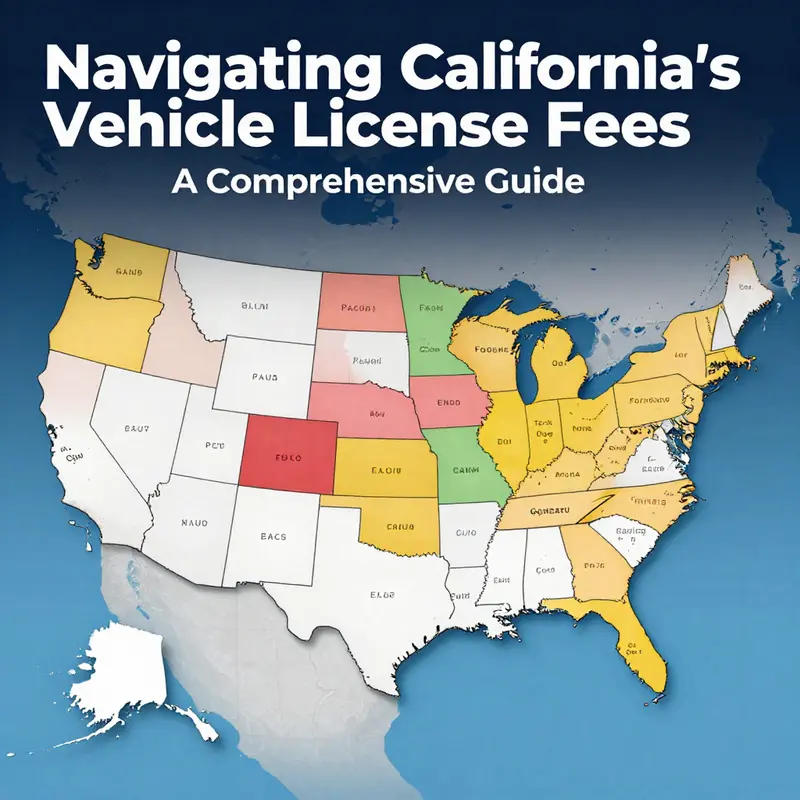
To place California in a broader context, the spectrum of annual registration costs across all 50 states runs from modest, sub-$100 bills to well over $500 for certain vehicles or jurisdictions. Alaska and Wyoming often sit toward the lower end of this range, while states like California and New York tend to register higher totals due to greater administrative overhead and a suite of added charges. The spread is not purely about geography; it is also shaped by vehicle characteristics such as weight and engine size, as well as whether a state imposes emissions-related or environmental fees as part of the renewal. In this sense, the sticker price of registration becomes a lens through which to view how each state negotiates the trade-off between funding roads, encouraging cleaner technologies, and managing the costs placed on households and businesses.
For readers who want to compare apples to apples, the National Highway Traffic Safety Administration (NHTSA) provides a comprehensive, state-by-state overview of vehicle registration fees. This resource offers a real-time, policy-aware snapshot of how licensing costs stack up across the country, helping owners, policymakers, and researchers understand how California’s approach fits into a national tapestry. The data emphasize that California’s annual charges often sit on the higher side, but they also illustrate how local factors, plate choices, and vehicle attributes can push totals in different directions even within the same state. As a practical matter, this means a vehicle owner in California should expect a registration bill that reflects both the broad policy framework—like the EV and PHEV surcharges—and the granular details of their own vehicle’s value, weight, and local tax structure.
The interplay between EV surcharges and traditional registration charges also has implications for budgeting and financial planning. For households purchasing or leasing new EVs or PHEVs, the upfront incentive landscape—the gains from federal or state tax credits, for instance—must be weighed against the ongoing annual cost of renewal fees. The $100 EV annual fee is a predictable, recurring cost that can color long-term ownership calculations, especially in states with aggressive environmental targets and heavy incentives. In California, the ongoing commitment to cleaner transportation coexists with the need to sustain infrastructure, and the EV/PHEV surcharges are a clear reflection of that balance. They also signal to buyers that the environmental benefits of electrification come with a corresponding, policy-driven contribution to the costs of maintaining the very system that supports driving.
The practical takeaway for readers who are planning around these costs is to treat the annual license fee as part of a broader renewal budget rather than an isolated line item. The amount you pay is not determined solely by the purchase price of the vehicle; it is shaped by the vehicle’s classification (EV, PHEV, or conventional), its value, its weight, and the localities where renewal occurs. Because California’s fee structure integrates multiple factors, an identical model line can yield different renewal costs in neighboring counties or cities, depending on local surcharges and plate fees. Moreover, the broader national context reminds us that where you live still matters a great deal. Even if you own a similar car in a different state, your annual cost can reflect a different policy mix—one that prioritizes certain revenue streams or environmental objectives more aggressively than others.
For those who want a closer look at how state rules intersect with vehicle licensing, comparative resources can illuminate the broader picture. Understanding state-level requirements helps explain why a given registration bill might include inspections, emissions testing, or plate-related charges that vary across jurisdictions. In California, the inspection and assessment landscape is part of a larger ecosystem of compliance and administrative processing that shapes the end-user cost. To explore how these state rules interact with licensing costs, readers can consult resources that discuss state vehicle inspection requirements in a broader context. The linked overview below directs curious readers to a discussion focused on how state inspection regimes influence licensing costs and processing, offering a practical bridge between policy design and daily billing. state vehicle inspection requirements.
As readers move from the specifics of California’s EV surcharge to the broader question of what the state charges for registration, it becomes clear that the total price of driving in California cannot be reduced to a single number. The EV and PHEV surcharges contribute a distinct layer of annual cost, but they sit atop a foundation of standard charges tied to value and weight, augmented by local or service-related fees. The net effect is a cost structure that rewards efficiency and environmental stewardship in price signals while ensuring a diversified funding base for transportation infrastructure. This dual ambition—promoting cleaner mobility while maintaining road quality and capacity—helps explain why California’s license fee profile remains unusually robust relative to many other states.
From a consumer perspective, the most reliable way to anticipate annual renewal costs is to engage directly with the state’s official resources and to consider the vehicle’s characteristics in tandem with local charges. DMV sites typically provide a renewal estimator or fee calculator that can take a given vehicle’s value, weight, model year, and powertrain into account. In parallel with these tools, it is useful to examine how environmental or emissions-related charges are applied in your area, as some jurisdictions impose additional requirements that can alter the bottom line. The combination of these tools yields a more accurate forecast for a given year and vehicle, which is particularly important for households planning long-term ownership or for businesses managing fleets. In short, understanding California’s licensing costs means embracing both the macro policy intentions and the micro details that vary from one vehicle to the next and from one locality to another.
For readers who want to situate California’s numbers within a national framework, the external reference below provides an broader perspective on how state-by-state licensing costs compare. This context helps explain why some owners perceive California’s fees as higher, and it also highlights the shared goals behind these charges: maintaining safe roads, supporting infrastructure, and incentivizing cleaner transportation options. External reference: NHTSA’s vehicle registration fees by state overview. https://www.nhtsa.gov/vehicle-registration-fees-state
Final thoughts
The navigation of vehicle license fees in California is a multifaceted landscape influencing new drivers, existing vehicle owners, and auto dealerships alike. Understanding the distinctions between electric, hybrid, and standard vehicle license fees provides clarity essential for making informed choices in vehicle purchases and ownership. As the state progresses toward greener transportation solutions, the implications of these fees will continue to evolve. Our analysis of California’s fees in comparison to other states reflects the complexities of vehicle regulation and its importance in fostering an eco-conscious driving culture. Ultimately, being informed about these fees empowers consumers and enhances the broader vehicle marketplace.