
Driving a commercial vehicle with a private license is a complex topic that impacts new drivers, existing motorists, and vehicle owners alike. Many individuals may wonder if their standard driver’s license permits them to operate commercial vehicles, especially given the rise in small van usage for business purposes. This article explores the nuances of licensing regulations, focusing on the specific conditions under which a C1 license can legally apply to small commercial vehicles. Furthermore, it will outline the restrictions and legalities, as well as the potential consequences of improper licensing. Each chapter will build a clearer understanding of driving responsibilities and legal compliance.
Bridging the Gap: What a C1 Private License Can and Cannot Do in Hong Kong’s Small Commercial Vehicle Landscape
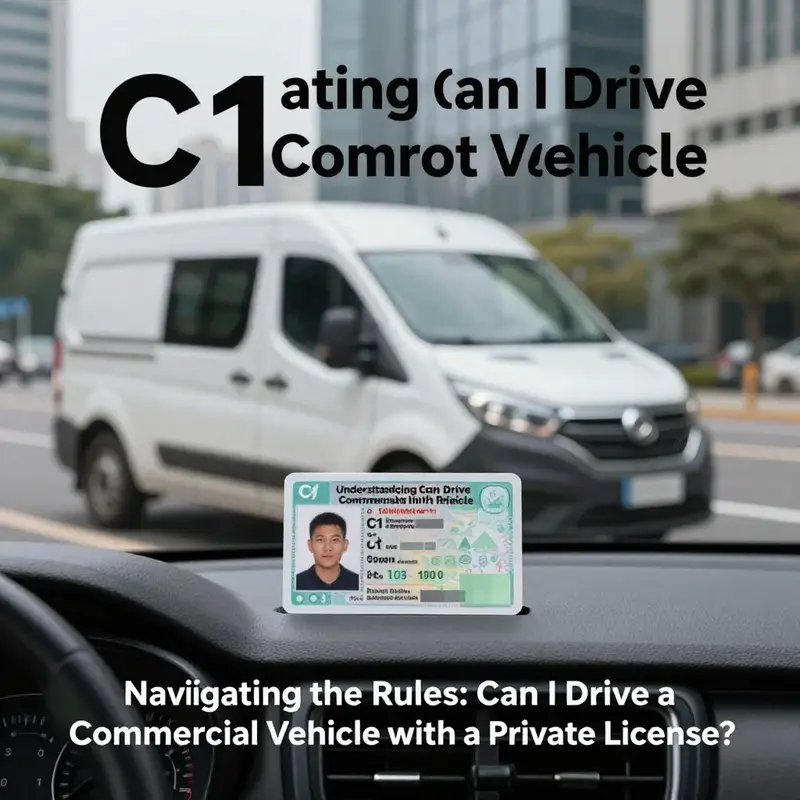
When a driver asks whether a private license can shoulder the responsibilities of operating a commercial vehicle, the answer hinges on a careful map of license categories, vehicle specifications, and the intended use of the vehicle. In many places, the line between private and commercial driving can appear blurry at a glance, but the rules are designed to be precise and enforceable. In the Hong Kong context, the distinction between a private license and a commercial vehicle license is not merely academic. It shapes what you may legally drive, how you may use it, and what liabilities you incur if you cross the boundary. The practical takeaway is straightforward: a standard private car license—often labeled as a C1 category in some systems—cannot, on its own, authorize you to operate most commercial vehicles. Yet there is a narrow, well-defined exception for certain small vehicles, and the path to a full commercial license is structured and explicit, with age, experience, testing, and administrative steps all playing a role. Understanding these nuances is essential for any driver who considers adding commercial tasks to their routine or who simply wants to know where the boundary lines lie for themselves and their colleagues.
To understand the landscape, it helps to start with what a C1 license typically covers and where it ends. In jurisdictions that use a C1 designation to describe a license category, the label often corresponds to the ability to drive small passenger vehicles and light commercial options. The Hong Kong framework, however, draws a clear distinction between private transport and commercial operation. In practice, the public-facing rule is simple: you cannot drive a commercial vehicle with only a private license. This prohibition protects road safety, ensures that drivers have appropriate training and assessment for vehicle size, weight, and cargo, and aligns with insurance and employer requirements that depend on recognized commercial licensing. The nuance lies in the specific vehicle class you may operate without stepping into the commercial-licensing process.
Within the Hong Kong system, there is a carefully defined corridor for small commercial vehicles, and it hinges on the vehicle’s gross vehicle weight, seating capacity, and the vehicle’s use. A private license does not automatically grant permission to operate commercial freight or passenger services beyond personal transport. What this means in practical terms is that even if a vehicle looks familiar—say a compact van or a small minibus—the moment your duties involve transporting goods for payment or carrying more than a minimal number of passengers for hire, the private license falls short. The distinction becomes significant when you consider a small business van or a nine-seater minibus, which may appear to sit on the edge of private and commercial use. If such a vehicle meets the criteria of length, seating, and weight, it may be permissible to operate under certain conditions with the appropriate license. Yet the moment the vehicle’s usage tips toward commercial freight, or the scale of the operation grows beyond those thresholds, a different licensing pathway is required.
A practical touchstone for this boundary is the C1 classification and its relationship to the typical small commercial vehicle. When a vehicle’s specifications align with the narrow scope that a C1 category can cover—commonly a small passenger vehicle with up to nine seats, and a total weight not exceeding about 4.5 tonnes—the line becomes clearer. In some cases, a small business van or a nine-seat minibus, such as a compact, people-oriented transport solution used for staff mobility or light goods transfer, may fall within these limits. The vehicle must remain within a certain length, such as six meters, and its weight must not exceed 4.5 tonnes. In such cases, operators argue that the vehicle can be operated within a C1 framework, especially when the intended use remains within personal or tiny commercial boundaries. However, the caveat remains: the moment the vehicle is used for commercial freight transport, or the operation exceeds those thresholds, the C1 license alone is not sufficient. The operator would need the appropriate commercial licensing to stay compliant with the law and the insurance terms that accompany it.
This is not merely a theoretical distinction. The consequences of misusing a private license to operate a commercial vehicle are real and potentially serious. The law treats the misuse as a form of non-compliant operation, which can trigger fines, vehicle seizure, and even criminal charges if an accident occurs while the vehicle is being used for commercial transport. Insurance coverage can also be jeopardized if the driver lacks the correct license for the vehicle’s use, exposing the operator and the driver to uncompensated losses and liability. In a landscape where road safety is a shared responsibility, the license category, the vehicle’s weight and size, and the vehicle’s purpose are not minor technicalities. They determine whether a task is permissible on public roads or falls under a different regulatory framework that requires formal licensing, training, and testing.
For those who seek to operate a commercial vehicle legally in Hong Kong, the path is clear but demanding. Eligibility for a commercial license rests on three pillars: age, experience, and formal authorization through the licensing process. The minimum age for commercial licensing in this framework is typically 21 years old, reflecting the increased responsibility of operating heavier or more complex machines on busy streets. Experience is the second pillar: an applicant must have held a valid private car or light goods vehicle (LGV) full driving license for at least one year, or successfully completed the probationary period associated with such a license. This requirement ensures that a driver has demonstrated a solid level of capability and reliability before stepping up to commercial responsibilities. The third pillar is proof of intent and ability to learn: a learner’s license for commercial vehicles must be pursued, and the process includes submitting a specific form—TD556—or using the government’s online service, the One Stop Service. The learner’s license is a gateway to the more extensive training and testing required to qualify for a full commercial vehicle license. An important caveat is that the learner’s license for commercial vehicles is not available for taxis or special-purpose vehicles, which reflects the tailored regulatory framework designed to address distinct transportation roles and safety considerations in those sectors.
The licensing path itself involves both knowledge and practical testing. A written test is required to demonstrate understanding of the road rules, safety procedures, vehicle maintenance basics, and the regulatory framework governing commercial transport. Beyond theory, a practical driving test—an on-road evaluation—must be passed to obtain the full commercial vehicle license. The combination of written and road testing is designed to assess not only technical competence but also judgment, decision-making abilities, and the ability to respond to complex driving scenarios that are typical in commercial operations. This two-tier assessment helps ensure that drivers who operate commercial vehicles have a robust skill set that transcends the basics of private driving.
The practical implications of this licensing architecture become even clearer when one considers the specific types of vehicles involved. A nine-seat minibus, with a length of up to six meters and a total weight not exceeding 4.5 tonnes, can, in certain contexts, be operated under a C1-like private license if the use remains within personal or very small-scale commercial boundaries. This is the narrow window where the vehicle’s size and seating capacity align with the private category, minimizing risk and complexity while allowing a degree of practical utility for small teams or small businesses. In contrast, delivery vans used for commercial freight transport, even when they appear modest in size, do not fall within the same permissive zone. If the vehicle is used to carry goods for payment, or if the operation is clearly commercial in nature, the license must reflect that use, and the operator must obtain the relevant commercial license. The same logic applies to larger trucks, buses, and heavy goods vehicles: these fall outside the permissible scope for private licenses altogether, and attempting to operate such vehicles without the appropriate licensing is a violation of the regulatory framework.
This boundary is not merely about the vehicle but about the operation itself. A private car used to carry goods for pay is, under the law, classified as commercial use, and this classification triggers the licensing requirements that apply to commercial transport. The practical effect is that someone who owns or operates a small van for occasional paid transfers must pursue a commercial license, even if the vehicle’s physical dimensions would otherwise suggest compatibility with a private license. The logic here is straightforward: commercial transport introduces a different risk profile, financial accountability, and regulatory oversight compared with private transport, and licensing must reflect that reality.
To navigate these rules effectively, many drivers and fleet operators turn to official guidance and resources. The Hong Kong Transport Department provides the primary framework for understanding which licenses apply to which vehicle classes and which uses. The department lays out that a C1 license permits driving small passenger vehicles (up to 9 seats, with a maximum length typically limited to about 6 meters and a total weight not exceeding 4.5 tonnes), but not larger commercial vehicles or those used for profit-making transport. This official stance underscores the central message: commercial use requires a license tailored to that purpose, and private license alone does not suffice for most commercial operations. The nuance is that the C1 category does hold relevance for a narrow subset of small vehicles, but this relevance is bounded by strict conditions on size, weight, and usage.
For readers who want to situate these rules within a broader regulatory context, a look at the broader landscape of driver licensing rules is instructive. There is value in understanding how different jurisdictions treat similar questions—how they balance ease of access for private use with safeguards for public safety when commercial activity enters the picture. A useful reference point for this larger discussion can be found in resources that examine how state rules impact driver licensing. These discussions help illuminate common threads across systems, such as the emphasis on minimum age, the duration of prior licensing experience, and the stepwise progression from learner to fully licensed commercial driver. They also highlight where Hong Kong’s rules align with or diverge from practices elsewhere, and they can offer practical comparisons for anyone who moves between regions or seeks to understand best practices. See the discussion on state rules impacting driver licensing for a broader sense of how different jurisdictions approach licensing thresholds and pathways.
With this framework in mind, it is helpful to ground the individual case studies in concrete examples. Consider a small nine-seat minibus that falls within the parameter of length up to six meters and a weight up to 4.5 tonnes. In a scenario where the vehicle is used purely for internal staff transport, or perhaps for a small number of client visits within a local area, some may wonder if this is a permissible arrangement under a private license. The practical reality remains nuanced. If the vehicle is employed in a manner that aligns with private transport—occasional, non-commercial travel with no compensation involved—the operation might be more easily justified under a private license. However, even in these cases, the edge of the permissible zone remains close to the boundary: if the operation becomes systematic, commercial, or if compensation enters any form of payment, the licensing framework shifts, and the private license no longer suffices. This is why many operators choose to err on the side of caution and pursue the formal commercial licensing route when there is any hint of paid transport or regular business use.
Not every vehicle that is physically small can be operated under the same license, and not every commercial use requires the same license. The rules are designed to be clear enough to prevent ambiguity while remaining flexible enough to accommodate legitimate variations in transport activity. The prudent approach for any driver is to assess three questions before taking on a task that might verge into commercial territory. First, what is the vehicle’s physical class—its seating capacity, its length, and its gross vehicle weight? Second, what is the vehicle’s use—the purpose of the trip, whether it is for personal convenience, a one-off errand, or a recurring service that involves compensation? Third, what license do the local authorities require for that specific use and vehicle combination? When these questions are answered consistently with the regulatory framework, the likelihood of compliance increases, along with the confidence that insurance and liability protections remain intact.
To reflect on the practical steps that a driver would take, the journey toward a commercial license in Hong Kong typically begins with meeting the basic eligibility criteria: ensuring you are at least 21, verifying that you have an appropriate period of prior driving experience on a private license, and initiating the learner process for commercial vehicles. The TD556 form, or its online equivalent via a government One Stop Service, marks the formal entry point into the commercial licensing track. The learner’s license is an essential prerequisite for the training that culminates in the formal tests. It is important to note the exception noted in the guidelines: the learner’s license for commercial vehicles is not available for taxis or special-purpose vehicles. This exception reflects a deliberate policy choice that recognizes the distinct regulatory treatment of taxis and special-purpose operations, which may be governed by separate licensing frameworks tailored to those roles.
As with any regulatory journey, the path is about more than ticking boxes. It is about cultivating the capability to manage larger, heavier, and more complex vehicles in a safe and predictable manner. The written test covers knowledge areas that practitioners must master to operate within the law, but it also tests the driver’s capacity to anticipate hazards, understand the interaction between driver behavior and vehicle performance, and apply best practices in maintenance and safety. The road test then assesses practical driving competencies—from maneuvering a larger vehicle through challenging urban traffic to handling braking, turning, and parking in constrained spaces. The combination of theory and practice is designed to ensure that a driver stepping into commercial duties brings a reliable skill set that supports both personal safety and public confidence in the transportation system.
The overarching message remains consistent: the boundary between private and commercial driving is defined not by a simple label but by a careful alignment of vehicle characteristics and usage with licensing categories. The private license, in its Hong Kong incarnation, does not authorize the routine operation of most commercial vehicles. The narrow exceptions are reserved for very specific, tightly defined cases in which the vehicle’s class and the intended use fall within the permissible private category. For everything else that carries the weight of money interchange or more than a nine-seat capacity, the commercial licensing channel must be pursued. In practice, this means recognizing when the task at hand is personal transport, and when it becomes a business activity that affects licensing, insurance, and accountability.
For readers seeking additional clarity, the local authorities’ official guidance is the most reliable compass. The Hong Kong Transport Department emphasizes the essential point that driving a commercial vehicle requires a valid license for that specific vehicle class, and that while a C1 license permits driving small passenger vehicles (up to nine seats, with length constraints and a maximum weight threshold), it does not extend to larger commercial vehicles or to those used for profit-making transport. This official framing reinforces the practical intuition that the boundary is not a gray area but a defined regime designed to align driver capability with vehicle complexity and risk exposure. While it is encouraging to see that there is a pathway for those who operate small vehicles within strict limits, the broader takeaway is clear: if your activities involve commercial transport, you will want to pursue the appropriate licensing to stay compliant and to protect yourself and others on the road.
For the broader reader who wants to situate these rules within a global context, there is value in looking at how other jurisdictions draw parallels and distinctions between private and commercial licensing. Acknowledging that licensing structures vary, the central themes tend to recur: age thresholds, the requirement for proven driving experience, the staged progression from learner to full license, and the pivotal role of both written and practical testing. These common elements help create a framework that is recognizable even when the regulatory details diverge. The comparative lens is not a call to imitate a particular system but a way to understand the logic behind licensing decisions and how they translate into day-to-day practice for drivers who balance private mobility with commercial responsibilities. In this light, the discussion about state rules impacting driver licensing offers a complementary perspective: it helps illuminate how different regulatory cultures handle similar challenges, and it can equip readers with the language to discuss licensing with professionals, trainers, and licensing authorities.
In sum, the question—can a private license drive a commercial vehicle?—finds its answer in the specific vehicle class, the vehicle’s use, and the licensing pathway that fits that use. A C1 or private-like license makes allowances for certain small vehicles, but it does not grant carte blanche to operate commercial transport. The nuanced boundary is there to protect road safety, to ensure appropriate training, and to align insurance and liability frameworks with actual driving responsibilities. Those who anticipate performing any form of commercial transport should approach licensing with a disciplined plan: verify the vehicle’s class against the license, assess the intended use for any commercial elements, prepare for the required learner stage if applicable, and complete the mandated written and road tests. The result is not only legal compliance but a clearer, safer driving practice that serves drivers, passengers, pedestrians, and fellow road users alike.
For readers who want to consult the official framework directly, the Hong Kong Transport Department remains the authoritative source on commercial vehicle licensing and the precise conditions under which small commercial vehicles may be operated within private license boundaries. The official guidance reinforces the core message that commercial use requires a license tailored to that purpose and that the path from private to commercial is structured to ensure safety, accountability, and competence on the road. As you plan your next steps, consider how your driving needs align with these guidelines, and consult the official resources to confirm any changes or updates to requirements.
External resource: Hong Kong Transport Department – Commercial Vehicle Licensing: https://www.td.gov.hk/en/vehicle/vehiclelicensing/commercialvehicle/index.html
Internal reference for broader licensing context: state rules impacting driver licensing. See the deeper discussion here: https://drivernvehiclelicensing.com/state-rules-impact-on-driver-licensing/
Can I Drive a Commercial Vehicle with a Private License? Unpacking Restrictions, Classifications, and Legal Realities
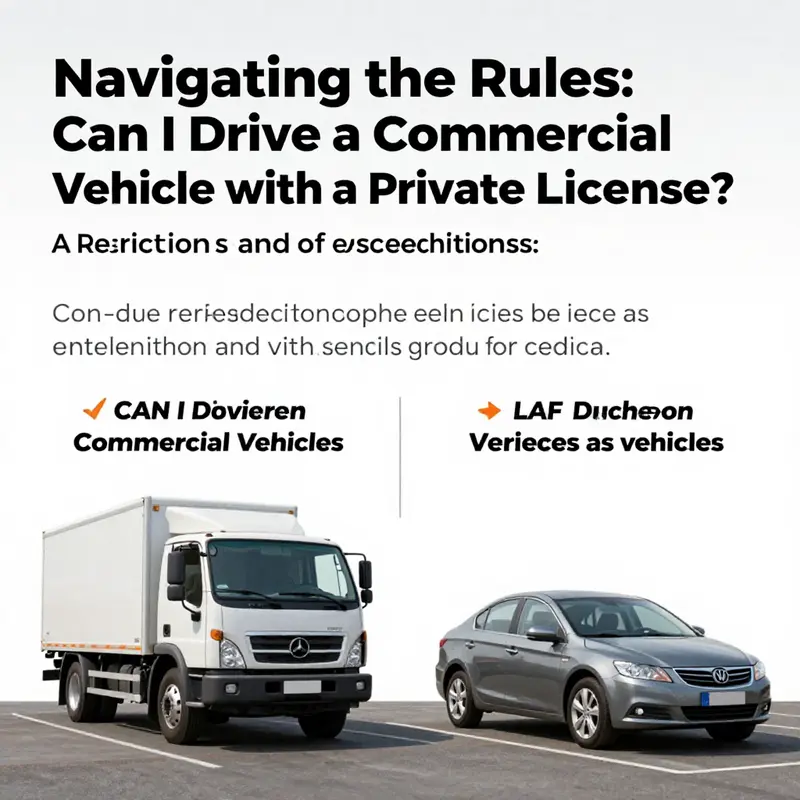
The central question many drivers ask is deceptively simple in appearance but layered in practical complexity: can a private, non-commercial driver’s license let me operate a commercial vehicle? The honest answer is nuanced and highly dependent on both the vehicle in question and the licensing framework of the jurisdiction in which you operate. Across many regions, a standard private car license does not automatically authorize you to drive most commercial vehicles. The line between personal transport and profit-driven freight or passenger service is drawn by vehicle class, gross vehicle weight, seating capacity, and the intended use of the vehicle. When you start moving beyond the familiar car into the realm of vans used for business, minibuses, or trucks, the license you hold must align with the vehicle’s classification and the activity you plan to engage in. This is not a matter of information that only “experts” keep handy; it is a practical safety and accountability issue that can affect road safety, insurance coverage, and personal liability. The difference between a vehicle that simply carries you from point A to point B and one that transports goods or people as part of a business operation is encoded in licensing, record-keeping, and the penalties that come with noncompliance. In other words, it is not enough to possess skill behind the wheel; you must also prove to the authorities that you are legally authorized to operate that particular class of vehicle in the specific context in which you intend to use it.
When we look across jurisdictions, a common pattern emerges: smaller, light commercial vehicles often sit in a gray zone, but larger vehicles and those used for profit typically require an official commercial license that matches the vehicle’s class and the activity. A practical way to frame this is to start from the simplest taxonomy—the vehicle’s weight, seating capacity, and whether the vehicle is used for commercial freight or passenger service. These elements work together to determine which license class is appropriate. In many places, a license that covers private passenger cars does not automatically extend to vans or minibuses used for business purposes. The result is a safety-oriented regime that aims to ensure that drivers have the proper training, knowledge, and responsibility to operate heavier or more complex vehicles on busy roads.
Consider the C1 license, a category that often sits at the boundary between private and small commercial driving. A C1 license is generally described as permitting the operation of small passenger vehicles with up to nine seats and vehicles with a total weight not exceeding a threshold, commonly around 4.5 tonnes, and a length constraint that keeps these vehicles within roughly six meters. Within these bounds, there exist examples that people encounter in everyday life—smaller staff shuttles, compact minibuses, and light commercial vans used by small businesses. For instance, a nine-seater van such as a compact Mercedes-Benz Vito or similar chassis may fall within the C1 category in many jurisdictions if it is used solely for non-freight purposes and stays within the specified weight and size limits. In those cases, the private license becomes, legally speaking, the appropriate license to operate that particular vehicle. The practical takeaway is clear: if you operate a small, light, nine-seat vehicle that weighs within the allowed limit and you do not engage in commercial freight transport, your private license can be sufficient, subject to local rules.
Yet the boundary around what you can or cannot do with a C1 license—and with a private license in general—remains precise and context-dependent. The same rules that permit a small nine-seat van to be driven under a C1 license also forbid a driver from using the vehicle for commercial freight. The moment you begin driving for payment, delivering goods to customers, or transporting passengers for a fee, you cross into the realm of commercial use. In those circumstances, the vehicle’s class and the license must align with the regulatory framework governing commercial transport. The law does not permit a casual, “as long as I feel fine, it should be okay” approach. The vehicle’s classification governs what you may do with it and how you must be licensed to do it. This distinction is critical because the penalties for ignoring it extend beyond a simple fine.
To understand the scope of these rules, it helps to think about the two big axes that define legality in this space: the vehicle’s capacity and its weight, and the use case—the reason you are driving the vehicle. A vehicle with more than nine seats or a gross vehicle weight exceeding roughly the 4.5-tonne mark is typically beyond the reach of a C1 license in many jurisdictions. If you intend to use such a vehicle for commercial freight or for transporting more than a small number of passengers, you almost certainly need a higher category license. The general principle—“size and weight, plus the purpose”—captures the way regulatory bodies prevent unsafe operation on the road and ensure that drivers have the necessary training for heavier, more complex vehicles. The practical reality is that most private license holders will not routinely be able to use commercial-grade vehicles for profit without obtaining the corresponding commercial license and meeting the related medical, testing, and operational requirements.
Coalescing these ideas into a concrete framework helps prevent confusion in real life. Suppose you own a small delivery van that weighs in at or below the typical threshold and seats a maximum of nine people including the driver. If your use is strictly personal or limited to ad hoc, non-commercial activity, a C1 license response aligns with the legal expectations in many jurisdictions. However, if you intend to deliver goods for pay, participate in any form of commercial transport, or operate a larger vehicle such as a true truck or a large passenger bus, the private license is not enough. The key distinction is not simply the vehicle’s ability to physically function under private license conditions but the use case that determines whether a commercial license is required.
An equally important layer is the enforcement and sanction landscape that accompanies the misapplication of a private license to a commercial operation. Driving a commercial vehicle without the proper license is illegal and can attract penalties that escalate in severity with the seriousness of the violation. At a minimum, one faces fines and potential vehicle seizure in some jurisdictions. The stakes rise significantly if the act contributes to an accident or involves the transport of hazardous materials, where penalties may include criminal charges or severe license sanctions. Insurance coverage can be invalidated when a vehicle is used for commercial purposes without the appropriate licensing. In practical terms, this means your personal coverage may be denied if you are found to be operating a vehicle in a manner that is outside the scope of your license. The consequences extend beyond immediate fines to long-term implications for employment, business operations, and personal financial security.
Given the diversity of regulatory landscapes, it is essential to consider jurisdiction-specific rules and the penalties attached to noncompliance. In the Hong Kong context, for example, the licensing framework for commercial vehicles rests on a specific set of conditions that govern who may operate such vehicles and under what circumstances. In this jurisdiction, the regulatory stance emphasizes both age and experience. A driver must typically be at least 21 years old and must have held a full private car or light goods vehicle license for a minimum period before switching to or adding a commercial class. Notably, this minimum holding period was adjusted in recent years to reduce bureaucratic hurdles and reflect evolving safety priorities. As of October 2020, the holding period requirement was eased from three years to one year, signaling a shift toward a more flexible licensing approach while maintaining the overarching safety standards. The practical implication is clear: even with a private license in hand, you cannot simply decide one day to operate a commercial vehicle. The license framework requires you to satisfy a defined progression, ensuring you have the appropriate training, experience, and regulatory compliance before you may operate a commercial vehicle. In essence, the private license and the C1-like category that covers small, light vehicles is a stepping stone—not a final authorization—for those who want to work with commercial transport. The Hong Kong Transport Department’s guidance underscores that driving a commercial vehicle requires a license specific to the vehicle class, and the C1 category alone does not authorize larger commercial volumes or profit-oriented transport.
These jurisdiction-specific details matter because they remind us that there is no universal badge that converts a private license into a universal permit for commercial driving. In the United States, for instance, the regulatory landscape tends to be more nuanced and varies by state. Some states allow a private car license holder to operate certain smaller commercial vehicles under specific weight caps, typically around 10,000 pounds gross vehicle weight. This creates a spectrum: on the one end, a private license might carry a limited exemption for light, non-heavy commercial tasks; on the other end, any larger or heavier vehicle—especially those used for ongoing commercial freight or passenger services—will demand a full Commercial Driver’s License (CDL) and adherence to the federal and state-specific CMV rules. The reality for many drivers is that while there is a pathway to operate certain light commercial vehicles with a car license, it is neither universal nor without strict conditions.
Against this backdrop, the practical steps for anyone contemplating operating a vehicle that could be considered commercial are straightforward, though not always easy. First, identify the vehicle class you plan to drive. If it is a nine-seat minibus or a small delivery van within the weight and size limits—subject to your local rules—you may be within the scope of a private license, but you must still confirm any usage restrictions. Second, examine the intended use. If you anticipate delivering goods for payment, transporting passengers for hire, or engaging in any business activity that relies on the vehicle to generate revenue, you should assume that a commercial license is required, and proceed accordingly. Third, consult the licensing authority or official regulatory guidance for your jurisdiction. The lines between private and commercial driving can blur in everyday life, but the consequences of misclassification are real and tangible. If you are in an environment that supports cross-border or cross-jurisdiction operation, the need to verify local rules becomes even more critical, because the vehicle class and its permitted uses can vary not only from country to country but also among states or provinces within a large federation.
To help bridge practical understanding with official guidance, consider consulting an authority on rules that impact licensing and vehicle operation in your area. For a broader look at how rules vary by jurisdiction, see the resource on state rules impact on driver licensing. This resource helps readers appreciate how the same vehicle or use case can trigger very different licensing requirements depending on where you drive. The emphasis remains on ensuring that a driver does not assume the legality of an operation merely because their private license has served well in a private context. The goal is safety, clarity, and accountability on the road, and the licensing framework is one of the primary tools regulators use to achieve those outcomes.
For readers seeking authoritative framing, the Hong Kong Transport Department’s guidelines offer a concise summary: a C1 license permits driving small passenger vehicles (up to nine seats, with length restrictions and weight constraints) but does not authorize larger commercial vehicles or those used for profit-making transport. This clarifies the boundary lines and helps prevent misinterpretation that private licensing automatically covers any commercial driving scenario. While the specific conditions, thresholds, and procedural steps vary by jurisdiction, the underlying principle remains consistent: match the vehicle’s class and the intended use to the license that validates your legal authority to operate. If you are unsure about a particular vehicle’s classification or your intended activity, slow down, pause, and verify with the licensing body before you get behind the wheel.
External resources can provide a solid reality check and help you plan next steps without risking penalties or insurance gaps. For official guidance in the Hong Kong context, you can consult the Hong Kong Transport Department’s Commercial Vehicle Licensing page, which sets out the conditions under which a C1 license may be used for light commercial vehicles and clarifies when commercial licensing becomes necessary. The page makes explicit the distinctions between personal transport and profit-oriented freight and passenger services and helps demystify the process of upgrading from a private license to a commercial one when needed.
External resource: https://www.td.gov.hk/en/vehicle/vehiclelicensing/commercialvehicle/index.html
When a Private License Meets a Commercial Wheel: The Legal Fallout of Driving a Commercial Vehicle on a Private Permit
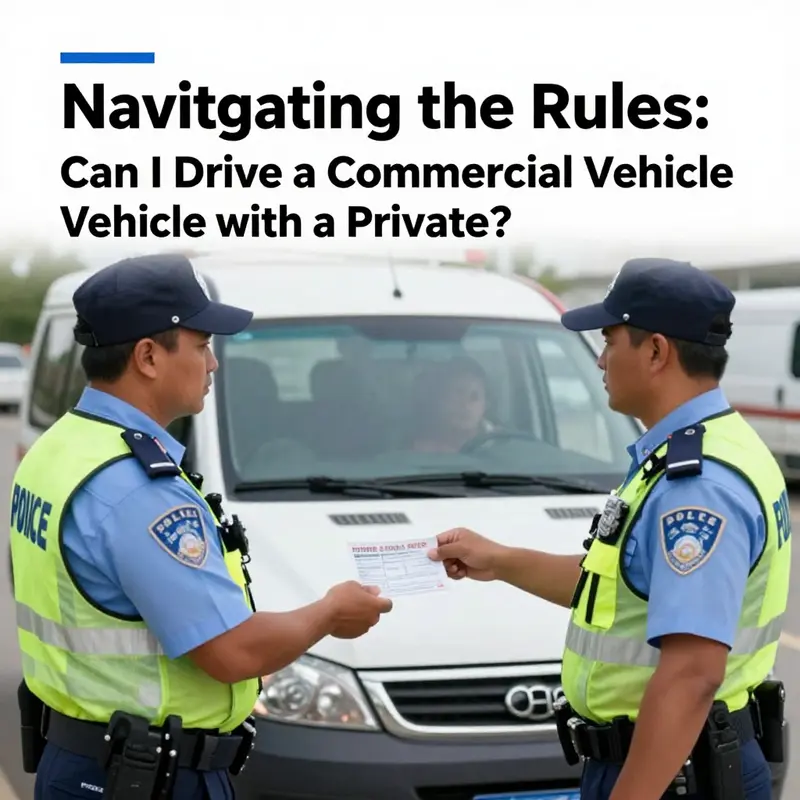
Daring to drive a vehicle that is meant for business on a license that was issued for private travel is not simply a misstep in judgment. In China, this act sits at the intersection of traffic safety and licensing, where a driver’s right to operate a certain class of vehicle is tethered to a precise legal framework. The everyday urge to earn a few yuan on the side or to help a friend with a delivery can collide with a set of rules that treats such moves as more than a mere traffic violation. Understanding why this matters requires stepping through the backbone of the law, from the broad obligation that you operate a vehicle in line with the license you hold, to the specific penalties that can cascade from a single misalignment between vehicle type and license class. It is a chapter written not in theory but in practice, where the consequences extend beyond a fine to touch on points, detention, and even the potential revocation of the license itself. This is the core hazard of misusing a private license for commercial driving, and it deserves careful attention for anyone navigating the terrain of road travel in the modern economy.
At the heart of the Chinese framework is a simple, guardrail-style rule: drivers must operate vehicles according to the type of vehicle specified on their driver’s license. This is codified in Article 19 of the Road Traffic Safety Law of the People’s Republic of China. The article lays out a principled expectation: the license is not a general permission to drive any vehicle, but a credential that grants access to a defined category of motor vehicles. The practical implication is stark: if you climb behind the wheel of a vehicle that your license does not authorize, you are not just bending regulations—you are violating the fundamental obligation that your license embodies. This fundamental principle serves as a clear signal to drivers: license scope is a boundary, and crossing that boundary triggers the legal framework designed to protect road safety and orderly traffic.
The Road Traffic Safety Law therefore becomes a map for what is permissible and what is not. It is the starting point for any discussion about misusing a private license to operate a commercial vehicle. But the map is drawn with detail by several implementing measures that translate broad statutory language into concrete penalties. One of the most consequential is the set of penalties defined by the Measures for the Administration of Scoring for Traffic Safety Violations, which is Ministry of Public Security Order No. 163 and has been in effect since April 2022. Within this framework, the act of driving a vehicle that does not match the permitted type on your license is a specific violation that carries a substantial hit to your driving record. The mechanical heart of the penalty is straightforward: nine points are deducted from the driver’s license upon confirmation of the offense. Points, in this system, function as a form of a credit score for safe driving behavior, and nine points is enough to trigger serious scrutiny of the driver’s overall behavior and compliance history.
Alongside the point deduction, there is a monetary consequence. The fine associated with this violation ranges from 200 yuan to 2,000 yuan. The band is wide enough to reflect context—ranging from a first, relatively minor transgression to a more flagrant or reckless disregard of the licensing boundaries—but the floor and ceiling are clearly defined. And there is a time-related penalty to consider as well: administrative detention of up to 15 days may be possible in certain circumstances. Detention is a step beyond a simple monetary penalty; it is a temporary removal from the roads that can have cascading effects on work, dependents, and daily life. The combination of points, fines, and potential detention creates a triad of consequences that can make a single misstep feel disproportionately heavy, which is precisely the point of the regime: to deter violations that undermine the safety and predictability of road use.
A deeper layer emerges when the offense is not treated as a one-off mistake but as a sign of a pattern of behavior. The measures outline that, in more severe cases or when offenses recur, the penalty regime can escalate into the potential revocation of the driver’s license. This is not an automatic consequence of a single incident, but a possibility that the municipal-level public security traffic management department can impose under specific circumstances. In this context, revocation mirrors the seriousness with which the authorities view repeated or severe violations. The law treats such violations as tantamount to unlicensed driving in practice because the license, by design, attests to the driver’s capacity to operate a vehicle within a defined class. When that trust is broken by repetitive misuses or by actions that seriously compromise safety, the license is revoked to restore the equilibrium of safety and accountability on the roads.
To appreciate how these penalties operate in the real world, it helps to ground the discussion in concrete scenarios. Suppose a driver uses a private car to deliver goods for pay—something many people might consider simple or convenient. In the eyes of the law, this transforms the vehicle’s use into commercial freight transport, which is a permitted activity only under the correct license class and with appropriate licensing for the vehicle’s role. The moment the vehicle carries goods for remuneration, it crosses from private travel into the realm of commercial use. This is precisely the type of use that the licensing framework is designed to regulate. And the consequences are not theoretical: the owner of the vehicle could face the aforementioned penalties, with the added risk that the insurance coverage tied to the vehicle or the driver’s policy could be jeopardized due to noncompliance with licensing requirements.
The penalties and procedures are designed to be enforceable and proportionate, but the scope of what counts as a “permitted type of vehicle” on a given license is not a vague concept. It is a defined category that includes, among other variables, the vehicle’s intended use, weight, size, and seating configuration. A driver with a private license may be permitted to drive certain small passenger vehicles or light-duty vehicles that are typically used for private travel or non-commercial activities. The precise certification of what falls within and outside that scope is something every driver should verify with local authorities or through official licensing documents. The risk of assuming that a private license covers a range of commercial operations is not only a regulatory violation; it is a risk to personal safety, third-party safety, and financial security. When the law is clear, the prudent choice is to err on the side of caution and pursue the appropriate licensing before undertaking any commercial transport activity.
The broader implications extend beyond the direct penalties. The deterrent effect of the scoring system, the finite range of fines, and the possibility of detention or revocation all contribute to a climate in which drivers think twice before engaging in commercial driving with an inappropriate license. The legal framework recognizes that the consequences of these choices are not limited to the individual; they ripple through insurers, employers, passengers, and other road users. In a society where road safety is framed as a collective responsibility, the law uses these tools to maintain a high standard of professional conduct in driving. The penalties thus serve a dual purpose: they punish noncompliance and reinforce the social contract that binds drivers and the broader community to safer roads. This is not merely about punitive action; it is about shaping behavior in a way that reduces risk and improves predictability on a highway network that handles people’s livelihoods, daily routines, and the occasional unexpected misfortune.
To make sense of these rules across different contexts, it is useful to think about the spectrum of vehicle types and the corresponding license classifications. A private license is typically fine for personal travel and non-commercial activities, but it does not automatically grant you permission to operate vehicles designed for business, freight, or passenger transport with more than a minimal scale. Driving a nine-seat minibus with the intention of transporting staff or small groups on a private scale might be acceptable within a certain jurisdiction, but that distinction is not universally portable. In China, the central rule is that the vehicle’s class, weight, seating, and purpose must align with the license. When that alignment is off, the legal consequence follows the mechanism described above. The alignment of license to vehicle type is a practical reflection of road safety philosophy: the more a vehicle can impact passengers or cargo, the greater the responsibility placed on the driver to demonstrate competencies appropriate to that vehicle’s operation. The licensing system thus functions as a safeguarding instrument, where the privilege to drive a more capable machine is earned through a process of licensing that attests to training, testing, and ongoing compliance.
From a policy perspective, this architecture encourages individuals and organizations to think strategically about licensing pathways. If you intend to operate a commercial vehicle, you should not treat the process as a box-ticking exercise. It is a pathway that involves understanding the specific vehicle category, the intended use, and the regulatory requirements that accompany commercial driving. Upgrading from a private license to a commercial license is not only about satisfying the law; it is also about ensuring that your skills and training align with the complexity and risk associated with heavier vehicles, larger weights, and more demanding safety contingencies. The process typically involves additional testing, perhaps medical examinations, and training focused on vehicle dynamics, load management, and routine safety protocols. It also often entails a closer relationship with licensing authorities, because the ongoing use of a commercial vehicle imposes more stringent standards for compliance and safety monitoring. In this sense, licenses are not merely bureaucratic hurdles; they are professional credentials that reflect a driver’s readiness to manage the responsibilities of heavier, more complex vehicles on public roads.
For readers who want to situate this discussion within a broader landscape, it is useful to look at how licensing frameworks in different jurisdictions approach the same core question. The logic that governs private versus commercial driving in China shares common ground with policy debates elsewhere: the need to balance convenience with safety, the imperative to deter noncompliant behavior, and the recognition that licensing is a safety-critical signal of a driver’s capabilities. The differences across jurisdictions often reflect local traffic conditions, enforcement capacity, and public safety priorities. In some places, the thresholds for what constitutes a commercial operation may be defined by weight or seating, while in others the line is drawn by the vehicle’s designated commercial use. In all cases, the guiding principle remains consistent: a license is a social contract. It certifies that the holder has demonstrated the capacity to operate a particular class of vehicle within the bounds of the law, and it commits the driver to adhere to the rules that guarantee the safety of everyone on the road. The breach of that contract—by operating a vehicle outside the permitted type—triggers a response designed to recalibrate the driver’s status and to deter others from copying the same approach. This ensures not only that traffic rules are obeyed but that the social expectation of responsible driving is upheld across all road users.
The practical takeaway for drivers, fleet operators, and policymakers alike is straightforward. Do not assume that a private license covers any form of commercial driving simply because you know how to drive a vehicle. The license class is a credential that speaks to a defined set of capabilities and uses. If your plans include commercial transport—whether it’s delivering goods, shuttling passengers for a small business, or operating a vehicle with a higher total weight—plan to secure the appropriate license class before you hit the road. This isn’t merely a formality; it is a safeguard for you, for others, and for the integrity of the road system. When in doubt, consult the official channels that define the scope of your license and the conditions for commercial use. The road to compliance begins with clear knowledge of which vehicle you are allowed to drive and under what circumstances.
In this context, a useful way to frame the available information is to connect licensing rules to real-world decision making. If you are evaluating a potential vehicle for personal or small-scale business use, you should ask: What is the vehicle’s class, weight, and seating? Which license would be required to operate it legally for commercial purposes? If the answer indicates a mismatch with your current private license, the prudent course is to pause and pursue the correct licensing before you drive the vehicle in question. The consequences of moving forward without alignment are not only legal penalties but the risk of injury, liability, and an erosion of public trust in your ability to operate a vehicle safely. The law’s design is to encourage due diligence, not to punish curiosity about new driving opportunities. This is why the chapter you are reading now is not a sterile catalog of penalties but a guide to safer and more responsible decision making, anchored in the operational realities of Chinese traffic law and its heavy emphasis on the match between vehicle type and license class.
For readers who want to explore the topic further, it is worth considering how licensing rules interact with broader standards in professional driving. In many jurisdictions, licensing frameworks are accompanied by mandatory training, periodic checks, and ongoing education about safety practices. The goal is to build a workforce of drivers who can manage the complexities of modern transport, where vehicles are more capable and road networks more crowded than ever before. The penalties described here function not only as punitive measures but as a public policy tool that signals the seriousness of driving a commercial vehicle without the appropriate credential. The nine-point deduction, the fines up to 2,000 yuan, and the possibility of detention or revocation together convey a clear message: the state regards the mismatch between license and vehicle as a risk to public safety that warrants significant, enforceable consequences.
As you continue to read about licensing, you may encounter broader discussions of how different regions manage the tension between convenience and safety. A useful point of reference is the way license categories are handled in other places, which can illuminate why certain rules exist and how they are designed to protect road users. This is not about federal versus local authority or about one-size-fits-all schemes. It is about recognizing that licensing is a live, dynamic mechanism that evolves with changes in vehicle technology, traffic volumes, and safety science. The essential aim remains consistent: ensure that a driver is matched with a vehicle in a way that maximizes safety, minimizes risk, and maintains trust in the transportation system. The penalties, the conditions for revocation, and the procedures for enforcement all operate within this overarching objective. In the end, the practical decision is simple: do not drive a commercial vehicle on a private license. If your plans require a commercial operation, pursue the appropriate licensing pathway before you step behind the wheel.
To ground this discussion in additional resources while keeping the focus on the Chinese regulatory framework, readers can compare the licensing landscape with related international discussions on how licensing rules shape driver behavior. The broader conversation about licensing rules and their real-world impact can be further explored through resources that discuss how licensing regimes in various jurisdictions influence decisions about vehicle use, training, and enforcement. For those who want to reflect on how different regions frame these questions, an accessible pointer is the topic of how state rules impact driver licensing in other jurisdictions. This comparative perspective helps illuminate common themes and difference, reinforcing the central lesson: licensing is not merely a document but a living standard that governs who can drive what on which roads. And if there is any doubt about how the law applies to a specific vehicle or scenario, the safest course is to consult the official sources that define licensing classes, permitted uses, and the penalties for misalignment. After all, the stakes are high when a single decision can affect not only the driver’s future but the wellbeing of everyone who shares the road.
For readers seeking direct references to official texts while reading this chapter, the Road Traffic Safety Law of the People’s Republic of China and the Measures for the Administration of Scoring for Traffic Safety Violations provide the statutory backbone for the points, fines, and detention discussed above. You can review these materials through the official National People’s Congress portal, which hosts the text of the law. While the legal language can be dense, grasping the core rule—that drivers must operate vehicles in line with their license type—helps anchor understanding and prevents misinterpretation in real-world driving decisions. This alignment between license scope and vehicle use is not a mere technicality; it is the foundation of safe and predictable roads for everyone. As you navigate the possibilities of vehicle ownership, employment, or personal transport, keep this alignment front and center. If your intended activity involves commercial transport, do not rely on assumption. Verify the license category and the permitted use with the relevant authorities before you drive.
In closing, this chapter has traced the logic that makes the offense of driving a commercial vehicle with a private license a serious matter in China. The statutory rule, the scoring and detention framework, and the potential for license revocation all function together to deter noncompliant behavior and protect road safety. The practical implication for drivers is clear: invest in the right license for the job, plan ahead, and consult official sources to verify the vehicle class and its permitted uses. The world of licensing is precise because the roads are precise; even a small mismatch between vehicle and license can cascade into a chain of legal and practical consequences that are far from trivial. If you want to see a concrete articulation of these principles in broader terms, consider the linked resource that discusses how licensing rules shape driver behavior across different jurisdictions. state rules impact on driver licensing. And for a definitive statutory reference on the topics discussed here, the official Road Traffic Safety Law text provides the grounding you need. External readers may consult the National People’s Congress site for the formal text: https://www.npc.gov.cn/npc/c1047/202307/8c7e2a2d319e4f4b8795d2996e681d1b.shtml. This combination of statutory clarity, enforcement practice, and cross-jurisdiction perspective offers a comprehensive view of why licensing must match vehicle use and how that alignment protects everyone on the road.
Final thoughts
Navigating the rules around driving commercial vehicles with a private license requires a clear understanding of the distinctions and legalities involved. This article has summarized the various aspects of C1 licensing, including which vehicles are permissible and the significant risks associated with driving without the proper authorization. Ensuring compliance is crucial not only for your safety but also for the safety of others on the road. When in doubt, always consult local regulations or seek guidance from your transportation authority to ensure you have the correct licensing.