
The distinction between Light Motor Vehicle (LMV) licenses and Commercial Driver’s Licenses (CDL) is vital for anyone aspiring to operate various vehicle types. This article aims to clarify whether one can drive a commercial vehicle with an LMV license. In the subsequent chapters, we will examine the licensing framework, explore regulatory requirements necessary for CDL, analyze specific regulations in countries like the U.S. and India, and understand the potential consequences of driving commercially without the appropriate license. This comprehensive overview will empower new drivers, existing vehicle operators, and auto dealerships with the knowledge needed to ensure compliance and safety.
Beyond the LMV Seal: Why Your Light Vehicle License Isn’t a Green Light for Commercial Driving
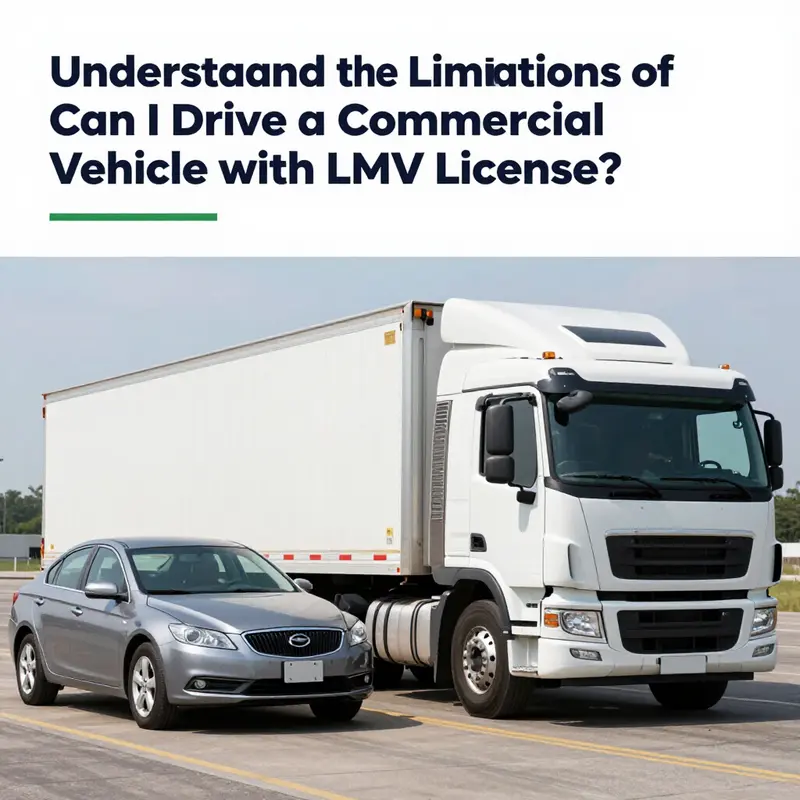
The moment you ask whether an LMV license can unlock the door to commercial driving, you step onto a regulatory bridge that spans safety standards, vehicle weights, and the duties of the road. The simple fact is that a Light Motor Vehicle license is designed for personal mobility with small, everyday vehicles. It is not a universal pass that expands to any vehicle you might encounter on highways or in cargo yards. The distinction between driving a private car or a light van and operating heavy trucks, buses, or specialized commercial vehicles is not a matter of opinion but of law, training, and demonstrated capability. While the answer may seem straightforward in many jurisdictions, the subtleties matter because they determine not just legality but also the safety of the public, the accountability of drivers, and the economics of transportation systems that rely on predictable, well-trained operators.
In a global frame, licensing schemes are built to align with the characteristics of the vehicle, the complexity of its operation, and the potential risk to passengers and other road users. A license issued for a light personal vehicle provides a baseline understanding of traffic laws, basic vehicle control, and safe driving practices. But the operational envelope of commercial driving—vehicles that are longer, heavier, or taller than normal passenger cars, or vehicles that carry hazardous materials, large numbers of passengers, or heavy cargo—demands more. It demands a professional designation that certifies, through specific training and testing, that the driver can handle the nuanced tasks associated with those machines: accurate vehicle handling under load, maneuvering at varying speeds and in challenging environments, and the capacity to respond to specialized scenarios quickly and correctly.
A practical way to frame this distinction is to imagine the spectrum of vehicle weight and complexity. On the far left sit private cars, compact hatchbacks, and light vans used for personal transport. These are governed by licensing rules that emphasize everyday driving skills and a standard standard of knowledge. On the far right sit heavy goods vehicles, multi-axle rigs, passenger coaches, and specialized transport units—vehicles that require tolerance for extended braking distances, precise stopping under weight, and careful coordination of multiple steering and braking systems. In between, there are vehicles that fall into a gray area: small light commercial vehicles with modest weight, used for deliveries within a city or region. Even here, many jurisdictions still require a separate license class or endorsement if the operator intends to carry passengers, freight, or operate commercially. The underlying principle is simple: the license should reflect the responsibilities that come with the vehicle’s size, weight, and function.
A specific case that helps crystallize this concept is the licensing framework in places like Hong Kong. In Hong Kong, an LMV license permits driving vehicles with a gross weight under 7,500 kilograms, such as a Tempo Traveller or a compact van. Yet this threshold does not authorize the operation of commercial vehicles that exceed it or that are designed for heavy-duty tasks. The rules clearly separate the privilege of driving lighter, private-style vehicles from the authority to operate heavier, commercial machines. To drive a commercial vehicle, an individual must hold a valid full driving licence for the class of vehicle in question and meet additional prerequisites, including age and the duration of holding a private car or light goods vehicle license before applying for the commercial class. The logic is straightforward: heavier vehicles demand more experience, stricter oversight, and additional safety considerations.
This separation serves several purposes. First, it ensures that drivers accumulate a track record of safe operation before taking on heavier, more dangerous machinery. Experience matters because physics does not scale linearly with vehicle size; the margins for error shrink as load and momentum grow. Second, it anchors accountability in a formal certification process that validates both knowledge and hands-on competence. Third, it protects the public and the driver by creating a documented path of training, testing, and ongoing evaluation. The licensing process often includes a blend of written examinations that test traffic law and safe operating procedures, followed by practical assessments of vehicle control, particularly under load, and with an emphasis on braking, turning, and hazard management. Additional endorsements may be required for special operations—like hazardous materials transport, passenger transportation, or heavy long-haul configurations—reflecting the specialized risks associated with those duties.
The implications of this licensing architecture extend beyond legality. Insurance, liabilities, and employer expectations are all tied to the official license held by a driver. A person with an LMV license may find that their insurance coverage for certain operations—especially those that involve passenger transport or commercial freight—either requires an upgrade in licensing or declines the risk profile of that operation entirely. For employers, compliance is not merely a bureaucratic concern; it is a component of risk management, training programs, and operational integrity. In markets where regulatory convergence is growing, authorities have increasingly emphasized continuous professional development, periodic retesting, and ongoing skill refreshers to ensure that drivers retain the competencies needed to manage evolving vehicle technologies and safety requirements.
The question, “Can I drive a commercial vehicle with an LMV license?” thus collapses into a broader inquiry about regulatory scope and the expectations that accompany heavier, more complex vehicles. In many jurisdictions, the explicit answer is no. The LMV license does not confer permission to operate commercial vehicles that fall outside its defined class, especially when those vehicles exceed weight thresholds or are designated for passenger or cargo operations with higher risk profiles. Even in places where a portion of the lmv class might technically cover lighter commercial operations, drivers often encounter restrictions or endorsements that limit the vehicle types and uses to which they may be assigned. These constraints exist not to complicate the lives of drivers but to ensure that those who operate larger and more complex machines have demonstrated a maturity of skill and a depth of understanding appropriate to the task.
For someone contemplating a transition from LMV to commercial driving, the pathway is clear but demanding. It starts with an honest assessment of the vehicle category they intend to operate and their current licensing status. If the target is a light commercial vehicle that remains under a weight or configuration threshold recognized in their jurisdiction, there may be a route to upgrade within the same licensing family, often through a specialized module or an additional endorsement. If the goal is a heavier vehicle—such as a standard truck, a bus, or a tractor-trailer—the journey typically requires obtaining a new license class entirely or earning a distinct commercial endorsement. The process usually includes a formal training program that aligns with the vehicle class, a theory examination tailored to the vehicle’s dynamics and safety considerations, and a practical driving test that challenges handling, maneuvering, and response to simulated hazards under load.
Beyond the technicalities of licensing, a driver should also consider the operational realities of commercial driving. Training programs commonly emphasize areas that extend beyond basic vehicle control. These include load Securement, hours-of-service regulations, route planning with regard to weight limits and road restrictions, and the interplay between the vehicle’s braking systems, suspension, and tire performance under different weather and load conditions. The mental discipline required is substantial: the driver must integrate safety protocols, regulatory compliance, customer service, and the financial implications of operating a commercial vehicle—fuel efficiency, maintenance schedules, and the potential costs of downtime. In many regions, there is also a culture of continuous learning. Regulations evolve with technology, new safety standards, and shifting traffic patterns. A professional driver remains a student of the road, regularly updating knowledge through refresher courses and requalification processes.
As readers consider the licensing question in their own locale, they should remember that local authorities, not generic guidance, determine the precise requirements. Rules vary significantly from one region to another, and even within a country they can differ by state, province, or city. For instance, while the Hong Kong framework provides a clear blueprint—LMV licenses for lighter vehicles and a separate process for heavier commercial operations—the specifics of age thresholds, duration of prior licensing, medical certificates, and the exact vehicle classes can diverge from, say, another urban center or a rural jurisdiction. The takeaway is practical and straightforward: do not rely on assumptions about what your LMV license might permit; consult the official licensing authority that governs your area. For those curious about how rules translate into broader regulatory landscapes, it helps to compare how different regions structure licensing tests, vehicle weight classifications, and the thresholds that separate private driving from commercial operation.
For readers who want to explore the practical consequences and read more about the nuances of vehicle licensing rules across borders, there are resources that detail state-by-state variations, inspection requirements, and the specific criteria for when a license upgrade becomes necessary. In particular, a resource focused on vehicle inspection requirements across U.S. states can offer a sense of how licensing interacts with certification and enforcement in a different regulatory environment, illustrating how the professional standards embodied in a CDL are anchored not only in knowledge but in verifiable competence that regulators and insurers both recognize. The key idea is that the road to commercial driving is a path of increasing responsibility, with every step backed by formal assessment and continuous professional development.
Finally, for those seeking official, jurisdiction-specific guidance, it is prudent to consult the relevant authority’s guidance directly. In the Hong Kong context, the Transport Department provides definitive information on licensing classes, age requirements, and the prerequisites for upgrading from an LMV to a commercial license. This official resource anchors the theory in practice and helps ensure compliance with the exact standards applicable in your locale: https://www.td.gov.hk
In sum, the short answer to the question can i drive a commercial vehicle with LMV license is: not safely, not legally, and not without undergoing a formal upgrade process that aligns with the vehicle’s class and the operation’s risk. The longer answer is a narrative about safety, accountability, and the professionalization of driving that reflects a transportation ecosystem’s broader commitments to public safety, regulatory integrity, and the effective movement of goods and people.
External reference for deeper regulatory context and official guidance can be found at the Transport Department’s Hong Kong site: https://www.td.gov.hk. For broader, more comparative insights into how licensing schemes shape driver qualifications and inspections across regions, another useful perspective is to review state-level vehicle inspection requirements and the ways in which those standards intersect with license class and endorsements. See the resource on US state vehicle inspection requirements for additional context on how different jurisdictions structured the relationship between inspection regimes and driver licensing within a broader safety framework.
From LMV to CDL: Navigating Regulatory Boundaries for Commercial Driving
The central question many aspiring drivers raise is deceptively simple: can I drive a commercial vehicle with only an LMV license? The answer, in most places, is no. An LMV license is tailored for small, personal vehicles—cars, compact vans, perhaps light-duty pickups. It is a credential that signals proficiency with everyday roads, not the specialized demands of professional fleet operation. The moment a vehicle leaves the lane for business purposes, carries paying passengers, or escorts heavy loads, licensing expectations shift dramatically. In those moments, the license you hold is not just a certificate of ability; it becomes a statement about safety, training, medical fitness, and the ongoing ability to perform a physically and cognitively demanding job. This boundary—between LMV and the commercial driving world—is essential for anyone who contemplates operating larger vehicles, whether in the United States, India, or another jurisdiction with distinct regulatory frameworks. The separation matters not only for compliance but for the practical realities of who can be behind the wheel and under what conditions, including health and ongoing qualification requirements that help ensure road safety for everyone sharing the mass of steel, rubber, and momentum that characterizes modern transport.
In the United States, the regulatory architecture clarifies that a Commercial Driver’s License, or CDL, is mandatory for most commercial motor vehicles. CMVs, by definition, include larger trucks and buses, and their operators are subject to licensure standards that reflect the heavier physical demands of control, endurance, and extended operation. The Federal Motor Carrier Safety Administration, or FMCSA, governs the CDL regime and sets forth criteria that govern not only the vehicle class but also the driver’s health, knowledge, and skills. A key feature of this framework is the medical standard. The vehicle may be legal to operate on the strength of a CDL, but the driver must also demonstrate ongoing medical fitness to handle the unique stresses of commercial operation. This is not merely about a prior passing score on a written or practical test; it is an ongoing obligation to meet health criteria that ensure safety on the road day after day.
From a practical perspective, obtaining a CDL involves more than a larger, more detailed license. It typically requires targeted training specific to the vehicle class you intend to operate and successful completion of both knowledge-based and behind-the-wheel evaluations. Endorsements may be necessary for specialized vehicle operation, such as transporting hazardous materials or carrying a high passenger load. These elements reflect the distinct risk profiles of different commercial operations and the corresponding expertise required to manage those risks. The result is a licensing pathway that is purpose-built for the vehicle and the operation rather than a broad, one-size-fits-all credential.
A further layer of complexity emerges when we consider medical requirements. The modern CDL framework in the United States is anchored in medical fitness standards designed to ensure that drivers can safely perform demanding tasks over long hours, with varying terrain, weather, and scheduling pressures. The medical examination for commercial drivers is conducted by certified professionals who act under the umbrella of federal standards. They assess a range of health indicators, from vision and hearing to cardiovascular health and neurological function. The official documentation used in this process is the DOT medical examination report, and since 2018, new CDL applicants and CDL renewals have been required to submit a complete medical examination report signed by a certified DOT medical examiner. This tightening of requirements underscores a commitment to ongoing fitness as a condition of holding and renewing a CDL, not merely a one-off compliance step.
These medical standards reflect a broader understanding of the roadway as a shared environment where large, heavy vehicles operate under more demanding conditions than typical passenger cars. The DOT’s approach is pragmatic: license holders must demonstrate capacity to perform under stress, absorb long hours, and react promptly to evolving road situations, all while maintaining the physical health necessary to do so. The medical examination forms, the list of testable criteria, and the requirement for a DOT-certified examiner converge to create a standardized baseline of safety. This baseline is not arbitrary; it is rooted in comprehensive research about the risks associated with heavy vehicle operation and the consequences of impaired driving. The federal framework thus serves as a uniform floor across states, ensuring that a CDL holder in one state meets a consistent standard with CDL holders across the country.
The regulatory conversation is not confined to a single country or jurisdiction. In India, for example, the line between personal driving and commercial operations is similarly drawn, but the mechanisms differ. While individuals with an LMV license can operate light-purpose vehicles, moving into commercial operations requires a separate commercial license for the vehicle class defined under the relevant Motor Vehicles Act. The implication is that motorists must remain mindful of the specific class designations, which are not interchangeable. The broader lesson from both the United States and India is clear: licensing frameworks are designed to align with the responsibilities, risks, and performance demands of commercial driving, and regulators emphasize distinct pathways and ongoing qualifications rather than a generic upgrade from a private to a commercial credential.
This is a landscape that invites careful planning and diligent verification. Regulations can vary significantly from region to region, not only in the existence of a CDL requirement but in details such as medical exemptions, age restrictions, duration of license validity, and the scope of endorsements. Because regulatory environments evolve, drivers and employers benefit from consulting official sources and staying current with updates issued by transportation authorities. An important nuance is that even within the same country, state or provincial rules can shape the practical realities of licensure in ways that affect where and how you can operate. For those navigating this transition, it is worth reading up on the broader context of how state rules impact driver licensing, which can provide a clearer sense of how requirements are applied locally while still fitting within the national or federal framework. See state guidance on how these rules are applied across jurisdictions: state rules impacting driver licensing.
The picture of licensing is therefore not about a single test or certificate; it is a layered, ongoing process. It begins with the recognition that a vehicle’s size, weight, and purpose create regulatory expectations that exceed those associated with private passenger operations. It continues with the acquisition of formal training, the demonstration of knowledge and practical skills relevant to the vehicle class, and the securing of medical clearance that confirms the driver can withstand the physical and mental demands of commercial service. The medical component, in particular, is a nonnegotiable pillar. It serves as a daily reminder that safety is a dynamic state, not a static credential. If a driver’s health flags in a way that could impair safe operation, licensing updates, medical reviews, or disqualifications may follow. This dynamic underscores why many fleets and regulators view the CDL as a living credential, one that must be maintained through ongoing fitness testing and adherence to medical standards.
For readers plotting a path toward commercial driving, the upshot is straightforward: if your goal is to operate a CMV for work, you will almost certainly need a CDL beyond the LMV license. You should anticipate a two-track process—one that encompasses both training and testing for the vehicle class you intend to drive, and another that secures medical clearance through a DOT-compliant examiner. The process is designed to be rigorous because the consequences of failure are significant, not just for the driver but for other road users and for the commercial operations that rely on dependable, safe transportation. The emphasis on health, skill, and accountability helps explain why the CDL emerges as a distinct tier of licensure, not simply an extended LMV license.
In an era where safety and accountability are at the forefront of transportation policy, the regulatory requirements surrounding commercial driving reflect an enduring commitment to protecting lives and livelihoods. They are not arbitrary hurdles but calibrated safeguards designed to ensure that those who operate heavy vehicles do so with the competence, endurance, and medical reliability that such responsibilities demand. As you weigh the option of moving from a private license to a professional license, it is worth remembering that the leap is not merely administrative. It is a transition into a credential system that recognizes the real-world stakes of commercial operation and codifies a shared standard that enables safer roads for everyone. If you are serious about making that transition, begin by understanding the precise CDL class you need, the endorsements that may apply to your intended duties, and the medical criteria that must be met on an ongoing basis. This triad—class, endorsements, and fitness—forms the backbone of compliant, responsible commercial driving.
For readers seeking authoritative medical guidelines and the formal requirements that underpin the medical qualification component, the Federal Motor Carrier Safety Administration hosts a comprehensive resource on the medical standards and processes. This external reference provides the latest guidance on examiner qualifications, reporting forms, and the expectations surrounding the DOT medical examination. Access to this resource helps clarify the practical steps involved in securing and maintaining a CDL under current federal standards. External resource: https://www.fmcsa.dot.gov/medical
From LMV to CDL: How Country Rules Delineate the Path to Driving Commercial Vehicles
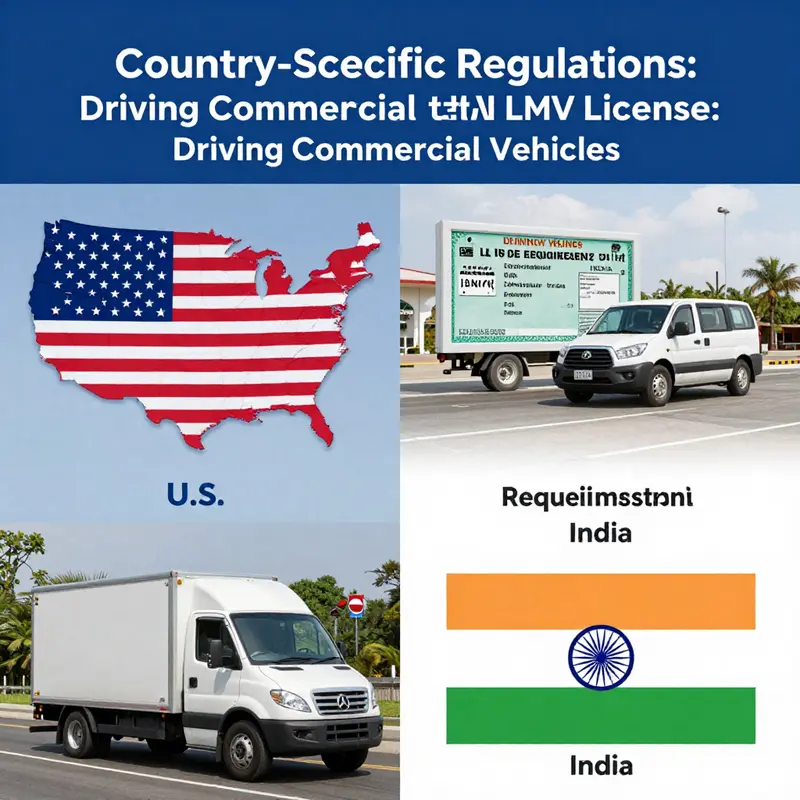
When people ask whether an LMV license can be used to drive a commercial vehicle, the question sounds simple, but the answer travels through a maze of laws, vehicle classifications, and safety objectives that differ from one country to another. The essence of the matter lies in the purpose of licensing in the first place: to ensure that those who operate heavier, more complex, or more hazardous vehicles have undergone targeted training, testing, and credentialing that match the real demands of the road. An LMV license is, by design, a permit for light, everyday mobility. It signals competence with smaller cars and light vans in ordinary traffic. It does not, in most jurisdictions, authorize the operator to handle the heavier, more specialized, or commercially oriented vehicles that carry passengers in large numbers, haul goods across long distances, or transport hazardous materials. To drive those vehicles legally, a separate credential—commonly called a Commercial Driver’s License (CDL) in many countries, with regional variations—becomes necessary. The practical implications of that distinction are felt in every layer of the licensing ecosystem, from the content of training programs to the format of testing, from insurance requirements to the actual enforcement at the curb or on the highway. While the question is simple to pose, the answer is invariably contextual and legally precise, reflecting each jurisdiction’s definitions, safety priorities, and administrative realities.
In the United States, the arc from LMV-style permissions to commercial driving rights is explicit and codified within a federal framework that is then interpreted and implemented by state authorities. There is no formal category called an LMV license within federal or state driving regulations as a standard, across-the-board designation. The operation of heavy vehicles is governed primarily by the Federal Motor Carrier Safety Administration (FMCSA) at the national level, with state departments of motor vehicles administering the licensing process at the local level. The key criterion for requiring a CDL centers on the vehicle’s physical characteristics and its intended use. A vehicle with a Gross Vehicle Weight Rating (GVWR) of 26,001 pounds or more, or a vehicle designed to transport 16 or more passengers including the driver, or a vehicle used to haul hazardous materials, triggers the CDL requirement. In contrast, the typical Class C license, which most people obtain to drive ordinary passenger vehicles, does not confer the right to operate commercial vehicles under those criteria. This structural separation is not merely bureaucratic; it reflects a policy judgment that heavy, risky, or complex vehicle operation demands a higher standard of training, testing, and ongoing regulation. The result is a clear boundary: if the license class does not align with the vehicle category and the intended commercial use, the operation is illegal, regardless of anything that might be written on a driver’s card claiming that it qualifies for “any vehicle under X weight.” A driver with an LMV or Class C license cannot legally assume the responsibilities of operating tractors, large buses, or other heavy commercial platforms simply by truthfully stating they possess the broader credential. The law expects precise alignment between license class and vehicle type, and the enforcement reality is that deviation invites penalties, insurance complications, and professional risk. In this regulatory ecosystem, the presence of endorsements—such as those for hazardous materials or passenger transport—adds layers of specificity, testing, and verification that further tailor the license to the vehicle’s demanding profile. The end result is that the pathway to commercial driving in the U.S. is structured, but it is not ambiguous: obtain the CDL, pass the requisite knowledge and skills tests, complete any endorsements, and meet medical and certification standards to drive the specified class of commercial vehicle.
Across the Atlantic, the regulatory environment in India presents a different but equally careful architecture. Here, the Motor Vehicles Act, 1988, forms the backbone of licensing and vehicle classification, with distinct pathways for LMV operation and commercial activity. An LMV license in India authorizes operation of light motor vehicles, typically for everyday personal use or light commercial tasks that do not involve heavier or more dangerous load profiles. When a driver moves into the realm of operating commercial vehicles—such as freight trucks or passenger buses—an endorsement becomes a prerequisite. This endorsement is not granted automatically with the standard LMV license; it is an additional credential that must be earned through compliance with the statutory process, which is outlined under the licensing provisions in the Act. The color and identification details of a vehicle can offer telltale signs to authorities: commercial vehicles are usually marked with yellow registration plates and black letters, or green plates with yellow letters in the case of electric vehicles, signaling that the vehicle is subject to different regulatory oversight and insurance considerations than a private light vehicle. The licensing ecosystem also specifies a minimum age for obtaining the commercial endorsement, commonly around 20 years in many states, and it rests on a formal endorsement added to the LMV license. The underlying legal reference is precise: the endorsement related to commercial operation aligns with the licensing conditions described under Section 3(1) of the Motor Vehicles Act, 1988. The practical upshot is a framework that recognizes that commercial driving is a distinctly higher-stakes activity than private car operation and that the driver’s authorization should reflect that risk calculus. In practice, then, Indian regulations do not permit a driver to operate a commercial vehicle on an LMV license alone. The road safety objective drives the formal separation: you obtain the LMV license, you earn the commercial endorsement, you meet the age and training prerequisites, and you operate only the vehicle categories that the endorsement permits. If the vehicle class, highway exposure, or passenger loads change, the licensing condition likewise changes, ensuring that the operator’s credentials stay aligned with the vehicle’s risk profile and the regulatory expectations.
The contrast between the U.S. and Indian models is instructive because it highlights the fundamental aims of licensing systems: to limit risk by ensuring that operators have demonstrated the necessary competence, situational awareness, and technical capacity to manage heavy or complex vehicles. In both contexts, the LMV license is not a gateway to the full spectrum of commercial operation. In the United States, that gate is the CDL, often accompanied by endorsements tailored to the vehicle’s specialized demands. In India, the LMV is a starting point, but the commercial operation requires an explicit endorsement that is earned and recorded as part of the driver’s licensing record. The divergent regulatory paths reflect different administrative cultures and policy priorities, but they converge on a shared concern: misapprehension about what a license permits can produce real-world consequences—unsafe vehicle operation, higher accident risk, and potential harm to public safety and property. The result is that anyone contemplating commercial driving should engage in a careful, region-specific assessment of the licensing requirements before assuming a broader operating scope. That assessment begins with understanding the vehicle’s classification, the precise licensing rules that apply to it, and the process to obtain the appropriate credential.
This discussion is not merely theoretical. For individuals who hold LMV licenses and wish to pursue commercial driving in either country, the path is concrete and navigable, but it is not interchangeable. In the U.S., the practical steps involve determining the vehicle category you intend to operate, meeting the GVWR or passenger capacity thresholds, enrolling in a certified training program if required, passing the knowledge and skills exams, and securing the appropriate CDL class along with any endorsements. The timeline and cost will vary by state but the structure remains clear: license class, vehicle type, and endorsement must align with the actual operation. In India, the process begins with confirming that your LMV license is eligible for an endorsement and then completing the requisite training and testing to obtain the commercial endorsement, with attention to state-specific variations and the color-coded vehicle identification that signals its commercial status. The regulatory language—the Motor Vehicles Act, and the sections that govern licensing—serves as a reminder that lawful operation is codified, not assumed. The consequences of misalignment can include penalties, invalid insurance coverage, and a legal risk to the driver and the company, should one operate beyond the license’s scope.
Within this framework, it is prudent to consult the relevant authorities to confirm local rules, as licensing practices can vary not only between countries but also among states or provinces within a country. This is not simply a matter of paperwork; it is a matter of road safety, training standards, and accountability in the transport chain. The emphasis on structured training and verification helps ensure that those who operate commercial vehicles possess the capacity to handle complex maneuvers, heavier loads, longer hours, and the additional responsibilities that come with passenger or hazardous-material transport. For readers seeking a broader perspective on licensing integrity and safety concerns that can accompany any licensing scheme, a resource exploring the systemic issues around CDL integrity is available at cdl-cheating-scheme-exposed-public-safety-at-risk. The discussion there, while not a substitute for official regulatory guidance, underscores why robust verification and standardized testing matter when large-scale road risk is involved. You can explore that discussion here: https://drivernvehiclelicensing.com/cdl-cheating-scheme-exposed-public-safety-at-risk/.
As you map the path from LMV to commercial operation, it becomes clear that the question is less about a single license and more about the jurisdiction’s philosophy toward training, risk, and accountability. The licensing landscape reflects a balance between enabling mobility and protecting the public from the hazards that accompany heavier, more complex, or more specialized vehicles. The result is a predictable rule set: you hold the correct license class for the vehicle type you intend to drive, you meet the appropriate training and testing standards, and you operate only under the endorsements that your license explicitly permits. When you respect that alignment, you contribute to safer highways, more reliable service in commercial transportation, and a professional standard that makes the roadways safer for everyone. For those who want to explore the statutory backbone in India, the formal reference to the licensing framework can be found in Section 3(1) of the Motor Vehicles Act, 1988, which codifies the licensing conditions for drivers of commercial vehicles and articulates the prerequisites that connect the license to the vehicle category and the operations permitted. External resource: https://www.mvact.gov.in/section-3-1-of-the-motor-vehicles-act-1988/
The Liability Gap: Legal, Financial, and Safety Risks of Driving a Commercial Vehicle on an LMV License
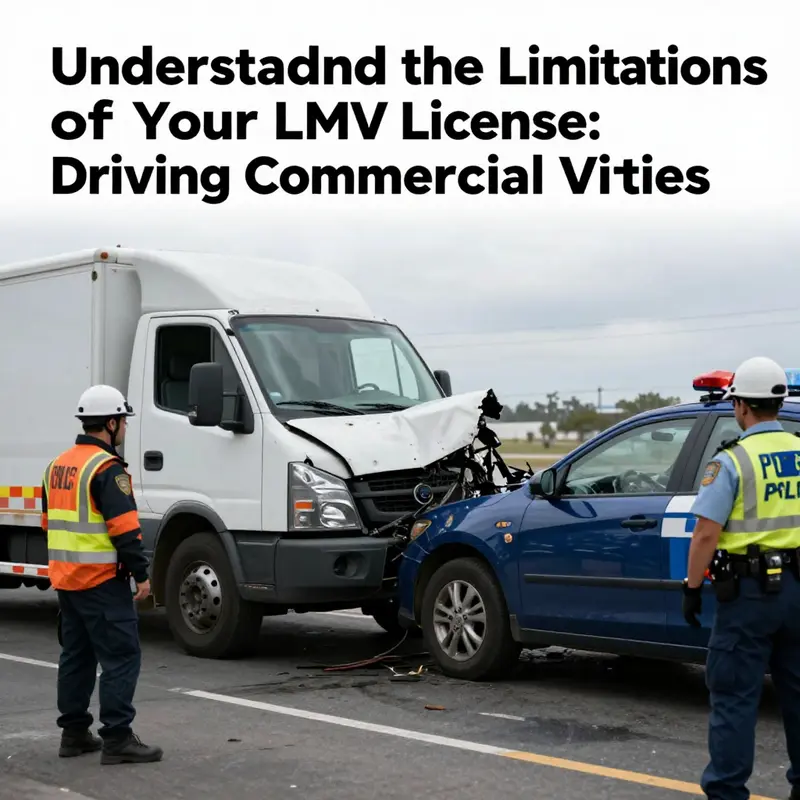
The lure of squeezing more value from a single credential is familiar to many drivers, especially those juggling tight schedules, small fleets, or the improvisational demands of everyday logistics. An LMV license, by design, covers light, everyday vehicles—personal cars, compact vans, and the like. It is not a carte blanche for hauling people or cargo in the same way a Commercial Driver’s License (CDL) is. Yet the line between what an LMV license permits and what a commercial operation requires is easily blurred in practical terms, particularly when the vehicle in question sits near the border of light and heavy duty. The result is a liability gap that can feel both administratively tedious and dangerously consequential. This chapter traces how the legal framework, the insurance landscape, and the safety ecosystem intersect in the decision to drive a commercial vehicle on an LMV license, and why crossing that line invites penalties, risk, and real costs that extend far beyond a roadside stop or a routine audit.
Legal frameworks around licensing are nuanced and highly region-specific. In many jurisdictions, a CDL or its equivalent becomes mandatory as soon as the vehicle’s gross weight or intended use crosses a defined threshold. In India, the landscape is further complicated by historical interpretations and evolving court rulings. It is important to note that, in a conditional sense, the jurisprudence has acknowledged certain exceptions: LMV license holders can operate specific commercial vehicles whose gross weight falls under a defined limit, or whose class and specifications align with the license they hold. The practical upshot is that a vehicle with a GVW under a threshold such as 7,500 kg may be operated by someone with an LMV license, but only if the vehicle’s specifications match what the license covers and if the operator complies with any endorsements or restrictions attached to the license. This nuance is not universal, and it does not grant blanket permission to drive any commercial vehicle simply because it is labeled as light or for personal use. The emphasis is on alignment—weight, vehicle class, and the precise regulatory category under which the vehicle is registered and operated. For anyone considering or already engaged in such work, the safest route is to verify with local licensing authorities and transport agencies. They hold the official guidance that cannot be substituted by anecdote or courtroom chatter. The take-away is clear: the license’s category must match the vehicle’s class and its GVW, or the operation risks becoming noncompliant despite a driver’s confidence.
This is not merely an academic distinction. The risk calculus expands quickly when a driver crosses the line between permissible exceptions and prohibited practice. First, the legal penalties can be severe and multi-layered. Law enforcement authorities may issue fines for operating a vehicle without the appropriate license category. In some jurisdictions, the act can lead to impoundment of the vehicle, and in certain cases, violations may escalate into criminal charges under traffic or motor-vehicle statutes. The exact consequences depend on regional statutes, but the pattern is consistent: penalties scale with the degree of noncompliance and the perceived risk to public safety. Second, insurance considerations can derail the financial math of any operation. Most insurance policies crafted for road transport assume the operator holds a license appropriate to the vehicle type. If a driver operates a heavier vehicle without the corresponding license, coverage can be voided. In the event of an accident, this means no compensation from the insurer, leaving the driver or employer facing substantial out-of-pocket losses and, potentially, civil liability for damages. The third facet is safety. Commercial vehicles—especially those near or above the governing threshold—demand specialized training, vehicle handling expertise, and a nuanced understanding of weight distribution, braking distances, and tire management. An LMV-trained driver may lack the practical experience needed to manage a heavy vehicle safely in complex traffic situations, on varying terrains, or under adverse weather. The result can be elevated risk of rollover, load shift, and collision, all of which threaten the driver, passengers, other road users, and the vehicle’s cargo. The fourth element—employment implications—can prove decisive for many professionals. For drivers, operating a vehicle that lies outside the license’s scope can lead to termination, revocation of credentials, or disciplinary action that affects career prospects for years. Fleet managers also bear risk: misalignment between licensing, vehicle class, and operation can ripple through insurance premiums, regulatory audits, and contractual compliance with clients who demand robust safety standards.
To navigate these complexities, it helps to frame the issue around four core considerations. The first is the vehicle’s GVW—what the vehicle weighs when it is fully loaded. This figure, not the vehicle’s mere physical heft, defines whether a given LMV license remains within its permitted ambit. The second is the license category itself. Some licensing regimes specify the exact vehicle classes and weight ranges an LMV licenseholder may operate. A mismatch here is not a minor clerical error; it is noncompliance with potentially serious consequences. The third consideration is the presence of endorsements or restrictions. In many jurisdictions, endorsements for passenger transport, hazardous materials, or specialized operations must be earned through additional testing or training. The lack of such endorsements can render a seemingly familiar vehicle into a noncompliant operator’s tool. The fourth factor is the obligation to verify with official channels. Verifying GVW, vehicle class, and endorsements with licensing authorities ensures decisions reflect current law and policy rather than outdated practice or personal interpretation.
A close look at practical implications clarifies why even occasional exceptions are surrounded by caution. Take a scenario where a small commercial vehicle weighs 6,500 kg when loaded. If the jurisdiction’s rules explicitly permit LMV licenseholders to operate vehicles under 7,500 kg with specific vehicle specifications, the driver might be within a narrow margin of compliance. Yet this narrow margin can erode rapidly when the vehicle’s cargo weight, passenger count, or configuration pushes the GVW beyond the permitted ceiling. In such moments, what seemed like a permissible workaround becomes a violation, and the operator is exposed to all the penalties described earlier. Another common trap is assuming that a vehicle’s class on paper matches the driver’s actual experience. A Tempo Traveller or a similar light commercial vehicle may physically resemble everyday passenger transport in many respects. But the engine tuning, steering dynamics, braking systems, and load-bearing requirements differ enough to demand targeted training. When such training has not occurred, the risk of mishandling increases, with consequences that ripple through the driver’s safety record and the vehicle’s insurance status.
What should a driver do if the commercial objective seems legitimate but the license appears to be a mismatch? The answer lies in due diligence rather than improvisation. Start with a careful inspection of the vehicle’s GVW against the license category. Cross-check the weight with the vehicle’s documentation, including registration and any endorsements. If in doubt, consult the licensing authority or a transport department representative before pulling away from the curb. It may require a formal license upgrade, a specific endorsement, or the use of a vehicle that sits clearly within the LMV category. In some cases, legal routes may include temporary authorizations or employer-provided waivers, but these are not universal and require formal processes. Where these pathways do exist, using them is far preferable to risking an unresolved regulatory dispute later. The broader lesson is pragmatic: align your vehicle choice with your licensing, and keep your operation within the boundaries of official guidance.
The social and economic costs of noncompliance can be severe. Beyond the immediate fines and potential vehicle impoundment, the reputational damage to a driver or a fleet can limit access to work, partnerships, and future contracts. Insurance undergoes a recalibration, not only increasing premiums but often creating a coverage gap that can complicate recovery in the event of a crash. Employers may face penalties for misclassification or for failing to provide compliant training and oversight, which can cascade into loss of business licenses or contractor status. For individual drivers, a licensing violation can trigger a chain reaction: loss of the right to operate certain classes of vehicles, diminished employability, and a lasting record that can affect future licensing applications. These are not theoretical risks; they are tangible, enforceable consequences that can alter careers and livelihoods.
Within this landscape, even the seemingly small decision to operate a near-threshold vehicle on an LMV license demands caution. A responsible approach treats the situation as a regulatory boundary to be mapped with precision, not a gray area to be explored for convenience. It means gathering authoritative statements from the relevant authorities, consulting official guidelines, and recognizing that the rules serve a purpose beyond mere compliance: they are designed to safeguard road users, cargo, and communities that rely on predictable and trained drivers. If you encounter ambiguous circumstances, the prudent choice is to defer the operation until you qualify for the appropriate license or endorsement. This disciplined approach protects you, your employer, and the public from avoidable harm and avoids the compounding risk of a legal dispute that could stretch over years.
For readers seeking a concrete sense of how these considerations play out across regions, it is helpful to review how rules evolve and where they diverge. Different jurisdictions treat the licensing boundary with varying degrees of rigidity, and even within the same country, amendments can shift the safest practice. The best path remains clear: always verify the specifics of GVW, vehicle class, and licensing categories with the official channels that govern vehicle operation in your area. Do not rely on memory, hearsay, or generalized guidance. The official guidance is the anchor that keeps practice aligned with the law and with safety standards.
In sum, the decision to drive a commercial vehicle on an LMV license is not just a matter of convenience. It is a decision that triggers a complex calculus involving legal risk, financial exposure, and safety considerations. While conditional permissions may exist, they are fragile, specific, and subject to change. The safer, more robust approach is to ensure that licensing and vehicle class are perfectly matched before taking the wheel. When you align licensing with the vehicle’s weight and purpose, you reduce the likelihood of penalties, insurance disputes, and safety incidents, and you protect your professional standing in the eyes of employers and regulators alike. For those who want deeper insight into how licensing rules are shaped by state policies and other jurisdictional factors, the ongoing dialogue among regulators, industry stakeholders, and drivers is a reminder that rules evolve with experience and with the weight that the law places on public safety. A practical, informed approach is not a luxury but a responsibility, one that keeps the road safer and the license valid.
Internal reference: for a deeper sense of how regional rules can shift driver licensing, see the discussion on state rules that impact driver licensing. state rules that impact driver licensing.
As you navigate these decisions, remember that official, up-to-date guidance is always out there. When in doubt, consult the relevant licensing authority or transport department, and use the approved channels to confirm your vehicle’s weight class and required licensing. The central idea remains simple: do not operate a vehicle beyond the license’s scope. The costs of getting this wrong go beyond fines; they extend to safety, coverage, and career integrity. In the end, regulatory clarity protects you and everyone else on the road. For those who want to anchor their understanding to external resources, official government guidance remains the most reliable reference. External resource: https://www.gov.uk/driving-and-vehicles
Final thoughts
Understanding the licensing regulations surrounding commercial vehicles is crucial for maintaining legal and safe driving practices. An LMV license typically does not cover the operation of commercial vehicles, which require a Commercial Driver’s License. Compliance with these regulations not only ensures legal operations but also promotes safety on the roads. As you navigate your driving journey, be aware of the necessary steps and requirements that can impact your ability to operate different categories of vehicles effectively.