
Buying a vehicle is a significant investment and often involves complex legal considerations, particularly if your driver’s license is suspended. Many individuals may wonder if it’s permissible to purchase a car under these circumstances. It’s crucial to understand that while you can legally buy a vehicle without a valid driver’s license, there are important stipulations regarding ownership and operation. Each state has its own regulations, and driving with a suspended license carries serious consequences. This article delves deep into the legalities of purchasing a vehicle with a suspended license, explores specific state regulations that may affect your decision, and outlines the potential consequences of operating a vehicle without the proper driving privileges. By the end of this exploration, you’ll be equipped with a thorough understanding of your rights and obligations.
Owning Without Driving: Navigating the Purchase of a Vehicle When Your License Is Suspended
The question often lands in a high-stakes gray area: can you buy a car if your driver’s license is suspended? The short answer is yes. The longer, more practical answer centers on a bundle of legal distinctions, financial realities, and daily consequences that ripple through planning, financing, insurance, and eventual use. Buying a vehicle is a property transaction. It marks ownership, not permission to operate, and it does not hinge on a valid driver’s license in most places. Nationally, there is no federal prohibition that blocks a person with a suspended license from purchasing a car. The act of purchase, transfer of title, and the bill of sale are civil matters, separate from the licensing discipline that governs who may legally drive on public roads. This separation matters because it sets the stage for a purchase that is legally permissible even when driving is temporarily off the table. Yet the silence of federal law on the purchase itself does not erase the legal complexity that follows once the car leaves the lot or the moment you try to drive away. The real work happens in the realm of state and local regulations, insurer requirements, financing criteria, and the practical discipline needed to avoid compounding penalties while you wait for your license to be reinstated. In other words, the act of acquiring a vehicle is feasible; the ongoing responsibility—especially the right to operate it—depends on the jurisdiction and the specifics of your suspension.
To understand how this plays out in daily life, it helps to map out the core requirements for the purchase and then walk through the friction points that typically surface for someone with a suspended license. At the cornerstone you’ll find proof of identity, proof of financial ability, and the essential paperwork—title, bill of sale, and any ancillary disclosures that state or seller may require. A government-issued ID, such as a passport or state-issued driver’s license (even if suspended), serves as a basic identity anchor for the transaction. In many cases, buyers can substantiate their identity without a valid license because the transfer of ownership is a civil transaction that does not depend on the right to operate a vehicle. The financial side, however, is more complex. Lenders view a license status as a proxy for risk. A suspended license can signal an unstable or uncertain financial profile, and that can complicate loan approvals or financing arrangements. The lender’s risk calculus is not about a person’s moral character or intent; it is about the predictability of repayment and the collateral’s value. With a suspended license, the state of the individual’s driving privileges becomes a signal that the borrower may have difficulty meeting obligations that require steady employment verification, consistent income, and a predictable driving record that correlates with steady stability. This is not an absolute barrier, but it is a meaningful hurdle that requires foresight, alternative strategies, and a careful reading of the state’s rules on vehicle ownership and registration when the car is driven by someone else or kept in storage until the license is back in hand.
The echo of this reality appears in the practical steps you’ll likely take. First, you gather proof of identity and financial capability. You’re not disqualified from buying a car by the lack of a license, but you may be asked to demonstrate liquidity or creditworthiness in ways that a typical buyer with a valid license would not be. Cash purchases become simpler from a lender’s perspective because they bypass the credit underwriting that often suspects risk tied to license status. If financing is necessary, a lender will scrutinize the situation more carefully. Some lenders rely on income stability and the value of the vehicle more than on license status alone. Others will require more robust co-signer arrangements or alternative forms of collateral. A co-signer with a valid license can substantially improve the odds of approval, but it transfers some financial responsibility and risk to the co-signer. The narrative here is not about exploiting loopholes; it’s about recognizing the real-world constraints that financial institutions apply when they assess a loan to someone with a suspended license.
Insurance, however, introduces another layer of complexity that can surprise buyers. Insurance companies often view a suspended license as a proxy for elevated risk. Even if you own the vehicle outright or have secured financing, insurance coverage is typically a prerequisite for registering the vehicle or, in many cases, even for moving the transaction forward. In some states, proof of insurance is mandatory to complete the registration process, irrespective of whether the vehicle will be driven immediately. The pricing implications can be stark: premiums may rise, underwriting standards may tighten, or coverage options may narrow to higher-deductible plans or policies that provide limited liability protection. The practical upshot is that before you can take legal possession of the car for the long term, you may need to arrange transitional insurance or non-owner coverage, and you’ll have to plan for the possibility of higher costs once the license status shifts. The boundary between owning and operating becomes crucial here. Ownership is a function of title and sale documents; operation demands an active license and compliance with traffic laws. If you intend to keep the car off public roads, your insurance needs—and your risk exposure—will look different from someone who intends to return to the wheel as soon as the suspension ends. Yet even parked cars are not entirely free from regulatory scrutiny. Some states require ongoing proof of insurance for registered vehicles, regardless of usage, and those rules can complicate the decision to purchase when your driving privileges are temporarily revoked.
The state-specific nuance matters as well. Although the federal layer is clear about the permissibility of purchase, states can add layers of registration, insurance verification, and even title transfer rules that create friction for a buyer with a suspended license. For example, some jurisdictions require you to carry liability insurance to finalize the vehicle’s registration, effectively tying the ability to operate to the obligation to insure. Others may have stricter rules about who can sign the title transfer or how a vehicle is titled when the buyer’s license is suspended. These variations can affect not only the timing of the purchase but the safety and legality of transporting the vehicle from the dealership to its new owner. The practical consequence is simple: do not assume uniformity across states. A transaction that proceeds smoothly in one state can become entangled in another, simply because of differing definitions of “ownership,” “registration,” and “insurance.”
This is where the broader legality becomes a living, changing conversation. The NHTSA’s overarching stance clarifies safety and registration standards, but it does not police the act of buying. The legal gravity sits with the state’s motor vehicle department, the insurance regulator, and, for financed purchases, the lending institutions. The buyer’s path thus moves through a jurisdictional maze: identify yourself, prove you can pay, secure the paperwork, and then navigate the insurance and registration hurdles—knowing that the right to drive lags behind the right to own. As you navigate this maze, the practical guidance is to anticipate the obstacles rather than react to them after the fact. If you intend to regain driving privileges in the near term, it can be wise to align your purchase with a plan that minimizes the risk of accruing penalties. For instance, if a suspension has strict conditions for reinstatement, you might time a purchase so that you can immediately arrange for a temporary arrangement—such as rideshare, a family member as a designated driver, or a supervised method of transport—while you work through the reinstatement process. In this sense, owning a vehicle when your license is suspended is less about a loophole and more about deliberate, informed management of a civil process that keeps ownership intact while you resolve the driving restrictions.
The legal landscape, as outlined above, is not a one-size-fits-all map. A poignant example of how the nuances can differ is the interaction between vehicle ownership and licensing status as it unfolds at the state level. Your state may impose additional requirements for registration, or it may demand that the vehicle be insured before it can be titled in your name. Even if you anticipate not operating the vehicle on public roads during the suspension period, these requirements can shape the feasibility and timing of the purchase. You may discover that the simplest path is to negotiate with the seller to structure the deal in a way that accommodates your status—perhaps a straightforward transfer of ownership with a clear statement that the vehicle will not be used on public roads until your license is reinstated. In practice, this means careful due diligence: confirm the title is clear of any liens, verify that the bill of sale matches the purchase price, and ensure that the vehicle’s new owner information is recorded accurately. It also means recognizing the potential for hidden costs, such as storage fees if you must store the vehicle somewhere secure while your license status remains suspended, or the possibility of additional insurance mandates that could temporarily raise monthly expenses.
Another layer worth acknowledging is the social and ethical dimension of purchasing a vehicle while your driving privileges are paused. The decision to own a vehicle in this state is not purely transactional. It intersects with your daily routine, your work obligations, and your broader legal responsibilities. If the suspension is tied to non-driving offenses or compliance issues, there may be a valuable opportunity to demonstrate accountability through proactive compliance and transparent communication with lenders, insurers, and the DMV. Being forthright about your status and presenting a clear reinstatement plan can influence how lenders weigh risk, how insurers price coverage, and how regulators view your intentions. This is not a pledge of immunity from penalties should you attempt to operate the vehicle, but it is a practical strategy to align your financial and regulatory position with the reality that ownership is permissible, while operation remains conditional on reinstatement.
In this sense, the purchase becomes a bridge rather than a shortcut. It allows you to secure a vehicle that you can call yours while you navigate the reinstatement process, arrange for appropriate storage, and prepare for a time when your license—and your driving privileges—return. The bridge concept also carries a caution: use the period of suspension to adjust expectations and plan for the post-reinstatement phase. After all, the ultimate goal is not merely to own a car that sits idle, but to rejoin the roads with a vehicle that you can legally operate. That means ensuring maintenance records are straightforward, that the vehicle has proper ongoing registration, and that insurance coverage is aligned with the state’s requirements for a reinstated driver. If you have any doubt about the rules that apply to your situation, a quick consult with the state DMV or a qualified attorney can prevent missteps that might complicate reinstatement or expose you to penalties. The law recognizes the difference between owning and operating, and so should your planning.
To connect these threads to a practical pathway, consider the following consolidated view. You can purchase a vehicle with a suspended license, but you should anticipate financing challenges and insurance hurdles that can complicate the process. The simpler route is to prepare for a cash purchase or build a strong case for financing with a co-signer who has a valid license and steady income. You should actively verify state-specific registration requirements, especially anything that links registration to proof of insurance, even if you do not intend to drive immediately. And you should be prepared for storage and security costs if you do not have immediate access to a safe parking space or if you cannot legally operate the vehicle until the suspension is lifted. Clear documentation, transparent communication with the seller and potential lenders, and a realistic plan for reinstatement will reduce the risk of post-purchase complications. The goal is responsible ownership during a period of limited driving privileges, not to circumvent the rules or to create a loophole that could lead to bigger problems down the line.
For anyone weighing this path, the underlying takeaway remains consistent: purchasing a vehicle with a suspended license is legally permissible in many jurisdictions, but it comes with a bundle of practical constraints that require careful planning, disciplined budgeting, and a clear understanding of state regulations. The purchase grants you ownership, but it does not grant freedom to drive without meeting the reinstatement criteria. The more deliberate and informed your approach, the more smoothly the transition back to the road can proceed when the time arrives. As you explore potential options, stay mindful of the possibility that some states may impose unique registration or insurance prerequisites tied to license status. The objective is to align your financial decision with your legal and practical reality, turning a suspended-license period into a structured step toward eventual full driving rights rather than a source of unplanned complications.
For readers seeking a deeper dive into the regulatory nuances and how they can vary across states, consult the broader discussion on state rules and their impact on driver licensing, which provides additional context for how licensing decisions ripple through vehicle ownership and registration. State rules impact on driver licensing.
External reading can further illuminate the landscape. For a consumer-focused overview of the purchase process and the considerations a buyer faces when the license is suspended, see Can You Buy a Car With a Suspended License? on CarInterior. This resource distills the practical realities, including financing and insurance challenges, that accompany the purchase decision during a suspension: https://www.carinterior.com/blog/can-you-buy-a-car-with-a-suspended-license/
Buying Without Driving: Navigating State Rules When Your License Is Suspended
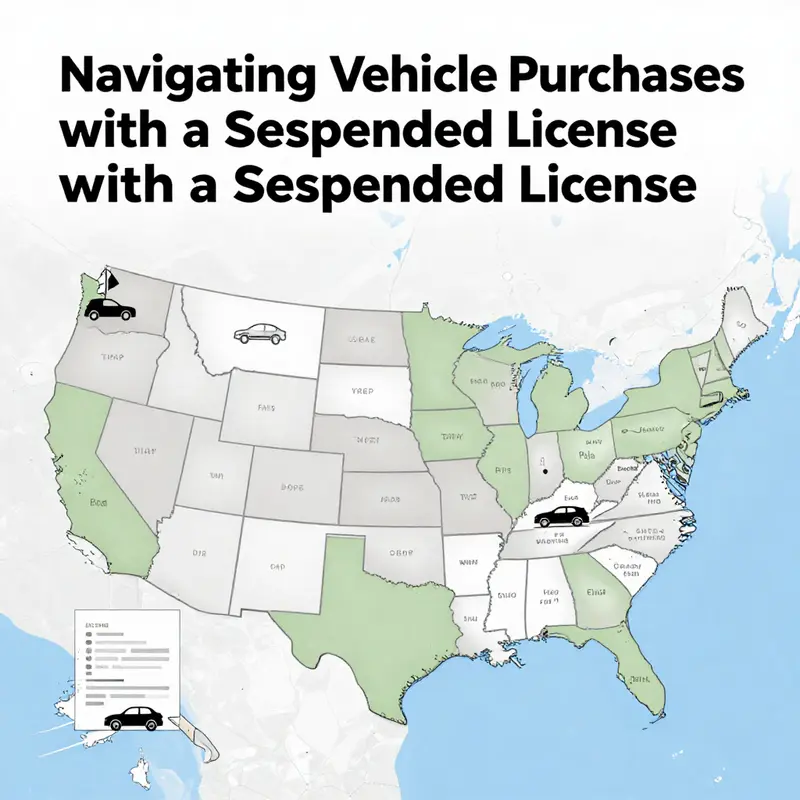
When your license is suspended, you can often still buy a car because ownership and driving are separate. The act of purchase is a contract about title, funds, and intent, not a grant of driving privileges. You may sign a deed, transfer title, and take possession of a vehicle even while you cannot legally operate it on public roads. Driving with a suspended license remains the key risk and can result in fines, arrest, or vehicle impoundment in many jurisdictions. Federal law generally does not bar the purchase; the National Highway Traffic Safety Administration does not require you to prove driving ability to buy a car. State rules vary, so check your DMV or legal counsel to understand registration, insurance, and the steps needed for possible reinstatement. A prudent approach is to separate ownership from operation: plan to own the car, arrange financing if needed, and avoid driving until your license is fully restored. When negotiating a purchase, be transparent with the seller and lender about your status, and ensure that you can meet registration and insurance requirements without driving the vehicle. If you are unsure, consult a local attorney who can interpret the rules of your state.
Driving on Hold: The Real Consequences of Operating a Vehicle with a Suspended License
When a driver’s license is suspended, the road ahead changes in a fundamental, non-obvious way. The suspension sits like a red light over every wheel and pedal, a legal signal that the privilege to drive is temporarily off-limits. Yet the vehicle itself often remains, sturdy and silent, a reminder that ownership and operation are two different things in the eyes of the law. This separation between possession and permission is not an accident; it is a deliberate boundary that aims to keep public safety intact while a driver works through the circumstances that led to the suspension. The consequences of crossing that line—pulling a car onto a public street, starting the engine, and moving from a legal prohibition into an illegal act—unfold in a cascade of legal, financial, and personal repercussions that can far outlast the moment of the stop or the citation itself. This gravity persists whether the suspension results from a single violation or a pattern of offenses. The law treats the act of operating a vehicle without a valid license as more than a simple mistake; it is a choice with clear consequences, and those consequences are designed to be both immediate and enduring.
Legal consequences form the backbone of the risk an unlicensed driver faces behind the wheel. In many jurisdictions, driving with a suspended license is classified as a misdemeanor. The precise characterization can, however, scale to a felony depending on the driver’s history and the circumstances surrounding the offense. A DUI-related suspension, for example, can push the offense into a more severe category, where penalties are more punitive and the social stigma is sharper. Even in cases that begin as misdemeanors, the penalties can snowball if the behavior recurs. Judges often impose fines that are wide-ranging, reflecting factors like the driver’s prior record, the duration of the suspension, the location of the offense, and whether there was an accident or property damage. It is common to see fines in a few hundred dollars, but in many states, those numbers can climb into the thousands when circumstances are compounded by prior violations or aggravating factors. The financial impact is not merely a line item on a courthouse ledger; it can translate into longer, more difficult financial struggles as time goes on.
Beyond the immediate fines, the legal process frequently expands the duration of an already active suspension and adds new mandates that seek to reform behavior. Courts may impose driver improvement courses, mandated counseling, or traffic-safety education. In some cases, the court can extend the suspension, lengthening the period during which driving remains illegal. The threat of jail time, though not universal, is a real possibility in repeated offenses or in cases involving aggravating factors like reckless driving or high-risk conduct. The specter of incarceration looms not just as a punishment but as a choice that can reshape daily life, affecting work, family responsibilities, and the list of personal priorities. In practice, these outcomes are not abstract. They shape a driver’s routine, from how they commute to how they respond when a car is essential to their livelihood.
State variance adds another layer of complexity. Each state maintains its own framework for suspensions, penalties, and the enforcement of driving without a license. Some jurisdictions emphasize deterrence with stiff fines and aggressive enforcement, while others tailor penalties toward rehabilitation and prevention of future violations. The uniform thread across states is clear: driving while suspended is a high-risk activity, and the legal system treats it as such. The nuance matters: a small difference in the length of a suspension, the presence of prior offenses, or the existence of contributing factors can drastically alter the severity of the penalties. This variability can catch a driver off guard, especially someone who has recently moved between states or who is balancing multiple legal pressures at once.
Financial consequences extend well beyond the moment of citation. Insurance often becomes a central, long-term casualty of the offense. Insurance companies frequently respond to a driving-without-a-license incident by significantly raising premiums to reflect the elevated risk. In some cases, insurers may refuse to insure the driver at all, creating a paradox where the person cannot legally drive but remains responsible for the potential liability that could arise if they did anyway. Even when coverage is retained, the terms may become harsher, with higher deductibles, stricter terms, and limited policy options. The ripple effect touches the financial stability of households. A driver who faces elevated premiums may struggle to manage monthly costs, save for future needs, or qualify for affordable credit. The combination of fines, higher premiums, and the potential for civil liability in the event of an accident can push a single mistake into a long-term financial strain.
The personal consequences of driving with a suspended license seep into areas that are less tangible but no less significant. A legal conviction can leave an enduring mark on a driving record, criminal record, or traffic history, depending on the jurisdiction and the exact charges. Such records influence employment prospects, especially for roles that require driving or regular background checks. Jobs in delivery services, transportation, or field sales can be particularly sensitive to these marks, with recruiters weighing the long-term impact on reliability and safety. A suspended-license offense can also limit travel, both within the United States and, in some cases, beyond state borders. Law enforcement agencies share data across jurisdictions, so an offense in one state can affect opportunities elsewhere, complicating life for someone who splits time between regions or who travels for work. The social consequences are not only about stigma; they can translate into practical limitations that shape daily decisions, such as whether to avoid journeys that would require illegal driving or to depend more heavily on friends, family, or paid services for transportation.
Perhaps among the most tangible personal consequences is the risk of impoundment and the ongoing vulnerability that follows it. A vehicle operated without a valid license can be subject to impoundment, seizure, or other seizure-related penalties that carry administrative costs and storage burdens. For households that rely on a single vehicle for work, school, or caregiving, such disruptions can cascade into missed opportunities and added stress. The sense of control erodes when the vehicle stands immobilized in a lot or on a street corner because the driver is unlicensed. The law recognizes that the vehicle is a resource as well as a tool for daily life, and thus it sometimes treats the act of illegal operation as a direct threat to public order. In practice, families and individuals learn that owning a car does not guarantee effortless mobility or legal mobility. The once-familiar routines—getting to work on time, dropping kids at school, running errands—become precarious undertakings that require meticulous planning, alternative arrangements, or delays until the license issue is resolved.
Dependency on others becomes a practical response to the risk environment created by a suspended license. People with suspended licenses often find themselves leaning on carpools, public transit, or ride-sharing arrangements that may not be as reliable or affordable as personal vehicles. The shift can be abrupt and disruptive, prompting a larger social and economic recalibration. The emotional toll should not be underestimated. The stress of navigating fines, court dates, and insurance inquiries, coupled with the daily friction of avoiding driving when prohibited, can strain relationships and erode a sense of personal autonomy. The broader social fabric—neighbors, coworkers, and family—becomes part of a support network that must absorb the consequences of one person’s suspension. In such cases, the chapter’s theme rings true: the consequences of operating a vehicle with a suspended license extend beyond the legal system and into the rhythms of everyday life.
Of course, a practical question often arises in conversations about this topic: if someone can buy a car while their license is suspended, why does anyone worry about the act of driving? The distinction between ownership and operation is not merely technical. It is the essential safeguard that separates the act of purchasing a vehicle from the privilege of using it on public roads. Buyers who are navigating a suspension may opt to acquire a vehicle for purposes that do not require driving—such as storage, a potential resale opportunity, or for use in a properly authorized, non-operational context. But even in those scenarios, the risk of driving remains the central concern. The threshold for enforcement is not based on intent but on observable conduct. If a person behind the wheel without a valid license is stopped, the law will treat the act as a violation of the license suspension, with all the attendant penalties that follow. This is why the information that one can own a car yet not drive is a nuanced reminder of the separation between property rights and driving privileges.
The broader public-safety framework informs every aspect of these outcomes. Lawmakers design penalties to deter risky behavior, protect other road users, and create incentives to reinstate driving privileges in a timely and responsible manner. In this light, the consequences described are not mere punitive measures; they reflect a calibrated approach to reducing the likelihood of accidents, injuries, and costly legal disputes. The consequences function as a system of checks and balances: a legal mechanism that recognizes that people make mistakes, while also signaling that certain choices—like getting behind the wheel—carry consequences that are specific, predictable, and enforceable. The interplay of deterrence, rehabilitation, and accountability underlines why the act of driving with a suspended license is treated with such seriousness. The goal is not to trap individuals in a punitive loop but to encourage a path toward restoration of driving privileges through lawful channels, including compliance with the terms of the suspension and completion of any required remedial steps.
Embedded in this conversation is a practical, actionable thread: what should someone do if facing a suspended license and a vehicle they cannot part with for essential needs? The informed approach centers on compliance, documentation, and proactive steps toward reinstatement. Keeping up with court dates, communicating with the DMV, and seeking legal counsel when possible can clarify options and reduce unnecessary risk. In parallel, careful budgeting and planning for the consequences—fines, increased insurance, potential impoundment fees, and the cost of alternative transportation—can alleviate some of the financial strain. This pragmatic stance—recognizing both the reality of needing mobility and the legal boundaries that govern it—helps individuals avoid the double trouble of violating the law while attempting to maintain daily responsibilities. It also provides a foundation for making informed decisions about whether to pursue vehicle ownership in the interim, potentially avoiding further entanglement with enforcement and long-term penalties.
Within this broader landscape, a small but meaningful thread concerns the availability of state-specific guidance. For readers who want to understand how their local rules shape these outcomes, a closer look at how state rules impact driver licensing can illuminate choices and timelines. The linked resource offers a practical lens into the variance and common threads across jurisdictions, helping readers gauge what might be unique to their situation State Rules Impact on Driver Licensing. While the core themes of this chapter focus on the experiences of consequences after operating a vehicle with a suspended license, recognizing the state-level context is essential for anyone navigating reinstatement processes. It becomes clearer how the combination of legal discipline, financial repercussions, and personal disruption plays out differently depending on where the violation occurs, and how those differences can inform a plan to regain lawful driving privileges.
As readers contemplate the broader arc of this topic, it is important to reinforce that the consequences discussed here arise from the act of driving with a suspended license, not from mere ownership. The decision to operate a vehicle in defiance of a suspension sets in motion a chain of legal actions, financial burdens, and personal challenges that can extend far beyond a single incident. The chapter’s aim is not to demonize individuals who face such circumstances but to lay bare the real costs of risky choices and to offer a grounded framework for navigating them. Informed readers can approach their situation with a sharper sense of consequence, a clearer view of the options for remedy, and a more resilient plan for moving forward. The road back to lawful operation hinges on understanding the magnitude of these consequences and aligning behavior with the strips of law that guide safe and responsible use of vehicles on public roads.
For those seeking authoritative direction beyond state-specific guidance, the federal framework—while not prohibiting the purchase of a vehicle by someone with a suspended license—still underscores the essential rule: driving is prohibited until the suspension is lifted or appropriately reinstated. The broader safety and regulatory landscape reinforces that the consequences described here are not merely theoretical; they reflect real-world enforcement, penalties, and life-altering implications. Keeping these dynamics in mind can help readers resist the temptation to drive when license status is unsettled and instead seek reinstatement through proper channels. The result is not only legal compliance but a higher likelihood of returning to the road with confidence and minimized risk to oneself and others.
External resource: https://www.nhtsa.gov/vehicle-safety/driving-with-suspended-license
Final thoughts
In conclusion, while it is legally permissible to purchase a vehicle even with a suspended driver’s license, the implications of doing so must be carefully considered. You can own a car, but you cannot drive it until your license is reinstated. The variability in state regulations can further complicate the issue, potentially influencing your ability to register the vehicle and obtain insurance. Moreover, operating a vehicle with a suspended license leads to dire legal consequences, which may include fines and extended periods of suspension. Understanding these aspects is vital for anyone navigating the world of vehicle ownership under restricted circumstances. Always ensure to stay compliant with your local laws to avoid additional penalties.