
As the adoption of electric vehicles (EVs) accelerates globally, the question of whether drivers need a specific license to operate these vehicles becomes increasingly pertinent. Just like conventional motor vehicles, legal requirements govern the operation of electric cars to ensure safe driving practices. This article delves into the various licensing requirements for electric vehicles in different regions, discussing their impact on driver qualifications, compliance within the EV market, and future trends shaping regulations. Through this exploration, readers will gain a comprehensive understanding of how electric vehicles fit into the existing legal framework and what it means for drivers and vehicle owners alike.
Electric Roads, Valid Licenses: Navigating EV Licensing Across Regions
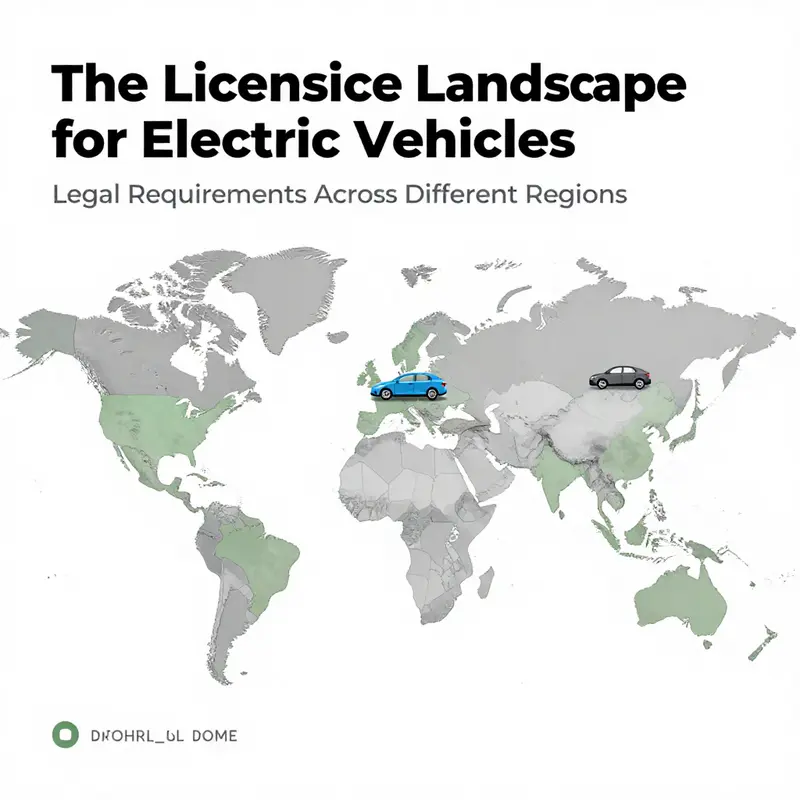
The shift to electric propulsion is as much about policy and procedure as it is about batteries and charging. An electric vehicle (EV) may feel different in its quiet acceleration, its reliance on regenerative braking, and its promise of lower tailpipe emissions, but when it comes to the legal right to operate it on public roads, the rules look familiar: you still need a license, you still need to register the vehicle, and you still must obey the traffic laws that govern all motor vehicles. The idea that electricity changes the fundamental requirement for a driver’s license is a common misconception, one that ignores how licensing is rooted in responsibility, competency, and public safety rather than the energy source that powers the vehicle. Across regions, the core logic remains the same, but the practical details vary, sometimes in ways that surprise new EV buyers who expect a single, universal standard. To understand the landscape, it helps to follow the throughline from the moment you consider purchasing an EV to the moment you take a seat behind the wheel on a bustling city street or a quiet rural byway.
In broad terms, licensing and registration divide the journey into two linked but distinct obligations. The first is the privilege and accountability to operate a vehicle, which rests on the driver’s license. The second concerns the vehicle itself: its identity, ownership, and ability to be legally driven on the road, which rests on the vehicle’s registration and its plates. With EVs, as with internal combustion engine (ICE) cars, these two layers interact in ways that sometimes appear more complex on the surface because EV ownership often comes with new considerations—such as higher upfront costs, unique maintenance patterns, and evolving incentives—that can influence how regulations are perceived or pursued. Yet the underlying purpose remains steady: ensure that anyone who operates a motor vehicle is adequately trained for traffic conditions and aware of the rules that keep roads safe for everyone.
A practical way to frame the discussion is to start with the universal premise: a driver’s license is required to operate a motor vehicle, regardless of powertrain. This is the norm in most jurisdictions and is reinforced by government guidance in many regions. The license is not granted or denied based on whether the vehicle runs on electrons or gasoline but rather on whether the operator can demonstrate the competence to handle the vehicle safely, obey traffic laws, and respond appropriately to changing road conditions. In parallel, vehicle registration is a separate but equally essential process. Registration establishes the vehicle’s identity in the public record, ties it to an owner, and enables lawful operation within the jurisdiction. A license plate is more than a symbol of ownership; it is a signal to law enforcement and to the broader traffic enforcement framework that the vehicle is recognized, insured, and accountable. When you put these pieces together, the EV landscape starts to look less mysterious and more like an extension of existing driving norms, with some region-specific hues.
Turning to regional variations helps illuminate how similar principles manifest differently in daily life. In the United States, for example, the licensing path for an EV mirrors that for a conventional car. A standard driver’s license—usually categorized as a Class C license in many states—is typically required to operate a personal EV, provided the vehicle falls within the class of passenger cars that the license covers. The license itself is tied to the vehicle’s category rather than its propulsion. States may offer certain incentives tied to EV ownership, such as tax credits, rebates, or access considerations like carpool lanes, but these incentives do not replace the baseline requirements of licensing and registration. In practice, an EV owner must keep the vehicle registered, display plates, and comply with annual or periodic inspection rules where applicable. These shared structures help ensure consistent accountability across the fleet of vehicles, including EVs, and prevent ambiguity about who is permitted to drive.
Across the Atlantic, the United Kingdom presents a parallel but nuanced picture. European systems generally operate on a framework where licensing is closely linked to the vehicle’s weight, speed, and intended use. In the UK, this often means that a full driving license is required for electric vehicles that exceed certain weight or performance thresholds. The essential takeaway is that electricity itself does not waive licensing requirements; the vehicle’s physical characteristics—how heavy it is, how fast it can go, and how it is classified—can shape which license category applies or whether additional endorsements are necessary. The spirit of the rule remains constant: drivers must demonstrate competence and awareness applicable to the vehicle they operate, even when the powertrain is electric. The regulatory environment in the UK also reflects a longer view about urban air quality and congestion management, using licensing and registration tools to align incentives with broader policy goals.
In the European Union, the pattern is broadly similar to the US and the UK, but the regulatory fabric is more integrated across member states. EVs require both a valid driver’s license and proper vehicle registration, with national rules governing the exact processes. For most EVs, a standard driving license suffices, because the vehicle type—passenger car, light commercial vehicle, or motorcycle—determines the license category rather than the fact that the car is powered by electricity. The EU’s approach emphasizes harmonization where possible, while leaving room for national adaptations that reflect local traffic patterns, urban planning priorities, and environmental targets. This balance between common standards and local tailoring helps keep licensing approachable for new EV buyers while preserving a robust framework for road safety.
A note about one of the more distinctive regimes: China. The country’s large cities have long faced urban congestion and emissions challenges that make policy design unusually capacious and experimental. EVs are subject to the same licensing and registration rules as other vehicles, but several major cities have implemented NEV—New Energy Vehicle—specific schemes. These can include quota systems, lottery allocations, or other visitor-friendly policies aimed at allocating limited license plate opportunities to reduce gridlock and curb emissions. The barrier to entry remains a driver’s license, but the assignment of a plate—especially in dense urban cores—can involve extra steps beyond the standard registration process. The broader implication is that even when EVs are incentivized through regime-style programs, the core requirement to hold a valid license to operate on public roads endures.
This discussion would be incomplete without acknowledging the role of vehicle registration and the practical consequences of these requirements for everyday ownership. Registration, for EVs as with ICE vehicles, is not merely ceremonial. It enables law enforcement, supports taxation and insurance processes, and documents a vehicle’s identity for safety recalls and regulatory compliance. In many places, EVs enjoy targeted incentives—reduced registration fees, credits, or exemptions from certain fees—precisely to promote adoption and reduce the perceived burden of transitioning from ICE vehicles. Yet these benefits do not erase the underlying need for a recognized license to operate and for a vehicle to be properly registered and insured. As buyers move from contemplation to purchase, they must navigate forms, timelines, and sometimes a patchwork of local regulations that can surprise those who assume a homogenous, plug-and-play system.
A deeper, more practical layer emerges when one considers how licensing interacts with the broader ecosystem of driving readiness. The license to operate is designed to ensure the driver knows how to handle the vehicle’s unique dynamics—an EV’s instant torque, regeneration strategy, and quiet operation that can affect how a driver perceives acceleration and braking. Even if an EV’s powertrain feels different, the fundamentals of sharing the road with pedestrians, cyclists, and other motorists require a solid grounding in traffic laws and safe operating practices. In some jurisdictions, this translates into supplemental training or updated driver education that emphasizes new technologies, charging etiquette, and the safe negotiation of mixed-use environments. The point is not to complicate the path to ownership but to cultivate a driver who can adapt to a rapidly evolving mobility landscape while maintaining safety as the north star.
For readers who want a concise sense of regional nuance, it is useful to connect these ideas to a broader synthesis of how state or national rules shape driver licensing in practice. Some jurisdictions empower local agencies or regional authorities to adjust licensing pathways in ways that reflect local traffic realities or environmental commitments. In this context, the phrase State rules impact on driver licensing captures a core truth: while the destination—having a valid license to drive an EV—remains constant, the route to that destination can differ. You can explore the specifics of how licensing rules unfold in different regions by consulting region-specific guidance, such as the roadmap provided by official sources and legal summaries. State rules impact on driver licensing.
Another practical aspect worth noting involves the intersection of licensing with other regulatory domains, such as vehicle inspections, insurance requirements, and safety standards. While the license to operate is a function of competency, vehicle registration and inspections serve as ongoing assurances that the vehicle remains seaworthy in a legal sense and that it meets safety and emissions criteria where applicable. In the EV context, inspection regimes may emphasize battery health, charging system integrity, and electrical safety features. These checks are not a substitute for a license to drive, but they contribute to a culture of accountability that helps prevent incidents and builds public trust in a transitioning vehicle fleet. The separation of duties—licensing for drivers, registration for vehicles, and inspections for ongoing safety—provides a robust framework that can accommodate a wide range of propulsion technologies as the automotive landscape continues to evolve.
Against this backdrop, new EV buyers should approach licensing with both a practical and a cultural understanding. Practically, one should verify the specific requirements in their country or state: the appropriate license class for their vehicle type, the registration steps, and any special conditions—such as licensing endorsements for heavy EVs or for commercial use. Culturally, there is an expectation that drivers not only comply with the letter of the law but also engage with the spirit of road safety. This includes staying informed about evolving regulations, participating in driver education when offered, and recognizing that incentives or penalties tied to EV ownership reflect policy aims beyond mere numbers on a form. In many ways, the EV licensing framework is a living system that responds to technology, urban planning, and environmental policy as they unfold in real time.
The shared thread across these regions is clear: electricity does not suspend the social contract that binds drivers to the road. Instead, it invites a slightly more nuanced understanding of the road system—one in which licensing, registration, and safety practices coevolve with cleaner propulsion and smarter charging infrastructure. For those who are new to EVs or who are navigating a move across borders or regions, the most reliable approach is to treat licensing as the first, ongoing checkpoint in the journey toward responsible and lawful operation. Gather the right documents, verify the license category, and check whether additional regional considerations apply to your vehicle class. If the region you are entering has unique plate or quota rules, prepare accordingly and seek authoritative guidance well before your planned test drive or first trip in your new EV. In short, licensing is not a hurdle so much as a doorway—one that opens not only to legal operation but to a broader understanding of how a modern, electrified road system is designed to work.
For readers who want to broaden their perspective beyond their local jurisdiction, a globally oriented resource can provide a useful frame for the variety of regulatory approaches. The landscape is diverse, but the underlying logic remains consistent: drivers must be qualified, vehicles must be registered, and road safety remains a shared priority. To anchor this discussion in a wider context, consider consulting an international guide that surveys mandates, targets, and regulatory frameworks across countries. This external resource offers a comparative lens that can illuminate why some places lean toward quotas, lotteries, or streamlined plate processes while others prioritize straightforward licensing routes, all in the name of cleaner air and safer streets. Electric car mandates and regulatory frameworks vary, and a broad guide can help buyers, policymakers, and manufacturers alike navigate the complexities with a more informed eye.
In closing, the question Do EVs need a license is answered affirmatively in practical terms: yes, you need a license to operate an EV, just as you would for any other motor vehicle. The precise rules, however, depend on where you live, and those rules reflect a balance between safety, policy goals, and the practical realities of local traffic. A license certifies that a driver possesses the knowledge and skills necessary to operate a vehicle safely, while registration and inspections ensure ongoing accountability and compliance. Together, these elements support a road system that can accommodate transformative technology without compromising public safety. As cities and countries continue to pursue cleaner transportation, the licensing framework will adapt—often in ways that preserve the core conditions for safe operation while embracing the benefits and challenges of electric propulsion. For readers charting their own EV journey, the path is clear: understand your region’s licensing requirements, stay informed about any regional nuances, and recognize that licensing is part of a broader commitment to responsible driving in an evolving mobility landscape.
External resources for a broader international view can provide additional context beyond local rules. For a broader international perspective, see Electric Car Mandate Guide by Country.
Licensing the Electric Road: Why Electric Vehicles Still Require a Driver’s License
The question of whether electric vehicles need a license is a bit misleading if read only as a matter of power source. The practical answer, across most jurisdictions, is yes: EVs require a valid driver’s license to operate on public roads. The license in this context is not a perk for some futuristic technology; it is the formal acknowledgment that a person has the necessary training, knowledge, and competence to handle a motor vehicle safely. This understanding rests on a simple but essential legal distinction: electric propulsion does not exempt a vehicle from the regulatory category that defines what a motor vehicle is. In the eyes of traffic law, an electric car, a plug-in hybrid, or a high-powered light truck shares the same basic characteristics as a gasoline-powered counterpart: it moves people or goods, weighs something in the defined range, and operates on public roadways. The practical consequence is straightforward. If a vehicle moves on a public road, it is subject to the same licensing requirements that govern any other motor vehicle. The power train might be electric, but the rulebook is still written for motorized travel, speed, weight, and road safety. This alignment with existing licensing structures helps maintain a consistent standard for road use, regardless of how the vehicle is powered, and it anchors the responsible handling of new technologies in familiar public safety norms.
In the United States, the licensing framework commonly aligns with vehicle classifications rather than with the propulsion system alone. A personal EV is typically driven with a standard Class C license, the same authorization that covers most passenger cars. In other words, an electric sedan, a compact hatchback, or an electric SUV is treated the same as its gasoline-powered peers for purposes of basic licensing. The emphasis remains on competence behind the wheel, understanding traffic signals, obeying speed limits, and demonstrating the ability to respond to dynamic road conditions. This consistency is not merely bureaucratic inertia; it reflects the central premise that the risk associated with operating a motor vehicle is linked to motorized control in traffic, not to the specific energy source of the vehicle. The licensing framework is designed to ensure that a driver can manage acceleration, braking, steering, gear or pedal coordination, and the situational awareness required for safe operation amid other road users. A standard licensure pathway helps standardize these competencies across the broad spectrum of vehicle powertrains, including electric propulsion.
In the United Kingdom and across the European Union, the same logic applies, though the specifics differ by weight and performance thresholds. The UK, for example, requires a full driving licence for electric vehicles that exceed certain weight or speed thresholds, and European regulations generally permit a standard driving licence for most EVs used for personal transportation. The core idea is consistency with established safety expectations for motor vehicles. The governing principle is that licensing is a gatekeeper for safe operation, ensuring drivers have the requisite knowledge of traffic laws, vehicle control, and emergency procedures before they share the road with others. The emphasis is not on the vehicle’s energy source but on the operator’s ability to manage it within the rules that govern all road use. This approach helps to level the field for EVs while preserving the safety practices that have underpinned road safety for decades.
The rationale for licensing is reinforced by federal and national safety standards that treat electric vehicles as motor vehicles with propulsion systems that must comply with the same safety and performance expectations as conventional vehicles. The National Highway Traffic Safety Administration, for instance, has clarified that any vehicle with a motor propulsion system that operates on public roads falls under the same driver qualification requirements. This perspective aligns with the Federal Motor Vehicle Safety Standards framework, which ensures that EVs meet the same baseline safety and operational criteria as traditional cars and light trucks. The legal architecture, therefore, keeps the focus on who is allowed to operate the vehicle, rather than on whether the engine is powered by electricity or gasoline. This approach helps avoid a loophole where a vehicle could be technically advanced yet operated by someone without appropriate licensing. It also anchors accountability, ensuring that drivers who operate EVs are prepared to handle standard traffic scenarios, respond to incidents, and cooperate with enforcement and safety protocols.
Beyond the baseline requirement, there is a growing body of evidence that driver qualification directly correlates with road safety. Research from the Insurance Institute for Highway Safety has highlighted that licensed drivers who have undergone formal training tend to demonstrate superior vehicle handling, quicker reaction times, and lower accident rates than unlicensed operators. While this research encompasses drivers of all vehicle types, the underlying message is equally applicable to electric vehicles. Licensing is not a mere formality; it is a conduit for practical knowledge—how to manage speed, how to navigate turns and intersections, how to handle adverse weather, and how to respond to emergencies on the fly. For EVs, this includes understanding how instant torque and regenerative braking alter acceleration and stopping dynamics, as well as recognizing the unique challenges of silent operation at low speeds where pedestrians and cyclists may rely on other cues to gauge vehicle presence. The licensing framework thus serves as a foundation for safe operation in a landscape where technology continues to evolve rapidly.
In addition to the standard licensing requirement, certain regions explore additional certifications for specific categories of electric vehicles. Automated driving systems, fully autonomous fleets, or commercial EVs used for delivery and service may trigger supplementary qualifications or permits. These specialized credentials are intended to address the distinct risk profiles associated with autonomous features, heavy payloads, or high-mileage operations. Yet for the vast majority of personal-use EVs—cars and light trucks intended for daily commuting or family usage—the primary legal prerequisite remains a standard driver’s license. The regulatory balance seeks to promote safety without creating unnecessary barriers to a transition to electric mobility. It acknowledges that while technology changes the way vehicles perform, the core responsibility lies with the driver, who must be capable of applying the rules of the road, maintaining control under diverse conditions, and prioritizing the safety of all road users.
For people who are new to driving or who are transitioning from a different propulsion system, the licensing process provides a familiar and structured path to build competence. Learner permits, written tests on traffic laws and safety procedures, and practical behind-the-wheel assessments all serve to ground new EV drivers in the essential habits of prudent road use. The process is designed to verify that a driver can manage the vehicle’s controls, anticipate hazards, and make sound judgments in real-time traffic. As EVs proliferate, the licensing system remains a stabilizing institution, ensuring that the benefits of cleaner energy do not come at the expense of road safety. It is not the absence of a license that would unlock broader use of EVs, but rather the assurance that those who operate them can be trusted to obey the rules, respond to emergencies, and share the road responsibly with others.
The practical implications of licensing extend beyond the moment of obtaining a permit. Licensing also influences ongoing education, recertification, and awareness of evolving technologies such as regenerative braking, one-pedal driving, and charging etiquette. Even where an EV feels deceptively simple to operate at first glance, drivers must remain attentive to the broader ecosystem of road safety. This includes understanding how charging infrastructure interacts with public space, recognizing potential hazards at charging sites, and appreciating how battery performance can be affected by weather and driving style. These considerations reinforce a central point: licensing is not merely about starting the car; it is about maintaining competence over time as the vehicle and its surrounding road environment evolve.
Regional variations do exist, and the rhetoric around licensing sometimes intersects with debates about how best to regulate new mobility formats. A subset of policy discussions centers on whether certain EV operators should hold separate, performance-based credentials, particularly for commercial fleets or high-speed or heavy-duty electric vehicles. The logic behind these discussions is straightforward: as the potential consequences of mistakes increase with vehicle size, speed, or cargo, the requirements for operator qualification become proportionally more stringent. However, the vast majority of personal-use EVs operate under the same licensing framework that governs conventional cars. The essential message for consumers is clear: owning or buying an EV does not exempt one from licensing; rather, it invites a familiar pathway to demonstrate readiness to participate in road traffic safely. This continuity helps maintain public confidence during a period of rapid technological change, ensuring that safety remains the shared responsibility of both legislators and everyday drivers.
A crucial companion to the licensing question is how regional rules shape the actual driving experience. In many places, the licensing system reflects a broader policy landscape that includes vehicle inspection regimes, registration requirements, and periodic safety checks. These elements collectively reinforce the chain of safety—from the moment a person learns to drive, through obtaining a license, to the ongoing maintenance and verification needed to keep a vehicle roadworthy. The interlocking nature of these requirements means that a driver’s license, while essential, exists within a broader safety ecosystem designed to minimize risk on crowded roads. For instance, the idea that an EV should meet the same safety and performance standards as any other motor vehicle is mirrored in both licensing and inspection frameworks. This alignment helps prevent a false distinction between EVs and their conventional counterparts—an important consideration for policymakers and the public alike as electric mobility becomes more ubiquitous.
From a practical perspective, the licensing pathway remains approachable for most potential EV owners. People who have earned a standard car license generally feel confident transitioning to an electric car with minimal additional formalities. The driving tests emphasize fundamental skills such as controlling speed, signaling correctly, yielding to pedestrians, and handling unexpected events. When a driver adds an EV into daily life, the learning curve is more about adapting to new vehicle characteristics than acquiring an entirely new credential. For example, the quiet operation of EVs at low speeds can subtly alter a driver’s sense of speed, and the immediacy of torque can affect braking behavior. These differences can be addressed through familiar driver education and practice, not by redefining what it means to hold a license. Thus, achieving and maintaining licensing becomes a practical bridge between a consumer’s desire to adopt cleaner technology and the enduring safety standards that govern all road users. The licensing system’s durability is precisely what helps sustain safe, progressive adoption of electric vehicles over time.
To illustrate how licensing sits within a broader, regionally varied landscape, consider the way a person navigates local rules on vehicle inspection and registration—which, while not licensing per se, interact with the licensing process to ensure road readiness. In places where vehicle inspection requirements exist, EVs undergo periodic checks that assess braking performance, lighting, tires, and other critical systems. This ensures that the vehicle remains a safe instrument for public use, complementing the driver’s ongoing responsibilities behind the wheel. The upshot is that drivers must engage with a network of safety obligations—licensing, inspection, maintenance—that collectively sustain road safety as vehicles evolve from gasoline to electric power. The coordination among these elements underscores a simple truth: the shift to electric propulsion does not dissolve the duty to be competent and responsible. It amplifies the importance of ongoing training, vigilance, and adherence to the rules that keep traffic moving smoothly and safely.
For readers seeking a region-specific view of driver licensing, the nuanced differences can be summarized through the lens of state or national rules. As a starting point, the broader framework emphasizes that the operator’s qualification takes precedence over the vehicle’s energy source. The idea that state rules can influence whether a driver can operate certain classes of electric vehicles is captured in discussions about differentiated licensing needs for heavy, commercial, or autonomous electric vehicles. To explore how these nuances manifest in your area, see the discussion on State rules impacting driver licensing. This internal link connects you to a concise examination of how local regulations shape the licensing landscape for EVs in various jurisdictions. Maintaining an awareness of these regional specifics helps owners anticipate any extra steps required beyond the standard licensure process and reinforces how safety is preserved at different scales of regulation. State rules impacting driver licensing
Despite the regional variations, a common thread runs through all of this: the license is the gatekeeper of road safety, not the powertrain. The continued relevance of driver qualifications reflects the unpredictable and complex nature of real-world driving. Even with advances in EV technology, the responsibilities of the operator—attention, restraint, anticipation, and timely decision-making—remain central. This is why licensing remains a cornerstone of public safety and why regulatory bodies emphasize that the driver must possess the knowledge and skills needed to operate a vehicle safely, regardless of whether it is powered by a battery or an internal combustion engine. As EVs become more common, it is tempting to imagine new, lighter requirements that could reflect charging etiquette or battery management practices. However, the overarching principle endures: certification of road competence through licensing is a durable, universally understood safeguard that supports safe adoption of electric mobility without compromising the fundamentals of traffic safety. The challenge, then, is not to replace licensing but to ensure it remains accessible, up-to-date, and aligned with the evolving capabilities of electric vehicles and the surrounding road environment.
In sum, the question does electric vehicles need a license is answered by looking at how traffic law defines motor vehicles and how safety agencies frame driver qualification. The consensus across major regulatory and safety organizations is clear: EVs are motor vehicles, and operating them on public roads requires a valid driver’s license. The license is the instrument by which society assures that every driver possesses the competence to manage the vehicle’s performance, respond to hazards, and navigate the complexities of shared roadways. The license thus serves as a practical bridge between innovation and safety, ensuring that the move toward cleaner propulsion does not outpace the safeguards that keep traffic orderly and secure. As the electric era unfolds, this framework offers both continuity and resilience, linking a driver’s preparedness to the evolving responsibilities of road use, and reminding us that progress in transportation is most powerful when paired with unwavering commitments to safety.
External resource: https://www.gov.uk/driving-a-car
Charging the Law: Why Electric Vehicles Still Need a Driver’s License
Electric vehicles bring new technology and cleaner air, but they do not erase the basic requirement that road use is licensed. Licensing centers on operator competence, safety, and accountability, not on energy source. Across borders, the principle remains the same: you must hold the appropriate license for the vehicle class you operate.
In many jurisdictions, a standard car license covers fully electric passenger cars. For lower speed devices like e-bikes or pedal-assisted scooters, regulatory thresholds determine whether a license is needed or if a bicycle or moped category applies. As vehicle definitions evolve with technology, regulators may adjust categories, tests, and eligibility, but the goal is consistent: to ensure drivers can navigate traffic safely and respond to emergencies. Even as advanced driver assistance systems and autonomous features become more common, the licensing framework continues to emphasize driver responsibility and ongoing education. The upshot is straightforward: energy source may be electric, but the obligation to prove capability remains rooted in vehicle class, speed, weight, and use.
Licensing the Electric Drive: Navigating Current Rules and the Road Ahead
The question of whether electric vehicles need a license might seem straightforward at first glance. Yet when you pull back the hood, so to speak, the issue reveals itself as a matter of regulation, safety, and social policy rather than a simple power source. Across many jurisdictions, driving any motorized vehicle on public roads requires some form of credential. The powertrain does not erase the obligation to prove competence behind the wheel. In this sense, electric vehicles are not exempt from licensing; they are simply embedded in a regulatory fabric that continuously adapts as technology evolves. The core logic remains constant: licensing serves to ensure that drivers understand traffic laws, demonstrate practical driving ability, and commit to safety standards that protect all road users. As electric propulsion changes the economics of transport and the behavioral expectations of users, regulators are compelled to refine who is allowed to operate what and under which conditions. This is not about a single milestone in battery technology; it is about an ongoing dialogue between safety science, road design, municipal governance, and the practical realities of everyday mobility.
What counts as a license, and which vehicle types trigger its requirements, tends to follow vehicle classification more than energy chemistry. A passenger EV—the kind of car most households now consider—will typically fall under the same licensing category as its internal-combustion counterpart. In the United States, for example, a standard driver’s license of an appropriate class is commonly required to operate a personal EV on public roads. In the United Kingdom and across the European Union, the tone is similar, with license validity tied to vehicle weight, size, and the vehicle’s design category rather than its propulsion method. The logic is consistent in Canada and many other regions as well. When regulators speak of licensing, they are addressing the operator’s competence and the vehicle’s suitability for the environment in which it will travel. The electric component is an important distinction for manufacturers and policymakers but not a loophole that would allow unqualified operation.
The effect of this approach is far-reaching. It means that the same tests, the same assessment of hazard awareness, and the same road-safety expectations apply whether the vehicle is powered by gasoline or electrons. This uniformity is essential for road users who share spaces with cars, buses, trucks, and motorcycles. It also helps maintain a level playing field for licensing authorities, insurers, and law enforcement agencies that must interpret and enforce the rules consistently. In practice, the licensing thresholds are shaped by the vehicle’s classification. Passenger electric cars, light electric utility vehicles, and light-duty trucks typically require a standard driver’s license of a class appropriate to passenger vehicles. The precise class names differ by jurisdiction, but the underlying principle remains: the operator’s credential must reflect the vehicle’s potential risk and performance profile, not merely the powertrain.
For anyone exploring how licensing works in an EV-dominated landscape, it is important to understand the specific categories that regulators use. In many jurisdictions, the spectrum begins with passenger vehicles, then extends to motorcycles or motorized two-wheelers, and finally to larger or more specialized vehicles such as heavier trucks, buses, and certain commercial or agricultural machines. Each category carries its own minimum requirements for theory, practical driving tests, and sometimes additional endorsements based on the vehicle’s characteristics, such as payload, top speed, or the presence of specialized safety systems. An EV’s place on this spectrum is determined by its classification criteria—weight, maximum speed, number of wheels, and intended use—rather than its electric motor alone.
The boundary cases often test the clarity of regulation. Electric bicycles, commonly known as e-bikes, illustrate the nuance well. When an e-bike fits national standards—such as a maximum assisted speed around 25 km/h and motor power not exceeding a few hundred watts—it is frequently treated as a non-motorized or lightly motorized vehicle. In such cases, a driver’s license may not be required at all. When the same device exceeds those limits or is configured to operate more like a motorcycle, licensing rules can shift dramatically, mandating motorcycle or specialized vehicle licenses depending on the jurisdiction. This distinction is crucial for urban planners and transportation agencies trying to balance safety with accessibility. A similar logic applies to electric scooters and low-speed four-wheeled vehicles, which occupy gray areas in some jurisdictions. Where a regulatory framework does not recognize a vehicle type, operators may face legal risks despite their intent to comply with the spirit of road safety. The practical consequence is that the line between a permitted, license-exempt mobility device and a licensed motor vehicle can shift with changes in speed, weight, and use, underscoring why ongoing regulatory clarity matters.
A core thread in current licensing conversations is the push toward more precise classifications as EV adoption accelerates. Governments are increasingly aware that the proliferation of high-speed or high-performance electric options—ranging from urban scooters to dense-city delivery fleets—could outpace older licensing structures if left unadjusted. This is not merely a matter of issuing new cards; it is about creating reliable pathways for drivers to acquire needed skills quickly and safely. Some jurisdictions are experimenting with streamlined processes that blend theory and practical testing into a single day or consolidate related licensing tasks under a single administrative footprint. The motivation is practical: reduce barriers for new drivers, especially in a market where EVs are often the default choice for urban transport. Yet this trend must be balanced against safety imperatives. A hurried test that does not convincingly assess hazard perception, vehicle handling, and regulatory compliance would be a step backward, not forward. The governance challenge lies in aligning fast-track licensing with robust safety education and credible verification.
Looking ahead, several trends appear likely to shape how licensing adapts to electric propulsion. A first trend is the pursuit of harmonized international standards for EV classification. If regulators in different countries converge on common definitions for categories—what constitutes a light electric vehicle versus a heavy one, or what speed thresholds justify a particular license class—the friction of cross-border travel and multinational fleets could diminish. A second trend involves the expansion of licensing categories to accommodate new EV typologies. Autonomous delivery vehicles, long-haul electric trucks, and heavy-duty municipal fleets may require new endorsements or entirely new license classes. This is not just about technology; it reflects a broader understanding that public-road risk is determined by performance potential and usage context as much as by propulsion type. A third trend is the integration of licensing systems with digital platforms. Real-time verification, online testing, and portable credential checks promise faster and more flexible administration. In rapidly evolving markets, digital tools can help authorities stay current with new vehicle models, safety features, and updated regulations without sacrificing security or accountability. A fourth trend concerns enforcement. As EVs with varied capabilities populate roads, enforcement agencies will increasingly rely on automated validation tools, calibration of speed-limiting mechanisms, and standardized inspection regimes to ensure compliance. These measures are not about policing per se; they are about maintaining consistent safety standards when the mix of vehicles changes swiftly.
A coordinated approach to licensing can also support broader public policy objectives. When licensing frameworks are transparent, predictable, and aligned with vehicle safety technologies, they contribute to safer roads, more equitable access to electric mobility, and clearer expectations for drivers. In places where licensing processes are slow or opaque, barriers to entry can disproportionately affect newcomers who seek cleaner transportation options. Conversely, overly rigid or fragmented licensing requirements can deter adoption and undermine the environmental benefits of electrification. The balance is delicate. Regulators must ensure that licensing remains accessible to responsible users while retaining rigorous assessments of driving competence and hazard awareness. In doing so, they also need to consider complementary factors such as vehicle registration, insurance requirements, and periodic roadworthiness checks. When licensing is treated as part of an integrated system—where a driver’s credential, vehicle registration, and safety inspections are synchronized—the path to responsible EV use becomes clearer for drivers and more predictable for authorities.
The evolving licensing landscape also raises questions about international mobility and the rights of drivers who operate EVs in different jurisdictions. Cross-border recognition of licenses is a practical consideration for travelers, expatriates, and multinational fleets. While some regions already implement partial recognition through mutual agreements or standardized formats, the rapid growth of electric mobility makes broader recognition systems more appealing. Achieving this requires careful alignment of testing standards, permit requirements, and vehicle safety criteria. It also demands ongoing dialogue between regulatory bodies, industry stakeholders, and the public. The goal is not to homogenize every policy to a single model but to create interoperable standards that respect regional autonomy while enabling safer, more reliable travel with electric vehicles.
To illustrate the practical texture of these developments, consider the broader ecosystem in which licensing operates. Licensing does not exist in isolation. It interacts with vehicle certification, road infrastructure, and urban planning. The design of charging networks and the availability of skilled technicians influence the types of vehicles that households and businesses choose. If licensing requirements become overly complex or delayed, they can indirectly affect the demand for specific EV configurations or even slow the introduction of new, safer designs. Conversely, well-tuned licensing reforms can accelerate uptake by clarifying expectations and reducing perceived barriers. That is why policymakers frequently frame licensing as part of a holistic mobility strategy rather than as a standalone administrative task. The most resilient approaches anticipate the next wave of vehicle innovation—whether it is a more efficient battery, a new safety sensor, or a driver-assistance feature—and build licensing rules that accommodate those capabilities with minimal friction.
The case for ongoing regulatory clarity is reinforced by the real-world consequences of ambiguity. When people encounter uncertain rules—such as whether a particular low-speed electric vehicle qualifies for a license exemption or whether a new class of micro-mobility devices requires formal training—uncertainty propagates risk. Individuals may drive without knowing the exact requirements, or they may assume that electric power equates to special handling without proper instruction. This is precisely why transparent guidance from transportation authorities is essential. It helps ensure that drivers understand the expectations attached to the vehicle they intend to operate and that those expectations evolve in step with technical progress. The public importance of consistent messaging cannot be overstated; it reduces risky improvisation and supports safer, more predictable road behavior.
As readers reflect on the licensing question, a broader perspective becomes evident. The licensing system is part of a broader social contract about who may use public space, under what conditions, and with what responsibilities. Electric propulsion changes the calculus in some ways, but it does not remove participant accountability. Drivers must still demonstrate comprehension of road rules, the ability to operate a vehicle safely in a range of conditions, and a commitment to ongoing learning as technologies and traffic environments shift. In this sense, the question is less about whether electricity changes the rulebook and more about how the rulebook evolves to fit a world where EVs are increasingly common, diverse in form, and capable of rapid acceleration and advanced safety features. When licensing is designed with this future in mind, the transition to electric mobility can be smoother, safer, and more inclusive for a wider portion of the population.
Finally, for those who want a practical orientation, the core takeaway is straightforward: treat the license as a trusted credential for safe operation, not a barrier to access. If you are planning to drive an electric vehicle, consult your local transportation authority to confirm the current classifications, speed definitions, and testing requirements. Regulations can vary significantly by region, and they can change as new vehicle technologies emerge. Keeping informed about your jurisdiction’s stance on EV licensing helps you avoid penalties, ensures proper vehicle operation, and supports the broader safety objectives that indeed protect everyone on the road. In this sense, licensing is not a stagnant relic of the internal-combustion era but a living system that must accommodate the electric future while upholding fundamental road-safety ideals. As the field continues to mature, expect a more nuanced, better coordinated, and digitally integrated licensing landscape that still rewards careful, responsible driving.
To connect a concrete example with the conceptual arc above, consider how licensing integrity matters in practice. When credentials are misused or forged, public safety is at risk and trust in the entire licensing framework erodes. A cautionary note from industry observers is that licensing processes must be resilient, transparent, and verifiable. This is where reinforcing safeguards becomes part of the broader regulation design. It is also where the public message matters: licensed drivers, trained and tested under standardized expectations, are the backbone of a safe, orderly transition to electrified transport. The point is not to deter people from driving electric vehicles; it is to ensure that those who do drive are prepared, informed, and accountable. The overarching narrative is one of gradual, well-regulated evolution rather than abrupt change. In that sense, the road ahead for EV licensing is less about dramatic upheaval and more about a refined, scalable approach that keeps pace with technology, while preserving the core values that underpin road safety.
As a final reflection, the licensing conversation invites us to see regulation not as a rigid constraint but as a framework that can encourage adoption, innovation, and safety in equal measure. The exact rules may shift—from how tests are administered to how licenses are verified or renewed—but the intent remains stable: to ensure capable, responsible operation on shared roads. If policy makers succeed in aligning licensing with real-world driving demands, EVs can fulfill their environmental promise without compromising safety or public confidence. That alignment will require ongoing dialogue, careful data analysis, and a readiness to revise classifications as vehicles diversify and performance characteristics evolve. In such a landscape, the license becomes less a gatekeeper and more a bridge—linking the benefits of electric mobility with the enduring commitments to safety, accountability, and the common good.
CDL cheating scheme exposed—public safety at risk
External reference: China’s Ministry of Public Security – Vehicle Management Regulations (2026 Update)
Final thoughts
As electric vehicles become a more prevalent part of our transportation landscape, understanding the licensing requirements, their implications for driver safety, and the evolving regulatory environment becomes essential. Ultimately, possessing a valid driver’s license remains a critical component for operating any vehicle, including electric ones. As regulations continue to develop, staying informed will not only promote safer driving practices but also ensure that drivers and vehicle owners are compliant with all legal obligations.