
Military vehicles in China are not just operational assets; they embody a strategic element within national security and governance. In the years following 2013, the Chinese People’s Liberation Army (PLA) implemented a new license plate system aimed at enhancing security, accountability, and public trust. This initiative was pivotal in combating misuse and unauthorized access to military vehicles, a concern that had grown due to instances of fake military plates used for personal gain. As we delve into different aspects of this system, we will explore the technological advancements ensuring secure identification, measures addressing potential abuses, the direct impact on military conduct, and how these changes strive to restore public confidence. Each chapter will illuminate various facets of how military vehicles are licensed in China, underscoring the intersection of law, technology, and ethics in modern governance.
Under the Plate: Tracing China’s Military Vehicle Licensing System and Its Wider Implications
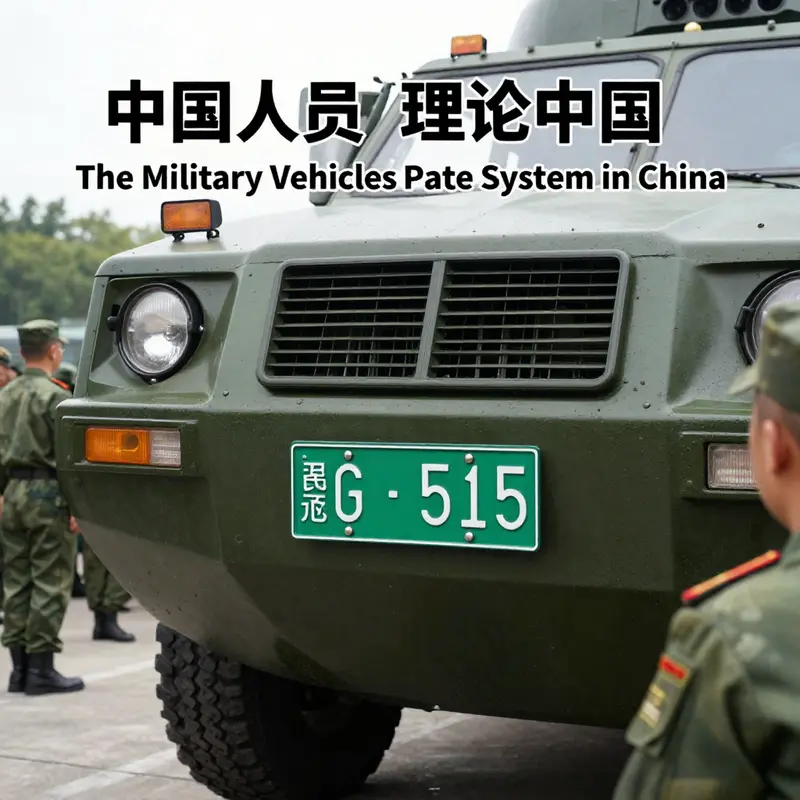
Do military vehicles have license plates? The answer in China is yes, and the system that assigns and regulates those plates is more than a bureaucratic curiosity. It sits at the intersection of discipline, accountability, and operational security. For decades, the Chinese People’s Liberation Army (PLA) and the Chinese Armed Police Force have operated under a distinct vehicle registration framework. This framework assigns plates that specifically designate military use. The changeover that began in 2013 did not merely refresh numbers; it represented a deliberate shift toward standardized identification across all branches, closer monitoring, and tighter control. The new plates were designed to be harder to forge and easier to trace. In short, the plate is as much a tool of governance as a marker on a map. It signals legitimacy, limits ambiguity, and makes it easier to detect and deter misuse in a system where the line between official and unofficial travel can blur quickly in moments of traffic and duty.
The reform began with a clear set of objectives. The PLA replaced the older plates introduced in 2004, rolling them out gradually starting on May 1 of 2013. The aim was both practical and political. Practically, the military needed a registration system that stood up to greater transparency demands and improved information technology. Politically, the reform was embedded in a broader anti-corruption campaign. It sought to curb abuses such as the unauthorized use of military vehicles for non-military purposes. In some cases, officials and others with influence exploited gaps in the old system to obtain special privileges—such as toll or parking exemptions—that were not intended for service vehicles. The policy language around the reform made it clear that such practices are not merely improper but actionable under the new regime. It is a story of narrowing avenues for gray-area behavior while expanding the tools to hold violators accountable.
A central feature of the new system is its emphasis on security and traceability. Military plates are not simply identifiers. They are indicators that link a vehicle to a controlled chain of command and a defined set of permissions. The modernization effort leverages information technology to track movements, verify authorization statuses, and flag anomalies. If a military vehicle travels outside its assigned zones or uses routes inconsistent with its mission, the system can alert command centers and civilian oversight channels alike. This capability reduces the temptation to misuse a military vehicle for private ends and makes it easier to detect both accidental and deliberate violations. The security design thus serves a twofold purpose: protect the integrity of military operations and reassure the public that the state treats the privilege of military mobility with seriousness.
Consistency across forces is another hallmark of the reform. The Chinese Armed Police Force, which is distinct from the PLA in its function and responsibilities, uses a license plate system that aligns with the PLA’s current military vehicle framework. This alignment is not merely cosmetic. It ensures uniform procedures for registration, inspection, and enforcement across all branches that manage mobility and security operations within the domestic sphere. A uniform system reduces opportunities for loopholes that could otherwise arise when multiple, divergent registration practices exist within a single country. It also simplifies enforcement and auditing, creating a cohesive ecosystem where civilian authorities and military units operate under shared rules. In practical terms, this means that a plate design, a tracking protocol, or a reporting mechanism can be understood and applied in a consistent manner whether the vehicle is on a training ground, a border crossing, a city street, or a rural highway.
The reforms also reflect a broader philosophy about governance and the military in modern China. The plate replacement is a visible step in a long process that aims to reduce extravagance and restore public trust. When plates are harder to forge and easier to audit, the incentives for misuse shrink. When officials know that misusing a vehicle will be detected and punished, the risk calculation changes. Yet the change goes beyond punitive measures. It embodies a shift toward professional management, where discipline in one area—vehicle usage—signals an overarching commitment to rule of law and equitable treatment. And in a society where public perception can linger long after the facts, visible improvements in everyday controls—like how vehicles are registered and tracked—play a symbolic role as well. The license plate, in this sense, becomes a small but meaningful emblem of a broader reform agenda that seeks to align military practices with civilian norms of transparency and accountability.
Operationally, the new plate system affects how the military interacts with the civilian world. A more secure and standardized registration process makes it easier for authorities to distinguish between legitimate military use and potential misuse. It also helps manage the tangible realities of defense logistics. Military fleets move across provinces, ports, and airfields with a need for swift identification by traffic authorities, customs, and emergency responders. A uniform plate system reduces ambiguity in such interactions. It can streamline routine tasks like lane assignments at checkpoints or the processing of documents tied to fleet movements. It also supports emergency response, where first responders must recognize and respect the unique status of military vehicles while still ensuring public safety.
The anti-corruption dimension of the reform matters as well for the broader legitimacy of state power. In contexts where public resources are scrutinized, even seemingly small privileges—such as special treatment at toll booths or parking facilities—can become flashpoints for debate about privilege and accountability. By hardening the system against tampering and by openly inviting oversight through internet platforms, the state signals that it accepts scrutiny and is willing to bear the costs of transparency. The reform thus functions on multiple levels: it strengthens security, clarifies governance, and reduces perceptions of excess. The combination of modern plate technology and robust policy enforcement creates a practical bulwark against the kind of abuses that once eroded trust in the system and, by extension, in the institutions charged with protecting national security.
From a governance perspective, the reform aligns with what scholars and policymakers describe as a modernized model of military administration. A staged rollout, clear legal framing, and integration of information technology point toward a system designed for scalability and accountability. The PLA and the Armed Police—two entities that historically operated with different administrative cultures—emerged with a shared practice. Such convergence is not accidental. It reflects a strategic choice to standardize how the state tracks a wide range of mobile assets, from vehicles to equipment, within a framework that supports rapid decision-making while maintaining rigorous controls. It also creates a more navigable record of fleet utilization, maintenance needs, and compliance histories. In turn, this makes it easier for auditors, inspectors, and even the public to understand how military mobility is managed, where resources are directed, and how rules are applied.
The public imprint of the reform should not be underestimated. When a society witnesses regular, visible steps toward reform—such as changing a license plate system—it reinforces the sense that governance is not static but evolving. The public’s willingness to engage with governance processes increases when information is more accessible and when the consequences of misuses are clear and enforceable. The reform thereby supports a social contract in which citizens observe, critique, and, when necessary, participate in oversight. That is precisely why the reform’s architects invited public scrutiny through internet platforms. They recognized that information, when shared responsibly, can deter corruption and empower better compliance. In this sense, the plate is a small but instructive example of how modern governance can intertwine technology, law, and civic participation to produce measurable improvements in public life.
This chapter does not stand alone. It is part of a larger narrative about how a country manages one of its most sensitive assets: the mobility of its armed forces. The licensing regime—the plates, the registration rules, and the enforcement mechanisms—reads like a microcosm of approach and intent. It shows a disciplined attempt to bring military mobility under the same kinds of controls that govern civilian life, without erasing the essential distinctiveness that military operations require. The reform acknowledges these operations’ unique needs while insisting on accountability, traceability, and integrity. In practical terms, it means better record-keeping, clearer lines of authority, and fewer opportunities for private misuse of public assets. It also signals a willingness to balance secrecy with openness, security with accessibility, and tradition with modernization. The plate is not just a tag; it is a statement about how a nation chooses to govern its most sensitive mobility in a way that is legible to its citizens and enforceable by its institutions.
For readers seeking a sense of how policy choices in one domain ripple outward, there is a useful parallel in how other regulatory frameworks are discussed and contested around the world. In related, though not identical, contexts, one might explore how different jurisdictions handle vehicle inspections and licensing rules. See the discussion on US states’ vehicle inspection requirements as a comparative reference US states’ vehicle inspection requirements. The point is not to blur lines between national systems, but to acknowledge that the impulse toward traceability, accountability, and standardized procedures is a common feature of contemporary governance around mobility.
In the end, whether one views the change as a security advance, a governance reform, or a public trust exercise, the essence remains clear. China’s military license plate system embodies a deliberate intention to couple authority with accountability. It links a vehicle to a credible, auditable record, and it ties that record to a broader effort to curb abuse and to restore confidence in the institutions responsible for public safety and national defense. The system’s evolution—from older plates to a modern, technology-enabled regime—speaks to a longer project: aligning the practices that govern sensitive state assets with the norms of modern administration. And while the plates themselves may seem like a mundane detail in the vast landscape of national security, they function as a practical, enforceable instrument of governance that helps ensure that those who move the nation’s military capabilities are carried forward by rules that are clear, enforced, and worthy of public trust.
For official information about the policy and its implementation, authoritative government information is available through the Ministry of Foreign Affairs of the People’s Republic of China: https://www.fmprc.gov.cn.
Armor on the Road: The Secure Identity of Military Vehicles Through License Plates and Tracking Technology
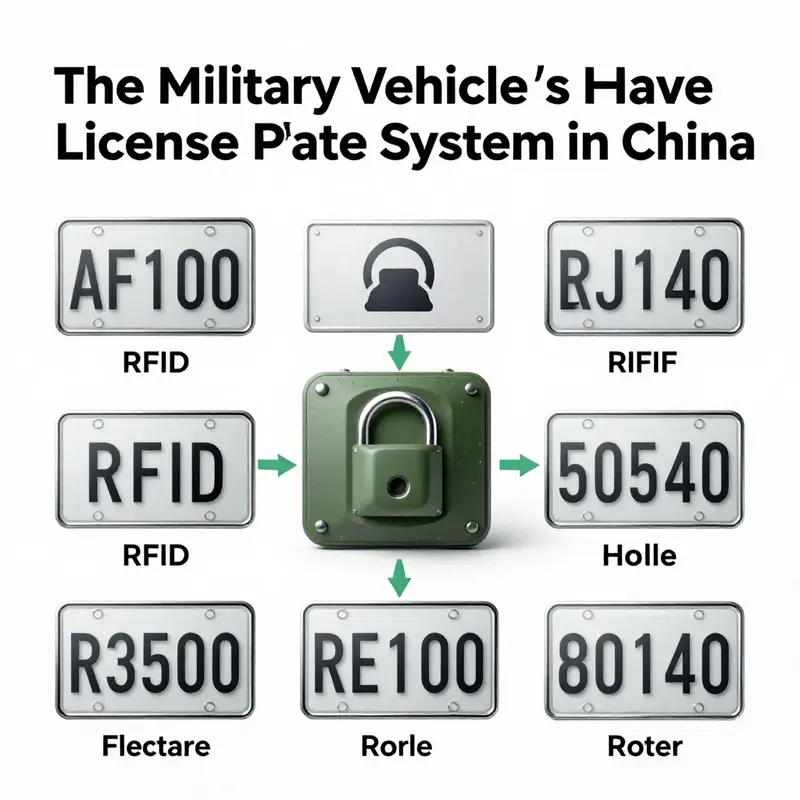
Across armed forces worldwide, license plates are more than decorative tags; they are anchors of accountability, security, and resource discipline. A formal plate ties a vehicle to a roster, permissions, and a chain of accountability that extends from the gate to the wider logistics network. When governance is strong, plates deter illicit use, speed verification, and enable rapid response when assets go astray. The plate’s power comes not from ornament but from auditable data: a unique identifier, a record of assignment, and a system of checks that keep the fleet aligned with policy and law.
Modern militaries turn plates into network nodes. Automated plate recognition, RFID where appropriate, GPS-based tracking, and centralized rosters create a living map of asset movements. With this digital layer, authorities can confirm legitimacy, locate vehicles in real time, and trace movements to the source of decisions. The design promotes transparency while preserving security, because access to sensitive details is restricted to authorized personnel and audited logs.
Security measures include tamper-evident formats, cryptographic tying of plate data to official identities, and strict penalties for misuse. Oversight through internal audits and public reporting strengthens trust and deters abuse. Civil-military parallels show civilians also rely on identity verification and transaction logs to deter fraud and misallocation of scarce transportation resources.
Challenges include counterfeiting, cross-border anomalies, and the risk that data systems become targets. The response blends technical hardening, procedural discipline, and clear lawful authority for data access. The aim is not to constrain movement unnecessarily but to make unauthorized use materially harder and easier to detect.
Taken together, license plates for military vehicles illustrate how a simple marker, when wired into a secure information ecosystem, can support safe, accountable, and efficient operations in complex environments.
Locking the Plate: How Military Vehicle Licenses Guard Against Abuse and Restore Public Trust
A license plate is more than a string of numbers on a bumper; it is a quiet ritual of accountability that tests a society’s willingness to distinguish privilege from principle. In this chapter, we follow that thread through a specific corridor of state power: the license plates assigned to military vehicles. The question does not simply ask whether tanks and armored transport bear plates. It asks what those plates stand for when the line between public service and public access is constantly watched and sometimes blurred by media, officials, and everyday road users. The answer, drawn from recent developments in China and echoed by broader enforcement practices worldwide, is nuanced: yes, military vehicles carry license plates, but their issuance, display, and use are governed by a web of strict regulations designed to curb abuse, deter smuggling, and rebuild public trust. The plate is both symbol and tool, a marker of authorized function and a trigger for accountability when that function slides toward privilege or profit.
In assessing how a military license plate system operates, it helps to start with the governing architecture. In China, the backbone of the system lies with the People’s Liberation Army (PLA) General Logistics Department, the body charged with allocating plates to authorized military vehicles. This arrangement is not merely bureaucratic housekeeping; it is a deliberate effort to centralize control over a highly visible resource. The idea is to prevent unauthorized use — a long-standing concern in many armed forces where the ease of access to equipment can tempt abuses ranging from toll exemptions to questionable vehicle inspections or covert deployments. The plate revamp that began in May 2013 was not simply a cosmetic change. It was pitched as a comprehensive step toward higher accountability in a digital age when a single snapshot on social media can unleash a public dive into the conduct of military units. Old plates were retrieved, new ones issued, and layers of information technology embedded to track movement and prevent misuse. In this light the plate becomes a security feature as much as a legal requirement: a way to verify legitimacy, trace provenance, and deter the unauthorised monetization of military mobility.
Crucially, the system is framed as a response to a broader anti-corruption effort. The authorities have framed the plate replacement as part of a wider project to curb abuses that extend beyond mere vanity or convenience. The logic is clear: if a private citizen or official can acquire a false plate or counterfeit a set of markings to secure toll exemptions or favorable inspections, the integrity of the entire system erodes. The new plates, by design, are harder to forge and easier to track, with the IT backbone enabling rapid cross-checks against official registers. The public dimension is not incidental. The same era that saw the plate upgrade also encouraged oversight via internet platforms, inviting citizens to report abuses and observe how enforcement actions unfold. The underlying message is unapologetically public: accountability thrives when information about vehicle identity and authorization is transparent and auditable.
This emphasis on security and oversight, however, does not erase the persistence of misuse. The historical record offers a sober reminder that bad actors will seek entry points wherever there is an opportunity to bend rules. Reports from 2013 highlight that fake military-style plates have appeared on smuggled, stolen, or overloaded civilian vehicles, sometimes even painted in a military shade in an attempt to pass as authorized military transports. The consequences of such deception extend beyond the occasional traffic violation. They threaten public safety, distort legitimate regulatory processes, and undermine the trust that civilian authorities place in the mobility of their own security forces. In response, authorities have mounted a dual approach: tightening plate issuance controls and leveraging enforcement technologies that can sift through the growing volume of traffic data. Automated license plate readers (LPRs) have become a key feature of this strategy. By cross-referencing plate numbers with official registries, LPRs can flag vehicles that pose a risk or show patterns of suspicious behavior. The Los Angeles Times reported a case in early 2026 where an LPR system contributed to solving a crime by linking a suspect vehicle to a plate that did not match legitimate authorization. While this particular case sits at a distance from the PLA’s internal protocols, it illustrates a universal principle: as enforcement technologies evolve, so does the capacity to detect and deter misuse, sometimes before a misdeed fully unfolds.
Within China’s framework, the distinction between legitimate military plates and misused or forged ones remains central to public discourse about military transparency. A common misconception adds a layer of confusion: the idea that there exists some form of “NATO license plate” for civilian or private use. In reality, there is no official NATO plate available to non-military personnel or civilian contractors. This is not merely a matter of terminology, but of operational clarity. The armor around military plates is intended to prevent misrepresentation and to keep the branding of military authority separate from civilian life. The gap between perception and reality matters because it influences how citizens interact with their roadways and how officials respond when irregularities arise. When misrepresentations occur, the penalties are severe and the accountability framework tightens, with disciplinary actions extending to drivers and their units. The message is explicit: misuse is not a private affair; it is a public matter and a breach of unit discipline that can ripple through a chain of accountability.
Linking this domestic narrative to a broader comparative lens deepens the understanding of why a robust plate regime matters. In many jurisdictions around the world, the visible presence of a license plate for military vehicles is a signal that the state intends to govern movement, access, and privilege with a clear-eyed strictness. The plates serve as identifiers not just for road compliance, but for procedural integrity. When a vehicle moves through toll roads, waste disposal routes, border checks, or restricted zones, the plate number acts as a beacon of lawful authority. But the beacon must be protected from dimming by forgery, imitation, or vanity exploitation. The 2013 reform in China illustrates a deliberate pivot toward governance where every plate is a data point, every vehicle a potential case study in integrity. It is a reminder that governance is not merely about setting rules; it is about aligning incentives so that the rules are worth obeying, and the means of evasion become increasingly costly and difficult.
The public dimension remains essential. Reform is not effective without public accountability. When the state invites civilian scrutiny of military mobility, it tacitly acknowledges that the road is a shared space and that the legitimacy of military operations depends on the public’s confidence in their conduct. The online platforms that encourage reporting of abuses are not in tension with military discipline; they augment it. They introduce a feedback loop that can lead to quicker corrective action, clearer discipline, and more consistent enforcement. The goal, then, is not sensationalism but stewardship: a steady, verifiable chain from plate issuance to deployment to post-operation review. In this sense, the license plate becomes a microcosm of civil-m military relations—an instrument that balances operational security with the social contract, an emblem of controlled power rather than unfettered display.
To ground this discussion, consider a practical counterfactual that helps illuminate several key dynamics. If plates remained static, easy to counterfeit, and lacking in cross-agency verification, the temptation to misuse would be higher, and the costs of detection would be lower. The opposite, however, is the design logic of the reform: dynamic plate regeneration, centralized issuance, and interoperable data systems. The plate is not a passive badge but a dynamic node in a larger enforcement ecosystem. In parallel, public oversight through digital channels can transform plate compliance from a matter of bound obligations into a shared, ongoing project of trust-building. When reports surface about misuses, the response is not only a punishment of the individualdriver but a recalibration of the system itself—new checks, sharper verification algorithms, more robust supply chains for genuine plates, and clearer sanctions for those who attempt to game the system. The net effect is a deterrence cascade: the more visible and auditable the system, the less alluring the opportunity for illicit advantage.
Against this backdrop, a single linked example can anchor the broader narrative. The CDL cheating scheme exposed for public safety risks illustrates how vulnerabilities in licensing processes can ripple outward. Such cases underscore why the careful calibration of military license plates matters not only for security but for social legitimacy. In the Chinese context, the linked approach to plate reform—retrieving old plates, issuing new ones, and leveraging IT surveillance—represents a model of governance that treats licensing as an ongoing covenant with the public, not a one-off administrative task. For readers who want to trace the broader implications of licensing integrity across transportation sectors, a practical reference is available in the broader discourse on licensing compliance and public safety, including cases where nonmilitary actors exploit vehicle identification systems. CDL cheating scheme exposed—public safety at risk.
In sum, the existence of license plates on military vehicles is not a contradiction to the ideals of military efficiency or operational secrecy. Rather, plates anchor a system designed to prevent privilege from masquerading as service. They are a practical instrument of control in a domain where the line between legitimate mobility and misuse can be subtle and seductive. The 2013 reform in China shows how a plate system can evolve into a comprehensive accountability mechanism, one that uses technology not to surveil indiscriminately but to deter deception, to enable rapid correction, and to restore the public’s confidence in the military’s conduct on the road and beyond. This is not an abstract exercise in regulatory theater. It is a real-world effort to align authority with responsibility, to ensure that the visible license plate reflects an invisible commitment to discipline, legality, and public welfare. The plate, in other words, is a small but telling component of a larger governance architecture that seeks to harmonize the legitimate needs of military mobility with the modern expectations of transparency and accountability.
External resource: https://www.wsj.com/articles/ice-vehicle-fake-license-plate-incident-11674589200
License Plates, Discipline, and Duty: How China’s Military Vehicle Plates Shape Conduct and Public Trust
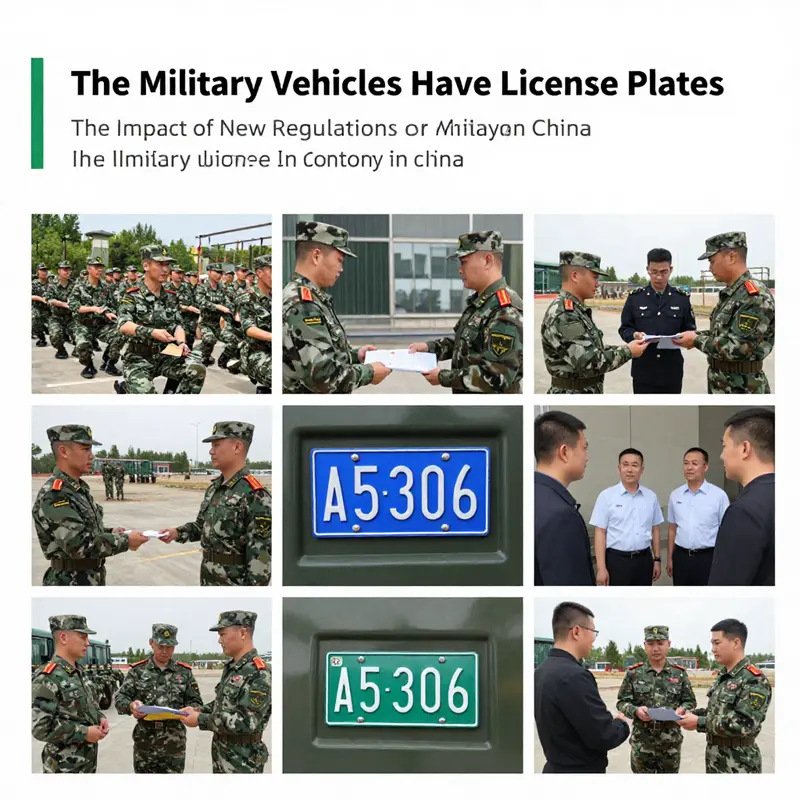
If a society judges its institutions by what travels on its roads, then the license plate is a quiet but telling proxy for how power is exercised, monitored, and restrained. In China, military vehicles carry a distinctive burden of privilege and scrutiny. The People’s Liberation Army (PLA) has long used specialized plates to distinguish military conveyances from civilian—and to grant or withhold certain exemptions and assurances. Yet for years, that distinction blurred in the public’s eye when civilians or officials sought to exploit military plates for private gain. Toll exemptions, vehicle and vessel taxes, routine inspections, and leniency in parking rules can all be leveraged, or misrepresented, depending on who holds the keys to the plate and how closely the vehicle is watched. The tension between privilege and accountability is not merely a bureaucratic concern; it sits at the intersection of national security, public trust, and everyday safety on the roads. The reform path the PLA chose was not only about new numbers and colors. It was a deliberate reconfiguration of incentives, controls, and consequences that would shape conduct from the barracks to the boulevard and back again into the digital era.
The mechanics of military license plates in China have always been anchored in a system of strict issuance and oversight. A military license plate is not a generic tag; it is the product of a dedicated military vehicle management body, a specialized authority that issues plates unique to military vehicles and tied to the fleet’s accountability. The privileges attached to these plates—exemption from tolls, from certain taxes, and from some regulatory inspections—are meant to support operational efficiency. In theory, they are tools that keep soldiers mobile, ready, and deployable. In practice, they have also created a corridor for wrongdoing when the human element, the systems that verify legitimacy, or the channels that enforce rules, becomes porous. When those channels fail, the same plates that enable rapid movement can become a gateway for illegitimate use by non-military actors or through counterfeit plates that masquerade as official credentials. The historical pattern—too often described by critics as a mix of convenience and ambiguity—prompted a rethinking of how the state manages and communicates legitimate use of military mobility.
The turning point came with a comprehensive revamp of the military vehicle license plate system in 2013. The reform began in May of that year, a deliberate demarcation from the older plates introduced in 2004. The motive was not merely to refresh symbols or to reduce administrative burden; it was to address a broader anti-corruption objective. The reform sought to curb abuses such as the unauthorized use of military vehicles, and to curb the practice of civilian or even wealthy individuals slipping into a privileged lane of governance through forged or improperly obtained plates. The new plates were designed with greater security in mind. They integrated information technology to track, verify, and, if necessary, invalidate plates that did not meet the criteria of legitimate military use. The aim was to close loopholes that allowed counterfeit plates to pass as legitimate, reducing opportunities for misuse while making it harder for non-military actors to claim exemptions or forge identities on the road. In this sense, the change was a signal: the PLA would be more visible, more accountable, and less forgiving of attempts to blur the lines between military and civilian mobility.
The reform’s backbone was governance as much as technology. The military vehicle management body did not merely issue new numbers; it redefined the norms of behavior for military drivers and the demand for public accountability. In the military press and in the mouthpiece of the PLA, the reform was presented as a step toward restoring public trust and reducing extravagance. The idea was to ensure that the privileges associated with military plates were strictly reserved for legitimate military use, especially as vehicles leave the confines of the barracks and operate in civilian traffic. The reform acknowledged a broader reality: in the age of the internet, scrutiny is constant, and the public is suddenly aware of the mechanisms that should safeguard propriety. Comments in the PLA Daily, noted after the launch, suggested that public observation and digital transparency would compel more disciplined conduct from military drivers, especially once vehicles are on public roads. The reform was thus framed as both a security improvement and a governance reform, a two-pronged approach to ensure that privilege does not outpace responsibility.
Technological enhancements were central to the 2013 overhaul, but they did not stand alone. The new plates were coupled with more robust record-keeping, more rigorous auditing, and faster, more reliable ways to trace a plate back to its owner, its assigned unit, and its authorized purposes. In practice, this meant that a plate could not be casually reused or redesigned without leaving a trace. It also meant that authorities could quickly identify anomalies—such as a vehicle leaving a barracks with an unofficial plate or traveling with a plate that did not match the vehicle’s official registration. The combination of secure design and digital traceability aimed to deter attempts at deception and to ensure that the plate was not merely a symbol of privilege but a functional instrument of accountability.
Yet the reality of enforcement is always more complex than the principle. Even as the new system was rolled out, reports from international outlets drew attention to ongoing incidents that underscored the persistent tension between privilege and misuse. The literature referenced by the research notes that, as public attention grew, so did the visibility of such misuse. Incidents described by The Wall Street Journal and the Los Angeles Times around January 23, 2026, illustrate a landscape where the misuse of military license plates—drivers speeding through traffic, evading tolls, or impersonating law enforcement vehicles—continued to evoke concern. The examples highlight a pattern: even with improved design and centralized control, the human factor—the choices made by drivers and the oversight provided by officials—remains a critical variable. This is a reminder that technology and policy alone cannot guarantee integrity; strong culture and rigorous enforcement must accompany every reform.
A telling episode reported in the sources involved a resident posting a military license plate online and presenting it as an ICE vehicle. The incident exposed a vulnerability that no plate design could wholly eliminate: the spread of information that can misidentify authority and mislead the public. It demonstrates how public platforms can magnify the consequences of plate misuse, turning a private act of misrepresentation into a matter of public safety and trust. The lesson is nuanced: transparency and accountability are essential, but they must be matched with responsible behavior by those who wield the plates’ privileges and with timely, credible responses by authorities when misuses are detected. In this sense, the plate reform is as much about deterrence as it is about detection. It aims to deter illicit use and to enable rapid detection when boundaries are crossed. It is a governance mechanism, designed not to neutralize all risk, but to reduce it and to make accountability credible and legible to the civilian population that must accompany the military on roadways.
The broader significance of the plate revamp extends beyond the specific acts of enforcement. It reflects a strategic posture toward discipline, efficiency, and public trust. The reform connects micro-level changes—how a plate is issued, checked, and tracked—with macro-level aims: to ensure that military mobility supports readiness without inviting opacities or abuses. It also signals a cultural shift within the armed forces. Once the plates leave the barracks, their movement on public streets becomes an indicator of how closely military conduct aligns with civilian expectations for rule of law and accountability. In this way, the plate policy becomes a proxy for the PLA’s broader governance project: to demonstrate that privilege is not a shield from scrutiny, but a responsibility that must be justified and verifiable at every turn. The reform, then, is a living program rather than a finite set of rules. It invites ongoing assessment, continuous improvement, and sustained public engagement—an effort that relies on both the discipline within the ranks and the confidence of the public beyond them.
The discussion thus far highlights a key point: license plates, in this context, are more than mere identifiers. They are a governance instrument that ties mobility to accountability. They function at the hinge between security considerations and everyday life. They are intended to reduce the risk that military privilege becomes a means of advancing private preference over public duty. The changes of 2013, and the subsequent public discourse about them, suggest a maturation of how the PLA conceptualizes its relationship with civil society. Rather than isolated pockets of reform, the license plate system embodies an integrated approach to anti-corruption, traffic safety, and institutional legitimacy. In practice, this means better traceability, clearer consequences for violations, and a cultural expectation that military personnel are held to high standards even when operating in civilian spaces. It also means that the public can observe, question, and hold to account the ways in which military mobility is managed—an essential dynamic in any modern state that seeks to harmonize the demands of security with the norms of openness and accountability.
For readers seeking a broader historical anchor to these developments, the 2013 lamp of reform is often cited alongside official policy discussions and national media coverage. The China Daily report on the plate revamp provides a contemporaneous account of the reforms’ aims and official framing. It situates the changes within a wider context of modernization and governance reform, reinforcing the sense that this is not merely a technical update but a strategic shift. The article, while dated, captures the impulse to synchronize military discipline with public expectations in an era when information travels quickly and oversight is available on multiple platforms. To understand the ongoing conversation about licensing, compliance, and governance in traffic and vehicle management, one can trace the thread from the 2013 revamp to contemporary discussions about enforcement, transparency, and trust on China’s roads, as well as to the practical outcomes for military drivers who must navigate an increasingly scrutinized operating environment.
Internal linking note: for readers curious about how state rules shape driver licensing in the broader regulatory landscape, this discussion can be connected to the ongoing conversation about road-use governance at the domestic level. See the discussion on state rules impacting driver licensing for a comparative perspective on how jurisdictions translate licensing policy into everyday practice on the road. state rules impacting driver licensing
External resource: for additional background on the plate revamp and its contemporary framing in China, consult the China Daily report referenced earlier. External resource: China Daily – China Military Vehicle License Plate Revamp
License Plates on the Frontlines: Public Trust, Oversight, and the Markings on Military Vehicles
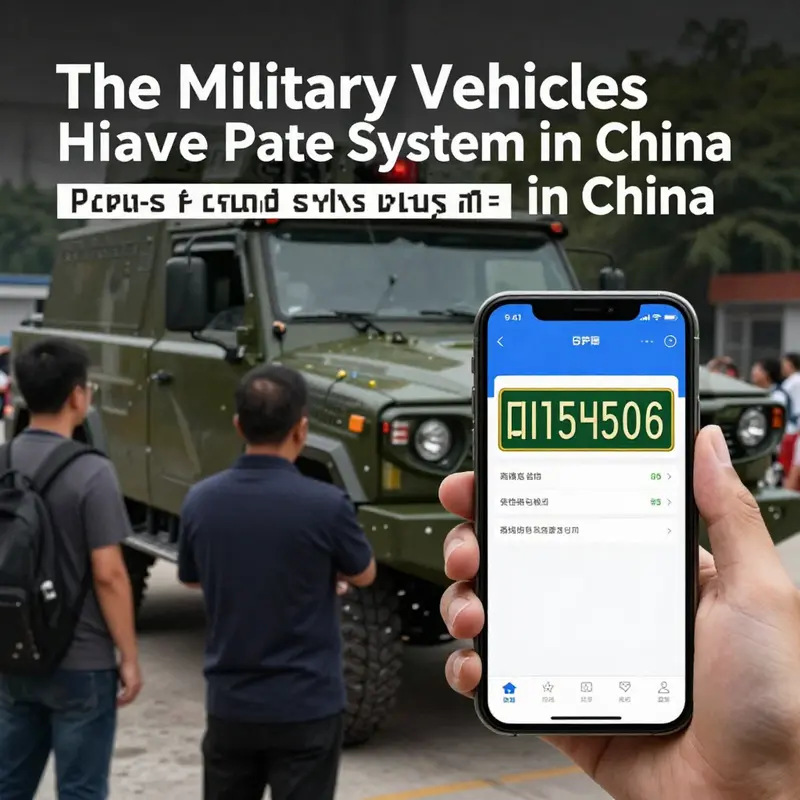
Military vehicle license plates serve as a legal and public accountability tool. Across nations, plates are designed to deter misuse, enable traceability, and connect a vehicle’s identity to its operator and mission, while balancing security with civilian oversight.
Final thoughts
The implementation of a new license plate system for military vehicles in China represents a significant step forward in ensuring security and accountability. This initiative not only incorporates advanced technological solutions to prevent fraud but also addresses broader issues of military misconduct and public trust. Through regular oversight and community involvement, these measures aim to deter abuses and rectify any violations associated with military vehicle use. The transformation of such regulatory frameworks serves as a vital learning point for governance worldwide, illustrating the need for transparency and integrity within military operations.