
Navigating the complexities of vehicle ownership can be daunting, especially for new drivers and vehicle owners. One common query arises: Do you need a driver’s license to register a vehicle? Understanding this pivotal aspect is vital for all demographic groups, including new drivers, learners, current vehicle owners, and auto dealerships. As the automotive landscape continually evolves, knowing your rights and responsibilities regarding vehicle registration is essential. This article examines the basic concepts, processes without a license, the legal implications of owning versus driving, and varying regulations by state. By guiding readers through these chapters, we aim to clarify this frequent uncertainty and equip them with the knowledge to make informed decisions about vehicle ownership and registration.
Registration Without a Ride: Demystifying Whether a Driver’s License Is Needed to Put a Vehicle on the Books
Registration and ownership sit on a different axis from driving ability, a distinction that often confuses people entering the process of putting a vehicle on the books. The question “do I need a license to register my car?” invites a layered answer that depends on where you are, what you’re registering, and what the governing rules demand at that moment. Across many places, the act of registration is a legal acknowledgment of ownership, a means by which the state records who owns the car, how much it is worth for taxation, and that the vehicle meets basic safety and emissions standards. It is not, in itself, a license to drive. Yet the practicalities of registration are intertwined with the wider system of vehicle regulation, taxation, insurance, and road safety. Understanding this relationship helps clarify why the requirements often include a driver’s license or a state-issued ID as part of the identity verification process, even if ownership and operation remain distinct legal statuses.
In the United States, the landscape is nuanced. The core function of registration is to establish who owns the vehicle and under what terms that ownership is recognized by the state. Most jurisdictions want to confirm the registrant’s identity and residence, ensure the vehicle has a valid insurance policy for the time being, and verify that the vehicle meets safety and environmental standards before it can be legally plated and driven on public roads. The driving license, while not always a formal prerequisite for registration itself, commonly enters the process as a practical and regulatory necessity. In many states, present-day registration procedures at the DMV or its equivalent will require a valid driver’s license or at least a state-issued identification card to prove that the person who owns and will operate or certify the vehicle’s compliance is properly documented and legally recognized to own property.
The point to hold onto is that ownership and driving are separate legal statuses. You can legally purchase and register a car in your name even if you do not hold a driver’s license. This separation matters because there are scenarios in which a non-driver might inherit a vehicle, transfer ownership through a family member, or acquire a car as a business asset that doesn’t require the registrant to physically operate the vehicle. Registration therefore serves as a mechanism to record ownership, assign responsibility, and ensure that the vehicle is properly accounted for in the public records and tax systems, while the act of driving itself remains governed by separate licensing and operational rules. Still, the practical reality is that the road-use framework often binds the two together in a way that makes it difficult to separate them entirely in daily life. The law’s intent here is not to penalize ownership per se, but to maintain a coherent system where ownership, insurance, and the right to operate on public roads are thoughtfully coordinated.
In practice, this means you should expect the following components to appear in a typical registration scenario in the United States. First, proof of identity is required to link the vehicle to a person who can lawfully own it. A government-issued photo ID—such as a driver’s license or a state ID card—widens the pool of accepted identifiers beyond a passport or other national document, but the key criterion remains verifiable identity. Second, proof of ownership is essential. This typically includes the vehicle title or a pink slip, along with a bill of sale if you recently purchased the car. The title acts as the primary document showing who holds the legal right to own the vehicle, and the bill of sale provides evidence of transfer and purchase terms. Third, proof of insurance is commonly required. The insurance link to registration is deliberate: policymakers want to ensure that a vehicle on the road can meet basic financial responsibility standards, meaning that if something goes wrong, there is a mechanism to address damages and losses. Finally, proof of payment, including any applicable sales tax or registration fees, is necessary to finalize the transaction and place the vehicle on the state’s financial ledgers. These elements, taken together, create a robust framework for tracking ownership, validating the vehicle’s status, and ensuring that public resources are appropriately allocated.
However, the way these elements are packaged—whether a driver’s license is mandatory for registration—varies by jurisdiction. In some states, the registration process is tightly bound to the possession of a license or a state-issued ID. For example, a number of states require a valid driver’s license or state ID as part of the registration submission because the state uses that credential to verify both identity and residency. In others, the rule is more permissive: you may be able to register with a non-driver ID or another acceptable form of identification if it clearly ties to the vehicle’s owner and the person’s legal rights to own the vehicle. This variation reflects differences in administrative design, enforcement priorities, and how aggressively the state seeks to tie vehicle ownership to responsible driving and insurance coverage. The net takeaway is straightforward: whether a license is strictly required at the moment of registration depends on the jurisdiction’s rules, but in nearly all places you will need credible identification and proof of ownership, and you will need to demonstrate that the vehicle is properly insured.
The international picture broadens and complicates matters further. In other countries, the regulatory architecture often requires a driving license as part of the registration process more explicitly. Consider the United Kingdom, where the legal framework treats vehicle registration and driving privilege as a tightly coupled matter under regulatory acts that emphasize road use, safety compliance, and accountability. In such settings, a valid driving license is typically a prerequisite for registering a vehicle for use on public roads, and the language of the law reflects the expectation that ownership and operation are within the same compliance envelope. Canada presents another array of rules that can differ by province. Some provinces require a valid driver’s license for vehicle registration in personal-use scenarios, while others emphasize the need for proof of ownership and insurance as the central criteria, with licensing entering the picture primarily when a person seeks to plate and drive. These international variations share a common aim: to prevent fraud, ensure that vehicle owners can meet financial responsibilities, and maintain safety standards that protect other road users. They demonstrate that the relationship between ownership and operation is not universal but is instead filtered through a country’s or a region’s legislative choices and administrative practices.
Across all these contexts, the recommended approach remains consistent: verify the local requirements before attempting to register a vehicle. Jurisdictional rules can and do change, sometimes in response to shifting policy priorities, budgetary considerations, or evolving safety standards. The most reliable source of current guidance is the local department of motor vehicles or transportation authority. They will provide the definitive list of documents, the acceptable forms of identification, and any jurisdiction-specific caveats, such as temporary registrations, special permits, or exemptions for certain categories of vehicles or owners. In the United States, federal agencies like the National Highway Traffic Safety Administration offer overarching guidance and safety frameworks, but the day-to-day granular rules rest with state and provincial authorities. This division of responsibility underlines why a single universal answer does not exist for the question of license requirements to register a vehicle; instead, you’ll encounter a spectrum of practices aligned with local governance and administrative design.
For individuals who are navigating the process for the first time, a practical mindset helps. Gather documentation that proves identity, ownership, and financial responsibility ahead of time. Make certain you understand whether your state or country requires you to present a driver’s license specifically or whether a state ID or other acceptable credential suffices. If you are purchasing a vehicle from a private party, keep the title, the bill of sale, and any transfer documents organized, because these items are central to establishing ownership in the eyes of the registrar. If you are buying from a dealership, expect them to guide you through the necessary steps, including how to obtain insurance, what kind of ID is acceptable, and how the VIN will be validated during the registration process. Insurance adds a separate but linked thread to the procedure; the policy not only sustains financial protection in case of an incident but also signals to the registrar that the vehicle has the required coverage in force at the time of registration. Without insurance, even a legally registered vehicle might face compliance challenges or penalties in many jurisdictions, highlighting why these components are jointly considered rather than treated as entirely separate tasks.
One notable implication of these rules concerns the possibility of owning and registering a vehicle without driving it. There are legitimate scenarios where this happens—a vehicle owned by someone who cannot or does not drive, a company car assigned to a non-driver employee, or an inheritance where the new owner plans to reassign the vehicle to a driver later. In such cases, the registrant’s primary role is stewardship and accountability rather than operation. The vehicle remains a registered asset, affixed with plates and a formal record, and the owner bears responsibility for maintaining insurance, paying taxes, and ensuring compliance with safety standards. Driving, however, remains a separate legal act that requires a valid license to operate on public roads. The line between owning and operating is clearly drawn by the law, but daily life in most places often requires navigating both sides of that line in a coordinated fashion. This distinction is not merely academic; it translates into practical consequences, such as what happens if you move to a different state, if you buy a vehicle from out of state, or if you relocate and need to re-register. The process is designed to accommodate these transitions, even as it preserves the critical boundary that a license to drive is a separate entitlement tied to public road use.
In synthesis, the core idea is that ownership and driving are not the same legal status, even though the processes that govern them are frequently linked. You can own a car and register it under your name without holding a driver’s license; you cannot, in most places, legally operate that same car on public roads without the appropriate license. The practical effect for most readers is a clearer expectation: when you set out to register a vehicle, prepare to prove who you are, prove you own the vehicle, show evidence of insurance, and demonstrate that you have fulfilled any corresponding tax obligations. If a license or state ID is required for registration in your jurisdiction, you will know it from the published rules at your local registrar. If it is not strictly required, you may still need to present a driving credential to satisfy the overall identity and residency checks that the registrar performs. Either way, the goal of registration—accurate ownership records, safety compliance, and the assignment of regulatory responsibilities—remains central.
For readers seeking a more granular view of the relationship between state rules and driver licensing, there is a resource that narrows in on how different jurisdictions shape the licensing landscape. The linked exploration on state rules impact on driver licensing provides a detailed look at how local policy choices influence what documents suffice for registration and what conditions govern the issuance of plates and driving privileges. state rules impact on driver licensing
In closing, while each jurisdiction tailors its requirements to its administrative framework, the overarching pattern is stable: registration is about ownership, proof of compliance with safety and financial responsibilities, and the legitimacy of the vehicle’s presence on public roads. Licensing governs who may operate, when, and under what conditions. The separation is purposeful, balancing the need to track ownership and fund infrastructure with the imperative to promote safe and responsible driving. Always consult the local registrar for the definitive rules and keep abreast of any changes that could affect both the paperwork you must present and the rights you hold as a vehicle owner. For official guidance on vehicle safety and related standards in the United States, the National Highway Traffic Safety Administration offers authoritative resources that complement local registration requirements. https://www.nhtsa.gov
On the Books Without the Keys: How Vehicle Registration Confirms Ownership When You Don’t Hold a Driver’s License
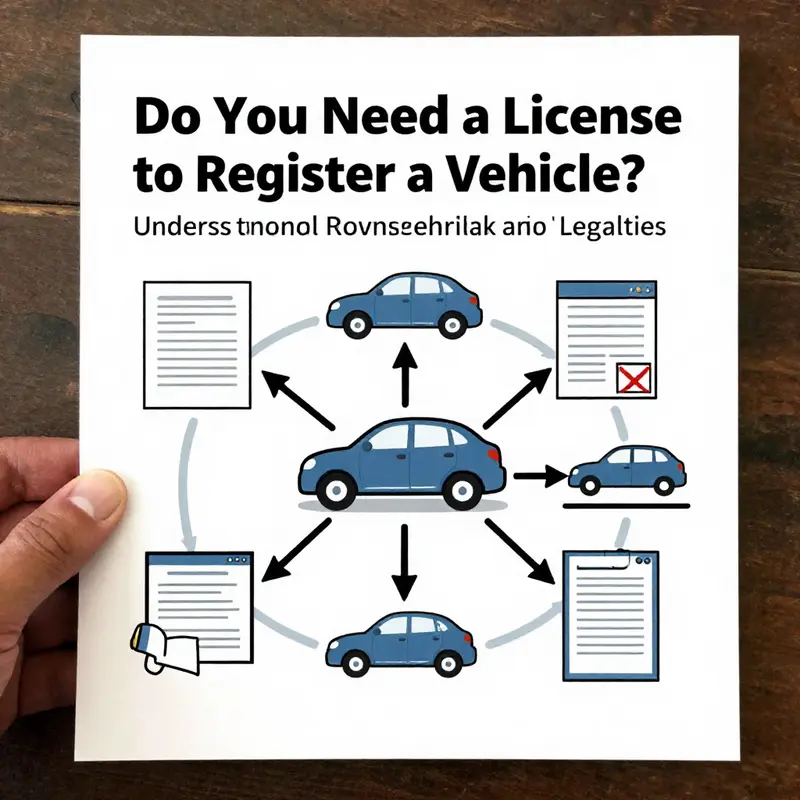
When people hear that a car can be bought and registered without a driver’s license, they often picture a loophole or a backroom arrangement. In truth, the system is built on a simple truth: ownership and driving are two different legal statuses. Registration is about who owns the vehicle, how the vehicle is identified by the state, and how safety and accountability are enforced. Driving, by contrast, is a separate authorization—an activity that requires the right to operate a vehicle on public roads. This distinction matters because it clarifies why a person can legally own and register a car without ever possessing a license to drive it. Understanding this separation helps dispel common myths and makes the process of getting a vehicle onto the books smoother for people whose lives don’t revolve around driving, whether for financial reasons, personal choice, or transitional circumstances such as waiting to obtain a license after meeting other requirements. The road between ownership and operation is navigated through different steps, different proofs, and different responsibilities, and recognizing this helps prevent needless missteps and penalties later on.
Vehicle registration serves multiple practical purposes beyond merely placing a plate on a car. It officially records who owns the vehicle, ties that ownership to an identifiable person, and creates a verifiable linkage between the vehicle’s identity and the owner in government records. The process ensures the vehicle meets baseline standards for safety and emissions, and it assigns a unique license plate number that becomes the outward symbol of accountability on the road. In this sense, registration is a public record of a private asset. It provides a framework for tracking ownership transfers, ensuring the vehicle can be traced if it is involved in an accident or a circuit of theft or resale. The system also helps collect public revenue through registration fees and taxes, which fund essential services and transportation infrastructure that everyone uses, licensed or not. All these elements cohere around the central concept that ownership is an entirely separate legal status from the ability to drive.
The practical upshot is straightforward: you can own a vehicle and have it registered in your name without holding a driver’s license. You can, in most jurisdictions, walk into a DMV office or its equivalent with the right documents and complete the registration in the absence of a license to operate. This arrangement is not intended to reward noncompliance, but to accommodate life circumstances where ownership and the right to drive are not aligned. For instance, a person who uses a vehicle for business purposes may hire a driver or rely on a licensed family member to operate while maintaining the vehicle’s registration under their own name. Likewise, new arrivals to a region may own a car before they have completed the process of obtaining a local license. The ability to register a vehicle without a license recognizes the reality that ownership requires a different form of proof than the capacity to operate in traffic. It is also important to emphasize that attempting to operate a vehicle on public roads without a valid license remains a separate offense with penalties that escalate with the jurisdiction and the severity of the violation.
What, then, does a person need to register a vehicle in practice? The core documents are consistently practical and focused on identity, ownership, and financial responsibility. First and foremost is proof of ownership. This is typically the vehicle title, sometimes called the pink slip, or a bill of sale if the vehicle has changed hands recently and the title is still in transit or under processing. The second essential element is proof of identity. A government-issued photo ID—such as a passport or national ID card or a state-issued driver’s license if one exists—demonstrates who is requesting the registration and who will bear the responsibility for the vehicle’s use and any future transfers. Third, proof of insurance is commonly required. The registration system operates on the premise that the vehicle is protected by a legitimate insurance policy, reflecting a baseline of financial responsibility in the event of an accident or damage. Fourth, the vehicle identification number (VIN) is used to verify the vehicle’s official description and to match it with the records in the registry. This identifier helps ensure that the car being registered is the same vehicle that appears in the title and in the seller’s documentation. Fifth, proof of payment for the registration fee, and any applicable sales tax, is necessary to activate the record. Each jurisdiction may have nuances—such as additional forms, specific insurance minimums, or regional tax considerations—but the fundamental framework remains stable: ownership, identity, and financial responsibility are at the core of the registration gate.
The process itself unfolds with a rhythm that remains consistent across many regions. Gather the documents, present them to the proper agency, complete the required forms, and pay the associated fees. In many places this happens at a DMV office, while some jurisdictions offer online or hybrid options that streamline the workflow. The moment the paperwork is accepted and the payment is confirmed, the vehicle receives its registration certificate and a plate, or the license plate is transferred to the new owner if the vehicle already has plates. The certificate acts as official proof that the vehicle is recorded in the owner’s name, ready for inspection by law enforcement if needed and appropriate for renewal cycles that occur annually or biannually. The license plates serve not only as a public display of the vehicle’s registration status but also as a physical reminder that the ownership is linked to a specific person in the official records. In this context, the process is less about who can drive and more about who owns and bears responsibility for the vehicle. The emphasis on identification, ownership, and compliance with safety and emissions standards underscores the state’s interest in a transparent and auditable system that protects property rights and public welfare.
A practical question often arises for people who do not plan to drive, or who do not yet have a license: what happens if you do not have a driver’s license but want to register a vehicle? The answer remains clear and consistent with the broader logic of registration. You can own the vehicle and register it in your name without a license to operate. However, the day you decide to operate the vehicle on public roads is when the license becomes a requirement. The license to drive is a separate authorization, built on a different set of criteria that a person must satisfy—passing tests, meeting residency requirements, and fulfilling any medical or age-related prerequisites. The regulatory framework thus creates two parallel lines: one that legitimizes ownership and a separate one that legitimizes operation. This parallel structure helps explain why a vehicle can exist publicly in your name, with plates and registration, even if you do not hold a license. Yet it also serves as a reminder that driving without a license is a legal risk that can carry fines, suspension of driving privileges, or more severe penalties, depending on the jurisdiction and the surrounding circumstances. In discussing this nuance, it is useful to note how state rules interact with broader licensing frameworks. A succinct way to frame this is to recognize that ownership and driving are separate legal statuses, and the rules that govern each have their own logic and enforcement mechanisms. For those who want to explore how these rules differ in practice, the topic of state rules and their impact on driver licensing provides a broader map of how policy shapes who can drive and who can own, at various times and in various places. See the discussion on state rules impact on driver licensing for further nuance on how different jurisdictions draw those boundaries.
From a planning perspective, this distinction matters when you think about future steps. If you intend to continue owning without driving, you may want to arrange for someone with a valid license to operate the vehicle, or you may choose to finance or lease in a way that aligns with your current status. If you intend to become a driver, you will start with the process of earning a license, which often involves a separate set of requirements, tests, and sometimes waiting periods. The two obligations—ownership and operation—may evolve at different times in a person’s life, but their legal footprints remain connected through the vehicle’s identity and the records that connect it to a specific owner.
It is also useful to consider the practical consequences of the registration system for people who move, sell, or transfer ownership. Address changes and residency updates are not mere formalities; they are essential to maintaining current records that reflect who is responsible for the vehicle, who can be contacted for legal notices, and who will receive renewal reminders. When a new owner purchases a registered vehicle, the title and registration must be updated to reflect the new ownership. In such cases, the witnesses to the transfer, the documentation of the sale, and the continuation of insurance coverage all play pivotal roles in ensuring a smooth transition. The process must remain robust to prevent misattribution of liability or the misallocation of registration fees. In some regions, a lapse in updating records can lead to penalties, even if the vehicle is not being driven at the time. These practical considerations reveal why the registration system emphasizes accuracy, documentation, and timely updates, reinforcing the broader purpose of public record-keeping and accountability.
With these threads in mind, it is worth returning to the core distinction once more: the license to drive is about capability and qualification to operate on public roads, while the registration is about proof of ownership and the vehicle’s identification within the state system. The two pieces of the puzzle fit together but do not require one to be present for the other to exist. For individuals who neither own nor operate a vehicle, the system presents no barrier to basic non-operational ownership; it simply does not apply. For those who own and wish to register, the documents and payments outlined earlier provide a straightforward path that keeps the public records accurate and the vehicle properly accounted for under the law. This alignment between practical ownership, regulatory compliance, and the public interest lies at the heart of why registration exists in the first place. And as the landscape of licensing continues to evolve—with changes in age, residency, or even in the administrative processes used to issue licenses—registration remains the constant thread that anchors a vehicle’s legal status to a specific person, in a specific place, at a specific time. If you want to delve deeper into the policy side of how licensing rules are shaped by state considerations, you can explore discussions around state rules impact on driver licensing, which illuminate how different regions balance ownership, operation, and the responsibilities that come with each.
In sum, you do not need a driver’s license to register a vehicle, but you will need one to drive it on public roads. The registration acts as a formal acknowledgment of ownership and a commitment to meeting standards that keep the road system orderly and safe. It is a practical tool for accountability, a financial mechanism for public services, and a legal record that follows the vehicle wherever it goes. By recognizing the difference between owning and driving, you can navigate the registration process with clarity, prepare for future steps if you plan to drive, and ensure that all the necessary paperwork aligns with your current status and your intended use of the vehicle. The path from ownership to operation is narrow but navigable, and understanding it helps prevent missteps, penalties, and misunderstandings that can arise when people conflate the right to possess a vehicle with the right to operate it in public space.
Ownership on Paper, Driving on a Separate Track: Understanding Vehicle Registration Without a Driver’s License
Ownership and driving occupy different legal lanes, even when they involve the same machine.
A car sits in your name on paper, while the right to steer it on public roads is a separate privilege granted by a license.
This distinction matters because the process of putting a vehicle on the books—registering it with a state or local authority—is not a license to drive. Registration is about identity, ownership, and compliance with safety and tax requirements. It is a ledger entry that marks who owns the vehicle and, in many places, confirms that the vehicle meets mandatory standards. The ability to own a car and the ability to operate it are not interchangeable rights. Understanding this separation can save a lot of confusion, especially for people who don’t hold a driver’s license but need to register a vehicle for use in their daily lives, a family member’s use, or as part of a business fleet.
To begin, consider what the registration process actually requires. In most jurisdictions, you’ll need proof of identity, proof of ownership, proof of insurance, and proof of payment for any taxes or fees. The identity requirement is straightforward: a government-issued photo ID, such as a passport or national ID card, confirms who is seeking to register the vehicle. Proof of ownership is the backbone of the transaction. The title document—often called the pink slip in everyday speech—and a bill of sale establish a chain of title and a sale price for tax purposes. Without this paperwork, registering a vehicle in your name becomes legally murky, and the state can question the legitimacy of ownership. Proof of insurance is typically required as part of the registration process, not because the act of ownership hinges on insurance alone, but because the registration system is designed to ensure that a vehicle is insured before it can be driven on public roads. This emphasis helps providers and regulators maintain accountability for insured operations and reduces the risk of uninsured driving on shared roadways. Finally, proof of payment for taxes and registration fees closes the loop, linking the registration record to the jurisdiction’s revenue system and its ongoing oversight of vehicle safety, environmental compliance, and roadway wear and tear.
A striking aspect of this framework is that it permits the registration of a vehicle in a person’s name even if that person does not possess a driver’s license. The core principle is explicit: ownership and driving are separate legal statuses. You can own a car without being licensed to operate it on public roads. This separation is why someone could purchase a car as an investment, a family member might register a vehicle for a minor or for a permanently disabled relative, or a business could place a vehicle in the name of a non-driver who oversees fleet acquisitions. In practice, this means the car can be bought, titled, and registered without a license, so long as the permitted registration process is followed and the identity and ownership are verifiable. It is crucial to recognize, though, that the moment the vehicle is moved onto public roads for actual use, a driver’s license (or another valid authorization to drive) becomes a legal prerequisite. Attempting to operate the vehicle without a license falls into a different category of violation, often leading to fines, penalties, or more serious charges depending on the jurisdiction and the circumstances. The vehicle’s registration does not confer the right to drive; it merely documents ownership and compliance with registration, tax, and safety standards.
These protections and distinctions have practical consequences in daily life. If you do not hold a driver’s license, you might still be responsible for ensuring the vehicle remains compliant with insurance requirements, safety inspections, and tax obligations. Insurance often requires the named driver, or the person who will be primarily responsible for the vehicle, to hold a license. Even when the policy itself is tied to the vehicle rather than a specific driver, many insurers require some verification that the person who will be operating the vehicle is legally licensed at least at some point, whether for a particular trip or during certain periods. This linkage helps ensure that coverage extends appropriately to the licensed operator and reduces the risk of invalid claims arising from unlicensed operation. Because insurance interacts with the ownership record and the operator’s credentials, it’s not uncommon for registrants to provide proof of the license status of the actual driver when the vehicle is in use by someone other than the registered owner. In practice, that means even if you are the registered owner, the vehicle might be driven by someone else who holds a valid license, and the insurer’s terms will govern how that arrangement functions in relation to coverage, premiums, and claims.
Another dimension worth considering is the variability across jurisdictions. Laws and administrative procedures can differ significantly from one state or country to another. Some places require proof of insurance before registration can proceed, while others may allow registration with an auto policy that is purchased in anticipation of registration or soon after. Some jurisdictions permit the registration of a vehicle without a license if the registrant can show other acceptable forms of identification, while others strictly require the individual to present a valid license in conjunction with the registration process. The variation doesn’t erase the underlying rule: driving still requires a license, and the registration process serves as a registry of ownership and compliance. Given these differences, the counsel from local authorities remains indispensable. A quick check with the local department of motor vehicles (DMV) or an equivalent agency can confirm the exact documentation and thresholds for your area, ensuring compliance while avoiding delays or penalties.
In this light, the act of registering a vehicle without a driver’s license becomes less a gray zone and more a clarified boundary. You may own the vehicle, you may have verified ownership and identity, you may carry the appropriate insurance and pay the required taxes, and you may still need to arrange for driving permissions through the appropriate channels. When a vehicle remains owned but not driven, the owner or registrant should still monitor the vehicle’s location and storage to prevent issues such as unpaid storage fees, failed emissions testing, or lapses in insurance coverage, which could complicate future registration or ownership transfer. The rules also often touch on who can take possession of the vehicle, how it can be transferred, and under what circumstances a non-driver can relinquish ownership or add a license-holding driver as the authorized operator. Because these scenarios can create a tangle if not approached with clarity, a careful, proactive approach to documentation and compliance is essential.
From a practical standpoint, individuals who find themselves registering a vehicle without a license should prepare for a few likely steps. Gather the core documents: government-issued photo ID, the vehicle title, the bill of sale, any existing insurance documents, and proof of payment or anticipated payment for taxes and fees. If the vehicle will be driven by another person, coordinate with the insurer to confirm how the policy covers the operator and what documentation the insurer requires to validate the driver’s license status. If you are registering a vehicle for someone else, ensure you have explicit authorization to register on that person’s behalf and clear instructions about who will be the operator at any given time. In addition, be prepared for potential follow-up tasks, such as proof of ongoing insurance or evidence of ongoing compliance with safety and emissions standards, which may be tracked in periodic inspections or mandatory checks.
As you navigate registration without a license, remember that the overarching principle remains straightforward: ownership and driving are distinct legal statuses, each governed by its own rules and processes. The DMV or its equivalent is the arbiter of how your jurisdiction applies this principle, and it is well worth seeking tailored guidance. The information above sketches the general contours, but specific rules can affect what documents you must present, what forms you must complete, and what timelines you must observe. To connect these ideas to everyday decisions, consider how you plan to use the vehicle. If there will be no driving performed by the registrant, you might prioritize documentation that solidifies ownership, insurance coverage, and financial compliance, while ensuring a reliable plan for licensed operation by someone who will actually drive the vehicle on public roads. By thinking ahead, you can avoid the common pitfall of assuming that registration automatically grants driving rights.
For readers who want to explore the regulatory nuance beyond this discussion, consider how state rules shape driver licensing as part of a broader governance framework. State Rules Impact on Driver Licensing provides a lens into how various jurisdictions calibrate the boundaries between ownership, registration, and driving privileges. This resource can help illuminate why your local rules may diverge from those of neighboring regions and why a simple question about licensing can lead to a maze of regulatory specifics. State Rules Impact on Driver Licensing. In any case, the guiding principle remains consistent: you can own and register a vehicle without a driver’s license in many places, but you cannot legally operate it on public roads without a licensed driver. The separation is not an obstacle; it is a design feature intended to separate ownership from operation, while ensuring safety, accountability, and financial responsibility across the spectrum of vehicle use.
If you want to anchor this understanding to a broader picture, you can view the conversation as a continuum rather than a rigid rule set. The process of ownership transfer, registration, insurance binding, and the eventual decision to authorize an operator are all linked steps in maintaining road safety and legal clarity. Weighing the documents, acknowledging the risk of unlicensed operation, and planning for the appropriate channels to obtain or verify driving credentials all contribute to a smoother, legally sound pathway from purchase to day-to-day use. The distinction between owning a vehicle and driving it is not merely theoretical. It shapes how you prepare, what you bring to the DMV counter, and how you coordinate with insurers, lenders, and family members who may share or use the vehicle. When you keep the focus on identity, ownership, and compliance, the registration experience becomes less about a single act and more about a deliberate choreography of legal responsibilities, all designed to keep roadways safe and authorities informed.
External resource: For a broader perspective on how licensing interacts with ownership and registration in practical terms, see the external discussion at Insurantly about registering a car without a license: https://www.insurantly.com/car-registration-can-you-register-a-car-without-a-license
Ownership Without Driving: How State Rules Shape Vehicle Registration and the License Divide
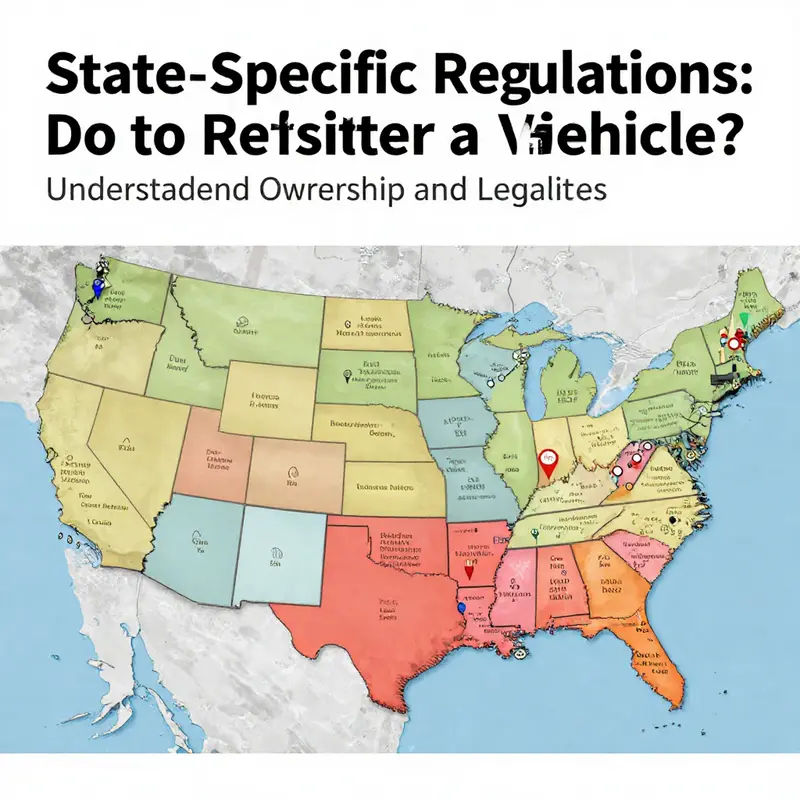
People often ask whether a driver’s license is required to register a vehicle. The answer is not a simple yes or no, because the truth hinges on a fundamental distinction many people overlook: ownership and operation are two different legal statuses, and state rules around vehicle registration reflect that split. In broad terms, registration is about who owns the vehicle, that ownership’s proof, and the vehicle’s compliance with safety and emissions standards. Licensing, by contrast, governs who may operate a vehicle on public roads. The law treats these as separate problems with separate remedies, penalties, and procedures. As a result, you can own and register a car in your name even if you do not have a valid driver’s license. You cannot legally operate that car on public streets without meeting the licensing requirements for driving, and doing so can invite fines, penalties, or more serious charges. The practical upshot is clear: if your goal is to place a vehicle “on the books” and obtain plates, the path is governed by ownership documentation, not by your driving credentials alone. The state framework for registration is designed to confirm identity, prove ownership, ensure insurance coverage, and collect taxes and fees tied to the vehicle. Those elements anchor the process, providing a stable record of who owns the vehicle and that the vehicle itself remains compliant with the state’s safety and environmental standards. The core object of registration is to create an official, transferable record of ownership and to ensure the vehicle meets baseline requirements. The rules can seem arcane, especially to first-time buyers or newcomers. Yet the underlying logic is pragmatic: registration ensures accountability, supports revenue generation through taxes and fees, and helps authorities track vehicles for safety, environmental, and traffic enforcement purposes. The moment you begin to peel back the surface, it becomes evident that the license needed to drive and the paperwork needed to register are different kinds of permissions, each with its own gatekeeping and its own set of consequences when breached. The practical steps to register a vehicle revolve around documents that establish who you are, that you own the vehicle, that you have a legitimate interest in it, and that you can show financial responsibility through insurance. In most places, the required documentation is straightforward enough when you have them in hand: a government-issued photo identity document to confirm your identity, the vehicle’s title or pink slip and a bill of sale to establish ownership, proof of insurance to demonstrate financial responsibility, and proof of payment for taxes and registration fees. These elements form the backbone of the registration process and are rarely controversial. They are, however, strictly checked, and the precise forms of accepted identification, ownership proof, and insurance proof can vary by jurisdiction. The result is a system tailored to the local legal framework but guided by widely shared objectives: preventing fraud in ownership transfers, ensuring that vehicles circulating on public roads meet safety and environmental standards, and securing revenue that supports road maintenance and safety programs. The separation between ownership and driving becomes even more evident when you consider how many states handle non-driving ownership scenarios. A person who does not hold a driver’s license may still purchase a vehicle and register it. Some jurisdictions explicitly accommodate non-drivers in the registration process, recognizing that ownership needs to be decoupled from the ability to operate. In practice, the process still demands robust verification of identity, proof of ownership, and proof of insurance; the difference lies in the absence of a requirement tied to a valid license for the act of registration itself. When you step back and examine the policy landscape, the variations across states appear as a mosaic rather than a monolith. A handful of states have rules that align closely with the common-sense principle described above, while others place more explicit stipulations on who may register a vehicle and under what conditions. California, for instance, reflects a tighter coupling between registration and driving credentials, often requiring the registrant to hold a valid California driver’s license to register a vehicle in the state. The specifics are nuanced and subject to exceptions—non-residents, temporary permits, and residency proofs can factor into the eligibility equation—so the official guidance from the state’s DMV is essential to interpret. Florida presents a different approach. In Florida, registration can be accessible to individuals who do not currently hold a driver’s license, particularly for out-of-state residents or those who do not plan to operate the vehicle regularly. Even in such cases, the registrar typically requires proof of identity, ownership, and insurance, along with other criteria that may apply. These juxtaposed examples underscore a central point: whether you must have a driver’s license to register a vehicle is not a universal yes or no. It is a question deeply rooted in jurisdictional policy, executed through a process that emphasizes ownership proof and vehicle compliance rather than driving capacity. The practical implication for a person navigating this terrain is to begin with the most authoritative source possible—the local DMV or equivalent agency. These agencies publish the specific documentary requirements, submission methods, and any state-specific exceptions or special circumstances. They are the definitive arbiter of what is accepted for identity verification, ownership proof, insurance coverage, and the payment of taxes and fees. It is also wise to anticipate variations in how proofs of ownership are treated. In some jurisdictions, the vehicle title alone may suffice to establish ownership alongside a bill of sale, while in others, a notarized transfer or additional forms may be required to transfer and register a vehicle successfully. The documents you gather for registration should be organized and verified before you set foot in the DMV office or submit an online application. Organization reduces delays, helps avoid repeated trips, and minimizes the risk of a denial that could complicate a planned purchase or transfer. Insurance, too, is a critical piece. Even if you are not planning to drive right away, you must satisfy the state’s requirement for line-of-sight evidence that you can meet financial responsibility should the vehicle be operated. Some states align insurance documentation with the registration process, while others have separate screens for proof of insurance that must be satisfied before plates are issued. The interplay of these requirements is rarely static, and it’s essential to stay current with official guidance. Regulatory environments adapt to changes in state policy, in federal guidance, and in practical considerations such as the availability of temporary permits, the transition of residents between states, and shifts in how emissions and safety inspections are administered. In this environment, it is not enough to rely on memory or hearsay. The exact set of documents, the order of steps, and the permissible channels for submission are state-specific and can even vary by county within a state. When you encounter a rule that seems unusual or burdensome, the most constructive approach is to trace it back to the underlying policy aim: to maintain a clean, auditable chain of ownership, to ensure the vehicle in question meets minimum safety and environmental standards, and to secure revenue that funds roadways and transportation infrastructure. With those objectives in mind, it becomes easier to interpret what is required and why. For readers already familiar with the general concept—that ownership and driving are separate legal statuses—the chapter’s larger aim is to illuminate how that separation plays out across the United States. The landscape is not uniform, but the logic is coherent. To understand your situation, you can often start from a simple checklist and then confirm each item with the relevant official source. Identify the person who will be listed on the registration: if you are the owner, you will typically need proof of identity that aligns with your legal name. Gather the vehicle’s title or pink slip and obtain a bill of sale if you are transferring ownership. Secure evidence of insurance, and ensure that the policyholder information matches the name on the registration documents. Finally, prepare to pay the applicable taxes and registration fees, and be ready to present any additional documents the state may require, such as proof of residency or a recent emissions test. As you move through the process, you may encounter phrases that hint at the deeper logic of the system. Terms like “proof of ownership” and “proof of identity” can carry different forms depending on the jurisdiction, but the objective remains the same: a trusted link between person, vehicle, and state record. If you are new to the process or moving between states, a practical recommendation is to invest time in a pre-registration information sweep. Visit the official DMV website for your state and, if possible, your county or city’s motor vehicle office. Read the current pages on vehicle registration, ownership transfer, and any special provisions for non-residents or temporary permit holders. It is also wise to bookmark or save a direct contact method for a real person who can answer edge-case questions. In the modern era, many DMV services now offer online pathways that streamline the submission of documents and fees. Even in states with careful in-person requirements, a preliminary online check can reveal missing items, reducing the risk of an in-person visit ending in a denial. The nuance of state rules also becomes particularly salient when dealing with situations like a vehicle purchased out of state, a multi-state ownership arrangement, or a move that transitions residence from one state to another. In these scenarios, the question of whether you need a driver’s license to register can hinge on the timing of your move, where you physically reside, and how long you intend to keep the vehicle registered in a given state. The guidance you gather should be contextual, not prescriptive. It should reflect the local realities of your registration office and the current policy environment. For some readers, the most practical route may be to align ownership transfer with timing that minimizes administrative friction—such as completing registration in a state where you have established residency or confirming that temporary permits are available if you have not yet fulfilled a residency requirement. It is also important to remember that, even when registration does not require a driver’s license, the license still plays a central role in daily life. If you intend to operate the vehicle, you must obtain the appropriate license that your state recognizes. Driving without a license is a different offense from failing to register and can carry penalties that include fines, vehicle impoundment, or even jail time depending on the jurisdiction and the severity of the violation. Therefore, the practical takeaway is balanced and pragmatic: plan for ownership and registration with a clear eye toward the documents and steps needed, and plan for driving with the license, tests, and permissions that your state requires. The two processes are linked in public policy, yet distinct in their execution. The chapter that follows will continue to illuminate how these distinctions shape everyday decisions for individuals and families alike. It will also guide readers toward reliable, state-specific sources that can confirm the exact requirements for their unique circumstances. For readers seeking a deeper dive into how state rules intersect with driver licensing, the discussion of broader regulatory patterns and the nuances of specific jurisdictions can be particularly enlightening. State-by-state variations matter, but the overarching logic—that ownership documentation, insurance, and tax compliance anchor registration—remains consistent across the board. When in doubt, consult the official state resource and, if needed, seek direct clarification from a human agent who can review your documents in the context of your particular situation. The road to registration is rarely a straight line, but with careful preparation and a clear understanding of your jurisdiction’s stance on licensing and registration, the process can proceed smoothly rather than becoming a tangled detour. To anchor these ideas in real-world practice, consider how a person navigating two contrasting state regimes might approach the journey: in a state with stringent licensing-linked registration, the starting point is to secure the license and establish residency, then proceed with registration, while in a more permissive state, the emphasis shifts toward ownership proof and insurance. Both paths meet the same end—legitimate, trackable ownership recorded in the state’s official system—yet they require attention to different gates at different times. As you prepare for your next registration, keep in mind that the license you hold for driving and the paperwork you assemble for ownership are not interchangeable, but they are interrelated pieces of a broader system designed to keep roads safe, records accurate, and transportation efficient. For readers who want to see the practical aspects illustrated with state-specific flavors, a quick exploration of the official pages for California and Florida can be illuminating. The California page on vehicle registration lays out eligibility, required documents, fees, and procedures in a way that makes the dependency on residency and driving credentials tangible. The Florida approach demonstrates how non-driving ownership scenarios can be accommodated while still embedding safety and accountability into the process. If you want to dive deeper into the state-by-state mosaic, the official pages are your most reliable compass, and they will guide you through the exact steps for your jurisdiction. For those seeking additional context beyond the state pages, a curated set of analyses can help illuminate how these rules interact with broader driver licensing policies and with enforcement realities across the country. State rules around licensing and registration are part of a living system that responds to changes in policy, technology, and societal needs. As you prepare for the next registration, remember that the most reliable guidance comes from the source—the official vehicle registration authority in your state. Acknowledging the distinction between ownership and operation will help you navigate the process with confidence, ensuring that your vehicle is properly recorded and compliant, even if you do not currently hold a driver’s license. The next steps involve verifying the exact requirements for your situation, preparing the documents, and engaging with the appropriate agency to complete the registration in a timely and compliant manner. And as you proceed, keep in mind the broader context: ownership is a property right that can be exercised independently of one’s ability to drive, a nuance that continues to shape how states craft their vehicle registration regimes. For a precise understanding of how a given state treats registration in light of driver licensing, you can consult the relevant official guidance and, when necessary, seek tailored assistance from the registry or motor vehicle office. State rules impact on driver licensing. In addition, for readers who want to corroborate the general principles with a concrete external reference on how California handles registration, the state’s official page provides comprehensive guidance, including the eligibility criteria, required documents, and steps to complete the process: https://www.dmv.ca.gov/portal/vr/vehicle-registration/.
Final thoughts
Understanding whether a driver’s license is necessary to register a vehicle is crucial for many individuals. It allows potential vehicle owners – including new drivers, learners, and auto dealerships – to navigate ownership logistics effectively. As we’ve explored, registration emphasizes ownership rather than a person’s ability to drive. With varying regulations across states, being informed empowers individuals to make educated decisions about vehicle registration and compliance. Whether you hold a driver’s license or not, the right to own a vehicle remains intact, ensuring that road safety and legal standards are respected. Keeping this knowledge in mind equips individuals with the assurance needed during the registration process.