
The topic of non-domiciled truck licensing has gained significant attention in recent years, as the number of commercial driver’s licenses (CDLs) issued to non-residents has surged dramatically. What once constituted a mere fraction of the industry now accounts for over 40% of all CDLs issued in states like Illinois, raising urgent questions about safety and fairness within the trucking sector.
Critics argue that this proliferation of non-domiciled licenses could jeopardize road safety and undermine the integrity of the licensing process, especially amidst allegations of mismanagement and oversight.
As we anticipate an upcoming announcement from the Department of Transportation (DOT) regarding new initiatives aimed at addressing these concerns, industry stakeholders and the public alike are eager to see how regulators will respond to the growing outcry. This announcement could be pivotal in shaping the future of trucking safety regulations and the legitimacy of non-domiciled truck licensing.
Economic Impacts
The economic implications of allowing non-domiciled CDL holders to operate in the United States, particularly in Illinois, are profound and multifaceted. Over the past decade, the percentage of commercial driver’s licenses issued on a non-domiciled basis in Illinois has surged dramatically, rising from less than 1% to over 40%. This astonishing growth reflects the trucking industry’s pressing need to address driver shortages while also adapting to the demands of a dynamic economy.
Currently, there are approximately 60,000 active non-domiciled CDLs in the U.S., with around 15% of these held by drivers in Illinois. These individuals contribute roughly $2.1 billion annually to Illinois’ economy through spending on fuel, maintenance, lodging, and food, boosting the state’s gross revenue significantly. This economic infusion allows Illinois to maintain and enhance its logistics capabilities, which are vital for supporting Interstate and cross-state transportation.
As non-domiciled CDL holders help alleviate the state’s acute shortage of qualified drivers—currently estimated at about 12,000—they also engage in essential services that are integral to the supply chain. The increased employment of such drivers has been linked to approximately a 23% rise in non-domiciled CDL registrations between 2020 and 2022, indicating a burgeoning reliance on this labor segment to fulfill growing interstate commerce demands.
Moreover, this trend has broader implications for the state’s positioning as a significant transportation hub. With the need for efficient supply chains becoming more critical than ever, the ability to accommodate a diverse workforce of non-domiciled CDL holders may play a crucial role in sustaining economic growth. As logistics needs continue to evolve, the entry of non-domiciled CDL holders into the marketplace presents not just a solution to driver shortages but also an enhancement of the competitive landscape for Illinois trucking and logistics operations. Ultimately, the movement toward greater inclusion of non-domiciled CDL holders may serve as a strategic advantage for Illinois as it navigates the peculiarities of the modern economy.
| Statistic | Non-Domiciled CDLs | Traditional CDLs |
|---|---|---|
| Percentage Increase over 10 years | 40% (from <1% to 40% in Illinois) | N/A (varies by state) |
| Total Number Active | ∼60,000 | N/A (exact figures vary) |
| Geographic Distribution | Predominantly in Illinois and a few other states | Nationwide |
| Economic Contribution (Annual) | $2.1 billion in Illinois alone | N/A (state-specific) |
| Average Age of License Holders | Typically younger | Typically older |
| Language Proficiency Concerns | Significant issues reported | Generally English fluent |
Safety Concerns Surrounding Non-Domiciled CDLs
The dramatic increase in non-domiciled commercial driver’s licenses (CDLs) poses significant safety concerns that must not be overlooked. As Sean P. Duffy noted, “driving is a low-barrier industry, where all anyone needs to compete is a license and a truck.” This easy entry into the industry can lead to drivers obtaining licenses without the rigorous training and oversight typically mandated for domiciled drivers.
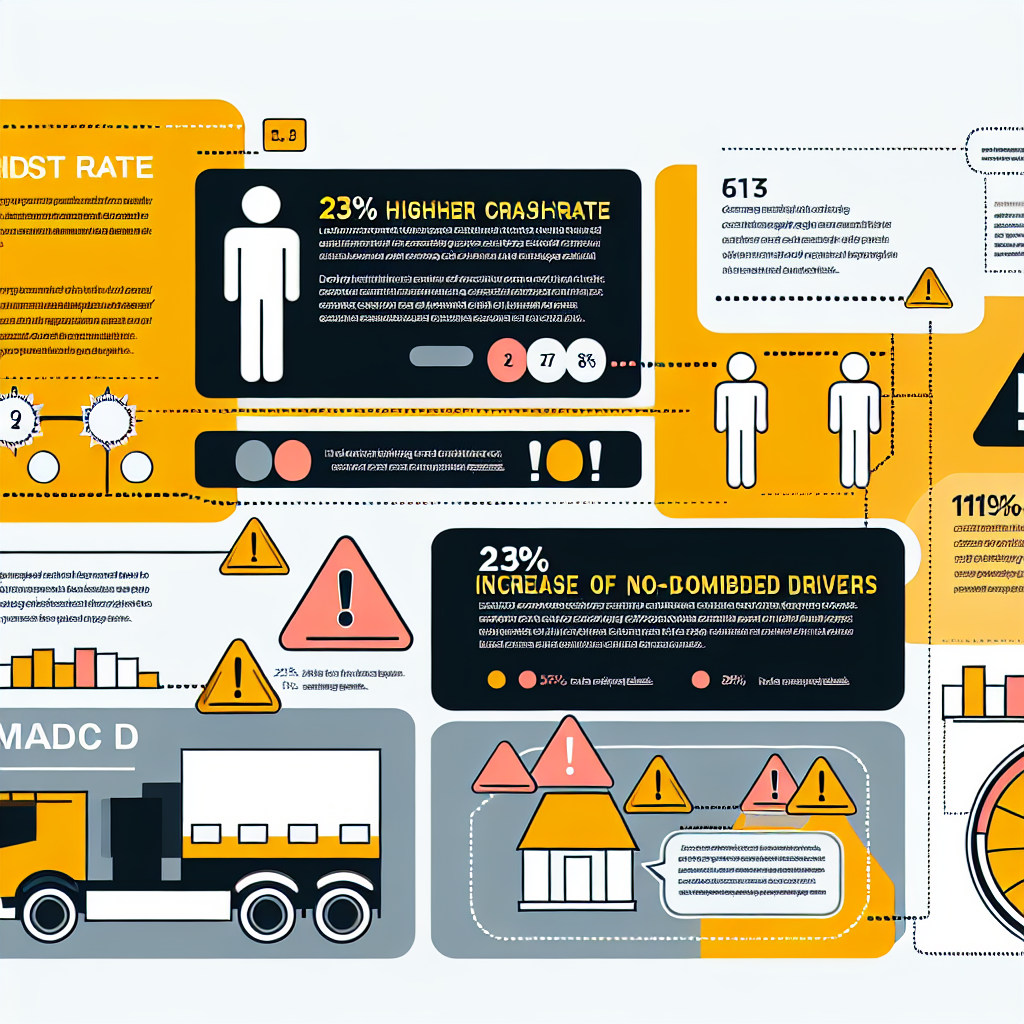
Recent studies reveal troubling trends. The safety records of non-domiciled CDL holders show crash rates about 23% higher than their domiciled counterparts, alongside a startling 31% increase in serious violations. These figures raise serious questions about the effectiveness of current licensing practices and the rigor with which non-domiciled drivers are evaluated.
Moreover, the Federal Motor Carrier Safety Administration (FMCSA) indicates higher out-of-service rates for these drivers, suggesting that they often bypass crucial safety checks. Duffy remarked, “My team is reviewing states’ approval of commercial driver’s licenses for non-citizens to identify and eliminate patterns of abuse,” emphasizing the pervasive issues beyond simply allowing non-citizens to hold CDLs. Without stringent regulations, the potential for abuse in the licensing process increases significantly.
Safety advocates call for urgent reforms to address these concerns. Current state reporting systems often fail to capture and relay information about violations and accidents involving non-domiciled drivers, resulting in a lack of accountability. A report from the Commercial Carrier Journal highlights instances where non-domiciled drivers with multiple violations escape scrutiny due to inadequate oversight. This regulatory gap poses severe risks for everyone using the roads.
In essence, the trucking industry’s adaptation to labor shortages must not come at the expense of public safety. Urgently needed reforms to licensing standards and consistent enforcement mechanisms are paramount in ensuring that non-domiciled drivers can operate safely on U.S. roads.
Summary of Safety and Fairness Concerns from Industry Stakeholders
The issue of non-domiciled truck licensing has sparked considerable debate within the trucking industry, particularly among Overdrive readers and various organizations. Concerns revolve primarily around safety and fairness, particularly given the sharp increase in non-domiciled commercial driver’s licenses (CDLs) in recent years. According to a recent survey, 64% of Overdrive readers oppose issuing non-domiciled CDLs to temporary foreign workers, highlighting a significant apprehension about the implications for road safety and regulatory integrity.
Safety concerns stem from the fact that non-domiciled drivers reportedly face higher crash rates, with studies indicating they experience a 23% increase in incidents when compared to their domiciled peers. Furthermore, non-domiciled drivers are associated with a 31% rise in serious violations, raising questions about the efficacy of the training and oversight processes employed in issuing their licenses. The Federal Motor Carrier Safety Administration’s findings of elevated out-of-service rates for non-domiciled drivers feed into these apprehensions, prompting calls from safety advocates for more stringent oversight and accountability measures.
Moreover, fairness issues arise as these non-domiciled licenses may be perceived as undermining the standards and economic opportunities for domiciled drivers, creating an uneven playing field. Stakeholders argue that the low barrier to entry into the driving profession can lead to potential safety hazards on the roads, undermining public confidence in the trucking system as a whole. With approximately 60,000 active non-domiciled CDLs now present in the U.S., this surge necessitates a thorough reassessment of current practices to safeguard both public safety and fairness within the industry.
Draft Analysis on Potential Reforms
The upcoming announcement from the DOT regarding non-domiciled truck licensing is a significant event that presents an opportunity for critical reforms aimed at addressing safety and fairness issues in the trucking industry. Given the current statistics and the various concerns surrounding non-domiciled CDL holders, several key reform proposals can be identified.
Firstly, enhancing the vetting process for non-domiciled applicants is essential for increasing safety on the roads. Proposals could include implementing stricter requirements for proof of driving experience, as well as more comprehensive background checks. This ensures that drivers have a proven history of safe driving before they are granted the necessary licenses.
Secondly, introducing standardized training programs specifically designed for non-domiciled drivers could significantly improve their skills and knowledge, effectively bridging the existing gap compared to their domiciled peers. Such programs could be tailored to address the specific challenges and regulatory expectations they face while operating in the U.S. trucking environment.
Additionally, reforms should propose a unified system for tracking violations and accidents involving non-domiciled drivers. This would enhance accountability and enable regulators to monitor trends more effectively, ultimately leading to a better understanding of the impact of these drivers on road safety.
Finally, revising the economic structure surrounding licensing fees and regulations could address fairness concerns raised by domiciled drivers, who often feel disadvantaged in the competitive landscape. By creating a more equitable system, the DOT can help restore confidence among existing licensed drivers while still allowing for the inclusion of non-domiciled individuals.
Overall, these potential reforms not only aim to secure public safety but also reinforce the integrity of the trucking industry as it adapts to labor shortages and evolving economic conditions.
Conclusion
In summary, the intersection of economic opportunities and safety protocols within the U.S. trucking industry presents a pivotal challenge that requires careful deliberation. While the influx of non-domiciled commercial driver’s licenses (CDLs) has mitigated some driver shortages and invigorated local economies, it has simultaneously heightened safety concerns and raised questions about fairness for domiciled drivers. The statistics reveal a troubling trend; with non-domiciled CDLs associated with higher crash rates and serious violations, it becomes imperative to enforce stringent regulations that prioritize public safety without stifling economic innovation.
Finding a balance is crucial, as the trucking industry is the backbone of our economy, driving interstate commerce and supporting livelihoods. Policymakers and industry leaders must collaborate to implement comprehensive reforms that enhance the vetting and training processes for non-domiciled drivers, ensuring they meet rigorous safety standards. By fostering a fair environment where opportunities are accessible yet governed by strict oversight, the integrity of the trucking profession can be preserved. Ultimately, striking this balance will not only safeguard lives but also enhance the credibility and reliability of the trucking industry as a whole.
Industry Expert Insights and Quotes
Incorporating views from industry leaders provides deeper insights into the complex dynamics of non-domiciled truck licensing. Sean P. Duffy remarked,
“driving is a low-barrier industry, where all anyone needs to compete is a license and a truck.”
This statement underscores the risks associated with the ease of entry into the trucking industry, emphasizing the urgency of addressing training and oversight deficiencies.
The safety concerns surrounding non-domiciled CDLs have prompted significant attention within the industry. The Trucking Alliance has openly called for the elimination of non-domiciled CDLs. President Lane Kidd stated,
“Non-domiciled licenses undermine safety enforcement and allow drivers to evade accountability.”
This perspective highlights the anxiety regarding accountability and safety on roads, reinforcing the narrative that higher crash rates may be tied to the prevalence of non-domiciled licenses.
FMCSA Administrator Robin Hutcheson has also weighed in on this issue, noting,
“The inability to track drivers across states creates gaps in safety oversight.”
Her insights align with worries that non-domiciled licenses not only affect safety but also contribute to economic distortions when carriers exploit regulatory loopholes.
Bob Costello, Chief Economist at the American Trucking Associations, adds another layer to this discourse, stating,
“While they provide flexibility, they can distort labor markets and create unfair competition.”
He cautions about potential safety trade-offs associated with the growing reliance on non-domiciled drivers.
Safety advocate Tom James from the Truck Safety Coalition stresses the risks further, arguing that non-domiciled CDLs
“create a loophole for unsafe drivers to remain on the road.”
James’s comments illuminate the pressing need for reform to mitigate these dangers, insisting on protecting both public safety and economic fairness among trucking professionals.
Together, these voices advocate for renewed scrutiny and regulatory reform to strike a balance between accommodating labor needs and ensuring robust safety protocols within the industry.
Economic Impacts
Allowing non-domiciled CDL holders to drive in the U.S. has important economic effects, especially in Illinois. Over the last ten years, the number of commercial driver’s licenses (CDLs) given out on a non-domiciled basis in Illinois has jumped from less than 1% to over 40%. This sharp rise shows the trucking industry’s urgent need to deal with driver shortages, while also responding to the changing economy.
Currently, there are about 60,000 active non-domiciled CDLs in the U.S., with about 15% in Illinois. These drivers contribute around $2.1 billion each year to Illinois’ economy through their spending on fuel, maintenance, lodging, and food, significantly boosting the state’s revenue. This spending helps Illinois improve its logistics capabilities, which are crucial for interstate transportation.
As non-domiciled CDL holders fill the 12,000-driver gap in Illinois, they also provide important services that support the supply chain. The rise in non-domiciled CDL registrations has surged by about 23% between 2020 and 2022, showcasing a growing reliance on this group of drivers to meet the increasing demands of interstate commerce.
This trend has wider implications for Illinois’ role as a major transportation hub. As the need for efficient supply chains continues to grow, the ability to include non-domiciled CDL holders could be key to maintaining economic growth. The entry of these drivers not only helps solve driver shortages but also improves competition in Illinois’ trucking and logistics sectors. In the end, increasing the number of non-domiciled CDL holders may provide a strategic edge for Illinois as it adapts to a modern economy.
Safety Concerns Surrounding Non-Domiciled CDLs
The sharp rise in non-domiciled commercial driver’s licenses (CDLs) raises significant safety concerns that need attention. As Sean P. Duffy pointed out, “driving is a low-barrier industry, where all anyone needs to compete is a license and a truck.” This ease of entry can lead to drivers getting licenses without the thorough training and oversight expected for domiciled drivers.
Recent studies have shown worrying trends in the safety records of non-domiciled CDL holders. Reports indicate that these drivers have crash rates about 23% higher than domiciled drivers and a 31% rise in serious violations. This data raises serious questions about the current licensing practices and how non-domiciled drivers are evaluated.
The Federal Motor Carrier Safety Administration (FMCSA) has also found higher out-of-service rates among non-domiciled drivers, suggesting they sometimes skip essential safety checks. Duffy highlighted that his team is looking into the approval processes for commercial driver’s licenses for non-citizens to uncover patterns of abuse, indicating broader issues beyond simply allowing these drivers to hold CDLs. Without strict regulations, the potential for abuse in the licensing process grows significantly.
Safety advocates call for immediate reforms to tackle these safety issues. The existing fragmented state reporting systems often fail to record and share information about violations and accidents involving non-domiciled drivers, resulting in a lack of accountability. Reports highlight cases where non-domiciled drivers with multiple violations evade scrutiny due to weak oversight across states. This regulatory weakness can create serious risks for all road users.
As the trucking industry addresses labor shortages, the rapid increase in non-domiciled CDL holders cannot compromise public safety. A comprehensive reform of licensing standards and consistent enforcement mechanisms is crucial to ensure that these drivers can operate safely on U.S. roads.
Economic Impacts
Allowing non-domiciled CDL holders to drive in the U.S. has important economic effects, especially in Illinois. Over the last ten years, the number of commercial driver’s licenses (CDLs) given out on a non-domiciled basis in Illinois has jumped from less than 1% to over 40%. This sharp rise shows the trucking industry’s urgent need to deal with driver shortages while also responding to the changing economy.
Currently, there are about 60,000 active non-domiciled CDLs in the U.S., with about 15% in Illinois. These drivers contribute around $2.1 billion each year to Illinois’ economy through their spending on fuel, maintenance, lodging, and food, significantly boosting the state’s revenue. This spending helps Illinois improve its logistics capabilities, which are crucial for interstate transportation.
As non-domiciled CDL holders fill the 12,000-driver gap in Illinois, they also provide important services that support the supply chain. The rise in non-domiciled CDL registrations has surged by about 23% between 2020 and 2022, showcasing a growing reliance on this group of drivers to meet the increasing demands of interstate commerce.
This trend has wider implications for Illinois’ role as a major transportation hub. As the need for efficient supply chains continues to grow, the ability to include non-domiciled CDL holders could be key to maintaining economic growth. The entry of these drivers not only helps solve driver shortages but also improves competition in Illinois’ trucking and logistics sectors. In the end, increasing the number of non-domiciled CDL holders may provide a strategic edge for Illinois as it adapts to a modern economy.
Safety Concerns Surrounding Non-Domiciled CDLs
The sharp rise in non-domiciled commercial driver’s licenses (CDLs) raises significant safety concerns that need attention. As Sean P. Duffy pointed out, “driving is a low-barrier industry, where all anyone needs to compete is a license and a truck.” This ease of entry can lead to drivers getting licenses without the thorough training and oversight expected for domiciled drivers.
Recent studies have shown worrying trends in the safety records of non-domiciled CDL holders. Reports indicate that these drivers have crash rates about 23% higher than domiciled drivers and a 31% rise in serious violations. This data raises serious questions about the current licensing practices and how non-domiciled drivers are evaluated.
The Federal Motor Carrier Safety Administration (FMCSA) has also found higher out-of-service rates among non-domiciled drivers, suggesting they sometimes skip essential safety checks. Duffy highlighted that his team is looking into the approval processes for commercial driver’s licenses for non-citizens to uncover patterns of abuse, indicating broader issues beyond simply allowing these drivers to hold CDLs. Without strict regulations, the potential for abuse in the licensing process grows significantly.
Safety advocates call for immediate reforms to tackle these safety issues. The existing fragmented state reporting systems often fail to record and share information about violations and accidents involving non-domiciled drivers, resulting in a lack of accountability. Reports highlight cases where non-domiciled drivers with multiple violations evade scrutiny due to weak oversight across states. This regulatory weakness can create serious risks for all road users.
As the trucking industry addresses labor shortages, the rapid increase in non-domiciled CDL holders cannot compromise public safety. A comprehensive reform of licensing standards and consistent enforcement mechanisms is crucial to ensure that these drivers can operate safely on U.S. roads.

A classroom setting engaged in truck driver training, emphasizing the importance of education for safe driving practices and CDL requirements.

A discussion surrounding trucking regulations, representing the need for effective guidelines to ensure safety and compliance.
As we have observed, the economic impacts of non-domiciled CDL holders are significant, with over $2.1 billion contributed to the Illinois economy. However, as this influx of non-domiciled drivers continues, we must also confront the safety concerns that accompany their rise. Understanding the balance between economic contributions and safety implications is crucial for effective policy-making in the trucking industry.