
Finding the owner of a vehicle using a license plate can often feel like navigating a maze, especially for new drivers and experienced vehicle owners alike. Understanding how to legally identify vehicle owners is critical, whether you’re addressing parking disputes, accident-related inquiries, or simply satisfying your curiosity. This guide details the legal methods available for U.S. citizens to uncover vehicle ownership, evaluating the implications of privacy laws, the role of technology, law enforcement’s involvement, and the procedures of the DMV. In doing so, it aims to empower readers and equip them with the knowledge needed to approach these situations with confidence and respect for others’ rights.
Behind the Plate: Navigating Legal Pathways to Identify Vehicle Ownership
The urge to identify who owns a vehicle from its license plate taps at a tension between accountability and privacy. In many places, a license plate is a gateway to a vehicle’s registration data, but not to the owner’s personal details. Privacy laws exist to prevent everyday people from pulling up someone’s name, address, or phone number simply because a plate is visible. This boundary is not a wall that blocks all legitimate inquiries; it is a guardrail that channels concerns through official, authorized channels designed to balance safety, fairness, and due process. Understanding these channels—how and when they can be used—helps people act responsibly when a real problem arises, such as a traffic incident, illegal parking, or a safety hazard. The discussion of access rights across jurisdictions makes clear that the mechanism is not a free-for-all; it is a carefully regulated process that depends on context, evidence, and a demonstrated need that the law recognizes as legitimate. To explore this, we can consider how two different legal environments approach the same question: how to move from a plate number to any information about the vehicle’s owner, while staying within the boundaries of the law and respecting privacy protections that are designed to protect everyone on the road.
In the United States, the privacy framework hinges on both federal and state safeguards, with the DPPA acting as a national standard that limits who may access personal information from motor vehicle records. The DPPA prohibits the release of personal data for purposes not specifically authorized, and it places strict controls on how data can be used and who can request it. Yet the same system also offers lawful avenues for certain verified needs. For example, many states provide a digital channel through the DMV or a state app to report a nuisance or to coordinate an official action. The plate number can be submitted to an official system to alert the vehicle’s registered owner that their car is blocking a driveway or parked illegally, without revealing who owns the vehicle. The message travels through official channels, and the owner is contacted by text or email through the platform. The user’s own contact information remains private, but the owner receives a notice that invites resolution. This approach preserves privacy while enabling prompt action that benefits the public.
When a situation involves potential wrongdoing, harm, or obstruction, the proper course often begins with local authorities. Contacting the police or the non-emergency line is a route that acknowledges legitimate needs. If a vehicle is involved in a traffic incident, blocks emergency access, or breaches parking rules in a way that endangers others, law enforcement can access official databases through proper channels. They verify the incident details, collect evidence, and determine whether a formal inquiry into the owner’s identity is warranted. The aim is not to reveal identities casually but to facilitate accountability and resolve disputes in a lawful manner.
Beyond emergency responses, some states permit formal requests to the DMV when the requester has a legitimate interest. This requires documentation such as an accident report or police case number. Each request is evaluated on its merits, with privacy protections weighing heavily in the balance. The result is a system that preserves the integrity of personal data while offering a remedy for those with a protected interest, such as an injured party or a property owner pursuing a prohibited obstruction. In many cases, the DMV process may yield the necessary information to contact the party involved, but it will typically do so through official channels rather than disclosing direct contact details to the requester.
Insurance channels provide another legitimate pathway in accident scenarios. If you know the insurer associated with the vehicle, you can engage through that channel to pursue a claim or coordinate a settlement. Insurers verify legitimate interest and may facilitate contact with the policyholder after confirming that the inquiry is tied to a covered incident. This route links responsible driving and transparency in handling claims, while still protecting privacy.
In contrast, other regions highlight how different legal systems approach access to ownership information. In the Chinese context, official channels exist to verify ownership through appropriate authorities, but the rules are clear: you must have a lawful basis grounded in public safety, legal proceedings, or substantial claims such as an accident or traffic violation. Steps often involve contacting the traffic police or visiting a local vehicle management office for verification, or pursuing a court-ordered investigation when warranted. Some regions also offer government-backed apps that help report violations and trigger notifications to the registered owner, without revealing private data publicly. The emphasis is on formal procedures that uphold privacy protections while enabling authorities to perform essential duties.
A recurring thread is the imperative to avoid circumvention. The temptation to rely on private databases or public postings is met with legal consequences and the risk of fraud. Privacy protections make it clear that private individuals cannot directly access or disseminate owner data simply because a plate exists. The right to information is balanced by the right to privacy, and violations can carry civil or criminal penalties. The aim is to ensure accountability occurs through proper channels with due process, evidence, and legitimate purpose.
To connect these threads to practical circumstances, consider legitimate interest. It is not enough to want to know who owns a car; there must be a legally recognized reason supported by facts and documentation. If you are dealing with a parking dispute, a damaged vehicle, or a collision, gather evidence and pursue appropriate channels. If the situation is urgent or involves safety concerns, contact the police. If it is a routine dispute or involved in an insurance claim, consult the DMV or your insurer as applicable. In some cases, a court order may be necessary to obtain ownership data in connection with a lawsuit or civil claim. Each path respects privacy while offering a legitimate means to address harm and keep roads safe.
For readers seeking policy context, the discussion of state and national guidelines is educational. It shows that the question of “who owns that plate?” is not a simple lookup; it must be navigated with care, backed by evidence, and conducted through official channels. The article notes cross-references to state rules and the boundaries they draw between public interest and private privacy. It also highlights that official guidance and regulatory frameworks evolve, and local practices can shift what is possible. To stay informed, consult your official motor vehicle authority and law enforcement agencies when you face a specific situation. In cross-jurisdictional terms, privacy protections under laws like DPPA or equivalent safeguards exist to balance accountability with privacy.
To help readers apply these ideas, the chapter closes with practical steps: gather relevant evidence, identify the legitimate channels applicable in your jurisdiction, and pursue a formal request when appropriate. If the situation is urgent or involves safety concerns, contact authorities. For disputes or insurance matters, start with the DMV or insurer as applicable. When warranted, consider a court order to obtain ownership data. Each path respects privacy while offering a legitimate means to address harm, resolve disputes, and keep roads safe and orderly. For a global reader, see official guidance from national authorities and privacy regulators to understand the current landscape.
Behind the Plate: How Privacy Laws Shape the Quest to Identify Vehicle Owners by License Plate
When a driveway is blocked, or a car is involved in a dispute, the impulse to locate the owner is instinctive. Yet in many places, a person cannot simply type a license plate into a search box and pull up a name, address, or phone number. The license plate is a data point that can tie to a private individual, and privacy laws treat that connection with care. The public interest in safety and accountability exists, but the rights of individuals to protect personal information are protected by a framework of federal and state rules. Understanding this framework helps readers distinguish what is lawful and what remains out of reach, and it explains why the road to accountability often travels through official channels rather than a private lookup.
At the heart is the Driver’s Privacy Protection Act of 1994, often shortened to DPPA, alongside parallel state statutes. The DPPA restricts the disclosure of personal information contained in motor vehicle records to specific and enumerated purposes, such as use by insurers in claims, by law enforcement during investigations, or by certain parties with a legitimate interest. In practice this means that a citizen cannot simply flip a plate into a search engine and obtain a name, home address, or contact details. The law does not erase all data; it merely channels access through authorized requests, with a legitimate reason, documented justification, and a trackable trail. States implement DPPA-compatible rules in their own motor vehicle departments, and those rules can differ in nuance, even as the core principle remains intact: privacy protections trump casual curiosity.
That framework exists to counter real harms. Unfettered access to owner information can enable stalking, harassment, or identity theft. It can also raise concerns about profiling or surveillance, especially when data is aggregated and misused. The field’s tension is clear: owners deserve safety and accountability, but the public must navigate boundaries that prevent abuse. This is not a purely legal puzzle; it is a social contract about how much of a private life we concede to the public sphere when vehicles circulate in public spaces. The goal is to keep the system accountable without turning every license plate into a beacon for unsolicited contact or exploitation.
Within those bounds, there are lawful avenues. State and local DMVs have built tools that align with privacy rules while still enabling action in legitimate cases. One example is the DMV’s “One-Click Move” feature, a reporting tool you can access via official apps. By entering the plate, your contact information, and the location, you trigger an official notification to the vehicle owner. The message asks them to move or address the situation. Crucially, this process preserves privacy by not exposing personal contact details in public forums or third‑party databases. It uses the official channel to facilitate communication. California’s own variation of this approach is often cited as a practical model for how such systems can work without compromising sensitive data.
When a risk to safety or public access exists—such as a vehicle blocking a driveway, blocking an emergency route, or contributing to a crash—the police are the appropriate point of contact. Calling the non-emergency line or filing a report provides law enforcement with the information they need: plate number, date, time, exact location, and evidence like photos or video. Officers may verify ownership through official records during their investigation and, if necessary, will pursue contact through authorized channels. In this model, the intent is transparent and the process auditable; it protects the privacy of individuals who are not suspects while ensuring that actual hazards receive timely attention.
In some cases, a formal request to the DMV becomes necessary. States vary in the procedures and the thresholds they set for viewing or sharing registration details. A typical pathway requires proof of interest—think an insurance claim, a police report number, or a documented legal matter—and a justification that satisfies the governing rules. The DMV reviews requests on a case‑by‑case basis, balancing the requester’s need against the owner’s privacy. This is not a quick lookup; it is an official process that provides a legally grounded mechanism for resolving disputes or supporting investigations when casual curiosity would be inappropriate or unlawful.
For those who have been involved in an accident, insurers can play a constructive role within legal bounds. Insurance providers hold access to some vehicle information to process claims, arrange repairs, or fulfill regulatory requirements. Access is typically restricted and validated; customers or claimants must show legitimate interest and verification. In practice, the insurer may coordinate with the DMV or police to facilitate contact through authorized channels. This pathway protects the privacy of the owner while enabling the flow of information necessary to settle claims and restore safety. It also demonstrates how data sharing can occur in a controlled, purposeful, and professional context rather than as a casual lookup.
Offerings that promise to reveal the owner’s identity in seconds through third‑party websites are best treated with skepticism. Many such platforms operate in gray zones or violate DPPA provisions. They may claim access to public records or repackage data, but they do not always comply with privacy law. Even when data seems publicly accessible, individuals’ contact details are often protected by additional safeguards. Using these services can expose you to scams, exposure to inaccurate information, or worse, legal penalties. The prudent stance is to avoid them and to rely on official channels that are designed to preserve privacy while delivering results relevant to your situation.
Beyond the practical mechanics, there is a broader policy narrative about how public safety and privacy can coexist with technological tools. Automated license plate recognition, or ALPR, illustrates this balance in another light. Law enforcement agencies deploy ALPR to scan plates for stolen vehicles, suspicions of criminal activity, or automated enforcement. The data generated by ALPR is sensitive and subject to strict use and retention policies. Agencies typically restrict access to personnel with a legitimate need, establish retention periods, and monitor for misuse. The aim is to limit exposure and ensure that the tools serve public safety without turning every plate into a dossier that follows people through daily life.
Readers may wonder how the balance translates into real everyday situations. The answer lies in a deliberate separation of curiosity from necessity. If your concern is property damage, parking obstruction, or a safety hazard, start with the simplest, legitimate channels: reporting the issue through official apps, contacting local law enforcement on non‑emergency lines, or requesting information through the DMV under the appropriate procedures. The path keeps you aligned with the law while respecting the privacy of others. It also preserves the integrity of the system, so that when owners are contacted, it is through authorized methods that protect both parties and maintain public trust. The rules are not hurdles; they are guardrails that help reduce risk for everyone involved.
State rules about driver licensing shape how data can be shared, how requests are processed, and what rights owners retain over their information. See how this concept is framed in broader policy discussions at State Rules Impact on Driver Licensing. By acknowledging these constraints, readers can distinguish between aspirational ideas about instantly knowing who sits behind a plate and the legal realities that require official processes and documented justifications. The chapter does not diminish the need for accountability; it simply channels it through mechanisms designed to protect privacy while still enabling responsible responses to incidents, disputes, or safety concerns.
Ultimately, the aim is clarity and caution. The public has legitimate interests in safety, quick resolution of disputes, and the enforcement of laws. Privacy laws exist precisely to prevent misuse, while official channels exist to ensure that when access is warranted, it is lawful, traceable, and fair. This is not a endorsement of private plate lookups but a careful map of what is permissible and what remains off‑limits for ordinary citizens. In practice, that means relying on DMV and police processes, and, when appropriate, involving insurers through proper channels. It means recognizing that ALPR and data‑sharing technologies can support public safety, provided they operate within carefully crafted boundaries that protect people’s private information and reduce the risk of harm.
To keep the discussion anchored, it is useful to consult credible analyses of what makes a lookup legal and what does not. The broader literature stresses that privacy protections, risk mitigation, and transparent governance are essential to maintaining trust in the system. While some commercial services assert they can locate owners by plate, they usually hinge on data that is not freely accessible to the public or require approvals that themselves reflect privacy safeguards. For readers navigating a case, the recommended posture is simple: use official channels, document your reason, and respect the boundaries of the law. This approach preserves both safety and privacy while enabling responsible solutions in situations that truly warrant action.
External resources can broaden understanding without compromising privacy. For those seeking a legal frame in more depth, reference this external analysis: https://www.automotiveprivacy.com/license-plate-owner-lookup-legality/
Seeing the Plate, Guarding the Privacy: The Tech, Law, and Limits of Finding Vehicle Owners by License Plate
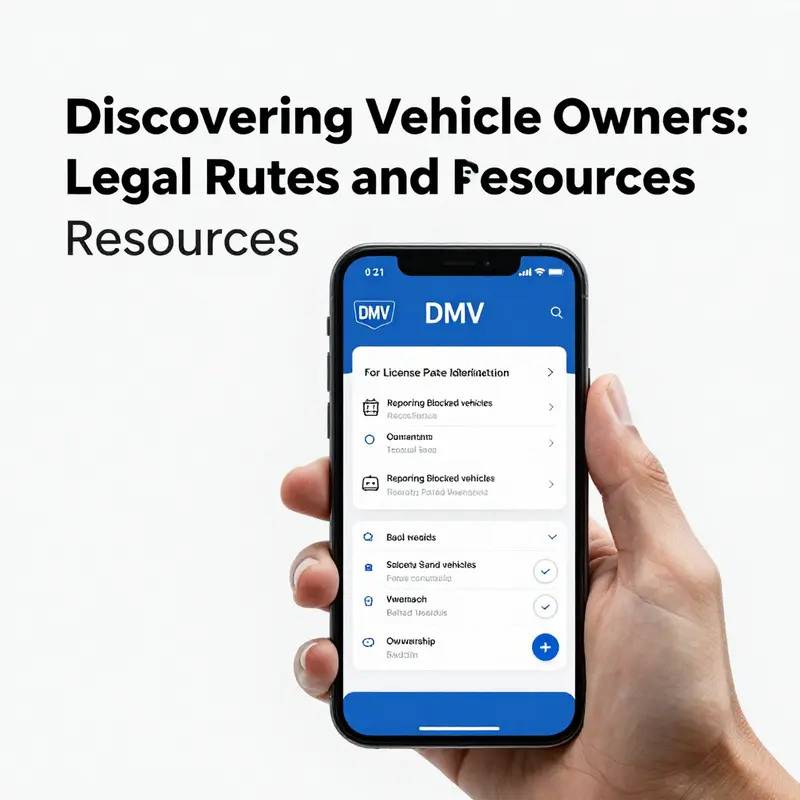
The modern traffic ecosystem sits at the intersection of fast recognition technologies and strict privacy rules. License plate identification has moved from a purely manual task to a field powered by embedded systems and artificial intelligence, capable of real-time detection and reading across diverse plate designs. Yet beneath the gloss of speed and convenience lies a critical tension: the same technology that helps manage traffic, enforce laws, and secure infrastructure can collide with personal privacy rights. This chapter traces how technological solutions for plate recognition work, what they can (and cannot) reveal, and how legitimate channels exist for contacting vehicle owners without exposing private data to the public.
Technological progress in plate recognition centers on two linked capabilities: detection and recognition. In practical deployments, researchers and engineers have built two-step pipelines that begin by spotting a plate in a camera frame and then deciphering the characters it bears. The detection stage often relies on lightweight, efficient architectures designed for constrained hardware. One widely cited approach uses a Single Shot Multibox Detector (SSD) with a compact backbone such as MobileNetV2. The aim is to localize the plate quickly in a scene where vehicles-and-background clutter compete for processing time. Once a plate region is isolated, the recognition stage takes over, converting pixels into alphanumeric sequences. In recent work tailored to local plate formats, a recognition module based on a high-performance detector—such as a smaller, fast variant of YOLO—executes on devices like Raspberry Pi-class hardware. The choice of hardware and algorithms illustrates a practical priority: maintain accuracy while keeping costs and energy use modest enough for field deployments.
A concrete, real-world illustration comes from a study focused on national formats with regional peculiarities. The researchers trained a system on a country-specific dataset and deployed it on a compact, low-power computer with an accompanying high-resolution camera. The results were striking: recognition accuracy around 95.7 percent and end-to-end processing times in the hundreds of milliseconds. What this demonstrates is not merely a numerical victory, but a broader message about accessibility and scalability. Plate recognition is no longer the domain of expensive, centralized infrastructure; it can function effectively in remote or high-traffic environments where power, connectivity, and maintenance resources are limited. This is the essence of embedded, edge-oriented design: the networked world can be monitored and interpreted at the point of capture, with the data streamed to a central system only when appropriate and legally permissible.
Fixed-venue scanning systems—those stationed at toll booths, border crossings, parking facilities, and gateway entrances—represent another pillar of the ecosystem. These installations provide continuous monitoring of passing vehicles, delivering a steady stream of plate data for purposes such as congestion management, security, and enforcement of time-limited parking. Yet they also face practical constraints: limited geographic coverage can create blind spots, high power demands, and the ongoing need for timely data synchronization and software updates. In contrast, dynamic, all-in-one machines are designed for flexibility. They pack robust plate recognition capabilities into portable or semi-permanent units, tuned for rapid deployment in places with shifting traffic patterns, such as scenic byways or event venues. The common thread across these configurations is a shared emphasis on accuracy, latency, and resilience in real-world conditions—factors that determine whether the technology earns trust from operators and the public alike.
As these technologies mature, they illuminate why the question of “finding the owner by plate” remains both technically possible in limited contexts and legally constrained in public practice. Plate recognition systems can identify a plate, confirm the plate’s presence, and—when authorized—trigger workflows that connect with official channels. But the leap from recognizing a plate to revealing a person’s contact details is gated by privacy laws and access controls. The core legal framework in the United States, most notably the Driver Privacy Protection Act, restricts how personal information tied to vehicle ownership may be accessed and used. In practice, this means that a private individual cannot simply request an owner’s name, address, or phone number from a public or commercial database simply by noting a license plate. Access is limited to government actors, law enforcement, and other sanctioned entities with a legitimate interest and proper authorization. Even then, access is tied to a demonstrable purpose, whether it is responding to an incident, pursuing an investigation, or handling a formal claim.
What, then, are the lawful avenues for leveraging plate data when ownership needs to be contacted in a legitimate context? First, there are official, channel-based mechanisms that facilitate communication without exposing private data to the general public. In many jurisdictions, authorities have digital tools that allow a vehicle to be pinged or notified through official channels when certain conditions are met—such as a vehicle blocking a driveway or an unsafe parking scenario. The system does not reveal the owner’s identity; instead, it sends a message to the registered owner through a government-managed contact mechanism, prompting compliance or a warning. The emphasis here is on controlled, auditable communication that preserves privacy while enabling prompt action. The principle is straightforward: if a reason for contact exists, use the official, privacy-protective pathway rather than attempting to trace a person directly.
Second, when a vehicle is involved in an incident, formal processes exist to link plate information to owner information in a restricted, legally justified way. Police, for example, can file a report or coordinate with the DMV to determine the appropriate steps for follow-up. Insurers also have a defined process for pursuing claims that involve plate data; they can initiate contact with the registered owner after verifying the legitimacy of the inquiry and the necessity for a dialogue about a claim. In all of these situations, the flow is deliberate, documented, and bounded by rules that prevent misuse and protect privacy. It is crucial to highlight that even these access pathways require a valid reason, proper authorization, and a legitimate need to know. The balance struck by these procedures underlines a larger truth: technology can aid public safety and accountability, but it cannot replace the careful, rights-respecting frameworks that govern personal data.
The regulatory landscape matters because it shapes how data can be shared and used. One ethical thread that runs through this chapter is the recognition that technology must be paired with governance. In many states, privacy-conscious rules influence how plate data can be accessed and what protections apply to any information linked to ownership. Operators and developers must design systems with those constraints in mind, ensuring that data handling aligns with legal requirements and best practices for data minimization, access controls, and auditability. This need for thoughtful governance also influences how information flows between agencies and private entities involved in accidents, insurance claims, or safety concerns. The practical takeaway is not simply a question of whether a plate can be read, but how that reading can be used responsibly to support legitimate ends without compromising the rights of vehicle owners.
In connecting these threads, it is natural to consider how the broader regulatory environment intersects with driver licensing and ownership records. State rules shape who can access what data and under what conditions, and they influence the design of systems that interface with plate recognition outputs. For readers who want to explore these regulatory dimensions more deeply, a concise path is to consult resources that discuss how state rules influence driver licensing and related data handling. This contextual anchor helps explain why plate recognition technology, powerful as it is, does not grant carte blanche to identify owners. Instead, it enables a set of governed workflows that promote safety and accountability while preserving privacy. See the discussion on State rules shaping driver licensing for a focused look at how regulations frame access to license plate-derived information.
Beyond the legal and governance aspects, ethical considerations lie at the heart of any chapter about plate identification. The public-facing fantasy of instant ownership discovery can tempt some to imagine a world where anyone can learn who owns a car simply by scanning a plate. The reality, reinforced by privacy laws and professional standards, is that such capability is tightly controlled. In practice, the most reliable, legitimate outcomes come from partnerships among government agencies, insurers, and authorized entities that operate within clearly defined boundaries. When plate data is used, it should be to improve safety, resolve disputes, or support legitimate claims, not to enable stalking, unsolicited contact, or doxxing. The safeguards are not merely bureaucratic; they are essential to maintain trust in a technology that otherwise promises a seamless grip on the roadways while honoring individual rights.
As plate recognition technology continues to evolve, the conversation moves from what the machine can read to how society should manage the information it reveals. Developers, policymakers, and public safety professionals must collaborate to design systems that respect privacy, ensure transparency about how data is used, and provide redress for misuse. This requires thoughtful user interfaces, clear documentation, and robust data governance. In the end, the goal is to harness the benefits of automated recognition—faster enforcement, safer roads, and more efficient services—without eroding the privacy protections that underpin a healthy, lawful society. The chapter’s throughline remains consistent: the plate can be read, but the owner’s details should only be accessed through lawful, authorized channels, with accountability built into every step of the process.
For readers who wish to explore the technology behind plate recognition in greater depth, a comprehensive external resource provides a broader look at advancements in license plate recognition systems, including architectural trends, performance benchmarks, and diverse deployment scenarios. This external perspective complements the privacy and governance emphasis of the discussion and helps situate real-world applications within ongoing technical progress.
See more here: https://www.automotive.com/vehicle-technology/license-plate-recognition-systems-advancements-2025
Internal cross-reference note: regulatory and licensing considerations influence how data can be shared across jurisdictions and with authorized parties. For further context on how state rules interact with driver licensing, you may review material on State rules shaping driver licensing.
Tracing Plate Ownership: The Critical Role of Law Enforcement in Identifying Vehicle Owners
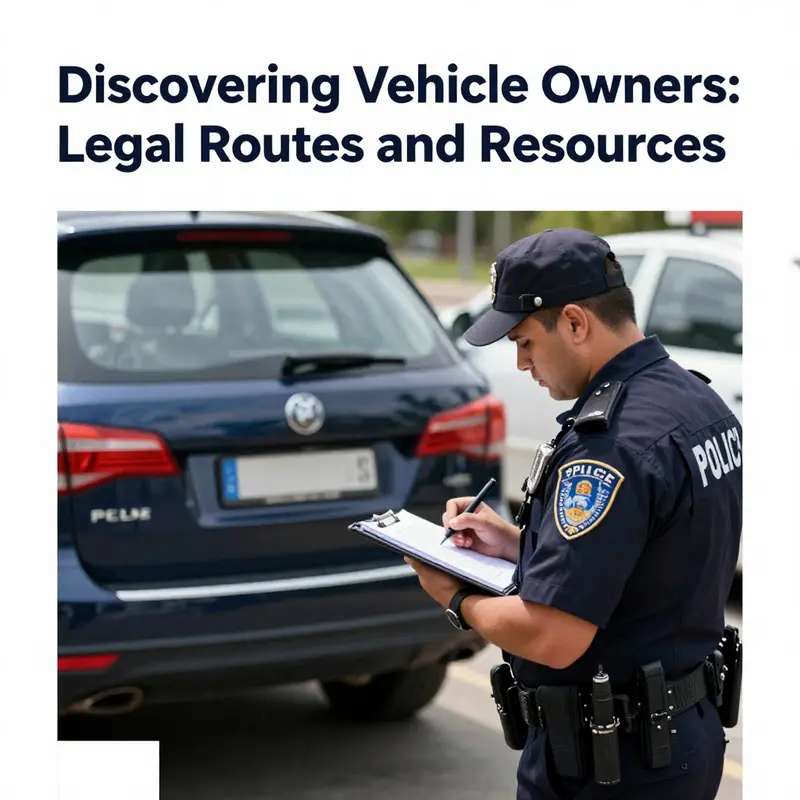
When people ask how to identify who owns a vehicle by its license plate, the instinct is to imagine a quick online lookup that reveals a name and contact details. In reality, the path from plate to person is filtered through privacy laws, official procedures, and a layered system designed to balance public safety with individual rights. This chapter focuses on the central role that law enforcement plays in identifying vehicle owners, but it also situates that role within the broader framework of lawful access, due process, and clear, legitimate reasons for pursuing that information. Far from being a simple public registry, the process is intentionally constrained to protect privacy while still enabling authorities to respond to safety hazards, crimes, and the legitimate needs of investigations. The licensed, regulated flow of information ensures that a plate does not become a shortcut to a private life, but rather a conduit for accountability when used correctly and lawfully.
At the heart of enforcement access is a carefully regulated set of information channels. Police departments and other authorized agencies can query official databases that tie license plates to registrations. These databases are not open to the general public; they are guarded by statutory protections that require a demonstrable need, typically tied to a specific incident or investigation. Privacy laws, such as federal and state drivers’ privacy protections, constrain who can request information and for what purpose. When officers run a plate, they are not casually exposing a name; they are establishing whether the vehicle is associated with an outstanding warrant, a stolen status, a reported hit-and-run, or another safety concern. If a legitimate thread emerges, investigators may then verify ownership through registered records, confirm the address associated with a given registration, or use the information to notify the registered owner about a safety issue in a lawful manner.
The mechanics of how this works in practice are nuanced. In traffic stops, for example, an officer may use a plate check to determine whether the vehicle is properly registered and insured, whether the plates match the vehicle’s VIN, or whether there are active cases linked to the vehicle. In more complex scenarios, such as crashes or suspected crimes, the road from plate to person often runs through a chain of evidence that includes a police report, a case number, and formal requests for information through the DMV and other official channels. Throughout this process, privacy protections are not ornamental; they serve as guardrails against misuse. Even when data is accessed as part of an investigation, the information is handled with strict vetting, limited to relevant personnel, and safeguarded against unnecessary disclosure. The objective is to ensure that the owner’s privacy is respected, while the public’s safety is actively protected.
One aspect of enforcement practice that often goes underappreciated is the role of inventory and custody in impounded vehicles. When a car is towed and held by a police agency, officers conduct inventories to document personal items and determine ownership claims. This practice is not merely administrative; it supports the legal right of the owner to recover belongings and establishes a factual basis for claims of ownership, theft prevention, and accountability. The inventory process is conducted under due process standards, with clear procedures for how items are catalogued, how owners can reclaim belongings, and how contested items are handled. In cases where the vehicle is later released or towed to a salvage facility, the documented ownership information helps prevent disputes and ensures that legitimate owners are recognized and protected. The same attention to procedural rigor governs the examination of the vehicle itself, which in turn informs whether further action—such as a police investigation or a DMV inquiry—is warranted.
For those who are not law enforcement officers but need to operationalize legitimate access, the pathways are narrow by design. A private individual cannot simply pull personal ownership data from a plate. Instead, legitimate routes include formal requests through the DMV in the context of specific claims, such as insurance investigations, accidents with a police report, or situations where a recognized safety concern or legal duty justifies the inquiry. These requests are not automatic; they require proof of interest or necessity, and agencies review them on a case-by-case basis to ensure compliance with privacy protections. Similarly, in the aftermath of an accident, an insured party may seek information through their insurer about the vehicle involved, though this too is conditioned on verification of legitimate claims and regulatory permissions. In all of these channels, the goal is to enable accountability and resolution without compromising the privacy of individuals who are not directly implicated in a given incident.
The legal scaffolding that governs access to vehicle ownership information is reinforced by professional ethics and sound public policy. Enforcement personnel are trained to avoid overreach and to limit disclosures to what is necessary for the task at hand. They operate within a framework that requires justification, documentation, and strict adherence to privacy laws. This governance helps prevent the emergence of a culture that normalizes casual snooping or the commodification of personal data. It also clarifies expectations for the public: when you encounter a vehicle that raises concerns—whether it is blocking a driveway, involved in an accident, or suspected of involvement in a crime—the appropriate step is to engage through official channels rather than attempting to bypass privacy protections. The public conversation about plate-based identification benefits from this clarity, because it underscores that ownership data is not a public resource but a tightly regulated asset that supports safety and due process.
In many discussions about plate-based inquiries, people naturally gravitate toward dual questions: what can be done, and who can do it. The answer hinges on purpose and provenance. Law enforcement can access owner information when there is a legal basis tied to an investigation or a safety matter. The same information is inaccessible to ordinary citizens without a supported claim or a lawful request. In the rare instances where a private individual seeks to move a blocked vehicle or address an immediate safety concern, there are pathways that preserve privacy while still offering a practical remedy. The public-facing tools described in official channels can facilitate contact through authorized means, enabling a conversation between the vehicle owner and a complainant without revealing sensitive data to the general public. This approach respects both the right of individuals to privacy and the duty of public agencies to respond to disturbances, violations, or emergencies in a timely and responsible manner.
For readers who want a more explicit map of how data access is regulated and what limitations exist, there is value in exploring how state-level policies can shape driver licensing and registration practices. The regulatory landscape varies by jurisdiction, and understanding the scope of permissible access can illuminate why certain paths exist while others are prohibited. This perspective highlights that the rights of vehicle owners are protected not merely by abstract principles but by concrete rules about who may look up what information, under which circumstances, and for what purposes. It also clarifies why some tools—such as official notification systems that request a driver to move a vehicle—can be both effective and privacy-preserving. By leveraging such official channels, the public can address immediate concerns without compromising the confidential information that belongs to others.
If readers want to deepen their understanding of how regulatory decisions translate into practical procedures, a focused inquiry into state rules affecting driver licensing offers useful context. This resource explains how licensing data is used, who is authorized to access it, and how privacy protections are maintained in routine operations. For those who prefer a more contextual overview, this broader view helps connect the dots between the theoretical rights of privacy and the real-world responsibilities of law enforcement in keeping roads safe and communities secure. The emphasis remains constant: lawful access, due process, and responsible stewardship of sensitive data.
As a closing reflection, the landscape around identifying vehicle owners by license plate rests on a delicate balance. Law enforcement holds a central, enabling role, but their authority functions within a tightly regulated system designed to protect privacy and ensure accountability. Private individuals seeking to engage with a vehicle owner should do so through official channels, backed by legitimate justification and appropriate documentation. In this way, the pursuit of safety and the protection of personal data march in step, each reinforcing the integrity of the other. The practical takeaway is straightforward: when a plate raises a concern, use authorized, transparent avenues to address it, and resist any impulse to bypass protections or pursue information through unofficial means. The public good—and the rights of the owner—depend on it.
External resource: https://www.carinterior.com/identify-car-owner/
License Plates and Legal Pathways: Navigating DMV Procedures for Vehicle Owner Disclosure
When people ask how to find the owner of a vehicle by its license plate, they often expect a simple lookup. In practice, privacy laws and strict access controls shape a different reality. The plate is fundamentally a public-facing identifier; the person behind it is protected by rules that limit who may see personal details and under what circumstances. This chapter offers a cohesive look at how modern DMV procedures and related authorities handle vehicle owner disclosure. It explains why direct public access to ownership information is restricted, and how sanctioned channels can be used when there is a legitimate, lawfully recognized need. The aim is to illuminate the pathways that exist within the boundaries of privacy protections, so readers understand what is possible, what is not, and where authorization actually comes from in real-world scenarios.
Privacy protections, codified in federal and state law, create a high bar for accessing a vehicle owner’s personal information. The Driver’s Privacy Protection Act (DPPA) is the backbone of these protections in the United States, restricting who may obtain owner data and for what purposes. The core idea is simple: a license plate is a key that unlocks a host of potential risks if misused. Allowing broad public access to personal contact information from plate data would expose individuals to harassment, scams, or worse. Consequently, the public cannot directly look up owners by plate, nor should anyone assume they can simply search a registry or hack databases to reveal identities. The law does permit, however, a narrow set of authorized inquiries conducted through official channels. The distinction often matters most in everyday situations—like a car blocking a driveway, or a vehicle involved in an accident—where a measured, legal response can resolve the problem without exposing private information.
One clear form of legitimate access comes through government-managed tools designed to coordinate resolution of common plate-related problems without exposing identities. For example, many states offer app-based features that facilitate notifications to owners when their vehicle needs to be moved or when a reporting issue is lodged through an official system. A typical workflow is straightforward: you file the incident through the DMV app or a state-specific equivalent, enter the license plate number and a contact method, and the system automatically notifies the owner that action is requested. The purpose is practical and non-intrusive—the owner is alerted and can respond through official channels. Importantly, these tools do not reveal the owner’s personal information to the reporter. They preserve privacy while enabling a timely resolution. In California, for instance, a Notify Me-like service demonstrates how this approach can handle issues such as illegal parking or nuisance blocking without turning plate data into a direct public directory of owners.
Beyond nuisance or safety concerns, there are scenarios where public safety or legal compliance requires a more formal path. If a vehicle is involved in a traffic violation, an accident, or blocks emergency access, reporting it to law enforcement is the appropriate step. When you provide the plate number, the incident’s date and time, the location, and any evidence such as photos or videos, officers can investigate and determine whether owner contact is necessary. This process serves a dual purpose: it protects individual privacy while ensuring that the action requested—like addressing a hazard or pursuing enforcement—receives proper handling. It is also a reminder that access to ownership information, while sometimes crucial, hinges on a legitimate investigative or administrative purpose. In many cases, law enforcement will initiate contact themselves using official channels, based on verified needs rather than individual curiosity.
For more formal or behind-the-scenes inquiries, a formal request to the DMV can be appropriate in specific circumstances. In some states, a legitimate stake—such as insurance claims, theft concerns, or other compelling legal interests—may justify submitting a formal inquiry to the DMV. These requests are typically evaluated on a case-by-case basis and require proof of legitimate interest, such as an accident report, police case number, or other substantiation. While the DMV may disclose ownership information to authorized parties under proper conditions, the process is intentionally cautious. It serves to balance the public’s needs with the individual’s right to privacy.
Similarly, those involved in an accident may seek information through their insurer. Insurance companies, after verifying the claim and ensuring legal justification, may access or disclose information to facilitate claims processing. This avenue underscores how data access is linked to legitimate risk management and liability resolution, rather than casual inquiries. In all of these contexts, the touchstone remains clear: disclosure happens through controlled mechanisms, not through casual plate lookups or third-party aggregators.
A practical takeaway from this landscape is that most direct attempts to “find the owner by plate” will fail or backfire. Third-party websites promising owner details are not only unreliable but often illegal. They may violate privacy protections and expose individuals to risk and the potential for fraud. Social media posts or public forums that display a license plate with the intent to identify the owner can constitute harassment or invite legal consequences. The right approach is to respect privacy and use official avenues whenever there is a legitimate need.
To help readers connect the dots between policy and practice, it’s useful to acknowledge how state procedures differ in substantive, practical ways. States vary in the forms required for transfer of vehicle ownership, the steps for lien releases, and the pathways for electronic title transfers. A foundational step in most states is to review the official DMV site for the most current instructions before taking any action. The rules governing ownership disclosure during transfers illustrate a broader principle: information about a vehicle’s history or ownership is sensitive and regulated, and transfers must be documented with accuracy and transparency. A particularly instructive example is how New York handles vehicle condition disclosure during a sale or gift transfer. When a vehicle has sustained damage, the title certificate must be marked to certify the damage. If the title indicates the vehicle was damaged or destroyed, the transaction cannot proceed without the appropriate disclosure and documentation. Failing to disclose can trigger substantial penalties, including fines. If the title indicates no damage, the DMV can process the transfer, but other steps—such as registering and titling the vehicle at the new owner’s local DMV office—still apply.
This leads to a broader question about the new owner’s responsibilities. After transfer, the recipient is generally responsible for registering and titling the vehicle, which often includes paying sales tax or showing proof of exemption. The new owner must bring the original title and proof of sales tax payment or purchase price to apply for a new title when the transfer occurs without a dealer. The specifics can vary widely by state, reinforcing the importance of consulting the state’s official DMV resources for the precise forms, deadlines, and procedural nuances. Some states have gift transfer options with tailored forms, different rules for lien releases, and electronic title transfer procedures. A careful reader will verify all requirements with the state DMV before initiating a transfer to avoid delays or penalties.
In addition to the case-by-case nuances, it is essential to keep in mind the legal framework that governs access to ownership information. Compliance and privacy concerns are not abstract. They shape what is possible and what is prohibited. The DPPA restricts unauthorized lookups, and even within government agencies, access is guarded by a valid, documented reason. Law enforcement may access records for investigative purposes, but they must justify their request. The same holds for individual citizens seeking to resolve disputes or address safety concerns: they should work through official channels, provide the necessary context and documentation, and be prepared for scrutiny of their claimed interest. This disciplined approach helps ensure that privacy protections remain robust while also supporting legitimate needs—such as addressing a safety hazard, resolving a parking dispute, or pursuing a formal claim.
The path through which a plate can become a lever to resolve a problem is, therefore, a pathway framed by policy. It is not a shortcut around privacy laws but a structured system that channels requests through the appropriate channels and with proper authorization. The practical implication for readers is to engage with the right institution at the right time: start with the DMV’s official tools for reporting issues with plate-observed problems or blocked access, and escalate to law enforcement or the DMV itself when the situation warrants. If you are involved in an accident or a dispute that requires contact with the vehicle’s owner, rely on insurers, police records, or formal DMV requests rather than attempting to pry open private information through unofficial means.
The discussion above would be incomplete without acknowledging the diversity of state landscapes. While the core privacy framework remains similar, the specifics—such as the exact forms, submission methods, and response times—vary. A prudent approach is to review your state’s DMV portal, seeking guidance on transfer documentation, salvage disclosures, and required proof of tax payment. Some states provide detailed checklists and timelines that help ensure a smooth transfer, especially when the vehicle is not purchased from a licensed dealer. These checklists often emphasize accurate disclosure, proper sign-off, and timely submission, all of which contribute to a transparent, legally compliant transfer process. To gain a broader sense of how state rules can influence related areas of licensure and vehicle transfer, it is useful to consider the broader landscape described in state-rule discussions that influence driver licensing and vehicle ownership procedures. See: state rules affecting driver licensing.
Putting these elements together, the central takeaway remains consistent: you cannot legally look up a private individual’s name or phone number from a license plate as a regular citizen. But you can engage official channels to address legitimate needs and to obtain necessary information through properly authorized processes. The key is to respect privacy, follow the law, and rely on the DMV’s official tools and procedures. When used correctly, these channels provide practical, lawful routes to resolve issues related to a vehicle’s plate, ownership, and transfer—without compromising personal privacy or inviting legal risk. This integrative view helps set the stage for the next chapter, which will continue to connect the practical steps of ownership transfer with broader regulatory frameworks and state-specific requirements.
External resource for additional context: https://dmv.ny.gov
Final thoughts
In the landscape of vehicle ownership inquiry, it is crucial to navigate the legal avenues while respecting individual privacy rights. By utilizing official resources such as DMV services and law enforcement channels, individuals can find the necessary information without crossing ethical lines. Understanding these methods enhances responsibilities for drivers, dealerships, and the community, fostering a more informed approach to vehicle-related issues. Embracing technology, while adhering to privacy laws, ensures that discovering a vehicle owner’s information remains a lawful pursuit, emphasizing respect for personal privacy in all scenarios.