
Understanding how to find a vehicle owner using a license plate is a crucial skill for new and existing drivers, vehicle owners, and auto dealerships. When faced with situations such as accidents, parking disputes, or vehicle theft, identifying the owner can become paramount. However, it’s important to navigate these waters carefully due to privacy laws and regulations that govern personal information. This article will explore several effective methods for locating vehicle owners by their license plates, including contacting law enforcement, utilizing official applications like Jiaotong 12123, visiting vehicle management offices, engaging insurance companies, and discussing the legal restrictions that come into play. Each chapter offers actionable insights tailored for drivers and vehicle stakeholders to make informed decisions and avoid legal pitfalls.
When Seconds Count: Reaching Law Enforcement to Locate a Vehicle Owner by License Plate
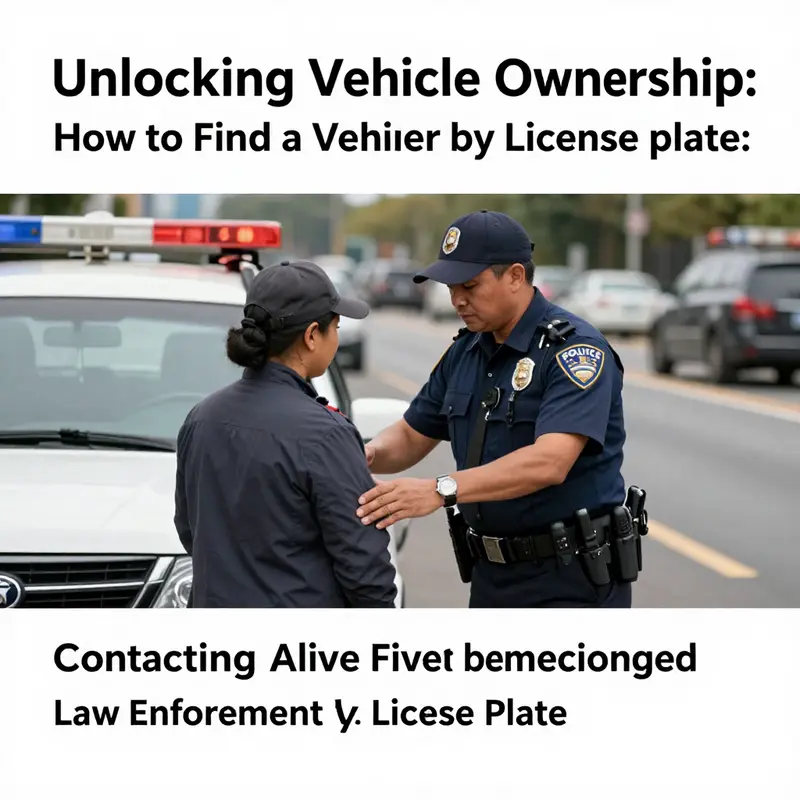
A license plate is a visible handle on a moving map of public safety. In urgent situations the safest route to locate a vehicle owner is through law enforcement. They have the authority and the formal access to registration databases that private individuals do not.
In an emergency, time matters. If a vehicle is blocking access to a home, a driveway, or an emergency scene, call the local emergency number immediately. The operator will ask for the plate number, a description of the vehicle, and your location. Provide color, approximate year, make, model, and any distinctive features to help responders verify the vehicle.
Law enforcement will verify ownership through official channels and may arrange towing, scene control, or contact with the owner through registered channels. Direct contact details are not provided to private citizens; the goal is to resolve the situation while preserving privacy.
For non emergency situations, use the non emergency police line or traffic management service. Present the same facts and documentation. Officials may file a report and instruct how the owner will be contacted through official processes rather than sharing private data.
Privacy and legal considerations: unauthorized access to or dissemination of personal information can carry penalties. Stick to official channels and avoid private data requests.
Practical steps you can take: prepare an incident description, photos, a log of times, and any witness statements. If safe, document the obstruction. Do not attempt to track the owner yourself or approach the vehicle. Trust the authorities to handle identity verification and communication.
From Plate to Contact: Navigating Official Traffic Services to Reach Vehicle Owners
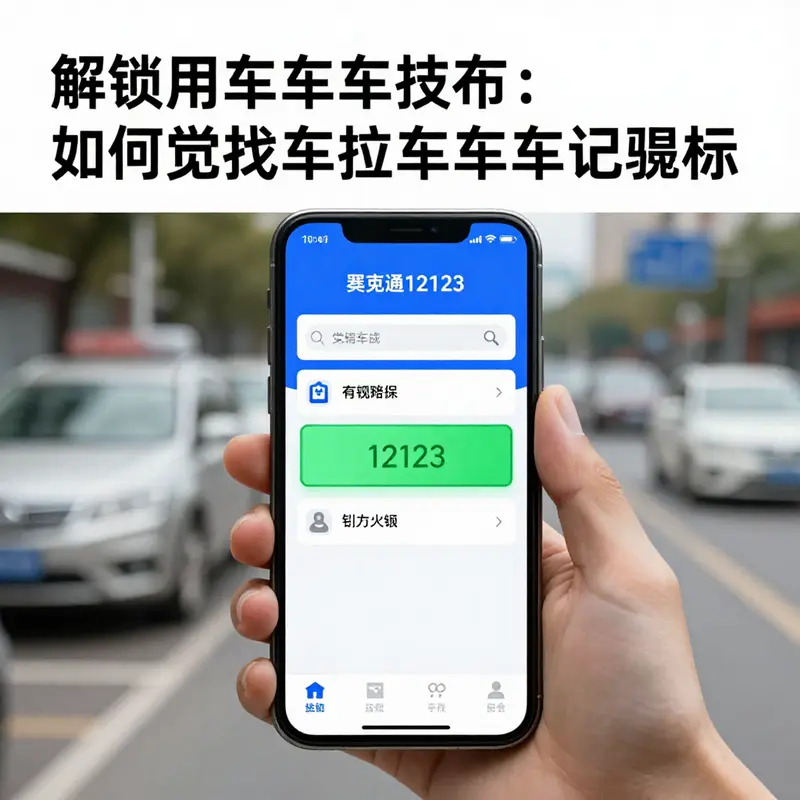
In the modern traffic landscape, a license plate is more than a sequence of characters; it can be a doorway to accountability, safety, and resolution after an incident. Yet the ability to identify a vehicle’s owner is tightly regulated, and concerns about privacy are not unfounded. This chapter outlines a sober, lawful path to reach the person behind the plate through official government channels that mediate contact without exposing private data. The aim is to restore order when a car disrupts traffic, blocks a driveway, or is involved in a dispute requiring contact between the vehicle’s operator and the relevant party. The approach emphasizes verification, legitimate purpose, and compliance with law and policy, ensuring that any outreach is auditable and bounded by due process. It is a narrative of restraint and responsibility, where technology serves as a controlled conduit rather than a means of intrusion.
How to Find Vehicle Owner by License Plate: Visiting Local Vehicle Management Offices
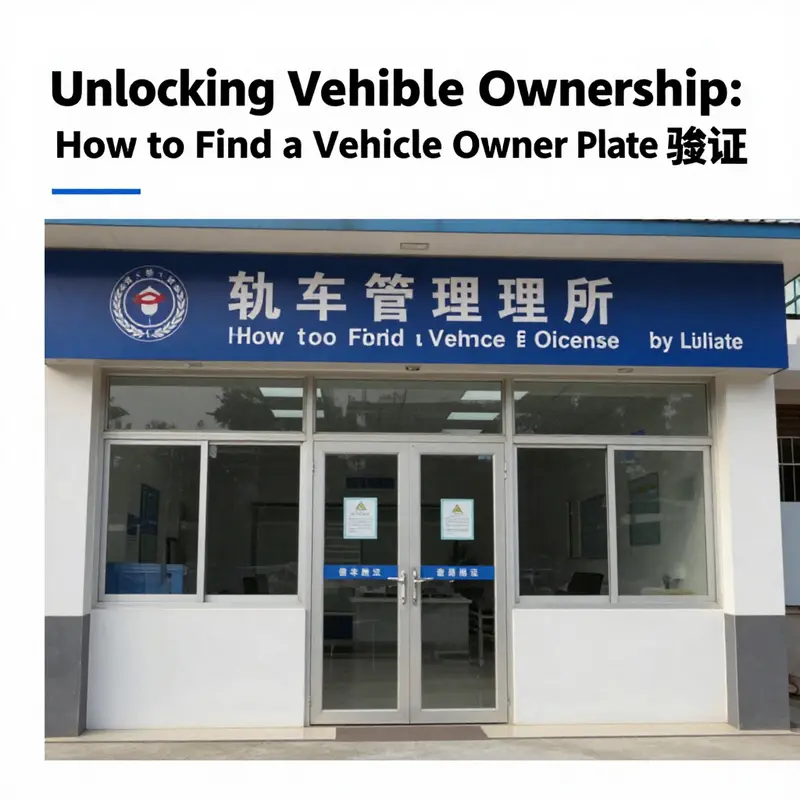
Finding the owner of a vehicle by its license plate is not a casual exercise. It sits at the intersection of public safety, legal boundaries, and privacy protections that are designed to prevent misuse. When a real need arises—such as a traffic collision, a vehicle obstructing a driveway or emergency access, or a safety concern on your property—the most reliable and lawful path often begins at the local vehicle management office, the government hub that maintains official vehicle registrations and the records that tie plates to owners. This chapter follows that path as a cohesive journey through procedure, purpose, and prudence, presenting a narrative that helps you understand what to expect and how to prepare, while emphasizing that access to personal data is guarded and granted only for legitimate reasons. The goal is not to reveal private details for curiosity, but to enable resolution of disputes, safety concerns, and legitimate claims in accordance with the law. In conversations with office staff and in reading official guidance, you will encounter a framework built on verifiable purpose, responsible handling, and a clear line between what is permissible for you and what remains protected for individuals.
The first encounter at the vehicle management office is often a measured one. Receptionists and clerks are trained to assess requests for owner information against a standard of legitimacy. You should arrive prepared to demonstrate your purpose with documents that corroborate the need for inquiry. A valid government-issued photo ID is typically required, alongside any materials that tie your case to the plate in question. Examples include an accident report, a police report, a statement from an insurer, or evidence of property damage tied to the vehicle. A detailed explanation of the incident, including date, time, and location, helps staff quickly determine whether your case falls within the approved categories—such as safety concerns, legal disputes, or insurance claims. In some jurisdictions you may be asked to complete a formal request form that lays out your contact information, the license plate number, the precise incident or claim, and the anticipated method of contact with the owner, if permissible. These steps are not merely bureaucratic hurdles; they are safeguards designed to ensure the information is accessed only when warranted and by the appropriate parties.
Once your documentation is reviewed, the staff will typically verify the basics: that the plate you’ve cited is associated with a registered vehicle, that the request aligns with a legitimate purpose, and that you have the proper authority or need to receive contact information. The process hinges on access to official records rather than any public-facing database. This distinction matters because it preserves privacy while still offering a path to resolution in cases where harm or risk is present and documented. Depending on the jurisdiction and the specifics of your case, the office may provide you with the owner’s contact information directly, or they may forward a message to the owner on your behalf, or direct you to appropriate legal channels. Some offices may allow the owner to be contacted via the office itself, who then relays the message. Others may require an additional step, such as a court order or instruction from an attorney, before personal contact information can be released. The variations are normal; they reflect a shared commitment to safeguarding private data while enabling legitimate, safety-driven inquiries.
Preparation is essential to move smoothly through this process. Bring copies of the accident report or incident documentation, along with your identification. If there is a time-sensitive issue—such as an obstacle to emergency access or a safety hazard—make that urgency clear when you present your case. If you are pursuing a claim against a vehicle, note the date and location of the incident and the exact plate number. The office staff may request a statement detailing how you were affected and what outcome you seek. It is wise to keep a written outline of your points to minimize miscommunication and to ensure you have all relevant information at hand. Some institutions also accept electronic submissions or require you to book an appointment in advance; check the local office’s site or call ahead to confirm the preferred method of submission and the expected processing times.
A key aspect of the visit is understanding the limitations that privacy laws impose. Even with a justified need, personal data is protected. In many places, the staff will not disclose private contact details outright. Instead, they may offer to facilitate direct contact with the owner through official channels, or they may share non-identifying information that helps you reach the owner through proper processes, such as a structured message relay or a contact point for the claim you are pursuing. This careful handling preserves the owner’s privacy while still supporting legitimate outcomes. It is also common for offices to provide guidance about what to do next if you need to escalate the matter, for instance through an insurer or a court, particularly if the owner does not respond to an official communication or if the issue involves ongoing safety concerns.
If you leave with a clearer path forward, you should also walk away with an understanding of the practical realities of the system. The staff may explain that some requests require additional documents, or that the owner’s cooperation depends on compliance with specific legal criteria. In some cases, processing can take days or weeks rather than hours, especially when the case involves complex circumstances or requires coordination with other agencies. Fees may apply for the record extraction, and some offices require prior approval before they initiate outreach to the vehicle owner. These are all normal facets of the process and reflect the layered protections surrounding personal information. It is helpful to view this as a structured, justifiable procedure rather than a loophole to bypass privacy laws. In the end, the aim is to connect responsible parties to appropriate channels so that issues like property damage, safety threats, or insurance claims can be resolved efficiently while respecting privacy and due process.
For readers seeking a deeper understanding of the legal contours that shape information sharing in this domain, an exploration of state-level rules can provide valuable context. See the discussion on state rules impacting driver licensing for nuanced insights into how information can be accessed, under what conditions, and through which administrative pathways. state rules impacting driver licensing
As you consider which path to take next, it is important to situate the vehicle management office option within the broader landscape of legitimate channels. If you already know the insurer involved in the incident, contacting them can be a practical step; insurers often act as intermediaries and can facilitate communication with the vehicle owner as part of a legitimate claim process. If you know the plate is insured and you have an active claim, this route can be smoother than navigating direct owner contact, though insurers will still operate under privacy constraints and require appropriate justification before sharing any personal data. In cases where a direct safety hazard exists and immediate action is required, engaging law enforcement remains the most effective recourse. Police or traffic authorities can initiate official inquiries, access specialized databases, and, when warranted, coordinate with the vehicle management office to contact the owner through proper channels. This coordinated approach is designed to protect all parties while ensuring timely resolution of critical situations.
The cautionary notes from this chapter bear repeating: do not attempt to bypass the system via informal channels or questionable third-party services. Such actions frequently violate privacy laws and can lead to legal penalties. Do not attempt to stalk or surveil the owner; do not leave notes on windshields in a manner that could be interpreted as harassment or vandalism. Privacy safeguards are not cosmetic; they are essential for maintaining trust in the system while still permitting legitimate inquiry when safety and legal interests are at stake. The local vehicle management office, backed by established laws and procedures, is the proper conduit for resolving disputes tied to a license plate and avoiding the risks that come with unauthorized access.
Finally, this chapter sits within a larger ecosystem of information on locating legitimate pathways to vehicle ownership data. The official resource provided by the DMV framework in the United States, DMV.org, offers state-specific guidance and explains how requests can be made through authorized channels. This external reference complements the chapter’s focus by illustrating how different jurisdictions structure access, forms, fees, and timelines. For deeper, jurisdiction-specific guidance, refer to DMV.org and its state-by-state resources. External resource: https://www.dmv.org
Engaging the Insurance Company for Assistance: Verifying Vehicle Identity While Respecting Privacy
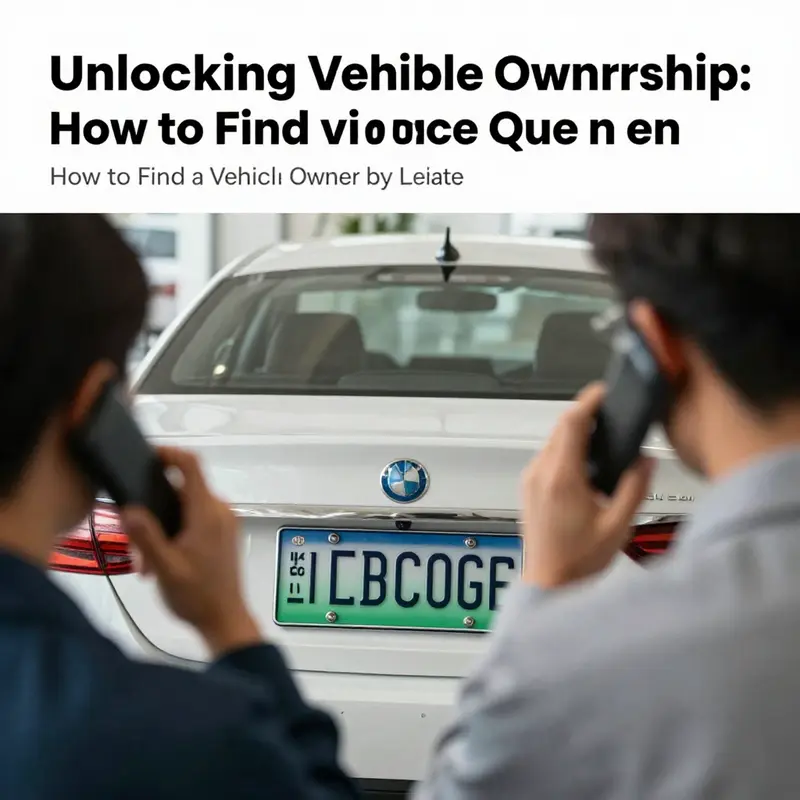
When a license plate raises questions about who owns or operates a vehicle, the instinct to uncover the answer must be tempered by privacy protections and lawful channels. This is not a simple lookup of private data; it is a careful, regulated process that can involve the vehicle’s insurer as a legitimate intermediary under specific circumstances. Insurers are bound by privacy regimes that restrict disclosure of personal information, yet they can play a constructive role in confirming policy status or facilitating communication in a way that serves safety, accountability, and fair resolution of incidents. If you have a legitimate reason—such as reporting a collision, seeking compensation for property damage, or verifying coverage in the context of a sale—engaging the insurer can help establish clarity without prying into private details.
The first step is to understand the insurer’s role. Unlike a casual inquiry, the insurer can verify whether a vehicle is insured and share general, non-personal policy information that supports a legitimate claim or dispute. They cannot, however, disclose the owner’s name, phone number, or address merely because someone asks. This boundary exists to protect privacy while ensuring that the flow of information remains within a formal, monitored process. In practice, the insurer’s cooperation is most useful when it channels communications through the proper claims pathways or when it confirms the presence of coverage tied to the license plate as part of a verification step. The aim is not to expose private data but to confirm a linkage between the vehicle and a policy and to facilitate safe, direct contact through appropriate channels if the policyholder consents or if a legal process provides a basis for disclosure.
To pursue this option effectively, the practical move is to identify the insurer. In many cases, you can find the insurer’s name on documents tied to the vehicle. The registration certificate, commonly known as the VRC, is a primary source. A windshield or inspection-related document—often called the green card in some jurisdictions—may also list the insurer and a contact number for inquiries. Having these documents handy helps you reach the right party without unnecessary delays. Gather essential details before you call: accurately record the license plate, note the time and location of the incident, describe the vehicle’s color, make, and model, and collect any supporting evidence such as photographs, police reports, or a claim number if available. When you present your inquiry, a concise, factual briefing is far more effective than a broad, open-ended request.
Next comes the test of legitimacy. Insurance representatives are trained to evaluate requests against a legitimate need. Acceptable grounds typically include accident reporting, pursuing compensation for property damage, or verifying the existence of coverage for due diligence in a transaction, such as when buying a used car. If your reason aligns with these criteria, you can proceed with a direct inquiry to the insurer. When you contact them, state your purpose clearly and provide the license plate number, the date and location of the incident, and any pertinent details that substantiate your claim. A respectful, procedural tone helps the claims desk respond promptly. Do not expect personal data to be disclosed simply because you asked; instead, you should anticipate information that supports verification, such as policy status or an authorized channel through which the policyholder can be reached.
In terms of what the insurer can provide, the results are typically purposeful rather than expansive. The insurer can confirm that a vehicle is insured and may indicate the policy type or general coverage in force. They can also perform a policy-owner cross-check to ensure alignment with the policy records, which can be essential for accurate claims handling or for preventing misidentification in a sale or dispute. In some circumstances, the insurer may relay a message to the policyholder through the claims department or arrange to connect with the policyholder using the channel the insurer deems appropriate. Crucially, direct disclosure of private data to an unrelated party remains off-limits. This is not a loophole around privacy laws; it is a controlled mechanism designed to support legitimate needs while protecting individuals’ personal information.
Preparation matters. Before you reach out, assemble evidence that demonstrates the legitimacy of your request. A police report, an accident description, or documentation of property damage can anchor your inquiry in a verifiable event. If your aim is to verify ownership in a transaction, collect documentation of the sale, correspondence with the seller, and the license plate details that tie your inquiry to the vehicle in question. If your context involves damages, include photographs and any witness statements that corroborate the incident details. A well-documented case reduces back-and-forth, shortens response times, and increases the likelihood of a constructive insurer reply that respects privacy boundaries.
Within this framework, it is also important to be mindful of the wider privacy landscape that governs data sharing. Personal data protection regimes exist to prevent casual or opportunistic extraction of private information. The insurer’s reply, when it comes, should be carefully vetted: it should confirm policy existence, offer general coverage information, or facilitate mediated contact with the policyholder rather than exposing personal contact details. Violating these boundaries can undermine the inquiry and may expose both parties to legal risk. The objective is to foster outcomes that are safe, compliant, and practical. A successful interaction feels procedural and legitimate, not investigative or coercive. It respects the rights of individuals while acknowledging the legitimate needs that can arise in the aftermath of a road incident or in the course of a vehicle transaction.
To help maintain this balance, consider how you frame your request. Clear, precise language about the incident, the need for verification, and the expected outcome can streamline the insurer’s assessment. Avoid speculative language about ownership or motives, and refrain from attempts to bypass the normal claims channels. If you are not seeking to extract private data, but to verify policy status or to relay a message, you are operating within the insurer’s authorized remit. If the insurer cannot disclose certain information, ask whether they can forward a message to the policyholder or guide you toward the appropriate, legally sanctioned path for contact. This approach embodies responsible engagement with financial protection systems rather than a sidestep around privacy rules.
In some regions, discussions about data sharing and licensing may touch on broader regulatory themes, including how state rules impact driver licensing and data access. For readers seeking broader context, you can explore discussions on how licensing frameworks shape data sharing through the following resource: state rules impact on driver licensing.
Ultimately, the insurer route is a practical, lawful option that respects privacy while enabling necessary verification and communication. It becomes most effective when your case is grounded in a verifiable incident or legitimate business transaction and when you approach it with ready documentation and a measured, respectful ask. It is not a tool for rapid do-it-yourself ownership discovery; it is a structured pathway that recognizes the role of privacy protections, the legitimate duties of insurance providers, and the realities of road life where timely resolution is essential for all involved. When used correctly, this channel can yield a clear confirmation of insured status, a mediated contact path, or a direction toward the proper official avenue for further action. If you intend to explore the wider landscape of how vehicle information is managed and shared under privacy laws, an external resource provides additional perspective: https://privacyinternational.org
License Plate Tracing Under Law: Navigating Privacy, Permits, and Responsible Steps
License plates act as a public-facing key to a vehicle, but they do not unlock a person’s private information. The urge to identify who owns a car—whether after a collision, a parking dispute, or an anonymous nuisance—runs against a set of strict privacy protections that vary by country and by state. In the United States, the legal framework that governs access to vehicle owner data is the Driver’s Privacy Protection Act (DPPA) of 1994. This federal statute draws a line between permissible and impermissible uses of personal information from state motor vehicle records. It makes names, addresses, and phone numbers accessible only for clearly defined purposes, such as law enforcement investigations, court orders, certain insurance underwriting activities, or cases where the individual has given explicit consent. In practice, this means a private citizen cannot simply “look up” an owner by the plate in order to reach out for casual reasons or to settle a dispute. Those who attempt to sidestep this framework face potential civil liability, criminal penalties, and a broader erosion of trust in the system meant to protect personal information.
The consequences of misusing license plate information are not theoretical. Privacy regulators and courts have repeatedly underscored that DPPA protections are not ornamental. Unauthorized disclosure or improper retrieval of owner data can trigger fines, compensatory damages, and, in some jurisdictions, criminal charges. This legal reality matters not only to individuals seeking accountability after a traffic incident but also to everyday drivers who value the integrity of their own personal information. It is essential to anchor any action in legitimate purpose and documented processes rather than curiosity or expedience. A careful reader will recognize that the path to resolution lies not in circumventing rules but in engaging the proper channels that exist to balance safety, accountability, and privacy.
Within this legal landscape, there are legitimate avenues for obtaining information or facilitating communication that do not grind privacy into dust. First and foremost, if you are involved in a serious incident—an accident with injuries, a hit-and-run, or a credible safety concern—the appropriate response is to contact law enforcement and, if necessary, the local DMV or transportation authority. Authorities can verify details through official systems designed for this purpose, while maintaining the privacy protections embedded in the law. When reporting a concern, it helps to provide the license plate, a clear description of the vehicle (color, make, model), the exact location, and a concise account of what happened. This enables authorities to determine whether a legitimate legal basis exists to proceed with owner contact or further investigation. In emergencies or immediate threats, dialing the appropriate emergency number will also trigger an official response that adheres to legal safeguards.
A parallel pathway, accessible in many jurisdictions, involves official government platforms or procedures that facilitate notification or outreach to the vehicle owner without exposing private data. In the United States, such processes are typically structured to respect privacy while allowing for necessary communication. The idea is not to reveal personal details but to convey a message to the owner through sanctioned channels, such as an in-system alert or formal notice that can be routed to the individual via verified contact methods. This preserves the owner’s privacy while offering a practical channel for resolving issues like parking obstructions or safety concerns. When described in practical terms, it becomes clear that the aim is to foster resolution and accountability, not to enable casual or invasive discovery. In discussing these routes, it is also worth noting that state and local rules can shape the exact steps and who may initiate them. For readers seeking a deeper dive into how these state policies influence driver licensing and related data access, a referenced discussion on state rules impacting driver licensing provides a concrete, jurisdiction-specific perspective.
For cases where you require information for legitimate, documented purposes—such as completing an insurance claim after a collision, or pursuing a legal remedy for damages upon verified evidence—the process typically begins with documentation that demonstrates the lawful basis for inquiry. A common step is to collect evidence of the incident or dispute: time-stamped photographs or video, a police report number if one exists, witness accounts, and a thorough description of the harm or obstruction. With these records in hand, you may contact the appropriate authority, such as the local police department, a traffic court, or the DMV, and request guidance on whether a formal data request can be made. In many cases, the response will focus on directing you to submit a request with accompanying documentation, with privacy protections intact and personal data shared only when the legal trigger is satisfied.
It is also crucial to recognize the role of insurance in this ecosystem. If you know which insurer covers the vehicle, you may initiate discussions with them about facilitating contact as part of a claim process. Insurers operate under their own privacy and data protection policies, and they will typically share information only under a legally permissible framework, such as a claim investigation or court-ordered access. This layered approach—law enforcement, DMV or traffic authorities, and insurers acting within bound rules—reflects a broader design: to resolve disputes and claims while upholding privacy and civil liberties.
This is not a field where shortcuts are acceptable. The temptation to rely on third-party lookup sites or private data brokers should be resisted. Those services often promise “instant ownership” or immediate contact details based on a plate number, but they frequently operate in legal gray zones or outright violate DPPA-type protections. Even when a service appears legitimate, using it without a proper legal basis can expose you to civil liabilities and criminal penalties. The overarching message is that privacy is not optional; it is a legal entitlement that underpins trustworthy interactions on the road and in the legal system.
The privacy architecture surrounding vehicle data is built on a careful balance: it permits necessary inquiries to address safety, accountability, and legitimate disputes, while shielding individuals from arbitrary or malicious intrusions. This balance is reinforced by the federal DPPA and reinforced by state implementations that reflect local privacy priorities and enforcement practices. The practical implication for a reader is straightforward: if your目的 is to identify an owner for a casual or nonessential reason, you must restrain yourself. The proper path is to pursue lawful channels that support resolution, rather than attempting to bypass privacy protections through private services or opportunistic lookups. In this light, the role of a well-informed driver or claimant is to anchor actions in documented necessity and to lean on official processes designed to protect both parties.
As you navigate this landscape, keep in mind that private property issues, such as a vehicle blocking a driveway, may call for a targeted, evidence-based approach. If the situation involves property access or nuisance, you can begin by documenting the occurrence with precise timestamps and locations, then reporting it to the authorities or to the property manager, depending on the circumstances. That documentation supports a lawful request for contact through sanctioned channels rather than an unlawful pursuit of data. It is also wise to consult the official guidance from relevant transportation safety authorities to understand the boundaries of permissible inquiries and the correct procedures for filing claims or disputes. By grounding your actions in documented necessity and official processes, you reduce the risk of inadvertently violating privacy laws or facing legal repercussions.
This discussion would be incomplete without acknowledging the broader context of privacy protections that frame every step in this domain. Policies are designed to prevent misuse while enabling legitimate accountability. For readers seeking a formal, codified understanding of privacy protections in vehicle data, a dedicated overview from national safety and privacy authorities offers a comprehensive explanation of permitted purposes, allowed disclosures, and the consequences of overreach. The emphasis remains consistent: do not pursue personal data for nonessential reasons, and rely on lawful processes when contact with an owner is legitimately needed. If you reflect on these principles, you will find that the path to resolution is not a shortcut but a careful, lawful journey that protects both parties and preserves public trust.
For those who wish to explore related regulatory perspectives and state-specific practices, you can consult resources that discuss how local rules shape driver licensing and data access. Such materials provide context for why certain avenues exist and how agencies adjudicate requests. This broader view helps readers understand that privacy is not merely a set of restrictions but a framework for responsible citizenship and civil conduct on the road. By staying within these boundaries, you honor both the letter and the spirit of the law, while maintaining the safety and dignity of everyone involved.
In closing, the question of how to find a vehicle owner by license plate is best answered not with clever workarounds but with clear attention to law, purpose, and process. The DPPA and its state-level counterparts set the terms, while official channels offer the legitimate routes to resolution when the stakes are real—safety concerns, property disputes, or verified insurance claims. The lesson is simple: license plates signal a connection to a person, but any attempt to reveal or misuse that connection must be justified, documented, and conducted through proper authorities. For readers who want a more jurisdiction-specific lens on how these rules interplay with driver licensing, the discussion on state rules impacting driver licensing provides a useful gateway to deeper understanding.
In this spirit of careful practice, the journey toward resolution respects privacy as a fundamental right and recognizes the legitimate needs that arise on the road. When in doubt, pause, document, and consult the official channels before attempting contact or data requests. This approach protects you, the vehicle owner, and the broader public, ensuring that the system serves safety and accountability without compromising personal information.
External reference for privacy protections and related safeguards: https://www.nhtsa.gov/privacy-protection
Final thoughts
Understanding how to find a vehicle owner by license plate is not just about the nudge of curiosity; it’s often a necessity in situations involving accidents, disputes, or safety issues. By following the methods outlined in this article, you can navigate the complexities of vehicle ownership inquiries while adhering to legal guidelines. Always remember that privacy is paramount, and respectful engagement through proper channels will yield the best outcomes. Equip yourself with the tools and knowledge shared here, and you will handle inquiries about vehicle ownership with confidence and legality.