
As a driver, you may encounter situations where obtaining information about a vehicle owner becomes necessary, whether for a minor traffic incident, a parking violation, or simply curiosity. The process for finding a vehicle owner by their license plate is, however, fraught with legal limitations and privacy considerations. Understanding the channels available—and the constraints surrounding them—is vital for new drivers, existing vehicle owners, and auto dealerships alike. In the following chapters, we will delve into the legal limitations of accessing such information, explore the official channels designed for legitimate inquiries, and address the privacy concerns that underscore these regulations. This comprehensive guide aims to navigate you through the complexities associated with license plate inquiries, equipping you with the knowledge to act within the bounds of the law while respecting individuals’ privacy rights.
Behind the Plate: Privacy, Policy, and the Real Path to Contacting a Vehicle Owner
The license plate is a public marker that serves a concrete, practical purpose: it identifies a vehicle in motion, parked, or involved in an incident. Yet the curiosity to connect a plate to a person runs up against a framework of privacy, policy, and lawful access that is designed to protect individuals from unwarranted exposure. This tension is not merely theoretical. It shapes actions when a car blocks a driveway, causes damage, or creates a safety hazard. It also governs what happens when someone seeks to know who owns a vehicle or to contact its owner. Across different legal landscapes, the fundamental rule remains consistent in spirit: personal information linked to a plate cannot be obtained by casual inquiries or through public search tools. Access is restricted, purpose-limited, and typically mediated through official channels. The result is a system that prioritizes orderly, legitimate processes over unauthorized sleuthing, even as it creates friction for those who believe they have a pressing, legitimate need to reach the owner quickly.
In the United States, the core protection comes from a long-standing privacy statute known as the Driver’s Privacy Protection Act, or DPPA. Enacted in 1994, the DPPA restricts the release of personal information from motor vehicle records. The records themselves are maintained by state agencies and contain sensitive data—names, addresses, telephone numbers, and other identifiers—that could, if publicly accessible, expose individuals to risk. The DPPA carves out narrowly defined circumstances under which information can be released. Law enforcement investigations, insurance claims with verified relevance, or court proceedings represent the typical legitimate channels that courts, prosecutors, or authorized entities rely on when they need to locate a vehicle owner in connection with a case.
This is not a blanket ban on any contact with a vehicle owner. It is a carefully calibrated permission structure. Authorized entities can access necessary information to fulfill their official duties. Individuals with a genuine, demonstrable need can pursue the information through proper legal and administrative steps. What is not permissible is the use of a plate number in a consumer-friendly search engine, a private aggregator, or a casual online tool to obtain someone’s personal contact details. Every time a person tries to bypass these safeguards, they risk legal consequences, including fines or more serious penalties, and they undermine the privacy protections that are intended to shield ordinary people from intrusive intrusion.
The practical question, then, is not whether it is possible to learn who owns a vehicle from its plate, but under what circumstances one can responsibly, legally, and ethically connect with the owner. The answer, in most cases, begins with an assessment of purpose. If the motive involves safety, property, or legitimate legal concerns, there are official channels designed to address those concerns. When the goal is to report a hazard, document a damages incident, or pursue a claim with a credible basis, authorities and institutions can mediate the process without disclosing private details to a curious onlooker.
One of the most straightforward routes is to engage the appropriate law enforcement or public safety channels. In acute scenarios—such as a vehicle blocking a public way or involved in a collision—the first step is to contact the proper authorities. In many jurisdictions, there exists a dedicated emergency or traffic incident reporting line. The operator can assess the situation, dispatch officers if needed, and initiate a process that may result in the vehicle owner being contacted through official channels. This route does not reveal personal information to the caller; instead, it relies on the agency to facilitate communication in a controlled, lawful manner. The underlying principle is clear: when time matters or public safety is at issue, the system is structured to enable coordination while preserving privacy.
Insurance processes present another legitimate pathway. If a vehicle is involved in an accident and you are a party to a claim, the insurer listed on the vehicle’s documents or on the insurance card can serve as a conduit for contact. Insurers frequently coordinate with customers to handle claims, arrange repairs, and verify details essential to settlement. This is not a casual lookup; it requires a legitimate claim-backed reason. The insurer has access to records governed by privacy protections and is bound by legal and ethical obligations to handle information responsibly. For individuals who merely wish to inform someone that their vehicle has caused property damage, it is insufficient to rely on a public search. Instead, filing a report with the authorities or initiating a claim through the appropriate insurer channels aligns with both privacy standards and practical outcomes.
When the outcome sought is more formal—such as a legal dispute or a complaint against a vehicle operator—the path moves toward official documentation and, if necessary, court processes. Visiting a vehicle administration office or a legal clerk can be appropriate in certain circumstances. You would need to present a valid form of identification and a legitimate reason for requesting information. The officers or clerks will evaluate the request against privacy rules and the legal basis for disclosure. This evaluation is not a hazy judgment; it rests on statutory permissions, the nature of the inquiry, and the necessity of obtaining the information to support a legitimate objective. The process may be longer and more formal than a casual inquiry, but it is designed to prevent misuse while ensuring that those with a worthy purpose can obtain access when appropriate.
In the wider international context, privacy regimes sometimes differ in their emphasis and governance. For example, a country that places a strong emphasis on data protection may treat personal information linked to vehicle records with even more rigor, limiting access even further unless a robust legal anchor exists. Conversely, some jurisdictions emphasize efficient administrative processes for public safety and consumer protection, and they provide clear, streamlined procedures for individuals and organizations to obtain necessary information through official channels. The core theme remains the same: public access to an owner’s personal details by simply knowing a license plate number is generally restricted. The general public cannot, on its own, deduce or extract private data about the person behind the plate.
To return to the United States as a focal example, DPPA’s protections are buttressed by enforcement and clarifying guidance from federal authorities. The Department of Justice’s guidance and public-facing resources emphasize that access to personal information is permitted only for verified, legitimate purposes. Unauthorized use, such as harassment or stalking, is not merely discouraged; it is unlawful. The DPPA framework recognizes that people have legitimate reasons to interact with vehicle owners—those reasons are most responsibly pursued through proper channels, with verification steps and appropriate oversight. The consequences for violating these protections are real. They can range from injunctions and penalties to potential criminal charges, depending on the nature and severity of the breach. This combination of official channels, verification processes, and penalties is engineered to deter misuse while preserving avenues for legitimate contact when it is truly warranted.
A common concern is the temptation to rely on third-party services that promise to reveal owner information based on a plate number. These services often advertise themselves as quick shortcuts to personal data, but they exist in a murky space that can infringe on privacy laws. Some may operate without proper authorization or fail to implement adequate safeguards, and others may misrepresent the scope of their access. The risk is not merely legal; it is ethical. When people trust that a service will provide private information without rigorous verification, they undermine the privacy protections that were designed to shield individuals from unsolicited contact and potential harm. The prudent approach is to avoid engaging with services that promise to disclose owner identities and instead rely on established, legitimate channels that are explicitly permitted by law and policy.
The ethical dimension is central to this discussion. Privacy is not an obstacle to accountability; it is a necessary condition for respectful and lawful conduct. In situations of property damage or safety risk, accountability is best achieved through documented processes, not through unsolicited outreach. Even with a legitimate need, the enclosure of private details behind a lawful barrier is a safeguard that prevents misuse and protects all parties involved. People who pursue contact for legitimate reasons must recognize that the barrier exists to balance the right to privacy with the public interest in safety, enforcement, and fair resolution of disputes. Respect for that balance is a fundamental aspect of a civil society’s approach to information, law, and personal autonomy.
Within this framework, the work of an individual who discovers a hazard or damage caused by a vehicle becomes a matter of careful, procedural action. First, document the incident meticulously. Take photographs of the scene, note the time, location, and any witnesses. Then report the incident to the appropriate authority or to the relevant insurer if a claim will be pursued. Provide the evidence that demonstrates the connection between the plate and the incident, while refraining from attempting to extract or solicit personal information from private actors. The officers and investigators who handle these cases work with the data they are authorized to access. They can reach out to the owner through official channels if needed and if the circumstances justify it. The process ensures that the rights of the vehicle owner are protected even as the rights of the complainant or victim are recognized and addressed.
The broader legal and policy landscape also invites consideration of how different jurisdictions handle the public’s interest in knowing who owns a vehicle. In some places, the emphasis is on accessibility for purposes of road safety, accident reporting, and consumer protection. In others, the emphasis is on safeguarding personal data as a fundamental civil right. In both cases, the principle is the same: information that reveals personal identity is powerful and sensitive. It should not be disseminated casually. The license plate serves as a gateway to a world of information, but that gateway is regulated. It is designed to prevent misuse while letting legitimate actors connect with the right people in the right circumstances.
One practical implication for readers of this chapter is to recalibrate expectations about what you can achieve with a plate number. If the purpose is to locate a vehicle owner, proceed through the channels that the system provides. If you are unsure which route to take, start with the simplest, most transparent option—contact the local authorities or your insurer, if applicable. They can determine whether your situation meets the threshold for access and guide you through the appropriate steps. If you are a professional actor—such as a lawyer or a licensed claims agent—you may have a defined, auditable process to request information via court orders or through the relevant agency’s procedures. Regardless of your position, the governing principle remains: do not circumvent the safeguards that protect privacy. Do not rely on unverified sources or on attempts to bypass the official checks. Do your part to respect the line between public interest and individual privacy, because crossing it can lead to harm for others and legal exposure for you.
This approach to privacy and process is not limited to one country or one legal system. In many places, similar protections operate in parallel with parallel requirements for legitimate use. The specifics may vary, but the core idea endures: the plate signals something about a vehicle, not a person’s life story. The information about that person is guarded, and access to it is tightly controlled. In a world where data flows are increasingly complex, this boundary helps prevent abuse and maintains the trust that underpins everyday civic life. It is about standing up for personal dignity while recognizing the legitimate needs that some situations present.
As readers consider their own circumstances, it is helpful to reflect on the balance between speed and compliance. When time is of the essence, people naturally seek a quick resolution. Yet the most reliable path to resolution is built on clear procedures, documented steps, and proper authorization. The legal framework is not a barrier to action; it is a guide that navigates competing interests and reduces risk for all parties involved. By following authorized channels, individuals protect themselves from unintended consequences and contribute to a system that values both safety and privacy.
The chapter thus arrives at a practical, grounded conclusion. Yes, you can take meaningful actions related to a vehicle using its license plate. You can report hazards, seek compensation, and request official assistance. But you cannot publicly unveil a vehicle owner’s identity without meeting strict criteria and following official processes. This distinction is essential for anyone who wants to engage with vehicle-related issues responsibly. It protects individuals from invasive outreach, supports legitimate investigative or claims work, and upholds the rule of law. In short, the license plate is a useful marker for pursuing legitimate interests, but it is not a transparent key to a person’s private information. The protection of privacy remains a cornerstone of how society regulates data, even as it allows a structured, accountable path for those who have real and lawful reasons to act.
For readers who want a concise reminder of the practical takeaways: preserve privacy by default, pursue legitimate channels for any contact with the owner, document incidents thoroughly, and avoid third-party lookups that promise to disclose personal data. If you face a situation where you believe owner contact is essential, begin with a described, lawful route—law enforcement, insurers, or official vehicle administration processes. These structures exist precisely to handle difficult circumstances with integrity and due process, ensuring that personal information is accessed only when necessary and appropriate. This is the core purpose behind the legal limitations: to protect individuals while still enabling practical responses to real-world problems arising from vehicle use and ownership.
If you would like a more concrete sense of how these principles play out in practice, consider the hypothetical scenario of a vehicle blocking a driveway repeatedly in a residential area. Suppose you have contacted the property owner and the obstruction persists. The right course begins with documenting the obstructions, time-stamping photographs, and recording patterns of behavior. You then file a report with the local authorities or seek guidance through the municipal or regional vehicle management office. If a claim or dispute arises, you collect evidence and consult your insurer or legal counsel to determine whether a formal inquiry is warranted. In this context, the license plate remains a useful but curated data point, a starting place for the process rather than a source of private identifiers. The owner’s identity remains protected unless and until a lawful mechanism authorizes disclosure. And even then, the disclosure occurs under controlled conditions designed to safeguard privacy and maintain accountability.
In sum, the landscape around license plates and owner information is governed by a deliberate set of rules designed to prevent abuse while enabling legitimate needs. This balance is not easily achieved, but it is essential for a fair, safe, and orderly society. When readers grasp this balance, they understand why a plain lookup is not the answer and why the proper channels exist for those who truly need to contact a vehicle owner. The system may feel slow at times, especially when urgency climbs. Yet the speed of justice and safety is rarely boosted by bypassing privacy protections. Instead, it is achieved through transparent processes, careful verification, and principled restraint that keeps private information in the right hands at the right times. This is the core truth behind the question of whether you can find a vehicle owner by license plate—and it is a truth that aligns with legal practice, ethical norms, and the practical realities of modern governance.
For readers seeking a concise, referenceable source on the legal framework discussed here, consider reviewing official materials that summarize how access to motor vehicle records is governed and what constitutes a legitimate purpose for disclosure. Such resources help clarify the boundaries and reduce the risk of misinterpretation or misuse. They also serve as guardrails for those who find themselves in situations where contact with an owner is necessary but not straightforward. By anchoring actions to established procedures, individuals can pursue legitimate outcomes while respecting the privacy rights of others. The license plate remains a practical instrument for administration, enforcement, and safety, not a door to personal data without cause. This distinction is fundamental to how modern privacy law operates and why it matters in everyday life.
Internal link for further context: State Rules Impact on Driver Licensing
External resource for deeper formal understanding: https://www.justice.gov/dpaa/driver-privacy-protection-act
Connecting the Dots Without Crossing Lines: Official Pathways to Locate Vehicle Owners by License Plate While Safeguarding Privacy
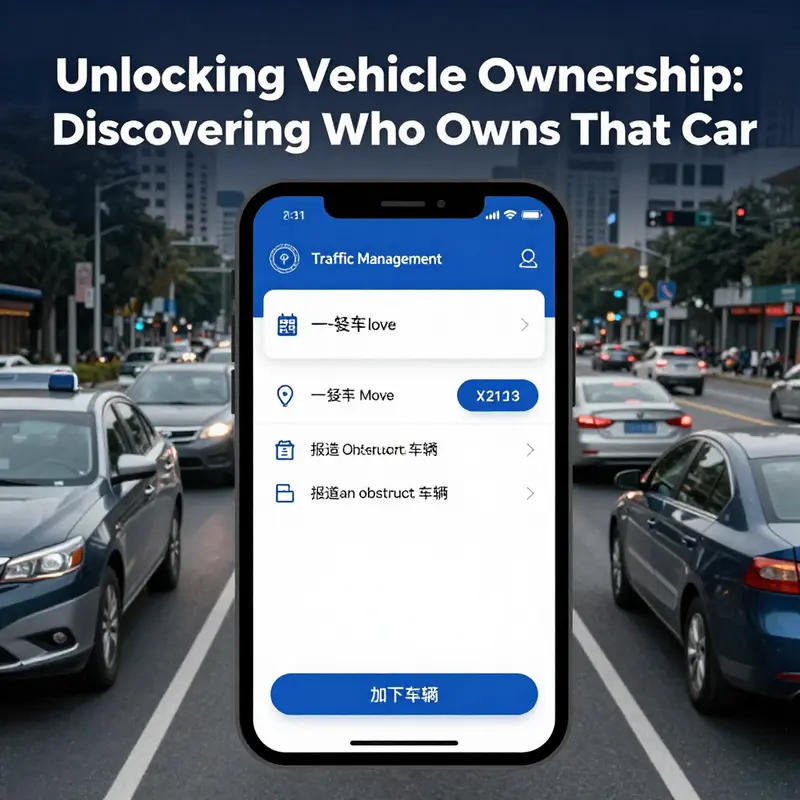
The license plate is a potent identificatory marker. It can tell you that a vehicle exists, where it is registered, and, in some systems, who is responsible for its upkeep or use at a given moment. But it does not grant an automatic doorway to a person’s private details. Across many jurisdictions, personal information tied to a plate number—names, addresses, phone numbers, or other identifiers—is protected by privacy laws. The instinct to “look up the owner” can arise in moments of frustration, danger, or legal concern, yet the rules that govern access to such information are designed to balance competing interests: the legitimate needs of individuals and institutions to enforce laws, resolve disputes, and maintain safety, against the fundamental right to privacy. In practice, this balance translates into a framework of official channels that allow constrained, verifiable inquiries. There is no public database that casually links a plate to a person. Instead, there are structured, authority-backed avenues that ensure accountability, preserve confidentiality, and reduce the risk of misuse. Understanding these channels requires a shift from quick online assumptions to an appreciation of procedures, evidence, and proper authorization. It also means recognizing the limitations—when a plate can be used to initiate contact or investigation, and when it cannot, even with seemingly good reasons.
The first principle to keep in mind is that the plate number is a pointer, not a repository of personal data. In many places, the identity of the vehicle owner is controlled by a provincial, state, or national body that governs who may access such information, under what circumstances, and through which processes. This is not a loophole, but a designed safeguard. When you reflect on this, the ordinary citizen’s temptation to bypass channels becomes clearer, because the perceived speed and simplicity of an online lookup stands in stark contrast to the deliberative procedures required by law. Yet the same restraint that protects privacy also preserves the integrity of interactions among neighbors, guardians of public safety, and people who simply want fair resolution to a problem involving a vehicle. A few official routes stand out for their legitimacy, reliability, and practicality, especially in non-emergency and emergency contexts alike.
One of the most accessible and user-friendly avenues for the public is the official traffic management system designed for everyday traffic concerns, including parking obstructions and vehicles blocking property. In this framework, there is a mechanism—often described in plain terms as a one-click or one-step process—that allows a user to enter a license plate and their contact details to initiate direct, automated communication with the vehicle’s owner. The crucial distinction here is that the system does not reveal the owner’s personal information in a public database. Instead, it delivers a notification to the owner through vetted channels, such as a short message or app alert, prompting them to respond to the issue at hand. This approach preserves privacy while enabling rapid, targeted outreach. The practical benefit is clear: it reduces the need for one party to engage in a time-consuming, invasive search while still enabling a courteous and efficient exchange between parties. In most jurisdictions, the use-case for this tool is non-emergency and oriented toward resolving parking disputes, vehicle blockages, or similar non-urgent situations. The system is designed to facilitate contact in a controlled manner, and the process is typically completed within minutes, with the owner receiving a notification that their vehicle might be obstructing property or creating an access issue. It is important to emphasize that the owner’s identity is not exposed in a public feed; rather, the system acts as an intermediary to connect the two parties when a legitimate, non-malicious motive exists. This aligns with privacy protections while offering a practical, user-centered remedy for everyday friction on the streets and driveways that neighbors share.
For individuals dealing with more formal or urgent needs, other official channels come into play. The public security and traffic management authorities maintain procedures that balance expedience with statutory protections. In urgent situations—such as accidents, vehicles obstructing public pathways, or threats to safety—the appropriate course is to contact the national or local police hotline. The dispatchers can triage the issue, verify the emergency or urgency, and determine whether contacting the owner is necessary or appropriate through official channels. In many systems, police intervention can lead to the owner being contacted by law enforcement personnel or through official correspondence, while preserving the privacy of the owner in the sense that identification and personal data are not disclosed to the requester in the public domain. This pathway is designed to be reliable and accountable; it ensures that sensitive information is accessed only when there is a sanctioned purpose, and the process is documented as part of a legitimate inquiry or incident report.
Beyond urgent situations, there are circumstances in which a more formal inquiry is justified, such as disputes arising from accidents, damage, or serious violations. In these cases, engaging with the vehicle administration or the local traffic management department in person is a recommended route. The procedure typically requires presenting valid identification and articulating a legitimate reason for the inquiry, supported by relevant documentation. In many places, officials will verify identity and purpose before proceeding. This ensures that access to ownership information is tightly controlled, and it helps preserve the integrity of the data by limiting exposure to those with a genuine need. The in-person process, while more time-consuming than an online submission, can yield the most reliable results because it rests on verifiable identity checks and formal paperwork. For someone presenting evidence of a claim or an official complaint, this pathway provides a clear, auditable trail that satisfies legal standards and reduces the risk of miscommunication or misdirection.
A closely related channel involves the vehicle’s insurer. If you are involved in a collision or incident, you may reach out to the insurer that appears on the vehicle’s inspection documentation or insurance certificate. Insurers operate under strict confidentiality rules and will disclose information only to authorized parties after verifying the claimant’s identity and the legitimacy of the claim. In practice, this means that an insurer is more likely to cooperate when you can demonstrate a legitimate interest—such as you are the policyholder, or you are a claimant or legal representative with proper authorization. It is not an open invitation to obtain owner details; rather, it is a controlled route that can help facilitate contact for claims processing or incident resolution. This channel reflects the broader principle that while plates serve as identifiers, the data linked to those identifiers is safeguarded by professional responsibilities and legal obligations governing confidentiality and data protection.
In the most consequential scenarios—civil litigation or criminal investigations—the law may authorize access through judicial channels. A court may issue an investigation order, directing relevant agencies to disclose specific registration information under controlled, legal procedures. This is the apex of authority in this domain and usually requires representation by a lawyer or other authorized official. Such orders are a formal instrument of due process, ensuring that the collection of personal data is grounded in legitimate legal proceedings and subject to judicial oversight. They also set out precise scopes and limits, guiding how the information can be used and safeguarding against overreach. Although this route is not available for everyday concerns, it remains essential for resolving serious disputes or prosecutorial matters where locating an owner is necessary to establish liability, accountability, or safety outcomes. The existence of this option reinforces the principle that access to ownership information is not casually granted; when it is, it is tethered to a robust legal framework that requires justification, procedure, and accountability.
A final, sometimes overlooked avenue involves direct communication with the vehicle’s registered owner via the official channels that oversee licensing and vehicle management. In certain circumstances, authorities may direct a vehicle owner to respond to a specific inquiry or resolve a dispute through a formal process that protects privacy while ensuring accountability. This is not about bypassing privacy laws; it is about coordinating with the responsible agencies to ensure that the owner can be reached in a manner consistent with legal and ethical standards. It also serves as a reminder that the people operating these systems—from traffic officers to insurance professionals and legal counsel—are bound by professional obligations to handle requests with care, to verify the legitimacy of each inquiry, and to document every step of the process. When you think through these channels as a whole, the pattern becomes clear: there is no simple, public lookup; there are, instead, a suite of authorized methods designed to balance the legitimate interests of individuals, property owners, and the public at large.
One subtle but important consideration concerns the risk posed by third-party lookup services, apps, or websites that promise instant access to owner data by simply entering a plate number. These are typically not legitimate venues for retrieving personal information and can be unlawful or misleading. The prudent stance is to avoid them entirely and to rely on authorized channels that operate within the bounds of privacy protections. The legal consequences of attempting to bypass safeguards can be severe, and the potential for misidentification or data breaches is high when data is accessed through improper means. In a world where data flows cross borders and privacy expectations differ across regions, the safest approach is to respect the local regulatory regime and pursue the official routes that have been designed to handle such inquiries with accountability and care.
The practical implications for individuals who might need to contact a vehicle owner are worth underscoring. When you encounter a blocking vehicle, you should consider reporting the situation through the official traffic management pathway designed for the general public. If the problem is time-sensitive or involves potential danger, contact the emergency or police services. If there is a legitimate dispute or claim, gather any relevant documents—proof of ownership, lease or rental agreements, insurance details, photographs of the scene—and approach the formal channels with a clear explanation of your needs. When engaging with any official body, be prepared to provide identification and to articulate a legitimate purpose. The process is purpose-built to prevent random or invasive inquiries and to ensure that once a vehicle owner is contacted, the communication is respectful, purposeful, and subject to appropriate oversight. This approach helps maintain trust in the system while enabling practical, timely responses to everyday issues on the road.
In discussing these pathways, it is useful to recognize a connective thread that runs through them. The thread is accountability. Each channel—whether it is the public-facing vehicle management tool, the in-person inquiry at a local office, the insurer’s confidential handling, or the court’s formal order—operates within a shield of accountability measures: identity verification, documented purposes, time-bound actions, and traceable outcomes. This accountability ensures that the fascination with a quick lookup does not eclipse the responsibilities owed to others’ privacy. It also helps to prevent misuses, such as stalking, harassment, or data exploitation, by ensuring that access to ownership information can be justified, supervised, and reviewed. In this way, the system acknowledges the complexity of modern data ecosystems and the ethical imperative to use sensitive identifiers only when necessary and properly authorized.
For readers who want to connect these ideas to formal guidance, a concise way to think about access to license-plate ownership information is to view it as a layered, permission-based model. At the base layer lies the privacy regime that bars casual access. The next layer comprises general public-oriented tools for non-emergency issues and community safety. Higher layers include the involvement of law enforcement, insurance processes, and court-ordered investigations. Each layer adds safeguards, ensures proportionality, and preserves the privacy of individuals unless a legitimate, legally sanctioned interest exists. When you move through this layered understanding, the path from plate to owner becomes a careful choreography rather than a shortcut. It reflects a society that values safety and reparation while holding privacy as a fundamental right that deserves protection and respect.
To weave these threads into a practical frame, consider the following sentence as a guide for navigating a difficult scenario: begin with the simplest, authorized channel that matches the urgency, collect only the information necessary to resolve the issue, and escalate through formal channels if a higher level of access is required. This approach not only reduces the risk of privacy violations but also increases the likelihood of a swift, legitimate resolution. In the end, the aim is clear: to address the problem at hand—be it a blocked driveway, a hit-and-run, or a dispute over damage—without compromising personal data or undermining the social contract that binds communities together. For readers who want to explore how state rules shape access to license information, a deeper dive into jurisdictional policy nuances can be found at the linked resource that discusses these governance principles in a broader context. state rules shaping access to license information.
As a closing reflection, the chapter reinforces a simple, often overlooked truth: license plates are a public-facing cue that triggers legitimate interventions, not a direct conduit to private identities. The channels described here exist precisely to translate that cue into a respectful, lawful, and efficient process for resolving concerns that involve vehicles and their owners. They preserve the privacy rights of individuals while equipping property owners, regulators, and the public with the tools they need to address conflicts, protect safety, and uphold accountability. The overarching message is not merely about access to data, but about cultivating trust in governance mechanisms that serve the public good. In the end, you can address most plate-related issues through official channels with a clear understanding of their purposes, limits, and safeguards. Direct online lookups are not the route to personal data; legitimate processes are, and they are designed to be accessible, transparent, and fair for all.
External resource for further reading:
For a deeper understanding of the privacy protections that govern personal data in relation to license-plate information, see the following external resource: https://www.chinalawtranslate.com/personal-information-protection-law/
Behind the Plate: Privacy, Policy, and the Real Boundaries of Finding Vehicle Owners by License Plate
The license plate is more than a vehicle’s outward sign. In many places it is a doorway to a carefully guarded set of data, a hinge between public observation and private information. When the question surfaces—can you identify a vehicle’s owner from the plate—the answer is not simply yes or no. It hinges on law, policy, and the social agreement that personal data should not be exposed to arbitrary scrutiny. This chapter unfolds that tension with precision and care, tracing how privacy protections shape every step from plate recognition to any final contact with an owner. It is not a tutorial on how to bypass safeguards; it is a meditation on why those safeguards exist and how legitimate needs can be met without compromising individual rights. In doing so, it situates the inquiry within a broader ecosystem of data governance, where the plate serves as a key but never a carte blanche to unlock a name, address, or phone number.
To begin with, the structural reality is clear: in most jurisdictions, the plate number is linked to a registry that contains personal details about the vehicle’s registered owner. The mere presence of a plate on a street or in a parking lot does not grant unfiltered access to that owner’s identity. Privacy laws, data protection statutes, and sector-specific rules erect barriers designed to prevent misuse. In the United States and Europe, these barriers are reinforced by a mix of federal, state, and national regulations that govern who may access vehicle registration data, for what purposes, and under what procedures. The practical effect is that ordinary individuals cannot simply perform a lookup and retrieve a name or a home address. The system is designed to be navigated only by actors with legitimate, documented reasons and through official channels that implement identity verification, audit trails, and purpose limitations. This is a core shift away from public curiosity toward accountable governance. It also means that the plate, while informative to a trained eye, does not automatically reveal the person behind it.
There are contexts in which access is permissible, and those contexts are carefully circumscribed. When someone has a legitimate reason—such as reporting a traffic violation, documenting an accident, or addressing illegal parking—the process is not a casual search but a formal request routed through authorized authorities or designated channels. In many systems, such requests flow through law enforcement agencies, qualified insurers, or government departments that manage traffic and vehicle data. These entities operate under strict legal and procedural guardrails. They verify the requester’s identity, confirm the basis for inquiry, and record each step of the interaction. The aim is twofold: to protect the owner’s privacy while ensuring that those who need information for legitimate purposes can obtain it in a controlled and transparent manner. The tension between privacy and accountability is never entirely resolved, but it is managed through mechanisms that emphasize legitimacy, proportion, and due process.
For individuals who are not part of law enforcement or the public safety infrastructure, the routes to information are intentionally narrow. Public access to detailed owner data linked to a plate is generally restricted. This is not merely a precaution but a legal requirement designed to prevent a cascade of harms—stalking, debt collection abuse, identity theft, and other forms of misuse that can arise when personal data flows freely in the hands of unknown actors. The risk is not hypothetical; it is measurable and real. When data about vehicle ownership can be assembled by anyone who cares to search, it becomes a tool that can facilitate harassment or predation. This is why numerous privacy regimes insist that data be accessible only through controlled processes, with accountability at every turn. It also explains why many services marketed to the public as “license plate lookups” either do not provide owner information at all or explicitly emphasize that access is strictly regulated and not for casual use.
Yet the landscape is not static. Policy debates, court decisions, and administrative reforms continuously recalibrate what is permissible and what remains off-limits. Some jurisdictions have introduced or tightened mechanisms that allow certain parties to contact owners under specific circumstances, without exposing those owners to unsolicited outreach from unknown individuals. A growing trend is to design interfaces that preserve privacy by design: if contact is needed, the system facilitates a mediated message rather than a direct personal data reveal. In practice, this might mean an automated notification that the owner will receive a message through an official channel, with no personal contact details disclosed to the requester. Such architectures reflect a broader recognition that information flows must be curbed in ways that still enable public safety and civil remedies. They also echo a philosophical stance: the public interest can be served without turning private information into an open directory.
The ethical dimensions are woven into this technical and legal fabric. Privacy is not simply a shield against invasion; it is a public good that sustains autonomy, safety, and trust. When people understand that their data will not be exposed to random strangers, they engage with the system more responsibly. They are less likely to allow their plates to be used as effortless tickets into personal lives. Conversely, when the boundaries are perceived as porous, fear and suspicion spread. Individuals may alter their behavior, be less cooperative with enforcement efforts, or withdraw from legitimate civic processes. The balance is delicate. It requires clear definitions of permissible purposes, transparent procedures for requests, and rigorous enforcement when boundaries are crossed. The chapter acknowledges that there are legitimate, sometimes urgent, reasons to seek owner information. It also emphasizes that such pursuits must be anchored in law, documented necessity, and respect for privacy principles.
From a policy perspective, the question of access is inseparable from broader governance of personal data. License plate information sits at the intersection of traffic management, consumer protection, and civil rights. Privacy advocates remind us that data points are not neutral; they accumulate contextual meaning. A plate number can be a thread that, when pulled through many databases, reveals patterns about a person’s location, movements, and associations. Even with a legitimate purpose, the trajectory of data sharing should be surveilled to prevent unintended consequences. That is why many official processes incorporate audit trails, time-bound access, and strict limitations on the scope of information disclosed. The aim is to ensure that any lookup is justified, proportionate, and accountable. The emphasis is not on erasing information but on shaping its accessibility so that it serves safety and justice without compromising fundamental rights.
It is important to distinguish between the different kinds of entities that may interact with plate-linked data. Authorized actors include law enforcement agencies, which may request data to investigate crimes or resolve incidents; insurance companies, which need information for claims processing and risk assessment; and certain government offices with regulatory or compliance functions. These entities operate under layered controls and oversight, including identity verification, purpose specification, and documentation of each inquiry. In many jurisdictions, private individuals or businesses do not have direct access to owner-identifying data. Instead, they may be steered toward official channels that can determine whether a given request has a lawful basis and can proceed without compromising privacy. This structural arrangement reflects a societal choice: information should serve the common good, but not at the expense of personal security.
In practice, this means the everyday user should not count on a fast, autonomous lookup that yields a name. The reality is more nuanced. If one encounters a vehicle in a dispute, like a blocked driveway or a misparked car in a critical zone, there are legitimate procedures to address the situation that do not involve circumventing privacy protections. The appropriate action is to document the incident, contact the property owner or property manager, and, if necessary, escalate to the relevant authorities. If a collision occurs, the standard protocol is to exchange information through recognized channels, file a police report if required, and use the proper insurance pathways to initiate a claim. The emphasis is on procedural integrity rather than on the speed of discovering who owns the vehicle. This approach aligns with the broader principle that maintaining privacy does not come at the expense of public order; rather, it sustains a system where accountability and rights can coexist.
One may ask how this translates into everyday behavior. Consider a citizen who suspects illegal parking that blocks access to a driveway or impedes emergency routes. The prudent course is not to publish or share plate numbers in public forums or to attempt to trace an owner through informal means. Instead, the responsible action is to report the incident through the proper municipal or police channels. Officials will determine whether a formal inquiry is warranted and, if so, they will execute it through authorized processes. The same logic applies in a traffic accident, where visibility of a plate should lead to a documented report rather than to a private dig through personal data. Even in emotionally charged scenarios, the rules are designed to prevent spirals of retaliation or harassment. By prioritizing official procedures, the community preserves both the capacity to respond to wrongdoing and the privacy rights of individuals who may be implicated or involved.
This framework does not happen in a vacuum. It emerges from ongoing policy conversations, judicial interpretations, and administrative guidance that shape the boundaries of permissible access. For readers who want to connect the practical implications to the policy landscape, there are broader discussions on how state rules impact driver licensing and data sharing. In some jurisdictions, these rules are framed to ensure that license plate data is treated as sensitive information, accessible only for specific uses and subject to oversight. For a concise synthesis of how these principles translate into real-world practice, see the discussion on state rules impact on driver licensing. This contextual reference helps underline that the question of finding an owner by plate is not a free-for-all—it is a carefully governed process designed to protect privacy while serving legitimate needs. The balance, however imperfect, aims to prevent harm while enabling essential civic functions.
A growing strand of thinking emphasizes that private, third-party tools marketed to the public, which promise easy plate-to-owner lookups, are often at odds with privacy protections. These tools frequently operate in a legal gray area or outside the boundaries of authorized disclosures. The risks associated with such services—identity theft, harassment, or stalking—are not merely theoretical. They are grounded in real-world misuse patterns observed across many jurisdictions. Reputable platforms, by contrast, foreground legal compliance and ethical use. They acknowledge that privacy is not a loophole to be exploited but a vital standard that shapes how data can be responsibly used. When platforms speak to users about privacy obligations, they are signaling that a mature information economy depends on trust and consent, even when the information seems readily accessible on the surface.
In contemplating the future, one can imagine a more transparent and accountable ecosystem for plate-linked data. Advances in privacy-preserving technologies, such as access controls that limit data disclosure to contextual needs and automated redaction of sensitive fields, could further reduce the temptation or ability to misuse information. Individuals could still report incidents and participate in the public safety framework without exposing themselves to the risks associated with widespread owner data exposure. Policy-makers, practitioners, and the public alike would benefit from continuous oversight, clear definitions of permissible uses, and robust education about why certain data cannot be accessed casually. The chapters that follow will connect these themes to concrete practices—how to pursue legitimate inquiries, the rights individuals retain, and the ethical responsibilities that accompany the power to inquire about vehicle ownership. As a reader traverses this topic, the central message remains: license plates signal a connection to a person, and that connection must be navigated with care, restraint, and respect for the boundaries that define a just information ecosystem.
For those who want to explore the governance aspect further, it is useful to recall how state rules influence not just licensing but the broader handling of vehicle-related data across agencies. The linked discussion on state rules impact on driver licensing provides a compact lens into how different jurisdictions calibrate access, ensuring that the plate’s meaning does not translate into a universal key to personal identity. Such calibrations reflect a normative choice about privacy as a public good and about the responsibilities attached to data access. In the end, the license plate remains an important signal—one that can aid in public safety and civic order when used through proper channels, while safeguarding individuals from unwarranted intrusions when used outside those channels.
External resource: For formal guidance on policy and practice, see materials from the U.S. Department of Transportation, which outlines the legal and regulatory framework surrounding vehicle data and privacy. https://www.transportation.gov
Final thoughts
Finding a vehicle owner’s information through a license plate is a complex endeavor underpinned by strict legal restrictions and essential privacy considerations. It is paramount to recognize that obtaining personal data without the owner’s consent may breach privacy laws, leading to potential legal repercussions. This article has highlighted various official channels available for legitimate circumstances, such as utilizing government apps, police assistance, and insurance contact. By adhering to these practices, you can navigate your queries regarding vehicle ownership in a responsible manner, respecting the privacy rights of others while addressing your needs. Whether you are a newcomer to driving or an established vehicle owner, being informed and cautious is the best approach for responsible vehicle interactions.