
Understanding how to find a vehicle owner by their license plate number is crucial for new drivers, existing vehicle owners, and even auto dealerships. This knowledge not only aids in resolving parking disputes or accidents but also fits within the context of maintaining safety and legal responsibility on the road. In this comprehensive guide, you’ll discover various legal avenues such as utilizing the 12328 App in China, contacting law enforcement, exploring avenues through insurance companies, visiting local DMV offices, and understanding the legal and ethical considerations that govern these actions. Each chapter serves as a building block, leading to a complete understanding of this important topic.
From Plate to Purpose: Navigating Official Pathways to Contact a Vehicle Owner Through License Plate Information
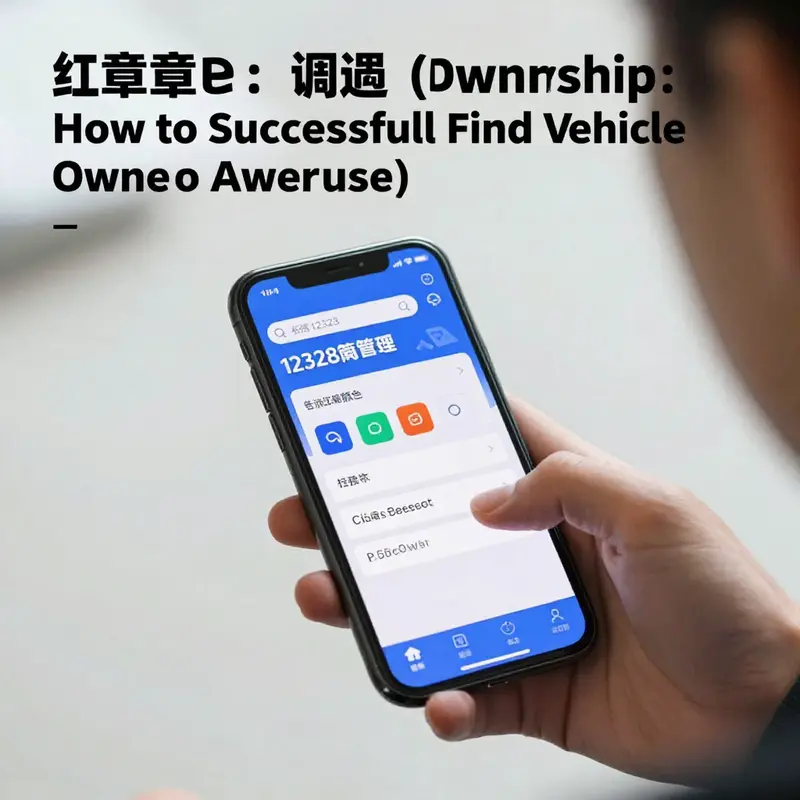
When a license plate becomes a point of friction or concern—such as a car blocking a driveway or a vehicle obstructing a lane—the urge to contact the owner may feel urgent. However, personal information tied to a plate is protected by privacy and data-security rules designed to prevent misuse. The bottom line is simple: you cannot directly identify a vehicle owner’s name or phone number from a plate through ordinary means. That boundary exists to protect individuals from harassment and stalking, and it is reinforced by privacy laws in many jurisdictions. There are legitimate avenues to address the issue, depending on the context and your legal right to engage. The goal is to resolve the practical problem while respecting privacy.
One practical route is an official reporting or notification service that mediates contact through approved channels. You provide license plate details, the factual context (parking obstruction, safety concern), and any supporting information such as photos and location. The system relays a message to the owner via government-approved contact methods. It does not reveal the owner’s identity directly. The owner may move the vehicle or contact authorities if needed. This preserves privacy while offering a path to resolution.
A second option in urgent cases is to involve law enforcement. In a crash or suspected crime, contacting police allows officials to access vehicle records under lawful procedures. You would provide the plate, describe the incident, and share evidence. They may disclose ownership information if warranted. This is not a casual lookup; it follows legal procedures.
A third option is to check with the vehicle insurer or a vehicle administration office for limited information relevant to a legitimate claim or dispute. These routes require proper justification and documentation and are not public.
All pathways share a principle: privacy and safety are central, and information is disclosed only when justified and properly authenticated. Prepare your case with documentation and choose the channel that fits your situation. For official guidance, consult the government’s traffic-management platform.
External resource: https://www.12328.gov.cn/
Tracing Ownership Through Official Channels: The Law-Enforcement Path for License-Plate Inquiries
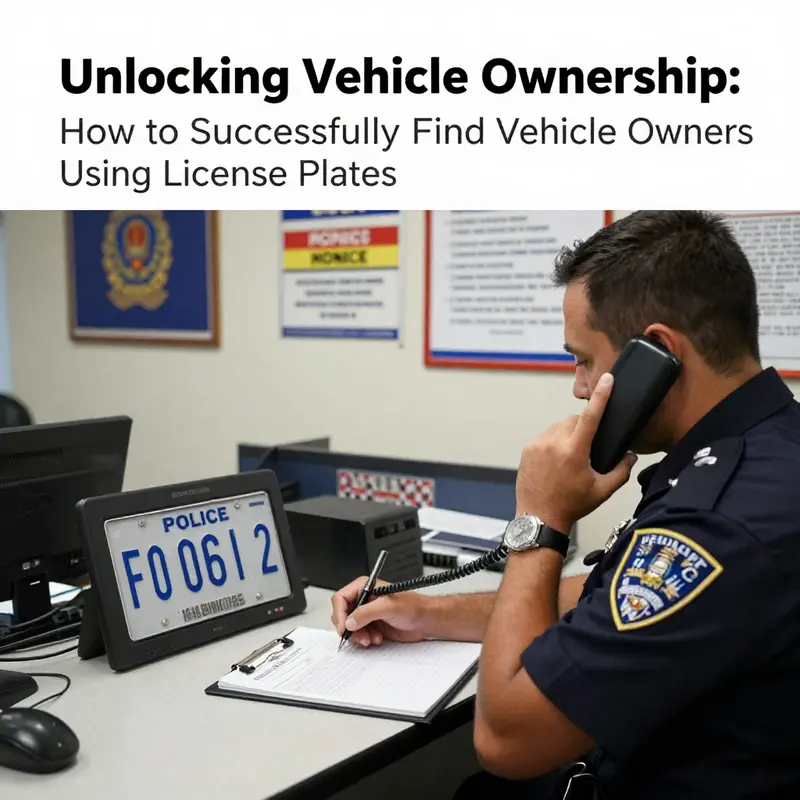
When a car sits idle in a critical spot or a collision disrupts the flow of everyday life, the impulse to know who owns the vehicle behind the plate is natural. Yet the act of tracing a license plate to a person sits at the intersection of practical need and strict privacy protections. Direct access to a vehicle owner’s personal information is not granted to private individuals in most jurisdictions. It is reserved for authorities who can establish a legitimate basis, and for specialized agencies that carry out official inquiries. This chapter explores how to pursue ownership information through formal channels, emphasizing lawful purpose, responsible conduct, and the practical steps that align with privacy laws. The path is not about bypassing protections but about engaging the system that enforces them, so that the right outcome—safe resolution, accountability, or rightful remedy—can emerge without compromising someone else’s rights. The subject matter is delicate; it requires restraint, documentation, and a willingness to use the appropriate institutional avenues rather than hunting for data through unverified platforms or informal networks.
At the core of the issue lies a clear division between what an ordinary citizen may know and what only a government or authorized entity may ascertain. Privacy protections are designed to prevent misuse while allowing legitimate enforcement and remedial actions. In many places, including jurisdictions with robust privacy regimes, the law recognizes that personal data connected to a vehicle—ownership, registered address, or contact details—falls under protections that necessitate a lawful reason and proper authorization before disclosure. Acknowledging this boundary is not a sign of weakness in a complaint process; it is the essential guardrail that ensures the system serves justice without becoming a tool for intrusion. When confronted with a blocked driveway, a hit-and-run report, or a dispute arising from a parking incident, the most reliable route is to initiate contact through the appropriate authorities or through recognized official procedures. This approach preserves both safety and privacy and reduces the risk of misdirected actions that could complicate the situation or expose the requester to legal liability.
The first and most straightforward channel is to involve local authorities through official, non-emergency contacts. In situations where a vehicle is obstructing access, or a non-emergency traffic violation is suspected, presenting clear information to the relevant police or traffic bureau is essential. The request should include the exact license plate number, the precise location where the vehicle is parked, and a concise explanation of why the owner’s contact is needed. This information helps the authority determine whether an official intervention is warranted and whether a notification to the owner is the most appropriate course of action. When such a request is legitimate, law enforcement can verify the vehicle’s registration status in their internal systems and, if appropriate, dispatch a notice to the registered owner through official channels. Importantly, even in these circumstances, the private individual will not receive the owner’s personal numbers. The next step—contact through the system rather than direct data sharing—ensures that privacy protections remain intact while the situation is resolved.
Beyond the traditional line of police or traffic authorities, many jurisdictions provide an official traffic-management platform designed to streamline communication between the vehicle owner and the person requesting assistance. Rather than exposing private contact details, these platforms facilitate a controlled exchange: a message is delivered to the owner, requesting that the vehicle be moved or that the situation be addressed, and the owner can respond through the same channel. In practical terms, this means the owner may receive a notification by SMS or an app notification asking them to take action. The aim is to move or correct the situation quickly while avoiding direct exposure of personal data to the requester. This workflow is trusted precisely because it relies on verified channels and official oversight, which also helps maintain a clear record of the steps taken. For people who are unsure whether their case qualifies as legitimate, this route offers a transparent, auditable process that can be referenced in any later legal or administrative review.
If the matter involves a traffic accident, the situation becomes more complex—and more clearly within the purview of law enforcement and insurance processes. Authorities can initiate an investigation, collect evidence such as photos, videos, or witness statements, and determine ownership through official records as part of a formal inquiry. In these contexts, the information shared with the requester does not include the owner’s private contact details. Instead, the process yields a documented basis for further action, whether it is a follow-up with the insurance company, a court filing, or another legally permissible remedy. Speaking with the insurer constitutes a different but related avenue: the insurer can verify whether the vehicle is insured and may confirm the policyholder’s identity or policy status only when there is a justified claim and proper authorization. The insurer’s cooperation is contingent on demonstrable need and compliance with privacy protections, and they will not disclose private information without a legitimate basis.
For disputes that do not rise to the level of an accident or a clear enforcement issue, some people turn to the vehicle administration office for official verification of ownership. Local vehicle-management authorities may, upon presentation of valid identification and documentation that demonstrates a legitimate interest—such as an accident report, a legal dispute notice, or other formal requests—facilitate a regulated inquiry. In these cases, the office may provide basic owner details that are strictly limited to what is necessary to resolve the matter at hand. Fees may apply, and the justification of the request is reviewed to ensure it aligns with legal standards and privacy protections. This pathway underscores the principle that ownership data is not a casual commodity; it is a tool to be used within a formal, accountable framework.
Throughout these processes, it is essential to remain mindful of the ethical and legal boundaries that govern access to personal data. Privacy protection laws exist to guard individuals from misuse of their information, and every step should be taken with a clear, legitimate purpose. Treating the inquiry as a matter of public safety, accountability, or legitimate dispute resolution helps ensure that the request stands up to scrutiny and cannot be contested as improper or harassing. The intention should be to resolve a specific issue—such as a safety risk, a traffic violation, or a legal claim—without overstepping the limits of what information can be shared or accessed through official channels. The risk of misuse is real, and it is not merely a theoretical concern. Harassment, stalking, or attempts to bypass privacy protections by turning to unverified websites or private data brokers can expose the requester to criminal liability and undermine public trust in the system that protects everyone’s rights.
In practice, the supported pathways through law enforcement and official platforms are designed to balance urgency with privacy. If a case falls into a gray area, the prudent course is to seek guidance from a legal professional or to begin with a formal inquiry through the appropriate agency. Documentation matters: keeping records of the incident, the vehicle’s plate, the location, the time, and any communications with authorities helps ensure a clean, traceable response path. This approach not only protects the requester but also protects the integrity of the process for the owner involved and for the institutions handling the inquiry. Interactions within official channels also create a paper trail that can be useful should future disputes arise or if further action becomes necessary.
For readers seeking a broader frame of reference on how regulatory frameworks shape access to driving-related information, consider exploring the discussion on how state rules impact driver licensing. This resource offers context on the legal environment that governs who can access certain data, under what conditions, and with what safeguards. state rules impacting driver licensing.
Finally, it is important to anchor any action in current, official guidance. When in doubt, consult the government platform dedicated to traffic management and vehicle-related inquiries for the most up-to-date procedures, rules, and contact points. This ensures that a farmer’s field of information remains within the boundaries of the law, and that the resolution of the immediate issue proceeds without creating new legal or ethical complications. To access the authoritative, official channel that streamlines these inquiries and preserves privacy while enabling action, refer to the government platform available at the official site. You can find the guidance and services described here: https://www.12123.gov.cn/.
Through Insurance Channels: Understanding the Limits of Finding a Vehicle Owner by License Plate

Seeking the owner of a vehicle by its license plate sits at the crossroads of privacy protections, safety needs, and the practical realities of how information is accessed in modern data systems. Insurance companies are part of that equation, but they are not a public Rolodex. They function as gatekeepers who balance the needs of policyholders, claimants, and lawfully authorized authorities against the imperative to protect personal information. When a plate number is all you have, the avenues that insurers will accept as legitimate are narrow, tightly defined, and bound by statutes and ethical standards designed to prevent misuse. To understand what is possible and what remains out of reach, it helps to trace the flow from plate to potential data, and then to the official channels that truly govern access to ownership details.
First, it is essential to separate what an insurer can do from what a private individual can request. Insurance companies do not operate as public databases of owner identities. Their systems are built around policy records, claims histories, and the need to protect personal data under privacy laws. A plate number may be linked to a vehicle in an insurer’s internal records, but sharing owner information with outsiders is not a routine or unrestricted practice. Even when a vehicle is insured, the insurer’s primary obligation is to protect the policyholder’s data. They may verify whether a plate corresponds to a current policy, but they will not disclose the name, address, or contact details of the policyholder to a requester who is not the insured or a legally authorized entity.
In practical terms, this means that you cannot simply call an insurance company, provide a license plate, and expect to receive the owner’s name. The public-facing steps that insurers might take are limited to confirming policy status or guiding legitimate claimants through the proper channels. If you are involved in a scenario such as a car accident and you believe the insurer could be relevant, the process becomes a matter of claims handling rather than a direct disclosure of personal information. The insurer may verify the existence of an insurance policy, ensure that coverage is active, or confirm that a vehicle with that plate is insured. They will typically do this to support a claim or a regulated inquiry, not to reveal private identities.
This is where legitimate routes intersect with legal thresholds. Law enforcement agencies and courts have the authority to compel disclosure through proper channels, such as subpoenas or orders, when a case involves accidents, fraud, or other legal disputes. In these situations, insurers can be asked to provide information that is necessary to resolve a matter, but the release of personal data comes with strict procedural safeguards. It is not a casual lookup; it is a legal instrument designed to protect both privacy and public safety. The distinction between internal verification for a claim and external release to a private party is subtle but crucial. It preserves the integrity of sensitive data while enabling accountability in the right contexts.
If your concern is not a formal dispute or a legal investigation but a concrete, non-emergency situation—such as a vehicle blocking a driveway or a similar obstruction—the appropriate path does not involve directly pressuring an insurer for ownership details. Instead, you should pursue official channels that are designed for these circumstances. In many jurisdictions, the first line of recourse is the proper authorities or the vehicle registration administration. If the matter is urgent, contacting local law enforcement may be warranted, especially when safety or access is at stake. The aim is not to expose private information but to restore normal activity in a lawful and orderly manner. Even in non-emergency contexts, the existence of a legitimate concern—proof of obstruction, an accident, or a dispute that might lead to a claim—does not automatically authorize sharing owner data.
For those who are curious about the broader regulatory environment surrounding information access, a useful framing comes from recognizing how state rules shape who can access driver information and under what conditions. In many places, access to ownership records is contingent on a demonstrable, lawful interest. This means that a private individual would typically need a compelling reason supported by documentation—an accident report, a legal notice, or evidence of a dispute—to trigger any official inquiry. The general principle is clear: privacy protections require justification, and data disclosures occur within a framework of checks and balances rather than through ad hoc requests to insurers or other private entities. If you want to explore how these rules evolve across jurisdictions, you can review discussions that frame the relationship between state licensing rules and information access. state rules impacting driver licensing provides a lens on how legal boundaries shape practical outcomes for anyone seeking ownership or vehicle data.
There is also a practical, safety-oriented path that aligns with legitimate interests. If the motive is to address a blocking vehicle, a non-emergency but urgent situation, or a potential safety risk, you can document the incident and turn to the relevant official platform or authority. In many systems, there are official procedures for reporting obstructions, arranging for the other party to move, or initiating a formal inquiry that could, if warranted, lead to verified owner information via lawful channels. The key is to anchor the request in a legitimate purpose and to follow the proper procedures rather than attempting to bypass privacy protections through unofficial means. This approach respects both the rule of law and the privacy rights of individuals while still offering a path to resolution when a genuine problem arises.
From a consumer standpoint, the reality is that insurers have a narrow, carefully defined role in the information ecosystem. They do not function as public contact points for vehicle owners based solely on a plate number. Where ownership data is needed for legitimate reasons, the steps involve either gaining consent from the policyholder (for example, through the policyholder’s online portal or agent) or proceeding through law enforcement or official registries with the appropriate legal basis. For policyholders themselves, access is typically available online, through mobile apps, or via agents, but this access is controlled and corresponds to the policyholder’s own information. Third-party access without a court order or a legally valid claim remains restricted. The overall picture is one of privacy-preserving safeguards that aim to prevent misuse while ensuring that critical information can be accessed when it is truly required to resolve disputes, process claims, or address safety concerns.
The practical upshot for someone trying to locate an owner remains consistent: do not rely on insurer lookups as a shortcut. Instead, build your case with verifiable documentation, pursue the appropriate official avenues, and, when applicable, involve law enforcement or the DMV with a clear, legal justification. If you are unsure of the correct procedure, seek guidance from a legal professional who can help you align your actions with local privacy laws and regulatory requirements. This careful approach protects you from potential liability and helps ensure that any information disclosed is done so under proper authority and due process.
For readers who want to connect this discussion to real-world practice, consider how these principles apply in a variety of contexts—accidents, property disputes, or situations where a license plate raises questions about ownership. A well-documented incident, a line of communication with the appropriate authorities, and an understanding of where insurance data can and cannot be used will serve you better than attempting to extract private information through informal channels. And remember, although there are legitimate purposes for identifying a vehicle owner, privacy laws—like those governing personal data protection—remain a constant framework that guides allowable inquiries. Practicing restraint and following official procedures not only mitigates risk but also upholds the integrity of the information ecosystem that makes the road network safer for everyone.
External reference for official guidance on these pathways remains found in the government platform that oversees traffic management and related records. You can consult it for the most current, jurisdiction-specific procedures and requirements: https://www.12328.gov.cn/.
Navigating DMV Pathways to Verify Vehicle Ownership
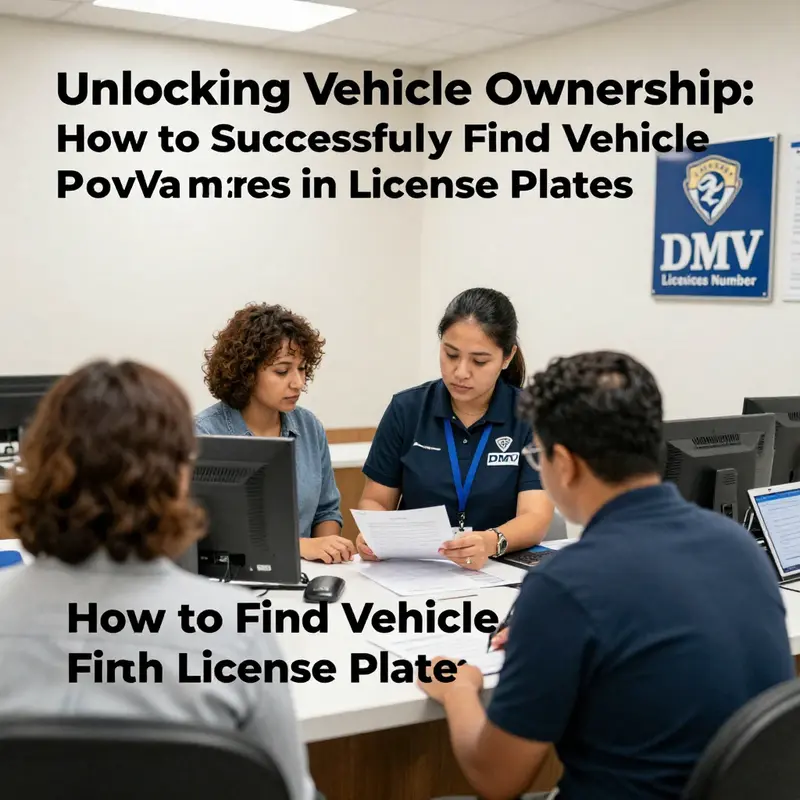
When a car sits where it shouldn’t—blocking a driveway, an exit, or a shared space—the impulse is to learn who owns the vehicle and reach out directly. The appeal is plain: resolve the obstruction quickly, restore access, and avoid recurring conflicts. Yet the reality is more complex. Personal ownership details are shielded by privacy protections and must be accessed only through official channels with a legitimate, legally justified reason. This is not a quest for casual curiosity; it is a careful navigation of rules that balance individual privacy with the needs of safety, property, and accountability. The most honest, effective path begins with recognizing the boundary between public obstruction and private information and then pursuing the appropriate, lawful steps that govern how ownership data may be accessed at the local level.
The practical starting point is to acknowledge what the DMV and related authorities can and cannot do. Direct public access to a vehicle owner’s name or contact details is not permitted. The integrity of private data is protected by privacy regimes, and attempts to bypass those protections can expose you to civil or criminal liability. The chapter that follows offers a cohesive, rights-respecting route through the process, emphasizing official procedures, documentation, and the justifications that typically sway a request from a DMV office, a police department, or an insurer. It also foregrounds the ethical considerations that accompany any effort to locate an owner, reminding readers that the end goal must align with lawful and respectful conduct.
A core thread running through these procedures is the need to establish a legitimate purpose. If the scenario involves an immediate safety hazard or an illegal act, law enforcement is the appropriate first contact. In non-emergency situations, the route typically runs through the vehicle administration office (the local DMV or its equivalent), where staff can determine whether a request meets the criteria for accessing limited owner information. The metal backbone of this process is verification: you must prove your identity, present a credible reason, and provide any supporting documentation that demonstrates why access is necessary. This might include an accident report, a notarized statement, or court documents that tie your claim to a legitimate legal matter.
To illustrate how this plays out, imagine a scenario where another vehicle is blocking your driveway. You would first document the obstruction, gather evidence such as photos or video, and contact the local authorities to file a report if necessary. Simultaneously, you would prepare to communicate with the DMV or a lawyer to seek authorized assistance. The staff at the DMV would review your request with care, checking that your stated purpose aligns with the permissible uses of ownership records. They would verify your identification and assess whether your case meets the narrow criteria for disclosure or for an official mechanism to reach out to the owner on your behalf. In many jurisdictions, the result of such a request is not a direct revelation of the owner’s private details. Instead, the office may contact the owner or provide you with limited information to move the matter toward resolution, such as facilitating a notice or forwarding a message through a legitimate channel.
Behind the scenes, the legal framework guiding these actions varies by jurisdiction, yet the overarching principle is consistent: access is restricted, and any information released is carefully bounded. This is why the process can feel slow or meticulous. It is not designed to delay justice—it is designed to protect people’s privacy while still offering a route to address legitimate disputes. If you read through the broader landscape of how state rules shape driver licensing and related access, you will see how privacy objectives, public safety concerns, and administrative efficiency interact. For a concise exploration of those state-level considerations, you can refer to discussions framed around how state rules impacting driver licensing shape requests and set expectations for what is permissible when seeking information tied to a license plate.
The process at the local DMV often involves a standard sequence, though the specifics can differ by state or country. You begin with an identification check. A government-issued photo ID is typically required to confirm who you are and to prevent impersonation. You then present your legitimate reason, described clearly and succinctly. You may be asked to fill out a formal request form, detailing details such as the plate number, the incident or situation that motivates your query, and the outcome you seek—whether it is simply to contact the owner via a lawful channel or to obtain limited confirmation that the vehicle is registered to a specific party. The DMV staff will assess whether your case fits the narrow categories of permitted use. This step is crucial; it preserves the privacy framework while allowing access to information when justified. If approved, they may provide the means to contact the owner indirectly or to arrange a direct, official contact, rather than handing over personal data.
The practical value of such a process lies not in speed but in reliability and legality. When you pursue this route, you gain more than the chance to resolve the obstruction; you gain confidence that you are acting within the law and protecting yourself from later challenges. Documentation matters: keep copies of every form you submit, every receipt for fees, and every written correspondence with the authority. If your case involves an accident, a police report or an official notification can become pivotal in demonstrating the legitimacy of your request. If the request has a time-sensitive edge—say a safety hazard or ongoing property damage—be explicit about urgency and provide any corroborating evidence that demonstrates why timely action is necessary. Such clarity helps the reviewer understand the practical impact of the request and can influence processing timelines.
There are other legitimate channels worth understanding as part of a comprehensive strategy. In emergencies or when there is clear risk, dialing emergency services or the non-emergency police line is appropriate. By reporting the incident and providing the plate number, you enable authorities to act within their investigative framework while also ensuring that you are aligned with public safety expectations. In non-emergency scenarios that involve disputes or minor property issues, contacting the vehicle’s insurer can sometimes help, especially if the insurer has already processed the claim related to a specific incident. However, insurers will share information only under strict conditions and with proper authorization tied to a verifiable claim. This is not a workaround for privacy protections but another part of the formal ecosystem for resolving vehicle-related disputes.
For those who want a broader, non-U.S. perspective, official platforms in other jurisdictions offer channels that echo the same principles: legitimate purpose, verified identity, and official communications channels to bridge the gap between the parties. The emphasis remains: never attempt to obtain or use someone’s private information for non-legal purposes. Privacy protections exist to prevent harassment, stalking, or nuisance, and violating them can carry serious consequences, including civil penalties or criminal charges. It is a line worth staying well away from, even when the urge to resolve a blocking car feels urgent.
In practice, then, the path to learning who owns a vehicle through a license plate number is not a straightforward lookup. It is a carefully navigated procedure that centers on necessity, proportionality, and respect for privacy. The DMV and related agencies exist to balance competing rights: the right to use public roads, the right to protect personal information, and the right to seek redress when property or safety is at stake. By embracing official procedures, you stand on solid ground and avoid the risks that come with unverified sources or illegal access. If you are unsure about your specific jurisdiction’s rules, begin with the official government portal that governs motor vehicle records and privacy. It will outline permissible uses, required documentation, and the steps you must complete to pursue an authorized inquiry. External guidelines may also remind you of how to contact the appropriate authorities when immediate action is warranted, such as a dangerous blocking vehicle or a hit-and-run scenario. For a sense of where to look and how to frame your request, the official guidance channels remain the most dependable compass.
External resource: https://www.12328.gov.cn/
Tracing Ownership by Plate: Navigating Legal Boundaries, Ethical Boundaries, and Responsible Pathways
When the urge to identify who owns a vehicle by its license plate arises, the immediate practical need often collides with a broader ethic of privacy. In many places, a license plate is a public-facing signal; the person behind it has a right to privacy regarding their personal details. The tension is not new, but the digital age has sharpened it. Information about vehicle ownership is shielded by privacy laws that are designed to balance public safety with individual rights. In this landscape, what looks like a straightforward lookup becomes a conversation about legality, legitimacy, and restraint.
At the heart of the matter are privacy regimes that govern access to private data. In most jurisdictions, the raw data that would reveal a name and address from a plate number is not accessible to ordinary citizens. This is not because the plate is untraceable; rather, the data is protected by law, and disclosure is restricted to specific, justified cases. When the public debate turns to “how to find the owner,” it is essential to distinguish between information that can be publicly verified and information that requires a lawful basis to obtain. The overarching principle is simple: access is justified only when there is a legitimate aim and a lawful mechanism to pursue it. This is not merely a bureaucratic hurdle; it is a safeguard against misuse, harassment, and wrongful accusations that can ruin lives.
There are, however, legitimate channels designed to resolve everyday problems without exposing private information. One such channel involves utilizing an official, government-operated service that acts as a conduit. The core idea is to preserve privacy while still enabling contact. If a vehicle is blocking a driveway or causing a minor obstruction, an official platform can relay a message to the owner without revealing their personal data. The owner receives a notification through the system—typically via SMS or in-app alerts—and can respond or take action. The advantage of this approach is twofold: it respects privacy by not disclosing names or contact details, and it provides a quick, verifiable path to resolution. It is not a tool for doxxing or stable surveillance; it is a mediated contact that preserves the boundary between public utility and private life. In practice, this method emphasizes one key insight: legitimate contact should be possible, but only through formal channels that are designed to enforce compliance and to reduce friction in the process.
If the situation crosses into potential noncompliance, danger, or harm—a scenario such as a traffic collision, a suspected hit-and-run, or an activity that signals illegal use—the appropriate response is to involve law enforcement. Police and traffic authorities possess access to vehicle registration databases. They operate within a framework that allows them to verify ownership when necessary and to act in accordance with due process. When a person reports an incident and provides a license plate number along with evidence such as photos or witness statements, the authorities assess the claim, confirm whether there is a valid legal basis, and determine the proper steps. In emergencies, dial numbers that connect directly to public safety services. The advantage of this route is that ownership information is obtained only through formal investigation, with safeguards to prevent abuse. It is a reminder that privacy protections do not vanish in the wake of accidents or suspicious activity; they are reinforced by oversight and lawful procedures, which safeguard both the reporter and the vehicle owner.
Insurance providers also play a function in the ecosystem, especially when a legitimate claim exists. If you know or suspect the insurer tied to the vehicle, you may engage their customer service channels. They can confirm whether a vehicle holds active coverage or verify policyholder details only under clearly defined conditions tied to a claim or dispute. The process is intentionally constrained: insurers must protect personal data and share information only with authorized parties who demonstrate a legitimate interest. This layering helps avoid the temptation to reach into private records merely to satisfy curiosity. In practice, this means that if you are involved in a claim, you can use the insurer as a conduit for verifying coverage and, with proper authorization, the policyholder’s identity. It is a reminder that the legal architecture of data access tends to favor the conclusion that private details are rarely shared without a compelling, lawful reason.
Another avenue that can be relevant in the right context is a formal inquiry to the vehicle registration administrator—the DMV in many places, or its local equivalent. Such bodies maintain ownership data for official purposes and can perform a controlled lookup for verified needs. To proceed, you typically must demonstrate a legitimate justification, provide appropriate identification, and present documentation that ties your request to a lawful aim, such as an accident report or a legal dispute. Fees may apply, and the information disclosed is rarely comprehensive; instead, there might be basic, non-sensitive identifiers that suffice for the permitted purpose. This route underscores a practical point: while private citizens rarely gain full access to ownership details, official inquiries anchored in verifiable need can yield essential information for resolution of disputes or compliance with legal processes.
In weaving these threads, it becomes clear that the core duty is to act within boundaries. Privacy protection laws—whether under a national framework or a regional data privacy statute—shape what is possible. The Personal Information Protection Law or its counterparts in other jurisdictions impose restrictions on how data can be used and shared. Beyond the letter of the law, there is an ethical dimension to consider: the intent behind seeking ownership, how data will be handled, and what safeguards exist to prevent misuse. It is not enough to satisfy a legal loophole; responsible practice requires foresight about potential consequences. If there is any doubt about whether a step is permissible, the prudent choice is to pause and seek counsel. A calm, deliberate approach protects both parties and preserves trust in the system.
For readers who want to place this topic in a broader policy context, there is a wider discussion to explore the governance of vehicle data and how regional rules shape the accessibility of ownership information for driver records. The linked resource offers a perspective on how state-level licensing practices interact with privacy and data-sharing norms, inviting reflection on what kinds of data flows are sanctioned within a given jurisdiction. state rules impact on driver licensing. This anchor serves as a reminder that every country and region constructs its own balance between transparency and protection, a balance that informs even the seemingly straightforward question of licensing plate ownership.
The practical upshot is not a shortcut but a careful map of legitimate pathways. The public-facing options emphasize respect for privacy, the establishing of legitimate reasons, and the use of formal channels designed for safety, accountability, and remedy. It is also worth noting the pitfalls that loom for the unwary. Numerous unvetted websites claim to offer “license plate lookups” or direct owner data. These sites often operate outside legal bounds, and many are designed to harvest money or to deliver false or misleading information. They create a false sense of immediacy while eroding trust in legitimate processes. A skeptical posture toward such platforms is prudent: if data access seems free, immediate, and personal, it is a red flag that the service may be bypassing protections and exposing you to legal risk or fraud. The emphasis remains: do not substitute official procedures with unverified third-party promises. The integrity of the process matters as much as the result.
The ethical framework guiding these considerations also carries implications for everyday behavior. Even when you have a lawful reason to identify an owner—for incident reporting, for avoiding wrongdoing, for pursuing a legitimate claim—the treatment of any resulting information must be careful and discreet. Data minimization should be practiced: collect only what is strictly necessary for the stated objective, keep records secure, and dispose of sensitive information when no longer needed. The aim is not to accumulate intelligence for its own sake but to resolve a concrete issue with fairness and respect. In the same spirit, individuals should refrain from repeating details beyond what is required, avoiding escalation or misinterpretation that could harm an innocent party.
This chapter, standing within a larger sequence that explores practical and ethical dimensions of license-plate-based inquiries, does not seek to normalize the practice. It clarifies what is permissible, why it matters, and how to navigate the landscape with integrity. The chapter binds together three core threads: legality, institutional pathways, and personal responsibility. Legality defines the outer limits—privacy statutes, data protection rules, and the due-process safeguards that govern access to ownership information. Institutional pathways conserve legitimacy by channeling requests through the proper authorities, whether in the form of official transport platforms or through law enforcement and authorized service providers. Personal responsibility keeps the moral compass aligned, ensuring that the motive for seeking ownership remains legitimate and that data is treated with care.
In sum, the question of how to locate a vehicle owner using a license plate number yields a clear verdict: there are official, carefully guarded routes for legitimate purposes, and these routes are designed to protect both the individual’s privacy and the public’s interest in safety and accountability. When in doubt, lean on formal processes, document your rationale, and seek guidance where needed. The result is not a guarantee of instant contact, but a dependable, lawful path to resolve disputes, clear obstructions, or address potential wrongdoing without compromising the rights of others. This insistence on restraint, transparency, and accountability helps safeguard the trust that makes any system for vehicle tracking workable in a modern, privacy-conscious society.
External resource for further context: https://www.jstor.org/stable/10.1086/724321
Final thoughts
In conclusion, the ability to find a vehicle owner by their license plate number is a resourceful skill for drivers, vehicle owners, and dealerships alike. However, it requires awareness of the legal and ethical boundaries surrounding personal information. Each method explored—from the 12328 App to engaging law enforcement, insurance companies, and DMV offices—offers a structured approach to acquiring necessary information while adhering to legal protocols. By understanding these processes, individuals can navigate the complexities of vehicle ownership queries responsibly.