The Importance of Obtaining a Motor Vehicle Dealer License
For anyone looking to embark on a journey in the automotive industry-whether as a new driver, a learner, an existing vehicle owner, or part of an auto dealership-understanding the significance of obtaining a motor vehicle dealer license is crucial. A motor vehicle dealer license is not just a legal requirement; it is a badge of trustworthiness that signifies your ability to operate within the rules and regulations set by the automotive industry. In a time when ethical practices and consumer confidence are paramount, having a dealer license ensures that you can provide a reliable service to your customers without running afoul of the law.
To navigate the complexities of starting a car dealership or selling vehicles, understanding how to get a dealer license can streamline the process. Not only does it legitimize your business, but it also opens doors to numerous opportunities-such as financing, insurance, and customer outreach-that unlicensed dealers simply cannot access. According to Auto Dealer Monthly, obtaining a dealer license ensures ethical operation and fosters consumer trust, both essential in today’s competitive market.
In summary, obtaining a motor vehicle dealer license allows individuals and businesses alike to operate with integrity and instills confidence among consumers, laying the groundwork for a successful venture in the automotive sector. If you’re interested in learning more about the steps involved, check out this comprehensive guide on how to get a dealer license.
Requirements for Obtaining a Motor Vehicle Dealer License
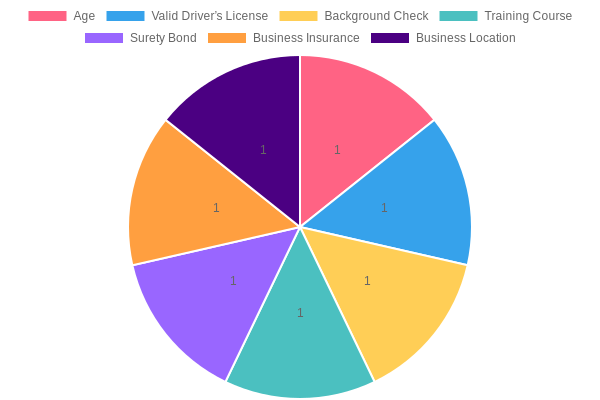
Obtaining a motor vehicle dealer license is a crucial step for those looking to start a car dealership. The requirements can vary by state, but there are common criteria that applicants must generally meet. Below is a comprehensive list of these requirements:
General Requirements
- Age: You must be at least 18 years old.
- Valid Driver’s License: A valid driver’s license is required, which may be non-commercial or commercial, depending on state regulations.
- Background Check: A background check is required, including a review of criminal history and credit.
- Training Course: Completion of a state-approved dealer education course may be necessary.
- Surety Bond: Applicants typically must provide a surety bond ranging from $50,000 to $100,000 to cover potential liabilities. This amount varies by state.
- Insurance: Proof of liability insurance is required; minimum coverage will depend on state laws.
- Business Location: You must have a physical business address that complies with local zoning laws. Some states require a designated display area for vehicles.
Legal and Financial Considerations
- Business License: Depending on your state, you may need a separate business license to operate.
- Sales Tax License: Most states require a sales tax license to sell vehicles legally.
- Local Permits: Check for any local permits or zoning requirements specific to your area.
Educational Resources
- To understand the specifics required in your state, refer to your state’s department of motor vehicles or official government websites. For more information on state variations, visit NADA Guides or American Motor Dealers Association.
You can check this comprehensive guide for more detailed requirements specific to your state.
Benefits of Having a Motor Vehicle Dealer License
Obtaining a motor vehicle dealer license is a transformative step for anyone looking to thrive in the automotive market. Here are some key benefits that illustrate how this license can significantly impact one’s business and provide leverage in a competitive landscape:
-
Legal Compliance: Holding a dealer license ensures you are compliant with local and state regulations. This exemplifies professionalism and diminishes the risks associated with legal repercussions, learn more about state rules’ impact.
-
Increased Credibility: A dealer license substantiates your legitimacy as a business, fostering trust among consumers. People are more inclined to purchase from licensed dealers, knowing they adhere to industry standards and regulations.
-
Access to Exclusive Deals: Licensing often grants access to wholesale markets, allowing dealers to acquire vehicles at a lower cost, thus enhancing profit margins significantly. This can lead to substantial savings and an increase in inventory quality.
-
Enhanced Marketing Opportunities: Licensed dealers can utilize a range of advertising resources unavailable to unlicensed dealers, widening their reach and elevating brand presence in the automotive industry.
-
Consumer Protection: The dealer license system is designed to protect consumers from unfair practices, ensuring that they receive quality service and vehicles. This commitment to integrity can make a notable difference in customer relations and repeat business.
Overall, possessing a motor vehicle dealer license is not just a requirement-it’s a powerful tool for establishing a successful and reputable automotive business.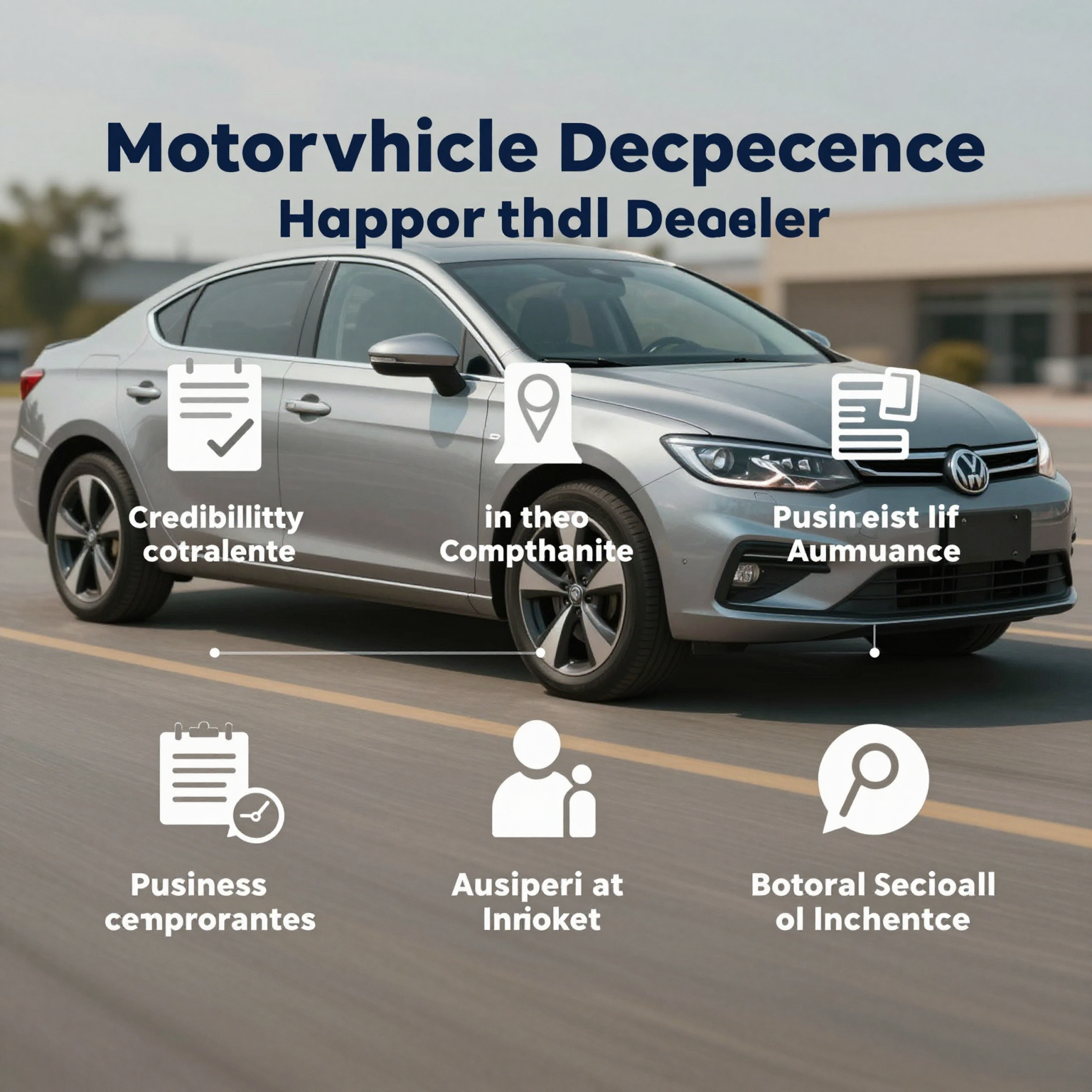
Regulatory Compliance Considerations
Maintaining a motor vehicle dealer license requires compliance with a variety of regulatory considerations at both state and federal levels. Understanding these requirements is crucial for the successful operation of a dealership and ensuring ethical practices within the industry.
State Laws and Licensing Requirements
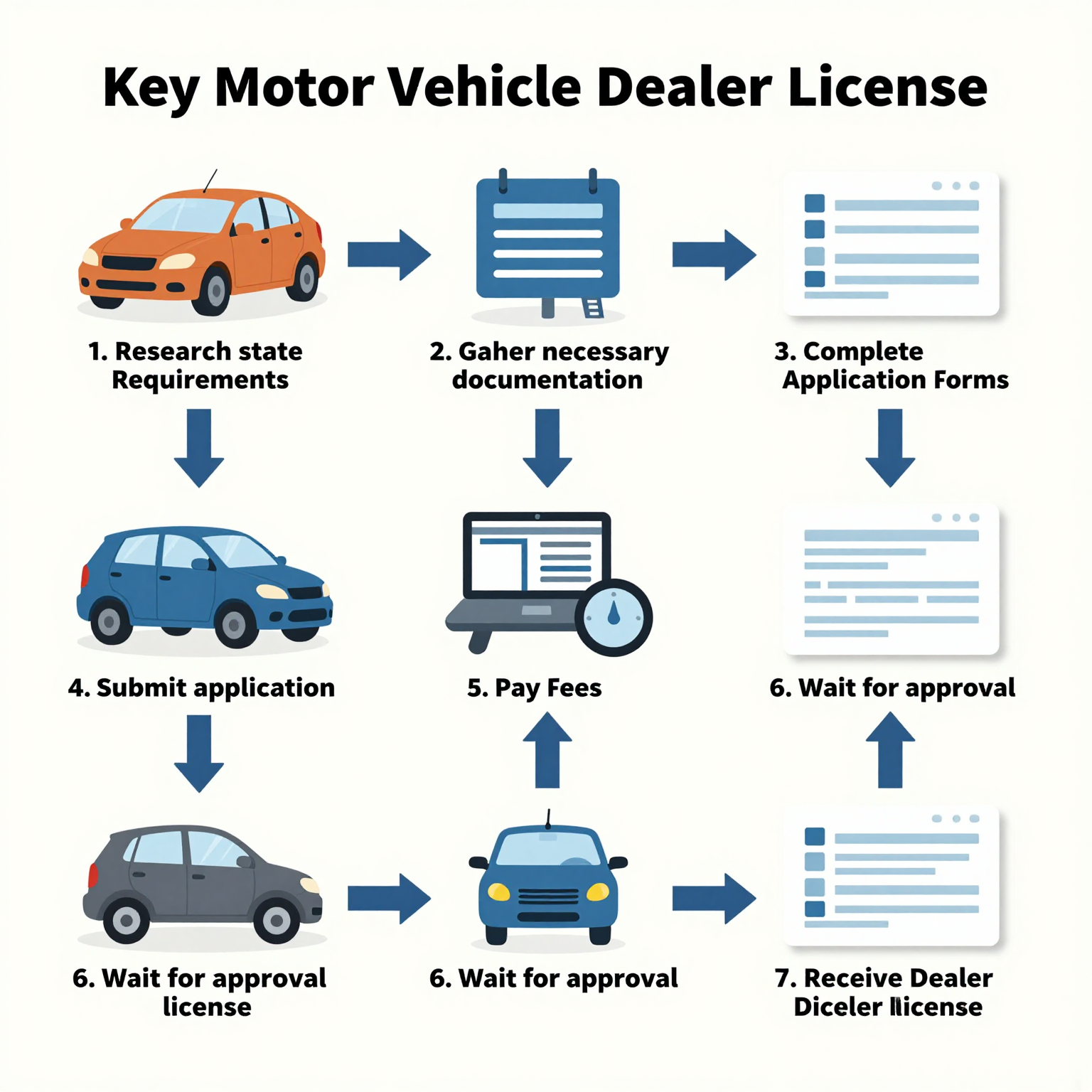
Each state has its own licensing requirements that must be adhered to. Generally, obtaining a motor vehicle dealer license involves the following steps:
- Application Submission: Submit a completed application form to the relevant state regulatory authority.
- Background Check: Undergo a background check, which may involve review of criminal history and financial standing.
- Insurance Requirements: Provide proof of dealer insurance, which is often mandated.
- Zoning Compliance: Ensure the location complies with local zoning laws for automobile dealerships.
For detailed information on state-specific regulations, readers can learn more about state rules impacting driver licensing.
Ethical Responsibilities
Dealers have an ethical obligation to operate transparently and fairly. Ethical responsibilities include:
- Honesty in Sales Practices: It is essential to represent vehicles accurately and disclose any issues openly to consumers.
- Compliance with Consumer Protection Laws: Adhering to federal laws, such as the Federal Trade Commission’s guidelines on advertising and sales practices, helps protect consumer rights.
- Building Trust: Maintaining ethical standards builds a reputable dealership that garners customer loyalty.
Ongoing Compliance
Once licensed, ongoing compliance with regulations is critical. This includes regular audits, continuing education on regulatory changes, and adapting to new consumer protection laws. Ensuring compliance not only protects consumers but also minimizes the risk of facing penalties or losing the dealer license.
For further reading on the implications of compliance failures, visit compliance failures and insurance costs.
| State | License Type | Bond Requirement | Background Check | Continuing Education | Business Registration |
|---|---|---|---|---|---|
| Alabama | Dealer | $25,000 | Yes | 8 hours (biennial) | Yes (Secretary of State) |
| Alaska | Dealer | $10,000 | Yes | 4 hours (annual) | Yes (Division of Motor Vehicles) |
| Arizona | Dealer | $10,000 | Yes | 4 hours (annual) | Yes (Department of Transportation) |
| Arkansas | Dealer | $10,000 | Yes | 4 hours (annual) | Yes (Department of Finance and Administration) |
| California | Dealer | $25,000 | Yes | 8 hours (biennial) | Yes (DMV) |
| Colorado | Dealer | $10,000 | Yes | 4 hours (annual) | Yes (Department of Revenue) |
| Connecticut | Dealer | $25,000 | Yes | 4 hours (annual) | Yes (DMV) |
| Delaware | Dealer | $10,000 | Yes | 4 hours (annual) | Yes (Division of Motor Vehicles) |
| Florida | Dealer | $10,000 | Yes | 4 hours (annual) | Yes (HSMV) |
| Georgia | Dealer | $10,000 | Yes | 4 hours (annual) | Yes (Department of Driver Services) |
| Hawaii | Dealer | $10,000 | Yes | 4 hours (annual) | Yes (Department of Transportation) |
| Idaho | Dealer | $10,000 | Yes | 4 hours (annual) | Yes (Department of Motor Vehicles) |
| Illinois | Dealer | $25,000 | Yes | 4 hours (annual) | Yes (Secretary of State) |
| Indiana | Dealer | $10,000 | Yes | 4 hours (annual) | Yes (BMV) |
| Iowa | Dealer | $10,000 | Yes | 4 hours (annual) | Yes (DMV) |
| Kansas | Dealer | $10,000 | Yes | 4 hours (annual) | Yes (Department of Revenue) |
| Kentucky | Dealer | $10,000 | Yes | 4 hours (annual) | Yes (Preliminary approval from DMV) |
| Louisiana | Dealer | $10,000 | Yes | 4 hours (annual) | Yes (DMV) |
| Maine | Dealer | $10,000 | Yes | 4 hours (annual) | Yes (Bureau of Motor Vehicles) |
| Maryland | Dealer | $25,000 | Yes | 4 hours (annual) | Yes (Motor Vehicle Administration) |
| Massachusetts | Dealer | $25,000 | Yes | 4 hours (annual) | Yes (RMV) |
| Michigan | Dealer | $10,000 | Yes | 4 hours (annual) | Yes (MDOT) |
| Minnesota | Dealer | $10,000 | Yes | 4 hours (annual) | Yes (MnDOT) |
| Mississippi | Dealer | $10,000 | Yes | 4 hours (annual) | Yes (DMV) |
| Missouri | Dealer | $10,000 | Yes | 4 hours (annual) | Yes (MoDOT) |
| Montana | Dealer | $10,000 | Yes | 4 hours (annual) | Yes (Department of Justice) |
| Nebraska | Dealer | $10,000 | Yes | 4 hours (annual) | Yes (Department of Motor Vehicles) |
| Nevada | Dealer | $10,000 | Yes | 4 hours (annual) | Yes (DMV) |
| New Hampshire | Dealer | $10,000 | Yes | 4 hours (annual) | Yes (Bureau of Motor Vehicles) |
| New Jersey | Dealer | $25,000 | Yes | 4 hours (annual) | Yes (Motor Vehicle Commission) |
| New Mexico | Dealer | $10,000 | Yes | 4 hours (annual) | Yes (Motor Vehicle Division) |
| New York | Dealer | $25,000 | Yes | 4 hours (annual) | Yes (DMV) |
| North Carolina | Dealer | $10,000 | Yes | 4 hours (annual) | Yes (NC DMV) |
| North Dakota | Dealer | $10,000 | Yes | 4 hours (annual) | Yes (Department of Transportation) |
| Ohio | Dealer | $10,000 | Yes | 4 hours (annual) | Yes (BMV) |
| Oklahoma | Dealer | $10,000 | Yes | 4 hours (annual) | Yes (Oklahoma Department of Public Safety) |
| Oregon | Dealer | $10,000 | Yes | 4 hours (annual) | Yes (DMV) |
| Pennsylvania | Dealer | $25,000 | Yes | 4 hours (annual) | Yes (Pennsylvania DMV) |
| Rhode Island | Dealer | $10,000 | Yes | 4 hours (annual) | Yes (DMV) |
| South Carolina | Dealer | $10,000 | Yes | 4 hours (annual) | Yes (DMV) |
| South Dakota | Dealer | $10,000 | Yes | 4 hours (annual) | Yes (Department of Revenue) |
| Tennessee | Dealer | $10,000 | Yes | 4 hours (annual) | Yes (Department of Safety and Homeland Security) |
| Texas | Dealer | $10,000 | Yes | 4 hours (annual) | Yes (TxDMV) |
| Utah | Dealer | $10,000 | Yes | 4 hours (annual) | Yes (DMV) |
| Vermont | Dealer | $10,000 | Yes | 4 hours (annual) | Yes (DMV) |
| Virginia | Dealer | $10,000 | Yes | 4 hours (annual) | Yes (DMV) |
| Washington | Dealer | $10,000 | Yes | 4 hours (annual) | Yes (DMV) |
| West Virginia | Dealer | $10,000 | Yes | 4 hours (annual) | Yes (DMV) |
| Wisconsin | Dealer | $10,000 | Yes | 4 hours (annual) | Yes (DMV) |
| Wyoming | Dealer | $10,000 | Yes | 4 hours (annual) | Yes (Department of Transportation) |
Costs Involved in Acquiring a Motor Vehicle Dealer License
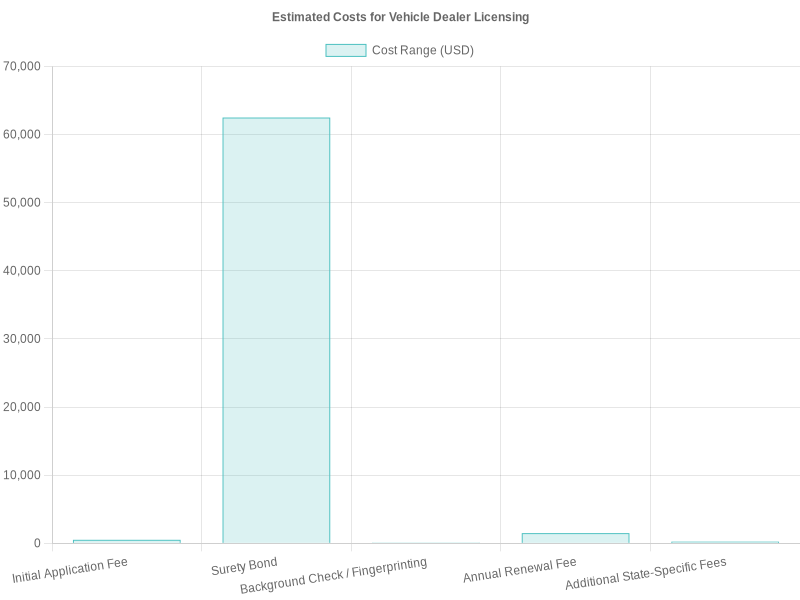
Acquiring a motor vehicle dealer license can involve various costs that applicants should consider when planning their new venture. These costs can be divided into initial fees and ongoing expenses, which can vary significantly depending on your location and the specific licensing requirements in your state.
Initial Costs
- Application Fee: The cost to apply for a motor vehicle dealer license can range from $50 to over $1,000. This fee greatly varies among states with larger vehicle markets typically charging higher amounts, such as California or New York.(source).
- Surety Bond: Most states require a surety bond, which acts as a financial guarantee that protects consumers. The bond amount generally ranges from $25,000 to $100,000, with the cost of the bond premium often being around 1-4% of the total bond amount. This results in annual premiums between $250 and $1,000.
- Background Check/Fingerprinting: Applicants usually need to undergo a background check or fingerprinting, which can cost between $50 and $150, depending on the specific requirements.
Ongoing Fees
- Annual Renewal Fee: After obtaining the license, dealers must pay an annual renewal fee that can range from $100 to $3,000. This fee is determined by the state and may vary based on the number of vehicles sold or the type of dealership (new versus used).
- Additional State-Specific Fees: Dealers might incur various state-specific fees, such as registration and title processing, which can add another $0 to $500 to the total cost.
Summary of Costs
| Category | Description | Cost Range (USD) |
|---|---|---|
| Initial Application Fee | Fee to apply for a new dealer license | $50 – $1,000+ |
| Surety Bond | Financial guarantee to protect consumers | $25,000 – $100,000 (premiums: $250 – $1,000 annually) |
| Background Check / Fingerprinting | Criminal history check | $50 – $150 |
| Annual Renewal Fee | Recurring fee to maintain active status | $100 – $3,000 |
| Additional State-Specific Fees | Miscellaneous costs | $0 – $500 |
Note: It’s crucial to research the specific requirements based on your state, as this will help you avoid unexpected costs and ensure compliance with licensing regulations.(source)
For a visual overview, please refer to the chart below that summarizes estimated costs for vehicle dealer licensing.
Overview of Dealer License Approval Rates
Dealer licenses are essential for operating a motor vehicle dealership legally. However, the approval rates for these licenses can vary significantly based on several factors, including geographical location and applicant demographics. Recent studies and analyses from the National Association of Motor Vehicle Dealers (NAMVD) and other academic sources have revealed compelling insights into these trends and concerns for potential dealers.
Regional Trends in License Approval Rates
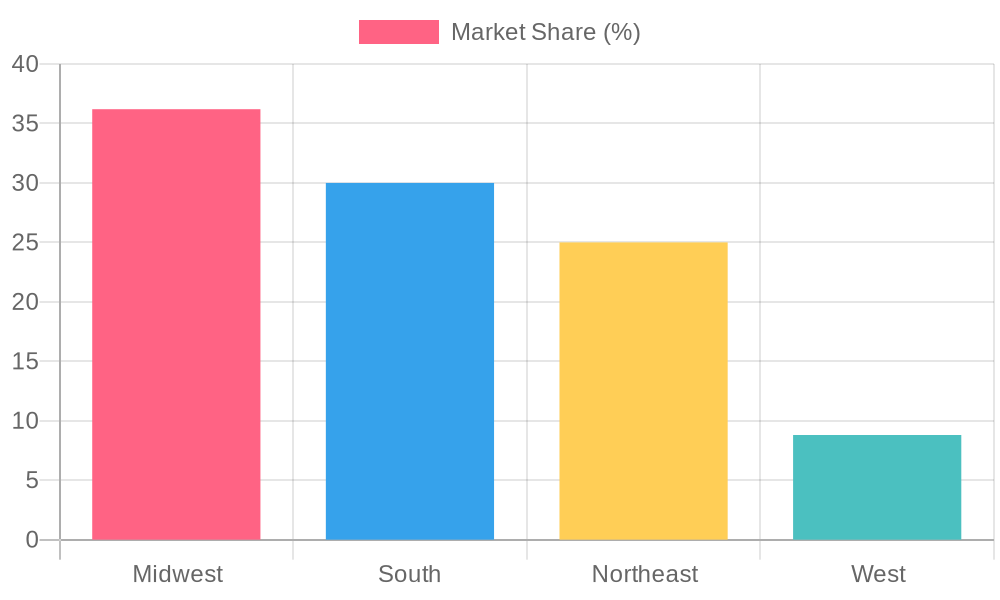
According to the National Association of Motor Vehicle Dealers, the approval rates for dealer licenses were notably higher in the Midwest, where approximately 36.2% of applicants were approved, compared to the South at 30%, the Northeast at 25%, and the West at 8.8%. This reflects not only regional economic variations but also differing regulatory frameworks.
The following chart illustrates the dealer license approval rates by region:
Demographic Disparities
Demographics also play a crucial role in license approval rates. Analysis from the Journal of Economic Research indicates that approval rates tend to favor male applicants over female applicants. Furthermore, the statistics reflect that applicants with higher educational qualifications experience better approval rates compared to those with lower educational attainment. Notably, areas with higher poverty incidences show disproportionately lower licensing rates.
Implications for Applicants
The disparate approval rates raise concerns about equal access to opportunities in the motor vehicle dealership market. This is particularly significant as the economic health of communities can impede or facilitate the establishment of dealerships. For potential dealers, understanding these trends can provide insight into the challenges they may face in securing a dealer license.
Conclusion
The approval rates for motor vehicle dealer licenses are a critical measure for aspiring dealers and reflect broader socioeconomic trends. With increasing scrutiny on socio-economic disparities, applicants must consider not just regulatory requirements but also the demographic context within which they operate. As the automotive market evolves, ongoing research will continue to shed light on these disparities, ensuring that potential licensees are adequately informed. For more information on licensing rules and impacts, check out our article on how state rules impact driver licensing.
The statistics indicate considerable regional variation and demographic inequality in approval rates, which may warrant further monitoring and policy adjustments to promote fairness in the licensing process. This information is particularly useful for new drivers, vehicle owners, and existing dealerships looking to expand or improve their operations in the automotive landscape.
Trends in the Motor Vehicle Dealership Market
The motor vehicle dealership market is undergoing significant transformations, influenced by shifting demographics and consumer preferences. As of 2023, this industry is expected to represent a substantial $532 billion, growing at an estimated 2.57% annual rate. The rise in electric and hybrid vehicles is a crucial driver of this growth, as consumers increasingly seek sustainable transportation options.
Key Highlights:
- Market Size: The global automotive dealership market is on track to reach $1.2 trillion by 2033.
- Demographic Changes: A notable increase in female and younger buyers is altering purchasing patterns, emphasizing the importance of adapting marketing and service offerings.
Chart: Automotive Dealership Market Size Projection
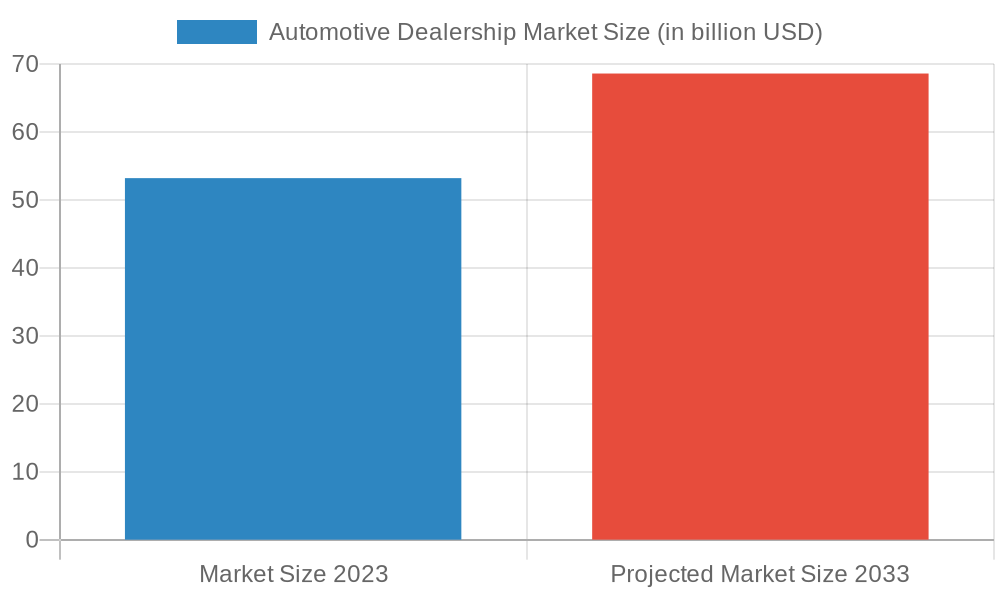
In the chart above, you can see the projection for the automotive dealership market size, delineating the size in 2023 versus the expected growth by 2033.
For more insights on the impact of state regulations on the driver licensing process, you can learn more here or explore vehicle inspection requirements across states.
Conclusion and Call to Action
Obtaining a motor vehicle dealer license is a crucial step for anyone looking to start a career in the automotive sales industry. A dealer license not only legalizes your ability to sell vehicles, but it also opens doors to numerous benefits such as enhanced credibility, access to financing options, and opportunities for manufacturer collaborations. The process requires compliance with various regulations, including maintaining a physical location and meeting specific financial criteria.
For entrepreneurs in the automotive business, it is essential to understand these requirements thoroughly to prevent legal issues down the line. If you’re ready to take the next step in becoming a licensed motor vehicle dealer, consider partnering with experts who can guide you through the process smoothly. Additionally, if you’re looking for high-quality solutions for your automotive needs, check out Summit Fairings to discover offerings that can enhance your business capabilities. Act now and secure your future in the automotive industry!