
Acquiring a vehicle dealer license is a crucial step for individuals interested in entering the automotive sales industry. This process is essential not only for compliance with legal standards but also for establishing a reputable business. Whether you are a new driver, an existing vehicle owner, or looking to start an auto dealership, understanding the various stages of obtaining the right license is paramount. This article is organized into five key chapters, detailing the different types of dealer licenses, eligibility requirements, necessary business registrations, the application process, and important steps to take post-application. By the end, you’ll have a clear roadmap to navigate through each step effectively.
Mapping the License Landscape: Understanding Vehicle Dealer Types and the Road to Getting Licensed
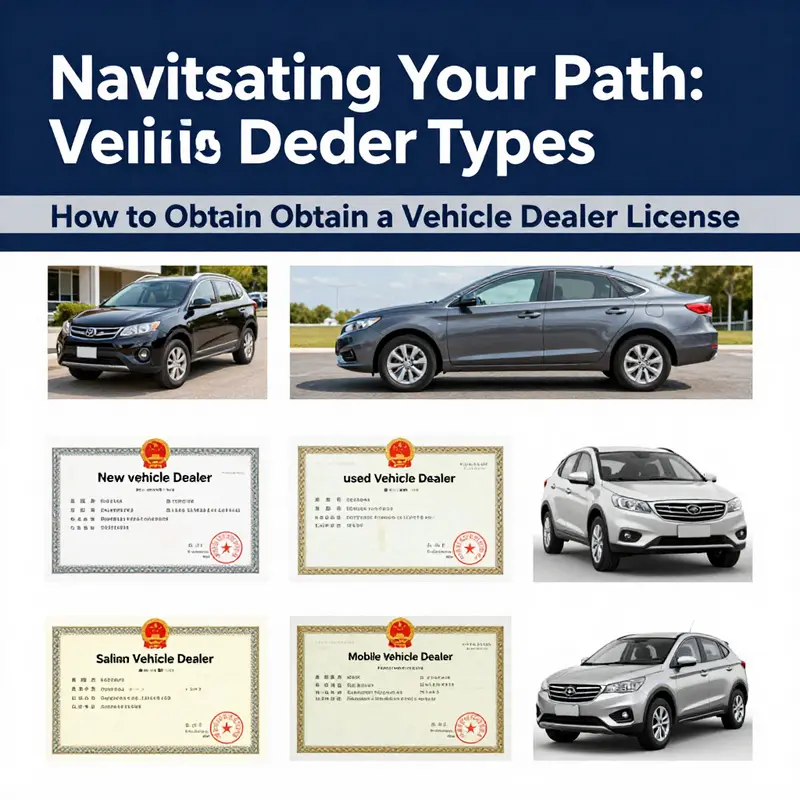
When someone starts to plan a vehicle sales business, the first big map to unfold is the license landscape. It’s not enough to want to sell cars; you must align your business model with the exact license type that authorizes the work you intend to do. Regulations vary from state to state, and even within a single state, the scope of permitted activity shifts with the license category you choose. This chapter blends a practical view of the main license types with the real-world steps you’ll take to secure one, using California as a point of reference while keeping the discussion transferable to other jurisdictions. The goal is to illuminate how the license type you select anchors everything from your showroom setup to the documentation you must keep, the bonds you must post, and the compliance you’ll maintain year after year. Understanding the differences upfront helps you design a compliant business from day one rather than reinventing the wheel later when a renewal or audit looms.
In broad terms, most states recognize several core license types that cover the spectrum of sales activities in the motor vehicle ecosystem. A New Vehicle Dealer License is issued to businesses that buy and sell brand-new vehicles directly from manufacturers. This license often assumes a close relationship with manufacturers, stricter showroom standards, and specific inventory and warranty obligations. A Used Vehicle Dealer License covers the sale of pre-owned cars and trucks and frequently comes with additional checks and disclosures designed to protect buyers who may be purchasing cars with an unknown history. A Wholesale Dealer License typically allows the business to procure vehicles for resale to other dealers, repair facilities, or licensed auctions rather than to the general public. This license centers on bulk transactions and inventory handling rather than retail storefront sales. A Salvage or Rebuilt Vehicle Dealer License addresses vehicles that have been damaged or totaled and later repaired, with rules that govern the disclosure of damage history, repair quality, and post-repair inspection. Finally, a Mobile Vehicle Dealer License applies to operators who sell vehicles away from a fixed lot, at events or from temporary locations, requiring flexibility paired with clear location and advertising rules. Each license type carries its own combination of required facilities, inspections, disclosures, and insurance expectations, so the path to approval starts with a precise alignment between your business plan and the regulatory category you pursue.
The practical implications of choosing a license type extend well beyond the label. Your approach to space, signage, and customer access changes with the license you hold. For example, a new vehicle dealership often means a showroom floor that meets brand and safety standards, a robust inventory pipeline, and a sales team trained in manufacturer-specific disclosures. A used car operation enters with heightened emphasis on vehicle history, inspections, and disclosures about prior ownership and service records. A wholesale operation may rely more on a business-to-business network, with less emphasis on consumer-facing showroom space but more on inventory procurement, transfer paperwork, and dealer-to-dealer transactions. A salvage or rebuilt dealer license brings its own layer of inspections and disclosure requirements to ensure buyers understand the condition and repair history of the vehicles. A mobile dealer must demonstrate the ability to comply with advertising, disclosures, and licensing while operating from temporary sites, which can complicate bond, insurance, and recordkeeping obligations. While the specifics vary, the throughline remains: your license type shapes your physical footprint, your compliance obligations, and your ongoing reporting.
With that understanding, the next step is to align your plans with the application process. In practice, the journey typically begins with submitting a formal application to the state’s primary licensing authority—often the department that handles motor vehicles or revenue and taxation. In California, for instance, the process is channeled through the state’s motor vehicle and tax administration bodies, and forms are category-specific. For new dealers, the application is designed to capture not only your business’s legal identity but also your capacity to maintain a compliant showroom and inventory. For used dealers, the form reflects the different emphasis on vehicle history, inspections, and consumer disclosures. The application package generally requires proof of business registration, such as Articles of Organization for an LLC or other organizational documents, an Employer Identification Number (EIN) from the IRS if you’re forming a company, and evidence that your business will operate from a dedicated location. Lease or purchase agreements for the dealership site, plus photos that verify the premises, are common staples. A crucial element across all license types is a surety bond. The bond acts as a consumer protection mechanism, providing recourse for fraud or failure to comply with applicable rules. The bond amount varies by state and by license type, but in many jurisdictions it sits in the tens of thousands of dollars. In California, the bond is a standard requirement to safeguard customers, and the bond amount can reflect the scope of your operations.
Before a license is granted, most applicants must pass background checks. This often includes fingerprinting and a review of criminal history for the owner and sometimes key personnel. The rationale is straightforward: vehicle dealerships are high-stakes businesses where trust and accountability are essential. Fees accompany the application, and they can range widely by license type and jurisdiction. In California, the price tag for a dealer license can span from modest to substantial, reflecting the complexity of the underlying regulatory framework and the level of oversight. In parallel with the financial and criminal checks, many states require education or training aligned with consumer protection, sales ethics, or specific DMV regulations. Completing these courses, when mandated, demonstrates your commitment to operating within the rules and to keeping buyers informed and protected.
Finally, once the state approves your application, you receive your dealer license and, in many cases, a dealer identification number. The license must be displayed prominently at the dealership, serving as a public sign that you are authorized to conduct the business. Beyond license issuance, there are ongoing requirements that keep the operation compliant: tax registration with the appropriate state agency for collecting and remitting sales tax; maintaining general liability and auto dealer insurance; and adhering to advertising, disclosure, warranty, and recordkeeping laws. Your ongoing duties include maintaining the dealership location in good standing, updating any changes to ownership or structure, and renewing licenses and bonds as required by your state. The landscape is dynamic, with periodic changes to forms, fees, and compliance expectations. This is why prospective dealers should set up a systematic plan that tracks deadlines, renewals, and updates to state rules.
To ground these concepts in a practical, state-aware mindset, it helps to consult official resources whenever you’re ready to take the next step. For California readers, the state’s official dealer services pages provide comprehensive guidance on license types, application procedures, required forms, and the documentation you will need. For broader or cross-state planning, a careful review of your own state’s DMV or motor vehicle and tax authority websites will reveal the exact flavor of your license type, associated bonds, and audit expectations. It’s also useful to consider how variations in state rules shape your operations, especially when comparing your plan to neighboring jurisdictions with different compliance rhythms. For a broader discussion of how state rules influence licensing regimes, you can explore further insights at this resource: state rules impact on driver licensing.
As you chart your path, remember that the license type you select is not just a label; it is the backbone of your business model, your showroom realities, and your legal protections. The exact steps, documents, and costs you face will depend on your jurisdiction, but the architecture described here applies broadly: choose a license type that aligns with your planned scope, assemble and verify the required business, location, and financial documentation, secure the necessary bond and insurance, complete any mandated training, and prepare for the thorough review that leads to licensure. With diligence and clarity about your intended operations, you position yourself to convert regulatory approval into a sustainable, compliant, and customer-centered vehicle dealership. External resources at the state level can provide the precise, up-to-date instructions you need as you move from plan to paperwork to plates. For California-specific guidance, the official California DMV Dealer Services page offers a definitive, formal roadmap to licensing, forms, and procedures: https://www.dmv.ca.gov/portal/dealer/.
Foundations of Eligibility: Laying the Groundwork for a Vehicle Dealer License
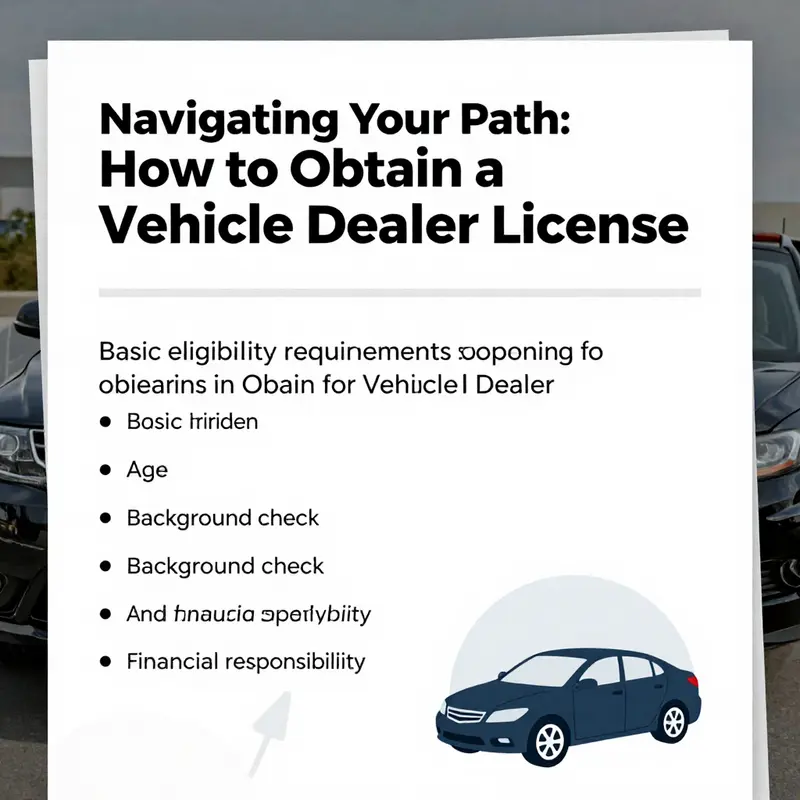
The path to a legitimate vehicle dealership begins long before the first sign is hung or the showroom lights are turned on. Eligibility is the gatekeeper, and it serves a dual purpose: it protects the public from unqualified operators and it ensures that a dealer can stand behind the standards of fair dealing, reliable disclosures, and proper title transfers. The journey toward a license is less about chasing forms and more about building a compliant, solvent, and visible business presence. When you view eligibility as an active set of obligations rather than a checklist to be rushed through, you set the stage for a smoother application, a sturdier operation, and fewer headaches down the road. The core requirements are interconnected, and they reinforce each other in a way that makes sense for both regulators and customers who rely on your dealership to operate with integrity.
First comes the structure of your business. Most states expect a legally registered business entity, which can be a sole proprietorship, partnership, limited liability company, or corporation. The form you choose affects taxes, liability, and how you present your operation to the licensing authority. An Employer Identification Number, or EIN, from the IRS is typically required if you form a company or partnership. Even a sole proprietor may need to show a tax identification reference. The underpinnings of this step are simple: you must show you are a bona fide business with a traceable legal footprint, not a temporary venture. As you plan, consider speaking with a business attorney or an accountant who understands automotive regulations in your state. The goal is not to secure a license in a vacuum but to demonstrate ongoing capacity to run a compliant enterprise.
Another pillar is proof of financial responsibility. Licensing authorities want to see that you can cover ordinary operations and potential consumer claims without risking the public trust. A basic expectation is some level of working capital or net worth that reflects a stable business model. A surety bond is common across states and serves as a consumer protection mechanism, promising that if you falter in your duties—such as misrepresentations or failure to remit funds—the bond provides financial recourse. Bond amounts vary widely; some states require as little as ten thousand dollars, while others push well into the fifty-thousand-dollar range or higher. In practice, you should anticipate that the bond is not merely a formality but a recognized cost of doing business, one that signals to regulators and customers that you take your financial obligations seriously. It’s prudent to budget not only for the bond but for the ongoing financial oversight that often accompanies dealer licensing.
A fixed, identifiable place of business is not optional; it is a nonnegotiable requirement. Licensing authorities expect a physical showroom or sales office with a clearly defined address, not a virtual or pop-up space. The location must be zoned for commercial use and meet local ordinances, including signage, parking, and safety standards. Proof of address is typically required in the form of a lease agreement, a deed, or a purchase contract tied to the dealership. This physical footprint underpins consumer confidence: buyers want to visit a real, inspected site where vehicles can be inspected, test-driven, and evaluated. It also anchors your compliance activities, such as recordkeeping, disclosures, and title transfers, which are far easier to manage when you operate from a stable location.
Beyond the physical and financial foundations lie obligations that bind you to broader state law. You must commit to following the applicable motor-vehicle statutes and regulatory rules governing dealer behavior. These include rules on advertising accuracy, disclosures about vehicles, handling of warranties, and the precise mechanics of title transfers. Compliance cannot be cherry-picked; it must be woven into daily operations. Regulators monitor not only the paperwork you submit during the license process but also how you conduct sales, how you document disclosures, and how you maintain records over time. A dealer who treats compliance as a recurring practice, rather than a one-time formality, stands a far better chance of thriving in a competitive market.
Background checks are a recurring element in many licensing regimes. Expect scrutiny of the owner or controlling individuals, with potential fingerprinting and criminal-history reviews. Felony convictions, particularly those involving dishonesty or consumer harm, can be disqualifying in certain jurisdictions. The aim is straightforward: regulators want to know that the leadership behind the dealership will operate with integrity and without repeating patterns of misconduct in the consumer-protection space. Preparing for this step means being transparent about past issues, addressing any concerns with remedial steps, and ensuring that senior personnel have a clean, continuous record relevant to the duties of a licensed dealer.
Some states also test knowledge of dealership laws. While not universal, written examinations or knowledge assessments ensure that applicants understand the rules that govern advertising, disclosures, financing practices, and consumer protection standards. Even when an exam is not required, familiarizing yourself with the core statutes and DMV regulations helps you prepare a stronger application and reduces the risk of later compliance gaps that could jeopardize your license. In practice, approach this as a learning opportunity rather than a hurdle to clear; the better you understand the framework, the more capable you are of maintaining a lawful, reputable operation.
Applications and fees bring the final formal steps into view. The process typically involves submitting a state-specific application form and paying a set of fees that cover processing, potential background checks, and license issuance. The exact amounts vary by state and by license type—new-car dealers, used-car dealers, salvage or rebuilding facilities, and other specialized dealer models each have distinct filing requirements. In California, for example, the pathway is channeled through the state’s licensing bodies, with notable distinctions between different dealer categories and the corresponding forms. You will often attach supporting documents such as your business registration proof, EIN letter, a certificate of good standing, your lease or property documents, and photos of the dealership premises. A display-ready space means you can show regulators not only documents but also a tangible commitment to the consumer experience you plan to deliver.
The practical arc of assembling eligibility is not merely a sprint to a closing date on an application form. It is a structured build-out: define the entity, secure capital and a bond, lock in a compliant physical site, align with legal expectations, and prepare for background scrutiny. When these components come together, you present a coherent, trustworthy picture of a dealership that can legally buy and sell vehicles, that can handle title transfers with accuracy, and that can sustain consumer protections in the long run. In parallel with this effort, you may encounter jurisdictional nuances that shape your exact path. For instance, in California the process may involve forms such as OL-248N for new dealers or OL-248U for used-car dealers, with submission options through the CDTFA or related agencies. The required documentation usually includes lease or ownership evidence for your location, photos of the premises, your business registration details, and proof of the dealer bond. While the procedural details vary, the underlying principle remains constant: regulatory readiness hinges on disciplined, methodical preparation, not on chance.
As you navigate these waters, it can be valuable to consider how state rules shape licensing more broadly. For context on how regulatory expectations are shaped across state lines, you can explore perspectives on state rules impact on driver licensing. This broader lens helps you anticipate where your state may align with or diverge from neighbors in terms of financial prerequisites, background checks, and site requirements. state rules impact on driver licensing.
In the end, the eligibility milestone is less a finish line and more a foundation. Once you demonstrate that your business entity is real, your finances are responsibly managed, your location is properly zoned and staffed, and your compliance posture is solid, you move from anticipation to action. You’ll receive the license, and the real work can begin: building trust with customers, maintaining meticulous records, and keeping pace with evolving laws that govern how vehicles are advertised, sold, and insured. While the exact steps and paper trail will depend on your state or country, the overarching logic remains consistent. Prepare thoroughly, seek clarity from official resources, and treat every requirement as an opportunity to prove that you are a responsible steward of the public market for vehicles.
External resource: For authoritative guidance on state licensing processes in California, consult the official state portal: https://www.dmv.ca.gov/portal/.
From Paperwork to Showroom: Navigating Business Registration on the Road to a Vehicle Dealer License
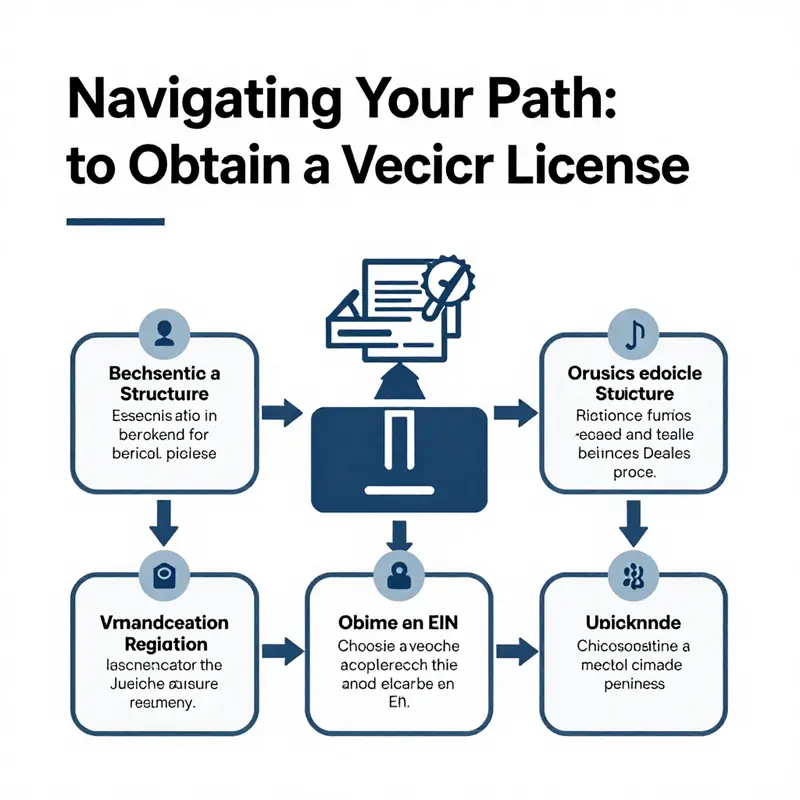
The journey to a vehicle dealer license begins long before the first car goes on a lift or the first price tag goes on a windshield. It starts with the business you intend to run and the legal footprint you will build for that enterprise. In most jurisdictions, especially in the United States, the licensing authority treats the dealer as a regulated entity that must operate within a clearly defined corporate framework. That means business registration is not a mere formality; it is the foundation of credibility, accountability, and long-term viability. The path is not one-size-fits-all. While this chapter uses California as a focal point for concrete reference, the logic and sequence apply broadly: establish a legitimate business, align it with state requirements, and then translate that structure into a compliant dealer license capable of sustaining a robust, transparent operation.
First comes state-by-state research. Licensing rules swing widely, even among neighboring counties, because each state writes its own rules about minimum capital, facility specifications, and bonding. A careful navigator will audit the public checklists, regulations, and application prerequisites before committing time or money. The moment you begin to compare what is required for a new-car dealer versus a used-car dealer, you start to see how the paperwork maps onto the business model you intend to run. You may encounter distinctions that affect your financial plan, your lease or ownership of premises, and the kind of signage you must display. California, for instance, uses a more formal, document-heavy approach than some other states, but the underlying principle remains the same: the state wants to see that you have a real, compliant operation with solid controls in place. For readers who want to drill into the state-specific nuance, a broader frame of reference is available in resources that discuss how state rules impact licensing and compliance. state-rules-impact-on-driver-licensing.
With that awareness, the next decisive step is choosing a business structure. The decision between a sole proprietorship, a limited liability company, or a corporation is not cosmetic. It determines liability protection, tax posture, and the mechanics of how you will hold assets and raise capital. A sole proprietorship might seem simplest, but it generally offers the least protection for personal assets. An LLC or a corporation creates a shield and can influence how a dealership stands up to audits, registrations, and the level of formality required in reporting to the state. The structure you select will cascade into the registration process, tax obligations, and even the bonding requirements that protect buyers. Once you settle on a form that aligns with your risk tolerance and growth plans, you can move to the next critical stage: registering the business name and obtaining an Employer Identification Number.
Naming your business is not just branding; it is a legal signal to your customers and the state that your enterprise is distinct and compliant. The process usually involves checking for name availability and ensuring the chosen name does not infringe on existing registrations. After you settle on a compliant name, you apply for an EIN from the Internal Revenue Service. The EIN is more than a tax formality. It becomes the cornerstone of your business banking, employee payroll, and the licensing process itself. An EIN letter from the IRS serves as concrete proof of your entity’s existence and helps you open a business bank account, separate personal and business finances, and fulfill ongoing tax obligations. These steps—name registration and EIN—are repeatable across states, though the precise filing channels and fees differ. The goal is to create a clean, professional engine behind your dealership, one that can be audited and defended if questions arise later in the licensing journey.
The formal registration with the state follows. Here, the mechanics depend on your chosen structure. LLCs file Articles of Organization; corporations file Articles of Incorporation; you may also need to file for a DBA (doing business as) if your permissible business name differs from the legal name you registered. The Secretary of State or the equivalent agency hosts online portals for these filings, but the requirement for precise documentation remains constant: organizational documents, bylaws (for corporations), and sometimes consent statements or registration certificates. This stage transforms a private business idea into a legally recognized entity with a traceable footprint. The registration is not merely administrative; it is the backbone that supports future licenses, permits, and registrations, including the dealer license itself.
A licensed dealer is not granted permission to sell until the business has secured the proper authorization to operate. When you apply for the dealer license, you typically present proof of your business registration, a completed application form, and evidence of a physical premises somewhere you can show prospective customers vehicles, signage, and a compliant showroom or lot. In California, the application process is layered through the state’s toyed-of-records structure, with distinct forms for new versus used dealers. The application package almost always includes photographs of the dealership premises, lease or purchase agreements, proof of the business’s registration, and, in many cases, a dealer bond that protects consumers. The duplicity of tasks is deliberate: it creates a multi-faceted image of a company that can be held accountable for its practices, its finances, and its obligations to customers.
The bond stands as a central, sometimes non-negotiable, pillar. It is a consumer protection instrument—an insurance policy of sorts for buyers against misrepresentation or wrongdoing. The bond amount varies by state and by license type but commonly runs tens of thousands of dollars. The exact percentage and terms depend on the jurisdiction, the business structure, and the dealer category. Securing the bond requires a surety company, and the process itself often coincides with a background check and fingerprinting, designed to ensure the licensee’s trustworthiness and financial stability. These checks, combined with the bond, deliver a framework in which both the state and the consumer have a recourse in cases of dispute or fraud. The financial discipline this system demands—every purchase, every invoice, every warranty obligation—teaches a new dealer to manage cash flow with clear visibility, since compliance and licensing are tied to ongoing operations rather than a one-off event.
As you move through this phase, consider the training landscape. Some states prescribe training on consumer protection, sales ethics, or DMV regulations. Even when not mandatory, pursuing training yields tangible benefits: it reduces the risk of inadvertent noncompliance and enhances your dealership’s standing with regulators and customers alike. Training signals a commitment to ethical conduct and a proactive approach to adherence. It also helps you implement robust internal controls—disclosures, warranty handling, advertising standards, and recordkeeping protocols—that align with what the state expects from a licensed dealer.
When the licensing officer signs off, the license is issued, and you can display it prominently at your location. Many jurisdictions will also provide a dealer identification number or similar credential, emphasizing the formal recognition that your business is now authorized to operate in a regulated market. The initial license is a milestone, but it is also the start of ongoing compliance. You will need to maintain your license by renewing it as required, and you’ll need to keep your business in good standing with the state—an ongoing process that includes timely tax filings, regular bond maintenance, and renewal of any required insurance coverage.
Beyond the core licensing steps, several administrative obligations deserve careful attention. Tax registration with the state tax agency is essential to collect and remit sales tax properly. Insurance is not optional; general liability and specific auto dealer insurance are standards that protect your business from loss and legal exposure. Advertising and disclosure rules govern how you present vehicles, warranties, and financing terms, and recordkeeping requirements ensure you can demonstrate compliance if regulators request audits or inspections. To keep the narrative consistent with the practical realities of dealership operations, it helps to frame the process as a continuum rather than discrete milestones. The business formation, the licensing submission, the bond, the training, and the ongoing compliance obligations all intertwine to create a legitimate, sustainable enterprise that customers can trust and regulators can monitor with confidence.
For readers seeking authoritative, state-specific guidance, the official resources remain the most reliable compass. In the California example, the state’s dealer licensing pages and the CDTFA resources provide the forms, fee schedules, and step-by-step instructions needed to align your business registration with licensing requirements. You should consult these primary sources, as well as the directory of state motor vehicle agencies, to confirm any updates to forms or procedures. The journey from business registration to a functioning dealership is made smoother by aligning with these official channels and by planning for the time and cost required to complete each phase. For official details, consult the California DMV dealer licensing page: https://www.dmv.ca.gov/portal/dealer-licensing/.
Applying for the Dealer License: Navigating the Regulatory Pathway to a Vehicle Sales Operation
When you decide to build a professional vehicle sales business, securing a dealer license is more than a single filing. It is a structured journey that blends business formation with strict regulatory compliance, site readiness, and ongoing governance. In many markets, including the Chinese regulatory framework that informs a great deal of cross-border licensing thinking, the process unfolds as a logical sequence: establish a legal entity, prove you can operate at a professional level, demonstrate a legitimate physical footprint, and then align your operation with the brand and the market authority that governs vehicle sales. This chapter traces that path as a coherent narrative, highlighting how each step serves both public interest and business viability, and it shows how the same logic appears in other jurisdictions with their own twists and timelines. The underlying principle is simple: the right license is not merely permission to sell; it is a framework that ensures accountability, safety, and transparency for every buyer who walks through your showroom.
The journey begins with the essential act of registering the business itself. In the Chinese context, as described in the official procedures, you must register with the local market supervision bureau. The process starts with a name pre-approval, followed by the submission of foundational documents such as articles of association, identification of shareholders and the legal representative, and proof of the registered address. You also need to declare your registered capital and shareholding structure. The bureau reviews these materials, often issues a Notice of Approval for Establishment, and then your official business license is issued, sometimes within a day after the review concludes. This phase is not merely bureaucratic; it creates the legal scaffolding for all subsequent licenses and permits. It also signals to lenders, suppliers, and potential brand partners that you are a bona fide business entity capable of meeting ongoing obligations. At this stage, a simple but critical decision emerges: will you aim to sell only used vehicles, or will you pursue the more demanding path of selling new vehicles under one or more brand authorizations? Your answer will shape the subsequent steps and the timelines you should anticipate.
Once the business is in place, the next major milestone is the dealer qualification itself. The distinction between new and used car operations is real and consequential. For new car dealers, the path requires brand authorization from the manufacturer whose vehicles you intend to sell. This means your application for brand dealer qualification must be coordinated through the national registration and market regulation channels, with the manufacturer formally endorsing your dealership in the brand portfolio. The documents you submit reflect this partnership: your business license, facility plans, and qualified personnel details that meet the brand’s standards. When the regulator approves, your license is updated to display the brand name, effectively linking your corporate identity with the manufacturer’s product line. For those who opt to operate used-car dealerships, the route centers on registration with the Commerce Department to secure a separate used-car trading qualification certificate. The facility must include a fixed operating site with clearly defined vehicle display and transaction spaces. You must employ at least a baseline cadre of qualified vehicle appraisal professionals, and you must demonstrate the capability to issue legitimate used-car transaction invoices independently. Importantly, the sequence often requires completing the initial business registration first and then proceeding with the Commerce Department registration within a defined window, typically two months. This bifurcated path—brand-backed new-car channels versus independent used-car channels—highlights how licensing is as much about the business model as it is about regulatory compliance.
Beyond the primary dealer qualification, a broader set of permits and registrations rounds out the regulatory toolkit. An Organizational Code Certificate used to sit alongside the business license in earlier years, but today, many jurisdictions have integrated this function into the unified social credit code system. Tax registration is essential, ensuring that you are properly registered with the local tax authority and prepared to collect and remit taxes on vehicle transactions. A corporate bank account becomes a practical necessity, enabling secure handling of customer payments, supplier settlements, and payroll. If your services include assisting customers with vehicle registration documents, you may also need a vehicle registration service station permit issued by the relevant traffic management or public security department. Each of these steps might seem granular, but taken together they ensure that your operation maintains traceable records, adheres to financial controls, and aligns with public safety and consumer protection standards. The cumulative effect is a business that can operate without friction and with clear accountability for every sale and service interaction.
For those contemplating a branded, multi-faceted retail footprint, the regulatory map grows more granular still. The 4S store model—Sales, Spare parts, Service, and Survey—appears as a benchmark for a serious, brand-aligned operation. In jurisdictions where this model is preferred or required for certain manufacturers, the conditions extend beyond licensing. You may be asked to satisfy tangible facility criteria: a minimum showroom area, adequate repair bays, and sufficient parts storage. Capital adequacy becomes a practical concern, with many programs requiring a substantial registered capital and verifiable land rights or long-term lease arrangements. Location matters, too; high-traffic corridors on major roads are favored for visibility and accessibility, and robust fire safety and compliance systems must be in place before any inspection occurs. These thresholds are not arbitrary; they reflect an expectation that the dealership will project stability, safety, and professional service capability to customers thinking about large, emotionally charged purchases.
As you navigate this path, it is important to recognize that licensing is inherently dynamic. Regulations shift with policy changes, and the forms, fees, and timelines you encounter can evolve. Therefore, maintaining a live regulatory calendar, keeping copies of your licenses and permits, and scheduling renewals well ahead of deadlines are prudent habits. The practical implication for a prospective dealer is simple: plan with the regulator in mind, assemble a well-documented file, and design your business processes to support ongoing compliance rather than relying on one-off approvals. In markets with strong brand ecosystems, anticipate longer lead times and stricter facility requirements, but also the upside of deeper brand backing, more formal dealer networks, and better program support for marketing and service. In markets where used-car operations dominate, emphasize a transparent appraisal framework, verifiable invoicing, and disciplined inventory control. The common thread across these paths is that a robust compliance culture pays dividends in customer trust, smoother audits, and more stable operations over time.
To broaden the comparative lens, consider how licensing philosophy plays out in other major markets. While the specifics differ, the core logic—clear licensing, verifiable site readiness, and ongoing compliance—resonates across jurisdictions. This cross-market perspective underscores the value of meticulous preparation long before you file the first form. It also reinforces the point that a dealer license is not a single green light but a sustained commitment to operating with integrity, maintaining accurate records, and honoring the expectations of regulators and customers alike. For readers seeking a broader regulatory comparison, a practical cross-market reference can be informative on how inspections and compliance expectations can vary from one jurisdiction to another. For context on regulatory requirements beyond your market, see US states vehicle inspection requirements. This comparative reminder helps frame why your preparation should emphasize documentation, site readiness, and internal controls as much as it does the mechanics of filing applications.
Finally, remember that the licensing journey is a dynamic dialogue with regulators. Keep your files organized, monitor policy updates from the national regulator and local authorities, and engage early with the authorities to anticipate changes in forms or criteria. This proactive approach reduces delays, clarifies expectations, and positions your operation to launch with a solid foundation. The licensing steps—business registration, dealer qualification, site readiness, and ongoing compliance—are not merely bureaucratic hurdles; they are the structural backbone of a credible vehicle sales business. Whether you pursue a single-brand showroom, a multi-brand used-car operation, or a hybrid model that includes service and parts, the essential discipline remains the same: build a solid legal entity, demonstrate readiness and integrity, and maintain the regulatory discipline that sustains growth and protects customers over time. To learn more about a broader regulatory framework governing automotive sales, consult the national regulations on automotive sales management in your jurisdiction. External resource: https://www.samr.gov.cn/zwgk/fgs/20251210/123456.html
From License to Legitimacy: Post-Application Foundations for a Vehicle Dealer
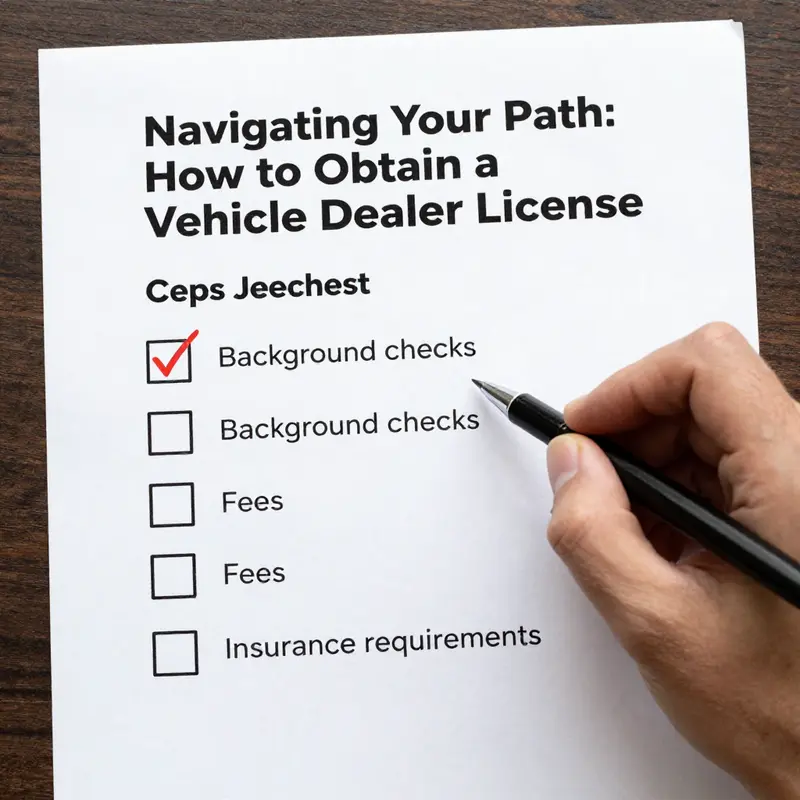
Receiving your vehicle dealer license is a pivotal milestone, but it is only the opening page of a longer story of establishing credibility, ensuring compliance, and building a scalable operation. The post-licensing phase is where intentions meet infrastructure. It requires a careful, integrated approach that aligns legal status, financial discipline, operational systems, and human capital. The goal is not merely to stay out of trouble; it is to create a resilient framework that supports transparent customer interactions, sound risk management, and steady growth. When the license arrives, the work that follows should flow naturally from the regulatory confidence you’ve earned, turning it into a durable business advantage rather than a one-off permit.
First, the decision about your business entity matters deeply. If you chose a limited liability structure, such as an LLC or a corporation, you now need to complete the formal articles of organization or incorporation with the state and secure any required approvals. This step confirms your legal status and sets the stage for responsibilities like ongoing annual reports and tax filings. The right entity isn’t just about protecting owners from personal liability; it also signals to lenders, manufacturers, and prospects that your operation meets professional standards. With your entity in place, you should promptly obtain an Employer Identification Number (EIN) from the IRS. The EIN becomes the backbone of your financial life, enabling you to open a dedicated business bank account, hire employees, and file taxes correctly. It also helps you separate personal and business finances, which is essential for clean accounting, clean audits, and credible financial reporting for lenders or investors.
Opening a business bank account is more than a formality; it is a discipline. A separate account keeps cash flow clean and traceable. It supports accurate expense tracking, inventory valuation, and timely tax payments. When you connect your account to your accounting system, you gain real-time visibility into margins, days’ supply, and receivables. A disciplined approach to banking communicates stability to suppliers and lenders, which helps you negotiate favorable terms for inventory and financing. It also reduces personal exposure to risk. In this ecosystem, finance becomes a partner in decision-making rather than a barrier to growth.
Insurance rounds out the core safety net for a new dealership. You should secure comprehensive coverage that reflects the specific risks of automotive retail. General liability insurance protects against everyday incidents on the showroom floor, while property insurance guards the building and fixtures. Commercial auto insurance is essential for your inventory and any test-drive vehicles, and a solid cyber and data liability policy helps when you manage customer information through a dealer management system (DMS). Speaking of systems, a robust DMS is not a luxury but a necessity. A centralized platform can manage inventory across lots, track vehicle history, handle financing and warranties, and log customer interactions from first contact to post-sale follow-up. The right DMS integrates with your accounting, your CRM, and your service operations, creating a single source of truth that reduces errors and accelerates service delivery.
As you set up operations, remember that compliance is a living practice. State-specific requirements can add layers of oversight beyond the basic license. Many jurisdictions require a surety bond or a special permit to advertise, disclose, and transact, and they expect meticulous recordkeeping. You will need to maintain consistent disclosures about vehicle history, warranties, and service records. Advertising regulations govern how you present prices, financing terms, and incentives, and they often mandate clear, non-deceptive communication. A policy-driven approach to compliance—one that your team can execute consistently—reduces the risk of penalties and protects your reputation with customers and regulators alike. In this light, staffing and training should be treated as an investment, not a cost center.
Hiring the right people and giving them clear training is fundamental to long-term success. At a minimum, your team should include sales professionals with strong product knowledge and ethics, a finance manager who can responsibly present lending options, and support staff who understand documentation, data entry, and customer service. Ongoing training should cover your company policies, state regulations, privacy practices, and the specifics of your inventory and warranty programs. A well-trained staff acts as a multiplier, ensuring consistency in customer interactions and compliance in every sale. It also fosters a company culture where ethics, transparency, and accountability are lived values rather than aspirational phrases.
The physical footprint of your business matters as well. A legitimate dealership requires a well-presented, compliant sales facility with appropriate signage, an orderly showroom, and a functioning office. The layout should support efficient customer flow while meeting local zoning requirements and building codes. The location itself conveys credibility; a thoughtfully maintained lot, clear branding, and a professional front desk signal to customers that they can trust you with their automotive investment. You should also establish internal processes that govern inventory handling, test drives, and vehicle delivery. A clean, well-documented process helps reduce disputes and supports accurate warranty and financing work.
Marketing and advertising demand careful calibration. You want to attract customers while staying squarely within disclosure standards and advertising rules. This includes clear pricing, transparent financing terms, and honest vehicle representations. A strong brand identity should emerge from your marketing strategy, but it must be rooted in compliance and customer trust. Your digital presence—site, listings, and social media—should reflect consistent messaging, with each channel reinforcing the same factual information about your inventory, policies, and service offerings. The systematized use of data from your DMS and CRM enables personalized, compliant outreach that respects customer preferences and privacy.
Supplier and manufacturer relationships are the strategic backbone for many dealerships. If you operate as a brand-specific dealer, formal authorization and agreements with the vehicle manufacturer are essential. These agreements grant you the rights to sell and service particular lines, and they often come with requirements around facility standards, staff training, and ongoing performance metrics. If you are pursuing a multi-brand or independent route, your compliance posture remains just as important, but your contracts will look different. Either path benefits from a documented procurement process, clear pricing strategies, and a system for maintaining inventory with real-time accuracy. You should also negotiate terms that align with your cash flow needs, warranty support commitments, and service capabilities so that your customers experience consistent and reliable post-sale service.
Taxation and ongoing registrations are not evergreen tasks that you can ignore after opening. You will need to register for state sales tax permits, maintain accurate tax collection practices, and stay current with periodic filings and renewals. A robust calendar and reminders keep deadlines in view and prevent costly late fees. Pair this discipline with periodic audits of your financial statements to ensure that your sales records align with tax reports and regulatory filings. The post-license phase is not about one-time compliance—it is about building a durable routine. As you scale, you will likely add staff, expand inventory, and perhaps open additional locations. Your systems and processes must be capable of absorbing that growth without compromising accuracy or due diligence.
In the midst of all this, the regulatory landscape remains a steady companion. A practical way to stay aligned is to establish a governance routine: quarterly reviews of licensing, bonding, and insurance terms; annual updates to your DMS configurations; and ongoing monitoring of local ordinances that affect signage, parking, and consumer protection requirements. If you ever feel unsure about the regulatory environment, a qualified attorney or a seasoned CPA with automotive-industry experience can provide essential guidance. They can help you navigate nuanced state rules, ensure that your vendor contracts contain appropriate compliance clauses, and keep you ahead of potential changes that could affect your license status or operating model. For deeper context on how state rules influence licensing and related practices, you can review resources like the article on state rules impacting driver licensing.
As you advance through these steps, the relationship between policy and practice becomes your compass. The license is not a certificate of completion but a doorway to building a credible, customer-focused business. Your next phase will likely involve refining your growth plan, strengthening your financial controls, and expanding your team with specialists who can sustain high service standards as you scale. In the chapters that follow, you will see how risk management, customer experience improvements, and strategic partnerships mesh with the foundations laid in this post-licensing period. The objective remains clear: translate regulatory assurance into operational excellence that earns trust with every buyer. For authoritative, overarching guidance on channeling regulatory requirements into a compliant dealership program, consult the U.S. Department of Transportation’s guide on becoming a motor vehicle dealer: https://www.transportation.gov/businesses/automotive-dealers.
Final thoughts
Navigating the process of obtaining a vehicle dealer license requires understanding various types of licenses, meeting eligibility criteria, effective business registration, an organized application process, and following through with critical post-application steps. By adhering to each phase represented in this guide, potential vehicle dealers can ensure they not only comply with industry regulations but also lay the groundwork for a successful automotive venture. Empower yourself with this knowledge to embark on a fruitful journey in the vehicle dealership arena.