
Understanding whether your vehicle is legally licensed is essential for all drivers, whether you’re a new learner or an experienced vehicle owner. This comprehensive guide navigates through key documentation, the importance of a valid driver’s license, the necessity of vehicle inspections, the role of compulsory insurance, and the consequences of traffic violations. Each chapter builds on the last, providing a complete picture of vehicle licensing and the responsibilities that accompany it, ensuring that you are informed and compliant while enjoying the road safely.
Is My Vehicle Legally Licensed? A Western Australian Documentation Roadmap for Verifying Your Vehicle’s Status
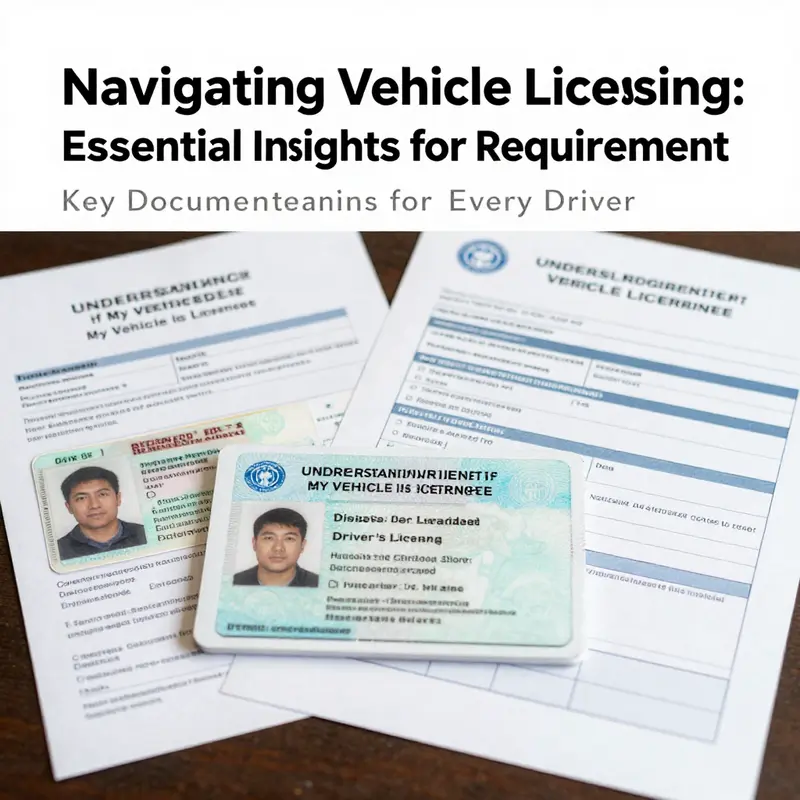
When you ask, “Is my vehicle legally licensed?” the answer rarely rests on a single card or sticker. In Western Australia, as in many places, licensing is a layered safeguard that ties identity, ownership, vehicle status, and lawful use into a single, verifiable picture. It is not enough to possess a registered car or to own the keys; you must meet a precise set of requirements and keep them up to date. This chapter follows that logic, unfolding how the licensing framework works in practice, with a focus on the Western Australian process so you can interpret your own situation with confidence. The aim is not to scare you with red tape, but to illuminate the path from ownership to lawful operation on public roads. In doing so, the discussion stays anchored to the central question: what do you need to prove your vehicle’s licensing status, and where do you look to verify it quickly and accurately? The answer is built from official forms, identity checks, and a clear trail of documentation that confirms both the vehicle and the person who controls it.
At the heart of Western Australian vehicle licensing is Form VL186, the Proof of Identity Nominated Owner/Vehicle Licence Holder. This form is more than a simple request; it is the formal link that ties you to the vehicle’s registration. It confirms who you are and how you are connected to the vehicle, which matters not only for licensing renewal but also for the integrity of the registration itself. If you are applying for a licence or renewing one, VL186 acts as the keystone document. It is designed to ensure that the person presenting the vehicle for licensing has both the authority and the identity necessary to hold a licence in that vehicle’s name. Without VL186, or without the proper chain of supporting documents, the licensing decision cannot be made. The form thus anchors the process in accountability, ensuring that the vehicle remains associated with the correct ownership and that the person behind the paperwork truly represents that ownership.
The practical steps to complete the licensing journey in WA center on documentation. The Department of Mines, Industry Regulation and Safety (DMIRS) requires a combination of five original documents to verify your full name, date of birth, and current address. Originals are non-negotiable here—laminated or photocopied documents will not suffice. This insistence on original materials reflects a broader principle: identity verification in licensing must be robust to prevent fraud and misrepresentation. The documents themselves are commonly cited examples, and while the exact list is published by the official regulator, a typical set includes items such as a driver’s licence, a passport, a birth certificate, a utility bill, or a bank statement, provided each item bears your full name and current address. The emphasis on originals means you should gather and present the documents in their pristine form, unaltered and unredacted beyond necessity. Preparing these five originals carefully ahead of your appointment can prevent delays and friction in the assessment.
As you prepare to submit VL186 and the supporting originals, the submission process itself becomes a test of organizational clarity. The VL186 form is designed to capture not only your identity but also your relationship to the vehicle and the status of its registration. When you assemble your documents, you are constructing a transparent trail that connects you to the car, from your name and date of birth to your current address, and onward to the vehicle itself. This trail is what the licensing authority uses to verify that the vehicle you intend to licence belongs to you and that you are authorized to hold that licence. The process may be completed through official channels in person or via the regulator’s approved online or hybrid pathways, depending on current regulations and service options. The crucial point is that every step must be verifiable, consistent, and documented with originals that stand up to scrutiny.
Beyond identity, licensing requires attention to the broader health of the vehicle and its legal use. In Western Australia, compliance is not solely about having a licence in your name. It intersects with the vehicle’s registration status, the ownership chain, and any applicable safety or regulatory checks. While VL186 confirms identity and ownership, it does not operate in isolation. Other elements of licensing include ensuring the vehicle’s registration is current, confirming that the vehicle remains fit for the road, and that you comply with any operational restrictions attached to the vehicle type or use. You should also confirm that there are no outstanding fines or penalties that could affect your licence or vehicle status. The licensing system is designed to be a comprehensive gatekeeper: if any one element—identity, ownership, registration, or compliance checks—fails, the vehicle cannot be licensed or re-licensed. This integrated approach helps preserve road safety and public trust in the licensing system.
To verify legitimacy, you will look to official platforms for the most accurate and up-to-date information. The Western Australian DMIRS site delivers definitive guidance on Form VL186, the documentation you need, and how to present originals during the licensing process. The site also details where to submit your forms and what to expect during processing. In addition to the formal VL186 pathway, the regulator’s official pages provide context on acceptable documentation and the precise combinations required at the time of application or renewal. Because rules can evolve, checking the regulator’s site ensures you are following the latest guidance rather than relying on memory or secondhand sources. It is worth noting that you should avoid relying on unofficial summaries; the official site is the authoritative source and should be your primary reference.
As you navigate this pathway, a broader point emerges. Licensing is not about a one-time act of registration; it is a status that requires ongoing attention. You must keep all documents up to date, ensure that your personal details are current in the regulator’s records, and monitor the vehicle’s registration and its compliance status. In practice, this means treating your original documents as living components of your licensing profile. If your address changes, if your name changes, or if you acquire a new vehicle in your name, you must reflect those changes through the proper channels and with the correct VL186 form and supporting documentation. The discipline of maintaining accuracy across multiple documents protects you from licensing interruptions, such as a hold on your ability to drive or to renew your licence, should discrepancies arise.
For those who want to further understand how state rules affect driver licensing and how these rules interplay with vehicle licensing, there is value in exploring the broader regulatory landscape. A focused look at how different jurisdictions coordinate identity verification, ownership proof, and vehicle status can illuminate the WA process. See more on how state rules impact driver licensing in this resource: state rules impact on driver licensing.
In practice, the question “Is my vehicle licensed?” becomes a matter of confirming three synchronized elements: your identity and ownership (VL186 and originals), the vehicle’s registration status, and the absence of impediments such as outstanding fines or compliance issues. When you approach licensing with this mindset, you move from a moment of doubt to a sequence of well-defined steps, all anchored in official guidance. The disciplines of identity verification, ownership linkage, and regulatory compliance are not abstract concepts; they are concrete procedures that you can prepare for, document, and execute. The WA licensing framework embodies this approach by requiring verification to be both rigorous and traceable, ensuring that every licensed vehicle has a legitimate link to a responsible owner and a compliant status on the public roads.
For readers seeking direct, official guidance, the WA government hosts a dedicated vehicle licensing portal that outlines the full requirements, including how to complete Form VL186 and which documents are acceptable. Engaging with these resources will illuminate the precise expectations for your situation, whether you are renewing, transferring ownership, or licensing a new vehicle. By grounding your actions in the regulator’s instructions, you reduce the risk of missteps and shorten processing times. As you prepare, keep in mind that the licensing system favors completeness and transparency. Present your originals, follow the stated document combinations, and verify your information against the DMIRS guidance. In doing so, you reinforce the legitimacy of your vehicle’s status and your own eligibility to operate it on WA roads.
External resource: https://www.dmi.wa.gov.au/vehicle-licensing
Licensing on the Road: Understanding Vehicle Registration and Driver Licenses
When you ask Is my vehicle licensed, the instinctive reply is often to check a registration sticker or the plate itself. Yet the question runs deeper than a single document. A legally operable vehicle rests on a chain of approvals that includes the vehicle’s registration and the operator’s credential. The distinction matters because a vehicle can be registered in your name, parked in your garage, and still be unfit for the road if the driver behind the wheel lacks the appropriate license. This is a tension that governs everyday driving in many regions, and understanding it can spare you legal trouble and safety risks that accompany noncompliant use. The chapter invites you to see the licensing landscape not as a pile of forms, but as an integrated system in which documents, checks, and behavior align to keep roads safe and the law clear.
To begin, separate two core ideas: vehicle licensing (registration) and the driver’s licensing that authorizes operation. A vehicle license is the government’s permission for the car itself to be on the road. It confirms the vehicle has been registered, is properly insured where required, and has passed any inspections. A driver’s license is the personal authorization that allows a person to operate a vehicle of a particular class. Operating a vehicle without a valid driver’s license is illegal in most places, regardless of registration status. This separation matters because many people assume that owning a car makes it street-legal for any driver. In reality, both elements must be valid and current for lawful operation.
The practicality is straightforward: your car may be registered, but if you’re driving with an expired or invalid license, you’re driving illegally. The more modern reality is that many governments offer online verification tools to check license status, class, and any restrictions. These digital platforms make it easier to stay compliant and provide a quick read of expiration dates and tied requirements.
Regional notes: licensing practices differ by locale. Some places require ongoing inspections, others rely on insurance proof, and some jurisdictions permit digital licenses or smart cards. The central idea remains: the vehicle’s paperwork and the driver’s credentials should be verifiable and current, both to avoid penalties and to keep road users safe.
Practical steps for everyday use: verify the vehicle’s registration status, ensure the driver’s license is valid for the vehicle type, and check for any suspensions or restrictions. If you share your vehicle, confirm every operator has the appropriate licensure. When in doubt, contact the local motor vehicle department for a definitive status check.
Ultimately, a legally operable vehicle is the result of aligned documents and responsible behavior. The aim is ongoing compliance, not a one-off renewal. Use official portals or apps for quick checks and keep licenses current to support safer roads.
Is Your Vehicle Legally on the Road? A Comprehensive Look at Licensing, Inspections, and Safety Checks
When you ask whether a vehicle is licensed, you’re really asking if a bundle of formalities holds together in a way that lets you legally operate on public roads. A vehicle’s licenses aren’t a single document but a constellation of records that prove the vehicle is registered, roadworthy, insured, properly plated, and compliant with local rules. Understanding how these pieces fit helps you avoid unexpected suspensions, fines, or complex back-and-forth with authorities. The essence is simple: legality requires ongoing compliance, not a once-done status check.
At the core sits the Valid Vehicle Registration. The registration certificate is the primary proof your vehicle exists in the official registry and is recognized as a legal vehicle for use. It is not enough to own a car; the registration must be current, renewed on time, and reflecting any changes to ownership or vehicle status. Alongside registration, a Valid Driver’s License appropriate to the vehicle’s class is essential. Driving a car without a license—or with a license that does not cover the vehicle type—creates a direct path to illegality, regardless of how well the registration is kept.
But legality doesn’t stop at paperwork. A Current Vehicle Inspection—often described as a roadworthiness or safety check—forms a critical line of defense against unsafe vehicles on the road. Inspections typically assess brakes, lights, tires, emissions, and structural integrity. In many places, the inspection must be completed annually or at intervals tied to the vehicle’s age or mileage. If a vehicle has not passed an inspection, or if the inspection status is expired, it cannot be safely or legally driven on public roads. This is where the concept of license and inspection intersect: a vehicle may be registered, but it doesn’t become road-legal again until it proves it meets current safety standards.
Another pillar is Compulsory Insurance. In some jurisdictions, drivers must carry a minimum level of third-party liability coverage. The insurance certificate, whether printed or electronic, should be visible or readily accessible in the vehicle. Without valid insurance, a vehicle is not legally allowed on public roads, even if the other elements are in place. It’s not merely about having insurance; it’s about having insurance that is active and aligned with the vehicle’s registration and use. The next two factors—license plates and fines—quietly reinforce the idea that legality is a regime of ongoing compliance.
A Properly Displayed License Plate is more than a cosmetic requirement. The plate must be clearly visible, undamaged, and properly affixed. Any alteration, forgery, or use of an unauthorized plate disrupts the framework that licensing creates, enabling authorities to identify vehicles and verify their status in real time. Then there are the financial and enforcement considerations: No Outstanding Traffic Violations or Unpaid Fines. Even a perfectly valid registration can be jeopardized by unresolved violations. Many regions restrict driving privileges or suspend registration when penalties accumulate, creating a chain reaction that starts with a simple unpaid ticket and ends with a vehicle that cannot legally operate.
Lastly, the issue of Legal Use and Modifications matters. A vehicle must stay within the bounds of its registered purpose and comply with standards for modifications. Illegal engine changes or body alterations can render a vehicle non-compliant, and operating a vehicle outside its registered use—such as converting a private car into a commercial vehicle without the necessary permits—can trigger enforcement actions. The licensing framework, then, is not a static label but a dynamic status that tracks changes in ownership, use, safety, and compliance.
So how do you determine whether your vehicle’s licensing is current and complete? The path begins with your local, official channels. Many regions maintain a centralized, real-time status lookup through a government-managed portal or app. You can typically search by the vehicle’s license plate number, VIN, or registration certificate number. The most immediate signal is whether the registration is listed as current, active, or due for renewal. If any of the core elements—registration, license, inspection, or insurance—shows an alert or expiry date approaching, it’s a clear sign that action is needed to avoid a gap in legality.
A practical mindset emerges from recognizing how these pieces connect. For example, inspections are not end points but recurring milestones that must be aligned with the vehicle’s ongoing registration. In some regions, commercial vehicles face additional scrutiny and documentation requirements beyond the standard roadworthiness checks. It’s not unusual for a leased vehicle to require a pre-inspection near the lease’s end to assess wear and tear, potentially affecting charges or returns. Digital inspection tools help owners anticipate repairs, manage wear, and stay within contract terms, illustrating how technology supports continuous compliance rather than creating a one-off checkpoint.
When you seek to verify legitimacy, you’ll encounter regional variations. In one country or state, roadworthiness might be tied to annual emissions testing and brake inspections, while another might hinge on a more frequent inspection cadence or different documentation for commercial use. The basic logic remains: licensing is a bundle of verified conditions that collectively certify your vehicle’s fitness for the road. This is why many people feel surprised when a vehicle’s registration appears valid but a hidden concern—expired insurance, a failed inspection, or an outstanding fine—undermines their ability to drive legally.
To navigate this landscape, turn to official channels rather than third-party questions or outdated records. A reliable approach is to use the government portal that aggregates registration, inspection, and status data. You can enter your license plate number, VIN, or registration certificate number to retrieve a snapshot of your vehicle’s current licensing status. This real-time visibility is invaluable for planning renewals, coordinating insurance, and ensuring you are prepared for inspections before they become urgent. For readers who want a broader comparative view of how inspections are handled across regions, it can be helpful to study how different jurisdictions structure these requirements. For example, you can explore how US states approach vehicle inspection requirements to gain perspective on the variety of compliance paths (US states’ vehicle inspection requirements).
As licensing becomes more digital worldwide, the trend toward electronic licenses and digital inspection marks continues to grow. In some large economies, hundreds of millions of drivers now access driving licenses electronically, and billions of inspection records are issued in digital form. These digital records enhance transparency and speed, enabling a driver to verify a vehicle’s inspection history and compliance status with a few taps or clicks. Yet even in a digital era, the principle holds: legality rests on meeting each requirement at the right time and keeping the documentation current. A lapse in any one piece can unravel the entire licensing chain, temporarily or permanently limiting the ability to drive on public roads.
In practice, keeping your vehicle licensed is less a single moment of compliance and more a daily commitment to maintaining the records that prove you’ve met safety, financial, and regulatory standards. It means scheduling and attending inspections, renewing registrations before expiry, maintaining adequate insurance, and ensuring your plates remain undamaged and correctly displayed. It also means staying informed about any changes in local rules that could affect your vehicle’s license status, such as new emissions standards, updated reporting requirements for commercial use, or adjustments to fines and penalties for violations. The overarching message is clear: regular checks with official sources, mindful maintenance, and proactive renewal cultivate a dependable, legally compliant vehicle that earns the right to be on the road.
For readers seeking direct, official verification, rely on your local transport authority’s portal or app. These platforms provide the most accurate status of your vehicle’s license, reformatted in real time to reflect renewals, inspections, and any flags that require attention. While I’ve described regional patterns and examples to illustrate how licensing works in practice, always ground your actions in the official resources available to you. External verification of your status is often just a few clicks away, and it’s worth the moment to confirm that every piece remains aligned with current regulations. External verification resource: https://www.12123.gov.cn/
Licensing the Road: How Compulsory Insurance Serves as the Gatekeeper to Legal Driving Across Europe
Is my vehicle licensed? In practice, licensing a vehicle is a chain of interdependent requirements starting with registration and ending with the driver’s ability to operate legally. Across Europe, compulsory third party liability insurance is the hinge that keeps this chain secure. It is not merely a formality; it is the cornerstone of accountability on the road. When you register in an EU member state, you participate in a system designed to ensure that those injured or whose property is damaged can receive compensation. The insurance certificate is more than proof of coverage for an accident; it is a declaration of responsibility to others who share the road.
In practical terms, compulsory third party liability covers damages you may cause to others and their property in a crash. It does not guarantee the repair of your own vehicle, nor does it cover your personal injuries. This distinction prevents overreliance on one policy. Optional first party protections may broaden coverage, but they are not the baseline requirement for licensing. The EU framework emphasizes the duty to third parties first, creating a cross border floor of protection.
EU wide validity: Once you hold a policy that satisfies third party liability in your home member state, you can drive across other EU countries under the same policy. This reduces friction and enables cross border travel. A recognized proof system, such as a Green Card or electronic record, is used. The Green Card is a portable certificate of insurance that travels with the vehicle, reassuring authorities that your vehicle is covered for third party liability wherever you go in the Union. When you navigate a different country, you rely on that policy to satisfy local requirements, provided the coverage remains valid and within the policy terms.
It is important to understand what compulsory insurance does not cover. Personal injuries to the driver, damage to the vehicle itself, theft, and vandalism are typically handled by separate protections. They may be optional and supplementary, but they are not substitutes for core third party liability. The minimum protection remains for third parties, while broader coverage is a matter of choice and risk assessment.
Regulatory requirements for proof of insurance frame licensing and road use. In most EU jurisdictions, you must carry or display evidence of compulsory insurance when the vehicle is on public roads. The insurer or policy documents provide verifiable proof. This may be a physical certificate, a green card, or an electronic record. The system is designed for accessibility and quick verification by law enforcement and authorities, including cross border checks. The aim is straightforward: no valid insurance, no license to drive on public roads.
Display and portability matter. In many places you should be prepared to show proof on request, at stops, during registration renewals, or in cross border checks. Electronic verification portals and apps can confirm status in real time. Licensing remains a data enabled journey as well as a legal one, with insurance status serving as a keystone in the arch of lawful operation.
Noncompliance consequences are real. Driving without valid insurance is illegal in the EU and can lead to fines, penalties, or impoundment. Licensing authorities may link insurance status to the right to register, renew, or operate a vehicle. If any element of the chain is out of date, authorities can restrict driving privileges.
Finally, stay informed. The EU Commission motor insurance guidance offers a comprehensive overview of the standards that bind member states and motorists who license their vehicles or operate across borders. This guidance connects the dots between insurance, registration, and licensing while respecting national implementation. In short, a licensed vehicle rests on a triad: registration, inspection, and compulsory insurance, current and demonstrable across borders. For authoritative details, consult the EU Commission guidance on motor insurance.
Is My Vehicle Licensed? How Licensing, Violations, and Real-Time Verification Shape Your Right to Drive
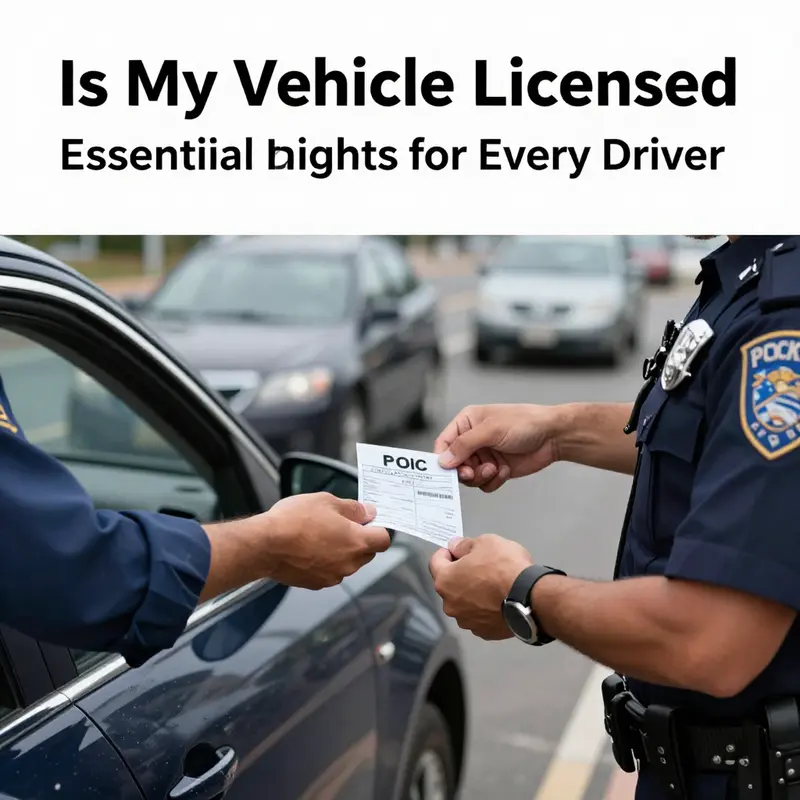
The moment you ask whether your vehicle is licensed, you are touching a web of compliance that extends beyond a single document or a single plate. A licensed vehicle is less a sticker on the bumper than a living status that rests on several interlocking requirements: registration, a valid operator’s license for the class of vehicle, an up-to-date safety or emissions inspection, proof of insurance where required, a clearly displayed license plate, and a clean ledger of fines and violations. When any of these pieces is missing, the vehicle’s legal standing on public roads can falter. Treating licensing as a one-off check—glancing at a registration card and assuming everything else is in order—asks for trouble. In practice, the licensing system is designed as a continuous, real-time audit, not a yearly snapshot. Each driver, each vehicle, and each day on the road becomes part of a system that cross-checks identity, ownership, use, and accountability. The careful driver understands that licensing is not a badge earned once, but a state of ongoing compliance that must be maintained with deliberate attention to detail.
To unpack what it means to be licensed, start with the simplest truth: a vehicle cannot legally operate on public roads unless it is officially registered and the registration remains current. A valid registration certificate demonstrates that the vehicle is registered with the appropriate motor vehicle authority and that the status of that registration is not past due. The paper or electronic proof is only as good as the status behind it, which means that an expired registration immediately jeopardizes legal operation, regardless of ownership or use. Equally fundamental is the driver’s license. You must hold a valid license for the class of vehicle you are operating. Driving without a license, or with a license that has expired or been suspended, is illegal and creates magnified risk if an incident occurs. A properly licensed driver is, in effect, a prerequisite for a legally licensed vehicle, because the vehicle and operator are paired in the eyes of the law.
Then there is the matter of inspection. In many places, vehicles must undergo an annual safety and emissions inspection to prove that they meet roadworthiness and environmental standards. A vehicle that hasn’t passed inspection, or one that has failed, cannot be driven legally until the issues are resolved. This requirement acts as a safeguard for public safety and for the broader system that relies on reliable vehicle data for enforcement and revenue stewardship. A failing or overdue inspection creates a ripple effect: not only is the vehicle out of compliance, but insurers, lenders, and even potential buyers may treat the vehicle as higher risk, with consequences that extend beyond the immediate suspension of driving privileges.
Insurance is another non-negotiable pillar of licensing. In many jurisdictions, compulsory third-party liability insurance is a legal prerequisite for road use. The insurance certificate, whether printed or electronic, serves as the financial protection that underpins the right to operate. Without valid insurance, a vehicle does not meet the conditions to be driven on public roads, and enforcement agencies can impound the vehicle or restrict its operation until coverage is restored. It is striking how each component—registration, license, inspection, insurance—feeds into a broader framework of accountability. When one link breaks, the integrity of the entire chain is questioned, and the risk of penalties escalates quickly.
Display and plate integrity are also essential. A license plate that is clearly visible, undamaged, and properly affixed signals to the enforcement system that the vehicle is accounted for in the public registry. Altered or counterfeit plates are not merely a cosmetic offense; they disrupt the intersection of identity, ownership, and accountability that underpins road safety and revenue collection. The plate is a public-facing symbol of legitimacy, and tampering with it invites legal action that can trigger a cascade of penalties well beyond the initial offense.
No outstanding traffic violations or unpaid fines completes the licensing picture. Even a vehicle that appears legally registered can be subject to restrictions if there are unresolved violations. The system uses such flags to enforce compliance and to ensure that the vehicle remains eligible for use on the road. This is not mere bureaucratic bookkeeping; it is a mechanism to align incentives—encouraging timely payment of fines, adherence to traffic laws, and proactive maintenance of records. The presence of fines or suspensions can compound quickly, affecting not only the immediate license status but also insurance terms, future licensing prospects, and even eligibility for certain professional driving duties.
Beyond the mechanics of documents, the legal use and modifications of the vehicle matter. A vehicle must be used for its registered purpose, whether private use or commercial operation. Illegally modified engines, altered emissions systems, or body modifications that breach national standards can undermine licensing by creating grounds for non-compliance, recalls, or enforcement actions. The licensing framework thus rewards transparency and compliance with defined specifications, while penalizing deviations that threaten safety or regulatory boundaries. To navigate this landscape, a driver should approach licensing as a living contract with the state: a contract that requires accurate information, timely updates, and careful stewardship of every document and every status check.
How, then, can a driver verify that all the pieces are in place? The practical answer lies in using official channels that provide real-time visibility into the vehicle’s licensing status. Most jurisdictions offer online tools through their traffic management or motor vehicle departments. These tools allow you to input your vehicle’s license plate number, the VIN, or the registration certificate number to retrieve current information about registration validity, plate status, and, in some cases, inspection and insurance status. The value of these tools lies in immediacy and clarity: you can see at a glance whether any action is required, whether there are outstanding fines, or whether a recent renewal has been successfully processed. A deliberate, proactive habit of checking status protects you from surprises and helps you correct issues before they escalate into penalties or driving restrictions. For a broader context on how state rules shape licensing, see State Rules Impact on Driver Licensing.
When a lapse is detected, the corrective path is generally straightforward but may require careful handling. If a registration has expired, you must renew it through the official channels and ensure your plate and registration documents reflect the updated status. If an inspection is due or has failed, you must address the faults or complete the recommended maintenance and obtain a passing result before you resume driving. If insurance coverage has lapsed, you need to restore coverage and obtain proof that meets the jurisdiction’s requirements. If fines are outstanding, paying them promptly and documenting the payment is crucial to avoid additional penalties or a suspension that compounds other licensing issues. In every case, maintain copies of receipts, renewal confirmations, and any correspondence with authorities. These records can shorten disputes and clarifications should a verification tool display conflicting information.
The process of verification is not merely reactive; it is a preventive practice that keeps road access secure for you and for others. Regular checks empower you to detect missing documents, missed renewals, or mismatches between records and the physical vehicle. They also enable you to respond quickly to any warnings or notices you receive from authorities, reducing the chance of a sudden driving ban or an expensive impoundment. In this sense, licensing becomes an active discipline rather than a passive status. It is about staying informed, updating the authorities with accurate information when circumstances change—such as a change in ownership, a change in use from private to commercial, or a relocation that modifies the vehicle’s registration region—and acting promptly to maintain compliance.
For readers seeking further reading on related inspection and licensing practices across different regions, the linked article above provides a broader lens on how state rules influence driver licensing and vehicle compliance. It is a helpful companion to the practical steps outlined here, offering context on how inspections, registrations, and use categories interact with licensing in diverse regulatory environments. External resources can also illuminate local nuances, so consult your own jurisdiction’s official portals for the most accurate, current requirements. As a practical takeaway, make it a habit to verify your vehicle’s licensing status at regular intervals—before long trips, after ownership changes, or whenever you notice a registered status that seems off. The road rewards drivers who stay ahead of compliance, not those who chase it after a ticket lands on the windshield.
External resource: For an additional practical reference on licence expiry checks, see Transport WA’s guidance on checking your vehicle licence expiry date: https://www.transport.wa.gov.au/vehicle-licensing/check-your-vehicle-licence-rego-expiry-date
Final thoughts
In summary, verifying whether your vehicle is legally licensed involves understanding and complying with a series of documentation and regulations. From ensuring you possess a valid driver’s license to keeping current with vehicle inspections and compulsory insurance requirements to being mindful of traffic violations, every aspect plays a crucial role in maintaining your driving privileges. With this knowledge, you can confidently navigate the roads, knowing you’re compliant and prepared for any situation.