
As electric vehicles (EVs) gain popularity, the need for reliable charging infrastructure becomes increasingly crucial. Obtaining a license for an EV charging station involves navigating a multi-faceted process that demands diligence and careful planning. This guide will elucidate the steps needed to secure your charging station license effectively. Beginning with market research and business planning, we will discuss how to validate demand and formulate a robust business strategy. We will then transition to the legal and zoning requirements, emphasizing compliance with local regulations that ensure viability. Finally, we will tackle environmental safety compliance, focusing on necessary permits that protect both your investment and the environment, culminating in a complete and actionable pathway towards launching your EV charging station.
From Insight to License: Market Research and Financial Blueprint as the Foundation of EV Charging Station Deployment
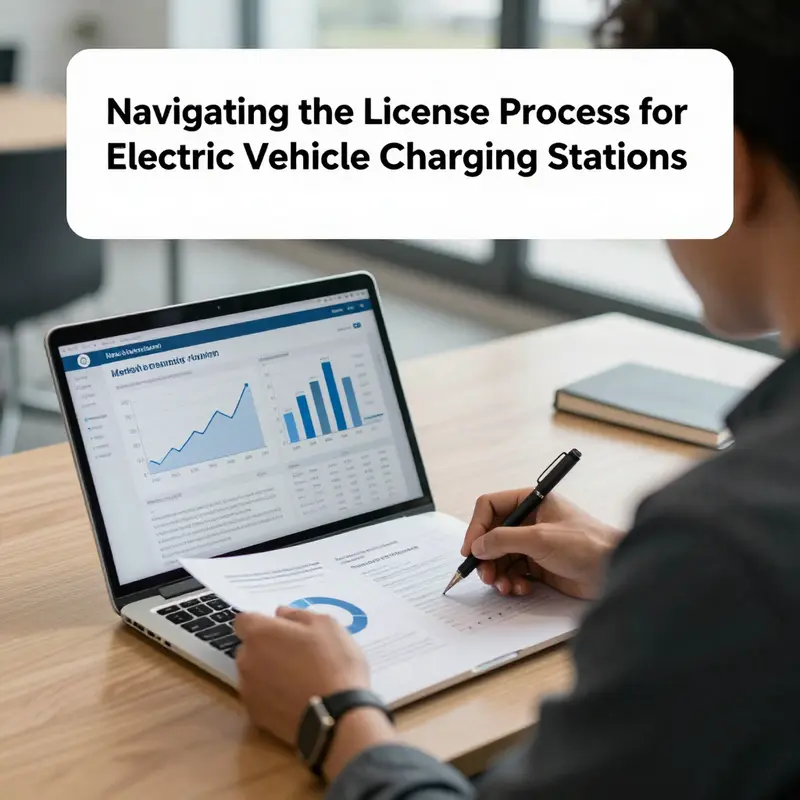
The pathway to licensing an electric vehicle charging station begins long before forms are filled and permits are stamped. It starts with a disciplined, data-driven approach that blends market intelligence with a clear financial blueprint. When regulators review your application, they want to see that the project makes sense in the real world: that there is sufficient demand, that the site is appropriate, and that the numbers add up in a way that supports not only initial capital but long-term operation and safety. This chapter weaves market research with a robust business plan, showing how evidence-based planning turns a promising site into a license-ready venture and how that planning sustains compliance, resilience, and growth through the life of the station. The goal is not merely to tick boxes on a permit checklist but to articulate a credible, durable story of value for riders, property owners, investors, and the communities that will host the infrastructure.
Market research, at its core, is a vertical survey of demand that translates into a practical, defensible projection of usage. It begins with a precise view of local demand: the number of electric vehicles registered in the target area, growth trajectories, and the likely pace at which incentives or policy changes may accelerate adoption. Relying on government or municipal transportation data, planners can sketch a map of future charging needs that aligns with the rhythms of daily life. Is the proposed site near a corridor with high traveler throughput? Does it sit at a busy intersection near shopping districts, office parks, or public parking facilities where drivers are already accustomed to stopping for a few minutes? These questions matter because the rationale for licensing hinges on demonstrating that the station will be utilized, that it will remain financially viable, and that it will operate within the safety and service standards regulators expect.
Beyond demand, market research requires a careful study of competition. This means cataloging the existing charging landscape within a reasonable radius and understanding the mix of chargers they offer—DC fast units that coax a quicker turnaround and longer dwell, or AC Level 2 stations that serve longer visits with steady throughput. Price points, occupancy trends, and user reviews illuminate strengths to replicate and gaps to exploit. A site that stands where others falter—perhaps by offering a more reliable power supply, a larger number of stalls, or a better payment experience—can transform a modest project into a compelling, license-worthy asset. It is not enough to know what exists; one must know how a new station will complement or outperform the current network and how it will integrate with broader transportation and energy goals.
Choosing the location is a vital extension of market research because sites differ not only in traffic volume but in accessibility and system integration. The ideal location balances high visibility with operational feasibility. It should be accessible to drivers with diverse needs, including those who drive lengthy routes, residents in multi-family housing, and workers who may want a predictable charging schedule aligned with their workday. A high-potential site often ticks several boxes at once: proximity to highways or major arterials, availability of a robust and stable electrical supply, and proximity to amenities that encourage dwell time without compromising safety. A site near a shopping center or office campus, for example, can leverage existing security, lighting, and access controls while offering a predictable revenue stream. For multi-family developments, the value proposition hinges on convenience and reliability, turning the charging station into a practical amenity that supports tenancy and property value. In all cases, the site must be compatible with the local land-use regime and capable of accommodating the physical footprint of the charging hardware, parking, and safe access lanes.
To translate location potential into a credible licensing narrative, the business plan must articulate a clear project description. This section defines the scale and type of chargers, the anticipated site layout, and the operational expectations that will shape permitting timelines. Will the project rely on a handful of DC fast chargers to serve long-distance travelers, or will it pivot toward a larger constellation of AC Level 2 units designed for shorter, routine stops? The answer should reflect the market data and align with the site’s unique constraints. The business plan then translates these choices into concrete financial projections, which are indispensable for securing financing and for satisfying regulatory scrutiny. Startup costs will include equipment, installation, and the cost of securing necessary permits; ongoing expenses will cover electricity, maintenance, insurance, and staffing for customer support and monitoring. A realistic forecast of revenue streams is essential. Pricing structures—whether pay-per-use, time-based, subscription-based, or a hybrid model—need to be justified by competitor benchmarking, expected utilization, and willingness-to-pay in the target community. Partnerships with retailers, property owners, or local employers can diversify revenue and improve the customer experience, making the station more resilient to seasonal or economic fluctuations.
The operational strategy of the plan should outline the user journey with practical, user-centered design. How will customers pay? Will there be a mobile app, contactless payments, or other convenient methods? What levels of service will be provided, and how will support be delivered? The plan should describe maintenance regimes, reliability targets, and remote monitoring capabilities that minimize downtime and protect revenue. These operational choices are not merely conveniences; they influence the regulatory review by demonstrating a credible, repeatable, and auditable process for delivering safe, accessible charging. A thoughtful plan also considers the environmental footprint and social impact, acknowledging the role of charging infrastructure in reducing emissions and supporting equitable access to clean energy. It is here that the plan begins to connect with broader energy policies and local climate goals, reinforcing the case that the project is not an isolated investment but part of a coordinated approach to regional decarbonization.
Funding strategy is a second pillar of the business plan, linking anticipated capital needs with practical capital sources. Start-up costs for EV charging stations can be substantial, including equipment procurement, installation, electrical upgrades, site preparation, and a framework for ongoing compliance. The plan should identify diverse funding channels to reduce risk: personal equity, bank loans, grants or subsidies aimed at accelerating EV infrastructure, and potential incentives tied to energy efficiency or renewable integration. A robust funding section demonstrates to regulators and lenders that the project has multiple financing streams, a realistic repayment horizon, and an understanding of the returns that investors expect. It also signals attention to risk management, since securing adequate capital reduces the likelihood of interruptions during permitting or construction, which can trigger regulatory concerns about project viability.
Crucially, the market research and business planning process forms the backbone of a license-ready narrative. Regulators review the license application not as a standalone request but as a synthesis of economic rationale, public benefit, and operational readiness. A well-documented market study provides context for the financial projections and helps justify the site selection, the scale of installation, and the pace of deployment. It demonstrates that the project responds to genuine local needs and aligns with public policy objectives, such as reducing greenhouse gas emissions, improving air quality, and expanding access to clean transportation. In turn, this strengthens the credibility of the later, more technical permitting steps—land-use and zoning approvals, environmental assessments, building and electrical permits, and utility interconnection—because licensing decisions increasingly rely on proactive risk management and community alignment.
As you shape the narrative of demand, capacity, and economic viability, it is essential to anchor the discussion in accessible data and transparent assumptions. Government data portals, regional transportation documents, and energy planning reports provide anchors for your projections. Where data are uncertain or sparse, adopt disciplined modeling with clearly stated scenarios: a base case, an optimistic case, and a conservative case. Each scenario should reflect plausible shifts in EV adoption, policy incentives, electricity prices, and construction costs. This approach invites regulators to review the plan as a living document that accommodates changing conditions while remaining faithful to the core hypothesis: there is a robust need for charging capacity at the selected site, and the proposed investment is justified by a credible plan for operation, compliance, and service.
The chapter’s guidance on market research and planning does not exist in a vacuum. It should explicitly connect to practical actions that keep the licensing process moving forward. Early engagement with site owners and property managers, for instance, can secure rights of access and generate alignment on grid readiness and security requirements. A pre-application meeting with the local permitting authority can clarify the expected documentation and timeline, reducing the risk of back-and-forth delays. In some jurisdictions, online portals now handle much of the permit intake and tracking, a shift that rewards applicants who prepare a complete, well-organized submission package. The principle is simple: the more you prove through data and planning, the more confident regulators become that the project will deliver value with minimized risk to public safety, grid reliability, and customer experience.
To strengthen the narrative further, the chapter recommends weaving in real-world references and tools. For instance, the U.S. Department of Energy’s Alternative Fuels Data Center offers state-specific guidance and benchmarks that help calibrate demand projections and regulatory expectations. When your plan quotes data or forecasts, cite credible sources and annotate assumptions so reviewers can follow the logic. The careful use of external references reinforces trust and reduces the likelihood of questions that stall approvals. For readers seeking region-specific guidance, national and local energy commissions or transport authorities often publish licensing checklists, which can be used to tailor the plan to particular jurisdictions. And while the focus here is on market viability and financial planning, the chapter also remains mindful that licensing is a gateway to creating a reliable, customer-friendly charging network that serves the community and sustains long-term operations.
Throughout this, a single thread remains constant: licensing is a reflection of preparedness. A robust market study paired with a credible financial plan means you are not asking for permission to build; you are presenting a case for prudent investment and public benefit. If the regulator sees that demand justifies the station, that the site and design meet safety and accessibility standards, and that financial and operational plans account for ongoing maintenance and growth, the licensing process gains momentum. It is this momentum that translates a concept into a concrete project—one that contributes to cleaner air, better transportation resilience, and more reliable charging options for travelers and residents alike. The arc from market intelligence to a bankable, license-ready plan is not merely administrative; it is the embodiment of strategic responsibility in a rapidly evolving energy landscape.
As you prepare for the next chapter, which delves into the legal entity, land use, and environmental dimensions of licensing, carry forward the disciplined mindset established here. The market foundations you have laid will inform every subsequent step—from choosing an ownership structure that aligns with tax and liability considerations to ensuring that the site is compatible with zoning, fire safety, and environmental standards. The bridge from insight to implementation is built on robust data, clear assumptions, and a plan that speaks to stakeholders with a shared interest in safe, accessible, and sustainable charging infrastructure. In short, market research and business planning do not merely support the licensing journey; they define its direction and durability. For those who wish to explore a broader regulatory perspective on how state rules shape licensing decisions, a related discussion can be found at the resource outlining how state rules impact driver licensing, which provides context on how policy surfaces influence the broader licensing ecosystem. state rules impact on driver licensing.
External resource: https://afdc.energy.gov
Licensing and Zoning for EV Charging Stations: A Practical Path
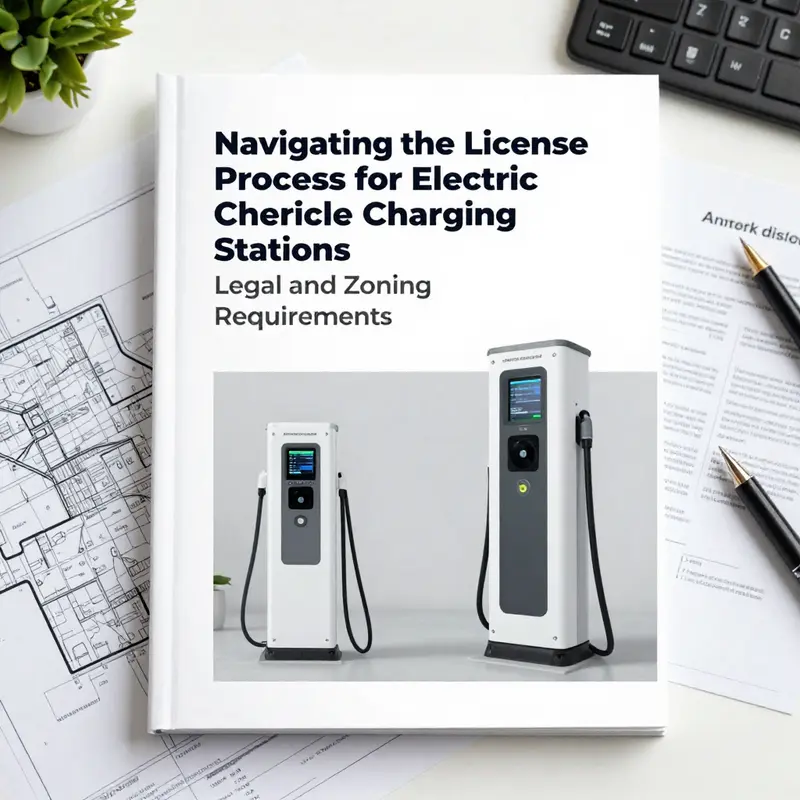
Navigating the licensing and zoning for an EV charging station requires more than a single permit; it demands an integrated view of land use, electrical safety, environmental considerations, and long-term operations. The process varies by jurisdiction, but several core elements recur: site suitability, setback and access, electrical design, utility interconnection, and a final inspection that certifies readiness for public use.
Begin with a regulatory scoping exercise to identify which agencies will review the project. Common actors include planning or zoning, building, fire safety, and the utility company. Early engagement helps align site plans with local character, traffic safety, emergency access, and grid capacity, reducing the risk of delays later on.
Setbacks and accessibility often determine where charging stalls can be located, how access drives and pedestrian paths are arranged, and how the site interoperates with nearby sidewalks, curb cuts, and parking. The minimum distances, landscaping requirements, and signage standards are defined in local codes and may be adjusted for public safety and aesthetics.
The electrical and interconnection track focuses on wiring diagrams, equipment ratings, metering, and protections that meet applicable electrical codes (such as NEC) and utility requirements. A grid interconnection agreement or power purchase terms may be needed, along with inspection checkpoints to verify correct installation and safety.
Finally, plan for inspections, commissioning, and ongoing compliance. A certificate of occupancy or equivalent authorization typically unlocks public access, after which maintenance, safety inspections, and periodic reviews ensure continued safety and reliability. By coordinating these threads from the outset and maintaining clear documentation, operators can navigate licensing cycles with greater predictability and fewer surprises.
Securing the Green Light: Environmental and Safety Compliance for EV Charging Station Licensing
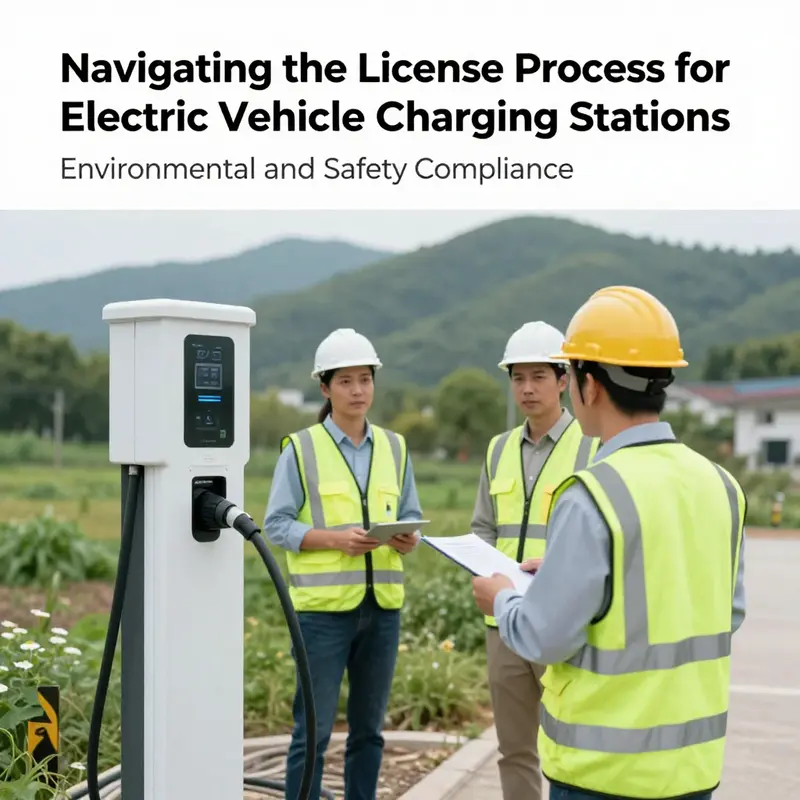
Licensing an electric vehicle charging station is a journey that blends business planning with public responsibility. The path to a license involves site assessment, environmental review, safety compliance, and ongoing stewardship. Regulators expect projects to harmonize with land use, protect air, water, and soil quality, and ensure a safe, reliable connection to the electric grid. The environmental and safety steps set the pace for permits, inspections, and commissioning, guiding design choices such as siting, buffering, drainage, lighting, and access.
Early stakeholder engagement with planning authorities and the utility helps identify setbacks, buffering needs, traffic implications, and safety considerations. The analysis typically includes noise and air quality considerations, stormwater management, and measures to minimize visual impact while preserving accessibility for users.
The environmental review may be a formal environmental impact assessment or a lighter review depending on jurisdiction and project size. It examines potential effects on air quality, noise, soils, surface water, groundwater, and local ecosystems, and it prompts mitigation measures such as erosion control, sediment management, and drainage protections. The goal is to ensure environmental safeguards are integrated into the engineering design before construction proceeds.
A robust safety framework underpins the project, anchored in required codes and inspections. Building and electrical permits verify that designs meet standards, that licensed professionals supervise critical work, and that insurance coverage is in place. Electrical components and the grid connection are designed and reviewed to ensure safe operation, with a formal grid connection application documenting requested capacity, upgrades, and reliability considerations. A utility site inspection and authorization to connect typically follow the design review.
Fire safety authorities assess risk and ensure appropriate protections, including spacing between units, ventilation for enclosed installations, access routes for emergency responders, and emergency shutdown procedures. A comprehensive safety plan coordinates with fire, building, and utility requirements to minimize risks during both construction and operation.
In parallel, jurisdictions may require specialized licenses or registrations for energy or transportation activities and may address data privacy and cybersecurity as charging stations collect user information. These regulatory threads add to the licensing narrative but all contribute to public safety and system reliability.
With planning and compliance in mind, projects benefit from clear sequencing of approvals, digital permitting when available, and thorough documentation. A concise environmental narrative, an explicit safety plan, and traceable records facilitate timely reviews and support ongoing compliance after commissioning. Finally, commissioning and final inspections culminate in authorization to operate and establish a framework for routine maintenance, reporting, and periodic revalidation of safety and environmental safeguards.
Final thoughts
Acquiring a license for an electric vehicle charging station is a critical step in contributing to the investment in sustainable energy solutions. By understanding the complexities of market research, legal requirements, and environmental compliance, you can position your venture for success in this evolving industry. Your commitment to responsible operations and adherence to regulations will not only enhance long-term viability but also support the broader mission of promoting electric vehicle adoption and sustainability. Move forward with confidence and clarity, knowing you have taken the right steps towards establishing a successful charging station.