
Insuring a vehicle comes with a series of intricacies, especially concerning whether having a driver’s license is a prerequisite to secure coverage. For new drivers and learners just getting acquainted with the rules of the road, existing drivers who may have faced license issues, and vehicle owners wanting to understand their obligations, making informed decisions regarding vehicle insurance is crucial. This article delves into the need for a license to insure a vehicle during purchase, explores the legal implications of obtaining insurance without it, and outlines the necessary documentation required in such situations. We will also look at the types of coverage options available for unlicensed vehicle owners, and clarify how a driver’s license status can impact insurance claims.
Insuring a Vehicle Without a Driver’s License: How Coverage Builds Before You Take the Wheel
Insuring a vehicle without a driver’s license often triggers a mix of confusion and practicality. The essential truth is simpler than it appears: you can begin a policy without presenting a valid license, but you cannot legally operate the vehicle on public roads without one, and the claims landscape shifts dramatically depending on who is behind the wheel at the moment an incident occurs. In the purchase phase, insurers center their attention on the car itself and the basic financial responsibility attached to it, rather than treating a person’s driving credentials as the sole determinant of coverage. This distinction matters because it frames how people think about insurance when a license is missing, suspended, or not yet obtained. The vehicle’s identity—its VIN, its make, model, and year—emerges as the primary anchor for underwriting, while the applicant’s address, credit history, and intended use of the vehicle add layers of risk assessment that shape the quote. The process typically asks for details like the VIN, the year, the make and model, and whether the use is personal or commercial. In many cases, a valid driver’s license is not a mandatory checkbox at the moment you initiate the policy. This reflects a practical reality: an insurance contract protects the vehicle and the financial responsibility it carries, not just the identity of the person who might eventually drive it. Yet this apparent contradiction disappears the moment you shift from purchase to operation. If you intend to drive the car, you must hold a valid driver’s license to meet the law and the contract’s terms. Driving with an unlicensed status—no license, suspended, or expired—constitutes a traffic violation in most jurisdictions and creates a strong likelihood that any claim would be denied or drastically limited. Insurers design policies to indemnify against the costs of risks associated with driving, but they also protect themselves against the consequences of illegal use. In plain terms, coverage is typically contingent on who is named as the driver and who is legally permitted to operate the vehicle. This is where the planner’s mindset matters: even if you can secure a policy without a license, you cannot realistically expect to operate the car without obtaining one. To be sure, the policy may be set up with the understanding that you will add a licensed driver as the primary operator, or you may choose to list another licensed individual—such as a spouse or family member—as the primary driver. In practice, many insurers require or at least strongly encourage the disclosure of the driver’s license number and details about the primary operator because these facts influence risk assessment and premium determination. If you do not possess a license yourself, listing a licensed driver as the primary operator can facilitate coverage for non-driving events. This is especially relevant if the vehicle is kept on the premises for storage or occasional use, or if it is insured against theft, fire, or other non-collision hazards when not in use. The nuance here is important: the policy’s coverage in the event of theft or damage that does not involve a moving vehicle can still be valid even if the named driver does not hold a license himself. However, the moment the car is driven, the licensed operator becomes critical to the contract’s enforceability. In a landscape where a license may be suspended or revoked, the insurer’s obligations become more complex. Some states and carriers require the filing of an SR-22 form, a certificate of financial responsibility, to prove that the driver meets the required legal threshold to operate. The SR-22 mandate can carry higher premiums and stricter terms, since it flags the insured as presenting a higher risk on the road. The resulting financial and legal consequences can ripple through the policy for years, affecting not only costs but also coverage limits and renewal eligibility. When the license status changes—whether you obtain a license for the first time, have your license renewed, or face a future suspension—the insured party should proactively inform the insurer. The relationship between licensing and coverage is not merely bureaucratic; it is about maintaining lawful protection. In scenarios where you do not plan to drive immediately, you may still want to insure your car. This can be sensible for protection against theft, fire, vandalism, or non-collision damage. In such cases, you would typically list a licensed driver as the primary operator, ensuring the vehicle remains protected even if no one drives it yet. The legal and practical implications are intertwined: insurers must know who will operate the car to assess risk accurately, and the policy’s validity aligns with the driver’s ability to lawfully operate the vehicle. If you ever encounter a situation where the license status is unclear or in flux, consult both the state’s Department of Motor Vehicles and the chosen insurer. They can outline the specific requirements in your area and explain how licensing status may affect coverage or premiums. For further context on how state rules shape licensing decisions, readers may explore the concept of how state rules impacting driver licensing influence underwriting decisions and the steps you can take to align your documents with local expectations. As you navigate this terrain, remember that the overarching aim of insurance is to stabilize financial risk associated with owning and operating a vehicle, not to penalize someone for not yet holding a license. The practical takeaway is clear: you can initiate insurance without a license, but you must eventually obtain a license to drive legally, and you should be prepared for the possibility that the absence of a license will influence eligibility, pricing, and the likelihood of claim acceptance. In parallel, it pays to verify your state’s rules and your insurer’s policies on proof of license during policy setup, as some carriers may require proof at the time of binding or during renewal. The consistency between state law, the contract’s terms, and the vehicle’s risk profile is what keeps coverage meaningful and enforceable when the time comes to use the car in earnest. For many readers, this means balancing the convenience of obtaining coverage now with the responsibility to secure a valid license in a timely fashion. The goal is not to complicate the purchase but to ensure that the policy you obtain will actually serve you when you need it most. So, while you can purchase insurance for a vehicle without a license, the act of driving the car—and the integrity of any claim—depends on maintaining valid driving credentials and transparent communication with the insurer throughout the life of the policy. If you are preparing for a future step, map out the licensing timeline alongside your insurance plan. That integrated approach helps prevent gaps in protection and keeps you aligned with both legal obligations and the practical realities of coverage. For readers seeking authoritative guidance beyond the practical advice shared here, the National Association of Insurance Commissioners provides consumer resources that offer a broader view of how policies interact with licensing requirements and state rules. This chapter thus navigates a nuanced space: you can purchase coverage for a car without a license, you can store or protect the car under a policy, and you can drive legally only after you have obtained the appropriate credentials and kept your insurer informed as circumstances change. The road from purchase to operation is defined by timing, disclosure, and compliance, and the right alignment among these elements ensures that your insurance serves its fundamental purpose when you need it most. In the broader arc of this article, understanding this alignment helps demystify the question at the heart of vehicle insurance: do you need a license to insure a vehicle? The answer hinges on the moment you intend to drive and the responsibility you carry to stay compliant with both law and policy.
The Legal Tightrope: Insuring a Vehicle Without a Driver’s License
In auto insurance discussions, a common question is whether you can insure a vehicle when you don’t hold a valid driver’s license. The short answer is that you can often obtain coverage without presenting a license at the moment of application, especially if the car is registered in your name and you are the owner. However, legality and insurance are not the same thing. Driving without a license is illegal in most places, and insurers will scrutinize claims if the driver was unlicensed. Misrepresentation or failing to disclose who will operate the vehicle can void a policy. If your license is suspended or revoked, you may need to file an SR-22 or take other steps to maintain or reinstate coverage. If you don’t plan to drive, you can still insure the car for theft, fire, or other non-operational risks by naming a licensed driver as the primary operator. Always disclose all potential operators and ensure that your policy terms align with local law. For broader context on how licensing rules interact with insurance, see state licensing resources and consider the information at https://drivernvehiclelicensing.com/state-rules-impact-on-driver-licensing/
Insuring Without Driving: The Hidden Rules Behind Coverage for a Vehicle You Can’t Legally Drive
The question many stumble over is not simply about whether a driver’s license is required to buy insurance, but what happens when ownership, protection, and the ability to operate diverge. You can, in many places, purchase a policy for a vehicle without possessing a valid driver’s license. The insurance contract treats the car, its ownership, and the listed operator as the core variables for underwriting. The act of purchase hinges on proving who owns the vehicle and who will operate it, not on whether the purchaser can legally drive at that moment. Yet this separation between ownership and operation lies at the heart of how coverage works in practice, and it carries real consequences if the car is ever driven without the proper license. The nuance is not merely academic; it affects risk, responsibility, and the very legality of using the policy when a claim is filed. As you navigate this space, consider that your state’s rules around licensing can shape how insurance is written and who is permitted to be behind the wheel in any given situation. Understanding how state rules impact driver licensing can illuminate why the distinction matters in everyday planning. state rules impact on driver licensing.
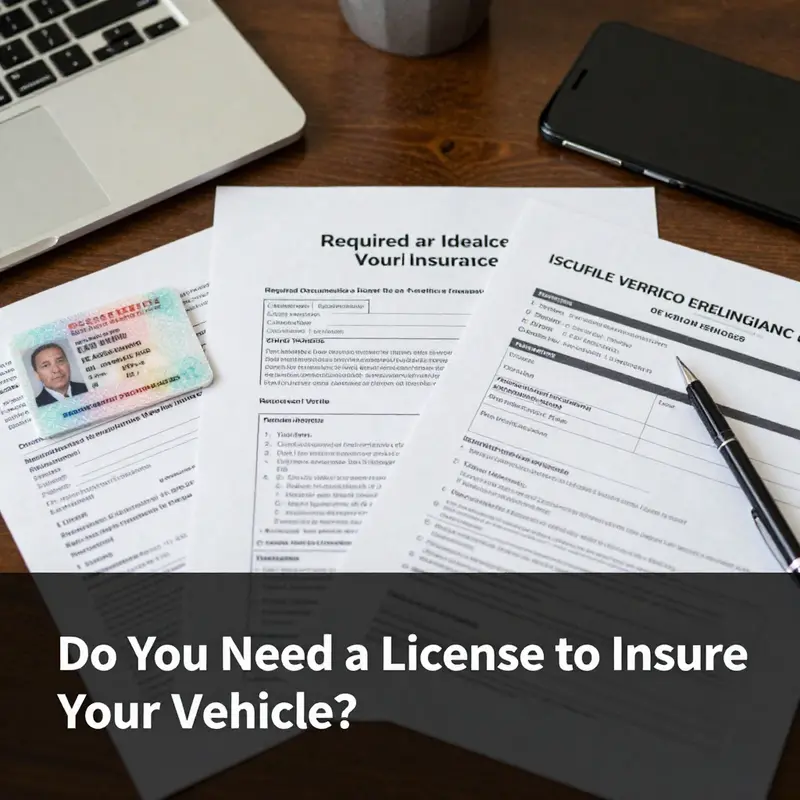
To begin, the documents you need to secure a policy are anchored in ownership and identity rather than in the right to drive. The insurer’s first concern is that you can establish that the vehicle belongs to you and that you are who you say you are. Proof of ownership is non-negotiable in most cases. This includes the vehicle identification number (VIN), the title or registration certificate issued by the relevant motor vehicle agency, and, if the car was recently purchased, the sales invoice or bill of sale. These items confirm that the car exists, is registered, and is legally transferable to you as the owner. Without them, a policy is unlikely to be underwritten, precisely because the underwriter must confirm the car’s legitimacy and the owner’s control over it. In parallel, insurers require proof of identity. A valid government-issued photo ID is typically sufficient, though some providers will accept other forms of government-issued identification if a passport or state ID is not on hand. The emphasis on identity protects both the insurer and the insured, ensuring that the policy is attached to the correct person and vehicle, even if the person who will drive may be someone else.
When it comes to the act of driving itself, the license is fundamental. The policy is designed to operate in the real world, where a licensed driver is the person who can legally operate the vehicle. If someone drives without a license and an accident occurs, the insurance company will likely deny the claim. This is not merely a moral or policy-interpretation issue; it’s a legal one. Driving without a license violates traffic laws and undermines the contract’s purpose—transferring financial risk from the driver to the insurer in exchange for premium payments. The risk that a vehicle will be driven by an unlicensed person is simply too high for many insurers to bear in the standard framework of coverage. This is why, even if you can buy insurance without a license, the coverage often becomes contingent on who actually operates the vehicle and whether that operator holds a valid license.
As you craft a policy, insurers will usually seek information about the intended drivers. They may ask for the license numbers and basic driving histories of those who will be behind the wheel. If you don’t have a license, you can still complete the purchase by listing a licensed driver—such as a spouse or another household member—as the primary operator. In practice, this means the policy documents will reflect a named driver with a valid license who is responsible for operating the vehicle in daily life. This arrangement is legally permissible and generally accepted, but it carries a clear understanding: the person who drives must comply with licensing requirements, maintain their license in good standing, and drive in accordance with the policy terms.
There are scenarios that complicate the straightforward picture. For example, some people buy insurance while not actively driving the vehicle because they want coverage against theft, fire, or other non-collision damage. In such cases, the owner can insulate themselves from liability for driving by designating another licensed driver as the primary operator. The policy will still provide protection for non-driving risks, but the coverage for crashes hinges on the licensed driver’s actions and the policy’s terms. In this arrangement, the owner’s role is primarily financial and custodial, not operational, and the insurer’s underwriting reflects that division of risk.
Yet the moment you take the wheel without a license, the insurability of that act changes. If a license is suspended or revoked, the owner still bears a legal responsibility to maintain financial responsibility for the vehicle. Some jurisdictions require you to file an SR-22 form or a comparable proof of financial responsibility to reaffirm that you will be able to cover damages in the event of an accident. Acquiring such a form can be a more involved, costlier process, and it highlights how a license status can ripple through the whole insurance arrangement. The policy itself may include clauses that protect the insurer and the owner by clarifying that the owner is not the permitted operator unless a licensed driver is named and agreed upon in the policy. If someone without a license were to drive and cause a claim, the insurer could invoke exclusions, limits, or other contractual provisions that render the claim unpayable or payable only under restricted terms.
Taken together, these threads form a clear continuum. You do not need a driver’s license to purchase vehicle insurance in most cases, but you do need a licensed driver to operate the car in a way that the policy contemplates. The purchase is anchored in ownership verification, but the policy’s usefulness rests on the operating party’s legal right to drive. This distinction is not just about paperwork; it’s about risk assignment, responsibility, and the alignment of legal compliance with financial protection. For families and individuals juggling multiple drivers, the architecture of the policy—who is listed as the primary operator, who is excluded if necessary, and how the premium is crafted to reflect driving history—becomes particularly important. Insurers can tailor the product to reflect a realistic driving ecosystem, where ownership and operation may be split. The end result is a contract that protects the vehicle and non-driving scenarios while ensuring that any driving complies with licensing requirements.
Because the landscape can vary by state, it is essential to stay informed about local rules and ordinances. The practical implication is straightforward: you can own and insure a vehicle without a license, but the policy’s coverage for driving is contingent on the operator’s license status. If you expect a change in your license status, say a temporary loss of driving privileges or a pending license restoration, you should communicate with your insurer to understand how the change affects your policy. In some cases, you may need to adjust who is listed as the primary driver, or you may need to arrange an exclusion for the owner while a licensed driver remains in control of the vehicle. The goal is to preserve coverage for non-driving risks while ensuring that any operation of the vehicle occurs under a legally compliant framework.
In the end, the core documents you gather for insurance—proof of ownership (VIN, title, registration), proof of identity, and the information about intended drivers—are the foundation. They enable you to secure a policy that protects the vehicle and its non-operating risks even if you yourself cannot legally drive. The policy will reflect the reality that you, the owner, may be unable to operate the car, and it will name a licensed driver as the operator who bears the responsibility for driving. This alignment between legal status and financial protection is what makes insuring a vehicle without a license feasible, while driving without a license remains outside the policy’s protections and outside the law. Always verify requirements with your insurer and your state’s motor vehicle department, and keep an eye on how your licensing status could influence premiums, exclusions, and the ongoing viability of the coverage you depend on. For a broader sense of how state rules shape licensing and, by extension, vehicle responsibility, see the referenced resource on state rules impact on driver licensing. External considerations, such as how driving status interacts with risk on the road, are also worth exploring through trusted road-safety guidance to understand the larger context in which these policies operate. https://www.nhtsa.gov/road-safety
Guarding the Car When No Driver Is Licensed: Insurance Realities for Unlicensed Vehicle Owners
Owning a car without a valid driver’s license places you at a crossroads where legality, risk, and financial protection intersect in uneasy ways. The core question—do you need a license to insure a vehicle—unfolds into a practical and nuanced truth: you can usually buy and maintain auto insurance for a car even if no one who will operate it currently holds a license, but that protection does not function the same way if someone drives unlicensed. A policy is built around the idea of risk, and the primary risk in this case is the legal ability to operate the vehicle. Insurance companies assess who will drive, how often, and under what conditions. If no licensed driver is allowed to operate the vehicle, the coverage landscape shifts in important ways, and the consequences of driving unlicensed can be severe for both the driver and the owner. The result is a landscape where ownership and operation diverge, and understanding that divergence is essential to safeguarding both the car and the policy you carry.
Across many jurisdictions, the act of purchasing insurance is less about who is behind the wheel than about who is legally allowed to drive. When you initiate a policy, the insurer typically needs the vehicle’s registration details, the owner’s information, and the planned use. A valid driver’s license is often not a strict prerequisite at the moment of purchase. The underwriting process focuses on the vehicle and the person who will be responsible for it, which can include listing a licensed driver as the primary operator. This practical flexibility reflects a broader public policy aim: ensuring that vehicles are insured against theft, vandalism, and other non-crash risks, even if the operator may not currently hold a license. Yet this latitude has a critical caveat: coverage for actual driving rests on the driver’s license status. If someone operates the car without a valid license at the time of an incident, insurers commonly deny claims, regardless of the policy’s broader protections. The logic is straightforward: driving without a license is a violation of traffic law and a breach of the insurance contract’s fundamental terms.
The most pivotal consideration is not the act of buying insurance but the act of driving. Without a valid license, the insured may find that a crash or a theft-related event does not trigger the protections they expected. The policy’s wordings and exclusions are designed to reflect that risk reality. Insurers usually require the license number and information about the primary driver to assess risk and set premiums. If you yourself do not hold a license, there remains a practical workaround: you can still secure coverage by designating another licensed driver as the primary operator. This approach aligns with common underwriting practices and allows the car to be insured against theft, fire, and other non-collision perils when no licensed driver is actively behind the wheel.
In practice, however, the practical boundaries of this arrangement become evident the moment an accident occurs. If the unlicensed driver is operating the vehicle at the time of a collision, the claim can be denied, even if the vehicle is insured for other risks. The reasons are both legal and contractual. Driving without a license violates the law, and many policy forms incorporate exclusions for incidents arising from driving without a license or while the license is suspended or revoked. The insurance industry has long recognized the tension between making insurance accessible to owners who cannot drive and maintaining the integrity of financial responsibility when driving is unlawful. The balance tilts heavily toward enforcing license requirements when it comes to actual operation.
Yet there are subtleties worth acknowledging. Some policies may offer coverage if the licensed policyholder has permitted an unlicensed individual to use the car and the policy does not explicitly prohibit such operation. In practice, this remains a fragile arrangement: insurers may still challenge liability or pursue recovery from the unlicensed driver after a claim, arguing that the driver’s lack of a valid license invalidates the coverage. For the unlicensed owner, this means that even when a legally acquired policy exists, the mere act of driving without a license can cascade into out‑of‑pocket costs far larger than the premium paid.
The landscape differs by region, but the shared core idea holds: compulsory coverage for damages to others does not guarantee protection for an accident caused by an unlicensed driver. In many places, the basic liability coverage required by law—often described as Compulsory Third-Party Liability (CTPL) or third‑party liability—does not extend to unlicensed drivers who cause harm. This is not a loophole; it is a protective measure that reflects the social contract behind responsible driving. In the United States and the United Kingdom, the rules underscore that unlicensed driving is a barrier to coverage. In the United States, state-by-state variations exist, but the National Association of Insurance Commissioners and other authorities repeatedly emphasize that many auto policies exclude coverage when the driver is unlicensed. In the UK, the Driver and Vehicle Licensing Agency (DVLA) and the Motor Insurers’ Bureau (MIB) state clearly that an unlicensed driver cannot be insured under a standard policy for the accidents they cause, even if the vehicle itself is insured. This reality holds even when the vehicle remains registered and the owner is the policyholder. For those living under these rules, it becomes crucial to think strategically about who actually operates the vehicle and to document any permitted, licensed drivers who may step in as the primary operator when the car is in use. A useful way to view this is to think of the policy as a framework for financial responsibility, shaped around the person who is legally allowed to drive the car. A policy can be permissive when a licensed driver is listed, but it does not magically grant coverage for unlicensed operation. As licensing rules evolve, see the discussion on state rules impacting driver licensing to understand how local standards may shift the way insurers assess risk and the way owners plan for coverage.
This is not to say there is no coverage at all for an unlicensed owner who does not drive. There are purposeful, legitimate uses of insurance that do not depend on the driver’s license status at the moment. If the car is stationary and you are not driving it, you may still want to insure it against theft, weather damage, or vandalism. In such cases, the insured has to ensure that the policy’s terms clearly reflect the intended use and the fact that no one will be operating the vehicle without a license. Listing a licensed driver as the operator remains the common, prudent approach. It provides a path to maintaining insurance coverage for compelling risks while respecting legal constraints.
Another layer of complexity involves the scenario where a license is suspended or revoked. Even then, the law typically requires you to maintain insurance. In many jurisdictions, you may be required to file an SR-22 or similar proof of financial responsibility to demonstrate that you can cover potential damages. This requirement can create additional costs and administrative steps, complicating the simple idea of “keeping coverage” while not driving. The practical implication is that a suspended license often triggers higher premiums or a more constrained coverage menu, and some insurers may view the combination of suspension and unlicensed operation as high risk. If you find yourself in this situation, it is worth consulting with a knowledgeable agent who can explain precisely which forms must be filed, how the premiums may change, and what documentation will be needed to keep the policy valid while you work toward eligibility to drive again.
Beyond the mechanics of who is listed as the driver and how licenses affect claims, there is a broader ethical and financial reality to consider. Insurance, at its core, is a mechanism to distribute risk and protect the financial interests of all parties in a crash, including the injured and the insured. When an unlicensed driver is behind the wheel, the risk calculus changes. The potential for fines, penalties, and compliance actions increases, and the road to obtaining future coverage can become tougher and more expensive. There may be situations where the unlicensed driver bears full responsibility for damages, and the owner of the vehicle becomes financially liable for out-of-pocket costs that would have been absorbed by an insurer under normal circumstances. This potential outcome underscores the importance of aligning policy terms with actual driving behavior and legal status.
The practical path forward for someone who owns a car but does not hold a license is pragmatic and safety‑oriented. The first step is to secure licensed operability for any time the vehicle will be used. If that is not feasible in the short term, the owner should restrict access to licensed drivers only and consider keeping the car in a secure, monitored location to deter theft. When driving is inevitable, enrolling in a driver’s education program or pursuing a licensing pathway helps restore protection in the most robust form: coverage that travels with the act of lawful driving, not merely with the ownership of the vehicle. In parallel, maintaining a transparent dialogue with the insurer about who will operate the car, the licensing status of that person, and any temporary arrangements helps reduce the risk of later disputes.
In sum, the question of whether you need a license to insure a vehicle hinges less on the act of buying and more on the act of driving. A policy can be issued to protect the vehicle, but its coverage for accidents hinges on the driver’s license status at the time of the incident. A licensed operator remains the linchpin of meaningful coverage, especially in a crash scenario. If you are an unlicensed vehicle owner, you can pursue insurance by listing a licensed driver as the primary operator, or you can insure the car for non-driving perils while you work toward becoming a licensed driver. Either path requires careful attention to policy terms, state or national rules, and the practicalities of what you intend to do with the vehicle. The goal is a coherent, realistic approach to protection that respects the law while delivering financial security when misfortune strikes. For anyone navigating these questions, the chapter that connects licensing reality with coverage options is a reminder that prudent planning now can prevent costly complications later.
External reference: For official guidance on unlicensed drivers and insurance in the UK context, consult the government guidance at https://www.gov.uk/government/publications/insurance-for-unlicensed-drivers.
The License Ledger: How Driving Status Shapes Vehicle Insurance Claims
In the broader conversation about insuring a vehicle, the question of whether you need a license to buy coverage often comes up. The answer is nuanced: you can typically initiate a policy without presenting a valid driver’s license at the moment of purchase. The underwriting process, however, or any claim that follows, hinges on who will be behind the wheel and what their driving history looks like. This is not just a bureaucratic technicality. It is a practical framework that shapes risk, costs, and the very likelihood that a claim will be honored when the car is involved in a mishap. The driving record, including the status of the license, points accumulated for violations, suspensions, and even revocations, enters the decision-making calculus long before a single payment is issued or a settlement is considered. The chapter that follows navigates that calculus by tracing how license status translates into claims handling, premium adjustments, and enforceable obligations, all within the larger landscape of responsible vehicle ownership.
From the outset, insurance providers focus on the vehicle, the owner, and who is likely to operate the vehicle in real life. When you buy insurance, the essential inputs typically revolve around the vehicle’s identity and registration—things like the VIN or license plate—and the person who owns the car. A driver’s license, while central to the legal operation of a vehicle, is not always required to initiate a policy. This distinction matters because it sets a practical path for people who may not yet hold a license or who are waiting for a requalification after a suspension. Yet, even if the purchase can proceed, the implications for claims once a loss occurs are dependent on license status. The policy may be in force, but its protection is only as good as the insured’s compliance with driving regulations and the terms of the contract. In short, the license is less about the act of buying coverage and more about the right to drive with the assurance that a claim will be honored when the time comes.
The most significant friction in claims lives at the intersection of driving history and risk assessment. Insurers routinely pull a driver record when a claim is filed. Points on a license, suspensions, and other violations are not merely footnotes; they are signals about the probability of future risk. Speeding violations, reckless driving, DUI, and other infractions carry weight because they correlate with the likelihood of accidents. When a policyholder with a points-heavy record files a claim, the insurer’s review goes beyond the incident itself. They examine whether the driver’s past behavior plausibly connects to the current event. This scrutiny can manifest in practical ways: delays in processing, the imposition of higher deductibles, or, in the worst case, denial of coverage if the insurer determines a breach of safe-driving obligations or policy terms. The outcome hinges less on the accident and more on the driver’s overall risk profile, which is built over years of driving history.
Premiums, too, respond to license status, sometimes in subtle ways and sometimes with a sharper edge. A clean record generally earns favorable terms, while points, suspensions, or a revoked license can push rates upward. Underwriters aggregate a spectrum of factors to determine future coverage, and a poor axis of driving history can tilt the balance toward higher costs or even policy cancellation. The logic is straightforward: insurance is a financial safety net backed by a probability assessment. If your record signals higher risk of future claims, the policy must reflect that risk. The cost is not just a monthly premium but a broader shift in how the insurer treats the policy—more stringent requirements, tighter terms, or a need for recurring documentation to demonstrate ongoing responsibility.
In this environment, the availability of coverage when a driver lacks a license becomes a delicate topic. If you don’t drive, you may still insure the car against theft, fire, or non-collision damage by listing another licensed driver as the primary operator. This arrangement preserves the asset and maintains responsibility for the vehicle, even if you are not the one who will operate it. It also introduces a practical workaround for individuals who are between licenses, awaiting reissuance, or managing a suspension that prevents legal driving. The insurer’s role is to ensure that there is a clearly identified, licensed person who will assume responsibility through the policy terms. The risk assessment then pivots from the absence of a license to the reliability and track record of the listed operator.
But the road gets thornier when license status changes during the life of a policy. A suspended or revoked license creates a different set of obligations. In many jurisdictions, you are still required to maintain financial responsibility for the vehicle, even if you are not actively driving it. The SR-22 form often comes into play in such circumstances, serving as proof of financial responsibility to the state. Obtaining and maintaining SR-22 status can be more expensive and complex, and it can influence an insurer’s willingness to provide coverage in the future. The presence of an SR-22 is a signal to the insurer that risk management requires additional safeguards, which may translate into higher premiums or stricter policy terms. This dynamic underscores a broader truth: the license status is not just a legal credential; it is a practical indicator of how risk is managed across the policy lifecycle.
The interplay between license status and claims handling also has tangible effects on the speed and outcome of settlements. When a claim is filed, the insurer investigates the driver’s record to assess whether the incident aligns with the policy’s expectations for safe operation. A driver with a history of multiple violations might face closer scrutiny, potential documentation demands, or conditions on future claims. In some cases, coverage can be adjusted in ways that reflect the risk, such as imposing step-down coverage, requiring a defensive-driving course, or re-evaluating the risk for future incidents. While a higher-risk record does not automatically equal denial, it does reframe how the claim is evaluated and settled. Insurers seek to preserve their own financial stability while honoring the terms of the contract, a balance that increasingly turns on the driver’s historical record.
All these considerations—risk assessment, premium implications, and claims processing—are not isolated policies but parts of a cohesive system designed to align coverage with actual driving behavior. The article [How Your Driving Record Affects Your Car Insurance] summarizes this logic in a contemporary lens, highlighting how driving records drive risk evaluation, premium variation, and claim outcomes. The picture that emerges is not simply about whether a driver possesses a license. It is about what the license status says about ongoing responsibility and the probability of future claims. In practice, a clean record earns a smoother path through underwriting and claims, while a clouded record invites careful scrutiny and, potentially, costly consequences.
For readers navigating these waters, a practical takeaway emerges. If you are not currently licensed, do not assume you will be automatically protected the moment you purchase insurance. Instead, plan for how a licensed driver will be identified on the policy, and be prepared for the possibility that the insurer will want accurate, ongoing information about who drives the car. If your license status changes—whether through suspension, revocation, or reinstatement—the timing and terms of your coverage can shift in meaningful ways. It is in these moments that the alignment between legal status and contractual obligation becomes most visible. To ground these dynamics in policy and practice, consider how state-level rules affect licensing and driving requirements, as these rules influence both the availability of coverage and the conditions under which a claim might be processed. See more about how state rules impact on driver licensing for a broader context on how jurisdictional policy shapes driving status and the downstream effects on insurance decisions.
The thread that connects all of this is simple and sometimes overlooked: insurance is a contract built on risk, and risk is measured against the reality of who drives the vehicle. A license status that signals greater risk can sour the perception of predictable claims, alter the path of settlements, and, in turn, influence the financial terms of coverage. Conversely, a clean and current driving record tends to smooth these processes, enabling prompt handling, reasonable deductibles, and stable premiums. The nuanced reality is that you do not need a license to initiate coverage, but you do need a license—or a clearly defined, licensed operator—to ensure that coverage translates into protection at the moment of loss. As the discussion unfolds in subsequent chapters, the interplay between license status and insurance will continue to illuminate how people protect their vehicles, their wallets, and their responsibility to other road users. External resources offer additional perspectives on the relationship between driving records and insurance outcomes, including evolving industry practices and legal requirements: https://www.insurance.com/car-insurance/driving-record/
Final thoughts
Navigating the complexities of vehicle insurance without a valid driver’s license is crucial for both legal compliance and financial security. Although it is possible to insure a vehicle without having a driver’s license, being aware of the implications and responsibilities associated with this decision is essential. Providing the proper documentation and understanding the specific coverage options available can help in effectively managing these challenges. Ultimately, maintaining a valid driver’s license is pivotal not only for operating a vehicle legally but also for safeguarding against potential claims pitfalls should an accident occur.