
The process of licensing a vehicle can vary greatly depending on the state of registration, particularly when dealing with residency requirements. Whether you’re a new driver eager to hit the road, an existing vehicle owner contemplating a move, or a student attending school in a different state, understanding the nuances of vehicle licensing is essential. This article will walk you through the critical aspects of vehicle registration in another state—from the residency requirements to the process involved in different jurisdictions, all the way to special considerations for temporary residents. Each chapter sheds light on a specific facet of this topic to provide a comprehensive understanding of how to effectively navigate vehicle licensing across state lines.
Crossing Residency Lines: How Residency Shapes Licensing a Vehicle Across State Borders
Residency is rarely glamorous, but it is the hinge on which vehicle licensing swings. In conversations about licensing a vehicle in a state where you do not currently live, the question that really matters is not the size of your paycheck or the color of your car. It is where you can truthfully claim a legal address, where you intend to make your home, and where the state will consider you a resident for purposes of vehicle registration and licensing. Across the United States, states differ in how they define residency, what counts as proof of residency, and how long you have to act once you establish ties. The practical consequence is simple but important: if you have not established residency in the state where you want to register your vehicle, you will typically face legal and financial risks, including fines or penalties if you drive with out-of-state plates in a state that considers you a resident. The balance between mobility and legality is delicate, and the path forward hinges on a careful reading of residency indicators, a clear eye on state rules, and a willingness to align your registration with your actual circumstances rather than your travel plans.
No two states measure residency in exactly the same way, and many people assume a simple rule of thumb will suffice. In reality, residency is a bundle of facts rather than a single moment or document. The law looks at a constellation of indicators that together suggest where your real home is. If you own a home, hold a job, vote, or carry a driver license in a given state, you are constructing a durable link to that state. Utility bills, lease agreements, and sometimes even the duration of your stay can tilt the balance toward one jurisdiction or another. The result is that temporary visitors or seasonal workers often do not meet residency requirements, even if they spend a good portion of the year in another state. This distinction matters; it preserves the integrity of state motor-vehicle records and ensures that vehicles are taxed, titled, and insured in the jurisdiction that has the strongest connection to the operator.
Consider the frequent scenario of a person who relocates for college, a new job, or family reasons. In the eyes of the DMV, simply spending a few weeks in a new state does not convert your residency automatically. For example, California, which has a reputation for strict compliance, expects most new residents to register their vehicle within a defined window after establishing residency, a rule designed to prevent people from skating by on temporary arrangements. Other states, like Texas, outline residency more explicitly through a blend of permanent address criteria and ties such as voting registration or holding a state driver’s license. Then there are states that create more permissive pathways for certain kinds of use, including seasonal arrangements, though such exceptions are relatively rare and usually come with caveats. The upshot is that the toolkit you bring to the process—proof of residency, the timing of registration, and the documents you present—must align with the state’s definition of residency rather than your intuition about where you happen to be living this month.
The practical implications go beyond paperwork and penalties. If you drive a car registered in a home state while you are now living elsewhere, you can risk enforcement actions that range from fines to more severe consequences, such as booting or impoundment in some situations. The stakes are higher for those who rely on a vehicle for commuting or who own a vehicle that is financed or insured under a policy tied to a specific state. Because the landscape is complex and state-specific, many people find themselves unsure about the correct course of action, especially when they are in transitional periods—moving to a new state for school, starting a remote job that spans states, or spending certain months in a warmer climate. The safest approach is to engage with the DMV of the state where you intend to register and to seek clarity on residency definitions, as well as the supporting documentation that state requires. This is not merely a bureaucratic hurdle; it is a framework that protects you from penalties and helps ensure that your vehicle records are accurate and enforceable across state lines.
When you start the process, you should approach it with a clear plan and a set of documents that demonstrate your ties to the state where you plan to register the vehicle. Residency indicators commonly include having a stable address that you consider your primary residence, being registered to vote in that state, holding a state driver’s license, having utility accounts in that name, and signing a lease or mortgage that shows a long-term commitment. Each state will weigh these factors differently, and some may require more than one type of proof. It is not unusual for people to question whether a particular circumstance—such as enrolling in a university in one state while continuing to work remotely from another—constitutes residency in either state. The answer typically comes down to the strength and persistence of the ties you can demonstrate. A robust set of indicators in one state can create a strong case for residency there, while a haphazard mixture of ties in two states can complicate the picture and trigger scrutiny.
A useful way to think about this is to view residency as a narrative you tell the DMV with supporting documents. It is not a race to collect as many items as possible, but a careful assembly of evidence that proves where your life is centered. If you are moving to a state that imposes strict residency rules, you may need to demonstrate a more substantial connection—such as a long-term lease, a job offer, or enrollment in local institutions—that goes beyond weekend visits or seasonal occupancy. Conversely, if you are in a state that recognizes seasonal use, you will still need to demonstrate why your vehicle and life are anchored there for a meaningful portion of the year. The key is to be honest about where you spend your time and to align your registration with the place that you truly call home.
In practical terms, the first step is often to contact the DMV in the state where you intend to register. Do not rely on hearsay or on the rules you glimpsed online without verifying them against the official guidance. DMV websites typically lay out residency definitions, the documents they will accept as proof, the fees you will owe, and the timeline for registration after residency is established. Some states publish exact lists of acceptable documents, while others use broad criteria that invite interpretation. In either case, you should prepare a straightforward package: proof of a physical address (such as a lease or utility bill), a state driver’s license or permit application that shows your intent to establish residency, and any other items the state requires for identification and vehicle ownership. If you are coming from another state, you may need to surrender your old plates or title, depending on the state’s procedures for out-of-state registrations. Understanding these requirements early can spare you delays, fines, or the risk of noncompliance while you settle into your new life.
For a deeper encounter with how states vary in defining residency and how those definitions play into licensing decisions, you can consult guidance that frames the issue in terms of state rules and their impact on driver licensing. See the resource on state rules impact on driver licensing for a concise overview of the spectrum across jurisdictions. This is not a substitute for checking your local DMV, but it can help you anticipate areas where states diverge, such as the level of proof required, the acceptable forms of address verification, and how long residency must be maintained before you can qualify for registration and licensing in the new locale. When you are ready to take concrete steps, your best source remains the official DMV site for the state you aim to register in. They will confirm the precise documentation, the fees, and the procedural steps you must follow to bring your vehicle into compliance with your new home state.
As you prepare to navigate an out-of-state licensing scenario, remember that there is a clear, repeatable path. Establish your residency in the target state with the primary indicators that state law recognizes. Then collect and present the documents that prove those ties in a coherent package to the DMV. If you are unsure at any point, seek guidance directly from the DMV rather than guessing. The landscape is not a fixed map but a living set of rules that change as people move, technology evolves, and policy priorities shift. The bottom line is straightforward: you license a vehicle where you establish your actual residency, not where your car happens to be parked most of the year. This approach protects your rights, keeps your registration current, and avoids the penalties that arise from misaligned residency claims. For those who are learning the ropes, this process can feel daunting, but it becomes manageable once you see residency as a construct built from recognizable, verifiable anchors rather than a single document or a moment in time.
External resource: For official guidance on registering out-of-state vehicles in New York, see the NY DMV page: https://dmv.ny.gov/vehicles/register-out-of-state-vehicle
Across State Lines: Navigating Residency, Rules, and the Vehicle Registration Path
When plans pull you toward a different state—whether you’re moving for work, school, or a temporary assignment—the question of licensing a vehicle across state lines becomes real and immediate. You might assume you can simply carry your registration with you and keep driving as usual, but the truth is deeper. Vehicle licensing is less about where you drive and more about where you establish your legal home. State governments want the place you call home to reflect where you register major life documents, pay taxes, and hold Driving privileges. Because residency is the engine behind registration, the rules you must follow in the destination state are shaped by how that state defines residency, how long you intend to stay, and whether your presence there is meant to be permanent or temporary. This is not a one-size-fits-all process; it unfolds as a careful alignment of location, intent, and paperwork, with the right timing and a clear understanding of consequences if you drift outside the rules.
The first, most fundamental fact to grasp is that most states require you to register your vehicle in the state where you establish legal residency. Residency is not simply about visiting plans or a transient job assignment. It is usually defined by a permanent address, ongoing ties to the community, and actions that demonstrate intent to remain—such as obtaining a state driver’s license, paying local taxes, enrolling in school, or voting in local elections. It’s the combination of clues and commitments that convinces a state department of motor vehicles that you truly belong to that state, not just that you’re passing through. If you think of residency as the anchor, the registration process becomes the tether that confirms you have placed that anchor firmly on the state’s soil.
From there, the exact requirements and the timeline to license and register a vehicle shift with every jurisdiction. Some states are strict about how quickly you must switch your registration after establishing residency. In California, for example, the policy is to register within a defined window after residency is established. Other states, like Texas, emphasize the possession of a permanent address and the other ties that come with residency—such as a driver’s license and voter registration—to determine when you can register a vehicle in that state. Then there are states with more flexible or nuanced positions. Florida, occasionally noted for more permissive rules for non-residents in certain contexts, still imposes restrictions and often limits on duration and use. The spectrum is wide, and the practical path depends on where you are coming from and where you plan to register.
An additional layer of complexity arises from the concept of reciprocity. Some states maintain reciprocity agreements with others, recognizing certain registration documents or allowing streamlined processes when you move from a neighboring jurisdiction. Even so, you can still be required to satisfy specific criteria tied to residency, vehicle ownership, and insurance coverage. The practical takeaway is simple: even if another state recognizes your registration, you should still expect to meet the destination state’s residency and registration requirements. Assuming seamless recognition can invite fines, delays, or worse—like penalties for driving an unregistered vehicle or for failing to meet emissions and safety inspections that some states require for in-state vehicles.
To understand the rules you’ll confront, you must consult the destination state’s Department of Motor Vehicles (DMV) guidance. DMV websites lay out residency definitions, the documents you’ll need, the fees you’ll incur, and the procedures you’ll follow. They also provide the most up-to-date rules, which can shift with changes in legislation or policy priorities. For example, a state may allow a vehicle to be registered by mail in certain circumstances, while another state may require in-person verification, title transfer, or emissions testing. Reading the official instructions helps you chart a path that minimizes errors and keeps you compliant.
Consider a concrete, recent illustration: New York State has allowed residents who buy a vehicle in another state to apply for registration by mail under specific conditions. That approach reflects a broader pattern where some states provide alternatives to in-person visits, provided you carefully meet the criteria and submit the right forms. This kind of example is a reminder that the process is not uniformly inflexible; rather, it blends residency status with practical steps and permissible channels for completing the registration.
The practical steps you’ll typically face begin with an honest assessment of residency. If you’ve established a legal domicile in the destination state, you’ll usually need a permanent address there, a valid driver’s license issued by that state, and proof of residency. You’ll gather the vehicle’s legal documents—the title, current registration, and lienholder information if the vehicle is financed—as well as proof of insurance that meets the destination state’s minimum requirements. You’ll also collect standard identification, such as a government-issued ID, and any documents showing your ties to the community, like job letters, school enrollment records, or utility bills addressed to your new address.
With residency established, you proceed to the DMV. The exact sequence differs by state. Some destinations require you to surrender your old license and obtain a new one first, then make arrangements to register the vehicle. Others permit you to complete registration alongside license activities, or to finish the process by mail or online submission if your circumstances allow. A common thread across states is the need to disclose your intended period of ownership and use in the state. If you will be a long-term resident, the case for in-state registration is stronger; if you’re here briefly, there may be allowances or exemptions, often more limited than you expect.
Documentation is the backbone of the process. Expect to provide proof of identity, proof of your new address, the vehicle title, current out-of-state registration, and, when required, the lienholder release or payoff documents. You will almost certainly need proof of insurance that meets the destination state’s minimums. Some states require a vehicle identification number (VIN) inspection, emissions testing, or a safety inspection as a precondition to registration. Older vehicles or vehicles with customized modifications may trigger additional checks or documents. If your vehicle has a lien, you’ll coordinate with the lienholder to obtain the required release documents and confirm that the title will be transferred properly to the new state. The process can feel like a paper puzzle, but each document has its place in validating your claim to residency and the right to operate the vehicle within the state.
Another recurring theme is the necessity of timing. Driving with out-of-state registration beyond the permitted window can bring penalties, fines, or even vehicle impoundment in some jurisdictions. The risk is real when you attempt to defer the steps while your life is in transition—moving logistics, school deadlines, new employment, and housing arrangements can all press you to delay. Yet, the moment you establish residency is also the moment you step onto a different regulatory path. The DMV’s guidance is explicit about deadlines and the consequences of missing them, so aligning your personal timeline with the state’s regulatory calendar is a critical strategic move.
In practical terms, you should approach this chapter of your life with a plan grounded in truth about your residency and intent. If you are a student living away from your home state for parts of the year, you may fall into a gray area where some states accommodate shorter-term registrations for seasonal use, but these exceptions are not universal and often come with strict conditions. If you are a temporary worker or an individual who anticipates a longer stay, the default assumption should be that you are establishing residency and should register accordingly. The cost calculus—registration fees, taxes, and potential emissions or inspection charges—varies by state, but the principle remains: do not delay the transition to in-state status beyond what is legally permissible, and always verify the latest requirements before you submit forms or hand over money.
As you navigate the decision-making process, a practical touchstone is to consult an official DMV resource specific to the destination state. In the broader discourse on licensing integrity and regulatory compliance, you may also encounter cautions about attempting to bypass rules or rely on incomplete information. For example, a cautionary discussion on licensing schemes underscores why following the rules matters for public safety and personal accountability. See this discussion for a perspective outside the direct licensing path: CDL cheating scheme exposed public safety at risk.
Ultimately, this journey across state lines is less about a single form and more about a disciplined sequence of steps that aligns your living situation with your vehicle’s legal home. Start by establishing residency in the destination state, then gather and organize the necessary documents, understand the specific inspections or tests that may apply, and plan your registration timeline to avoid penalties. Throughout, rely on the state DMV as your primary guide and reference, recognizing that each jurisdiction has its own flavor of rules, even as they share common aims: to document ownership, ensure safety, and maintain accurate records of who lives where and drives what.
To further ground your plan in official guidance and up-to-date practices, you may consult the New York DMV’s detailed guidance on out-of-state registrations. This resource illustrates how a major state coordinates mail-in options, title transfers, and the checks that accompany out-of-state processing, reinforcing the importance of following precise procedures rather than improvising from memory or rumor. For official guidance on out-of-state registration, see the New York DMV page: https://www.dmv.ny.gov/permits/registration/outofstate.htm. The navigation of this landscape favors careful preparation, direct questions to the destination state’s DMV, and a clear understanding that residency, not mere presence, should govern where your vehicle is registered.
In the end, the question “Can you license a vehicle in another state?” is less a single decision than a process that mirrors your life’s transitions. It asks you to declare a domicile, document it with the right forms, and complete the journey with the appropriate inspections and fees. When you treat residency as the true center of gravity and the DMV as your compass, the path across state lines becomes a map you can follow with confidence, avoiding the friction that arises from misapplied rules or deferred action. The outcome is straightforward: when you establish legitimate residency in the destination state and follow its procedures, you gain in-state licensing legitimacy and the right to operate your vehicle wherever you call home in that state. The alternative—the risks of operating without proper registration—belongs to a different set of uncertainties, one that no one should navigate when there is a clear, law-abiding route forward.
Licensing Across State Lines: How Reciprocity and Residency Rules Shape Vehicle Registration
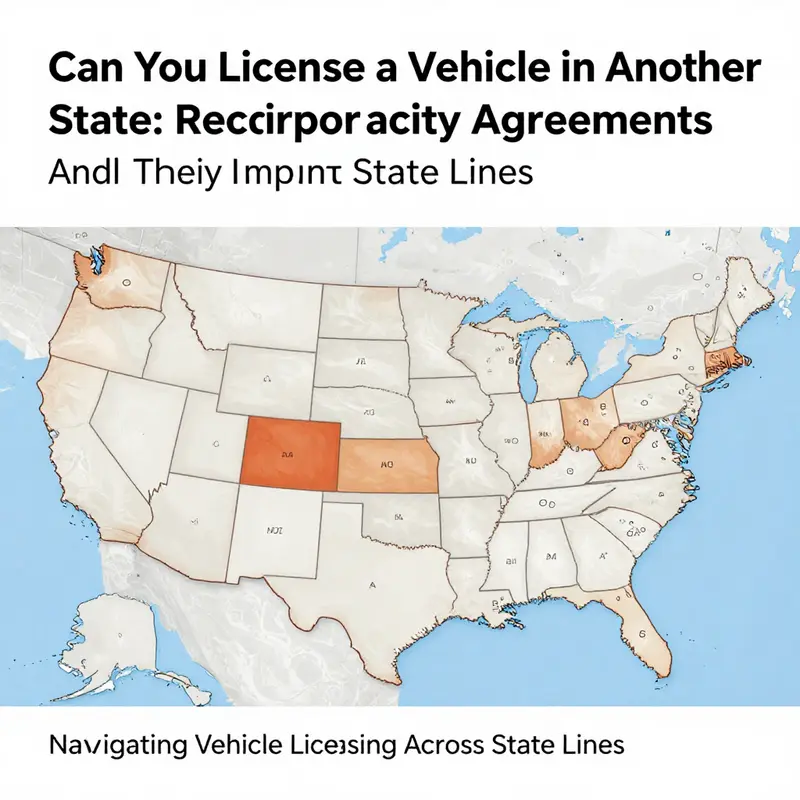
Licensing a vehicle across state lines is a topic that blends practicality with a stubborn set of rules. The core question—can you license a vehicle in another state—does not have a single, universal answer. Instead, it hinges on how you establish residency, whether the vehicle is used for personal or commercial purposes, and what reciprocity agreements exist between the states involved. What makes the landscape even more nuanced is that many people underestimate how residency status and the intended use of the vehicle interact with registration and licensing. The result can be confusing at the moment you try to register a car or truck after a move, a seasonal relocation, or a long stay away from home. Yet with clarity about residency, reciprocity, and the scope of state rules, you can avoid common pitfalls and align your registration with the law in a way that supports your plans rather than complicates them.
Residency is the foundation. In practical terms, most states expect you to register a vehicle in the state where you establish legal residency. Establishing residency usually means more than merely passing through or visiting; it involves creating a stable foothold—such as a permanent address, a job or school enrollment, and long enough intent to remain. The lines between temporary presence and permanent establishment are where many missteps occur. A person who travels for a semester, a short work assignment, or a family visit is often not the same as someone who intends to live there full-time. In those cases, registering in the state of residence, rather than the state where you frequently drive, tends to be the rule of thumb. To avoid violations, start by defining residency clearly: where you live most of the time, where you receive mail, where you pay taxes, and where you hold a driver’s license. This clarity guides decisions about vehicle registration, vehicle title, and insurance.
The rules do not stop there. Some states emphasize strict timeframes for registering after establishing residency. For instance, a state might require registration within a defined number of days after establishing residency. Others may place emphasis on the possession of a driver’s license, voter registration, or employment as indicators of residency. The exact thresholds vary, and the practical effect is that you must be mindful of both where you live and how long you intend to stay. It is not enough to be a temporary visitor with a vehicle in tow; the law generally treats you as a resident only after you meet the particular state’s residency criteria. This is why contacting the local DMV or its equivalent is a prudent step whenever a move occurs.
Within this framework, reciprocity agreements act as a bridge between states that want to ease certain regulatory burdens. Reciprocity means mutual recognition—when one state acknowledges another state’s registration or tax payments under defined conditions. The agreements are highly specific and are not blanket approvals to bypass residency requirements. They are most commonly applied to commercial operations, especially those that cross state lines to move goods, and they can streamline certain aspects of registration and fuel tax reporting for fleets that regularly operate in multiple jurisdictions. The practical impact is substantial for businesses that rely on inter-state transportation. By recognizing each other’s registrations under agreed criteria, states reduce duplication, cut red tape, and keep essential commerce moving with less friction. But reciprocity is not universal. It depends on bilateral or multilateral agreements that lay out eligibility criteria, vehicle types, uses (often business rather than personal use), and documentation. Operators must verify current regulations with the appropriate licensing or motor vehicle department in the state where the vehicle is registered or is intended to be registered.
A concrete illustration helps illuminate how reciprocity works in this space. In the Pacific Northwest, Washington State has reciprocity arrangements with neighboring states for vehicles that are part of a goods transport operation. Under specific conditions, vehicles licensed in one state may receive certain reciprocal treatment for registration and fuel tax purposes when they transport goods to or through particular ports within Washington. The arrangement is designed to facilitate interstate trucking and reduce administrative overhead for operators that move between states as part of a commercial supply chain. Importantly, these arrangements are tailored to defined use cases—typically commercial, not personal—so a private passenger car does not automatically fall under the same provisions. This is a key distinction: reciprocity is a tool for specific, established patterns of use, usually tied to business activity rather than everyday personal travel.
For anyone navigating this terrain, the first step is to verify which, if any, reciprocity agreements apply to your situation. Start by contacting the DMV or the state motor vehicle agency where you plan to register or where your vehicle is currently registered. Look for sections on reciprocity, inter-state registration, and tax agreements. You should expect to provide information about how you intend to use the vehicle, whether it will be employed in commercial operations, where it is garaged, and where you hold residency. If your use case falls under a reciprocal agreement, the agency will outline the exact documents required and the steps you must follow. If no reciprocal arrangement covers your situation, you will generally need to meet the new state’s residency-based requirements and complete standard registration and titling procedures.
In discussing residency and reciprocity, it is essential to distinguish those situations from more unusual or rarer scenarios. Some states, though not common, offer limited forms of non-resident registration under particular conditions—such as seasonal use or military assignments in another state. Those cases are exceptions and typically subject to strict restrictions and timeframes. The result is a mixed landscape where a traveler or a short-term resident might not qualify for reciprocity or for non-resident registration, yet a commercial fleet engaged in regular cross-border activity could benefit from a carefully defined reciprocal framework. The overarching message is clear: there is no one-size-fits-all answer, and the path you take should reflect both where you live and how you plan to use the vehicle.
Practically speaking, this means diligent planning and documentation. Start with the basics: a valid title, proof of ownership, proof of current insurance, and a driver’s license that matches your state of residency. You will likely need proof of your new state residence—like a lease or mortgage statement, utility bills, or employment paperwork—along with your current out-of-state registration if you are seeking to leverage a reciprocal arrangement. Where reciprocity is involved, you may also need to provide proof of the business use of the vehicle, the nature of the operation, and perhaps the vehicle’s assignment to a commercial fleet with a regular route. The documentation requirements can be exacting, and failing to provide the correct combination of documents can stall the process or invalidate the reciprocity option.
When you are changing residency, the practical implication is to plan for a transition period during which you may need to keep two sets of registrations or to comply fully with the new state’s rules within a mandated window. These timelines are not just bureaucratic niceties; they are designed to ensure that the vehicle is properly insured, taxed, and recorded in the jurisdiction where it primarily operates and where the owner has established legal ties. The risk of noncompliance can include fines, penalties, or even impoundment in extreme cases. Therefore, if you anticipate moving, you should map out a schedule that aligns with the residency establishment timeline and the registration deadlines in both your former and new state.
In terms of personal experience, it helps to think through a typical scenario. Suppose a family moves temporarily for a job across a state line and plans to return after a year. If the family intends to settle permanently in the new state, the prudent course is to establish residency there and begin registration in that state within the applicable period. If the family continues to commute with the same vehicle and intends to maintain property and accounts in the old state, the decision becomes more complex. In many cases, the new state’s residency rules will prevail, and the vehicle will need to be registered there, even if the family still holds a presence elsewhere. If, however, the vehicle is used primarily for business purposes in the new state and a reciprocity agreement applies, the operator may leverage that agreement for registration and fuel tax reporting under defined conditions. The crucial point is that business use and residency status strongly influence whether reciprocity is available and how it applies to registration and licensing.
An additional layer of nuance comes from the reminder that reciprocity agreements are not permanent guarantees. They can change with new legislation, budget considerations, or shifts in interstate commerce policy. As such, operators must stay current by consulting official sources. The DMV, motor vehicle agencies, and licensing departments publish updates on reciprocity and inter-state registration, and many state websites have dedicated pages or sections that explain eligibility, required documentation, and the scope of any reciprocal arrangements. To stay compliant, consider setting up a routine check—especially if your business operates across multiple states or if your residency status is in flux due to education, military service, or family circumstances. This proactive approach helps prevent missteps that could otherwise arise from outdated assumptions about cross-border registration.
For readers seeking a concise entry point into this subject, a practical path is to consult the official guidance on the state rules that affect driver licensing and residency. A quick way to anchor your understanding is to review how a particular state frames residency and licensing, and then compare that with reciprocal agreements where relevant. This can illuminate how your use case fits into the broader regulatory framework and where you should direct your inquiries for precise instructions.
If you want more targeted information about how state rules affect driver licensing, you can explore resources that discuss the broader implications of residency and licensing in practice. For example, a resource focused on state rules and their impact can provide a clearer sense of how different jurisdictions approach these questions and where to begin when you need to align your vehicle registration with residency status. State Rules Impact on Driver Licensing
When it comes to verifying reciprocity specifics, the best practice is to consult the official state agency with jurisdiction over vehicle registration and licensing. Look for a dedicated reciprocity or inter-state registration page, read the eligibility criteria carefully, and prepare to submit the exact documentation required. In addition to state guidance, it is useful to be aware of relevant external resources that summarize or interpret reciprocity provisions for cross-border vehicle registration. An example of such an external resource is the Washington State Department of Licensing page on reciprocity, which outlines the conditions under which certain inter-state registrations and fuel tax arrangements apply for vehicles used in commerce. For more detailed information, see Washington State’s reciprocity page: https://www.dol.wa.gov/vehicle/registration/reciprocity.html.
The overarching takeaway is that licensing a vehicle in another state, while possible in specific circumstances, hinges on a careful calibration of residency status, the intended use of the vehicle, and the existence of reciprocity agreements. It is a dynamic space where rules can shift with changes in residency, employment, or inter-state policy. By prioritizing residency determination, verifying any reciprocity pathways relevant to your vehicle use, and engaging with the appropriate DMV or equivalent agency early in the process, you can navigate this terrain with confidence and avoid the common pitfall of treating licensing as a purely location-agnostic task. Planning ahead, gathering the needed documentation, and confirming current requirements will keep you compliant and ensure you are properly registered where your vehicle primarily operates. The goal is not simply to obtain plates in another state but to align your registration with where you live, work, and drive most of the time, while leveraging reciprocity only when the specific use case and the governing agreements allow it.
Crossing Residency Boundaries: Navigating Vehicle Licensing Across States for Students and Temporary Residents
When you find yourself living in another state for school, work, or a temporary stint, a common question rises with the mountains of mail and car keys: can you license a vehicle in a state where you aren’t a permanent resident? The short answer is yes in some cases, but the path is rarely straightforward. Licensing and registration rules are built around the idea of residency—the state you call home for purposes of taxes, voting, and many daily duties. In practice, residency is what unlocks or shuts the door to registering a vehicle. Across the country, states insist that you establish a legal connection to their jurisdiction before you can register a car there. That connection usually means more than just living there for a few months; it often means having a permanent address, a job, enrollment in school, or other enduring ties that would anchor you there. The consequence of misinterpreting residency can be costly: fines, penalties, or even a suspension of driving privileges. The landscape is further complicated by differing timelines, documentation needs, and occasional exceptions that feel more like narrow lanes than broad highways. To navigate this properly, you must understand the core principle—residency—and then study how specific rules apply to students and temporary residents, who occupy a gray area between temporary presence and lasting establishment of domicile.
One of the most reliable starting points is to recognize that registration in the state of residence is generally the default rule. In practice, most states require you to register where you establish legal residency. Residency is typically demonstrated by a permanent address, a job, enrollment in school, or an intent to make that state your home. Simply visiting or living temporarily in another state is usually not enough to justify registration there. The rules, however, are not identical from coast to coast. For example, some well-known rules and thresholds illustrate how varied the landscape can be. California, for instance, imposes a relatively brisk timeline after residency begins: most newcomers are expected to register their vehicle within about 10 days of establishing residency. The intent here is to align vehicle ownership with a home base that will be reflected in insurance, taxes, and ongoing compliance with state standards. Texas follows a similar logic but emphasizes the existence of a permanent address and additional ties—such as voter registration or possessing a driver’s license—as signals of residency that permit registration there. Florida, occasionally offered as a model of flexibility, has nuanced provisions for non-residents under certain conditions, particularly for seasonal use. Yet even in Florida, such allowances are unusual and come with restrictions; they are not a general invitation to bypass traditional residency requirements. These examples underscore a central theme: residency is the gatekeeper, and even when a state offers a pathway for non-residents, the path is specialized, narrow, and carefully regulated.
In the real world, many states maintain reciprocity agreements that can simplify parts of the process for people who move between states. Reciprocity often refers to recognizing each other’s registrations or offers to accept out-of-state registrations under specific criteria. The practical effect is that you might avoid retracing every step if your situation aligns with a reciprocal arrangement. Still, reciprocity rarely eliminates the need to prove residency or to meet insurance, inspection, and fee requirements. Driving without proper registration in your state of residence compounds risk. Law enforcement and DMV officials typically view proper registration as an essential safety and regulatory measure, ensuring that vehicles are properly insured, meet emissions or safety standards where applicable, and are accounted for in the state’s vehicle inventory and taxation system. The penalties for noncompliance can range from fines to more serious consequences such as license suspension or vehicle impoundment, depending on the state and the particulars of the case. The best safeguard is diligence: verify residency status, understand the exact registration timelines, and prepare all required documents in advance.
A practical pathway to clarity begins with contacting the Department of Motor Vehicles in the target state. DMV websites are the most reliable resource for up-to-date residency criteria, required documents, fee schedules, and processing timelines. The documents you might need commonly include proof of residency (such as utility bills in your name, a lease or deed, or a state-issued address), proof of insurance that meets the state’s minimum requirements, and details about the vehicle (title, VIN, odometer reading, and any existing out-of-state registration). Some states also require a vehicle inspection or emissions test as part of the registration process. While the core concept is straightforward—prove you belong to the state and that your vehicle complies with state standards—the specifics vary widely. A careful review of the applicable state’s rules can prevent missteps that would trigger fines or delays and makes the difference between a smooth transition and a bureaucratic roadblock.
For students and temporary residents, the path is even more nuanced. Students studying out of state may have a compelling reason to register in the state where they study, particularly if they maintain a permanent home, are enrolled full-time, or have other ties to that state. Some states treat students who are not residents differently. In certain cases, students may be allowed to retain registration in their home state if they can demonstrate ongoing ties and do not intend to establish long-term residency in the study state. Conversely, other states permit out-of-state students to register in the study state under defined conditions, such as proof of insurance, payment of required fees, and meeting address-related requirements that signal intent to reside in that state for purposes such as schooling. The balance is delicate: you must show you are there for school, yet not establish a separate permanent residency unless that is your genuine intent. An example often cited in discussions of student residency is that some states have provisions for non-residents to register a vehicle if they can satisfy the state’s stated conditions, including practical proof that their presence is temporary and tied to education. Still, this is not a blanket entitlement; it hinges on meeting specific criteria that may include existing registrations, billing addresses, and enrollment documentation. When considering whether to maintain registration in your home state or shift it to the state where you study, the best approach is to examine both sets of rules carefully. The home state may prefer you to keep registration there if you retain a permanent address and intend to return; the study state may accept registration there for a defined period or under particular conditions. As with all residency decisions, there are no universal guarantees—only carefully aligned facts and a direct line to your state DMV.
Temporary residents face a different set of circumstances. People who are in a state for a limited time for work, internships, or other short-term arrangements often encounter barriers to vehicle registration in that state. The traditional expectation is that you establish residency before you can register the vehicle there. If the stay is genuinely temporary, many officials advise against attempting to register the vehicle locally and instead suggest relying on rental arrangements or public transportation during the stay. The underlying logic is that temporary presence does not create a stable, long-term ownership scenario that a state needs to accommodate through vehicle registration. It is essential to consider not only the duration of the stay but also the intention to return to another state as your home, which helps determine how you should proceed with registration and licensing.
All the above points converge on a core strategy: do your homework in advance, communicate clearly with the DMV in both the home state and the study or work state, and prepare documentation that demonstrates residency clearly. A practical checklist can help: secure a stable mailing address you can use for state correspondence, collect proof of insurance that meets the state’s minimum requirements, gather lease or utility documents to establish residence, and confirm whether the state requires a vehicle inspection or emissions test. If you are a student, obtain enrollment verification from your school and documents showing your intent regarding residency—whether you plan to return to your home state or remain beyond the current term. If you are a temporary resident, document the duration of your stay, your intended return, and any ties that would complicate a shorter-term registration plan. The goal is to present a coherent residency picture that satisfies the exact standards of the state where you seek registration while avoiding misinterpretation that could trigger penalties.
To bridge these ideas with the broader framework of licensing, it is worth considering how residency rules interact with driver licensing beyond vehicle registration. State rules that govern licensing can influence eligibility, renewal timelines, and even the recognition of a license from another state. A clear, consolidated understanding can help you align both registration and licensing responsibilities in a way that minimizes risk and ensures you remain compliant across state lines. For a deeper look into how these rules can affect driver licensing, you can explore related discussions on the broader topic of state rules impact on driver licensing. State rules impact on driver licensing.
In the end, the question of whether you can license a vehicle in another state does not boil down to a single yes or no. It comes down to residency—with all its definitions, requirements, and exceptions—and how you fit into the peculiar mosaic of each state’s rules. The most reliable approach is thoughtful preparation and direct verification with the DMV in the state where you intend to register. Gather your proof of residency, your vehicle’s documentation, and your insurance details, then confirm the exact steps, fees, and deadlines. If you connect these dots carefully, you’ll reduce the risk of surprises and ensure your vehicle remains properly registered and legally operable wherever you spend your days. For those who are navigating this path due to school or temporary work, the careful balance between staying connected to your home state and establishing legitimate ties to a new one is the critical line to walk.
External resource for further guidance: For state-specific guidance on out-of-state vehicle registration and related residency considerations, consult the New York DMV resource at https://www.dmv.ny.gov/perm/otstv.htm.
Across State Lines: The Realities, Rules, and Risks of Licensing a Vehicle in a Different State

Licensing a vehicle in a state other than the one where you live is a topic that surfaces whenever people move, pursue school, or take a temporary job across borders. The short answer is simple: yes, you can license a vehicle in another state, but the long answer is a careful map of residency, timeframes, and local rules. Your eligibility hinges not on where you park the car for a season, but on where you establish legal residency. In practice, this means your permanent address, your daily life, and your future plans in a given state. Simply visiting or working briefly elsewhere usually doesn’t qualify you for registration there. The nuance is real, and the consequences of misreading the rules can be abrupt and costly. When people move, they often assume the process mirrors their previous state’s approach. But each state treats residency with its own logic, and those differences matter for both vehicle registration and the broader set of duties that accompany it, including taxes, insurance requirements, and even driver’s licensing. In short, licensing and registration across state lines is less about the car and more about the life you establish where you intend to live.
Residency is the hinge. Most states require you to register a vehicle in the state where you have established legal residency. Residency generally means more than a temporary stay. It often requires a permanent address and a set of ties that show you intend to remain. Those ties can include a long-term lease or ownership of a home, a job, enrollment in a school, or other substantial commitments. The idea is simple: if you are genuinely part of a state’s community and economy, your vehicle registration should reflect that reality. This framework helps state governments collect their fair share of taxes and fees, ensure correct insurance requirements, and keep traffic enforcement coherent. On the other hand, trying to register somewhere you don’t truly live is asking for trouble. A misstep can trigger audits, investigations, or penalties that ripple through your finances and driving privileges.
The rules, however, are not uniform. California, for example, requires that you register a vehicle within 10 days of establishing residency. Texas frames residency in terms of a permanent address and additional ties—such as voting registration or holding a driver’s license in the new state. Florida presents a more nuanced option: it can allow non-residents to register vehicles under certain conditions, often tied to seasonal use. But such arrangements are rare, and they usually come with restrictions and strict documentation. These examples illustrate a broader truth: residency is a moving target, and the exact requirements depend on where you live and where you intend to be a resident for the long haul. When in doubt, the most reliable approach is to consult the state’s Department of Motor Vehicles (DMV) or equivalent agency. Their websites detail residency criteria, documents needed, fees, and the precise timeline you must honor. The guidance is practical enough to be followed, but it does demand careful preparation and honest reporting of your situation.
Beyond residency, some states have reciprocity agreements with others. Reciprocity can mean that a vehicle registered in another state is recognized for certain purposes, or that you can leverage another state’s processes to satisfy local rules. Yet even when reciprocity exists, you might still need to provide proof of residency, or to meet other criteria—such as insurance requirements, emissions standards, or vehicle safety inspections. It’s tempting to assume reciprocity makes the process simple, but the reality is more nuanced. The central question remains the same: do you genuinely reside in the state where you want to register? If you cannot demonstrate that residency, even a favorable reciprocity arrangement won’t rescue you from penalties or rejection. Driving without proper registration in your state of residence can lead to fines, penalties, or even impoundment of your vehicle. It’s not merely a bureaucratic inconvenience; it’s a legal exposure that can intersect with taxes, insurance coverage, and law enforcement.
A concrete illustration helps illuminate the risk of missteps. Consider how New York handles out-of-state purchases. New York requires residents who purchase a vehicle out of state to apply for registration by mail through the NY DMV. This process is designed to safeguard compliance with state laws and reduce the chance of fraudulent or misrepresented registrations. But if someone attempts to register a car in New York without actually becoming a resident, the DMV can scrutinize the application and may reject it. The New York example underscores two important themes: first, residency must be credible and verifiable, and second, even well-intentioned attempts to streamline registration can backfire if the underlying residency facts don’t align with the state’s rules. The practical takeaway is clear: whenever you move or you anticipate a period of residency in a new state, verify how that residency translates into vehicle registration requirements before you attempt to register your car.
How should a person navigate these waters without getting tangled in penalties or delays? The first priority is to verify the specific residency and registration rules for the state where you want to license your vehicle. The most reliable source remains the state DMV’s official website, which lays out residency definitions, what counts as proof, the documents you’ll need, and the exact fees and timelines. If you’re unsure about your status, reach out to the DMV directly. A quick conversation can spare days or weeks of misapplied paperwork and a cascade of potential fines. As you prepare to move, assemble your documentation early: proof of your permanent address, evidence of employment or school enrollment, your vehicle’s title and current registration, your insurance policy, and any lease or mortgage documents. In many states, you’ll also need your driver’s license in the new state, and you may be asked to surrender or update your old license. Insurance requirements often parallel registration rules. An insurer might require you to list your new state of residence and to confirm that your vehicle is garaged there, aligning your policy with local registration and taxes. The interplay of these elements—residency, registration, licensing, and insurance—creates a framework that helps keep you compliant and protected.
In the throes of a move, people often ask whether temporary or seasonal stays can justify nontraditional arrangements. Some states may accommodate seasonal registrations or temporary use, but even these allowances come with caveats. It’s essential to be transparent about the duration of your stay, your daily life in the state, and your long-term intentions. If you are a student, a temporary worker, or a person who splits time between two states, you might fall into a gray area. The risk of assuming you can “get by” with a nonresidential registration is real. Law enforcement can stop a vehicle, issue citations, or, in the worst case, impound the vehicle if the registration appears illegitimate or out of date. The consequences can extend beyond fines to the suspension of driving privileges until you straighten out the records and demonstrate proper residency.
To keep you oriented, it helps to view the process as a sequence rather than a single act. First, determine whether you truly reside in the state where you intend to register. Then, collect the necessary documents that establish residency and demonstrate your intent to stay. Next, contact the DMV to confirm the exact steps, whether you should register by mail or in person, and what fees apply. Finally, complete the registration and any required inspections, and make sure your insurance is aligned with the new registration. If you’re unsure about a particular rule, consult the DMV’s official guidance. The difference between a correct process and a near-miss is often a few well-placed documents or a clarifying phone call.
An additional layer to consider is how residency interacts with driver licensing. State rules about licensing can influence how you register a vehicle, particularly if your license must reflect your current address. Some states require that your driver’s license and vehicle registration align in terms of the address and residency status. The relationship between licensing and registration is not arbitrary; it helps ensure that law enforcement can verify who is driving a vehicle and under what jurisdiction, especially in situations like traffic stops, tolling, or insurance claims. For readers who want to explore this interplay in more depth, there is a resource that compiles state-level considerations on how residency affects driver licensing. It’s worth reviewing to understand how your status as a resident or nonresident might shape your responsibilities across both domains.
If you are planning a cross-state move or a long-term stay, approach the situation with a clear plan rather than a guess. Talk to the DMV in the state where you intend to register, and request a written checklist of residency requirements and registration steps. Keep a copy of all documents you submit, and note the dates on which you provided them. This practice can help you recover quickly if a notice arrives asking for additional proof or clarification. It’s also prudent to monitor any changes in the law. States occasionally update residency tests, imaging of titles, or fee structures, and a quiet shift in policy can affect your timeline and costs more than you might expect.
In this landscape, credibility matters. Attempts to register where you do not truly reside—even if driven by convenience—are not only risky but unnecessary. The rules exist to prevent under- or over-taxation, to ensure that vehicles are registered with the correct authorities, and to guarantee that the vehicle is properly insured and safe for the roads where it will primarily operate. When you approach registration with a clear understanding of residency, you protect yourself from penalties and you support a smoother process for yourself and for the agencies that manage these vehicles on public roadways.
For readers who want a concise cue to keep in mind while navigating residency questions, consider this: residency determines where you should register, and the consequences of improper registration can be severe and broad. If you are ever unsure, pause, consult the DMV, and document your position before taking action. The safer, more reliable path is to establish clear residency and to follow the state’s rules carefully, even if that means registering your vehicle in the state where you actually live rather than where you temporarily stay. In practice, this approach reduces friction and aligns your registration with your life as it really exists, not just as you wish it to be.
To connect these ideas with a broader perspective on how state rules shape your driver’s journey, you may want to explore resources that synthesize residency impacts on driver licensing: https://drivernvehiclelicensing.com/state-rules-impact-on-driver-licensing/. This and other official guidance can help you map out a path that minimizes risk while keeping your vehicle paperwork clean and up to date. When you need a definitive reference for the official stance on residency and registration, turn to the relevant state DMV site. For a concrete, widely used example of formal residency and registration requirements in action, consider the New York DMV, which outlines its own procedures for out-of-state purchases and registration: https://www.dmv.ny.gov/.
Final thoughts
Navigating the intricacies of vehicle licensing across state lines can seem daunting due to varying residency requirements and processes. By familiarizing yourself with the rules in your current state and the state in which you wish to register, you can streamline your vehicle registration experience. Whether you are a new driver, a vehicle owner contemplating relocation, or a student away from home, understanding these vital aspects ensures compliance and avoids unnecessary legal hassles. Always consider reaching out to your local DMV for the most accurate and detailed guidance tailored to your situation.