
As the landscape of vehicle licensing evolves, online platforms like ‘Traffic Management 12123’ in China provide significant convenience for new drivers, existing vehicle owners, and auto dealerships. This guide explores the step-by-step process of licensing a vehicle online, outlines the benefits of this method, compares it with traditional approaches, and discusses future trends leading the way for even more innovation in vehicle management. Each chapter unpacks critical information designed to empower you, whether you are applying for a license for the first time or managing existing vehicle documentation effectively.
Licensing Your Vehicle Online: A Practical, Step-by-Step Roadmap

Step-by-step process
Licensing a vehicle online is a clear sequence of decisions and actions. The path is the same whether you are registering a brand-new car, renewing a seasonal permit, transferring ownership, or arranging an annual inspection. This chapter walks you through that sequence. It focuses on what to check first, how to prepare, how to complete the application, and what to expect after submission. Each step highlights common pitfalls and practical tips to save time and avoid repeat trips to an office.
Begin by checking the current status of the vehicle’s license. Confirm whether an active license exists and note its expiry date. If a valid license already covers the period you need, consider whether renewal or an early replacement is truly necessary. Applying early is often allowed, but it rarely yields a refund for unused days on the current license. Make a simple calendar check and decide the dates you actually require coverage. If your situation involves a seasonal permit, determine the exact start and end dates now; many online forms ask for precise coverage windows.
Next, confirm roadworthiness. New vehicles, unlicensed vehicles, and vehicles with lapsed licenses typically require an inspection before a licence can be issued. The inspection ensures the vehicle meets safety and emissions standards required for registration. For ordinary passenger vehicles, inspections usually check brakes, lights, tires, steering, suspension, and emissions equipment. If your vehicle has an unusual history—such as importation, major repairs, or conversion for racing or rally use—additional documentation and special approvals may be necessary. Imported vehicles often require import clearance and evidence that they meet local design rules or have documented exemptions. If the vehicle cannot legally be driven to an inspection site, arrange a temporary movement permit to transport it safely.
When inspections are required, know where to go and what to bring. Typical items include proof of identity, proof of ownership, the current registration or plates (if any), and a valid certificate of inspection from an authorized testing station. If you are unsure which inspection standard applies, consult the official vehicle safety guidance for your region. For comparative information about inspection rules across jurisdictions, see resources on vehicle inspection requirements across states: https://drivernvehiclelicensing.com/us-states-vehicle-inspection-requirements/.
Once the vehicle passes inspection or if no inspection is needed, you are ready to complete the online application. Use the official licensing portal or the mobile app provided by the relevant authority. The application workflow typically guides you through a sequence of pages that collect: owner identification, vehicle details (VIN, make, model, year), insurance confirmation, license type or period, and payment. Keep scanned copies or clear photos of required documents ready. Common uploads include proof of identity, proof of address, bill of sale, insurance certificate, and inspection certificate.
Several application categories deserve specific attention. For new vehicle registration, you may be asked to select or reserve a plate number, confirm insurance coverage, and pay vehicle purchase tax where applicable. Seasonal licenses usually require exact dates. Renewals can often be processed quickly if the vehicle has a clean record and no changes are required. Transfers of ownership typically require signatures from both buyer and seller and possibly a certified transfer form. When changing registration details—such as address or vehicle modifications—prepare supporting documents so the system can verify the change without manual intervention.
Identity verification is a key step. Most jurisdictions require real-name registration and some form of electronic identity check. This could involve linking to a national ID system, uploading a scanned ID plus a selfie, or answering knowledge-based questions. Complete this step carefully. Mismatches between the identity on your ID and the name on ownership documents are common causes of delays. If you are registering on behalf of another person or a company, check the portal’s rules for authorized agents and prepare power-of-attorney documents or corporate authorization letters as needed.
When you reach the payment stage, confirm accepted methods before you begin. Most platforms accept major credit cards and popular electronic payment methods. Some portals also support bank transfers or in-app e-wallets. If a tax or levy applies, the system usually calculates it automatically when you enter the purchase price or declared value. Keep your payment reference or transaction ID; the confirmation page often requires that number to finalize the process.
After submission and payment, the system will provide a reference number and an estimated processing time. Processing times vary. Simple renewals may complete within minutes, while new registrations or transfers that require manual checks can take days. Keep a screenshot or save the confirmation email. If the portal allows, create or log into a user account to track application status. For mailed documents, verify the postal address carefully; incorrect addresses are a frequent cause of delays.
Electronic documents are increasingly standard. Many licensing authorities now issue legally recognized digital registration certificates and electronic license documents. These digital documents are valid proofs of registration in most interactions with enforcement and service agencies. Store them safely on your phone and, if possible, back them up to a secure cloud location. If the authority offers a downloadable or printable certificate, keep a printed copy in the vehicle until you are certain the electronic version is universally accepted in practice.
Special cases require extra steps. Freight and commercial vehicles often have separate permit systems for road transport and may need electronic road transport permits for route-specific operations. Commercial operators should prepare company registration documents, vehicle weight and load details, and any driver accreditation proofs. If you operate a fleet, take advantage of business portals that allow batch processing. These portals typically allow renewals, permit applications, and certificate downloads for multiple vehicles in one session, saving considerable administrative time.
If your application is incomplete or flagged, the portal usually indicates required corrections. Common problems include unclear document uploads, mismatched information, unpaid fees, or failed identity verification. Respond promptly to any requests for additional information. Most systems permit document replacement or re-submission through the original application link. If the portal provides a helpline or email contact for case inquiries, use it. Document every interaction and keep a timeline of submissions and replies.
Once approved, know how the licence will be delivered. Some jurisdictions issue a physical card by mail and a digital certificate instantly. Others provide only digital documentation. Verify whether a physical plate or sticker is required. For plates that must be issued physically, the portal will usually notify you when and where to collect them. If delivery is by mail, expect typical postal delays and plan accordingly.
Record-keeping and compliance follow licensing. Keep electronic and printed copies of the licence and supporting documents for the required retention period. Reminders and automated renewals can simplify future renewals. Many portals allow you to set notification preferences for expiry alerts via email or SMS. Consider subscribing to official notifications so you receive timely guidance on regulatory changes that affect insurance, emissions requirements, or inspection intervals.
Finally, plan for exceptions and appeals. If an application is rejected, read the rejection reason carefully. Appeals or resubmissions usually follow a defined process and require additional documentation. If you disagree with a technical assessment—for example, an inspection outcome—ask about independent review or re-inspection processes. For complex or commercial matters, consider seeking formal advice from professionals experienced in vehicle compliance and registration.
Licensing a vehicle online is a structured process when you prepare the right documents and follow the platform’s guidance. Verifying license status, securing roadworthiness certification, completing identity checks, uploading clear documents, and paying fees correctly will move applications smoothly. Keep a record of all steps and expect electronic delivery of documents in many cases. For specific inspection rules and how they vary by location, consult resources on vehicle inspection requirements across states.
External reference: For official guidance on getting a vehicle inspected or moved in one jurisdiction, see the transport authority’s inspection and movement service: https://www.transport.wa.gov.au/vehicles/vehicle-standards-and-safety/get-my-vehicle-inspected-or-moved.asp
From Paper to Pixel: How Online Vehicle Licensing Redefines Convenience Across China and Hong Kong
Licensing a vehicle has traditionally required a careful walk through offices, queues that stretch longer than practical, and stacks of documents that seem to multiply the moment you think you’ve gathered them all. Yet a tectonic shift is quietly unfolding in two densely interconnected urban landscapes: mainland China and Hong Kong. Across these regions, the drive toward online licensing is not a gimmick or a temporary convenience but a structural change in how people and businesses interact with government, how records are kept, and how quickly transactions can be completed. The overarching question—can you license a vehicle online?—is being answered with growing clarity and confidence as digital platforms extend their reach, streamline processes, and reduce the friction that once defined the licensing experience. The story is not identical in every place, but the thread that runs through both the mainland and Hong Kong is a commitment to making essential services accessible from anywhere, at any time, with greater transparency and fewer physical touchpoints.
In the Chinese context, the government’s digitization strategy has extended far beyond the idea of “digital filing” or online inquiry. It has culminated in a comprehensive, end-to-end licensing ecosystem that integrates registration, documentation, tax settlements, insurance, and compliance checks into a single, user-friendly digital channel. At the heart of this evolution is a nationwide online licensing framework that supports a spectrum of vehicle-related tasks. Instead of visiting a service center to complete each discrete step, users can initiate and finish several core activities through a government-endorsed digital platform that operates as a conduit among multiple departments. This approach emphasizes not only convenience but reliability: it standardizes verification and reduces delays caused by missing paperwork or bottlenecks at physical offices. The system’s architecture is designed to support complex interdepartmental data exchanges, ensuring that once information enters the platform, it can flow to the relevant agencies with minimal re-entry or duplication.
Within this digital landscape, the range of services available online expands steadily. For many owners, the most immediate benefit is the ability to obtain and manage electronic vehicle documents. An electronic version of the vehicle registration certificate, for instance, can be issued through the platform and used as a legally recognized document in place of a paper certificate under many circumstances. The transformation is not merely about digitizing records; it is about reimagining the lifecycle of vehicle ownership in the information age. The digital certificate, along with other electronic documents, is designed to be accepted by authorities, insurers, lenders, and other stakeholders who rely on proof of ownership and vehicle status. This shift reduces dependency on physical copies and accelerates essential transactions, especially for individuals who must demonstrate registration status during travel, cross-border movements, or compliance checks.
A milestone in this transformation is the online handling of new car registrations. Beginning on a marked date, the system enabled the entire process to be performed online for new purchases. This means a buyer can select a license plate number, arrange compulsory motor third-party liability insurance, and pay vehicle purchase tax—all without stepping into a showroom or government counter. The elimination of these in-person steps is not merely a time-saver; it also reduces the cognitive load on applicants who previously navigated a labyrinth of documents, forms, and approvals. The online pathway streamlines the sequence into a coherent flow that guides the user from initial data submission to final confirmation. For many people, especially those purchasing their first vehicle or registering a fleet for business purposes, the online option translates into predictable timelines, transparent fees, and the ability to track progress in real time.
The online licensing ecosystem does not stop at initial registration. It expands to ongoing maintenance tasks that were once arduous to manage through traditional channels. Online annual inspections, for example, are now accessible for freight vehicles. Rather than booking a physical inspection, gathering paper copies, and waiting for an appointment, operators can submit required documents, schedule the inspection, and download the inspection certificate electronically. This is a meaningful improvement for logistics-driven businesses, where every day of downtime translates into higher costs. It also strips away years of incremental friction, transforming a once-daunting compliance obligation into a manageable digital event that fits more cleanly into modern operating rhythms.
Even more sweeping are the capabilities around vehicle transfers and changes of registration. Whether an owner sells a vehicle, transfers it between family members, or updates registration details due to address changes, the platform is designed to move information securely and automatically between the involved departments. The goal is to minimize re-entry of data, reduce errors, and shorten processing times. In practical terms, a user can initiate a transfer online and receive confirmation or updates without making multiple trips to service centers. Similarly, electronic road transport permits for freight companies can be applied for, renewed, replaced, or canceled online. The ecosystem is built to support enterprise-scale operations, with features that cater to fleets, compliance officers, and contract managers who need to manage multiple vehicles under one umbrella.
The practical steps to engage with this digital environment are straightforward, though they do require careful preparation. First, a user downloads the official government platform and creates an account with real-name authentication. This identity verification step is a cornerstone of the system’s security, designed to ensure that only authorized individuals can transact on behalf of the vehicle. Once verified, the user chooses the service they need—be it electronic registration certificates, new vehicle registration, or annual inspections—and follows guided prompts. Documents are uploaded in supported formats, fees are paid through integrated payment options, and the status of the application can be monitored in real time. The architecture emphasizes a seamless, end-to-end experience where the user is guided through a logical sequence rather than confronted with a jumble of separate forms.
From a policy and governance perspective, the online licensing framework is backed by a robust endorsement from public security and transportation authorities. The system’s credibility rests on standardized procedures, secure data exchanges, and clear accountability mechanisms. The result is an infrastructure that not only accelerates transactions but also enhances traceability and auditability. In practice, this translates into fewer mistakes, fewer in-person visits, and fewer opportunities for delays caused by incomplete submissions. It also supports a broader public policy aim: making essential services accessible to a wider range of residents, including those who previously faced barriers such as distance, time constraints, or disability. With a growing slate of services—already surpassing forty distinct vehicle- and driver-management offerings online by early 2026—the digital licensing ecosystem is steadily expanding its reach and utility.
A parallel narrative unfolds in Hong Kong, where the Transport Department has also prioritized online licensing as a core component of the city’s service delivery. The online vehicle licence enquiry platform in Hong Kong enables vehicle owners to retrieve critical information directly from their registration documentation, such as the date of registration and ownership status, without visiting a government counter. This capability fuses convenience with security, allowing owners to verify details quickly and accurately. The Enhanced Vehicle Licence Initiative further reduces the procedural burden by trimming the number of documents required for licensing applications, making renewals faster and simpler for individuals and businesses alike. The most visible and widely used feature, however, is the online renewal process. Accessible through the GovHK portal, the renewal pathway provides a seamless, time-saving route for renewing licences from anywhere at any time. The ability to complete renewal remotely, and often without interrupting daily routines, has a tangible impact on how people plan their lives around vehicle ownership and daily logistics. The cumulative effect across Hong Kong is a meaningful decrease in waiting times, a reduction in administrative paperwork, and a stronger sense of control and predictability for users navigating periodic licence requirements.
These parallel developments in mainland China and Hong Kong illustrate a broader shift toward digital governance that respects the demands of modern life. The advantages are not merely about convenience; they touch on reliability, security, and resilience. When a process can be fully digitized, it becomes easier to standardize across regions, to share data where appropriate, and to minimize errors born of manual entry or misplaced documents. For drivers and fleet operators alike, this translates into fewer disruptions, more accurate information, and a clearer understanding of what is required at each stage of the licensing lifecycle. The user experience is deliberately designed to be intuitive: one portal, one account, a sequence of clearly signposted steps that keep pace with real-world timelines—registrations due, inspections scheduled, permits renewed—without the back-and-forth that used to characterize the pre-digital era.
Of course, the shift to online licensing is not a one-size-fits-all revolution. There are differences in legal frameworks, data sovereignty considerations, and technical readiness that shape how quickly and how broadly services are rolled out. Yet the trajectory is unmistakable: governments are crafting user-centric digital ecosystems that place essential vehicle-related tasks within easy reach, anywhere and at any time. The practical implications for individuals are immediate. A private car owner can renew a licence from a commuter train or a cafe, while a logistics operator can schedule updates to fleet documents between shipments, avoiding costly delays. For small business owners and independent drivers, the ability to manage licensing alongside invoices and registrations represents a powerful consolidation of workflows that reduces administrative overhead and reallocates time to core business activities.
From an informational perspective, the online licensing environment also supports better decision-making. Users gain access to clearer timelines, transparent fee structures, and up-to-date status information. The digital platform’s design often emphasizes real-time status updates and proactive alerts about impending renewal deadlines or missing documents. That visibility is a form of reliability in itself. When applicants know exactly what is required and when, the likelihood of a rejected submission falls, and the need for repeated visits to authorities diminishes. In addition, the system’s interoperability—its capacity to exchange information with related departments and services—helps prevent duplicate or conflicting records, a common source of confusion in traditional workflows.
To illustrate how the narrative travels beyond national borders, consider the broader discourse among licensing communities. Some discussions focus on how regulatory design shapes licensing outcomes, how rules around identity verification, data sharing, and privacy protections influence the speed and accuracy of online transactions. For readers exploring these questions, a helpful reference point is the discussion around state-level rules and their impact on driver licensing. See State rules impact on driver licensing. This resource underscores that digital licensing is not merely a technical upgrade but a governance choice with wide-reaching consequences for consumers and regulators alike. It confirms that the shift to online processes should be accompanied by thoughtful policy design, robust security standards, and clear consumer guidance.
In sum, the move toward online vehicle licensing represents a redefining moment for how a society manages mobility. It aligns administrative procedures with contemporary expectations of speed, clarity, and seamless service delivery. It reduces waste—of time, paper, and energy—and it makes licensing a more reliable companion to daily life and business operations. Yet it also invites ongoing attention to issues such as data privacy, system resilience, and equitable access. The endgame is not simply digital convenience; it is the creation of an integrated, trustworthy framework in which vehicle ownership, use, and compliance feel natural, efficient, and secure.
External reference: For a practical overview of how online licensing portals guide residents through transport-related tasks, you can consult the GovHK transport portal, which provides official pathways for renewals and related services. https://www.gov.hk/en/residents/transport/
Internal reference: For further reading on how regulatory design shapes licensing outcomes, see State rules impact on driver licensing.
Rethinking the License: How Online Vehicle Licensing Rewrites the Road from Paper to Platform
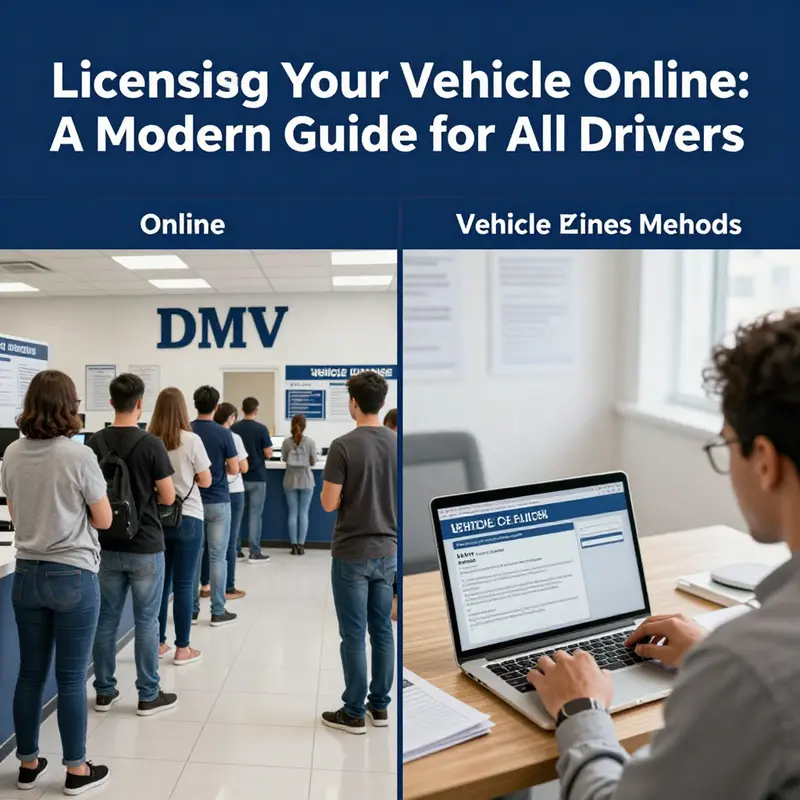
Can you license a vehicle online? The answer is increasingly yes in many places, but with important caveats. The shift from paper forms and in-person visits to digital platforms is not a single switch flipped nationwide; it is a gradual realignment of responsibilities, data flows, and public trust. Across different jurisdictions, authorities are reconceiving what needs to be verified in person, what can be authenticated remotely, and how to keep track of a vehicle’s legal status as it moves from one owner to another. In Hong Kong, the licensing landscape has already undergone a decisive transition toward digitization. Residents routinely interact with an online ecosystem for registration, examination scheduling, licences, and certificates. The movement is not merely about convenience; it is about creating a cohesive, auditable trail where every action leaves a verifiable digital footprint and every document can be accessed with a few taps on a screen. This evolution mirrors a broader shift in public administration, where the goal is to reduce friction without compromising the safeguards designed to protect road safety and financial accountability. The digital shift, in other words, is not a simplification of processes but a reengineering of workflows, data integrity, and regulatory compliance across time and space.
The most striking difference online licensing introduces is accessibility. When a system is designed for 24/7 operation, the barrier posed by office hours recedes. Individuals who juggle work, family responsibilities, or travel can initiate a licence-related task at any moment they choose. In many places, online portals provide a spectrum of services that used to require separate trips to different offices. A motorist can, for example, view the current status of a vehicle’s documents, book or reschedule an annual examination, and retrieve a copy of a registration certificate without stepping into a government building. These capabilities are not mere conveniences; they democratize access by reducing the time, cost, and psychological burden of compliance. A busy professional in a provincial area, a small-business operator with a fleet of vehicles, or a first-time owner navigating unfamiliar procedures can begin their interaction with the licensing system and complete substantial portions of the process without leaving home. Yet accessibility is a two-edged sword. It depends on reliable connectivity, digital literacy, and the trust that the online process will handle sensitive information with the same care that a clerk would at a counter.
Speed and efficiency lie at the heart of the online licensing advantage. Digital platforms streamline complex sequences by connecting all stages of the process. When a single platform coordinates data from vehicle registration, insurance verification, and tax payment, the likelihood of data mismatch diminishes. Automated checks can flag inconsistencies early, preventing costly back-and-forth between departments. In practice, this means shorter waits for approvals, faster issuance of electronic documents, and a smoother handoff from one stage to the next. The system’s design often centralizes the workflow, reducing duplicate data entry and the chance of lost documents, which traditionally caused delays and rework. For businesses managing fleets, the gains multiply: bulk submissions, centralized monitoring of renewal dates, and clearer dashboards that reveal a vehicle’s regulatory status at a glance. Still, speed in digital workflows does not imply a hollowed-out human component. Behind every automated step is a layer of human oversight, risk controls, and customer support ready to intervene when anomalies arise.
Transparency follows closely on the heels of speed. Digital records create a persistent, verifiable log of every action taken on a vehicle’s licensing journey. Users can check what information was submitted, when it was completed, who approved it, and what fees were paid. This level of visibility reduces disputes and gives owners a reliable audit trail. In practical terms, one can verify the date the vehicle was registered, confirm the current owner, and confirm whether any sanctions or penalties apply to that vehicle. Such transparency is not merely a feature; it is a governance tool. It helps ensure accountability within the system and offers a safeguard against error or manipulation that could otherwise erode public trust. The trade-off is the need for robust data governance: clear rules about data sharing, retention, access rights, and the security measures required to protect sensitive information from unauthorized use.
Yet not all procedures can be fully digitized without friction. Certain specialized tasks retain a distinct, offline flavor for reasons rooted in tradition, practicality, or risk management. In the realm of vehicle licensing, there exist niche processes that demand in-person handling, direct verification by a human expert, or the physical exchange of particular documents. For example, premium registrations with unique identifiers or ceremonial exchanges associated with high-value assets may continue to rely on traditional channels. Even as the majority of routine tasks migrate online, hybrid models persist, blending digital convenience with selective on-site interactions. This hybrid approach reflects a mature recognition that digital progress must be balanced with the assurance needs of complex or incumbent practices. The result is a practical ecosystem where online systems handle the bulk of common tasks while retaining trusted offline avenues for specialized transactions.
User experience, finally, is a critical barometer of success. A well-designed online licensing system seeks to feel seamless, intuitive, and trustworthy. The best platforms present a unified interface where licensing, registration, renewal, and examination information live in one place. They offer real-time status updates, clear fee breakdowns, and responsive support channels. For many users, the experience is transformed from a sequence of anxiety-filled visits to a calm, efficient digital journey. Yet the digital experience is not universal. Some individuals—often older or less internet-proficient—prefer in-person guidance or face barriers to online access. A thoughtful licensing system acknowledges these segments, offering alternative pathways, user education, and accessible help desks to bridge the digital divide. In the end, the aim is to create an environment where online licensing is not just available but genuinely usable for the broadest possible spectrum of people and circumstances.
The contrast between online and traditional licensing becomes even more nuanced when looked at from a broader regional perspective. In mainland China, the licensing ecosystem has grown to accommodate a comprehensive set of online services that touch many facets of vehicle ownership. The trajectory is clear: digital documents, electronic certificates, and online payments for registration, insurance, and taxes are all part of an integrated fabric. For new car purchases, the entire registration process can be completed online for those who wish to take that route, including the selection of plate numbers and the procurement of compulsory insurance. An even wider set of services—such as online annual inspections for freight vehicles, online vehicle transfers and registration changes, and electronic road transport permits for freight operators—illustrates a national push toward digital continuity. In practical terms, the platformized approach reduces paper, speeds up processing, and builds a data-rich environment where authorities and users can track the lifecycle of a vehicle from purchase to retirement in a transparent, auditable way. By February of the following year, the system reportedly supported a broad array of vehicle and driver management services online, underscoring the scale and ambition of the transition. This is not merely a simplification of tasks; it is a redefinition of how licensing roles and responsibilities are distributed across government agencies and private partners, all oriented toward a more user-friendly, accountable, and resilient framework.
Still, the momentum toward online licensing does not erase the value of direct human guidance. The digital path can distort the landscape if the user base encounters uneven access to technology or if data privacy and security concerns are not adequately addressed. The experience in urban and rural settings often reveals a digital divide: those with reliable internet access and digital literacy can navigate online services with ease, while others may require in-person assistance to interpret complex requirements or to handle urgent, time-sensitive issues. Regulators and practitioners thus face a delicate balancing act. They must protect the integrity of the licensing process while removing unnecessary frictions for the majority who benefit from online access. The challenge is not merely technical but also cultural: fostering trust in electronic documents and the veracity of digital signatures, while maintaining a swift, fair, and human-centered approach to cases that demand discretion.
From a policy perspective, the online licensing revolution invites a reconsideration of what constitutes essential identity verification, what data should be collected, and how cross-departmental data sharing is governed. When a single digital background can verify a person’s entitlement to register a vehicle, obtain a certificate, or confirm tax and insurance status, the question becomes not whether online licensing can substitute for traditional methods, but how it can be scaled responsibly without creating new risks. The emphasis shifts to robust cybersecurity, strong authentication processes, and transparent governance. In this sense, online licensing is less about eliminating humans and more about reorienting human expertise toward higher-value tasks, such as complex risk assessment, individualized advisory support, and oversight of high-stakes transactions.
The central takeaway is nuanced: online licensing can and often does replace many routine steps, delivering speed, clarity, and broader access. It can also redefine the relationship between citizens and government by providing a continuous, auditable record of a vehicle’s regulatory journey. However, there remains a legitimate role for offline processes in high-stakes or high-value tasks and in ensuring inclusivity for those who cannot readily engage online. The hybrid model, rather than a wholesale replacement, stands as the pragmatic path forward. As technology matures and digital trust grows, the proportion of licensing tasks conducted online will continue to rise. Yet there will always be room for a human touch in parts of the system that demand additional scrutiny, personal interaction, or ceremonial exchange. That balance, carefully managed, is what makes a licensing regime credible, efficient, and accessible to a diverse population over time.
For readers tracing these developments, the broader implication is clear: if you are contemplating licensing a vehicle online, you should assess not only what the digital platform can do for you today but also what remains offline in your jurisdiction. Check whether essential steps—such as identity verification, ownership transfers, or niche registrations—are fully compatible with online submission in your area. And remain aware that the fastest path may still require one in-person touchpoint at a critical moment, especially when dealing with unique documents, high-value registrations, or rapid changes in status. The journey from paper to platform is ongoing and uneven, but its momentum is undeniable.
For readers who want to explore official guidance beyond this discussion, consult the government’s online services portal for vehicle registration and examination, which provides current procedures, eligibility criteria, and step-by-step instructions. This resource is essential for anyone planning to initiate licensing activities remotely, ensuring alignment with the latest rules and timelines. In addition, pay attention to evolving links and communications from authorities, as regulatory frameworks may adjust in response to security concerns, technology upgrades, and policy reviews. And for those who are curious about how regional rules shape licensing trajectories, it can be instructive to compare different jurisdictions’ experiences with online processes and to consider how shared challenges—data privacy, identity verification, and equitable access—are addressed in diverse legal landscapes. Together, these perspectives illuminate the practical realities of online licensing today and help readers gauge whether their own circumstances favor a digital route or a more traditional approach.
To further illustrate the nuance, one can reflect on how the online licensing model interacts with the broader ecosystem of motor vehicle administration. When the core documents—such as a digital certificate or electronic registration—become readily available and widely accepted, the administrative premise shifts from a transactional encounter to a continuous lifecycle management. Owners can monitor, renew, and update records with confidence, knowing that the system preserves a coherent chain of custody for each document. Yet the alignment between policy intent and everyday practice remains critical. If systems are designed with too much rigidity or insufficient user support, even the most advanced platforms can fail to deliver the intended benefits. The design challenge, then, is to create a platform that is both technically robust and empathetic to users’ real-world needs—one that reduces friction for most users while preserving safeguards for the most sensitive cases. This is the evolving core of online licensing: a dynamic equilibrium between efficiency, security, and human-centered service.
For researchers and practitioners, the ongoing transformation invites ongoing inquiry into how digital platforms can be optimized, how data interoperability between agencies can be enhanced, and how public trust can be maintained as the licensing landscape becomes increasingly platform-based. It also invites consideration of how future innovations—such as automated risk assessment, digital identity ecosystems, and cross-border data sharing—could further reshape licensing. In the end, the central question remains practical and immediate: can you license a vehicle online? The answer in many jurisdictions is now yes for core tasks and routine updates, with the frontier extending as platforms mature and trust deepens. The path forward is not simply a matter of digitizing forms, but of rethinking processes, governance, and service design to deliver a licensing experience that is faster, clearer, and more resilient than before.
See also: official guidance on online services for vehicle registration and examination for the most current procedures and procedures. Online Services for Vehicle Registration & Examination – Transport Department • And for related discussions on how regulatory environments influence online licensing practices, you can review perspectives on state rules impacting driver licensing.
Beyond Paper Plates: How Online Vehicle Licensing Will Evolve and Expand
The shift from paper records to digital vehicle licenses is not a simple change of medium. It is the start of a systemic redesign of how vehicles are registered, tracked, inspected, and permitted. As governments digitize licensing services, they move away from episodic, transaction-driven interactions toward continuous, integrated management. This chapter explores the likely innovations, regulatory shifts, and practical implications that will define the next wave of online vehicle licensing.
First, consider the normalization of fully digital licensing documents. Governments that pilot electronic registration certificates and licensing records are treating digital documents as primary legal instruments. That change eliminates routine dependency on physical papers. It also enables real-time verification across systems. With digital certificates, agencies can revoke, update, or reissue credentials instantly. Enforcement officers can confirm validity using secure, short-lived tokens rather than photocopies. For vehicle owners, that means fewer lost documents and quicker resolution when ownership or registration details change.
Interoperability among agencies will be central. When registration, taxation, roadworthiness, and insurance records live in connected systems, workflows become automated. New vehicle registration, tax payment, and compulsory coverage verification can happen in a single session. Transfers of ownership can trigger automatic updates to insurance and tax authorities. Freight and commercial transport can see permits issued and checked without paper. The result is faster processing, fewer duplicated entries, and reduced risk of errors that cause delays.
Security and trust frameworks will evolve alongside digitization. Systems must authenticate users with high assurance. Expect broader adoption of government-backed digital identity and multi-factor authentication. Cryptographic signatures and tamper-evident ledgers will be used to anchor key records. These measures help prevent forgery and unauthorized changes. They also enable confidence when third parties, such as insurers or lenders, need to validate a vehicle’s status.
At the same time, artificial intelligence will augment fraud detection and compliance. Machine learning models can flag suspicious transfer patterns, unusual inspection results, or mismatches between declared data and sensor-derived telemetry. AI will not replace auditors, but it will prioritize high-risk cases for human review. When combined with secure digital identities, these tools will make fraudulent ownership changes and illicit licensing much harder to conceal.
Remote and hybrid inspections will expand the scope of online licensing. For some vehicle classes, remote inspections may suffice. High-resolution video, guided imaging workflows, and telematics data can often demonstrate roadworthiness. Freight carriers may submit digital logs and sensor records alongside targeted physical checks. This reduces downtime for commercial fleets and speeds up routine renewals. Still, certain safety-critical inspections will retain in-person elements. The future will be a calibrated mix of remote verification and physical testing, chosen by risk profile and vehicle type.
The integration of telematics and on-board diagnostics is another major trend. Vehicles increasingly generate continuous operational data. When owners consent, that data can inform licensing decisions. For example, dynamically monitored emissions output could extend or shorten renewal intervals. Usage-based classifications may influence fees or permit types. Policymakers will need to design privacy-preserving architectures that use telemetry for licensing without exposing drivers to intrusive surveillance.
Cross-jurisdiction compatibility will become a priority. As more places issue digital credentials, the ability to validate a license or registration issued elsewhere will matter. International travelers, transport operators crossing borders, and multi-state fleets all benefit from mutual recognition. Achieving that requires common standards for data formats, cryptographic proofs, and verification protocols. Regional agreements and technical standards bodies will play a key role in enabling trusted cross-border checks without friction.
User experience will undergo major improvements. Licensing portals will become truly mobile-first, supporting guided workflows, document uploads, and instant payments. Many routine tasks currently performed in person will be replaced by intuitive, transparent digital journeys. Notifications and proactive reminders will reduce missed renewals and noncompliance. Accessibility features will broaden reach, helping older adults and people with disabilities complete transactions independently.
Regulatory modernisation will accompany technical change. Laws and administrative procedures must recognize electronic documents as legally equivalent to paper. Policymakers will address evidentiary rules, data retention, and liability allocation. They will also define how digital systems interface with courts, insurers, and enforcement bodies. Regulatory clarity reduces disputes and increases public trust in online licensing programs.
Public-private partnerships will accelerate capabilities. Technology vendors, inspection providers, insurers, and fleet managers bring specialized tools and scale. When agencies structure partnerships carefully, they can leverage innovation while maintaining oversight. Contracts should require interoperability, data portability, and clear privacy safeguards. Open APIs and shared platforms can catalyze an ecosystem of certified third-party services that integrate with official licensing systems.
Data governance will be a defining issue. Licensing systems will amass sensitive personal and vehicular information. Responsible stewardship requires robust access controls, purpose-limited data use, and transparent retention policies. Privacy-by-design principles should be baked into system architecture. When data is used for analytics, it must be appropriately anonymized and aggregated. Clear consent mechanisms will increase user confidence and legal compliance.
Another likely innovation is the rise of modular licensing services. Rather than one monolithic portal, authorities will expose modular services via APIs. Third-party apps could offer tailored experiences that connect to the official backend. A vehicle marketplace app, for example, might surface ownership history and instant transfer initiation. Certified service providers could offer streamlined inspection scheduling or insurance bundling. Modularity encourages competition and specialization while keeping authoritative records centralized.
Environmental and policy levers will shape licensing too. Policymakers may use digital licensing to incentivize lower emissions. Lower registration fees, priority access to permits, or expedited licensing can reward cleaner vehicles. Conversely, dynamic fees could adjust by emissions class or usage intensity. Digitally enabled systems make such policies administrable in real time, helping align transport behavior with climate goals.
Operational resilience and disaster readiness must be part of system design. Licensing services are critical public infrastructure. They should be distributed, redundantly hosted, and able to recover from outages. Contingency workflows must allow emergency paper or offline verification if needed, with secure reconciliation once systems are restored.
Education and change management will decide adoption rates. Users often resist changing established habits. Clear guidance, step-by-step tutorials, and multi-channel support will ease transitions. Targeted outreach for senior drivers, small business fleets, and remote communities will ensure equitable access. Successful digitization is as much about social design as it is about technology.
Standards for proof and verification will emerge. Digital credentials will incorporate machine-verifiable claims: tax paid, insurance active, inspection passed. Verification transcripts will show the chain of custody for each claim. Standardized verification responses let enforcement or commercial systems make automated decisions, within defined legal bounds.
Finally, expect incremental expansion of online services. Today’s scope—registrations, renewals, transfers, and permits—will broaden to include complex workflows. Financing disclosures, lien registrations, salvage processing, and lifecycle histories may be integrated. For freight, route-specific digital permits and automated tolling reconciliations will become common. Each added service increases convenience but also raises integration and governance complexity.
Many jurisdictions will learn from early adopters and forge hybrid paths. Some will move quickly with full digital credential recognition. Others will take staged approaches, beginning with noncritical services and scaling up. The trajectory is clear: licensing will become faster, more secure, and more connected. The aim will be a seamless environment where legal status, compliance, and operational data flow across trusted systems.
If you want to understand how state-level rulemaking can shape these systems, review the analysis on how regional regulations influence licensing frameworks and enforcement. It highlights how diverse legal regimes affect deployment timelines and interoperability options: state rules impact on driver licensing.
Examples from regions experimenting with advanced digital licensing show both promise and cautionary tales. Pilot projects demonstrate that digital credentials improve turnaround times and reduce fraud. Yet they also reveal the importance of inclusive design, clear legal foundations, and strong technical controls. The path forward balances innovation with governance and stewardship.
As licensing moves online, the conversation will shift from whether it can be done to how it should be done. The emphasis will be on trust, interoperability, and equitable access. Governments, industry, and civil society will decide how digital credentials integrate into everyday mobility. For those implementing or relying on online vehicle licensing, the challenge is to design systems that are secure, user-centered, and resilient—so they can support the next generation of road transport services.
For further technical and policy detail on an implemented advanced registration and licensing platform in a major urban jurisdiction, see the official site: https://www.td.gov.hk
Final thoughts
The advent of online vehicle licensing marks a significant advancement in how drivers interact with essential vehicle documentation. This guide has explored the practical steps to license a vehicle via the ‘Traffic Management 12123’ app, highlighted the numerous benefits of online systems, analyzed the differences between online and traditional methods, and speculated on future innovations. As technology continues to evolve, stay informed and adaptive to these changes, ensuring a smooth and efficient vehicle licensing journey.