
Consistency in your legal name across your driver’s license and vehicle registration is essential for maintaining compliance and safeguarding your rights as a driver and vehicle owner. This article delves into the importance of name alignment, exploring the legal implications of discrepancies, state-specific regulations, and practical steps to ensure compliance. Each chapter provides insights into how mismatches can lead to complications, making it crucial for new and existing drivers, vehicle owners, and auto dealerships to understand. By consistently aligning your documents, you can avoid penalties and protect your rights effectively.
In Sync on Paper and Plate: Why Your Driver’s License Must Match Your Vehicle Registration
Identity is the quiet architecture beneath every drive. When you slip behind the wheel, you trust that the papers you carry—your license and your vehicle registration—say the same thing about you: your full legal name, exactly as it appears on official government documents. This alignment is practical, not cosmetic. It helps keep your rights intact and your interactions with authorities, insurers, and buyers predictable. When the license and registration reflect the same legal name, routine tasks such as renewing plates, transferring ownership, or proving identity during a traffic stop are smoother and less prone to dispute. A mismatch can trigger delays, questions, or penalties, depending on state rules. The key point is consistency across government records that pertain to you as a driver and as a vehicle owner. The DMV familiarizes you with this requirement, and many states offer online tools to verify name consistency across license and registration.
If your name changes, update the license first and then propagate the change to the vehicle registration. The process may involve submitting proof of the name change, such as a marriage certificate or court order. Once updated, verify that the changes have propagated across all relevant systems to avoid delays at renewal or ownership transfers. The practical benefits are clear: fewer hurdles when stopped by law enforcement, smoother transfers of ownership, and more seamless insurance processing. The goal is a seamless identity across documents that govern your driving life. State rules differ in steps, but the underlying principle remains: your license name and your vehicle registration name should match exactly. Use online portals where available, and if necessary, visit the DMV with approved documentation to complete the updates.
In addition to state-specific steps, worldwide record-keeping practices emphasize consistent ownership identity. Keeping your legal name synchronized across records safeguards your rights and reduces the risk of disputes. For a concrete example, many states provide a vehicle registration lookup tool to verify that the information on your registration matches your government-issued ID. The practice is about reliability and ease, not about chasing perfection. By staying proactive—checking records, submitting required proofs, and confirming propagation—you minimize administrative friction during renewals or transfers. In short, align your license and registration to reflect the same legal name, and verify that the changes have taken effect across all relevant systems.
Aligned by Law: The High Stakes of Matching Names on Your Driver’s License and Vehicle Registration
When you slide behind the wheel, your driver’s license and your vehicle registration are more than pieces of paper. They are the official links through which the state recognizes you as the operator and owner of a specific vehicle. The name on each document is not merely a formality; it is a legal identifier that ties your identity to your driving privileges and to the vehicle you own, operate, or transfer. A mismatch in how your name appears on these documents can ripple through routine moments and serious transactions alike, from a traffic stop to a title transfer, from insurance claims to the renewal of a license. The practical reality is that the two documents must reflect the same current legal name. This consistency helps ensure that who you are is verifiable at moments when your name matters most. It also reduces the risk of misidentification that can complicate or delay critical administrative steps.
The need for alignment is not just about avoiding a fine or an inconvenience; it is about protecting your rights as a driver and as a vehicle owner. The guidance from practitioners who oversee vehicle compliance is clear: keeping your vehicle documents aligned with your current legal name protects you in meaningful, tangible ways. As Sarah Lin, a State Motor Vehicle Compliance Officer, put it in a 2026 update, keeping documents in sync isn’t simply about ticking a compliance box. It’s about ensuring that the legal record you present reflects who you are and that you can exercise your rights without unnecessary obstacles. The alignment becomes especially important during encounters with law enforcement, when paperwork is checked under tight time pressure, and when ownership or insurance matters are being resolved in a bureaucratic setting. In those moments, even a small discrepancy can become a stumbling block, drawing out a process that should be straightforward.
Yet many drivers are surprised by how widely the rules can vary from state to state. Some states permit convenient online name updates for both the license and the registration, while others require in-person visits or mail-in submissions, with different sequencing rules. This is one of those areas where the practical advice is not a single universal instruction but a reminder to verify the specifics for your state. For instance, in some jurisdictions, you must update your driver’s license first before initiating changes to the vehicle registration. This sequencing is not an arbitrary preference; it reflects how state systems confirm your identity across multiple records before authorizing changes to the vehicle’s registration. If your legal name has changed due to marriage, divorce, a court order, or any other reason, your first move is to secure updated legal documentation that reflects your current name and status.
The core principle is straightforward: ensure that the name on your license, your vehicle registration, and your other official records matches your current, legally recognized name. This reduces the risk of delays and prevents the kinds of friction that can arise during routine processes such as vehicle inspections, renewals, or transfers of ownership. The practical path typically starts with obtaining the appropriate legal documents—whether it is a marriage certificate, a divorce decree, or a court order that changes your name. Once you have those documents, you’ll proceed with updating your driver’s license. The exact steps will depend on your state. Some states offer online changes that can be completed in minutes, while others require a visit to a DMV office or submission by mail. In all cases, your updated license will generally serve as the trigger for processing changes to the vehicle registration. In other words, you are aligning your most portable form of identification with the official record that ties you to your vehicle.
Misalignment can trigger a cascade of potential complications. If there is a discrepancy between the name on your license and the name on your vehicle’s registration, authorities may question or delay actions that rely on consistent documentation. For example, during a traffic stop, an officer’s ability to verify ownership and identity quickly can hinge on documents that all say the same thing. When ownership is not clearly established due to a name mismatch, transfers of title or license renewals may be refused or delayed. If you are involved in a situation that requires an insurance claim or a registration renewal, a mismatched name can complicate the claim or renewal process, requiring additional documentation and time. In some jurisdictions, unresolved documentation issues may even influence whether a license renewal is issued or a transfer of ownership is approved. While penalties or enforcement actions vary by state, the underlying principle remains constant: consistent legal naming across official records reduces risk and streamlines processes that touch your driving privileges and your vehicle’s status.
That is why a proactive approach to name changes matters. When a name change occurs, the best practice is to begin with updating your legal documents, then proceed to the driver’s license, and only after that update the vehicle registration. The logic is practical: many states require that the license reflect the current name before they will process changes to the vehicle registration, since the license is often used as the primary proof of identity in the system. If you have recently changed your name, assemble your legal documents that reflect that change, then consult your state’s DMV guidance or contact a local DMV office to confirm the correct order of steps. The guidance will usually include a checklist that begins with securing the legal name change document, followed by instructions for updating the license, and finally instructions for updating the vehicle registration. A one-size-fits-all template does not exist here; state-specific rules govern the exact steps, permissible methods, and required documentation. The most reliable source for these rules remains the state motor vehicle department’s official guidance, which is tailored to your jurisdiction and current regulations.
From the perspective of a driver who wants to minimize hassle, the key is clarity and timeliness. Once you have the updated legal name in hand, take immediate steps to reflect that name on your driver’s license. This reduces the risk that a later attempt to update the registration will be blocked by an unaligned name on another critical document. If you encounter delays or uncertainty, there is value in seeking direct confirmation from your local DMV office. You can usually find the right contact point on your state’s DMV website, or you can reach out by phone or in person to verify the exact order of steps and the precise forms you will need for each change. A practical approach is to treat the license update as the official endorsement of your new name, then move forward with the registration update using the license as the primary form of identification.
As you navigate these requirements, you may find it helpful to consult state-specific explanations that address variations in how name changes are processed for licensing and registration. For example, you might come across guidance that explains how different states handle the interplay between name changes and driving privileges, and how to resolve any discrepancies that arise during the process. This is one of those areas where a deeper understanding of your local rules can prevent confusion and save time. An integrated approach—update the name across all major documents, confirm the sequence with your DMV, and keep copies of every updated document—will reduce the chances of misalignment and the administrative headaches that can follow.
In the end, the central question—does my license have to match my vehicle registration?—has a clear answer rooted in legality, practicality, and personal protection. Yes, you should strive for alignment, and you should do so promptly after any legal name change. By ensuring that the name on your driver’s license, your vehicle registration, and your other official records is the same, you protect your rights, smooth the path through inspections or transfers, and avoid the kinds of avoidable complications that can arise when pieces of your official identity diverge. When you look at the steps required, the logic becomes evident: updated legal documents inform the updates to your license; once the license reflects your current name, the registration can be adjusted without the friction that a mismatch would create. This isn’t merely a bureaucratic preference; it is a practical safeguard that aligns your legal status with your everyday responsibilities as a driver and vehicle owner.
To learn more about how state rules shape driver licensing and related documentation changes, see the internal resource on state rules impact on driver licensing. This resource provides a state-by-state lens on the requirements, timelines, and acceptable methods for updating your name across records.
For readers who want a practical, step-by-step guide to the name-change process and to verify the correct order of actions for their jurisdiction, refer to the official, state-specific guidance provided by the DMV. You’ll find a detailed overview of updating your name on vehicle registration and related documents, including the steps and required forms. This is particularly helpful if you have recently changed your name due to marriage, divorce, or a court order and need to navigate the process without unnecessary delays.
External resources can also offer additional guidance that complements official state pages. For instance, the DMV’s comprehensive name-change guidance outlines the sequence of updates and the types of documentation typically required. It’s a reliable reference point when you’re preparing your documents and planning the updates across licenses and registrations. See https://www.dmv.org/vehicle-registration/name-change/ for a practical guide to updating your car registration in conjunction with a name change. This resource can help you anticipate common questions, identify the documents you’ll need, and understand how to approach the renewal and transfer processes with confidence.
Match Made in the DMV: Navigating State Rules on License and Vehicle Registration Alignment
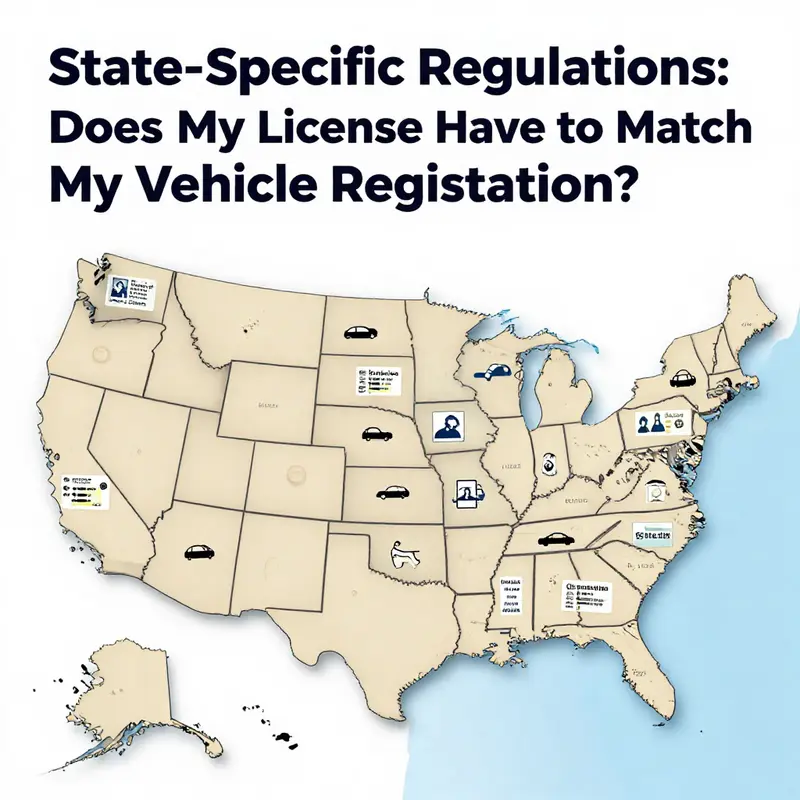
When you think about your driver’s license and your vehicle registration, they might seem like two separate pieces of paperwork that live on different shelves. In reality, they share a common purpose: to identify you as the owner and operator of a specific vehicle. Across most states, the underlying principle is straightforward yet powerful—your legal name on the license should match the name on the vehicle registration. This alignment is not merely a bureaucratic preference; it is a cornerstone of identity verification, record accuracy, and the smooth functioning of legal processes that touch everything from traffic stops to title transfers. When the names diverge, the ripple effects can reach far beyond a single renewal notice, complicating encounters with law enforcement, delaying ownership transfers, and creating headaches at the DMV itself. The idea is simple in theory, but the execution requires careful attention to the rules that vary from state to state, and those rules can shift when life events change your name or other identifying details.
The core logic behind matching licenses to registrations rests on the integrity of official records. The state motor vehicle departments keep these records to reflect who owns and operates a vehicle, and to ensure that the person presenting a license is the person who is legally recognized as the owner. When your name appears differently on these two documents, it can cast doubt during routine checks and administrative actions. In a traffic stop, for instance, law enforcement relies on the DMV’s database to confirm that the driver’s name on the license corresponds to the vehicle’s owner information. A mismatch can trigger a moment of friction that, if unresolved, may escalate to delays in processing or even penalties that are avoidable with a proactive update.
Even when the difference seems minor—such as the use of a middle initial, a hyphen, or a name change after marriage—what matters is the exact correspondence of your current legal name across both documents. If you have undergone a legal name change, you are faced with a two-step requirement: update the name on your driver’s license and update the name on your vehicle registration. The timing and method differ by state, but the principle remains the same: the records must reflect the same legal name. The stakes extend beyond compliance. Aligning these documents protects your rights as a driver and as a vehicle owner. It reduces the risk of complications that can hinder insurance coverage, title transfers, or future registrations. The guidance you’ll find from the State Motor Vehicle Compliance Officer underscores this point: keeping vehicle documents aligned with your current legal name isn’t just about compliance—it’s about protecting your rights as a driver and owner.
The practical path to alignment is inherently state-specific. Each state has its own procedures, forms, and accepted documentation to verify a name change and to enact a corresponding update on both the license and the registration. Some states have embraced online systems that allow you to submit a change request remotely, attach digital copies of the legal documents supporting your name change, and receive confirmation without stepping foot into a local office. Others require in-person visits or mail-in submissions, with slightly different document requirements. The variance is not unusual; it reflects differences in state administrative design and security considerations for identity verification. The common thread is that you will need to present evidence of your legal name change—think certified marriage certificates, court orders, or other official documents that demonstrate the change. A careful preparation of these documents can prevent delays and make the process smoother, whether you start online or walk into a DMV office.
To understand how this plays out in real life, imagine someone who legally changed their name after a marriage. They might be tempted to update only one document and assume the other will catch up eventually. Yet the two records operate as a single identity file. If the license reflects the former name while the registration reflects the new one, the mismatch can surface at renewal time, when selling the vehicle, or during an insurance claim review. The question isn’t merely about aesthetics or convenience; it’s about ensuring that the DMV can reliably match the person presenting the documents to the official ownership record. The alignment also supports the integrity of the vehicle’s title record. In some states, the title and registration are separate records, and mismatches could complicate the transfer of ownership or the enrollment of a new insurer. The bottom line is simple yet critical: any name change should be synchronized across documents as promptly as possible to preserve uninterrupted access to services and legal protections.
Given the diversity of rules, the essential step is to consult your own state’s DMV resources. The process can range from online updates, which provide a convenient path for many residents, to in-person visits for those who must present original documentation and undergo identity verification in a more formal setting. Even when online options exist, you may be required to visit a local DMV branch for final confirmation or to submit original documents. Because the acceptable forms of documentation and the exact workflow differ, it’s prudent to verify the precise steps on your state’s official DMV site before you begin. In addition, you’ll want to confirm whether the name on your driver’s license must be changed before or after you update the registration, or if both changes can be submitted concurrently. The steps may be straightforward, but skipping a required document or misreading an instruction could trigger delays or requests for additional paperwork.
For readers seeking a broader frame—those who want to understand how state rules can shape licensing beyond the name change scenario—there is value in exploring how different states approach related issues, from how identity verification is conducted to the ways in which records are cross-checked across agencies. A readily useful entry point is to examine state rules impacting driver licensing, which offers a lens into the general philosophy behind DMV procedures and the emphasis on keeping records coherent across systems. This is not just a practical matter of paperwork; it’s about the reliability of government records that you rely on every day, whether you are paying a toll, renewing a plate, or proving your identity in a critical moment.
When you decide to act, the recommended action is simple and targeted. Visit your state’s official DMV website to locate the precise steps, forms, and documentation required for a name change and the subsequent updates to both the license and vehicle registration. If you want a consolidated sense of how state rules can influence licensing decisions more broadly, you can start with the overview on state rules impacting driver licensing. The internal guidance highlights the shared logic across states while also pointing to the unique pathways each jurisdiction uses to protect identity integrity.
In practice, the process is often a two-part journey. First comes the legal recognition of your name change, supported by appropriate legal documents. Then comes the administrative update, where you align the two records: your driver’s license and your vehicle registration. The timing of these updates can vary. Some states allow you to submit the name-change request online with digital copies of your supporting documents and to receive a confirmation notice electronically. Others require you to present your documents in person or to mail them in for processing, with potential longer processing times. In any case, you should expect to see the updated records reflected in both documents once processing completes. If you anticipate selling the vehicle or transferring ownership, aligning the records promptly minimizes potential hurdles and ensures a smoother transaction.
To reinforce the practical takeaway, think about the everyday moments that hinge on these records aligning. At a traffic stop, the officer compares the license against the vehicle’s ownership records. If the two tell different stories about who is legally named on the documents, you may be asked for additional information or be delayed while the records are reconciled. If you’re renewing registration or transferring ownership, mismatches can trigger administrative holds or require you to provide proof of your name change and identity again. These are not hypothetical inconveniences; they are concrete outcomes that can be avoided with a methodical, proactive approach.
In short, your driver’s license and your vehicle registration are two faces of the same identity coin. The name on both should match your current legal name, and the process to achieve that alignment is designed to keep records accurate and services uninterrupted. The state-specific path may differ in steps and timing, but the underlying objective is consistent: to ensure that the person who holds the license is the same person who owns the vehicle, and that the recorded information reflects reality. As you navigate this process, use the state DMV resources as your map, and remember the simple rule: align your documents as soon as your name changes, and confirm the alignment with both documents to safeguard your rights and your access to essential services. For further reading on how state rules can shape driver licensing decisions beyond name changes, see the overview on state rules impacting driver licensing.
External resource: https://www.dmv.ca.gov/portal/vehicle-registration-and-title/vehicle-registration-change-of-name/
Aligned Identities on the Road: The High Stakes of Matching Your License and Vehicle Registration
Identity verification is the backbone of everyday driving. When the name on a driver license matches the name on the vehicle registration, the process of proving ownership and operating a vehicle becomes smoother. Misalignment can create delays during stops, inspections, or when filing insurance claims. It is not just a bureaucratic detail but a practical concern that can affect enforcement, coverage, and the ability to move through routine tasks with confidence. In many states, name alignment is treated as a core requirement for motor vehicle regulation because it ties the person to the vehicle and to the official records that document ownership and operation. Alignment reduces friction and helps ensure that transfers, renewals, and ownership proofs proceed with fewer questions and fewer holds.
When names differ, a license holder and the vehicle registration may raise questions about identity fraud or documentation errors. Officers may pause a routine stop to verify identity, and insurers may request extra proof during claims processing. The consequences can include longer processing times, additional paperwork, and possible delays in getting a vehicle back on the road after repairs. The risk compounds if a name change was not fully reflected across all records, such as after marriage, divorce, a court order, or relocation to a new state.
A coordinated update across license, registration, and title is the best defense. The steps and timing can vary by state, but the principle remains the same: keep every major document in sync so that your ownership and your identity are represented consistently in public records. Updating the license without updating the registration, or vice versa, increases the chance of a misalignment later and creates avoidable hurdles at renewal or transfer.
State guidance can differ, so consult your DMV or motor vehicle agency for the exact requirements. Depending on the jurisdiction, online changes may be available, while others require in person verification or documentation. The core idea is to prepare and submit the necessary documents such as a name change decree, a certified marriage certificate, or a court order, and to confirm that each relevant database reflects the updated name. When records align, you experience fewer stops, faster renewals, and a clearer story across all documents that prove who you are and what you own.
For deeper context on how different states manage driver licensing and vehicle records, you can consult official guidance from your state’s DMV. While this resource is not a substitute for local rules, it helps outline the broader patterns of how identity and ownership are handled on the road. If you want to explore updating your name on vehicle registration specifically, follow official state guidelines and use the resources provided by your DMV or motor vehicle agency. A reliable starting point for understanding general name change considerations is the touchpoint offered by consumer advocacy sites that outline the typical documentation needed and the steps to complete the changes in a way that minimizes risk and delay.
In sum, aligning your license and vehicle registration is a practical standard that supports lawful driving and smooth administrative interactions. The costs of misalignment appear in delays, disputes, and the friction of claims and transfers, while the rewards are easier renewals, clearer titles, and a less obstructed path to proving ownership and identity when interacting with authorities and insurers.
Aligned Identities: The Practical Path to Matching Your License With Vehicle Registration
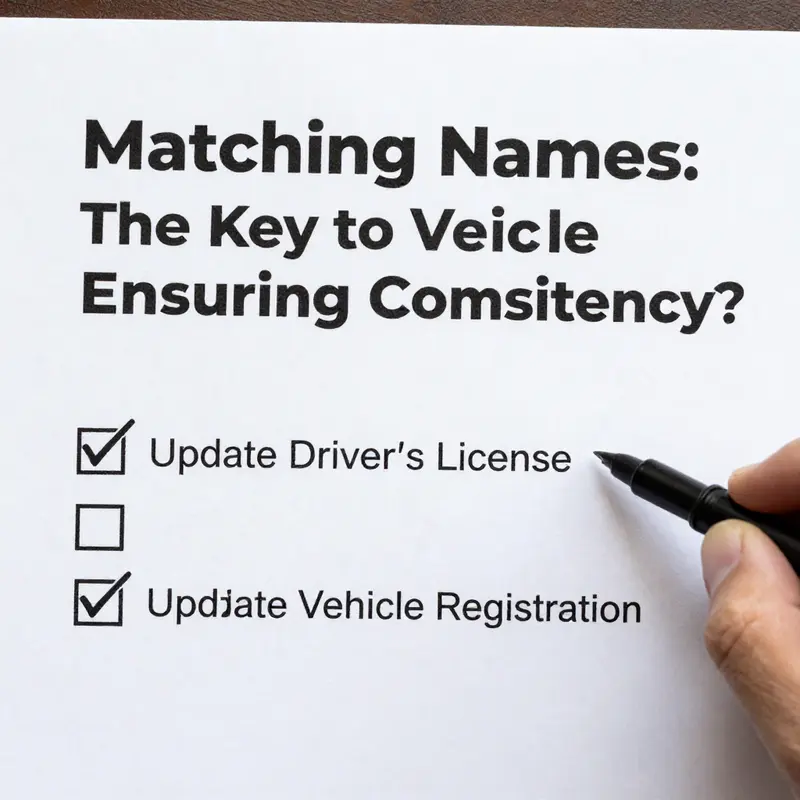
Your driver’s license and your vehicle registration operate as two halves of the same identity on the road. They are not interchangeable documents, but they work best when they tell the same story: the same name, the same owner, the same legal status. When the name on your license diverges from the name on your registration, it is not merely a paperwork mismatch; it is a point of friction that can ripple through your interactions with law enforcement, during vehicle inspections, or when you need to transfer ownership. The alignment is more than a matter of form; it is a practical safeguard that helps verify ownership, confirm eligibility to drive, and keep the process of renewals and transfers moving without unnecessary delays. In the eyes of regulators and officers who enforce the rules, ensuring consistency across documents is a straightforward way to reduce confusion and uphold your rights as a driver and vehicle owner.
As highlighted by State Motor Vehicle Compliance Authority guidance, keeping your vehicle documents aligned with your current legal name isn’t just about compliance—it’s about protecting your rights as a driver and owner. This sentiment, echoed by professionals who administer the rules, underscores a simple truth: consistency lowers risk. When your documents reflect the same legal identity, you minimize the chances that a clerical mismatch could be used, intentionally or not, to question ownership, eligibility, or authority to operate a vehicle. The path to that consistency is not one-size-fits-all; it varies by state, with some jurisdictions offering streamlined online updates and others requiring in-person visits or mail-in submissions. The important thing is to approach the update methodically, starting with the document that is most likely to be accepted by agencies first and then proceeding to the others in a coordinated sequence. For precise steps tailored to your location, your state’s Department of Motor Vehicles website is the best resource, and your local DMV office can provide direct guidance if you encounter any questions that online instructions do not cover.
To translate the principle into action, consider the practical steps that will keep your license and registration in sync. The first step is obtaining official proof of your name change. This proof is your anchor; it is the document you will present to demonstrate that your legal name has changed and that all subsequent records should reflect that change. Acceptable forms generally include a marriage certificate, a divorce decree, a court order, or an amended deed poll. It sounds straightforward, but the exact requirements can differ by jurisdiction. Some states may require certified copies, while others accept standardized forms; some may also ask for a government-issued form of identification in addition to the name-change document. Before attempting any updates, check your state’s rules to ensure you have the correct proof on hand. If your name change is recent, gathering these documents before you begin the process saves time and prevents missteps later.
With the proof in hand, the next phase is to update your driver’s license first. In most states, the license acts as the controlling credential that authorizes you to operate a vehicle, and updating it to reflect your new name often serves as the trigger for subsequent changes to other records. The process may be accessible through an online portal, which can offer a convenient, time-saving path for those with the required identity verification steps. Alternatively, many states require an in-person visit to a local DMV office, where you can present your proof of name change, submit the name-change request, and have the new license issued on the spot in some cases. The key is to ensure your license is current and reflects your legal name before you attempt to modify the vehicle registration; many jurisdictions explicitly require that the primary driver document be updated prior to processing registration changes. When you plan the update, consider the wait times and appointment availability, which can vary by locale and time of year, and prepare all required documents in advance to avoid back-and-forth trips.
Once your driver’s license mirrors your established legal name, you can proceed to the vehicle-registration update. The vehicle record is, in effect, the ownership ledger that ties the car to you as the owner. As with the license, the exact method for updating registration information depends on where you live. Some states support online submissions, letting you file the change electronically after you’ve already refreshed your license. Others require an in-person visit or a mail-in form. Either way, you will typically need to provide the updated license information, the proof of name change, and the vehicle’s current registration documents, plus any forms your state requires for an administrative change of ownership or name. It is not unusual for a state to route these updates through the DMV’s central system, where the link between your identity and the vehicle’s record can be updated in a single pass once the prior step is complete. It pays to consult the state’s DMV site for the exact sequence, the forms, and the preferred submission method. A carefully managed process reduces the risk of downstream complications, such as delays in renewing your registration or in the event of a vehicle transfer of ownership.
As you navigate these steps, you should verify the status of your changes along the way. After submitting the update for your license or registration, monitor the status through the state’s official online portals. DMV systems typically offer a lookup tool that lets you confirm whether the records have been updated and whether any additional actions are required. Waiting for confirmation before attempting another update is prudent; it helps avoid duplicate submissions or inconsistent records that could cause confusion later. If you encounter unexpected delays, a quick call to the DMV or a visit to a local office can clarify whether additional documentation or a corrective submission is needed. The aim is a clean, fully aligned set of documents—one name, one identity across the ledger that belongs to you and your vehicle.
The practical advantages of this alignment extend beyond ease of renewal and transfer. A mismatch can catch the attention of law enforcement or inspectors, not because you are in trouble, but because it can raise questions about ownership or eligibility when records are not aligned with your current legal name. A driver who recently changed their name through marriage or a court order may not even realize how a missing update can slow a routine renewal or complicate a title transfer. The savings come from foreseeing the friction and tackling it proactively, rather than reacting to an obstructed renewal or ownership change that could trigger penalties or a temporary stop on the road. In this sense, the alignment of your license and vehicle registration is a quiet act of self-protection—an investment in smoother road experiences and less administrative friction.
The landscape of state rules adds another layer of consideration. While one jurisdiction may offer a seamless online workflow, another may require in-person verification and the submission of certified copies. It is here that the guidance from professional authorities becomes especially valuable. For readers who want to explore how these rules differ across states and what it means for driver licensing, the reference State Rules Impact on Driver Licensing provides a concise overview of how state-level variations can influence the timing and method of updates. This awareness helps you approach the process with clarity rather than surprise, recognizing that the same goal—consistent records—can be achieved through different paths depending on where you live. The prospect of compatibility across documents is not merely about compliance; it is about reducing risk and maintaining the integrity of your driving rights.
Finally, to anchor the practical steps in a broader sense of verification, you can consult the official guide for confirming vehicle registration status and ensuring that a car is properly registered. This resource complements the steps outlined above by offering a structured way to verify that the record you rely on is current and correct. By directing your attention to the official verification process, you reinforce the discipline of keeping your records current and accurate, which in turn safeguards your rights as a driver and owner. For more information on how to verify if your car is registered, see the official guide linked here: How To Easily Verify If Your Car Is Registered – A Step By Step Guide.
Internal link note: To better understand how state rules can shape the timeline and methods for updating driver licensing in relation to vehicle registration, you can explore the discussion on State Rules Impact on Driver Licensing. This resource highlights how differences among states influence the required order of operations and the available channels for submitting updates. It serves as a useful reminder that while the overarching principle is universal—names must match across key documents—the execution details are state-specific and worth checking before you begin.
External resource for verification: For a concise, official pathway to confirm that your registration record is current, refer to the Department of Motor Vehicles guidance and verification steps at https://www.dmv.org/vehicle/verify-vehicle-registration.php.
Final thoughts
Ensuring that your driver’s license matches your vehicle registration is more than just a matter of compliance; it safeguards your rights as a driver and owner. Discrepancies can lead to legal complications and hinder processes such as registration renewals and ownership transfers. By understanding the importance of alignment, recognizing the legal implications, and being aware of state-specific regulations, you can confidently navigate your driving responsibilities. Always take practical steps to keep your documents up-to-date to avoid unnecessary issues and ensure a smooth driving experience.