
Navigating the world of motor vehicle purchasing and selling can be daunting for both new and experienced drivers. Licensed Colorado motor vehicle dealers play an essential role in ensuring that this process is compliant, safe, and customer-focused. This article explores the integral functions of these dealers, the regulatory standards governing them, and the ethical considerations they must uphold. By breaking down these elements, we aim to equip new drivers, existing vehicle owners, and auto dealerships with the necessary knowledge to engage with licensed dealers effectively and responsibly.
Between Legality and Trust: The Hidden Architecture of Colorado’s Licensed Motor Vehicle Dealer
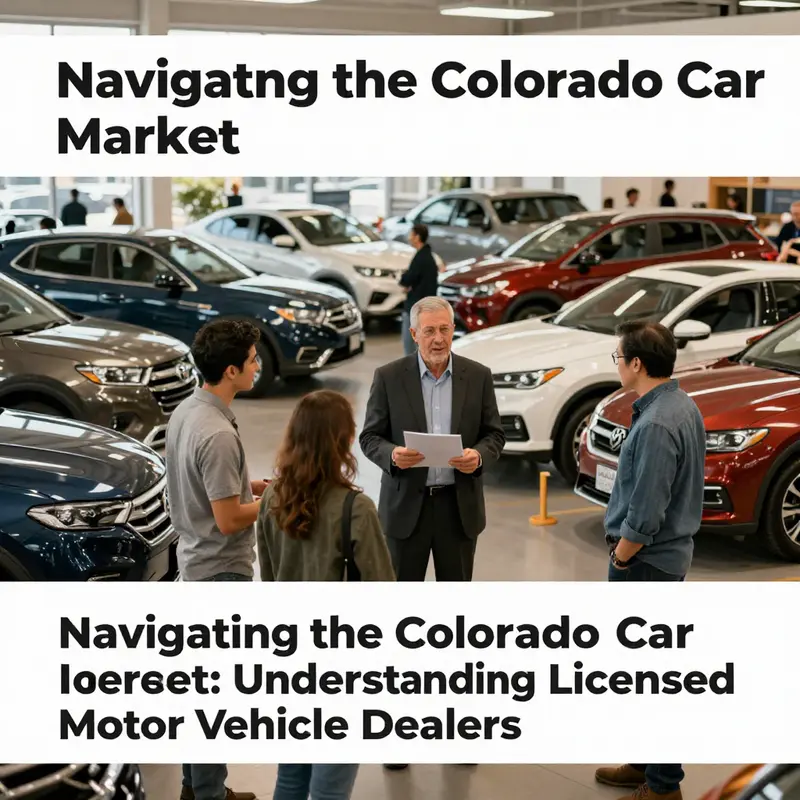
Trust is the currency of Colorado’s car marketplace. A licensed Colorado motor vehicle dealer sits at the intersection of commerce, law, and everyday lives. The license is not merely a badge; it is a contract with the public, a signal that the business intends to operate within a framework that seeks fairness, transparency, and accountability. In a state where every sale involves the transfer of title, the right to register the vehicle, and the assumption that the buyer will rely on accurate information, the dealer’s license becomes a gatekeeper. It sets in motion a chain of obligations that touch every corner of the market—from the lot’s first customer to the long tail of maintenance, warranties, and eventual resale.
Because licensing in Colorado is administered by the Department of Revenue, Division of Motor Vehicles, the rules govern not just how a dealer can sell a vehicle, but how they document it, how they hold themselves accountable when things go wrong, and how they protect the consumer from fraud or misrepresentation. The licensing framework is designed to ensure that dealers maintain sound financial practices, hold appropriate insurance, and keep rigorous records that can be drawn upon in disputes or investigations. This system does not exist to chill enterprise; it exists to create a predictable environment, where a transaction is backed by verified paperwork and a trackable history.
To become licensed, an applicant faces a multi step process. They must demonstrate that they have a legitimate business entity, a physical location that is compliant with zoning and signage requirements, and an ongoing ability to meet financial responsibilities. A background check screens for criminal history that could undermine consumer trust. The financial responsibility standard, which may involve proof of insurance and other financial instruments, serves as a safeguard so that customers are not left exposed if the dealer experiences financial distress. The license, once granted, creates a conduit through which wholesale and retail transactions can flow, title transfers can be issued, and registration services can be performed on behalf of buyers and sellers. But the license also carries ongoing obligations: the dealer must keep accurate records, disclose information as required by law, and maintain a level of professional conduct that aligns with public expectations.
At the heart of the dealer’s daily life is documentation. Every sale, every transfer of ownership, and every registration action generates a paper trail that may be consulted years later. Colorado law requires careful documentation of odometer disclosures, financing terms, tax information, and the chain of title. When a vehicle changes hands, the dealer must not only capture the sale price but also record the history of ownership, the state of the vehicle at the time of sale, and any disclosures about prior damage or repairs that could affect the vehicle’s value or safety. This meticulous approach is more than bureaucratic routine; it is a contract with the buyer that the information presented is accurate and complete, and that the seller is prepared to stand behind it if questions arise long after the deal closes.
Consumer protection regulations extend beyond paperwork. They shape the tone and cadence of the sale itself. Dealers are expected to present clear disclosures, avoid deceptive practices, and provide truthful information about vehicle condition, past incidents, and any warranties or service agreements that may accompany a purchase. The license frames a standard of conduct that discourages pressure tactics, misrepresentations, or hidden terms that could catch a buyer off guard. The goal is to create a marketplace where buyers feel confident that a licensed dealer has been vetted by the state and remains subject to ongoing oversight. This is not a passive requirement; it is a living obligation that informs daily operations, because the consequences of violations ripple through the business — suspension or revocation of the license, fines, or other penalties that can threaten the entire enterprise.
Record maintenance is another pillar. The license prescribes not only what records to keep but the manner in which they must be organized and preserved. Dealers maintain ledgers of vehicle inventory, purchase and sale transactions, and customer communications. They retain title documents, registration receipts, and any correspondence that confirms what was promised or agreed at the time of sale. These records support customer rights, enable audits, and ensure traceability should questions of provenance arise as a vehicle changes hands across years. In practice, this means creating a reliable archive that can withstand inquiries from regulators and, crucially, from wary consumers who want to verify the legitimacy of their purchase. This is not merely an internal back office function; it is a public-facing assurance that the business can be held accountable when needed.
Ethics and transparency are not optional extras; they are the core of the license’s promise to the community. The licensing framework sets a standard for how business should be conducted when large sums of money and significant personal reliance on a vehicle are at stake. A dealer who adheres to the rules demonstrates integrity by setting clear expectations, providing complete disclosures, and honoring commitments made at the point of sale. When such standards are visible in the customer experience — in the clarity of the invoice, the simplicity of the title transfer, and the straightforwardness of the registration process — trust accrues. Consumers do not have to assume that every dealer is trustworthy by default. They can look for the signs that the operation is licensed, that records are thorough, and that the dealership is aligned with a public interest in safe, legal, and fair motor vehicle transactions.
Think of the license as a collective covenant among the state, the dealer, and the public. The state commits to ongoing oversight and enforcement to keep the playing field level. The dealer commits to operate within the bounds of law, to maintain insurance and financial resources, and to commit to ethical engagement with customers. The public commits to engage with a licensed entity, recognizing that the license is not a guarantee of perfection but a signal of accountability. This triad shapes the behavior of dealers across the state and influences market dynamics in meaningful ways. It matters not only for the big-ticket purchases but for the many smaller, everyday transactions that together keep the local economy moving. A licensed Colorado motor vehicle dealer thus occupies a special position in the ecosystem: a professional steward entrusted with the fluid and sometimes fragile trust that binds buyers to their mobility and to the social and economic roles that vehicles enable.
Beyond the paperwork and the regulation, there is a practical dimension to the licensing that often goes unseen by casual buyers. Dealers structured under a license are prohibited from engaging in practices that could undermine safety or economic stability in the local market. They must maintain signage that clearly identifies them as legitimate businesses and that offers customers a clear path to recourse if something goes wrong. They must also demonstrate an ongoing capacity to meet financial obligations, ensuring that if a vehicle purchased on credit requires adjustments, the dealer has the resources to handle it without leaving the buyer exposed to abrupt changes in terms or service. The licensing regime, therefore, indirectly shapes the resiliency of the consumer market by creating a predictable authority with real consequences for noncompliance. When a buyer sees a license badge, a transparent process for title and registration, and documentation that aligns with expectations, confidence grows and transactions proceed with less friction, even when the purchase involves a used vehicle with a storied prior history. For additional context on how state policy interfaces with driver licensing, explore the state rules impact on driver licensing.
From the standpoint of the dealer, the road to licensure is also a road to clarity. The process invites careful planning: a legitimate business address, a dedicated office, and a space that demonstrates the capacity to store records securely. It invites careful financial preparation, as the state will want to understand the dealer’s ongoing ability to meet obligations, whether those are warranties, taxes, or customer refunds. It invites legal awareness, as the dealer must understand the scope of consumer protection regulations and how they apply to disclosures, ad practices, and post sale responsibilities. And it invites ethical discipline, since compliance is not only about staying out of trouble; it is about building a lasting reputation that informs every transaction and every future customer. In this sense, licensure becomes not a constraint but a framework for sustainable enterprise—an architecture that supports growth while safeguarding buyers.
Wholesale and retail dimensions of the license both come into play in Colorado’s market. A licensed dealer may engage in wholesale activity, moving inventory to other licensed entities, while retaining obligations to report, transfer titles, and transfer ownership in compliance with the state’s rules. They may also engage in retail sales to consumers who rely on licensed professionals to guide them through the purchase, financing, and registration steps. The license carries with it the ability to issue and transfer titles, to file registration paperwork, and to administer the transfer of ownership in a manner that ensures the new owner is legally recognized by the state. This dual capacity helps to support the flow of vehicles through the market, enabling dealers to participate in a complex network of buyers and sellers with confidence that each step adheres to the regulatory standard. It also elevates the need for accurate and timely record keeping, because the more transactions pass through the dealer, the more important it becomes to preserve a complete evidentiary trail for every vehicle, every customer, and every agreement.
Compliance is not a one time event. It is ongoing. The license must be kept current, and dealers must participate in periodic renewals, continuing education if required, and routine updates to reflect changes in law or policy. They must maintain premises that are accessible to customers and investigators, and they must ensure their staff understands the rules as well. This ongoing obligation creates a living system of accountability. It ensures that even as markets shift and consumer preferences evolve, the legal and ethical baseline remains intact. It is not enough to start with a license; the real work is continuous compliance that protects customers and preserves the integrity of Colorado’s motor vehicle market.
Finally, the linkage to the state’s broader regulatory infrastructure matters deeply for consumers. A licensed dealer functions within a network of regulators who enforce laws related to sales practices, disclosures, financing, and consumer protection. If a dealer crosses the line, the consequences are not purely corporate; they ripple into the consumer’s daily life through potential losses, misrepresentations, or unresolved problems that threaten safe mobility. The standard of accountability, and the enforcement that follows, create a deterrent effect that encourages ethical behavior, accurate recordkeeping, and transparent communication. The net effect is a market that is safer, more predictable, and more trustworthy for Colorado families seeking dependable transportation. For legitimate licensing details, consult the Colorado DMV’s official portal dedicated to motor vehicle dealers: https://www.colorado.gov/pacific/dmv/motor-vehicle-dealers.
Like any robust system, the Colorado dealer license faces ongoing questions about how it will adapt to changing realities in mobility and finance. The digital era brings new expectations for digital records, secure storage, and faster workflows while preserving the integrity of the paper trails that back every transfer. The challenge is to maintain a human-centered approach to selling—one that respects the buyer’s need for clear information and straightforward processes—while leveraging technology to safeguard accuracy and reduce the risk of errors. For a licensed dealer, adaptability is not a departure from principle but a means of strengthening it, ensuring that the public retains confidence even as the tools of commerce evolve.
Beyond compliance considerations, the licensed dealer’s presence in Colorado is a stabilizing factor for households and for neighborhoods. A license signals that a business has committed to a predictable standard of conduct, which can help families plan their finances around dependable transportation options. It helps local economies by supporting legitimate financing channels, tax collection, and employment opportunities tied to the sale and maintenance of vehicles. It fosters competition in a way that rewards transparency and reliability rather than aggressive sales tactics that may undermine trust. In short, the licensing framework is more than an administrative formality; it is a social contract that makes mobility safer, more accessible, and more sustainable for a growing and changing community.
To the reader contemplating a vehicle purchase, understanding the licensed dealer’s role offers a different lens on the marketplace. The license is not a guarantee of perfection but a beacon that lights the way toward responsible business practices. When buyers encounter a licensed dealer, they encounter a structure designed to minimize risk, clarify obligations, and provide recourse when things do not go as planned. That is the practical meaning of the public policy behind licensure: to balance speed and convenience with accountability and fairness. As Colorado’s automotive market continues to grow and evolve, the licensed dealer remains a central pillar—an institution that helps align private enterprise with public trust.
Ultimately, the story of a licensed Colorado motor vehicle dealer is the story of a regulatory system that translates complex rules into everyday transactions. It is about the quiet choreography of ledgers and title transfers, the careful language used in disclosures, and the patient discipline required to follow up after a sale. It is about the state agency that prints and renews licenses, the inspectors who verify premises, and the consumer protection safeguards that give customers a sense of security. It is the daily practice of turning legal obligations into practical service, ensuring that the freedom to move does not come at the cost of fairness or safety.
With that view, the next chapter can turn to the practical steps a prospective buyer might take to evaluate a dealership’s credibility, including questions to ask, documents to review, and red flags to watch for. The aim is not merely to define a license but to illuminate how licensure shapes the experience of purchasing, financing, and registering a vehicle in Colorado. It is about translating the public promise of the license into a personal sense of assurance as one enters the lot, speaks with a salesperson, and signs the paperwork that makes a vehicle yours.
External resource and official guidance are available here: Colorado DMV Motor Vehicle Dealers page.
On the Lot and Under the Law: Navigating Colorado’s Regulated Terrain for Licensed Motor Vehicle Dealers
In Colorado, the sale of a motor vehicle is more than a business transaction; it is a tightly regulated enterprise that rests on a licensed foundation, one designed to protect consumers, elevate professional standards, and keep the roadways safer. A licensed Colorado motor vehicle dealer operates within a framework built by state agencies, most prominently the Colorado Department of Revenue and its Division of Motor Vehicles. This framework is not a relic of the past but a living set of requirements that shape every step from storefront to service bay. The licensing process, ongoing compliance, and the penalties attached to missteps are not mere bureaucratic hurdles. They are the architecture that legitimizes a dealer’s presence in the market and, crucially, preserves the public’s trust in the motor vehicle marketplace. A robust understanding of this regulatory landscape helps dealers not only to avoid sanctions but to transact with transparency and accountability that benefit buyers, lenders, insurers, and the broader community of traffic safety and consumer protection.
To begin with, the license itself is the anchor of legitimacy. In Colorado, a dealer’s license is issued by the state’s revenue department and specific divisions within it, with the DMV entrusted to oversee the practical application of vehicle sales, title transfers, and registration services. A license is never merely a stamp of approval; it is a living credential that prescribes where a dealer can operate, how records are kept, what disclosures are required, and how advertisements must reflect reality. The enforcement of these rules creates a market space where competition remains fair and where customers can verify information with confidence. The licensing process is designed to screen out entities that cannot meet minimum standards of integrity, financial responsibility, and business reliability. It is a gatekeeping function that, when properly administered, reduces the incidence of fraudulent sales, odometer tampering, hidden fees, or misrepresented vehicle history.
Key parts of that gatekeeping relate to background checks and financial responsibility. The background check serves as an early signal about a business’s stewardship of consumer interests, its owners, and its management. It is not an abstract hurdle but a practical safeguard: a dealer’s reputation is, in many ways, a capital asset in the marketplace, and the background scrutiny helps ensure that those who operate vehicles and handle customer funds have demonstrated a baseline level of trustworthiness. Financial responsibility, often evidenced by a bond or similar mechanism, provides a financial backstop. It offers protection to customers against potential losses that could arise from the dealer’s failure to fulfill obligations, such as title transfers, refunds, or other mandated remedies. This requirement—while sometimes seen as administrative—has a direct and tangible impact on consumer confidence. It signals that the business stands behind its commitments and has resources to address issues should problems arise.
Beyond the personal histories and financial assurances, the state also insists on a physical presence that meets regulatory standards. A dealer must maintain a bona fide office or business location. This is not merely about square footage or a visible storefront; it is about a space that supports orderly operations, verifiable inventory, and the capacity to complete paperwork efficiently. A proper premises is a practical asset in the eyes of customers who may visit to inspect vehicles, discuss terms, or arrange financing. It reassures buyers that they are dealing with a legitimate business entity rather than a transient operation. The physical location also serves as the anchor for signage that complies with state rules and, importantly, for the recordkeeping infrastructure that keeps track of vehicle histories, title transfers, and registration records. The requirement for a stable business presence is a core element of accountability and a determinant of a dealer’s ability to sustain operations through the inevitable fluctuations of the market.
Advertising and pricing transparency are other pillars of the regulatory structure. The rules governing how vehicles are advertised are designed to prevent misrepresentation and to ensure that consumers receive accurate, complete information before they commit to a purchase. This includes clear statements about price, terms, and any additional costs that a buyer will incur. The aim is not to discourage competitive pricing but to prevent bait advertising or the omission of critical terms that would mislead a customer about the true cost of a vehicle. Transparent advertising also dovetails with disclosure requirements that ensure buyers know a vehicle’s history, current condition, and any limitations associated with the sale. A dealer who embraces transparent advertising builds trust with customers and reduces disputes arising from misunderstood expectations. In practice, this means meticulous attention to how price is presented, how financing terms are disclosed, and how any required disclosures accompany the displayed offer.
The sale of a vehicle in Colorado cannot be detached from the vehicle’s history. Disclosure requirements compel dealers to provide accurate information about a vehicle’s past, including title brands and odometer readings. Title brands—whether indicating prior damage, salvage, flood damage, or other classifications—carry substantial implications for value, insurance, and future resale. An omission here is not merely a minor error; it can alter a buyer’s decision-making calculus and later expose the dealer to disputes or regulatory action. Odometer disclosures, likewise, protect buyers from non-authentic mileage representations. The combination of these disclosures with the vehicle’s current condition forms a factual backbone for the transaction. The dealer’s obligation to share complete and precise information is not simply compliance drama; it is the bedrock of informed consent in the sale, a standard that protects buyers and reduces the likelihood of post-sale remediation expenses or disputes.
A closely linked area is the inspection and standards compliance that governs the vehicles offered for sale. Colorado’s framework pushes dealers to ensure that both new and used vehicles meet safety and emissions standards before they can be registered. This is not a one-time gatekeeping action at the point of sale; it is part of a continuous chain of accountability that ties the vehicle’s compliance status to the dealer’s practices. The dealership must have processes to verify that vehicles conform to safety recalls where applicable, that repairs or alterations meet state and manufacturer requirements, and that any used vehicles presented as compliant have passed appropriate inspections. The emphasis on safety and emissions is a public service as well as a business obligation: it reduces the chance that a buyer leaves the lot with a vehicle that poses safety risks or requires costly corrective work after purchase.
All of these elements—the licensing process, background checks, financial responsibility, premises, advertising rules, disclosures, and inspection standards—form a cohesive system. They are not a random collection of regulations but a designed ecosystem that aligns dealer behavior with public policy goals: consumer protection, road safety, and fairness in commerce. For dealers, understanding this ecosystem is not a matter of compliance theater; it is a strategic advantage. A business that treats regulatory requirements as minimum thresholds will find that customers, lenders, and insurers reward its diligence with smoother transactions, fewer disputes, and stronger market standing. The licensed Colorado motor vehicle dealer, then, operates at the intersection of commerce and governance where the law is not a distant formalism but a daily guide to how business should be done on the lot and in the back office.
To illustrate how these pieces connect in the real world, consider the flow of a typical dealer transaction from inquiry to registration. A potential buyer visits the lot, reviews a selection of vehicles, and relies on the dealer’s disclosures, including a clear articulation of price and all associated terms. The dealer’s advertising must reflect the numbers shown in the showroom or on the vehicle’s listing, with no hidden fees sprung at the closing table. If the buyer negotiates, the financing terms are presented with transparency, including any down payment, interest rate estimates, and the total cost of purchase over the loan period. Throughout this process, the dealer should be prepared to provide a complete vehicle history report, confirm the odometer reading at the time of sale, and note any title brands that could affect the buyer’s risk assessment.
When the sale is agreed upon, the dealer proceeds with title transfer and registration, tasks that are not merely administrative but legal responsibilities. The paperwork must be accurate, timely, and consistent with the information presented to the buyer. If the vehicle has undergone inspections or needed specific repairs to meet safety or emissions requirements, those details must be documented and, when necessary, reflected in the vehicle’s warranty or service records. The dealer’s office, as the regulatory anchor point, houses the systems that track inventory, document title transfers, and log compliance checks. In Colorado, the DMV plays a central role in validating these records, ensuring that each transaction is traceable and that ownership changes are recorded in state systems with integrity. Any irregularity—whether a missing odometer disclosure, an inaccurate mileage entry, or an incomplete lien notation—can trigger corrective steps and, in some cases, regulatory scrutiny.
These patterns of behavior—sound licensing practices, responsible financial arrangements, transparent advertising, and thorough disclosures—are not merely symptoms of compliance. They are signals of professional maturity in a field where information asymmetry can easily tilt the balance in favor of the more sophisticated or the less scrupulous. Buyers rely on the dealer’s expertise to navigate complex terms, financing options, and risk considerations. A dealer who consistently adheres to the regulatory rhythm builds goodwill, reduces the probability of disputes, and creates a marketplace that rewards accountability as much as it rewards price competitiveness. In the long view, the licensing framework serves as an ongoing accreditation mechanism. It is not a one-time hurdle but a continuing obligation to uphold standards, review practices, and adapt to evolving laws and market conditions.
It is worth noting that the regulatory landscape is not static. It evolves with changes in consumer protection priorities, safety standards, and governance philosophies. Dealers must cultivate a culture of ongoing compliance, not a quarterly checklist. This culture manifests in practical ways: regular staff training on disclosures and notices, periodic audits of recordkeeping practices, and a governance approach that treats customer complaints as opportunities to improve. It also includes staying informed about changes in the law through official channels and trusted regulatory guidance, and ensuring that any new practice—such as a revised advertisement style, a different disclosure language, or updated inspection standards—is vetted and implemented before it reaches the showroom floor. The aim is to create consistency between what the dealer communicates, what the vehicle actually provides, and what the law requires. When a dealer achieves this alignment, the result is a more predictable and reliable buying experience, which in turn nurtures a more robust and resilient local market.
For readers who want to explore this regulatory terrain further, the landscape is typically anchored in a handful of primary sources. The Colorado Department of Revenue and its Division of Motor Vehicles are the most immediate references for licensing criteria, ongoing compliance expectations, and official guidance on recordkeeping and reporting. The Department of Revenue’s motor vehicle dealer section outlines the precise steps to obtain and renew a license, the kinds of financial assurances required, and the standards for physical premises. The DMV, in turn, provides the day-to-day operational details that a dealer must meet to handle title transfers, registrations, and related services accurately and efficiently. While the exact language and procedural steps may vary over time, the underlying principles endure: protect consumers, maintain accurate records, and operate with integrity.
Contemplating the nuanced role of the licensed dealer also invites reflection on the broader ecosystem of consumer protection and road safety. The dealer is a link in the chain that extends from vehicle manufacturing to the hands of the buyer and beyond—into finance, insurance, maintenance, and, eventually, the vehicle’s long life on the road. Each link is fortified by the legal requirements described above, and each link depends on the integrity of the others. The buyer’s trust rests on the assurance that a dealer has authenticated the vehicle’s history, that disclosed information mirrors truth, that the vehicle meets safety standards, and that the purchase and registration processes are carried out with accuracy and transparency. In this sense, licensing is not merely a gatekeeping act but a performance standard—the standard by which reputable dealers earn and preserve their license to operate.
To enrich this understanding, readers may consider examining how different states approach vehicle inspections and compliance, as such variations influence how dealers manage risk, train staff, and present vehicles for sale. For a concise overview of state-by-state inspection requirements and how they relate to licensing duties, see the following resource: vehicle inspection requirements across states. While Colorado’s specific rules may differ from other jurisdictions, the principle remains that knowledge of regulatory expectations informs better business decisions, ultimately benefiting both dealer and consumer.
The regulated path laid out for Colorado’s licensed motor vehicle dealers is not a prosecution of rigidity but a calibration of accountability with opportunity. A well-governed dealership does not fear regulation; it embraces it as a framework for sustainable growth, trustworthy service, and long-term success. By anchoring practice in licensed legitimacy, the dealer can focus on delivering value—the right vehicle at the right price, with complete disclosures, careful attention to safety and compliance, and a customer experience that respects the buyer’s need for clarity and reassurance. The result is a marketplace where competition thrives on merit and transparency, where the rule of law underwrites the buyer’s confidence, and where the road, for driver and dealer alike, becomes safer and more predictable for everyone who participates in it.
As the regulatory terrain continues to evolve, the licensed Colorado motor vehicle dealer will benefit from a steady engagement with the core duties that define the profession. Maintaining a compliant office, meeting advertising standards, honoring disclosures, upholding the integrity of title transfers and registrations, and ensuring that every vehicle on the lot adheres to applicable safety and emissions standards—these are not mere checklist items. They are commitments to customers, insurers, lenders, and the broader public trust. In this way, licensing becomes the practical embodiment of professional responsibility: a daily discipline that transforms the act of selling a car into a reliable service that supports safe travel, informed decision-making, and a healthy marketplace for motor vehicles in Colorado.
External resource for further regulatory context: https://www.colorado.gov/pacific/dor/motor-vehicle-dealer
Staying Above the Line: Compliance, Records, and Ethical Practice for Colorado Motor Vehicle Dealers
Operating as a licensed Colorado motor vehicle dealer demands more than a grasp of vehicle inventory and salesmanship; it requires a disciplined commitment to legal compliance and ethical conduct that protects customers, employees, and the dealership’s long-term viability. A dealer’s license grants authority to buy, sell, register, and transfer titles, but that authority is conditioned on meeting precise statutory and regulatory obligations. Understanding how those obligations intersect with everyday operations turns abstract rules into practical routines that minimize risk and build trust. This chapter lays out the core compliance responsibilities and ethical principles that shape responsible dealership practice in Colorado, and it explains how to translate legal requirements into durable business habits.
At the foundation is licensing itself. A valid Motor Vehicle Dealer License issued by the Colorado Department of Revenue, Division of Motor Vehicles (DMV), must be maintained, displayed, and kept current. That requirement is not a formality. It triggers a host of downstream duties—from recordkeeping and signage to the proper handling of titles and registrations. Dealers must ensure the license covers the correct classification of activity: retail, wholesale, salvage, manufacturer, or broker roles each carry different rules. Renewals and any changes in ownership, location, or business structure must be reported promptly. Failure to keep licensing information accurate exposes the dealer to enforcement actions that can include fines, license suspension, or revocation.
Title and registration compliance demand constant attention. Each vehicle transaction must be supported by clear, marketable title documentation unless any lien or encumbrance is fully disclosed and handled in accordance with state law. Dealers bear responsibility for timely title transfers and registrations. This includes preparing title applications accurately and submitting them within statutory windows, as well as ensuring the buyer’s information is correct and complete. Misrepresenting title status—selling a vehicle as free of liens when it is not, or concealing salvage or rebuilt status—constitutes a severe violation. Transparent disclosure of a vehicle’s history is essential. Good practice is to provide documented vehicle history reports, disclose accident or flood damage, and ensure customers understand the implications of branded titles.
Advertising and sales practices are another area where compliance and ethics intersect. Advertising must be truthful and not misleading. That means clear pricing, accurate disclosure of fees, and honest descriptions of vehicle condition and features. Avoid bait advertising—promoting a vehicle at an attractive price without intent to sell at that price—or any ad that omits material facts. Sales contracts should be written in plain language and contain full disclosure of terms including price, fees, warranties, and any financing conditions. Representations made during negotiations must match the written contract. When dealers provide financing or arrange third-party financing, they must disclose the terms clearly and avoid misleading statements about interest rates, monthly payments, or the nature of the loan. Ethical sales practices reduce complaints and regulatory scrutiny, and they protect the dealership’s reputation.
Consumer protection law in Colorado complements licensing rules. The Colorado Consumer Protection Act prohibits unfair or deceptive acts or practices in the sale of goods and services. For dealers, this translates into a duty to provide accurate vehicle information, to disclose known defects, and to honor warranty obligations when applicable. Implied duties include dealing fairly with consumers who raise concerns about defects or title issues after purchase. Responding promptly and transparently to consumer complaints often prevents escalation to formal disputes or regulatory investigations. Clear internal procedures for handling complaints—documenting customer interactions, evaluating claims fairly, and recording remedial steps—are essential for demonstrating good faith in the event of external review.
Accurate financial and administrative recordkeeping underpins every compliance obligation. Dealers must maintain detailed records of all transactions, purchases, sales, leases, trades, and financing arrangements. Colorado requires these records to be preserved for a specified period—commonly five years—and to be available for inspection by regulators. Beyond raw retention, records must be accurate, legible, and organized. This includes sales contracts, assignments of title, odometer statements, vehicle acquisition documents, and records of any repairs or reconditioning work performed prior to sale. Maintaining robust accounting practices prevents errors that can look like fraud. Bank reconciliations, secure handling of customer deposits and trade-in credits, and segregation of duties between sales and accounting functions all help avoid both inadvertent mistakes and deliberate misconduct.
Ethical conduct extends beyond compliance with written rules. It is a culture that values honesty, respect, and transparency at every customer touchpoint. Treating customers with fairness means offering clear explanations of pricing and contracts, avoiding high-pressure sales tactics, and making sure consumers have time to review documents and ask questions. It also means training staff to recognize and avoid conflicts of interest—such as steering buyers toward financing options that benefit the staff or dealership at the expense of the customer. Ethical decisions often require judgment calls. When in doubt, prioritize disclosure and documentation. When a vehicle has a question in its history, disclose that question. When a mistake occurs, correct it promptly and in writing.
Compliance programs should be proactive and practical. A successful program starts with written policies that reflect statutory requirements and best practices. These policies should cover title handling, advertising standards, sales contract preparation, disclosures, warranties, trade-ins, odometer disclosures, and record retention. Regular staff training reinforces these policies. Training should address common compliance pitfalls, how to complete standard forms correctly, and how to escalate complex issues to management. Dealers should schedule periodic audits—both internal and, when useful, external—to ensure that policies are followed. Audits should review sample transactions, verify title and registration timelines, check advertising materials, and confirm the existence and accuracy of required records. When gaps are found, implement corrective action plans and document the steps taken.
Technology can both simplify and complicate compliance. Digital systems for inventory, sales contracts, and title processing reduce manual errors and create audit trails. They can automatically populate standard forms, flag missing information, and timestamp critical actions. However, reliance on technology does not eliminate the need for oversight. Systems must be configured correctly and secured against unauthorized access. Data integrity checks, back-up procedures, and access controls are necessary to protect sensitive consumer information and to ensure records remain accurate. Where electronic signatures or electronic document submissions are used, they must comply with Colorado law and DMV requirements for acceptability. Maintaining both paper and secure electronic backups of key records is a prudent hedge against system failures.
Interactions with lenders and third-party vendors also warrant careful oversight. Many dealers work with finance sources, service providers, and auction houses. Selecting reputable partners and maintaining clear contractual terms helps prevent regulatory risk. Agreements should specify responsibilities for title transfers, lien filings, and disclosure obligations. Dealers must not shift their legal duties to third parties through informal arrangements. When a vendor fails to meet its obligations—such as late title filings—dealers remain responsible to the customer and to regulators. Regular vendor reviews and written service agreements help maintain accountability and prevent unexpected liabilities.
Handling special categories of vehicles raises additional responsibilities. Salvage, rebuilt, and flood-damaged vehicles require explicit disclosures and often specific documentation. Dealers must be familiar with the criteria for branded titles and must apply the correct processes when selling such vehicles. Furthermore, dealers who sell commercial vehicles or vehicles subject to inspection requirements must ensure compliance with inspection rules and provide buyers with any mandated documentation. Awareness of varying inspection laws across states can matter when moving vehicles across borders; a resource on inspection requirements can help dealers plan transport and sales logistics responsibly. For further reference on inspection differences among states, see this summary of state vehicle inspection requirements: https://drivernvehiclelicensing.com/us-states-vehicle-inspection-requirements/.
Record inspection by regulators is a realistic prospect for any dealer; being prepared reduces stress and exposure. When regulators request records, respond promptly and provide complete documentation. Establish a point person who knows where records are kept and who can assemble requested materials quickly. Maintain a written log of all regulatory communications and any remedial actions taken in response to inquiries. Documentation of cooperation and corrective steps can mitigate penalties in many enforcement scenarios.
Transparency with customers about fees and add-ons prevents disputes. Dealers should clearly disclose any dealer-installed accessories, protection products, or service contracts. If a product is optional, the customer should sign separate acknowledgment. Misrepresenting optional products as required or inflating fees without disclosure invites complaints and legal risk. Similarly, honest handling of trade-in valuations, vehicle history disclosures, and warranty limitations prevents later conflicts.
Cultivating an ethical culture requires leadership. Owners and managers set the tone by modeling compliance and by rewarding staff for ethical behavior rather than short-term sales gains. Performance metrics should include measures of customer satisfaction and compliance, not just sales velocity. When staff witness unethical shortcuts without consequence, bad practices spread. Encourage reporting of concerns through confidential channels and investigate allegations thoroughly. When misconduct is confirmed, act decisively and document corrective measures.
Finally, stay current. Laws and regulations evolve. Periodically review official guidance from the Colorado Department of Revenue, Division of Motor Vehicles and related sources to ensure that policies reflect the latest requirements. The DOR’s dealer page is the authoritative source for licensing rules, forms, and enforcement policies: https://www.colorado.gov/pacific/dor/motor-vehicle-dealer. Subscribe to updates, participate in dealer associations, and consult legal counsel when complex or novel compliance questions arise.
A licensed Colorado motor vehicle dealer who integrates these practices will not only reduce the risk of enforcement action, but also strengthen customer trust and long-term business success. Compliance is not a checklist to be completed once; it is an ongoing discipline. Ethical conduct is not optional; it is the engine of reputation and repeat business. By maintaining accurate records, honest advertising, transparent title handling, strong internal controls, and a culture of integrity, dealers transform regulatory obligations into a competitive advantage.
Final thoughts
Understanding the role of licensed Colorado motor vehicle dealers is crucial for both new and seasoned drivers. These professionals are not only the facilitators of vehicle sales but also custodians of customer rights and regulatory compliance. By engaging with licensed dealers, vehicle owners can ensure a smoother, fairer, and legally compliant transaction process. This understanding fosters a better relationship between consumers and dealers, ultimately enhancing the quality of service in the automotive field. Therefore, as you navigate your vehicle journey in Colorado, remember the importance of working with licensed dealers who are committed to ethical standards.