
Locating a vehicle by its license plate is often a necessity for new and experienced drivers alike. Whether it’s to track down a parked car, confirm a vehicle’s registration, or streamline auto-related protocols, understanding the methods available is crucial. This comprehensive guide dives into five key chapters, covering law enforcement methods, government resources, insurance company processes, dealership assistance, and essential legal precautions. By the end of this article, readers will be well-equipped with the knowledge needed to navigate the complexities surrounding vehicle location based on license plates.
Tracking by Plate: How Authorized Agencies Locate a Vehicle through License Plate Data
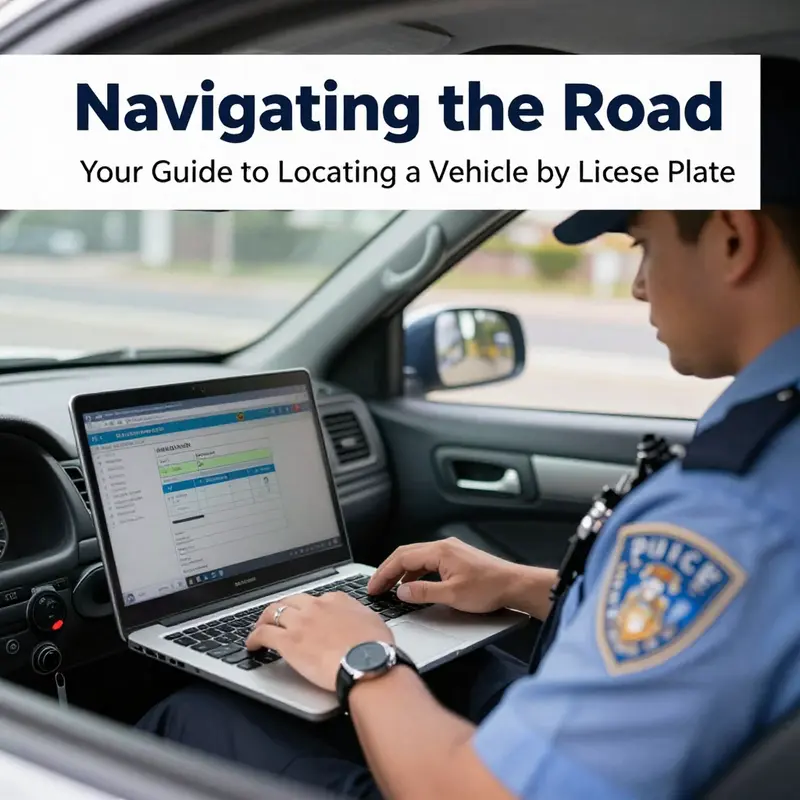
A license plate is more than a tag on a rear bumper; in the hands of trained authorities, it functions as a sanctioned signal that can trigger a carefully structured investigative workflow. It is important to understand that locating a vehicle by plate is not a public search function. Privacy protections and data protection laws restrict access to plate-derived information, and only individuals with legitimate authority—such as law enforcement officers, traffic investigators, or DMV officials—may retrieve or act on that information. The public-facing world of plate data is limited to what a person can learn through official channels about their own vehicle, or what authorized personnel may disclose under proper legal processes. This distinction between authorized access and private inquiry is foundational to the entire practice; it ensures that plate data serves public safety without compromising individual privacy. In practice, the license plate becomes a starting point for a chain of checks and corroborating evidence designed to identify, locate, or verify a vehicle in a lawful and accountable manner. The technology and procedures behind this practice are the product of decades of refinement, aimed at balancing rapid response with civil liberties, and they continue to evolve as new tools and legal frameworks emerge.
At the core of authorized plate data access are two intertwined infrastructures: real-time database checks and permissioned data repositories that are tightly governed by policy and oversight. When a plate is scanned—whether by an in-vehicle computer, a mobile device held by an officer, or a checkpoint reader—the software initiates a rapid query across nationwide and state-level records. The search typically touches records for stolen vehicles, active warrants, suspended or revoked registrations, and other flags that would justify further action. If a match is found, the system generates an alert that travels through dispatch channels to the appropriate responder. This immediacy is crucial for situations ranging from recovering a stolen vehicle to deterring a suspected offender from fleeing. Importantly, the speed of these checks does not undercut due process; it is governed by strict rules about why access is granted, who may view the data, and how the data can be used.
A central technology in this space is Automated License Plate Recognition (ALPR). These systems deploy high-speed cameras on patrol units, at fixed road locations, or as part of urban surveillance networks. The cameras capture plate images, and the software extracts the alphanumeric data for immediate cross-checks. ALPR is powerful because it scales with traffic volume and can operate continuously across large geographic areas. However, it is not a standalone remedy; it functions within a broader ecosystem that includes human oversight, data governance, and legal safeguards. Jurisdictions typically implement limitations on data retention, access controls that specify who can query results, and audit trails to document every retrieval. When used responsibly, ALPR accelerates legitimate investigations, helps locate stolen vehicles, and supports the timely response to critical incidents without unduly infringing on privacy.
Beyond plate reads, law enforcement draws on a spectrum of linked data to construct a precise picture of a vehicle’s movements and status. Plate results can be cross-referenced with GPS-enabled history data, registration records, insurance information, and incident reports. This multi-pronged approach allows investigators to verify whether a vehicle that shows up in one inquiry is the same vehicle involved in a crime, or simply a legally registered conveyance passing through a monitored corridor. The details obtained through DMV-held records may include ownership, registration status, lien information, and address verification, but all access to this level of detail requires a legitimate objective and proper authorization. In cases where a vehicle is linked to a serious offense, investigators may pursue interstate warrants or federal alerts that enable cross-jurisdictional tracing. The digital backbone supporting these actions is designed to share pertinent plate data across agencies while preserving chain of custody and enforcing privacy protections.
The operational backbone of locating a vehicle by plate hinges on tightly choreographed interagency collaboration. Local police, state troopers, transportation departments, and federal bodies may exchange plate information under defined protocols, ensuring that data flows quickly where needed but remains protected from misuse. This collaborative framework is particularly vital when a suspect or a stolen vehicle is believed to be moving across jurisdictional boundaries. Centralized platforms and interagency dashboards provide a shared view of flagged plates, allowing responders to coordinate stops, pursuits, or intercepts. When such actions are warranted, the approach adheres to legal standards established by statutes, case law, and agency policy, with oversight mechanisms designed to prevent overreach.
The legal and ethical architecture surrounding plate-based location efforts is not static. It evolves with court decisions, regulatory updates, and public interest in accountability. Officers are trained to interpret plate results within the context of other evidence, to avoid leaps in assumption, and to document the rationale for each action taken due to plate-derived information. This emphasis on context helps avoid misinterpretation and minimizes the risk of targeting errors. It also reinforces proportionality in enforcement actions: a plate hit may trigger a stop, but the officer’s subsequent steps—gathering ID, verifying registration, or requesting further search authorization—must align with the law and with the facts at hand. In this sense, the plate is a trigger for a lawful investigative sequence rather than a standalone ticket to action.
Public discourse around plate data often highlights concerns about privacy and the potential for abuse. Responsible agencies address these concerns with clear retention policies, access controls, and routine audits. Data gathered through plate checks is retained only for as long as necessary to fulfill the stated purpose and is accessible only to personnel with a defined need. Oversight bodies, internal auditors, and judicial review all play roles in ensuring that plate-derived information is used appropriately. The emphasis on accountability helps maintain public trust while enabling officers to perform their duties effectively when there is a legitimate threat to safety or property.
For readers who want to see how state-level rules shape these processes, a helpful lens is to consult discussions of how state rules impact driver licensing. See State rules impact on driver licensing. State rules impact on driver licensing.
Even with advanced technology and strong governance, the core objective remains straightforward: to locate a vehicle when it matters—whether to recover a stolen asset, prevent a crime, or protect the public. That objective is tempered by a commitment to due process and privacy, ensuring that plate data is not exploited or disclosed beyond what is legally permissible. The interplay between rapid data retrieval and thoughtful, rights-respecting handling defines modern practice. Officers learn to translate a plate hit into a purpose-driven sequence of actions, from a preliminary contact to a potential stop, all while maintaining a careful record of the justification, the evidence, and the chain of custody. This disciplined approach helps ensure that the tool—license plate data—serves safety without compromising liberties.
Ultimately, the public-facing takeaway is that locating a vehicle by license plate is a controlled, authorized activity. It relies on a constellation of curated databases, international and interstate collaboration, and technologies like ALPR, all governed by policies that prioritize safety, accuracy, and privacy. The result is a system in which a single plate can set in motion a lawful process that respects rights, preserves evidence integrity, and delivers timely public safety responses. For deeper background on how plate data integrates with vehicle identification frameworks and record systems, consult the broader resources on the topic, including official guidance from national safety authorities: https://www.nhtsa.gov/vehicle-identification-number-vin.
null
null
Plate-to-Policy: How Insurance Carriers Navigate License Plate Data Within Legal Boundaries
Locating a vehicle by its license plate sits at a delicate intersection of privacy, law, and risk management. Insurance providers operate within strict boundaries that prioritize consent, applicable regulations, and a legitimate purpose for information requests. A plate number alone rarely justifies access to location data; any lookup is framed by policy terms, regulatory requirements, and a documented need.
In practice, insurer access is not a public search. When plate-based information is needed, the request proceeds through formal channels, identity verification, and a defined purpose—such as validating a claim, determining policy status, or coordinating recovery services. The data sources may include registration records, policy records, and, where the policyholder has enrolled in telematics or shared-location features, data that the owner has authorized for use in policy services. Access is purpose-limited and time-bound, with data minimization at the forefront.
The privacy framework governing vehicle information emphasizes that sensitive data—ownership, location, and vehicle status—are protected. Insurers generally disclose information only to the policyholder, authorized claims personnel, or law enforcement with the appropriate legal basis. This safeguards owners from inadvertent exposure and reduces the risk of misuse. The act of locating a vehicle by license plate, within the insurance ecosystem, is therefore a controlled operation guided by procedures, verification steps, and documented authorization.
In claims or recovery workflows, a plate helps confirm coverage and align the vehicle with the correct policy record. If telematics data is available and the owner has consented, location information (such as a last-known point or time-stamped coordinates) may assist in recovery or accident investigation, but only within the terms of the policy and the duration of the claim. When a theft is reported, insurers work with authorities to share permissible data that supports rapid recovery, subject to warrants or subpoenas as required by law.
For policyholders, the practical takeaway is to use official channels—claims portals or dedicated phone lines—and to expect identity verification and consent checks. Gather incident details, the plate number, vehicle description, and policy identifiers. If location data is part of a legitimate claim, expect clear explanations of scope, timing, and how updates will be provided while protecting privacy. The goal is to enable safe, lawful assistance without exposing private data unnecessarily.
Beyond the Plate: How Dealerships and Repair Shops Fit Into Locating a Vehicle by License Plate
Locating a vehicle by its license plate sits at the intersection of everyday practicality and strict privacy rules. In the real world of car ownership, dealerships and repair shops operate as essential service nodes that manage a tangle of data about vehicles. Yet they do not function as public plate-to-ownership lookup engines. The license plate is a public-facing tag, but the information tied to that tag—ownership details, current registration status, or precise location—remains safeguarded behind controlled access. For most people, the license plate number by itself does not unlock a live map to a vehicle. The channels that do exist are tightly regulated, requiring proper authorization, clear purpose, and appropriate identity verification. In this light, dealerships and repair shops are better understood as Cogs in a broader, legally constrained system rather than as gateways to locate a vehicle on demand. To understand what this means in practice, it helps to trace the public’s expectations against the realities of how information is stored, accessed, and shared when a plate appears in a transaction, a repair, or an insurance report.
Dealerships and repair shops often operate with a dual focus: customer service for owners and compliance with internal data governance. On the showroom floor or in a service bay, staff routinely reference the VIN—the Vehicle Identification Number—as the primary key to a vehicle’s history, configuration, and service records. The VIN is a constant, almost unchanging fingerprint that stays with the vehicle from manufacture through ownership transfers. In contrast, the license plate is issued by the state and may change when a vehicle travels between jurisdictions or is re-registered. Because of this structure, dealerships and repair shops generally rely on the VIN to pull up detailed information like warranty status, past service entries, and installed options. The plate number, if used at all, is typically a secondary reference, useful for matching a car to a temporary permit, a registration renewal, or a local police report, but not as a standalone access key to a comprehensive vehicle record.
In practice, what a dealership or repair shop can and cannot do with plate information reflects a disciplined separation between public-facing identifiers and restricted data. Access to ownership records, registration data, and location details is restricted to authorized personnel within government agencies or entities with explicit authorization and legal justification. This is not a mere courtesy; it is a fundamental privacy protection. Privacy laws and data protection regulations are designed to prevent individuals from retrieving or disseminating someone else’s vehicle details without a legitimate reason. Even when a plate is visible in a car’s window, a shop employee cannot, in most circumstances, reveal who owns the car, where it is currently located, or whether it has any outstanding violations, simply by looking up the plate in a local system. The systems that do hold such sensitive information are tightly controlled, audited, and accessed through official channels.
This boundary matters especially when a car is involved in an incident, a theft investigation, or a dispute. Law enforcement and government agencies maintain primary access to the most sensitive data through official databases. Their authorized use cases often include locating a vehicle involved in a traffic incident or verifying the registration status of a car flagged in a warrant or an insurance claim. In these contexts, the plate number functions as one piece of a larger investigative puzzle, not as a direct key to a person’s private information. For the general public, the practical path to locate a vehicle through official channels remains procedural and formal: it requires a legitimate reason, proper identification, and access through established government portals or law enforcement procedures.
Beyond the authoritative routes, the vehicle owner has the most straightforward option. In many jurisdictions, the owner can log in to official government portals—such as a state DMV website or app—to view their own vehicle data. This access is predicated on authentication that verifies the person is indeed the owner or an approved representative. In the United States, for example, the DMV system provides an interface for owners to confirm registration details, confirm the current license plate number, and review vehicle attributes that are pertinent to ownership and compliance. This owner-centric access does not grant broader public lookup capabilities; it simply allows the rightful owner to verify what is on record about their own vehicle. It is a reminder that the exchange of information in the modern era occurs within a framework that prioritizes privacy and secure identity verification.
The role of insurance companies in this ecosystem is more specialized. When a claim arises from an accident or a policy dispute, an insurer may request, with proper consent and verified identity, information that includes the plate or related identifiers. Such disclosures are executed within the bounds of the policy terms, evidence of loss, and appropriate authorization. The purpose is to reconcile a claim with the actual vehicle involved, not to enable general plate-based surveillance. In these scenarios, the flow of data is governed by contractual and regulatory constraints that safeguard both the policyholder’s privacy and the insurer’s legitimate interests. Dealerships and repair shops may contribute to the picture here as well, when they serviced the vehicle and retain records tied to the VIN. Those records support service histories, warranty claims, and maintenance milestones, providing a robust data trail that helps owners and authorized parties understand a car’s lifecycle.
It is also important to acknowledge the role of authorized service providers within the ecosystem. When a vehicle comes in for maintenance or repair, a shop will often pull up maintenance logs and service histories through its own internal systems. The access pattern is VIN-centric, not plate-centric. The license plate may appear on a registration sticker or be noted in the vehicle’s file, but it does not unlock a comprehensive history in the way a VIN does. This distinction matters for owners seeking to understand a vehicle’s past; the VIN-based approach ensures that data fields align with the vehicle itself rather than with a transient plate identifier, which can change over time and across jurisdictions.
For anyone navigating the practical implications of these rules, several warnings are worth keeping in mind. First, third-party plate lookup services that promise universal access or quick, cheap plate-based ownership information should be treated with skepticism. Such sites are frequently unreliable or unlawful, and they can expose users to privacy violations or identity theft. They may not adhere to data protection standards, and their results can be inaccurate or outdated. Second, privacy laws are not optional add-ons; they are foundational to how data is organized, accessed, and shared. Attempting to bypass official channels or to obtain information without proper authorization constitutes a breach of those laws and can carry serious consequences for individuals and organizations alike. Finally, accuracy matters. Official channels typically provide the most reliable data, and this is particularly true for information that affects ownership rights, liability, or the status of a vehicle’s registrations and insurances.
For readers who seek legitimate ways to navigate this terrain, a practical path exists. If you are the vehicle owner, use the official DMV or equivalent government platform to verify your car’s details, including registration status and the associated license plate number. If you are involved in an accident or insurance claim, work through your insurer and follow the documented procedures to present the necessary proof of identity and ownership. If a dealership or repair shop is involved, expect them to operate within VIN-based workflows and to request appropriate authorization when your inquiry touches on sensitive data. These processes reflect a system designed to protect privacy while still enabling legitimate access for authorized purposes. They acknowledge that the plate remains a public identifier, but the information most people seek about a vehicle is safeguarded behind authorized channels and the vehicle’s own, more stable identifier: the VIN.
For a broader understanding of how state rules shape the pathways that govern access to vehicle data—and to place this discussion in the wider regulatory context—consider the guidance that discusses state-level inspection and licensing requirements. This helps illuminate how different jurisdictions frame what information can be retrieved, by whom, and under what circumstances. It provides a practical backdrop for recognizing why a plate-based lookup is not a universal, open tool and why legitimate locating efforts must proceed through authorized channels and documented processes. As you navigate the system, remember that the end goal is to balance accessibility with the fundamental protections that govern privacy and data sharing. That balance, while sometimes frustrating for those who want swift answers, is essential to maintaining trust and safety within the vehicle ecosystem.
External resources and official guidance reinforce these points, offering authoritative perspectives on accessing vehicle data through proper channels. For authoritative guidance on accessing vehicle data via official channels, refer to the California DMV’s Vehicle Information page. This resource underscores the principle that plate-linked data is handled within regulated systems designed to protect owners and the public alike. California DMV – Vehicle Information.
Internal context and practical experience also point to a common-sense approach. If you need to locate a vehicle for legitimate reasons, begin with the owner or authorized agents and use the official government portals or law enforcement channels appropriate to your jurisdiction. In many cases, the owner’s consent, the VIN, and formal documentation will be the enabling factors. Dealerships and repair shops will function as service intermediaries, not as public lookup engines. They can help interpret VIN-based records, confirm service histories, and connect owners with the right official channels when a plate-related inquiry surfaces in the course of a sale, a service appointment, or an insurance claim. This integrated, rule-governed approach ensures safety, privacy, and accuracy in a domain where the plate is only one piece of a larger, carefully regulated puzzle.
Internal link for broader context: US States Vehicle Inspection Requirements
Between Privacy and Recovery: Navigating Legal Boundaries When Locating a Vehicle by License Plate
Between Privacy and Recovery: Navigating Legal Boundaries When Locating a Vehicle by License Plate
Locating a vehicle by its license plate sits at a delicate crossroads of public interest, personal privacy, and strict regulatory guard rails. In many places, the public cannot simply peer into ownership records or real-time locations using a plate number alone. The chapter that follows unfolds this complex terrain as a practical guide for those who find themselves needing to recover a missing vehicle or verify its status while staying firmly within the law. It treats the topic not as a suspenseful mystery to be solved by clever workarounds, but as a careful process that respects data protection, due process, and the rights of vehicle owners.
To begin, consider the core reason the license plate number is not a license to obtain comprehensive vehicle data. A plate functions as a public-facing identifier that enables enforcement actions and administrative tasks, yet the details it can unlock—owner identity, precise location, and personal contact information—are shielded by privacy protections. This separation is not merely bureaucratic inertia; it is a deliberate design to prevent misuse, identity theft, or coercive surveillance. Authorities operate under strict procedural rules that ensure any access to sensitive data is justified, authenticated, and auditable. In essence, the plate is a gateway for legitimate traffic management and investigative activities, not a universal key to private data.
Within this framework, legitimate gaps exist for those who own a vehicle or for officials performing their duties. For owners, the law recognizes a privacy-preserving exception: you may access information about your own vehicle through official channels. This usually means logging into a government portal or app that is tied to your identity and your vehicle registration. The process is straightforward in many jurisdictions: a verified account linked to the vehicle makes it possible to confirm registration status, current plate details, and related records. In practice, a owner may check whether their vehicle has been reported stolen, whether there are pending notices, or whether a service event has updated its status. The purpose is clear and narrowly defined—protecting the owner’s interests while safeguarding broader privacy.
Authorized entities, including law enforcement and government departments, hold broader access to license plate data but operate under a tightly constrained framework. Police officers, traffic enforcement personnel, or officials from the department of motor vehicles can query official databases to investigate a traffic violation, locate a stolen vehicle, or pursue a liability matter arising from an accident. Even then, each inquiry requires a legitimate reason, a formal procedure, and proper authorization. In the real world, this might mean a meticulously documented case file, supervisory approval, and an auditable trail showing why access was necessary and how the information was used. This is not a loophole but a safeguard to keep sensitive data from drifting into the hands of indiscriminate inquiry.
Insurance companies occupy a somewhat narrower lane. If a policy holder is involved in an incident, the insurer may access relevant vehicle information or assist in the process of locating a car as part of claim handling. The data accessed in these circumstances is typically limited to what is necessary to process a claim, verify coverage, or support recovery. Again, identity verification and legitimate purpose anchor the inquiry, and the insurer’s access is usually tethered to the policy and incident records rather than a free-floating plate-to-identity lookup.
Dealerships and repair shops, too, can retain license plate information in the course of servicing a vehicle they own or have serviced under a service agreement. If you are the vehicle’s owner, a dealership or shop may provide records or confirm plate details within the bounds of their internal systems. These channels exist to support ongoing service, warranty claims, or routine maintenance rather than to enable free-ranging tracking.
All of these authorized pathways converge on a simple, practical rule: do not attempt to bypass protections or rely on unverified third-party services to extract ownership or location data from a license plate. There are compelling reasons for this caution beyond civil liability. Privacy regulations are designed to prevent misuse that could endanger individuals, enable stalking, or facilitate fraud. In many jurisdictions, it is illegal for private individuals to access owner information via a plate number, and attempting to obtain such data can expose you to civil penalties and criminal charges. Even when well-intentioned, unauthorized lookups can trigger unintended consequences, including misidentification, data breaches, and the creation of misleading or outdated records that complicate recovery efforts.
When you are confronted with a missing vehicle, the prudent course begins with formal, professional steps rather than improvised searches. Reach out to the local police to report the vehicle as missing or stolen. Provide the license plate, a thorough description, and any known last-known location. In many systems, this report initiates an official investigation that can be escalated if the vehicle is located or if there are active warrants or other concerns tied to the plate. The police can, if warranted, coordinate with other agencies and access the appropriate databases through established channels. This is the authorized path to initiate any meaningful, lawful search for a missing vehicle and to activate any protective measures that could deter theft or assist in recovery.
If you are the registered owner, you can also leverage official services dedicated to vehicle management. In many regions, government apps or portals provide status updates on registered vehicles, including whether the vehicle has been reported stolen, is under a hold, or has any active compliance notices. The use of such tools is not a workaround but a formal extension of the owner’s rights to manage their property within the legal framework. These systems are designed to confirm the vehicle’s status and ensure that owners can act quickly and securely when a vehicle goes missing. The key distinction here is consent and authentication—the owner’s identity must be verified, and the information accessed should be strictly limited to what is necessary to manage ownership and safety concerns.
Where GPS features are involved, the landscape changes once again. Modern vehicles increasingly include built-in tracking and remote access features through manufacturer or dealer apps. These systems are explicitly designed for owner use and require consent and secure authentication. They can provide real-time or last-known locations, remote immobilization options, and status checks. If the vehicle is equipped with such technology and the owner has granted permission for location sharing, these tools become a highly effective, legitimate means of recovery. The critical caveat is consent: if the tracking feature is not activated by the owner, or if access is not authorized, using such data to determine a location would stray into prohibited territory.
The same careful approach applies to insurance and service providers. In practice, when involved in a recovery scenario, you should inform the insurer and request guidance on the appropriate steps. They may coordinate with authorities or provide documentation that supports the investigation. Any sharing of data must align with policy terms and privacy obligations. In all cases, maintain a clear record of requests, authorizations, and communications. This record helps demonstrate that you pursued legitimate routes and respected privacy protections, which can be crucial if disputes arise later about data handling or access.
The broader regulatory backdrop in a global context further reinforces why direct location or ownership data from a plate is not readily accessible to private individuals. In jurisdictions with stringent data protection regimes, privacy is a core principle embedded in statutory frameworks and enforcement practices. The emphasis is on protecting individuals as a matter of public policy, not merely a conventional courtesy. In practice, this translates to clear lines about who may access what data, for what reasons, and under what safeguards. It also implies an expectation that any legitimate need for information will be pursued through official channels that can verify identity, purpose, and necessity. For readers seeking an overseas perspective, notice how authorities frame these interactions and how the steps for legitimate recovery parallel or diverge from domestic norms. The bottom line is simple: lawful access is purpose-bound, procedure-bound, and traceable.
As you weigh the practical options, consider how state rules shape what you can access and when you can access it. This is not a mere administrative footnote; it shapes every decision—from reporting to authorities to using an owner’s portal to checking status. For a deeper look at how state rules affect driver licensing, you can consult the resource focused on these regulatory nuances: State Rules Impact on Driver Licensing. This contextualizes the licensing framework that governs who may view certain information and under what conditions. The broader message remains constant: act through official, authorized channels, protect privacy, and document every step you take.
The chapter also emphasizes a critical caveat about third-party platforms that promise to locate vehicles via a plate. Such services often operate outside recognized privacy protections and may expose you to fraud or data breaches. They can also deliver inaccurate or outdated information, which can complicate an already stressful recovery process. The right path, by contrast, is to lean on official channels—your local police, your government’s vehicle administration platform, and, where appropriate, your insurer or service provider. These channels mitigate risk and increase the likelihood of a legitimate, timely resolution. The emphasis remains on lawful, ethical action rather than shortcut tactics that might violate privacy laws or create new legal problems.
For readers seeking to understand the procedural landscape in more detail, consult the publicly available guidelines issued by national traffic management authorities in applicable jurisdictions. In the Chinese context, for example, official guidance makes explicit that private individuals may not query owner information by license plate. Police and government departments act within a defined mandate, and the recommended approach for lost or missing vehicles centers on reporting to authorities, using official services to verify status, and leveraging owner-approved tracking technologies when available. The emphasis is consistent: privacy protections exist for a reason, and recovery efforts should be pursued with informed compliance and legitimate authority. See official procedures and regulations for reference in your region, and remain guided by the principle that legitimate needs can and should be met through proper channels.
In closing, the ethical and legal framework around locating a vehicle by license plate invites a careful balance. Recovery goals must be weighed against the right to privacy, and the most effective path to success lies in adherence to authorized processes. Start with a report to authorities, then move to official status checks for owners, or engage with appropriate insurers or service providers where permitted. If you ever feel uncertain about the proper channel, pause and verify through a trusted official source before proceeding. This approach protects you, the vehicle owner, and the broader public, reinforcing a culture where safety, privacy, and accountability reinforce each other rather than compete. For further context on international practices and official guidelines, you can refer to the external resource provided by national authorities here: https://jksj.122.gov.cn.
Final thoughts
In summary, locating a vehicle by its license plate requires understanding the authorized channels available to different stakeholders. From law enforcement to personal owners and organizations like dealerships and insurance companies, each has its methods and legal boundaries. Caution is crucial to avoid breaching privacy regulations. By adhering to these guidelines and utilizing the correct resources, you can navigate the complexities of vehicle location effectively and responsibly.